
March 4 revealed two dramatic shocks to Russia’s maritime war effort: a Ukrainian drone swarm damaging warships at Novorossiysk and the sudden explosion of a sanctioned Russian LNG tanker in the Mediterranean. Moscow blamed Kyiv for both incidents while escalating nuclear threats toward France and Britain, even as new evidence of Russian war crimes and evolving drone tactics underscored how the conflict continues to expand in scope and intensity.
The Day’s Reckoning
March 4 opened with the consequences of two dramatic blows against Russian maritime assets. Ukrainian drones struck Russia’s Black Sea Fleet base at Novorossiysk, damaging multiple warships and demonstrating once again that even the fleet’s relocated sanctuary ports remain vulnerable. At the same time, a Russian LNG tanker carrying 61,000 tons of gas exploded and sank in the Mediterranean near Libya—an incident Moscow immediately blamed on Ukraine while threatening retaliation against shipping routes to Ukrainian ports and escalating nuclear rhetoric toward France and Britain.
Behind the geopolitical confrontation lay a darker ledger of the war itself. Ukrainian officials reported that Russia has now executed 337 Ukrainian prisoners of war, while more than 95 percent of POWs held in Russian captivity have been subjected to systematic torture. Ukrainian prosecutors also accused a Russian general of directing the missile strike on Kyiv’s children’s hospital, adding to the growing body of documented war crimes tied to Moscow’s campaign.
Meanwhile, Russia continued adapting its battlefield tactics. Shahed drones increasingly appeared inside the tactical zone near the front lines, where their heavier payloads could strike Ukrainian fortifications, while Russian forces intensified attacks on railway infrastructure in an effort to disrupt Ukraine’s logistics network.
March 4 revealed a war evolving on several fronts at once—Ukraine striking Russian military assets far from the battlefield, Russia refining its drone tactics closer to the front, and the humanitarian cost of the conflict continuing to deepen even as the fighting grinds forward.
Fire in the Harbor: When the Black Sea Fleet Woke to a Sky Full of Drones
The night over Novorossiysk was supposed to be quiet. Instead, sometime before dawn on March 2, the sky filled with the low mechanical whine of engines. Ukrainian drones—hundreds of them—swept toward Russia’s main Black Sea Fleet base like a storm of metal and propellers. Analysts would later estimate at least 200 aerial drones, a swarm larger than many battlefield formations.
When daylight finally reached the harbor, the damage told the story.
The frigate Admiral Essen, one of Russia’s Project 11356R Admiral Grigorovich–class warships, sat wounded at its berth. Open-source analysts identified damage to the ship’s PK-10 passive jamming systems, the TK-25 electronic warfare suite, and multiple illumination radars. More serious still was suspected damage to the Fregat-M2M surveillance radar, the system that served as the ship’s eyes in battle.
The frigate had not faced the attack alone.
Sources within Ukraine’s Security Service told Suspilne that three additional vessels were struck: the minesweeper Valentin Pikul and the anti-submarine corvettes Yeysk and Kasimov. The strikes killed three Russian sailors and wounded fourteen more—losses Moscow could not entirely conceal even while downplaying the damage.
The swarm struck beyond the ships themselves. Drones hit the guidance radar of an S-300 air defense system and a Pantsir-S2 battery designed to defend the base. Six of seven oil tankers in the terminal caught fire, sending thick black smoke rolling across the harbor.
The meaning was impossible to miss. After earlier Ukrainian strikes forced Russia’s fleet away from Sevastopol, Novorossiysk had become its refuge. Now even that refuge looked exposed.
Moscow responded with the familiar mixture of denial and rage: “minor damage,” officials insisted, while promising retaliation.
But the attack had already delivered its message. Even far from Crimea, Russia’s Black Sea Fleet was not safe.
Fire on the Mediterranean: The Sanctions Tanker That Vanished in Flames
The Arctic Metagaz left Murmansk carrying a controversial cargo—61,000 tons of liquefied natural gas moving through the shadow network Russia uses to sell energy despite Western sanctions.
The voyage ended in fire.
On March 3, roughly 240 kilometers off Libya’s coast near Sirte, the tanker suddenly erupted in explosions. The Libyan Maritime Authority reported multiple blasts followed by massive flames. The ship burned for hours before finally slipping beneath the Mediterranean, its cargo sinking with it.
Moscow did not wait for investigators.
Russia immediately blamed Ukraine.
Officials from the Russian Ministry of Transport claimed Kyiv launched unmanned surface vehicles (USVs) from Libya’s coast to strike the tanker. An unnamed maritime security source cited by Reuters echoed the accusation without evidence. Russian officials then escalated the charge, labeling the incident “terrorism” and threatening to shut down shipping routes to Ukrainian ports.
The claim raised obvious questions.
Ukraine has no military presence in Libya. Launching naval drones from a country fractured by civil war—thousands of kilometers from Ukrainian territory—would require a complex covert operation. Even reaching waters near Malta without detection would be difficult. And Ukraine’s strike campaign has focused on military targets and energy infrastructure inside Russia, not tankers already sailing under sanctions.
But the narrative came first.
Russian officials have repeatedly blamed Kyiv for damaging incidents before presenting evidence, using the accusations to justify retaliation or intensify strikes.
The Arctic Metagaz disappeared beneath the Mediterranean carrying sanctioned cargo on a sanctioned ship. Whether the cause was sabotage, accident, or something else entirely remained unknown.
The sea kept its answer. Moscow delivered its accusation anyway.
Nuclear Shadows Over Europe: Moscow’s Threats Against France and Britain
While fires still smoldered from naval strikes and tanker explosions, another battlefield opened—this one built from words and nuclear warnings.
Russian Foreign Ministry spokesperson Maria Zakharova stepped before cameras and aimed Moscow’s latest threat not at Kyiv, but at Europe’s two nuclear powers most committed to supporting Ukraine: France and Britain.
Her remarks focused on French President Emmanuel Macron’s recent announcement that France would expand its nuclear arsenal. Zakharova condemned the decision as “highly destabilizing,” accusing NATO of disguising militarization as defense against Russia.
But the sharper warning came when she addressed growing UK–French nuclear cooperation.
Zakharova claimed European nuclear deterrence efforts were preparing for a future NATO–Russia confrontation and warned that such “uncontrolled expansion” would force Moscow to respond with its own military planning—diplomatic language signaling Russia might expand or reposition its nuclear capabilities.
Then came a more explosive accusation.
Repeating a claim first made by Russian intelligence on February 24, Zakharova alleged that Britain and France were attempting to transfer a “dirty bomb” or nuclear weapons capability to Ukraine. Both governments had already denied the allegation. Moscow dismissed those denials.
For analysts watching the exchange, the pattern was familiar.
The Kremlin was deploying what strategists call reflexive control—a tactic designed to shape an opponent’s decisions by flooding the information space with threats and uncertainty. By invoking nuclear escalation, Russia aimed to influence Western debates about troop deployments, security guarantees, and long-term military support for Kyiv.
Yet the reaction in Western capitals suggested the strategy had limits. France’s nuclear modernization plans continued. British Storm Shadow missiles kept arriving in Ukraine.
Moscow had played the nuclear card again.
This time, the warning sounded less like strength—and more like anxiety.
The Ledger of Cruelty: When Executions Become Strategy
When Ukrainian Ombudsman Dmytro Lubinets stood before reporters, the brutality of the war appeared in numbers that were almost impossible to grasp. According to United Nations data, 337 Ukrainian prisoners of war had been executed by Russian forces as of late 2025. More than 95 percent of captured Ukrainian soldiers had endured systematic torture while in Russian captivity.
Each number represented a life, a moment, a decision made in violation of the Geneva Conventions. Multiply those decisions hundreds of times and the pattern no longer resembles isolated crimes. It begins to look like policy.
Ukrainian prosecutors pointed to one case that illustrated the chain of command. Major General Sergey Kuvaldin, currently commander of Russia’s Long-Range Aviation, is accused of coordinating the July 2024 missile strike on Kyiv’s Okhmatdyt Children’s Hospital. Investigators say the strike was not an accident but a deliberate order targeting civilian infrastructure, including a hospital filled with children.
The statistics continued to grow. Taras Semkiv of Ukraine’s Prosecutor General’s Office reported that investigators had documented 213,200 separate incidents of Russian war crimes by early March 2026.
Spread across roughly two years of full-scale invasion, that equals more than 290 documented war crimes every day.
Many involve Russia’s expanding use of first person-view drones against civilians in areas just behind the front line. Operators watch live camera feeds, choose targets, and strike people moving along roads, working in fields, or attempting to flee.
The pattern suggests something deeper than battlefield chaos. Analysts describe a culture within Russia’s armed forces that treats civilian suffering as an instrument of war.
International law offers mechanisms for accountability, including tribunals and sanctions. But enforcement requires political and military realities that have not yet arrived.
Until then, the ledger continues to grow.
March 4 added another entry.
The Drones Move In: Russia Brings Shaheds to the Front
Serhiy “Flash” Beskrestnov noticed the shift before most observers understood what it meant. The Ukrainian Ministry of Defense adviser had spent months tracking Russia’s drone campaign when a new pattern appeared.
Russian forces began sending Shahed drones closer to the battlefield.
These Iranian-designed drones had previously been used for long-range strikes against Ukrainian cities and infrastructure. Now they were appearing inside the tactical zone, sometimes within twenty kilometers of the front line.
That zone was already dense with smaller weapons. Both sides filled the air with FPV drones, reconnaissance quadcopters, and short-range missiles searching for vehicles, troops, and supply positions. At first glance, using Shaheds there seemed wasteful. Why deploy a long-range drone so close to the fighting?
The answer was payload.
FPV drones carry small warheads suited for vehicles or exposed soldiers. Shaheds carry far larger explosives capable of damaging bunkers and hardened positions. Instead of wasting the drones, Russian forces were using them as heavy strike weapons against Ukrainian fortifications that smaller drones struggle to destroy.
The shift reflected battlefield adaptation. Ukrainian air defenses had grown more effective against Shaheds aimed deep inside the country. Near the front, however, defenders focus on immediate threats. In that crowded airspace, Shaheds can slip through long enough to deliver heavier blows.
The tactic is part of Russia’s broader effort to degrade Ukrainian defenses along the front line.
And the evolving drone campaign is expanding toward another critical target as well: Ukraine’s railways.
Steel Tracks Under Fire: Russia’s Expanding War on Ukraine’s Railways
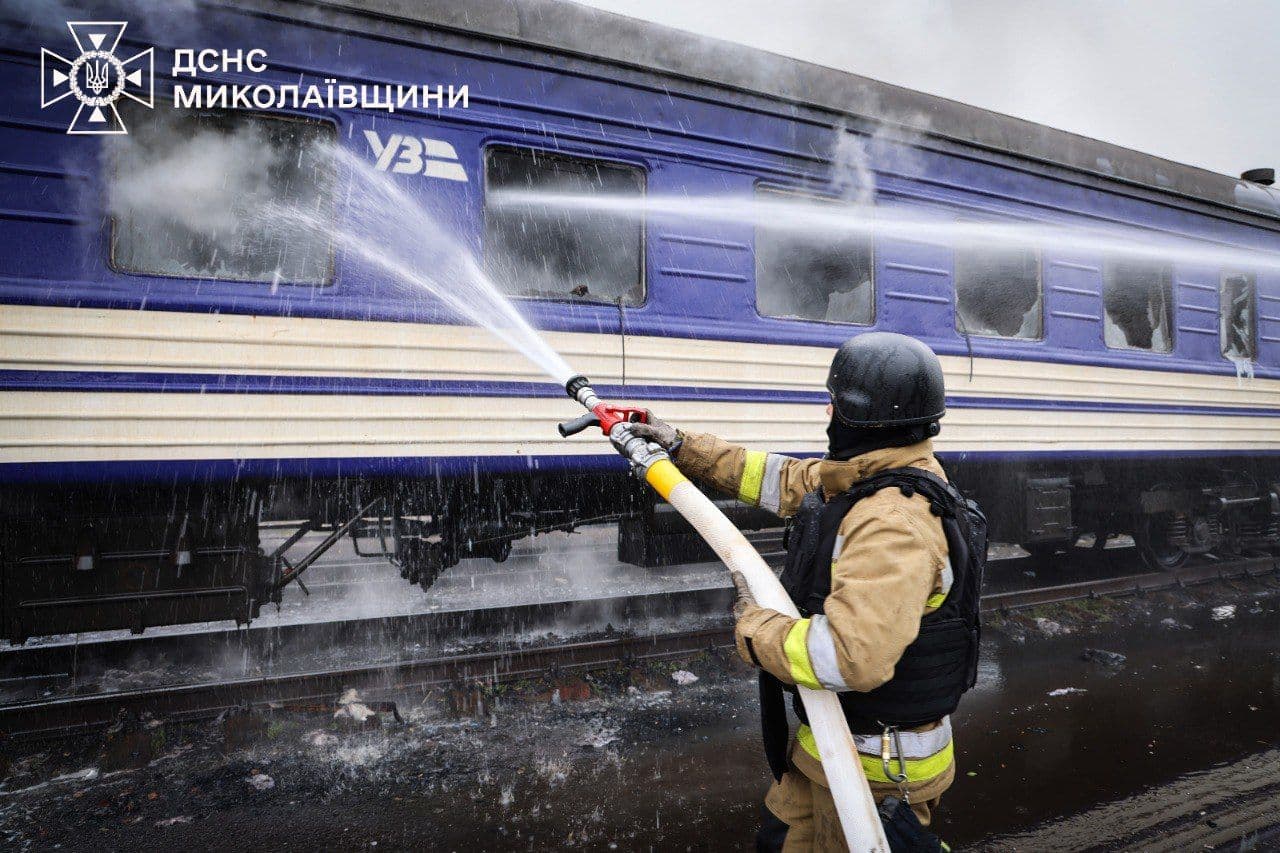
Ukrainian Deputy Prime Minister Oleksiy Kuleba watched geolocated footage from Mykolaiv. A train was burning on the tracks roughly eighty-five kilometers behind the front line. A Russian drone had struck it directly.
It was not the only attempt that day.
Hours earlier, another drone had targeted a moving train on the Dnipro–Kovel route. The crew saw the threat in time and slammed the brakes. The drone struck the ground only meters away.
The attacks were part of a growing pattern. Ukraine’s state railway operator, Ukrzaliznytsia, reported eighteen Russian strikes against railway infrastructure in the first four days of March alone. Forty-one railway assets were damaged, including seventeen passenger and freight cars along with specialized repair equipment.
The campaign is not random. Since mid-2025 Russia has increasingly targeted Ukraine’s rail system to weaken logistics moving toward the battlefield. Every disabled train means fewer supplies reaching soldiers. Every damaged engine slows transport. Every destroyed section of track forces rerouting and delay.
President Zelensky had warned the pressure would intensify. The numbers now confirm it.
Railways remain the backbone of Ukraine’s wartime economy. Food shipments, fuel, ammunition, humanitarian aid, evacuation trains, and military equipment all move along the same steel corridors. Cripple the rail network and both the army and the civilian population begin to feel the strain.
Most attacks occur closer to the front, where air defenses are thinner. The strike in Mykolaiv showed something else: Russian drones can reach deeper when opportunities appear.
Yet the system continues to function.
Railway crews rush to repair damaged tracks and engines while air defense units scramble to protect infrastructure they once rarely defended.
The trains keep moving.
And the drones keep coming.
A Pipeline Panic: Orbán Turns Ukraine Into an Election Issue
Hungarian Prime Minister Viktor Orbán demanded an investigation into what he claimed was Ukrainian sabotage of the Soviet-era Druzhba oil pipeline running through Hungary. The accusation landed like a spark in an already tense political season.
Hungary heads toward national elections in April, and Orbán’s ruling Fidesz party has been trailing the opposition Tisza Party in recent polling. Raising the specter of Ukrainian sabotage instantly shifted attention from domestic frustrations over living costs, healthcare, and corruption.
Political analyst Peter Kreko of Budapest’s Political Capital think tank saw the calculation clearly. With voters focused on everyday problems, he argued, Orbán was reaching for more dramatic issues to dominate the campaign conversation.
The pipeline investigation quickly became the centerpiece of that strategy.
The drama carried real consequences for Ukraine. Hungary and Slovakia had already halted diesel fuel shipments to Kyiv. Both governments were also blocking the European Union’s twentieth sanctions package against Russia. At the same time, Orbán continued to oppose a ninety-billion-euro EU loan intended to help sustain Ukraine’s wartime economy.
Hungary’s opposition leader Peter Magyar challenged the government’s claim directly. If there were genuine evidence of sabotage, he said, Orbán should present it to NATO partners instead of fueling panic. Magyar even proposed that they inspect the pipeline together.
His party condemned Russia’s invasion but stopped short of full support for Ukraine. The Tisza Party opposed sending Hungarian weapons and rejected fast-tracking Ukraine’s EU membership, reflecting Hungary’s complicated balancing act between NATO obligations, EU politics, and dependence on Russian energy.
Orbán’s pipeline alarm illustrated that balancing act. By framing Ukraine as a threat, he could cast himself as Hungary’s defender while avoiding a direct break with Moscow.
Meanwhile, the pipeline continued pumping oil.
From Kyiv to the Gulf: Zelensky Turns Battlefield Lessons Into Diplomacy
As Iranian missiles and drones streaked across the skies of the Middle East, President Volodymyr Zelensky saw something others might have missed: an opportunity born from Ukraine’s own hard experience.
Iran had launched massive retaliatory strikes after Israeli and American attacks on its military infrastructure. The United Arab Emirates reported intercepting hundreds of projectiles. Across the region, countries faced waves of missiles and more than a thousand attack drones.
Many of them were Shaheds.
For Ukraine, the name carried bitter familiarity. Since 2022 those Iranian-designed drones had struck Ukrainian cities, power plants, and neighborhoods. Ukrainian forces had spent years learning how to track them, jam them, and shoot them down.
Now Zelensky offered to share that knowledge.
Ukraine, he said, could help Gulf states defend themselves against the same weapons. Ukrainian specialists could deploy to assist with counter-drone defenses, working alongside local militaries already struggling with the sudden surge of Iranian attacks.
He had already spoken with leaders in the United Arab Emirates, Qatar, Jordan, and Bahrain, and preparations were underway for talks with Kuwait.
The proposal carried clear logic. Ukraine had developed practical experience fighting Shaheds that few countries possessed. Gulf states now faced the same threat. Cooperation could deepen diplomatic ties, open defense partnerships, and strengthen Ukraine’s international standing.
But the move also carried risk.
Providing expertise abroad meant balancing foreign cooperation against Ukraine’s own defense needs at home. And geopolitically the offer cut directly across Russia’s strategic partnerships. Iran supplies Moscow with the drones used against Ukraine. Helping Iran’s regional rivals defend against those same weapons linked the war in Eastern Europe with the widening conflict in the Middle East.
The Shaheds that terrorized Ukrainian cities had taught hard lessons.
Now Zelensky was offering to export them.
NATO Intercepts Iranian Missile Near Turkey as Middle East Conflict Reaches Alliance Airspace
An Iranian ballistic missile crossed the skies of the eastern Mediterranean, forcing NATO air defenses to act. The interception near Turkey marked the first time the widening Middle East confrontation directly touched NATO territory. The incident revealed how quickly regional conflicts can spill across alliances and borders.
NATO’s First Intercept: When Iran Targets Turkey
A ballistic missile launched from Iran streaked across Iraqi and Syrian airspace toward Turkey’s eastern Mediterranean coast. NATO air and missile defense systems intercepted it before impact.
Turkey’s Defense Ministry confirmed debris fell in the Dortyol district of Hatay province. No casualties were reported. But the incident marked the first time since the Middle East escalation began that Iranian missiles had entered a trajectory requiring NATO defensive response near alliance territory.
“Every step to defend our territory and airspace will be taken without hesitation,” Turkey’s Defense Ministry declared. “We reserve the right to respond to any hostile attitude toward our country.”
Whether Turkey was the intended target or whether the missile veered off course remains unclear. Reuters reported that Ankara summoned Iran’s ambassador to protest and demand clarification.
NATO spokesperson Allison Hart stated that the alliance stands firmly with all members, including Turkey, as Iranian attacks expand across the region. NATO’s deterrence and missile defense posture, she emphasized, remains fully active.
The incident exposed the spillover risks Western officials had warned about. Iran’s retaliation for Israeli-American strikes had already reached several countries. Now Iranian missiles were crossing into NATO airspace over a NATO member’s territory.
Turkey’s role complicates the picture. Since Russia’s invasion of Ukraine, Ankara has balanced relations with both Kyiv and Moscow while remaining a NATO member.
Now Iran, Russia’s drone supplier in Ukraine, was threatening the territory of a NATO state.
The missile was intercepted before impact. The political consequences may travel further.
The Ukraine Frontline Stalemate: Russian Attacks Continue Without Major Breakthrough
Across Ukraine’s eastern and northern fronts, Russian assaults continued but failed to produce decisive gains. Fighting stretched from Sumy to Donetsk as both sides traded strikes, small advances, and constant pressure. The battlefield showed the war’s defining pattern: relentless combat measured in meters rather than miles.
Away from the diplomatic maneuvering and long-range strikes, the war’s true character appeared along the front.
Russian forces continued attacks in northern Sumy Oblast but failed to advance. Assaults near Mala Korchakivka north of Sumy City were repelled as Ukrainian defenders held their lines.
Ukrainian units struck a Russian vehicle storage site in the region, reportedly destroying several light vehicles. It was another small tactical success in a campaign defined by attrition rather than decisive victories.
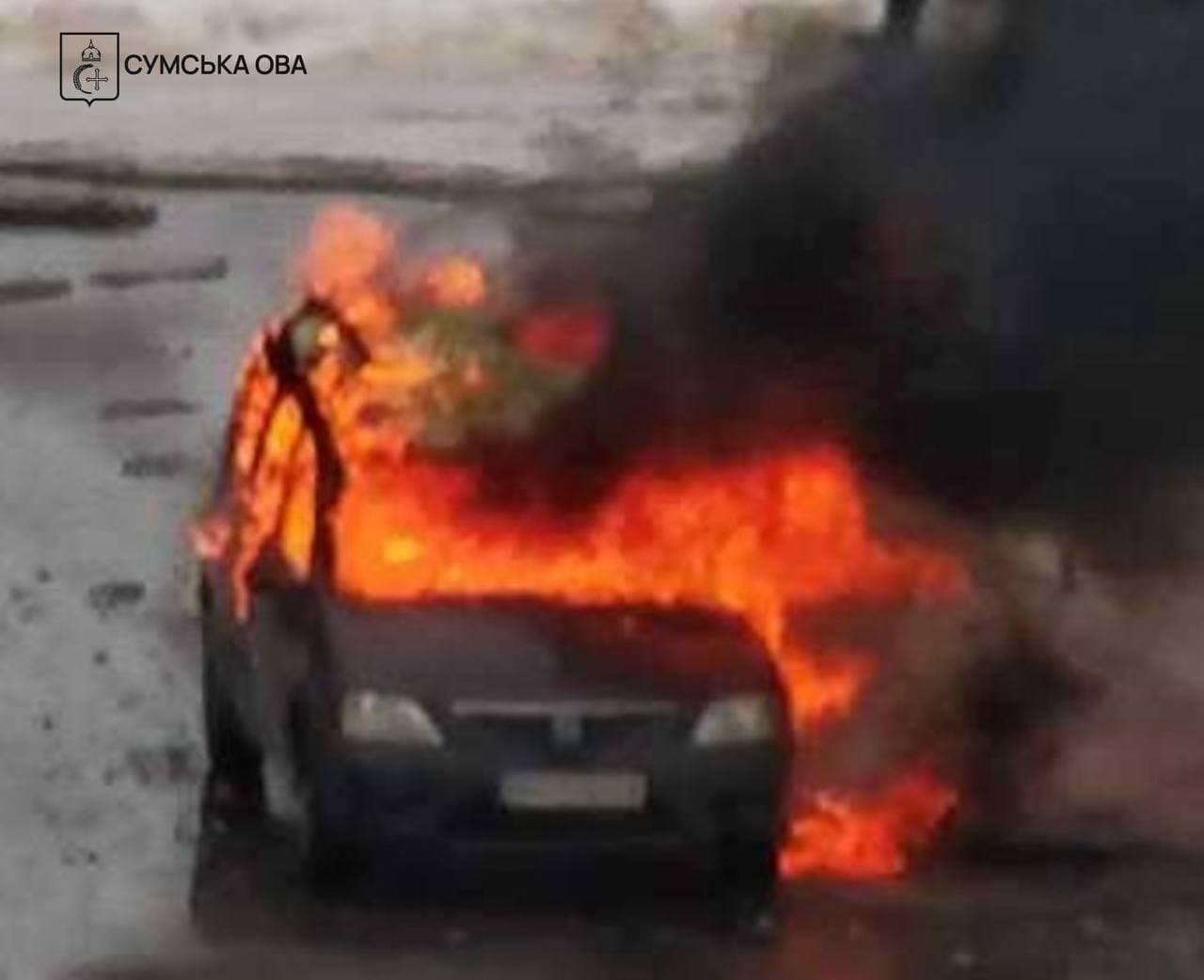
In Kharkiv Oblast, Russian troops attacked near Lyptsi, Vovchansk, and Starytsia. Fighting continued without significant territorial change. Russian pressure persisted. Ukrainian positions held.
The Donetsk axis followed the same pattern. Russian forces launched attacks in sixteen locations around Chasiv Yar. They made minor gains near Kostyantynivka and Druzhkivka; advances measured in hundreds of meters—important locally but barely shifting the broader map.
Further south, Ukrainian forces reported progress toward Hulyaipole in Zaporizhzhia Oblast. Geolocated footage confirmed Ukrainian strikes against Russian positions in several sectors.
Together the engagements formed a familiar mosaic. Russian forces pressed forward without breakthrough. Ukrainian forces resisted without reversing the broader pressure.
Drones evolved tactics. Artillery pounded defensive lines. Infantry fought for tree lines, trenches, and ruined buildings.
The front shifted in places and held in others.
Meter by meter, the war continued to grind forward.
Tehran’s Man in Minsk: The Iran-Belarus Axis Deepens
While Ukrainian drones struck Russian warships and Western leaders debated deterrence, a quieter development unfolded in Minsk. Iran’s Air Force Commander Brigadier General Hamid Vahedi arrived to strengthen military cooperation with Belarus.
The visit came as Iran was already under global scrutiny for launching retaliatory strikes across the Middle East using the same Shahed drones Russia has relied on heavily in its war against Ukraine.
In Minsk, Vahedi met Belarusian Air Force commander Igor Golub to discuss expanding cooperation between the two militaries. Belarus’s Defense Ministry later announced a coordination plan for 2026 that includes personnel training and medical support.
The bureaucratic language masked a larger strategic picture. Iran supplies Russia with Shahed drones used against Ukrainian cities and infrastructure. Russia provides Belarus with military equipment and political backing. Belarus in turn offers Moscow territory from which Russian forces have launched attacks against northern Ukraine.
Vahedi’s visit suggested that Iran and Belarus are now developing direct military links, reducing the need for Russia to act as intermediary.
For Ukrainian planners, that possibility carries real implications. Intelligence services have spent months tracking Iranian drone components flowing to Russia. Direct Iran-Belarus cooperation could create new routes for technology transfers, training missions, and logistical support tied to the war in Ukraine.
The announcement from Minsk was brief. The meaning behind it was not.
The coalition supporting Russia’s war effort continues to grow more coordinated.
Black Sea Grain Corridor Attacked: Russian Drone Strike Hits Cargo Ship in Ukrainian Port
Late in the evening, Russian drones struck a Panama-flagged cargo vessel at Chornomorsk port in southern Ukraine.
The ship had been preparing to depart with a load of corn through the Ukrainian Corridor, the maritime route Kyiv established after Russia withdrew from the Black Sea Grain Initiative. Crew members were injured and received medical treatment, though officials did not specify how many.
Regional governor Oleh Kiper reported that the attack also damaged a transport infrastructure facility, an administrative building, and three nearby residential houses.
The strike followed a pattern already visible in the Black Sea. Russian forces have repeatedly targeted civilian cargo ships operating along Ukraine’s emergency shipping corridor.
Earlier incidents had already killed foreign crew members. In one January attack, Russian strikes on two cargo vessels killed a Syrian sailor. Days later, two additional ships were hit—one entering port with vegetable oil and another leaving with corn.
The goal appears clear: make shipping through Ukrainian ports too dangerous and expensive to sustain.
Every damaged ship drives up insurance costs. Every wounded crew member makes sailors less willing to accept assignments on the route. Every successful strike sends another warning to shipping companies weighing the risks.
Ukraine’s maritime corridor remains open, but under constant threat.
The ship burned in Chornomorsk harbor. The corn meant for export never reached its destination.
Trump’s Frustration: The War That Refused to End Quickly
US President Donald Trump sat beside German Chancellor Friedrich Merz and delivered a blunt assessment of the Ukraine war.
“Regarding Russia and Ukraine—where is it on my priority list? Very high,” Trump said. Then he added the admission that framed the moment: “I thought it would be much easier than it turned out to be.”
Trump had expected to broker a settlement quickly after returning to office. Instead he ran into the same reality every administration eventually faces: wars rarely end on a timetable set in Washington.
Trump argued the central obstacle was personal hostility between the two wartime leaders.
“There is tremendous hatred between President Putin and President Zelensky,” he said. “I’ve seen a lot of hatred in my life, but I think this one is at the very top of the scale.”
The remark reflected Trump’s transactional view of diplomacy. In his telling, personal animosity between leaders mattered more than the deeper conflict between Russian territorial ambition and Ukrainian sovereignty.
Earlier that morning Trump posted on Truth Social about US weapons stockpiles. He claimed American reserves were strong in many categories and that some weapons existed in “virtually unlimited supply.” But he also acknowledged that high-end precision weapons—the systems Ukraine needs most—were “not where we want to be.”
Trump renewed attacks on former president Joe Biden, accusing him of giving Ukraine enormous quantities of US weapons without properly replacing them.
The political framing was clear: present Ukraine less as a strategic partner and more as a costly burden for American taxpayers.
The Backlash: When NAFO Strikes Back
Trump’s rhetoric triggered an immediate response from an unexpected source.
Jürgen Nauditt, managing director of NAFO—the decentralized online movement known for countering Russian propaganda—published a sharp rebuttal on X.
“Ukraine has received billions in aid since 2022 to defend itself, not to ‘cheat,’” Nauditt wrote. “Trump is twisting this to justify his own waste in ‘Epic Fury’—a war that’s swallowing billions while he dismisses Ukraine as a ‘show.’”
The reference to “Epic Fury” invoked Trump’s own military operations, which critics argued consumed massive resources with limited strategic results. Nauditt flipped Trump’s argument: if aid to Ukraine was wasteful, what about Washington’s own military spending elsewhere?
He called the P.T. Barnum comparison “repugnant,” arguing the language trivialized Ukraine’s struggle against Russian aggression and shifted blame onto Kyiv while minimizing the destruction inflicted by Russia.
“Trump is dehumanizing an entire people who are heroically resisting in order to sell his own ‘strength,’” Nauditt wrote. “This rhetoric is not only repugnant, it’s dangerous. It undermines alliances, emboldens aggressors like Putin, and betrays American values.”
The reaction highlighted fractures within Western support that extended beyond governments into grassroots activism. NAFO—famous for its Shiba Inu “fellas” mocking Russian propaganda online—now directed similar energy at an American president.
The movement that once focused almost exclusively on Kremlin narratives now confronted messaging from within the Western alliance itself.
Trump’s call for quick settlement clashed with activists who viewed Ukraine’s resistance as a fight worth sustaining. His framing of aid as waste collided with those who see it as strategic investment in resisting aggression.
The debate over Ukraine’s future was no longer confined to battlefields and diplomatic rooms.
It had moved fully into the information war.
When Education Cannot Wait: Ukraine’s Classroom Crisis
The war has disrupted far more than buildings and front lines. For millions of Ukrainian children, education itself has become uncertain as displacement, trauma, and constant disruption reshape how learning happens.
Ukraine’s response centers on the Multi-Year Resilience Programme (MYRP), funded by the global Education Cannot Wait initiative and implemented with Ukraine’s Ministry of Education. The program brings together Ukrainian and international organizations to address a crisis threatening an entire generation.
Partners include the Kyiv School of Economics, savED, Osvitoria, Teach for Ukraine, Projector Foundation, EdCamp Ukraine, Finn Church Aid, DOCCU, MriyDiy, and GoGlobal.
The model combines physical safety with educational recovery. “Hard” components focus on protected learning spaces—shelters in schools, kindergartens, and vocational institutions. “Soft” components focus on tutoring, mentorship, blended learning, and digital tools.
Educators discovered an important lesson: in crisis conditions children often stop learning not because subjects are difficult but because they no longer feel safe or connected to meaning.
Mentorship programs therefore emphasize stable adult relationships. Teachers increasingly adapt lessons to match how children process stress and attention during wartime.
Digital learning centers known as “Hives” provide spaces where children can study, interact, and regain a sense of routine. More than 50,000 students have already participated.
Programs also incorporate social and emotional learning to help students rebuild resilience, empathy, and focus—skills that proved essential once the war disrupted everyday life.
Despite these efforts, the challenge remains enormous. Millions of Ukrainian children have been displaced, and the scale of educational loss cannot yet be fully measured.
Ukraine’s educators are working to ensure that even in wartime, an entire generation is not left behind.
The Refugees Who May Never Return: Counting the Diaspora
While educators struggled to keep classrooms functioning inside Ukraine, researchers examined a harder question: how many displaced Ukrainians would ever come back?
A large survey divided Ukrainian refugees into four broad groups. Some are committed to returning regardless of circumstances, driven by family ties and property in Ukraine. Others say they will return only if the war ends and economic prospects improve. A third group has already settled abroad and sees little reason to return. The final group remains undecided, balancing connections to Ukraine against opportunities in host countries.
The balance between these groups may determine Ukraine’s demographic future. Too many refugees settling permanently abroad would mean long-term population loss just as the country faces the challenge of rebuilding.
European policy also shapes the calculation. The European Union’s temporary protection status for Ukrainian refugees runs until March 2027. Survey data suggests only about 23 percent of refugees would return if that status ends. Many have already secured or plan to obtain alternative residency permits, a sign that temporary refuge may become permanent migration.
Age patterns deepen the concern. Younger Ukrainians are more likely to remain abroad while older refugees are more likely to return. For Ukraine’s long-term recovery, that imbalance could prove damaging.
Geography also matters. Germany hosts roughly 23 percent of Ukrainian refugees and Poland nearly 20 percent. Together the two countries account for almost half of the diaspora.
For Ukraine the refugee crisis is not only humanitarian. It is demographic. Every family that builds a stable life abroad becomes one less family available to rebuild the country after the war.
The Day’s Meaning: Power, Pressure, and a War That Refuses to Break
Watch Ukrainian drones cripple Russian warships while a Russian tanker burns in the Mediterranean. Listen to Moscow threaten France and Britain with nuclear retaliation even as new evidence surfaces of mass executions and torture of Ukrainian prisoners. See Shahed drones shift from long-range terror weapons to frontline bunker-busters while Russian strikes increasingly target Ukraine’s railways.
The day revealed a war defined by parallel realities.
Russia demonstrated tactical adaptation. Drone strikes against Ukrainian rail infrastructure increased. Offensive pressure continued across multiple sectors of the front. Shahed drones were pushed into the tactical zone to strike fortified Ukrainian positions.
Yet those gains collided with mounting setbacks and complications. Ukrainian drones struck Russia’s naval base at Novorossiysk, damaging warships and killing sailors. Western support continued despite Kremlin threats. British Storm Shadow missiles remained in Ukrainian service, and French discussions about expanding nuclear deterrence moved forward regardless of Russian warnings.
Meanwhile the war’s moral ledger darkened further. Ukrainian officials reported hundreds of documented executions of prisoners of war alongside widespread evidence of systematic torture.
Diplomatically the battlefield expanded. Zelensky offered Ukrainian counter-drone expertise to Gulf states facing Iranian attacks, positioning Ukraine as a security partner rather than merely a recipient of aid. Hungary’s pipeline dispute showed how domestic politics inside Europe can weaponize Ukraine’s crisis. And NATO intercepted an Iranian missile near Turkey, another reminder that regional conflicts are increasingly entangled.
The war now moves forward on multiple tracks at once: tactical adaptation, strategic strikes, diplomatic maneuvering, and mounting human cost.
Russian pressure continues. Ukrainian resistance holds. Western support evolves but does not collapse.
The frontlines move slowly. The consequences spread far beyond them.
Prayer For Ukraine
- Protection for Civilians and Frontline Communities
Lord, we ask Your protection over the people of Ukraine as drones, missiles, and artillery continue to threaten cities, railways, ports, and frontline towns. Shield families living near the fighting, protect railway workers repairing damaged infrastructure, and guard those who must travel and work despite the danger. - Justice for Prisoners of War
God of justice, we lift up Ukrainian prisoners who have suffered torture and execution. Comfort those still held in captivity, strengthen their hope, and bring accountability for the crimes committed against them. May truth come to light and justice prevail over cruelty. - Wisdom for Leaders and Diplomats
Father, grant wisdom to Ukraine’s leaders and to the nations engaged in diplomacy. Guide decisions about alliances, defense partnerships, and negotiations. Help those working to defend Ukraine’s sovereignty while preventing wider war across Europe and the Middle East. - Strength for Those Defending the Nation
Lord, sustain the soldiers, sailors, drone operators, and defenders who stand between their nation and destruction. Give them courage, clarity, and endurance in the long days of war. Protect them in battle and strengthen their resolve to defend their homeland. - Hope for Ukraine’s Future
God of restoration, we pray for Ukraine’s future—its children, its displaced families, and those rebuilding life in the midst of war. Guard the nation from despair, preserve its people, and bring a just peace that allows Ukraine to live in freedom and security.
Lord, sustain Ukraine, protect its people, strengthen those who defend it, and bring this war to a just and lasting end.