
Ukrainian forces pushed Russian lines backward in late February, reclaiming dozens of square kilometers and liberating multiple settlements in the Oleksandrivka sector—the first sustained period of net territorial gains since the 2023 counteroffensive. At the same time, Moscow stalled the next round of peace talks, while Washington continued denying Ukraine the long-range weapons it is using elsewhere in the Middle East. The result was a day that exposed the war’s central paradox: movement on the battlefield while diplomacy remains frozen.
The Day’s Reckoning
The stage in Abu Dhabi was ready. Delegations expected to arrive. Diplomats prepared their talking points. Then the Kremlin quietly announced it had “no clarity” on when or where the next round of peace talks would occur. The meeting anticipated this week simply vanished from the calendar.
While diplomacy stalled, the battlefield told a different story. Ukrainian forces reclaimed 57 square kilometers in the final week of February, liberating nine settlements in the Oleksandrivka sector and breaching Russian defensive lines. For the first sustained period since the 2023 counteroffensive, Ukraine gained more territory than it lost. The frontline, which had crept slowly westward for months, began shifting the other direction.
Beyond the battlefield, the geopolitical contradictions sharpened. American and Israeli forces struck Iranian drone and missile facilities using Tomahawk cruise missiles—the same long-range weapons Ukraine has repeatedly requested to target Russia’s Shahed drone factory at Alabuga and other deep-rear production sites. The strikes demonstrated the strategic logic Kyiv has long argued: destroy the factories, reduce the attacks.
In Washington, Donald Trump called ending the war a top priority while publicly deriding Volodymyr Zelensky as the “P.T. Barnum of Ukraine.” The message reflected the broader Western posture toward the war—supportive in principle, selective in practice.
Meanwhile, the internal pressures of wartime governance continued. Corruption investigations remained active even as the war demanded national unity. Russia’s central bank challenged EU asset freezes in court while Ukrainian officials under scrutiny resurfaced in new roles.
Day 1,370 revealed a conflict moving on several tracks at once: Ukrainian advances at the front, stalled diplomacy abroad, and political battles unfolding behind the lines.
The Summit That Vanished
The world expected diplomats to gather in Abu Dhabi. Schedules had been sketched out, delegations quietly preparing for another round of negotiations that might—perhaps—move the war one step closer to resolution. Instead, the Kremlin dissolved the moment before it began.
Dmitry Peskov stepped before reporters and spoke with deliberate vagueness. There was, he said, “no clarity” on timing. No clarity on location. The Abu Dhabi meeting now seemed unlikely “for obvious reasons.” The language was polite, but the message was unmistakable: the negotiations had stalled before they even began.
When asked whether American military strikes against Iranian facilities might affect Washington’s approach to Ukraine diplomacy, Peskov offered a response that explained everything and nothing. “We’ll see; time will tell,” he said, noting only that the United States had “more work on its plate.” The remark carried an unspoken calculation. Moscow understood Washington’s attention had split across two crises at once.
While American B-2 bombers struck Iranian targets and carrier groups maneuvered across the Persian Gulf, the urgency surrounding Ukraine had inevitably dimmed.
From Kyiv, Volodymyr Zelensky acknowledged the complicated reality shaping Ukraine’s position. Security guarantees from the United States were possible—but only as part of a negotiated peace with Russia. Not beforehand. Not independently.
“I do not agree with this point,” Zelensky said quietly, “but that is how it is.”
He insisted talks could still occur within days, perhaps March 5 or 6, though he argued they should take place in Europe. “The war is on our continent.”
The deeper obstacle remained territory. Moscow demanded roughly 5,800 square kilometers of Donbas. Zelensky refused outright. Proposals to freeze the current front line had already been floated—and rejected by Russia.
The Kremlin was not negotiating for stalemate.
It was negotiating for victory.
Peace Promised, Respect Withheld
Donald Trump said ending Russia’s war was a top priority, then turned and cut at the man fighting it. Zelensky, Trump scoffed, was the “P.T. Barnum of Ukraine”—a showman, a master of spectacle, someone who wins support with drama more than diplomacy.
Barnum’s name carries a sting. It implies hype, exaggeration, selling the story. In one phrase, Trump suggested Ukraine’s president was less commander-in-chief than fundraiser-in-chief, working the world’s attention like a stage.
He reinforced the jab with another claim: that Washington had already handed Kyiv “hundreds of billions” in arms. The number blurred what had been authorized with what had actually arrived, collapsing paperwork and promises into the same pile of delivered weapons.
The moment captured the American contradiction in miniature: call peace urgent while publicly diminishing the partner you would need to make any deal. Back Ukraine’s defense but undercut its credibility. Signal you want the war ended yet speak as if the victim is the problem.
The Missiles Kyiv Never Received
Watch what governments do, not what they say.
Across Iran, American and Israeli forces struck drone and missile production sites with Tomahawk cruise missiles—long-range weapons capable of reaching 1,600 to 2,500 kilometers and smashing hardened industrial targets. The same weapons Washington refused to provide Ukraine in the fall of 2025.
The strategic logic was identical in both theaters. Destroy the factories and you reduce the attacks. Iran produces drones and missiles threatening American forces and allies. Russia produces drones and missiles that fall nightly on Ukrainian cities.
Kyiv has asked for Tomahawks for precisely this reason. Ukrainian drones can reach deep into Russia, but their smaller payloads struggle against heavily protected facilities. The Shahed drone plant at the Alabuga Special Economic Zone in Tatarstan—1,100 kilometers from Ukraine—kept running despite drone strikes in 2025. The Votkinsk Machine Building Plant in Udmurtia—about 1,300 kilometers away—continued producing ballistic missiles even after Ukrainian FP-5 Flamingo cruise missiles hit the site in February.
A handful of Tomahawks might have changed that equation. Concentrated strikes could have damaged or destroyed key production centers and weakened the campaign that battered Ukraine’s energy infrastructure through the winter of 2025–2026.
The barrier was never technical. Ukraine had already proven it could strike deep inside Russia with weapons of its own design.
The barrier was political.
The Hypocrisy—and the Trade Zelensky Offered
Russia’s foreign minister Sergei Lavrov and Kremlin spokesman Dmitry Peskov condemned the US-Israeli strikes on Iran with solemn talk of sovereignty and non-interference. They urged everyone to “cease hostilities,” as if the lecture came from a neutral capital, not from a government occupying parts of Ukraine, Georgia, and Moldova.
Lavrov went further, dismissing claims that Iran was pursuing nuclear weapons and casting Moscow as Tehran’s protector—even while Russia keeps importing the Shahed drones those same Iranian factories feed into the war over Ukrainian cities.
Zelensky answered without theatrics. He called the strikes a “good decision,” then pivoted to what Ukraine has learned the hard way: Patriots can swat ballistic missiles, but swarms of cheap drones bleed interceptors dry. Ukraine has built interceptor drones for that exact problem.
So, he offered a bargain to the Middle East: Ukraine provides drone-killer tech; partners provide Patriot missiles. A battlefield exchange meant to save lives—if bureaucracy can move faster than the next wave.
The Line Turns: Ukraine Pushes Russia Back
For the first time in many months, the numbers told a different story.
In the final weeks of February, Ukrainian forces reclaimed more land than they lost. Not just holding the line. Not just slowing Russia’s grinding advance. Ukrainian units pushed forward, forcing Russian troops to give ground.
Data compiled by the Institute for the Study of War captured the shift. Ukrainian forces gained nearly 33 square kilometers between February 14 and 20, then roughly 57 square kilometers in the following week. Since January 1, about 257 square kilometers had been retaken.
President Volodymyr Zelensky offered a higher estimate—460 square kilometers reclaimed since the start of the year. The totals differed depending on the methodology used, but both pointed to the same reality: the front was moving in Ukraine’s favor for the first sustained period since the stalled 2023 counteroffensive.
The clearest example came in the Oleksandrivka sector.
Ukraine’s Air Assault Forces reported liberating nine settlements. Three more had been fully cleared, while fighting continued around several others. The operation had begun on January 29, just as new restrictions disrupted Russian use of Starlink terminals. When unauthorized terminals stopped functioning, Russian units lost crucial communication and battlefield awareness.
The cost was heavy. Since January 29, Russian forces in the sector had lost 6,537 troops—4,355 killed, 2,167 wounded, and 15 captured. Ukrainian units from the 7th Rapid Response Corps breached defensive lines and severed supply routes.
The advances did not signal a sweeping counteroffensive. Ukraine still lacked the resources for that scale of operation. But the localized successes forced Russian commanders to halt their own offensive plans, stabilize their defenses, and reclaim lost ground before pushing forward again.
The War Moscow Still Thinks It Can Win
Four years into the invasion, the Kremlin’s war plans still read like the opening week of 2022.
Volodymyr Zelensky revealed that Russia’s military planning for 2025–2027 envisions sweeping territorial conquest: the remaining parts of Donetsk and Luhansk, continued advances across Zaporizhia and Kherson, and eventually the capture of the entire Odesa Oblast—from the Romanian border all the way to the Dnipro estuary.
Not a frozen front. Not a negotiated settlement. Total expansion.
The scope of the plan reaches even beyond the territories Moscow formally claimed to annex. Odesa was never included in those declarations, yet it sits prominently on Russia’s roadmap for the coming years.
The ambitions would be staggering even for an army advancing rapidly. But Russia’s forces have spent a decade trying—and failing—to capture all of Donetsk Oblast alone. Since 2014 the command has issued repeated deadlines for completing the conquest. Each has collapsed under the weight of Ukrainian resistance and enormous Russian losses.
Even pro-war Russian milbloggers have begun warning that the objectives are detached from reality. They argue that the relentless deadlines drive costly assaults that sacrifice troops without producing strategic breakthroughs.
Still, the plans persist.
The pattern is familiar. In February 2022 Russian forces attempted to seize Kyiv within days. That failure set the tone for everything that followed: sweeping goals, impossible timelines, and the belief that sheer persistence will eventually force the outcome.
Now those same ambitions are being presented to Washington as inevitable—an argument meant to convince Western leaders that Ukraine cannot ultimately hold the ground it defends.
When the Lights Stayed On
All winter long the missiles came for the power.
Russia’s campaign against Ukraine’s energy grid during the winter of 2025–2026 had three clear goals: cripple the country’s electricity system, shut down its industries, and break the will of civilians living through blackouts and cold.
It failed.
Volodymyr Zelensky summarized the outcome bluntly. The attacks failed to divide Ukrainians. They failed to turn the public against the military. And they failed to force ordinary citizens to demand surrender. The strikes created hardship—damaging substations, power lines, and generating facilities—but the country kept functioning.
Russian planners hoped to fracture Ukraine’s energy network into isolated islands that could no longer support one another. Instead, engineers repaired damage as quickly as it appeared, restoring power faster than Russian missiles could permanently destroy it.
The industrial sector proved equally resilient. Government advisor Hanna Gvozdiar reported in February that Ukraine’s defense industry had expanded dramatically during the war, increasing production fiftyfold since 2022 and reaching an estimated $50 billion in output. Factories targeted by thousands of drones and missiles continued operating.
Even Kyiv—one of Russia’s main targets—never stopped functioning. Nearly three million residents continued living and working in the capital, repairing infrastructure while the government coordinated the war effort.
Now the campaign appears to be shifting.
Zelensky warned that Russia is preparing a new wave of attacks, this time aimed at water supply systems. The change suggests a quiet admission in Moscow: the effort to break Ukraine through its energy grid did not achieve its intended result.
The Election That Assumes War
Inside the Kremlin, officials are already preparing for the September 2026 State Duma elections. But according to an insider source, every political scenario discussed during a recent seminar for vice governors began with the same assumption.
The war would still be underway.
Not ending. Not winding down. Continuing as the central fact of Russian political life.
The Presidential Administration outlined three possible narratives for the campaign season. In one, Russia would present the war as a strategic success. In another, the country would face mounting pressure requiring greater mobilization and sacrifice. A third scenario assumed the conflict would simply grind on much as it does today.
The “most likely” outcome, officials reportedly concluded, was that wartime conditions would continue through the elections and beyond.
The discussion revealed how deeply the conflict has been woven into Russia’s domestic politics. Candidates are expected to frame their campaigns around support for the war, while state media continues portraying the conflict as a test of national unity rather than a problem to resolve.
One scenario never appeared in the planning.
There was no path built around peace.
The omission spoke for itself: Moscow is preparing its politics—and its public—for a long war.
Fire Across Crimea’s Lifeline
The announcement came days after the strikes themselves.
On February 27, Ukrainian officials revealed what their drones had quietly done earlier in the week—two attacks aimed not at the front line, but at the machinery that keeps Russia’s occupation running.
Thirteen drones struck the 500-kilovolt Taman electrical substation in Krasnodar Krai. It was not just another power facility. The substation forms part of the power bridge feeding electricity across the Kerch Strait into occupied Crimea. The attack ignited a fire and destroyed two autotransformers, cutting into the capacity that keeps Crimea’s grid supplied from the Russian mainland.
That same day, another Ukrainian strike hit the Yevpatoria Aviation Plant in occupied Crimea, about 150 kilometers from the front. The facility serviced Russian Orior and Forpost reconnaissance drones used to spot targets across southern Ukraine. The blast damaged three hangars and forced the dispersal of aircraft and equipment to less efficient locations.
Taken together, the attacks showed Ukraine’s evolving strategy.
Instead of striking only soldiers and trenches, Kyiv is reaching deeper targeting the infrastructure that sustains Russia’s military presence. Power lines, logistics hubs, drone facilities. Each strike forces Moscow to stretch its defenses farther across thousands of kilometers.
Every transformer destroyed, every hangar damaged, makes the occupation harder to sustain.
Fire on the Shadow Fleet
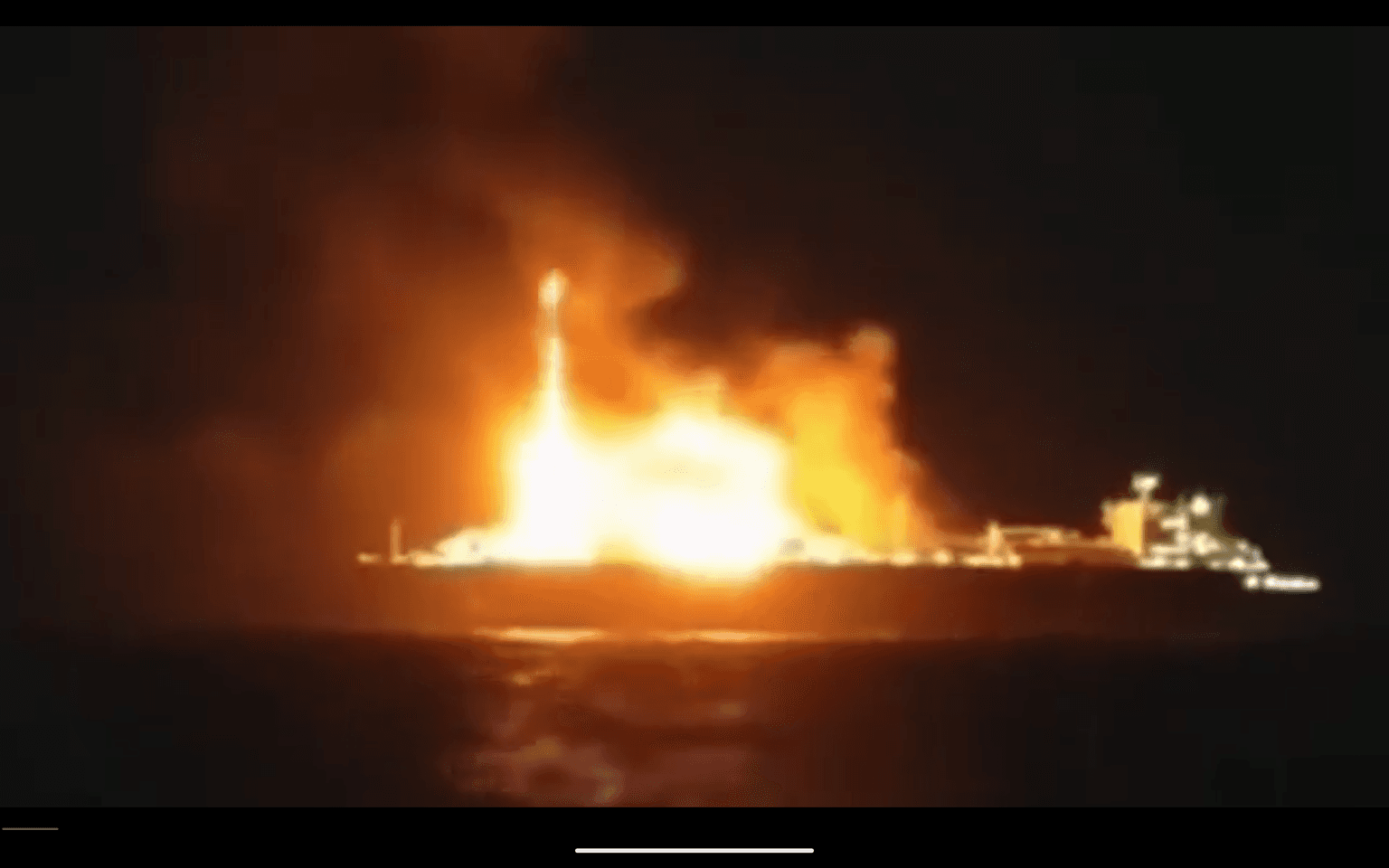
The Arctic Metagaz was the kind of vessel Russia relied on to keep energy exports moving despite Western sanctions—a Russian-flagged liquefied natural gas tanker operating through opaque ownership and irregular shipping practices.
Before dawn on March 3, it was burning.
Videos circulating online showed flames engulfing the ship somewhere in the Mediterranean. Reports placed the tanker either near Malta or closer to Libya’s coast. Maltese armed forces later confirmed the crew had escaped safely into a lifeboat inside Libya’s search-and-rescue zone.
The cause of the blaze remains unknown.
Maritime sources told Reuters the fire may have resulted from a Ukrainian naval drone strike, though the claim remains unconfirmed and Ukrainian officials offered no comment.
What is clear is the wider pattern.
Ukraine has steadily expanded its campaign against Russia’s oil and gas lifelines. Ukrainian naval drones struck the sanctioned tankers Kairos and Virat off Turkey’s Black Sea coast in November. Another shadow fleet tanker was critically damaged in the Black Sea in December. Later that same month, Ukrainian forces struck a Russian tanker in the Mediterranean for the first time, more than 2,000 kilometers from Ukraine.
If the Arctic Metagaz fire resulted from Ukrainian action, it would represent a further expansion of Ukraine’s reach—targeting the revenue streams that finance Russia’s invasion.
Whether accident or attack, the message was clear.
Russia’s shadow fleet is vulnerable, even far from the Black Sea.
The Frontline Mosaic: Incremental Advances and Costly Stalemates
Beyond territorial gains near Oleksandrivka, the wider frontline reflected the grinding patterns that have defined the war.
In the Slovyansk direction, Russian forces advanced in central Drobysheve northwest of Lyman. Ukrainian troops struck Russian positions south of Fedorivka Druha after a Russian infiltration mission. A Ukrainian brigade commander described how rivers, swamps, and shifting weather complicated Russian advances. Russian forces sent stronger troops against fortified urban positions while deploying prisoner units across open ground, attacking along five to seven routes to complicate Ukrainian drone operations.
Weather also shaped the battlefield. Rain and fog disrupted Ukrainian drone visibility, giving Russian units brief windows to move. Ukrainian defenders relied on terrain advantages while Russian forces searched for moments when technology faltered.
In northern Kharkiv Oblast, a Russian milblogger tied to the Northern Grouping of Forces disputed Moscow’s February 28 claim that Neskuchne had been captured, saying many soldiers from the 9th Motorized Rifle Regiment were missing there. The same source said Russian troops still did not fully control Zelene. Another milblogger described small Russian attacks meant to force Ukraine to disperse reserves rather than concentrate them.
In the Pokrovsk direction, Russian forces attacked but failed to advance. A Ukrainian sergeant reported increasing Russian use of unmanned ground vehicles to move supplies after Ukrainian strikes disrupted traditional logistics.
In the Kupyansk direction, a Russian milblogger claimed Ukrainian troops were pressuring Russian units inside Kupyansk itself, forcing them to move through basements and rely on drone deliveries.
Near Novomykolaivka in the Novopavlivka direction, Ukrainian forces recently advanced southwest of the settlement, adding another localized disruption to Russian planning in the south.
Across the front, the pattern remained unchanged: adaptation, counteradaptation, and gains measured in meters rather than breakthroughs.
The Night Russia Couldn’t Break Through
Ukrainian Air Force tracking screens lit up before dawn on March 3. A swarm was approaching: 136 drones launched from multiple directions.
About eighty were Shaheds, joined by Gerbera-type, Italmas-type, and other strike drones. They launched from Kursk City, Primorsko-Akhtarsk in Krasnodar Krai, and occupied Hvardiiske in Crimea. Ukrainian air defenses had to track threats across hundreds of kilometers at once, coordinating intercepts as the drones maneuvered to evade.
Ukrainian forces shot down 127 drones—a 93 percent interception rate showing both strong air defense and the huge numbers Russia must launch to ensure any get through.
Five drones struck three locations. Debris from downed drones hit three additional sites.
Residential and civilian infrastructure suffered damage in Kharkiv City and surrounding areas. Port and transport infrastructure were struck in Odesa Oblast. Power outages spread across Donetsk, Dnipropetrovsk, Sumy, and Chernihiv oblasts.
A ten-year-old girl was injured in Kharkiv. An eighty-year-old woman was wounded in the regional capital. In Poltava Oblast, falling debris damaged houses and a college and delayed several trains.
The mathematics of defense remained brutal. One hundred twenty-seven drones were destroyed. Five got through.
Air defense crews saved many targets while knowing they could not save them all. The attack also showed Russia still possessed significant drone stockpiles despite sanctions.
And it confirmed a reality Ukrainians know well: distance from the frontline offers no protection.
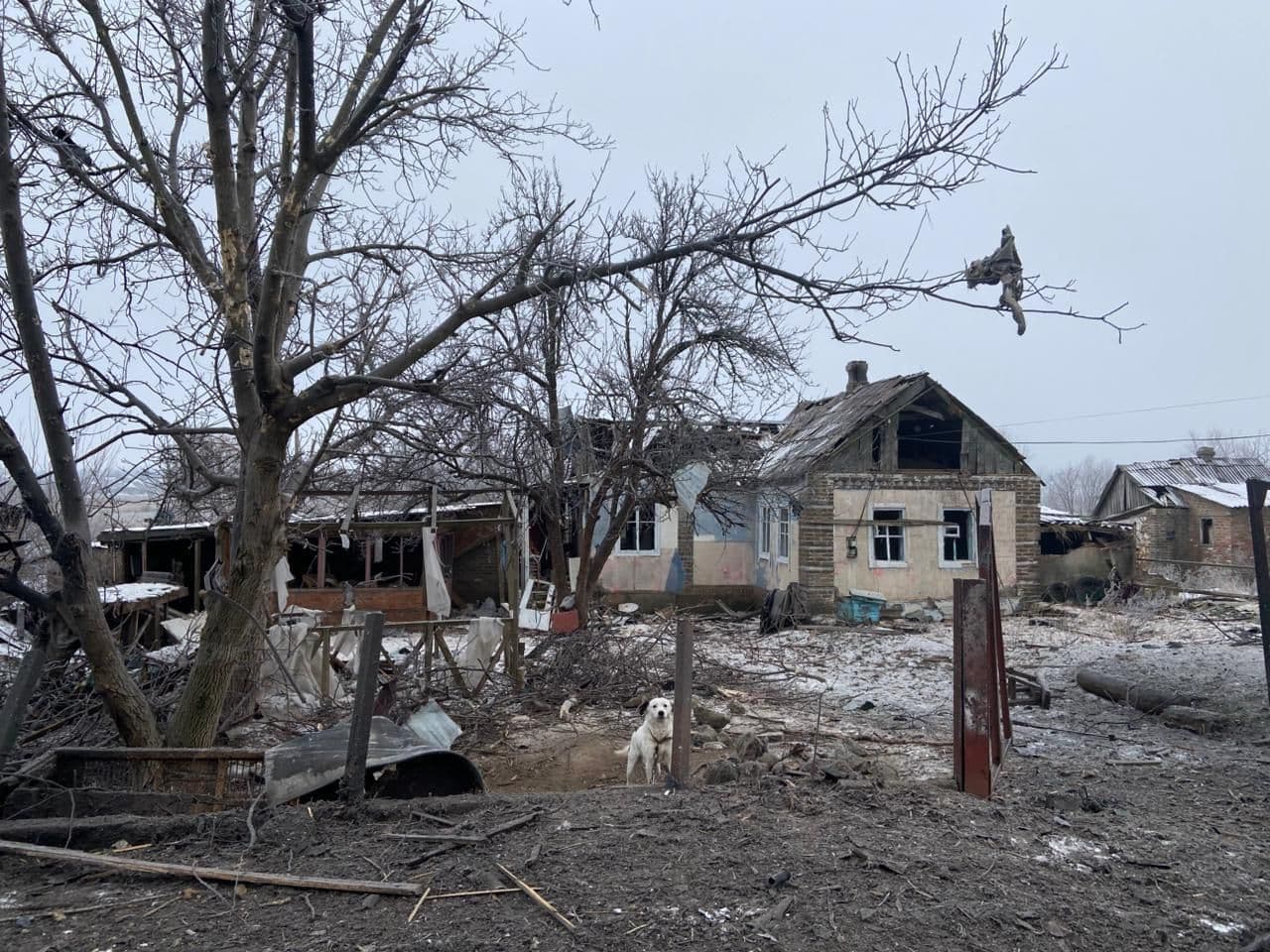
Aftermath of a Russian attack in Donetsk Oblast, Ukraine. (Donetsk Oblast Governor Vadym Filashkin/Telegram)
Prison Torture as State Policy
Ukraine’s Human Rights Ombudsman Dmytro Lubinets addressed the UN Human Rights Council with statistics that would have seemed unimaginable before February 2022.
By the end of 2025, at least 337 Ukrainian prisoners of war had been deliberately executed by Russian forces. Not killed in combat. Executed after capture.
Lubinets told the council that torture had become systematic. “Russia has turned torture into state policy and uses it as a weapon,” he said, citing UN findings that 95 percent of Ukrainian POWs reported torture while in Russian captivity.
Russia currently holds about 7,000 Ukrainians. More than 4,000 are military personnel, but the number also includes civilians—people protected under the Geneva Conventions.
Ukraine holds roughly 4,000 Russian prisoners and has repeatedly proposed all-for-all exchanges.
The most recent exchange occurred February 5, when 157 Ukrainian service members and civilians returned home. But freeing civilians remains far harder than securing the return of soldiers.
In 2025, Ukraine conducted ten exchanges.
2,080 service members came home.
Only 230 civilians were released.
The disparity reflected Moscow’s approach: military prisoners have exchange value, but civilians can be held indefinitely as leverage.
When the Money Arrives: IMF Delivers, EU Stalls
Ukraine received its first payment under the new IMF program: $1.5 billion deposited into government accounts, Prime Minister Yulia Svyrydenko confirmed.
The larger question remained unresolved. Where was the EU’s €90 billion loan?
Hungary had blocked the package—approved at a December 2025 summit and intended to cover major portions of Ukraine’s defense and budget needs through 2027—over the Druzhba pipeline dispute. Russian attacks damaged the pipeline carrying Russian oil through Ukraine to Hungary and Slovakia. Budapest and Bratislava accused Kyiv of delaying repairs. Ukraine said it was conducting necessary damage assessments before restoration.
Hungarian Prime Minister Viktor Orban announced on February 27 that Hungary and Slovakia would form a joint inspection group to evaluate the damage. The status of that initiative remained unclear.
European ambassadors were scheduled to meet on March 4. There was still no indication whether the €90 billion loan would even appear on the agenda.
Without the funding, Ukrainian government finances could run dry by mid-2026. The IMF payment provided temporary relief but could not replace the much larger EU commitment.
Ukraine’s ability to sustain defense operations through 2026 and beyond now depends on whether European unity can overcome Hungary’s veto—or whether alternative financing arrangements will be required.
The Diplomatic Circus: Orban Calls Putin, Merz Pressures Trump
While European leaders debated support for Ukraine, Viktor Orban was on the phone with Vladimir Putin.
The Kremlin said the two discussed Hungarians serving in Ukraine’s army who were later captured by Russian forces. They also revisited agreements from their November Moscow meeting, the situation with Iran, and possible energy market impacts.
Putin praised Hungary’s “principled stance” favoring diplomatic solutions and its commitment to a “balanced and sovereign” foreign policy—language widely read as approval for Budapest’s resistance to tougher EU measures against Russia.
Orban’s rhetoric toward Ukraine has hardened as domestic pressure rises. His Fidesz party is trailing Peter Magyar’s opposition Tisza party ahead of April parliamentary elections. Criticizing Kyiv and opposing EU aid plays well with parts of his political base.
In Washington, German Chancellor Friedrich Merz delivered a different message. After meeting with Donald Trump, Merz said he urged the U.S. president to increase pressure on Putin.
“Russia is playing for time,” Merz told reporters.
He also insisted Europe must be included in any settlement talks and warned against forcing Ukraine into further territorial concessions. European support for Kyiv, he said, must continue.
Trump reportedly told Merz that brokering peace between Russia and Ukraine remained a high priority. He also expressed confidence that the United States had enough munitions to supply both partners supporting Ukraine and other conflicts.
Whether those weapons will actually reach European partners—and under what conditions—remains uncertain.
Russia’s Legal Counteroffensive: Challenging the Asset Freeze
While Russian forces fought across Ukraine’s frontlines, Russia’s central bank opened another front in European courtrooms.
On February 27 the bank filed a challenge against the EU’s decision to indefinitely freeze Russian gold and foreign exchange reserves, bringing the case before the European Court of Justice’s General Court in Luxembourg. The appeal targeted a December 12, 2025, regulation that extended the freeze indefinitely and narrowed legal avenues to contest it.
Russia’s central bank called the measure “illegal,” arguing it violated property rights, sovereign immunity, and access to justice. Moscow also claimed the regulation should have required unanimous approval instead of the qualified majority that adopted it.
The stakes were enormous. Western governments froze roughly $300 billion in Russian assets after the 2022 invasion. About two-thirds—roughly €210 billion—are held by Euroclear, a Belgium-based financial services company.
The new EU framework changed how the freeze is maintained. Instead of unanimous renewal every six months, lifting the measure now requires at least fifteen EU states representing over 55 percent of the bloc’s population. The shift effectively removed Hungary and Slovakia’s veto over renewing the freeze.
Russia also filed a lawsuit in Moscow’s arbitration court against Euroclear seeking compensation for the blocked funds.
Putin has suggested frozen assets could eventually fund reconstruction in war-damaged regions, presenting them as potential bargaining leverage. Ukraine rejected that idea, insisting Russian assets should be used for war reparations.
The legal fight reflected Moscow’s broader strategy: pursue military gains in Ukraine while challenging sanctions in court—hoping pressure on both fronts might eventually force Western concessions.
Corruption Continues: When War Doesn’t Stop Graft
Ukraine’s war has demanded unity and sacrifice. Corruption investigations continue to reveal that not everyone answered that call.
Andriy Yermak, who resigned as President Zelensky’s chief of staff on November 28, 2025, after National Anti-Corruption Bureau searches of his premises, has taken a new role heading a committee within Ukraine’s National Association of Lawyers. The body will work on legal protection for victims of Russia’s aggression and compensation mechanisms for reconstruction.
Yermak remains under investigation in a case involving the state nuclear power monopoly Energoatom—one of the largest corruption probes during Zelensky’s presidency. He has not been charged. After resigning, Yermak said he intended to go to the frontline, but the Defense Ministry confirmed in January that he had not enlisted. Instead, he resumed legal work and accepted the committee role.
Ukrainian media reported he continues communicating with Zelensky and maintains political influence. The National Association of Lawyers itself faces criticism. Its head, Lidia Izovitova, has been accused of ties to pro-Kremlin politician Viktor Medvedchuk and of remaining in office beyond her 2022 term.
Meanwhile, former State Border Guard Service chief Serhii Deineko—dismissed in December 2025—was mobilized and assigned to lead the Luhansk Border Guard Detachment. Deineko faces charges in a bribery case involving at least €204,000 tied to cigarette smuggling across the Ukraine-EU border using vehicles with fake diplomatic plates.
Bail of 10 million hryvnia was posted on February 4.
The cases highlight Ukraine’s persistent corruption challenge even during wartime.
The Day’s Meaning: The War of Contradictions
Day 1,370 exposed the war’s contradictions with unusual clarity.
On the battlefield, Ukraine achieved something rare. For the first time in nearly three years, Ukrainian forces liberated more territory than they lost. Nine settlements were reclaimed in the Oleksandrivka sector, and Ukrainian strikes damaged Russian energy and drone infrastructure in Crimea. Yet these gains remained tactical. Limited resources meant they were unlikely to become large-scale counteroffensives before Russian defenses stabilized.
Russia’s winter campaign against Ukraine’s energy grid also failed. The strikes damaged infrastructure but did not break civilian morale, cripple industry, or make Kyiv uninhabitable. Ukrainian production continued growing despite repeated attacks. Moscow now appears to be shifting its strategy toward water infrastructure instead.
Diplomacy moved in circles. Peace talks remained perpetually discussed but never scheduled. Moscow claimed there was no clarity on negotiations. Washington continued linking security guarantees to a peace framework Kyiv could not accept. European unity also frayed as Hungary blocked a major EU loan while maintaining close communication with the Kremlin.
At the same time, Russia signaled expectations of a long war. Kremlin insiders described planning that assumes the conflict will continue through Russia’s September 2026 elections and likely well beyond.
Internal pressures also continued inside Ukraine. Corruption investigations advanced even as wartime demands unity. Officials under investigation for serious allegations were reassigned or given new roles rather than removed entirely from public life.
Across all fronts—military, diplomatic, economic, and political—the same pattern persisted.
Incremental battlefield movement.
Failed strategies replaced by new ones.
Negotiations discussed but delayed.
Nothing resolved. The war continued to move forward one day—and one kilometer—at a time.
Prayer For Ukraine
- For Protection from Night Attacks
Lord, we lift before You the families in Kharkiv, Odesa, Poltava, and other regions struck by drones and falling debris. Comfort the wounded, especially the children and elderly harmed in these attacks. Strengthen the air defense crews who stand watch through the night, intercepting wave after wave of drones. Protect the cities and villages of Ukraine, and place Your shield over those who sleep beneath the sound of sirens. - For Soldiers on the Frontline
Father, we thank You for the courage of Ukrainian defenders who reclaimed territory and continue holding the line under relentless pressure. Give them wisdom in command, endurance in the trenches, and unity in their ranks. Guard those advancing and those defending. May their efforts protect their people and bring the day closer when war no longer defines their lives. - For Prisoners and the Suffering
God of justice, we pray for the thousands of Ukrainians held in captivity. Comfort those who have endured torture and loss. Strengthen their spirits and protect their lives. Bring them safely home. And move the hearts of those who hold them so that cruelty ends and humanity prevails. - For Wisdom Among Leaders and Nations
Lord, guide the decisions of leaders in Ukraine, Europe, and the United States. Remove political gamesmanship that delays help or divides allies. Provide the resources Ukraine needs to defend its people. Let truth prevail in diplomacy and expose any efforts that prolong suffering or reward aggression. - For Integrity and Renewal in Ukraine
Father, even in war You call nations to righteousness. Strengthen Ukraine’s fight not only against invasion but also against corruption and injustice. Raise up leaders of honesty and courage who will rebuild the nation with integrity. Let this time of trial ultimately produce a stronger and more just Ukraine.
Lord, we ask You to sustain Ukraine, protect its people, strengthen those who defend it, and bring a just and lasting peace. Amen.