
As Ukrainian agents ignite substations in Kaliningrad and destroy drone factories in Tatarstan, Moscow retaliates by deliberately targeting American businesses while world leaders gather for critical G7 talks
Summary of the Day – June 15, 2025
The war’s shadow warfare reached new depths as Ukrainian intelligence operatives successfully sabotaged an electrical substation in Russia’s Kaliningrad enclave—6,800 kilometers from the front lines—while drones struck the heart of Russia’s Shahed production facility in Tatarstan. Moscow’s response came swift and calculated: a deliberate strike on Boeing’s Kyiv offices, marking a dangerous escalation in targeting Western businesses operating in Ukraine. As world leaders gathered in Canada for the G7 summit, the battlefield reality exposed the hollow nature of recent ceasefire talks, with nearly 200 Russian missiles and drones pummeling Ukrainian cities just hours after Putin’s latest conversation with Trump. The grim mathematics of war continued unabated: 1,200 more Ukrainian bodies returned home, North Korean casualties in Kursk exceeded 6,000, and five Ukrainian citizens died in Iranian missile strikes on Israel—underscoring how this conflict’s tentacles now reach across continents.

Fire Across Continents: Ukraine’s Deep Strike Campaign
In the pre-dawn darkness of June 14, Ukrainian special forces accomplished what many military analysts deemed impossible: infiltrating deep into Russian territory to sabotage critical infrastructure in Kaliningrad, Russia’s heavily fortified Baltic exclave. The operation, conducted by Ukraine’s Main Military Intelligence Directorate (HUR), targeted an electrical substation serving military production facilities, causing $5 million in damage and cutting power to nearby defense sites.
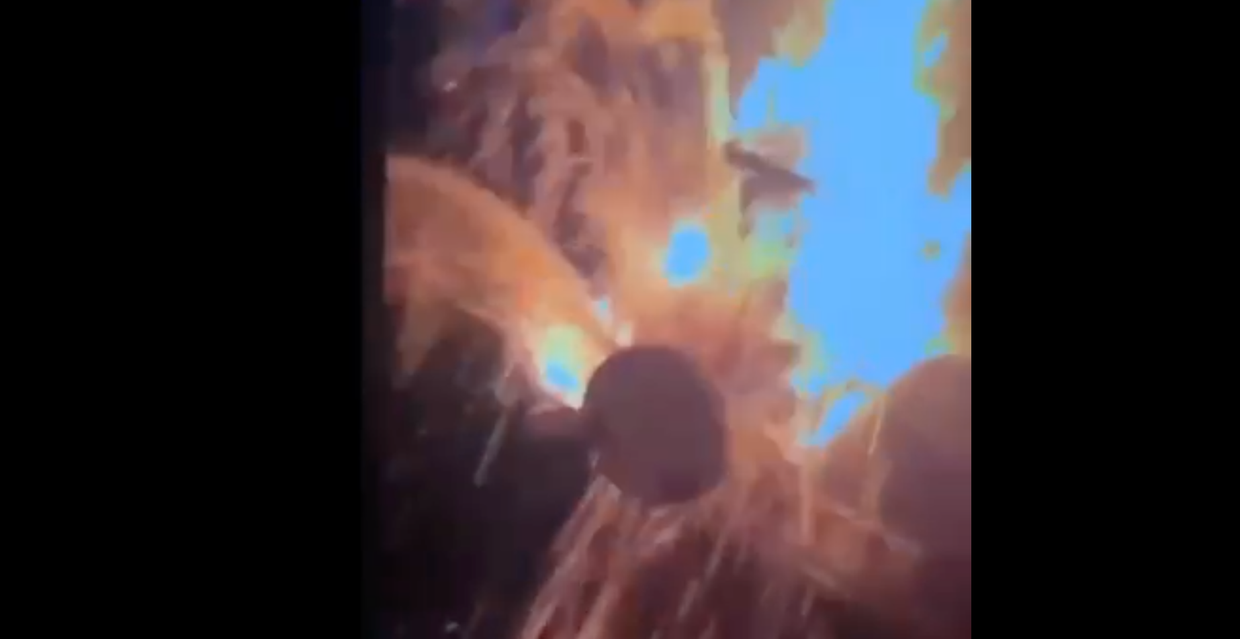
The audacious mission required Ukrainian agents to drain coolant from the substation’s power transformer before igniting the facility, creating an inferno that illuminated the night sky. The attack represented Ukraine’s furthest confirmed incursion into Russian territory—even more distant than the May 30 Vladivostok operation.
“We once again remind you that Russia no longer has a rear either in the east, in the west, or anywhere else on the planet,” a HUR source told the Kyiv Independent. “Everything Russian involved in the war against Ukraine will burn, sink, and be destroyed regardless of its level of protection or location.”
Simultaneously, Ukrainian drones struck the Alabuga Special Economic Zone in Tatarstan, targeting the facility where Russia produces its deadly Shahed-type attack drones. The facility, located 1,500 kilometers from Kyiv, aims to manufacture 6,000 Shahed drones annually at roughly $20,000 each—a cornerstone of Russia’s terror campaign against Ukrainian cities.
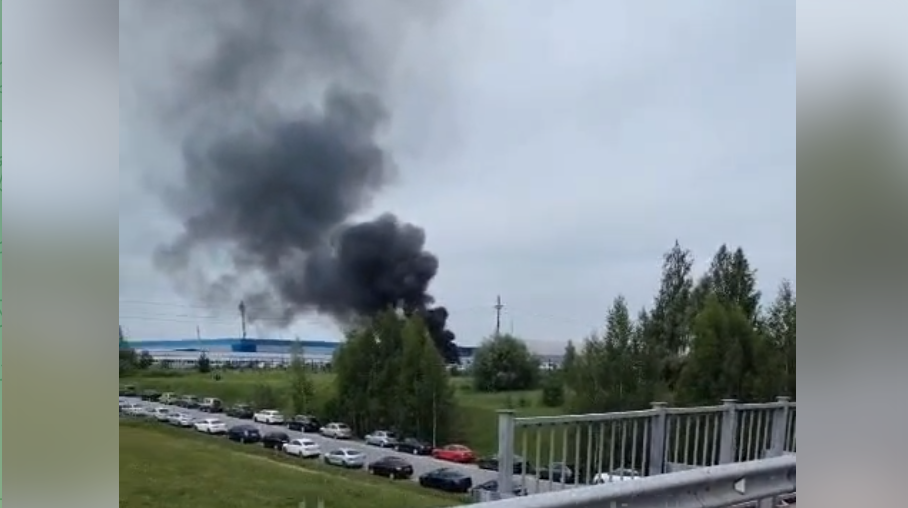
One person died and 13 were injured when Ukrainian drone debris fell on the facility after being shot down by Russian air defenses. Videos shared on Telegram showed thick smoke billowing over Yelabuga, while Ukraine’s General Staff confirmed the strike was specifically directed at Shahed-style drone production capabilities.
Ukrainian forces also struck the Butulinovka Airbase in Voronezh Oblast, targeting a facility housing Russian Su-34 fighter bombers that regularly conduct bombing runs against Ukrainian positions and civilian areas. The attack demonstrated Ukraine’s expanding target set, moving beyond energy infrastructure to directly engage Russia’s air power projection capabilities.
Precision Warfare: Ukrainian Drones Hunt Russian Air Defenses
In occupied Zaporizhzhia Oblast, Ukraine’s military intelligence achieved a tactical masterpiece on June 14, using precision drone strikes to eliminate three sophisticated Russian air defense systems. The operation destroyed a Buk-M3 surface-to-air missile system, a Pantsir S1 short-range air defense system, and a 9S19 Imbir radar from the S-300V air defense complex—representing millions of dollars in destroyed equipment.
Video footage released by HUR showed the “stunning maneuver of a Ukrainian drone dodging a Muscovite anti-aircraft missile” before successfully striking its target, demonstrating the technological sophistication Ukrainian forces have achieved in drone warfare. The successful evasion of Russian countermeasures highlighted both the skill of Ukrainian operators and the advanced capabilities of domestically-produced attack drones.
The destruction of these systems creates gaps in Russia’s air defense network, potentially facilitating future Ukrainian operations in the region while demonstrating Kyiv’s ability to systematically degrade Russian defensive capabilities in occupied territories.
Corporate Warfare: Russia’s Calculated Retaliation
In a calculated escalation targeting Western business interests, Russia deliberately struck a building housing Boeing’s Kyiv office during the massive June 9-10 attack on the Ukrainian capital. The targeting of America’s aerospace giant represented a new front in Moscow’s war against Western economic engagement with Ukraine.
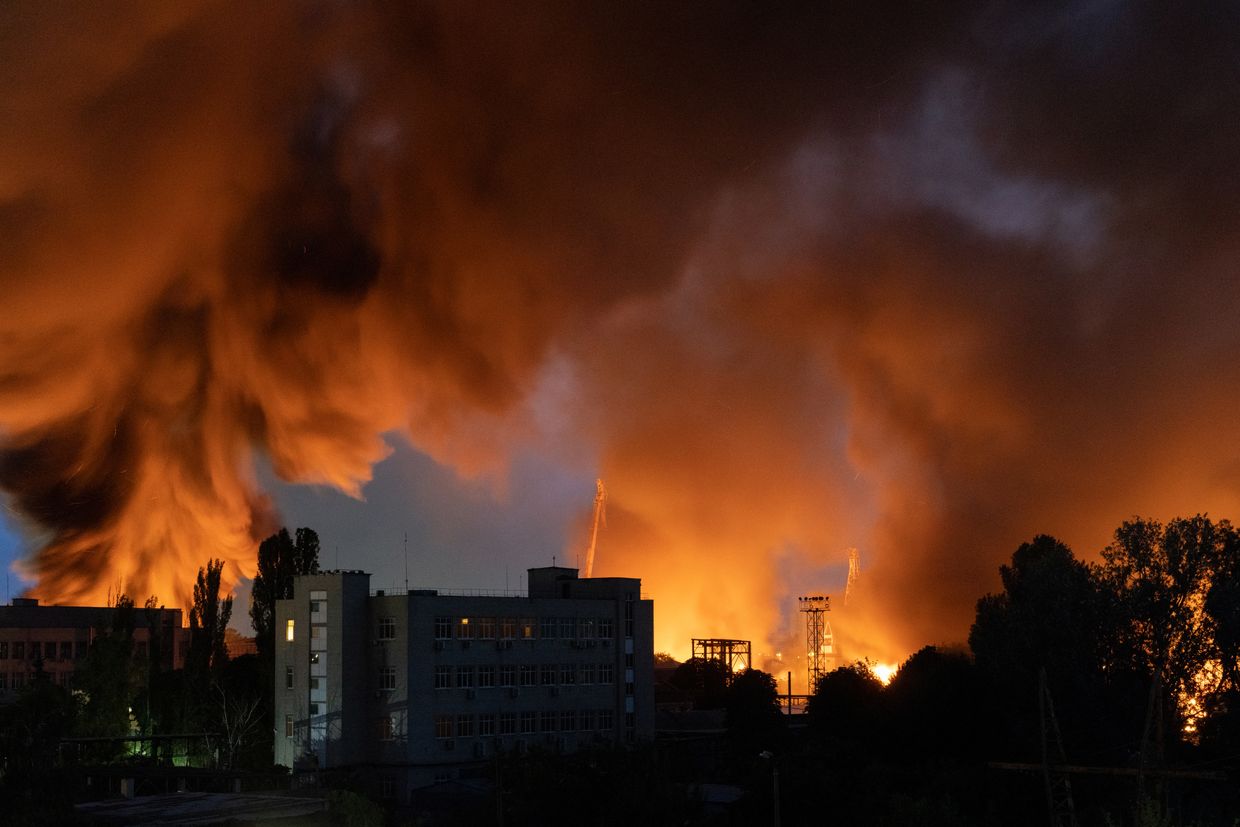
“This is not just an attack against Ukraine, but also an attack where American business is being hit,” said Andy Hunder, president of the American Chamber of Commerce in Ukraine, which represents nearly 700 U.S. and international investors. “This is a war against a world where American businesses are making money and thriving.”
Boeing, which employs approximately 1,000 people in Ukraine and collaborates with aerospace company Antonov on defense projects, confirmed none of its employees were injured but emphasized its continued operations despite the attack. The strike came as direct retaliation for Ukraine’s Operation Spiderweb, which had damaged 41 Russian military aircraft across four airbases.
Nearly half of the American Chamber’s members have suffered facility damage or destruction, yet 90% continue operating in Ukraine—a testament to Western business resilience in the face of systematic intimidation. German defense company Rheinmetall has faced similar threats from Moscow, with Russian officials declaring it a “legitimate target” despite the company’s assertion that its facilities are well protected.
The Phantom Ceasefire: Putin’s Middle East Gambit
The hollow nature of recent diplomatic overtures became starkly apparent as Russia launched nearly 200 missiles and drones against Ukraine on the night of June 14-15, just hours after Putin’s latest phone conversation with Trump. The massive barrage, primarily targeting Poltava Oblast’s energy and agricultural infrastructure, underscored Moscow’s true intentions despite public commitments to ceasefire discussions.
Russian forces deployed two Kh-47M2 Kinzhal aeroballistic missiles, one Iskander-M ballistic missile, four Iskander-K cruise missiles, four Kalibr cruise missiles, and 183 Shahed and decoy drones. Ukrainian air defenses achieved remarkable success, neutralizing 159 of 183 drones while downing two Kinzhal hypersonic missiles and six of eight cruise missiles.
The attack hit energy facilities in Kremenchuk and civilian infrastructure in Chutivskyi, both in Poltava Oblast, while Russian shelling across Kherson Oblast killed one person and injured seven others. In Donetsk Oblast, two people were injured in Pokrovsk and Myrnohrad.
President Volodymyr Zelensky condemned the attack as “Russia’s spit in the face of everything the international community is trying to do to stop this war,” noting it occurred “right after Putin’s conversation with Trump” and while “Putin tries to portray himself as a mediator for the Middle East.”
During that same phone call, Putin successfully positioned himself as a potential mediator in the escalating Israel-Iran conflict, spending more time discussing Middle Eastern tensions than Ukraine’s ongoing war. Trump expressed openness to Putin serving as a mediator, telling reporters: “Yeah, I would be open to it. He is ready. He called me about it. We had a long talk about it.”
The irony was not lost on Ukrainian officials, who watched Putin attempt to position himself as a peacemaker while Russian missiles fell on Ukrainian cities. Five Ukrainian citizens, including three children, were killed in Iranian missile strikes on Israel on June 14, highlighting the tragic interconnections between conflicts involving Ukraine’s enemies.
The Intelligence War: Spies, Saboteurs, and Corruption
Ukraine’s Security Service exposed the mechanics of Russian intelligence recruitment by catching a 24-year-old agent red-handed while filming a military airfield in Rivne Oblast. The unemployed man, recruited through Telegram by Russia’s Federal Security Service, was promised “easy money” in exchange for collecting coordinates for potential airstrikes on airfields and logistics depots.

The arrest highlighted the FSB’s systematic targeting of Ukraine’s most vulnerable populations: the unemployed, those with criminal records, and drug addicts. More disturbing, over 20% of FSB recruits in Ukraine are minors, revealing Moscow’s willingness to exploit children as intelligence assets.
Meanwhile, two individuals in Kyiv were arrested for attempting to extort $200,000 from a European defense company, potentially jeopardizing the delivery of five electronic warfare systems to Ukraine’s military. The suspects falsely claimed influence within Ukraine’s Defense Ministry, promising to ensure positive evaluations of equipment provided free by international partners.
Both corruption cases highlighted ongoing challenges within Ukraine’s defense sector, where criminal elements exploit the country’s desperate need for military equipment and intelligence. The detained spy faces life imprisonment for high treason, while the extortion suspects face up to eight years in prison and asset confiscation.
The Grim Arithmetic: Bodies, Casualties, and Cultural Loss
Ukraine received another 1,200 bodies of fallen citizens from Russia on June 15, part of an ongoing repatriation process following June 2 talks in Istanbul. The exchange brought the total to over 4,800 bodies returned since mid-June, though Ukrainian officials noted that Russia has previously returned bodies later identified as their own soldiers.

“We had instances when they returned bodies that later were identified as their own,” Zelensky revealed, highlighting the macabre confusion surrounding these exchanges. Defense Minister Rustem Umerov confirmed that law enforcement investigations would work to identify the returned remains, which include both military personnel and civilians.
New intelligence revealed the staggering cost of North Korea’s involvement: over 6,000 casualties among the approximately 11,000 troops initially deployed to Kursk Oblast. British defense intelligence attributed the massive casualty rate to “large, highly attritional dismounted assaults”—human wave attacks that reflect the brutal reality of modern warfare where even allied forces are treated as expendable.
The war also claimed another prominent cultural figure as actor Yuriy Felipenko was killed fighting with the elite Achilles Strike Drone Battalion. Known for his role in the 2024 television series “A Promise to God,” Felipenko had joined one of Ukraine’s most effective drone units in April 2024, trading the spotlight for the front lines.

“Yura was killed. Yura was, without exaggeration, my world, my soul, my light,” his wife Kateryna Motrych wrote on Instagram, capturing the personal devastation that war inflicts beyond military statistics.
Frontline Realities: The Grinding War of Attrition
Across multiple sectors of the 1,000-kilometer front line, Russian forces achieved modest tactical gains while Ukrainian defenders inflicted heavy casualties in exchange for every meter of territory. In Sumy Oblast, geolocated footage confirmed Russian forces had advanced near Myropillia, northeast of Sumy City, marking the first assessed advance near this settlement since attempts began in April.
The Kupyansk direction saw confirmed Russian advances southwest of Krasne Pershe, where forces likely seized additional positions on the west bank of the Oskil River. Ukrainian artillery commanders reported preventing Russian forces from establishing permanent crossings, forcing them to transport limited equipment across on inflatable pontoon boats.
Russian forces advanced north of Ivano-Darivka in the Siversk direction, while advancing in central Chasiv Yar and entering northern Dyliivka near Toretsk. A Ukrainian officer reported that Russian forces had sustained over 50,000 casualties in the battle for Toretsk, including approximately 20,000 killed in action.
In Kursk Oblast, Russian forces continued offensive operations but failed to advance, despite ongoing attempts to reclaim territory seized by Ukraine in August 2024. Russian milbloggers reported fighting near Novyi Put, while Ukrainian forces allegedly counterattacked toward the border south of Glushkovo and Tetkino.
Reports emerged of Russian forces using “unspecified munitions equipped with harmful chemical substances” in the Siversk direction, representing a potential escalation in the types of weapons being employed.
Life Under the Drones: Voices from the Border
In the small border town of Stetskivka, just 17 kilometers from the Russian border and 10 kilometers from active fighting, the war’s human dimension played out in the daily struggles of elderly residents refusing to abandon their homes. Galyna Golovko, 69, who runs a small shop near the bus stop, embodied both the fear and determination that characterizes life in Ukraine’s border regions.
“I’m afraid. Nobody knows what could happen to the bus we take,” Golovko told AFP, describing how Russian drones now dictate the rhythms of daily life. She never ventures out in the morning or evening when Russian drones “crisscross the sky,” calling those periods “just hell.”
The town’s pre-war population of 5,500 has been replaced by Ukrainian soldiers, while the few remaining civilians have packed their belongings in case Russian troops arrive. Beyond Stetskivka, “everything has been destroyed, there is not a single village,” Golovko observed.
On her shop counter sat a plastic box with a few banknotes—donations for a local family whose home was destroyed by a Russian glide bomb. Commander Anvar of the 225th regiment’s drone battalion described the conflict as a “war of positions,” where Russian forces continuously send “cannon fodder” to overwhelm Ukrainian defenses.
Despite the terror, Golovko voiced confidence in Ukrainian defenders and determination to remain. “I will stay at home,” she declared tearfully. “One day, this madness will end. The madness that Putin unleashed will end.”
Diplomatic Theater: G7 Summit and Sanctions Debate
As world leaders gathered in Kananaskis, Canada, for the G7 summit, European Commission President Ursula von der Leyen and European Council President António Costa called for harsher sanctions against Russia to force genuine ceasefire negotiations. Their proposals included lowering the oil price cap from $60 to $45 per barrel and implementing the EU’s 18th sanctions package.
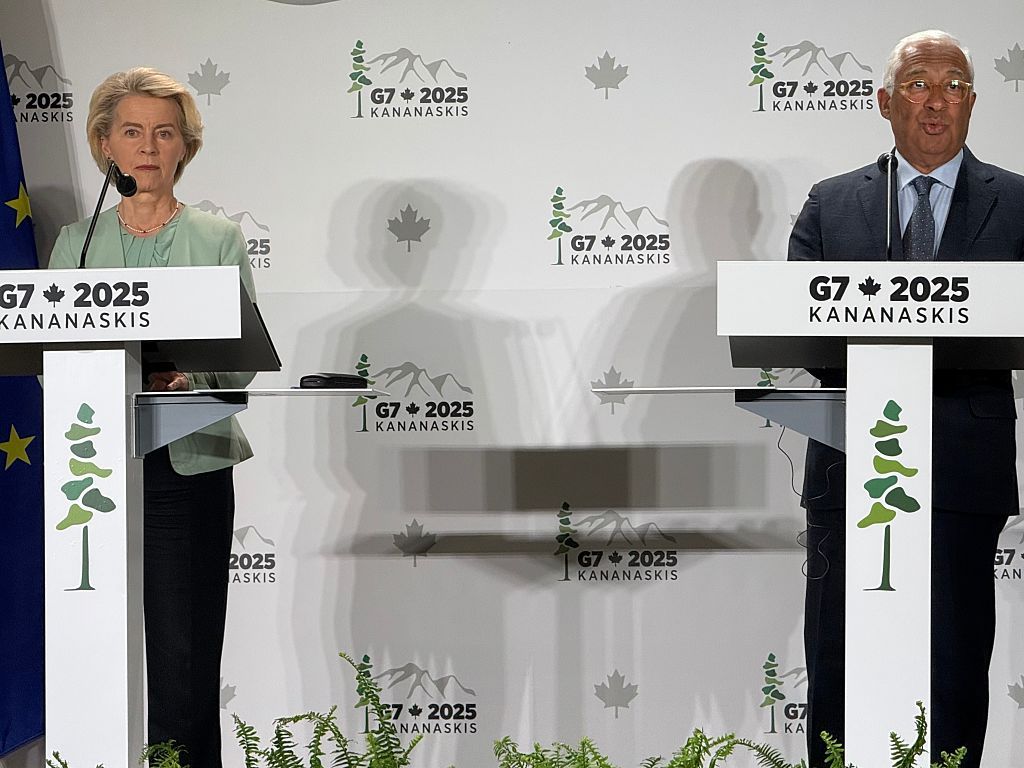
“To achieve peaceful strength, we must put more pressure on Russia to secure a real ceasefire, to bring Russia to the negotiating table, and to end this war,” von der Leyen declared, noting that existing sanctions had reduced Russian oil and gas revenues by nearly 80% since February 2022.
However, the United States reportedly opposes lowering the price cap, creating potential fractures within the G7 alliance. The resistance reflects Trump’s broader reluctance to impose additional economic pressure on Moscow, despite Russia’s continued escalation and obstruction of peace efforts.
Zelensky, attending his fourth G7 summit since the invasion began, proposed even more aggressive measures: slashing the oil price cap to $30 per barrel. “Real peace will come with a ceiling of $30,” he argued. “That’s the level that will really change the mindset in Moscow.”
America’s Uncertain Commitment: The Aid Dilemma
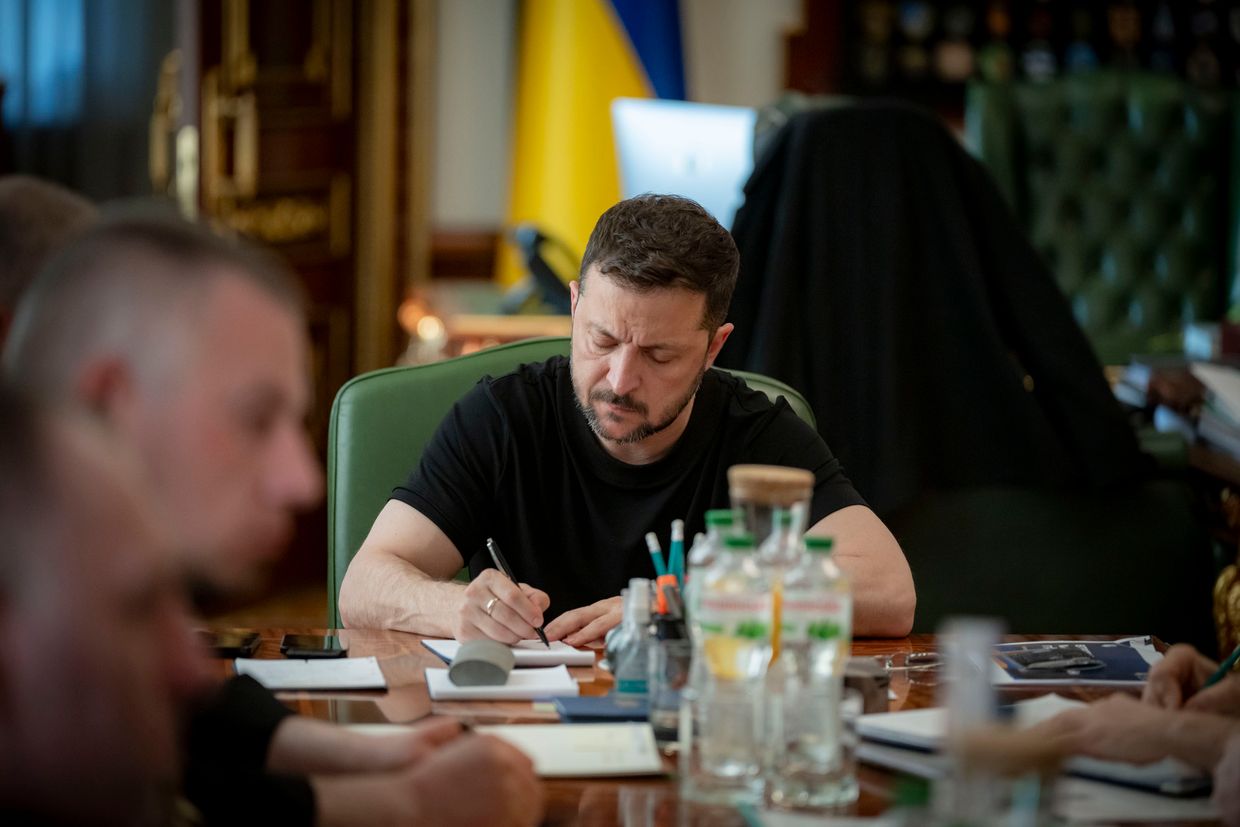
Trump’s arrival in Canada for his crucial June 17 meeting with Zelensky highlighted the uncertain future of American military aid. Defense Secretary Pete Hegseth’s announcement of reduced funding for Ukraine in the 2026 defense budget has created anxiety in Kyiv, particularly as the U.S. has not announced any new military aid packages in nearly five months.

Throughout the full-scale war, Washington has provided nearly $74 billion in military aid, representing roughly 30% of all weapons used by Ukrainian forces. Military analysts noted that while Ukraine has reduced its dependence on American weapons through domestic production and European partnerships, certain capabilities remain irreplaceable.
“The only thing that makes us critically dependent on the U.S. is the Patriot air defense system,” explained military expert Mykhailo Samus, noting that European alternatives are still in early production.
Ukraine has made substantial progress in defense self-reliance, with plans to increase domestic weapons supply from 40% to 50% in 2025 and achieve 100% self-sufficiency in artillery production. However, critical systems like Patriot air defense and advanced intelligence capabilities remain dependent on continued American support.
Recent U.S. actions have heightened Ukrainian concerns, including redirecting 20,000 anti-drone missiles intended for Ukraine to the Middle East and temporarily suspending military shipments and intelligence sharing after heated February discussions between Trump and Zelensky.
Looking Ahead: The Gathering Storm
The coming days will test whether international pressure can translate into meaningful constraints on Russian aggression, or whether Putin’s strategy of diplomatic theater while escalating military action will continue unchallenged. With Zelensky and Trump set to meet on June 17, the stakes could not be higher for Ukraine’s future—and for the broader question of whether aggression will be rewarded or resisted in the 21st century.
The war’s expanding geography, from Kaliningrad to Tel Aviv, from Tatarstan to the G7 summit halls, underscores how this conflict has become truly global in its implications. As Ukrainian agents light fires in Russian substations and Russian missiles target American offices, the world watches to see whether diplomacy can contain a conflagration that grows more dangerous with each passing day.
Meanwhile, in places like Stetskivka, ordinary Ukrainians continue their daily acts of resistance, maintaining their humanity while living under the constant threat of annihilation. Their courage represents the true heart of Ukrainian resistance—not just against military occupation, but against the erasure of hope itself.