
In the Caspian Sea, Ukrainian drones set a Lukoil platform ablaze 1,500 kilometers from Ukraine’s border. In Moscow, Foreign Minister Lavrov systematically dismantled America’s 28-point peace plan, rejecting every provision that didn’t demand Ukrainian capitulation. In Washington, Trump blamed “both sides” while refusing to pressure Russia. The 1,387th day of war—when diplomacy revealed itself as theater while Ukrainian drones rewrote the rules of modern warfare.
The Day’s Reckoning
The flames became visible on satellite imagery around 3:00 a.m. Moscow time—orange tongues licking upward from the Vladimir Filanovsky platform in the Caspian Sea, 1,500 kilometers from Ukraine’s border. Ukrainian drones had just rewritten the geography of war.
While the oil burned, Sergei Lavrov was already awake in Moscow, preparing to systematically dismantle American peace efforts. He would spend the day methodically rejecting seven provisions of the US-proposed framework—the plan Washington had crafted with Russian input, hoping it might end the war. Instead, Lavrov transformed it into a catalog of ultimatums: Ukraine must surrender territories Russia had never captured, accept “security guarantees” designed to destroy NATO, and condition its own sovereignty on permanent neutrality.
The Kremlin wasn’t negotiating. It was advertising the impossibility of compromise.
In Washington, Trump administration officials woke to news of both the Caspian strike and Lavrov’s rejections. Their response would be to blame “both sides” for failing to make peace while carefully avoiding any pressure on Moscow to moderate its demands.
Three capitals. Three simultaneous realities. And between them, the war’s fundamental paradox: Russia demanded capitulation disguised as diplomacy while Ukrainian drones proved that geographic depth—the traditional Russian defense—had become irrelevant. The energy infrastructure funding Moscow’s invasion could burn anywhere from the Baltic to the Caspian, and there was nothing Russian air defense could do to guarantee protection.
This was diplomacy and warfare locked in a death spiral. Each Russian rejection of reasonable terms justified another Ukrainian strike deep inside Russia. Each Ukrainian demonstration of long-range capability hardened Moscow’s conviction that only total victory could secure Russia from a neighbor it could neither defeat nor intimidate into submission.
Day 1,387. The gap between what diplomats said and what militaries did had never been wider.
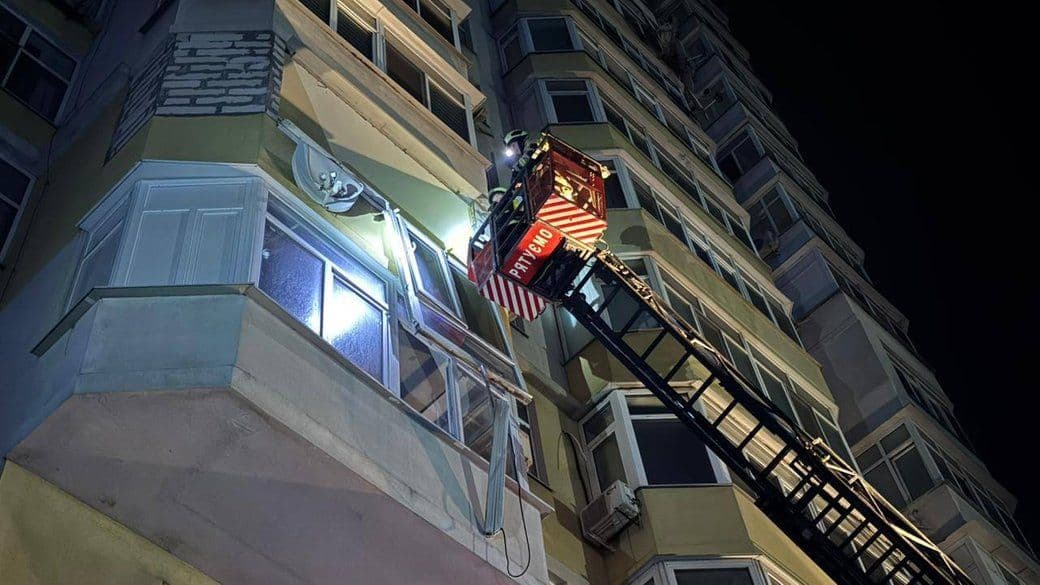
Morning in Odesa: Another residential building gutted by Russian missiles, windows blown out, concrete crumbling, lives shattered. This is what Russia calls “negotiating”—terrorizing civilians while diplomats in Moscow reject peace terms. (Serhiy Lysak / Telegram)
When Russia Says “Peace” But Means “Surrender”
Sergei Lavrov spoke for hours, methodically dismantling every provision of America’s 28-point peace plan. The Russian foreign minister wasn’t negotiating. He was performing—transforming a document US officials had crafted with Kremlin input into a prosecutor’s brief against peace itself.
The territorial provisions died first.
Lavrov rejected freezing Zaporizhzhia and Kherson along current battle lines, invoking Russia’s constitution—amended to claim territories Moscow had illegally annexed but never fully controlled. “The Russian Constitution recognized Crimea and Donetsk, Luhansk, Zaporizhzhia, and Kherson oblasts as integral subjects of the Russian Federation,” he declared, as if constitutional theft legitimized conquest.
The peace plan’s 21st point had proposed recognizing current battle lines as settlement basis—a massive Ukrainian concession abandoning legal claims to occupied territory. Lavrov rejected even this. Russia demanded not just what it held, but what it coveted. Negotiation as armed robbery.
Then Lavrov gutted the security architecture.
He dismissed NATO’s proposed halt to further expansion and resurrected December 2021 ultimatums demanding NATO roll back to 1997 borders. Translation: remove all NATO infrastructure from Eastern Europe. Destroy the alliance by stripping military presence from states that joined after the Russia-NATO Founding Act.
The threat came explicit: any Western “peacekeepers” in Ukraine would become “legitimate military targets.”
Russia would permit Ukraine to exist only as a defenseless buffer state, stripped of alliances, unable to deter future aggression—while simultaneously demanding Moscow receive its own security guarantees from the West it was threatening. Lavrov wasn’t building peace frameworks. He was constructing arguments for why peace remained impossible except through Ukrainian capitulation.
The most sinister rejection targeted Ukrainian sovereignty itself.
Lavrov claimed Russia’s 1990 recognition of Ukraine had been conditional on neutrality—retroactively declaring Ukrainian sovereignty existed only at Moscow’s pleasure. The diplomatic equivalent of an abusive spouse: I let you exist, therefore you exist on my terms, and I can revoke that permission whenever your independence becomes inconvenient.
Even EU standards for minority rights triggered rejection. “Unacceptable,” Lavrov stated. Russia intended to weaponize manufactured grievances about Russian-speakers as permanent leverage for interference—exactly as before the invasion.
The Victory That Wasn’t: Putin’s Siversk Fantasy
Vladimir Putin summoned his generals for theater, not strategy. Lieutenant General Sergei Medvedev stood before cameras declaring the 3rd Combined Arms Army had seized Siversk—a claim designed for Western audiences, not military reality.
Fighting continued throughout the city. Western Siversk remained under Ukrainian control.
The performance fit a pattern. Putin had staged identical meetings in recent weeks featuring inflated reports about Vovchansk, Kupyansk, Pokrovsk, Hulyaipole. Each produced dramatic claims that evidence later contradicted. The cumulative effect was the point—create an impression of unstoppable momentum to convince Western capitals that support merely prolonged inevitable defeat.
Medvedev claimed Russian forces had “flanked Siversk from north and south, cutting ground lines of communication.” Masterful encirclement, he suggested.
Reality was less impressive. Geolocated footage showed Russian forces reaching eastern sections after 41 months from Lysychansk—460 meters per month on average. Ukrainian Lieutenant Colonel Dmytro Zaporozhets rejected victory claims: fighting continued throughout Siversk, with Russian forces “taking advantage of poor weather to infiltrate.”
A Ukrainian brigade described actual tactics: small groups infiltrating during bad weather, raising flags for propaganda footage, then withdrawing or being eliminated. A prominent Russian milblogger inadvertently confirmed the truth: “The presence of a two-man assault team in Siversk’s center doesn’t mean the entire area is under control.”
Then came Medvedev’s most absurd claim: Siversk’s seizure positioned forces to launch operations against Slovyansk.
Pure fantasy. Russian forces would need to complete Lyman’s capture and advance 14 kilometers across the Siverskyi Donets River, or traverse 30 kilometers from Siversk through prepared defenses. They’d been trying to recapture Lyman since October 2022. The push to Siversk took 41 months. At those rates, reaching Slovyansk’s outskirts required another year.
The gap between propaganda and reality revealed deeper problems. Russian forces had made tactically significant gains in only six of roughly 16 distinct areas—accounting for 80 percent of 2025’s territorial gains. Even publicized successes revealed constraints: Pokrovsk, Novopavlivka, and Oleksandrivka had each absorbed over two combined arms armies’ worth of combat power—unsustainable across multiple fronts.
Putin’s meeting was cognitive warfare masquerading as operational planning. The internal contradictions exposed the desperation beneath the performance.
When Ukrainian Drones Reached the Caspian
Orange flames erupted from the Vladimir Filanovsky platform around 3:00 a.m.—1,500 kilometers from Ukraine’s border, in a landlocked sea surrounded by Russia and its allies.
Ukrainian Security Service drones had just announced that nowhere in Russia was safe.
The Caspian Sea sits entirely within Russia, Kazakhstan, Turkmenistan, Iran, and Azerbaijan. The Filanovsky platform occupies the northern Caspian, accessible only by air routes traversing hundreds of kilometers of Russian-controlled territory. Four Ukrainian drones found it anyway, halting production from 20 wells: 129 million tons of oil, 30 billion cubic meters of natural gas. Revenue that funded the invasion, now burning.
The Caspian strike formed part of a coordinated assault across a 2,000-kilometer front—Kyiv’s most ambitious drone campaign of the war.
Russian air defense claimed 287 intercepts overnight. Yet fires burned at five energy facilities. Explosions rocked four military airfields. Moscow’s four airports shut down for 8-10 hours while thousands of travelers slept on terminal floors.
The target list told Ukraine’s strategic story: Samara refinery (third strike since August), Afipsky refinery (sixth attack, production down 20-30 percent), Dorogobuzh Chemical Plant (ammonia and nitrates for defense industry), Akron Fertilizer Plant (ammonium nitrate production halted). Each facility sustained Moscow’s war machine. Kyiv wasn’t terrorizing civilians—Ukrainian forces were systematically degrading the economic infrastructure enabling Russia to continue its invasion.
The psychological damage matched the material impact.
Russian governors suspended airports, cut mobile internet, issued evacuation warnings. The Caspian strike particularly unnerved planners—if Ukrainian drones could reach platforms 1,500 kilometers away in a landlocked sea surrounded by Russia’s partners, what infrastructure remained secure?
Secondary strikes hit four military airfields—Ivano, Ryazan, Voronezh, Olenya. The pattern revealed Ukrainian sophistication: strike energy production funding the war while degrading military infrastructure prosecuting it. Force Russian air defense to choose between protecting cities, energy facilities, or military installations—knowing they lacked resources to defend everything.
Moscow itself faced over 100 Ukrainian drones circling above—potentially the largest hostile airspace violation since World War II. Russia’s capital no longer enjoyed immunity from the war its leadership launched.
Trump’s Tantrum: Blaming Everyone, Pressuring No One
White House Press Secretary Karoline Leavitt announced President Trump was “extremely frustrated with both sides of this war”—performative anger directed equally at victim and aggressor while avoiding any action that might constrain Moscow.
“The president is extremely frustrated with both sides, and he’s sick of meetings just for the sake of meeting,” Leavitt told reporters. “He doesn’t want any more talk. He wants action. He wants this war to come to an end.”
The statement positioned Trump as an exasperated adult demanding squabbling children stop fighting—treating Russian aggression and Ukrainian resistance as morally equivalent irritants rather than invasion and self-defense.
Leavitt claimed administration officials had spent “more than 30 hours in recent weeks” with Russian, Ukrainian, and European counterparts. Yet the fruits remained invisible. The 28-point peace plan Lavrov had dismantled that morning had reportedly emerged from these consultations—a framework so tilted toward Russian demands that even the Kremlin felt comfortable rejecting provisions that didn’t favor Moscow.
The administration’s stance on weekend talks revealed hollow urgency. Leavitt stated the United States would send a representative “only if it sees a meaningful chance for progress.” Translation: America would participate in ending a major European war only if success seemed guaranteed in advance. Diplomacy as beneath presidential dignity unless victory came without effort.
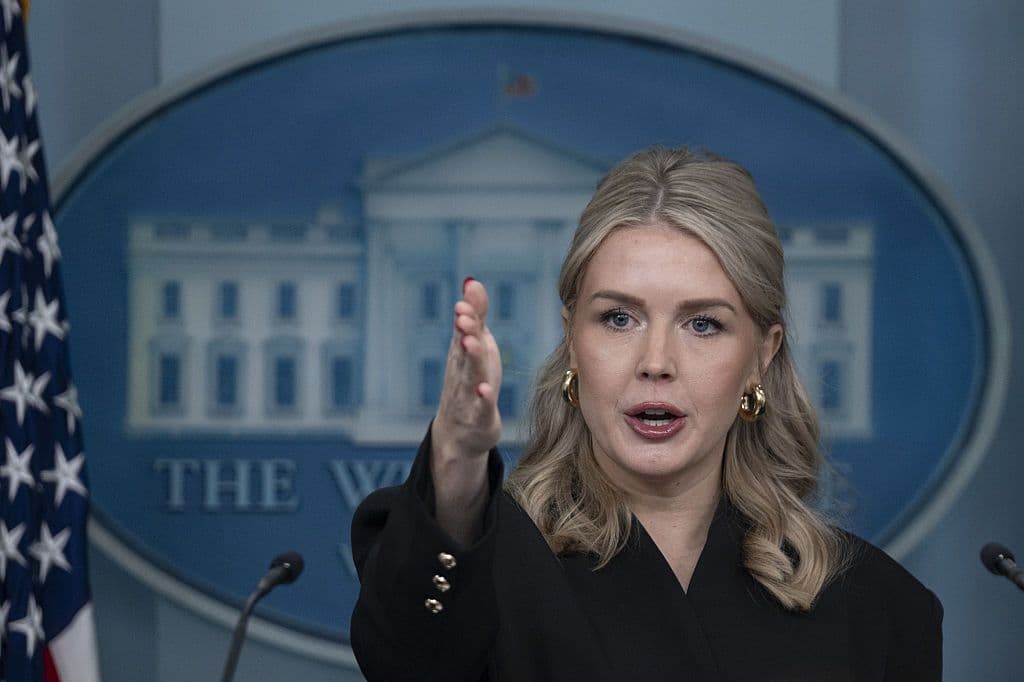
The White House Press Secretary Karoline Leavitt speaks at the press briefing room in Washington DC, announcing Trump’s “frustration with both sides.” She blamed victim and aggressor equally while offering zero pressure on Moscow to stop the invasion. (Photo by Celal Gunes/Anadolu via Getty Images)
The fundamental dishonesty lay in what remained unspoken.
Leavitt’s comments contained zero indication Trump had applied, was applying, or intended to apply any pressure on Russia to moderate demands or cease invasion. The “frustration” targeted both sides for failing to agree—not Moscow for making unreasonable demands that precluded agreement.
European observers had no illusions. German Chancellor Friedrich Merz noted talks would proceed—phrasing suggesting Europeans were moving forward with or without American participation. Merz outlined three priorities: ceasefire backed by “robust guarantees” and settlement protecting European security without undermining NATO. The priorities implicitly rejected the US framework demanding Ukrainian concessions while offering little to deter future Russian aggression.
Trump’s “frustration” amounted to diplomatic theater—public impatience designed to pressure Ukraine toward Russian demands while maintaining plausible deniability about abandoning an ally. Leadership without courage, engagement without commitment, frustration without accountability.
Let the People Decide: Zelensky’s Constitutional Shield
Volodymyr Zelensky responded to mounting American pressure for territorial concessions by shifting responsibility to Ukraine’s citizens: “I believe the people of Ukraine will answer this question. Whether through elections or a referendum, the Ukrainian people must take a position.”
The statement came as the US pressured Kyiv to cede Donbas—a Kremlin war goal explicitly prohibited by Ukraine’s Constitution, which forbids territorial concessions without popular approval. Trump had claimed “82% of Ukrainians are demanding settlement”—contradicted by surveys showing most Ukrainians rejected peace tied to territorial concessions. Zelensky called Trump’s bluff: if Ukrainians wanted territorial compromise, they could vote for it. If not, American pressure to override Ukrainian democracy would be exposed.
The timing wasn’t accidental. German Chancellor Friedrich Merz revealed Kyiv sent a new proposal outlining possible territorial concessions. Zelensky confirmed “rumors that current proposals would force Ukraine to withdraw troops from its own territory—but not occupying Russian troops.” American proposals for a “free economic zone” where Ukrainian forces withdrew while Russian troops remained—what Moscow termed “demilitarized.”
Zelensky identified fatal flaws: “Key issues remain unresolved, including who would control the zone, how monitoring would work, whether Russian troops would pull back equally, and how to prevent infiltration by Russians posing as civilians.” A demilitarized zone where only Ukraine withdrew forces wasn’t compromise—it was unilateral disarmament disguised as peace.
The constitutional dimension added weight. Ukraine’s Constitution requires popular approval for territorial changes. Zelensky legally couldn’t accept land transfers even if he wanted to. If Americans wanted Ukraine to surrender land, they were demanding Ukraine first suspend its constitutional order—hardly the defense of democracy Washington claimed to champion.
Practical challenges remained unaddressed. Fair voting requires safe conditions—impossible when millions lived under occupation, millions fled as refugees, and Russian missiles targeted infrastructure. Any wartime referendum would favor Russia by excluding occupied populations most likely to oppose concessions.
Zelensky’s implicit message: if you want Ukrainians to vote on territorial compromise, first help create conditions where such voting would be legitimate.
Europe’s End-Run Around Orban: The Lviv Accord
EU Enlargement Commissioner Marta Kos announced a ten-point action plan in Lviv representing European determination to advance Ukraine’s accession despite Hungarian obstruction—and insistence that membership remain contingent on genuine reform, not wartime emergency.
The timing carried weight. Ukraine’s largest recent corruption scandal was unfolding—NABU had charged seven people including President Zelensky’s former business partner Timur Mindich with money-laundering involving state-owned Energoatom. The scandal threatened Ukraine’s reform credentials precisely as Kyiv pushed for accelerated EU integration. The Lviv agreement acknowledged concerns while committing both sides to continued institutional transformation.
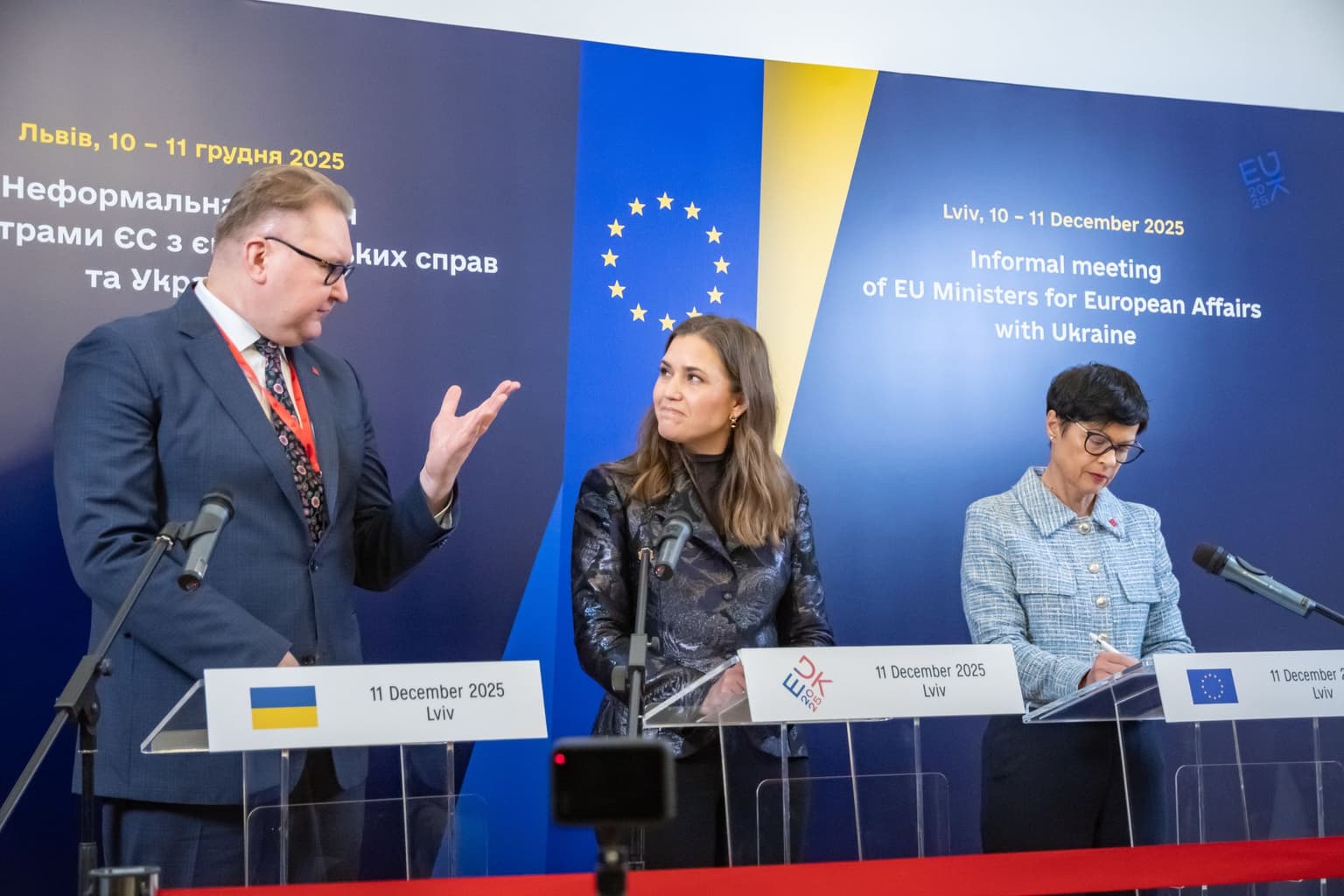
Deputy Prime Minister Taras Kachka, Danish Minister Marie Bjerre, and EU Commissioner Marta Kos coordinate Ukraine’s EU accession—work that continues despite Hungarian obstruction and American indifference. Europe’s commitment, even when Washington wavers. (Olena Znak/Anadolu via Getty Images)
Ukraine committed to “expanding the jurisdiction” of NABU and the Specialized Anti-Corruption Prosecutor’s Office—anti-graft bodies testing Ukrainian elites’ tolerance for accountability. Additional targets included judiciary reform, prosecutor’s offices, and State Bureau of Investigation.
Deputy Prime Minister Taras Kachka acknowledged the challenge but emphasized Ukraine was using the scandal as leverage for deeper institutional change rather than crisis management.
The broader context revealed progress despite obstruction. Viktor Orban’s government had consistently blocked opening the six negotiation clusters required to advance membership. Hungary’s EU Affairs Minister conspicuously skipped the Lviv meeting. Danish Minister Marie Bjerre acknowledged frustration but emphasized “the enlargement process with Ukraine is not at a standstill.”
The strategy reflected European determination to sidestep Hungarian obstruction through technical progress that couldn’t be vetoed. By September, Ukraine had completed bilateral screening—assessing whether Ukrainian legislation aligned with EU requirements. All six clusters would be under Council consideration by year’s end, “meaning they can all be opened once political consensus is reached.”
Commissioner Kos made the strategy explicit: “Reforms are at the center of this process, and nobody can veto Ukraine from doing these reforms.” Orban could block formal cluster openings, but he couldn’t prevent Ukraine from reforming institutions or aligning legislation with EU standards. When Hungarian obstruction eventually ended, Ukraine would be positioned to move immediately toward full membership.
The domestic context added urgency. Orban faced his greatest challenge in upcoming parliamentary elections, with Peter Magyar’s opposition Tisza Party leading in polls. Magyar’s platform rejected Orban’s Russia-friendly policy and supported stronger EU integration—suggesting obstruction might resolve through democratic processes within months.
Europeans were running out the clock on Orban while ensuring Ukraine completed reforms that would survive any Hungarian political transition.
Holding Hulyaipole: The City Russia Can’t Take
Southern Defense Forces spokesperson Vladyslav Voloshyn told Ukrinform that Russia continued “heavy assaults from the north and east, attempting to enter the city but failing.” Then emphatically: “There is no enemy in Hulyaipole, I repeat.”
The city’s strategic significance derived from its position along key logistical routes connecting Dnipropetrovsk Oblast to frontline positions in Zaporizhzhia. Voloshyn identified Russian efforts to “cut off logistical routes from the north”—notably from Pokrovske. Severing these would isolate Hulyaipole’s garrison and threaten Ukrainian positions across the southern front, opening pathways toward Zaporizhzhia city and Orikhiv stronghold.
The tactical picture matched patterns across contested areas: Russian forces employing small assault groups to infiltrate, raising flags for propaganda footage, then being destroyed when located. “We destroyed them there, and all their attempts were unsuccessful,” Voloshyn reported. Russian infiltrations, Ukrainian responses—attritional warfare without resolution.
Russian aviation struck with “more than 25 guided bombs” on December 10 alone—using munitions launched from aircraft beyond Ukrainian air defense range to degrade defensive positions before ground assaults.
Open-source mapping revealed Russian progress east of Hulyaipole. Forces had captured Chervone and Zelenyi Hai over three weeks, positioning themselves in northeastern suburbs.
Military analysts emphasized Hulyaipole’s role as linchpin. If the city fell, Zaporizhzhia and Orikhiv would face increased pressure as Russian forces gained positions threatening multiple defensive axes. This explained sustained pressure despite modest tactical value—Moscow was creating conditions for subsequent operations.
Russian milbloggers claimed “fire control” over Hulyaipole and the T-0814 highway—information warfare rather than reality. If Russian forces genuinely controlled key supply routes, Ukrainian defenders would face imminent isolation. Instead, Voloshyn’s confident assertion that Hulyaipole remained firmly under control suggested Russian claims significantly overstated their position.
Substantial Russian combat power concentrated in the sector—57th Motorized Rifle Brigade, 11th Air Force components, 328th Airborne drone operators, 4th Military Base forces. Yet despite this concentration, Russian forces achieved only incremental advances while failing to enter Hulyaipole itself.
Force concentration alone remained insufficient to overcome prepared Ukrainian defenses.
Monetary Policy in Limbo: When Good News Isn’t Enough
The National Bank of Ukraine maintained its benchmark interest rate at 15.5 percent—the sixth consecutive hold since March. Inflation was declining toward pre-war targets, yet uncertainty about future international financing prevented the monetary easing that would normally accompany such progress.
The economic data supported rate cuts. Inflation had slowed to 9.3 percent in November, down from 15.9 percent in May and approaching the NBU’s 5 percent target. Under normal circumstances, such trends would justify monetary easing.
But Ukrainian monetary policy operated under conditions where conventional logic barely applied.
Ukraine needed 135 billion euros in combined financial and military support during 2026-2027. Brussels was attempting to secure a “reparations loan” backed by frozen Russian assets covering two-thirds of requirements. But Belgian Premier Bart de Wever opposed the plan, whose fate would be decided at a December 18-19 summit. Without additional assistance, Ukraine would exhaust financial reserves by mid-2026.
The NBU explicitly acknowledged this calculus. Holding rates “is essential to keep hryvnia assets attractive and the foreign exchange market stable.” Translation: we would normally cut rates given current inflation, but we cannot risk undermining confidence or triggering capital flight while international support remains uncertain.
The foreign exchange dimension was crucial. The NBU’s reserves stood at $54.7 billion—a record high. But those reserves would deplete rapidly if donors failed to deliver. Higher rates made hryvnia-denominated assets more attractive, reducing pressure on foreign exchange markets and preserving the reserve buffer sustaining Ukraine’s ability to import essential goods.
Solid macroeconomic performance—declining inflation, stable exchange rates, record reserves—failed to enable conventional policy responses. An ICU survey revealed the disconnect: 75 percent expected the bank to hold rates steady, yet over half said they would cut rates if they controlled policy.
Monetary policy trapped in limbo—unable to ease despite achieving objectives because achievement remained vulnerable to external funding decisions entirely outside central bankers’ control.
What Day 1,387 Revealed
Two wars happened simultaneously.
In one war, conducted through press conferences, Russia positioned itself as reasonable while Ukraine refused reality. In the actual war, Russia demanded capitulation disguised as negotiation while Ukrainian forces proved their capacity to strike targets from the Baltic to the Caspian.
Sergei Lavrov’s systematic rejection of the 28-point peace plan demonstrated that Russia viewed diplomacy purely as theater—an opportunity to advertise impossible demands. Putin’s propaganda session claiming Siversk’s capture revealed similar disconnection—officials making grandiose claims while forces that spent 41 months advancing 19 kilometers faced another year reaching their next objective.
The Ukrainian drone strike on the Filanovsky platform provided the evening’s most eloquent rebuttal. While Lavrov demanded submission and Putin claimed unstoppable momentum, Ukrainian forces demonstrated that Russian energy infrastructure remained vulnerable across a 2,000-kilometer front. Russia could not bomb Ukraine into submission while protecting its own infrastructure.
The day revealed deepening Western fractures. Trump’s “frustration with both sides” reflected American unwillingness to distinguish between aggressor and victim. European determination to advance Ukraine’s EU accession despite Hungarian obstruction showed allies could work around American indifference.
The National Bank’s decision to hold interest rates despite favorable inflation captured the day’s most important truth: Ukrainian success remained contingent on international support that looked increasingly uncertain.
The question facing Ukraine: would its demonstrated resilience maintain allied support long enough for Russian society to conclude continuing the war cost more than ending it could gain? Ukrainian drones burning platforms 1,500 kilometers away suggested Kyiv possessed tools to make that cost calculable. But Russia’s systematic rejection of reasonable terms, combined with American pressure for concessions, raised the opposite possibility: Russia would accept any cost while waiting for Western fatigue.
The flames at Filanovsky burned through the night—visible evidence Ukraine retained capacity to punish Russian aggression.
But fire alone had never won wars.
Day 1,387 provided zero evidence Russia had chosen peace or that America was prepared to make that choice mandatory.