
Ukraine’s 3,000-km Flamingo missile hits the Votkinsk ICBM factory deep inside Russia while Zelensky privately tells advisers negotiations have failed and the war may last until 2029.
The Day’s Reckoning
Smoke rose over Votkinsk before dawn.
More than 1,200 kilometers from Ukraine’s border, inside Russia’s Udmurt Republic, the Votkinsk Machine Building Plant — manufacturer of Iskander-M ballistic missiles and Yars intercontinental nuclear systems — took a direct hit. Ukraine’s FP-5 Flamingo cruise missile, with a reported 3,000-kilometer range, flew low across Russian territory and struck Workshop 22. Video showed black columns climbing into a winter sky.
For three years, Russian missiles have crossed that distance in reverse.
Now Ukraine crossed it back.
While flames burned at one of Russia’s most strategic defense factories, Ukrainian units on the southern front pushed forward. President Volodymyr Zelensky announced 300 square kilometers liberated — gains tied, Ukrainian officials suggest, to Russia’s disrupted Starlink workaround. The front line, mostly static for months, shifted in the south.
Publicly, Zelensky spoke of endurance. Privately, according to Wall Street Journal reporting from inside the Presidential Office, he told advisers negotiations had effectively collapsed. Plan for three more years of war.
In Moscow, Vladimir Putin signed legislation granting the FSB power to disconnect any Russian citizen from the internet without explanation. Milbloggers interpreted it as groundwork for a Telegram clampdown. At the same time, Hungary and Slovakia threatened to halt emergency electricity exports to Ukraine over oil transit disputes, even as Kyiv sanctioned 225 captains linked to Russia’s shadow oil fleet.
Missiles arced deep into Russia. Territory changed hands in the south. Political fault lines widened across Europe.
Day 1,458 did not move the war toward resolution.
It widened it.
The Night Votkinsk Burned: Ukraine Strikes Russia’s Nuclear Missile Factory
Before dawn, smoke climbed over Votkinsk.
More than 1,230 kilometers from Ukraine’s border, inside Russia’s Udmurt Republic, the Votkinsk Machine Building Plant — manufacturer of Iskander-M ballistic missiles, Yars intercontinental nuclear systems, Bulava submarine missiles, Kinzhal aeroballistic weapons, and reportedly the new Oreshnik — took a direct hit.
Ukraine’s General Staff confirmed the strike was carried out by domestically produced FP-5 Flamingo cruise missiles. Reported range: up to 3,000 kilometers. Warhead: approximately 1,150 kilograms. Geolocated footage showed smoke rising from the compound. Udmurtia’s governor acknowledged a strike on an unspecified facility and confirmed casualties. Independent outlet Astra reported at least eleven injured and damage to Workshops 22 and 36. Residents filmed shattered windows and black columns drifting over apartment blocks.
The timing was deliberate.
Throughout the full-scale war, Votkinsk expanded — thousands of new workers, imported machinery from China, Taiwan, and Belarus routed through intermediaries. A Kyiv Independent investigation in June 2025 documented that growth. In 2024, Russia produced nearly three times more Iskanders than in 2023. One of those missiles struck Sumy on Palm Sunday, killing 34 people, including two children.
Ukraine had reached Udmurtia before — Izhevsk in July 2025, sabotage of an electrical substation in January. But this time the production hub itself burned.
The same overnight wave struck the Neftegorsk gas processing plant in Samara Oblast, roughly 850 kilometers from the border, igniting fires visible on NASA FIRMS satellite sensors. Samara’s governor confirmed hits on two industrial sites. Smoke also rose over the Elektrovypriamitel-ZSP plant in Saransk after a reported explosion, though attribution remained unclear.
Minutes before confirmation, Firepoint co-owner Denys Shtilierman posted a launch video on X: “No context. Context – later.”
When the General Staff confirmed the strike, he replied:
“And here is the context.”
Behind Closed Doors: Zelensky Tells His Team to Prepare for Three More Years of War
The microphones were still warm when the tone changed.
To AFP, Volodymyr Zelensky was resolute. “You can’t say that we’re losing the war. Honestly, we’re definitely not losing it, definitely,” he said. “The question is whether we will win. That is the question — but it’s a very costly question.” He announced 300 square kilometers liberated in the south. He rejected pressure from Washington and Moscow to abandon Donbas. “Both the
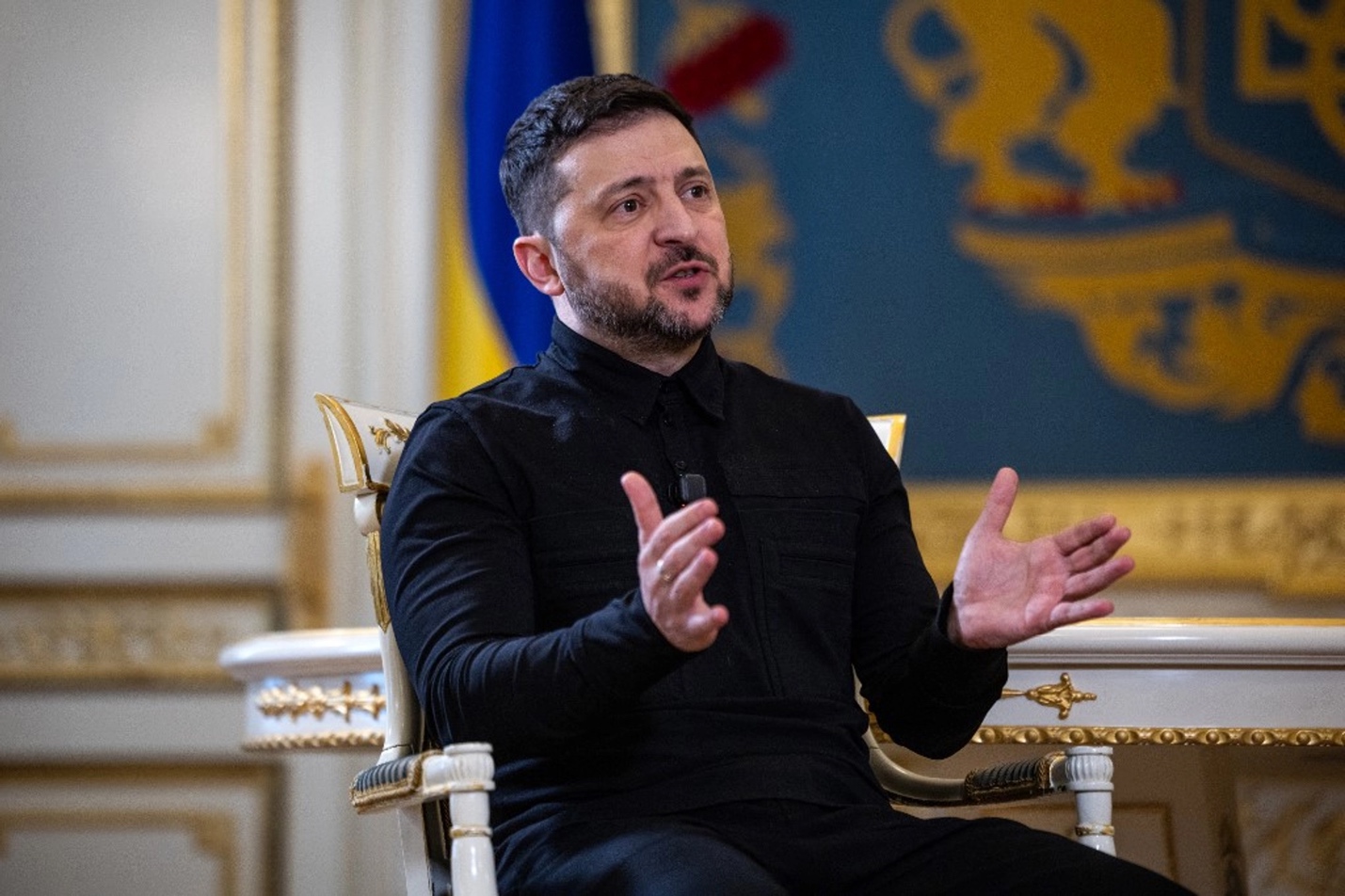
Americans and the Russians say that if you want the war to end tomorrow, get out of Donbas,” he said — and made clear he would not.
On elections — his five-year term expired in May 2024 — he was blunt: “Let’s be honest — the Russians just want to replace me. No one wants elections during a war.”
But the private meeting was different.
According to Wall Street Journal correspondent Bojan Pancevski, citing three sources inside Zelensky’s inner circle, the president gathered his closest advisers before departing for the Munich Security Conference and delivered a verdict: negotiations had basically failed. Plan for another three years of war.
“He said that explicitly,” Pancevski reported. Those present were “totally shocked.” They had been preparing for elections, possibly a referendum, perhaps a negotiated settlement by late spring or summer. Zelensky dismissed that trajectory as “all nonsense.”
The inner circle is divided. A camp associated with intelligence chief Kyrylo Budanov is described as more open to exploring conditional deals. Figures linked to former chief of staff Andriy Yermak — formally dismissed but still influential — are reportedly more skeptical of the diplomatic track. Several European officials privately welcomed Yermak’s departure, calling him a difficult interlocutor.
Zelensky’s bottom line: territorial compromise only with legally binding security guarantees approved by the US Congress. Pancevski described American assurances so far as largely verbal. Russia has signaled it would reject any deal allowing Western troops in Ukraine.
The Geneva talks ended without progress. “We haven’t found constructive solutions on territorial issues,” Zelensky said. Moscow demands full withdrawal from Donbas. Kyiv insists on freezing the current line.
Public confidence. Private recalculation.
Three more years may now be the working assumption.
The Line Moves South: Ukraine Pushes Back 300 Square Kilometers
The map shifted.
Not dramatically. Not with a breakthrough arrow punching through defensive lines. But it shifted.
President Volodymyr Zelensky announced that Ukrainian forces had liberated 300 square kilometers in the south. He did not specify where or over what timeframe. Open-source analysts and ISW traced part of the movement to the Dnipropetrovsk–Zaporizhzhia oblast administrative border — the most fluid stretch of the front since autumn, when Russian units broke through understrength Ukrainian brigades.
Since January 1, 2026, at least 168.9 square kilometers have been confirmed retaken in that zone.
Geolocated footage showed Ukrainian advances in eastern Novopavlivka, central Ternove southeast of Oleksandrivka, and northwestern Verbove. Even a Kremlin-affiliated milblogger published a map acknowledging Ukrainian movement east of Novopavlivka — an unusual concession. Ukrainian forces likely also liberated Orestopil, Vovche, Novooleksandrivka, and Hai in recent days.
Zelensky linked the gains to the disruption of Russian Starlink access. The effect has been visible. In the Kostyantynivka–Druzhkivka sector, a Ukrainian battalion commander reported Russian troops attempting to use SIM cards harvested from intercepted Ukrainian drones simply to regain connectivity after the Starlink block.
The advances, however, are not sweeping penetrations of fortified lines. Ukrainian analysts describe them as extended clearing operations inside a contested grey zone — grinding work, trench by trench.
Ukraine has fought largely in strategic defense for much of the past year. In 2025 alone, Russian forces occupied 4,336 square kilometers of Ukrainian territory.
The math remains brutal.
But for now, in the south, it runs in Ukraine’s direction.
Fire Across the Occupied South: Ships Hit, Bombers Crippled, a Tornado Silenced
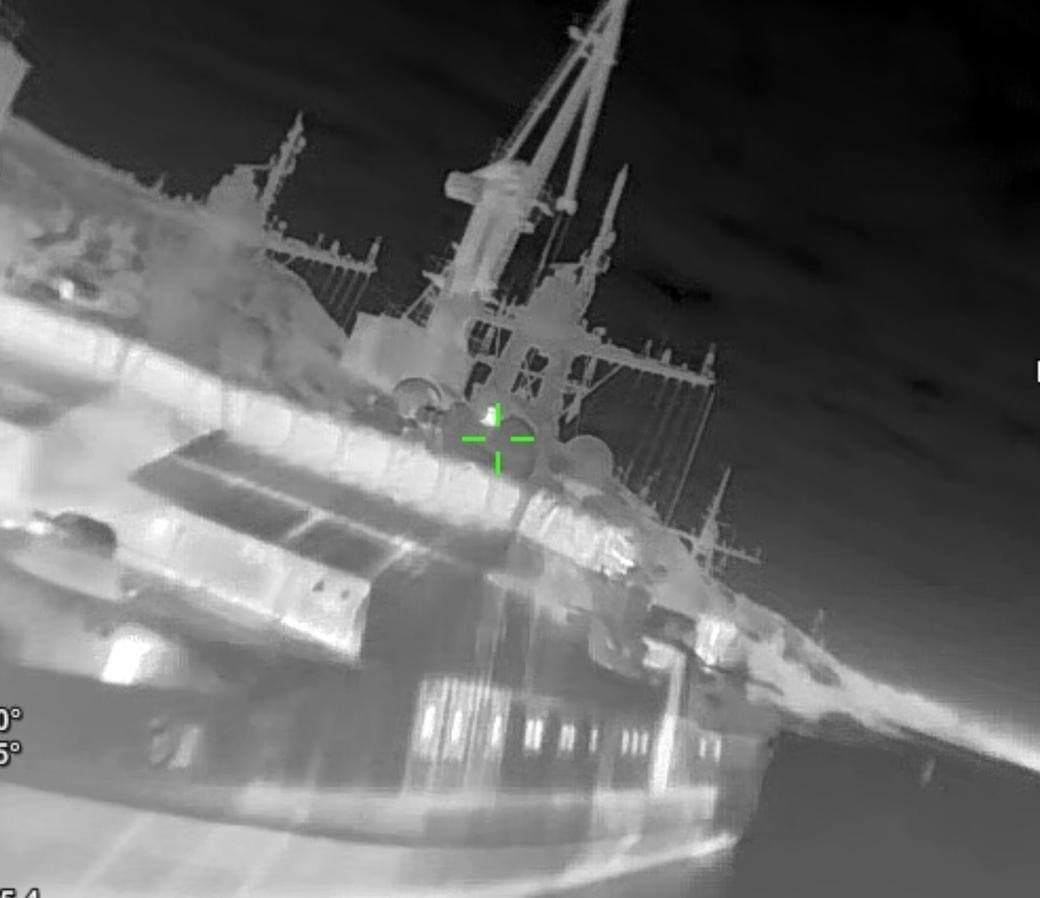
The strikes did not stop at Russia’s border.
In occupied Crimea near Sevastopol, two Project 22460 Okhotnik border patrol vessels were hit — coast guard ships built to track surface and airborne threats. Ukraine had targeted the same class with sea drones in December. This time, the General Staff did not specify the method.
Farther north, at the Yevpatoria Aviation Repair Plant, two Be-12 Chayka amphibious anti-submarine aircraft were struck. The Soviet-designed Chayka is no museum relic. Equipped with submarine-hunting sensors and active over the Black Sea, it remains a working asset. Ukraine first hit Be-12 aircraft in September 2025. Now the airframes took fire again.
In Zaporizhzhia Oblast, Ukrainian forces destroyed a Tornado-S multiple launch rocket system — Russia’s high-precision, 120-kilometer-range counterpart to HIMARS. “Tornados are a nightmare for Kharkiv, Zaporizhzhia, Sumy, Kherson, Nikopol, and other peaceful cities of Ukraine,” said Robert “Madyar” Brovdi, commander of Ukraine’s Unmanned Systems Forces.
The overnight wave continued across occupied Donetsk Oblast. Ukrainian forces struck a materiel and technical depot in Polohy, a fuel and lubricants warehouse in Donetsk City, a production and maintenance workshop near Nova Karakuba, and a drone operators’ concentration point belonging to Russia’s 76th Airborne Division in Selydove.
ISW has noted a sharp rise in these mid-range Ukrainian strikes since December 2025 — a battlefield air interdiction campaign designed to mirror Russia’s own BAI operations that enabled advances in fall 2025.
Warehouses, fuel depots, aircraft, rocket systems.
Each strike reduces range, slows logistics, narrows options.
The air war now runs both directions.
Winter Under Fire: 120 Drones, One Iskander, and a City in the Dark
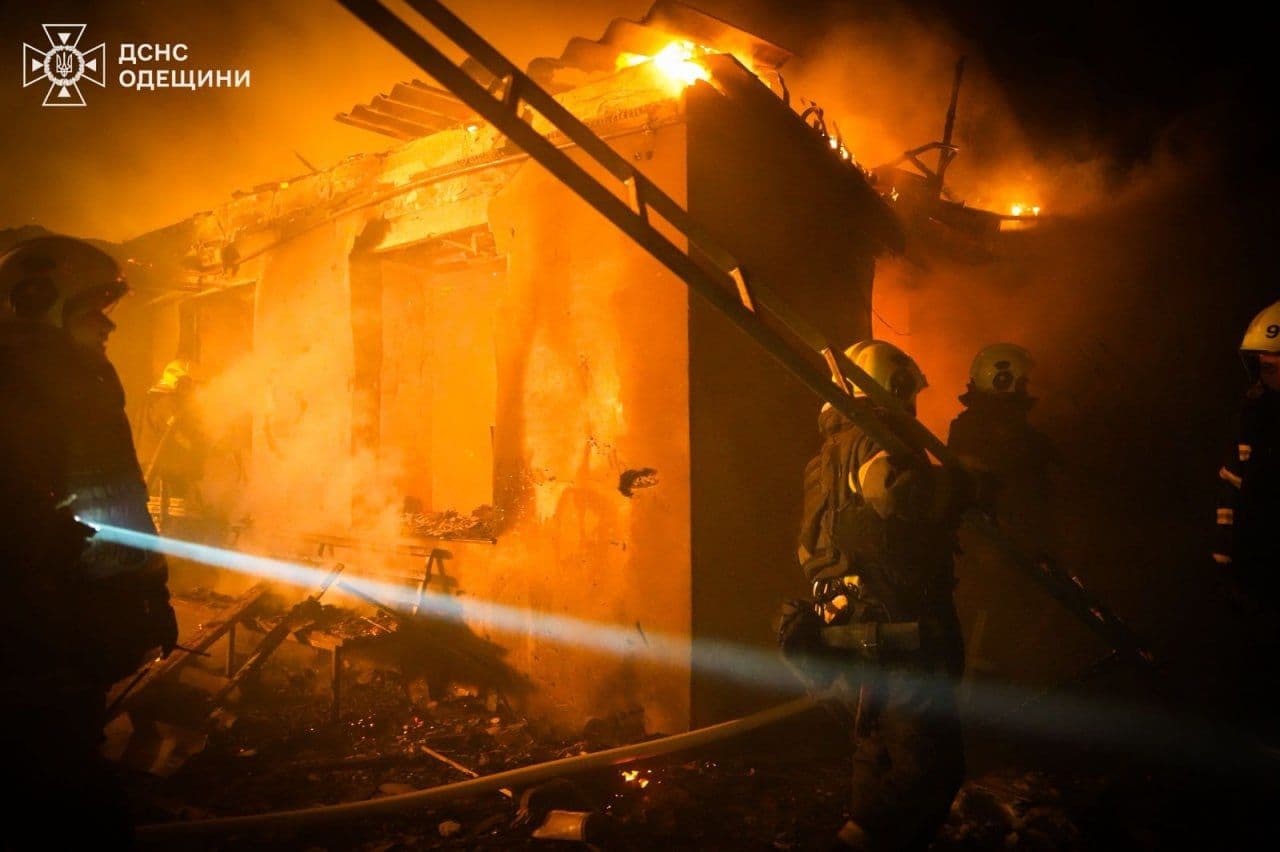
Emergency services respond to an attack in Odesa Oblast on Feb. 21, 2025. (Ukraine’s Emergency Services/Telegram)
The air raid sirens began again.
Overnight, Russian forces launched one Iskander-M ballistic missile from Voronezh Oblast and 120 drones — Shahed, Gerbera, Italmas, and others — from multiple directions: Bryansk, Kursk, and Oryol; Shatalovo in Smolensk Oblast; Primorsko-Akhtarsk in Krasnodar Krai; and occupied Hvardiiske in Crimea.
Ukrainian air defenses shot down 108.
The rest found targets.
Odesa absorbed the heaviest blows. Drones struck residential buildings, a four-story apartment block, the second floor of a school, an energy facility, and a DTEK substation. The company called the damage “significant” and warned repairs would take “a long time.” More than 16,000 residents relied on emergency warming and charging points as temperatures held firm in winter’s grip.
In Zaporizhzhia, seven people were injured when residential infrastructure was hit overnight. In Sumy, two children and an elderly woman were wounded; two buildings were destroyed. In Kherson, a drone targeted a civilian minibus, injuring at least three people, including the 71-year-old driver.
At least fifteen people were injured nationwide.
Fragments fell at eight additional sites. Eleven locations sustained direct hits.
The Ukrainian Center for Countering Disinformation warned that Russia may be preparing an even more intensified infrastructure strike campaign.
Winter is not an accident in this strategy.
Heat, light, and water remain targets.
And the nights are still long.
Moscow’s Kill Switch: Putin Signs Law to Silence Russia’s Internet
With one signature, the switch moved closer to off.
Vladimir Putin approved a law granting Russia’s Federal Security Service authority to disconnect any citizen from mobile or home internet — no court order, no explanation required. Telecommunications providers are explicitly shielded from legal responsibility. The legislation moved fast: introduced in January, passed by the Duma on February 17, signed on February 20.
The scope is sweeping. The FSB can now impose communications blackouts nationwide or regionally under conditions defined only by “regulatory legal acts of the President.” An earlier draft limited such powers to “emerging security threats.” That language was removed before the second reading. The authority extends into occupied Ukrainian territory under Moscow’s control.
The immediate target, Russia’s own milbloggers say, is Telegram.
Authorities have throttled the platform while building justification. The FSB told state news agency TASS that Ukrainian forces have harvested Telegram data “for military purposes,” allegedly endangering Russian soldiers in the past three months. The Ministry of Defense and propagandist Vladimir Solovyov amplified footage of servicemembers claiming they use only an encrypted “military messenger.” State media has promoted the Kremlin-controlled app Max as the alternative.
But skepticism runs deep.
One milblogger noted Russian forces possess military messaging systems only “locally,” and that Telegram outages are already degrading command and control. Another argued the block is less about security than control — strangling a platform the ruling class cannot fully dominate. A September 2025 “white list” of approved sites — state portals, Ozon, Wildberries, Yandex, VKontakte, Odnoklassniki, and Max — remains in place for blackout periods, though outages often cripple even those services. Authorities also attempted to fully block WhatsApp earlier this month.
The architecture is now formal.
In a future mobilization, the lights could go out — digitally — across an entire country.
Power as Leverage: Hungary and Slovakia Threaten to Cut Ukraine’s Lifeline
As Russian drones struck substations, pressure came from inside the European Union.
Slovak Prime Minister Robert Fico warned that unless oil transit through the Druzhba pipeline is restored by Monday, he will order Slovak companies to halt emergency electricity exports to Ukraine. “In January 2026 alone,” Fico wrote on X, “these emergency supplies, needed to stabilize the Ukrainian energy grid, were required twice as much as during the entire year of 2025.”
Hungarian Prime Minister Viktor Orban reinforced the message: “If we stop that, bad things could happen.”
Both leaders blamed Kyiv for stalled repairs after Russian strikes damaged Druzhba infrastructure in late January. The pipeline — one of the world’s largest, capable of transporting roughly two million barrels per day — remains a critical artery. Hungary and Slovakia are the last EU states still dependent on Russian crude.
Kyiv answered sharply. Ukraine’s Foreign Ministry called the threats “provocative” and “irresponsible,” accusing Budapest and Bratislava of “playing into the hands of the aggressor.” It warned that ultimatums “should be sent to the Kremlin, and certainly not to Kyiv,” and signaled it may trigger the Early Warning Mechanism under the EU-Ukraine Association Agreement. The Energy Ministry declined further comment.
The numbers clarify the risk. Hungary provides roughly 45 percent of Ukraine’s electricity imports; Slovakia about 17 percent. Earlier this week, both countries halted diesel exports to Ukraine.
A Polish energy expert cautioned that cutting emergency electricity unilaterally would violate European energy market rules, making the move legally and diplomatically costly for Slovakia. Croatia has already refused requests to move Russian oil through the Adria pipeline, declining to transport Russian crude at all. Ukraine has proposed alternative non-Russian supply routes.
The deadline is Monday.
Energy, in wartime, is never just about oil or electrons.
It is leverage.
Names on the Hull: Ukraine Sanctions 225 Shadow Fleet Captains
The list did not target ships.
It targeted the men steering them.
President Volodymyr Zelensky announced sanctions against 225 captains involved in transporting Russian oil — a direct strike at the human backbone of Moscow’s shadow fleet. “We will continue to consistently impose sanctions and make them global against everyone who helps Russia earn money for war,” he said.
The fleet itself is familiar: aging tankers, opaque ownership structures, flags of convenience, paperwork designed to blur origin and destination. It is Russia’s primary mechanism for evading Western oil sanctions. Until now, the system operated in deliberate obscurity.
This time, the obscurity narrowed to names and licenses.
Zelensky urged the European Union to prohibit maritime services for ships carrying Russian crude, arguing the move could pressure the Kremlin to shift “from war to diplomacy — to real diplomacy.” He noted that Ukrainian sanction proposals often become templates for partner nations’ packages.
The timing was deliberate. The European Commission is preparing its 20th sanctions package, potentially including a full ban on maritime services for Russian crude — a decision that could be finalized by February 24, the fourth anniversary of the full-scale invasion.
France, Germany, and Italy have already acted against sanctioned Russian-linked vessels in their waters.
The shadow fleet moves oil.
Oil moves money.
Money moves war.
By sanctioning captains directly, Kyiv is signaling that circumvention has a face — and that face now carries consequences.
North of the Border: Hackers Expose Belarus as Russia’s Drone Launchpad
For six months, they watched the map glow.
Pro-Ukrainian hackers say they infiltrated Russian military drone monitoring systems and traced the architecture of the northern strike campaign in real time. What they describe is not improvisation, but design.
Russian forces have been using Belarusian civilian infrastructure — cellular towers and related installations — to chart routes and stabilize signals for drone strikes into northern and western Ukraine. Energy facilities. Railway lines. Supply corridors.
The hackers say the drone incursions into NATO airspace over Poland on September 9–10, 2025, were not navigational errors.
They were a test.
A deliberate probe of Belarusian civilian networks to rehearse logistics strikes aimed at severing Western military aid flowing through Ukraine and Poland.
ISW assesses these actions as part of Russia’s “Phase Zero” campaign — a strategy to destabilize Europe and fracture NATO cohesion in preparation for potential future conflict with the Alliance. In ISW’s standing assessment, Belarus functions as a de facto annexed territory and a co-belligerent.
The northern axis is thickening.
Iran’s Air Force Commander recently visited Minsk to deepen military cooperation. Belarusian forces are now receiving Iranian Shahed drones — the same type striking Ukrainian cities.
Each Iranian trainer arriving in Belarus.
Each Shahed shipment unloaded near Minsk.
Each added signal node on the northern grid.
For Ukrainian planners, the threat is no longer confined to the east and south.
The launchpad extends north.
And the map keeps lighting up.
Grinding Without Breakthrough: Russia Pushes, Ukraine Bends, the Line Holds
The front did not break.
It strained.
Across dozens of contact points, Russian forces pressed forward without achieving the rupture Moscow’s operational plans require.
In Kharkiv Oblast, attacks near Kozacha Lopan, Vovchansk, and northeast of Velykyi Burluk yielded no advance. In the Kupyansk direction, the momentum tilted slightly the other way: geolocated footage confirmed Ukrainian gains in eastern Kurylivka and marginal progress in central Kupyansk even as Russian assaults continued. A milblogger tied to the Russian Western Grouping conceded “minimal advances,” describing units pinned under constant Ukrainian fire, with infiltration attempts near Radkivka and Kindrashivka stalled. In the Borova sector, Russia’s Ministry of Defense claimed the seizure of Karpivka southeast of Borova — unconfirmed as of this reporting period.
Donetsk remained the main effort.
Russian forces attacked along the Slovyansk, Kostyantynivka-Druzhkivka, Dobropillya, and Pokrovsk axes. Near Pokrovsk, a Ukrainian brigade reported small Russian groups using motorcycles and buggies to slip deep into defensive belts, attempting to erect antennas and signal amplifiers in central Myrnohrad to strengthen drone operations. In Kostyantynivka-Druzhkivka, a Ukrainian battalion commander said Russian units deployed hexacopter heavy-bomber drones — a new tactic Ukrainian operators are working to neutralize. Ukrainian forces counterattacked near Kotlyne, Drobysheve, Novoselivka, Korovii Yar, and Vozdvyzhivka.
In Sumy Oblast, attacks toward Myropillya and Nova Sich made no gains. A Russian Northern Grouping-affiliated milblogger claimed elements of the 80th Separate Arctic Motorized Rifle Brigade were redeploying from Kherson, and alleged officers were extorting soldiers for rear-area assignments — an accusation Moscow would not confirm.
Limited assaults continued near the Antonivskyi Bridge and across the Hulyaipole and western Zaporizhzhia sectors.
Pressure everywhere.
Breakthrough nowhere.
Two More Home: The Long Road Back from Occupation
In a war measured in kilometers and missiles, sometimes the number is two.
Ukraine’s Kherson Regional Military Administration announced the return of two children from Russian-occupied territory, bringing the regional total to 31 freed this year.
One of them is 17. Russian soldiers had broken into her home, searched her devices, and pointed weapons at her mother. They warned the girl would be sent to a boarding school and her mother to “the basement.”
Now she is home.
“Fortunately, now the children and their families are safe and are receiving the necessary assistance in the Hope and Recovery centers,” said regional head Oleksandr Prokudin.
The relief is real. The scale of what remains is overwhelming.
Ukraine’s “Children of War” database documents at least 20,000 children abducted from occupied territories and taken to Russia since February 2022. Approximately 1.6 million children remain under Russian occupation. Ombudsman Dmytro Lubinets estimates as many as 150,000 abductions; Presidential Commissioner for Children’s Rights Daria Herasymchuk places the range between 200,000 and 300,000. Some have been forcibly sent to North Korea.
Only 2,003 children have been returned.
At least 684 have been killed.
2,369 have been wounded.
In 2023, the International Criminal Court issued arrest warrants for Vladimir Putin and Russia’s children’s rights commissioner Maria Lvova-Belova over the systematic deportations.
The warrants exist.
Most of the children are still waiting.
What February 21st Revealed
A cruise missile arcing northeast over a thousand kilometers of Russian terrain. Smoke rising from the factory that builds the weapons used to kill Ukrainian children. A president telling his inner circle, privately, that three more years of this nightmare may lie ahead. A law signed in Moscow that can silence any Russian citizen’s internet connection on command.
The day laid out its contradictions without resolving them. Ukraine struck deeper into Russia than it has before, while Zelensky confided that the diplomatic path has closed. The southern front showed genuine Ukrainian advances while the broader strategic picture remained one of grinding, costly defense. Hungary and Slovakia threatened to cut the electricity keeping Ukrainian cities warm while Russia continued destroying the infrastructure that generates that warmth. Pancevski described US sanctions as genuinely powerful against Russia’s energy sector — and yet those same sanctions have not yet brought Moscow to the table.
The Flamingo missile proved Ukraine can reach Votkinsk. Whether Ukraine can sustain that reach across three more years is the question Zelensky is no longer willing to answer optimistically — at least not in private.
Day 1,458. The smoke over Udmurtia. The children coming home, two at a time. The front holding, for now. The questions multiplying faster than the answers.
The Day’s Meaning
A missile crossed 1,200 kilometers of Russian airspace and struck a factory that builds nuclear-capable weapons.
A president told his closest advisers to prepare for three more years of war.
A law in Moscow formalized the power to silence an entire nation’s internet.
February 21 did not produce a breakthrough. It exposed trajectory.
Ukraine demonstrated reach. The Flamingo strike on Votkinsk signaled that the war is no longer confined to border regions or oil depots. Critical nodes of Russia’s strategic arsenal are now vulnerable. That changes calculations inside Moscow — even if it does not change policy.
At the same time, Zelensky’s private warning marked a psychological pivot. Publicly, Kyiv speaks of resilience and incremental gains in the south. Privately, the working assumption is endurance, not settlement. The Geneva track stalled. Security guarantees remain verbal. The air war is intensifying faster than diplomacy.
Europe’s fractures were visible. Hungary and Slovakia leveraged electricity exports while Russia weaponized energy destruction. Sanctions tighten around the shadow fleet, yet oil still flows. Washington’s tools remain potent, but not decisive.
The front line held. It did not collapse. It did not surge.
It absorbed.
The pattern emerging is not escalation alone, but widening: deeper strikes, broader pressure, longer timelines.
Ukraine can reach Votkinsk.
Russia can still strike Odesa.
Children return home — two at a time — while tens of thousands remain displaced.
Sustainability now matters more than symbolism. Industrial capacity. Air defense stocks. Political cohesion. Public endurance.
Day 1,458 did not answer whether Ukraine will win.
It clarified that neither side is preparing to stop.
Prayer For Ukraine
1. For Strength in a Long War
Lord, as leaders prepare for years more of conflict and soldiers hold strained front lines, grant Ukraine endurance that does not collapse under time. Strengthen weary commanders, steady anxious families, and guard the resolve of a nation facing a marathon, not a sprint.
2. For Protection from the Air War
Shield cities under drones and missiles. Protect Odesa, Sumy, Kherson, Zaporizhzhia, and every village whose nights are broken by sirens. Guard the workers restoring power, the elderly waiting in the cold, and the children who should never measure life by explosions.
3. For Children Still Taken
We thank You for the two children who returned home and for the 31 freed this year from Kherson Oblast. Bring home the thousands still held in occupied territories or taken into Russia. Protect them from indoctrination, fear, and harm. Let justice not sleep and let every family feel Your nearness in the waiting.
4. For Unity in Europe and Beyond
Prevent division among allies. Where energy, oil, and politics strain relationships, grant wisdom and courage to leaders so that support for Ukraine does not fracture under pressure. Turn leverage into solidarity and hesitation into conviction.
5. For Truth Over Control
As digital walls rise and information is restricted, preserve truth. Protect journalists, whistleblowers, and ordinary citizens seeking reality amid propaganda. Expose deception and restrain those who would silence entire nations with the flip of a switch.