
Kyiv receives largest wartime body repatriation under Istanbul deal as Russian forces intensify attacks across 12 fronts, North Korea loses 6,000 troops in Kursk, and million-casualty milestone reveals war’s devastating toll
Summary of the Day – June 16, 2025
The final chapter of the Istanbul body exchange agreement closed with Ukraine receiving 1,245 fallen soldiers and civilians—completing the return of 6,057 bodies in what became the war’s most extensive repatriation deal. Yet even in death, Moscow’s deception persisted: Russian forces mixed their own soldiers’ remains with Ukrainian bodies, forcing Kyiv’s forensic experts to untangle a macabre puzzle. Meanwhile, Russia’s summer offensive gained momentum across multiple fronts, with Ukrainian forces repelling 99 separate clashes in a single day. As diplomatic channels showed further strain with canceled U.S.-Russia talks, the battlefield reality grew more violent—six civilians died in Russian attacks while Moscow’s shadow fleet continued circumventing sanctions in international waters. The day’s events underscored a brutal truth: even in gestures meant to honor the dead, Russia weaponizes grief as another tool of war.
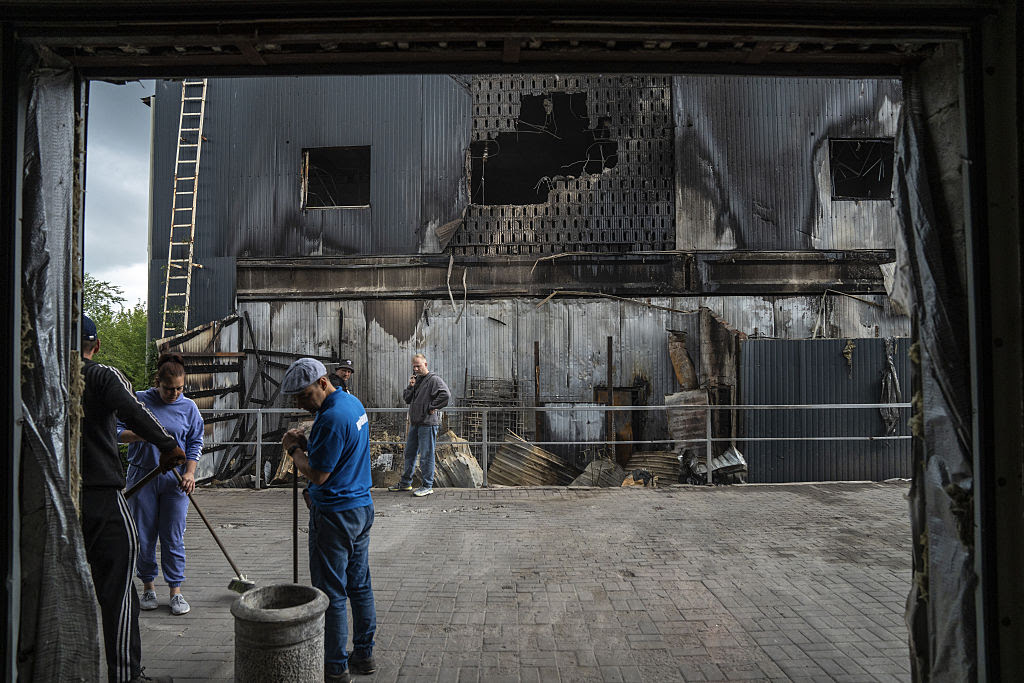
People sweep the ground during cleanup efforts in the damaged area after the Russian attack on a post office in the city of Kramatorsk, Ukraine. A post office and a car wash were damaged in the Russian attack, but there were no casualties. (Jose Colon/Anadolu via Getty Images)
The Final Accounting: 6,057 Bodies Come Home Under Istanbul’s Grim Bargain
The last convoy of refrigerated trucks crossed into Ukrainian territory on June 16, carrying 1,245 bodies that marked the conclusion of the most expansive prisoner and body exchange agreement of the full-scale war. The repatriation, negotiated during June 2 talks in Istanbul, brought the total number of Ukrainian remains returned under the deal to 6,057—each representing a family’s long wait for answers finally ending.
“Each of them undergoes identification. Because behind every one of them is a name, a life, a family waiting for answers,” Defense Minister Rustem Umerov wrote on Facebook, his words capturing the profound weight of Ukraine’s most sacred responsibility to its fallen.
Yet what should have been a solemn moment of closure became another example of Russian callousness. Interior Minister Ihor Klymenko revealed that Russian forces had mixed their own soldiers’ bodies with Ukrainian remains during the repatriation process, forcing Ukrainian forensic experts to sort through an intentionally complicated mess.
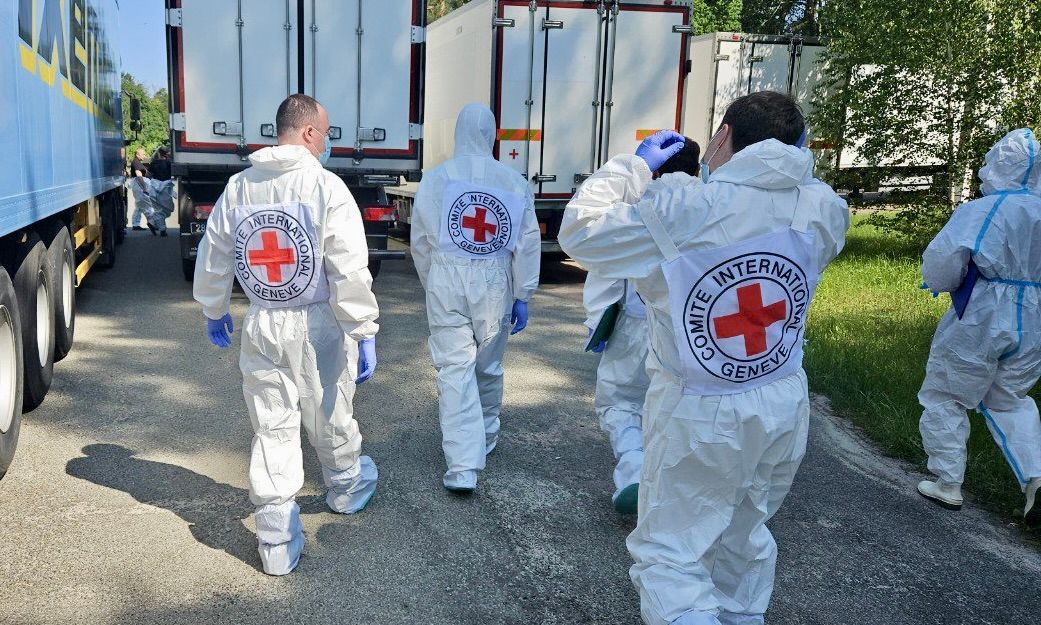
“Parts of the bodies are in different bags. There are cases when the remains of one person are returned even during different stages of repatriation,” Klymenko explained. The minister suggested two possible motives: “This could have been done by the Russians on purpose to increase the number of bodies transferred and to load our experts with work, adding to all this cynical information pressure. Or it could be their usual negligent attitude toward their own people.”
The psychological warfare extended beyond the physical manipulation of remains. Ukraine’s Foreign Intelligence Service reported that the Kremlin was preparing to escalate a disinformation campaign related to the POW exchanges, aiming to provoke public outrage in Ukrainian society and discredit Ukraine internationally—a campaign set to culminate on June 20, the final day of prisoner exchanges.
The Summer Surge: Russian Forces Launch Coordinated Push Across Multiple Fronts
As diplomatic gestures toward prisoner exchanges continued, the battlefield told a different story of escalating violence. Russian forces intensified offensive operations across multiple front-line areas, launching attacks in 12 directions that resulted in 99 recorded clashes—a significant uptick that signaled the beginning of Moscow’s anticipated summer offensive.
Victor Tregubov, spokesperson for Ukraine’s Khortytsia group of forces, confirmed the surge represented “the expected summer increase in activity,” with Russian troops ramping up attacks particularly in the Novopavlivka and Kharkiv sectors. In the Novopavlivka sector alone, Ukrainian soldiers repelled 17 attacks as Russian forces attempted to push into Dnipropetrovsk Oblast.
In Donetsk Oblast, Russian forces were attempting to encircle Kostiantynivka, one of Ukraine’s key logistics hubs since the start of the full-scale invasion. The city now faced coordinated attacks from three directions as Russian commanders sought to sever vital Ukrainian supply routes. Meanwhile, Russian forces made confirmed advances in eastern Komar while claiming to have seized multiple settlements in their push toward Dnipropetrovsk Oblast.
To the north, Russian forces continued their systematic expansion into Sumy Oblast, with geolocated footage confirming the seizure of Kindrativka, north of Sumy City. The commander of the Russian 11th Airborne Brigade openly stated that Russian forces were trying to cut off Ukrainian ground lines of communication from Yunakivka to Sumy City, using motorcycles, quad bikes, and even electric scooters for assault operations.
The Motorcycle Wars: Russia’s Tactical Evolution Reveals Equipment Shortages
Satellite imagery analysis revealed a telling shift in Russian military tactics that underscored the war’s impact on Moscow’s conventional capabilities. Russia’s consumption of Soviet-era tank stores appeared to be slowing, with the country retaining 46 percent of its pre-war tank reserves, 42 percent of its infantry fighting vehicle reserves, and 48 percent of its armored personnel carrier reserves.
Russian forces were increasingly relying on motorcycles and all-terrain vehicles rather than traditional armored vehicles—an adaptation driven by pervasive Ukrainian drone strikes that had made large, slow-moving targets increasingly vulnerable. The commander of a Ukrainian brigade operating in the Lyman direction described the tactical shift: “Russian forces have switched to attacking in small groups, including in groups of three to four motorcycles.”
Ukrainian Border Service Spokesperson Andriy Demchenko confirmed that Russian attacks in northern Sumy Oblast using “motorcycles and all-terrain vehicles” had decreased recently, likely due to manpower losses. The adaptation had succeeded in granting Russian forces marginal tactical gains at the expense of significant infantry losses, but equipment remained so valuable that Russian forces would attempt to retrieve motorcycles from the battlefield following assaults.
Terror from Above: Kyiv Endures Devastating Nine-Hour Assault
The night of June 16-17 brought one of the most intensive aerial assaults on Kyiv since the war began. Russian forces launched 472 aerial weapons overnight, including nearly 280 Shahed-type attack drones and two Kinzhal ballistic missiles, in what President Volodymyr Zelensky called “one of the most horrifying attacks on Kyiv.”
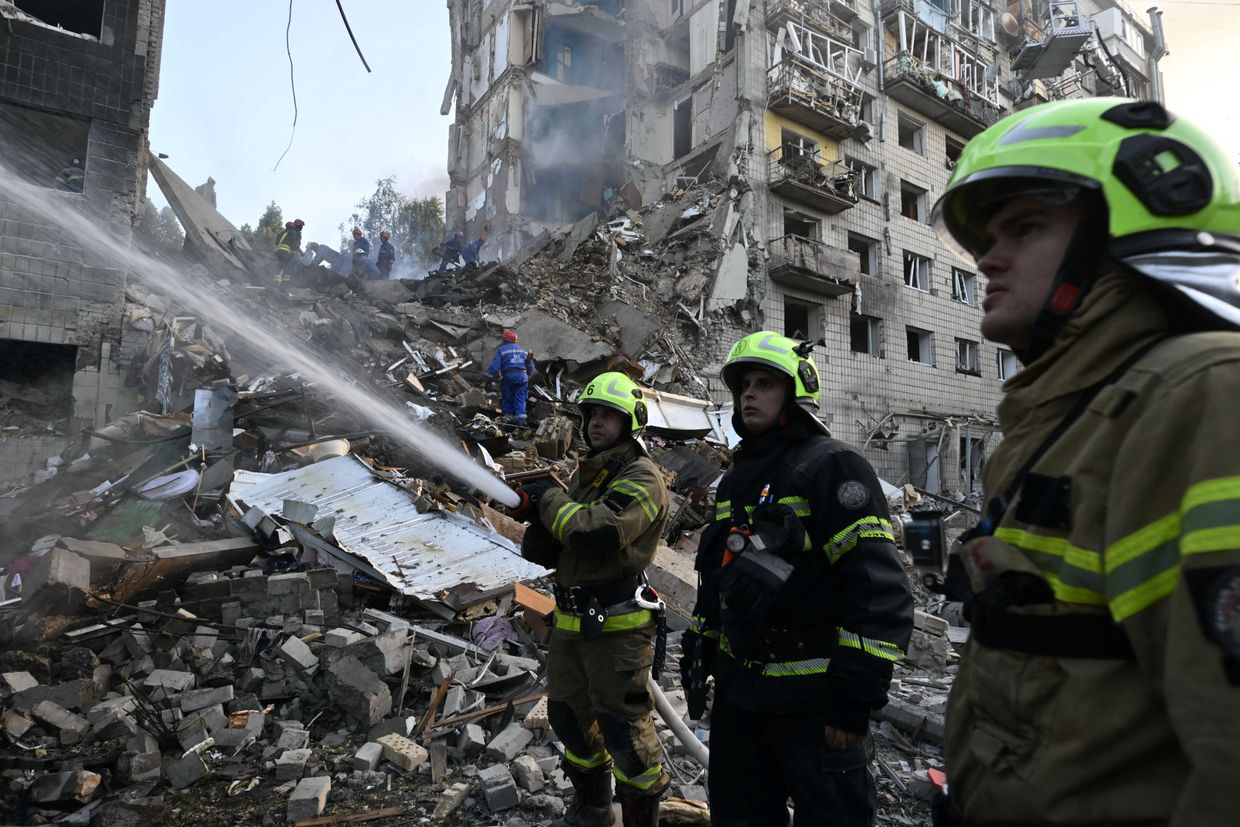
The almost nine-hour bombardment killed at least 10 people and injured 124 others, with damage reported across eight districts of the capital. The deadliest strike hit a nine-story residential building in the Solomianskyi district, “completely destroying” one section. Among the victims was a 62-year-old U.S. citizen who died in a building across from where medics were assisting the injured.
“I saw the missile because it was low,” recounted Olena Kushnirova, a 46-year-old nurse who lived in a neighboring building. “I grabbed my daughter by the hand and shouted ‘run!’ It was literally 15 seconds. We ran to the toilet and then there was a very powerful explosion.”
Beyond the spectacular overnight assault on Kyiv, Russia’s systematic targeting of civilians claimed six additional lives across Ukraine on June 16. Donetsk Oblast bore the heaviest casualties, with three killed in Bahatyr, two in Pokrovsk, and one in Kostyantynivka, while seven people were injured in Kherson Oblast after Russian forces struck critical infrastructure and residential neighborhoods.
The Grinding Arithmetic of War: Million-Casualty Milestone and Foreign Fighter Losses
Military analysts reached a sobering milestone in assessing the war’s human cost: Russian casualties had reached one million, five times higher than all Russian and Soviet wars since World War II combined, with approximately 200,000 fatalities. Since January 2024 alone, Russian forces had seized less than 5,000 square kilometers of Ukrainian territory—less than one percent of the country and smaller than Delaware—while losing over 1,200 armored vehicles, nearly 2,000 tanks, and more than 3,200 infantry fighting vehicles.
The human cost extended to Russia’s foreign allies, with British intelligence reporting that more than half of the roughly 11,000 North Korean troops initially sent to Kursk region had been killed or injured. The British Ministry of Defence cited “highly attritional” assaults on North Korean foot soldiers as the cause of the devastating casualty rate, with approximately 6,000 North Korean casualties highlighting the expendable nature of these forces in Russian military planning.
In a rare moment of accountability amid widespread war crimes, Dmitriy Kurashov, a former Russian prisoner recruited into a “Storm-V” assault unit, pleaded guilty in a Zaporizhzhia court to killing 41-year-old Ukrainian soldier Vitalii Hodniuk in January 2024. According to witnesses, Hodniuk emerged from a foxhole unarmed and knelt in surrender when Kurashov shot him, representing one of 79 documented prisoner executions since August 2024.
Russia’s Maximalist Demands: Weapons Destruction and Nuclear Posturing
Moscow hardened its negotiating position as Deputy Foreign Minister Alexander Grushko demanded that Ukraine dismantle and destroy all Western-supplied weapons as part of any ceasefire deal. “All these surpluses must be destroyed,” Grushko declared, reflecting Russia’s growing list of maximalist conditions that also included Ukrainian recognition of Russia’s territorial annexations and full Ukrainian troop withdrawal.
The demands came as satellite imagery revealed that Russia had expanded and modernized at least five nuclear-related facilities near European borders. The most notable developments occurred in Kaliningrad, where the suspected nuclear weapons storage site showed significant reconstruction including triple-layered fencing, new buildings, and advanced communications equipment. Polish officials estimated that up to 100 tactical nuclear warheads might be stored at the site.
The nuclear facility upgrades reinforced concerns that Russia was positioning nuclear assets as both military tools and diplomatic leverage, even as Moscow struggled with conventional capabilities on the Ukrainian battlefield.
Economic Warfare and Diplomatic Strain: Shadow Fleets and Canceled Talks
Russia’s economic warfare continued through its expanding shadow fleet, with Ukraine’s military intelligence identifying an uninsured Russian Aframax-class tanker conducting illegal ship-to-ship oil transfers in international waters near Greece and Cyprus since July 2024. The vessel represented one of 159 tankers allegedly belonging to Russia’s shadow fleet, enabling roughly one-third of Russia’s oil and gas profits to fund the war effort in 2025.
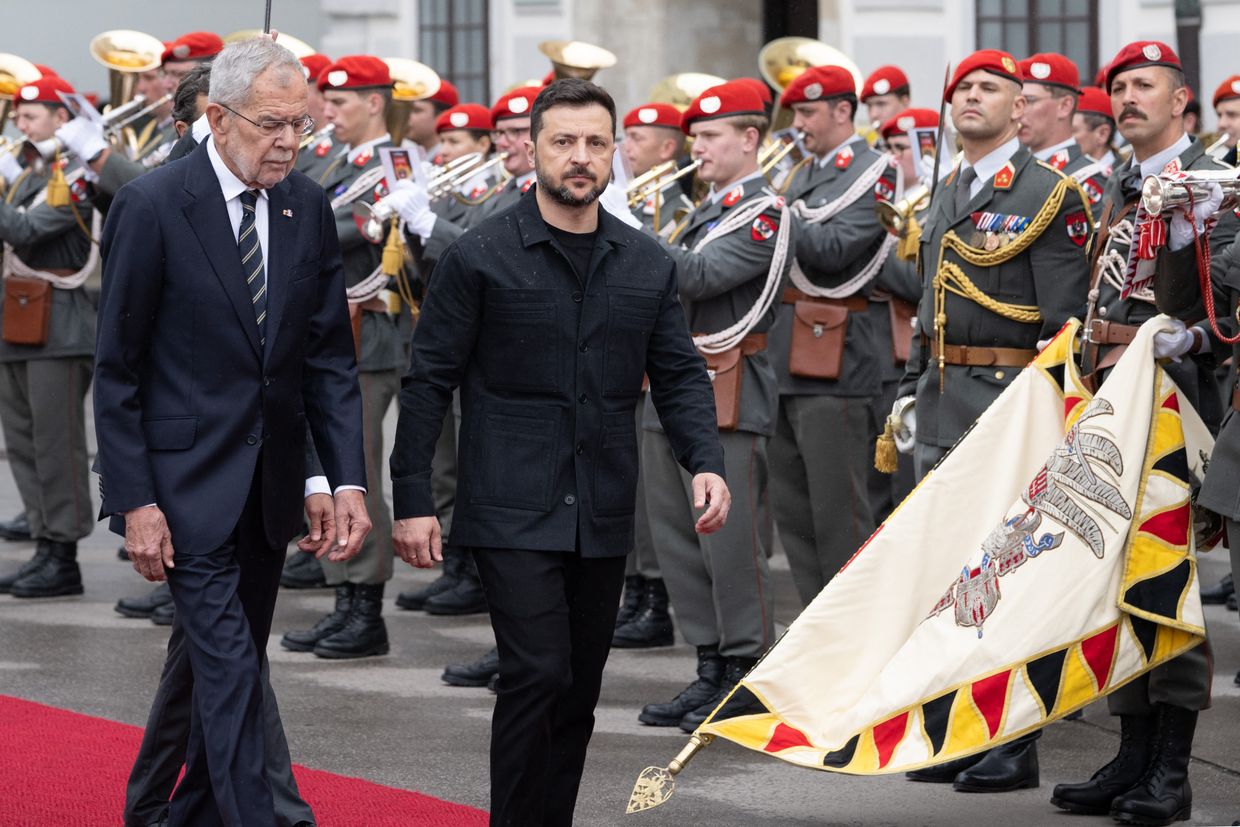
The diplomatic front showed new strains as Russian Foreign Ministry spokesperson Maria Zakharova claimed the United States had canceled the next round of talks on restoring diplomatic relations. The cancellation coincided with President Trump’s early departure from the G7 Leaders’ Summit, citing urgent Middle East matters and missing a planned crucial meeting with Zelensky scheduled for June 17.
In contrast, Canadian Prime Minister Mark Carney was expected to announce additional support for Ukraine, with sources indicating Ottawa would disclose on June 20 how much of its allocated two billion Canadian dollars would be directed specifically to Ukraine. European Commission President Ursula von der Leyen urged G7 nations to increase sanctions pressure, noting that joint measures had reduced Russian oil and gas revenues by nearly 80 percent since February 2022.
Economic Resilience and Political Pressure: Investment Climate and Trust Deficits
The challenge of maintaining economic life during wartime took center stage as International Chamber of Commerce Secretary General John Denton made his fourth trip to Ukraine, emphasizing that business survival was essential for Ukraine’s overall survival. “There needs to be a more nuanced understanding of risk in Ukraine. It’s not one risk quota for the whole of the country,” Denton explained, noting greater vibrancy in western Ukraine compared to more challenged eastern regions.
Economic diplomacy showed promise as Ukraine approved initial steps to open the Dobra lithium field to private investors—the first project advanced under the landmark U.S.-Ukraine minerals agreement signed in May. The deal structure called for half of extraction revenues to flow into a joint U.S.-Ukraine investment fund, with likely bidders including a consortium featuring Trump associate Ronald S. Lauder.
However, domestic political pressures were mounting as President Zelensky’s trust rating dropped to 65 percent—down 11 percentage points since May. The decline came amid increasing pressure for ceasefire negotiations, with polling revealing deep divisions over territorial concessions: among those who trusted Zelensky, 55 percent were strongly opposed to any compromise, while among those who distrusted him, 46 percent were willing to cede territory.
Looking Forward: The Intersection of Death and Diplomacy
As June 16 drew to a close, the day’s events crystallized the war’s current dynamic: even gestures toward cooperation—like body exchanges—became venues for psychological warfare, while military operations intensified despite ongoing diplomatic contacts. The completion of the Istanbul repatriation deal represented both humanitarian progress and a reminder that Moscow viewed every interaction as an opportunity for manipulation.
The summer offensive’s early stages suggested that both sides were positioning for what could be decisive months ahead. Russia’s tactical adaptations showed military learning under pressure, while Ukraine’s defensive resilience in repelling 99 separate attacks demonstrated continued battlefield effectiveness despite international political uncertainties.
With nuclear facilities expanding, shadow fleets operating, and trust deficits growing, the path toward any sustainable resolution remained unclear. The day’s mixture of diplomatic gestures and escalating violence suggested that the war’s next phase would test both military capabilities and political will in ways that could reshape the conflict’s ultimate trajectory.