
Trump Rejects Putin’s Middle East Mediation While Ukraine Executes Collaborators and Global Alignments Shift Across Multiple Fronts
Summary of the Day – June 18, 2025
The diplomatic chess game surrounding Ukraine took on new dimensions as President Donald Trump publicly rebuffed Vladimir Putin’s offer to mediate the Israel-Iran crisis, telling the Russian leader to “mediate your own” conflict first. While Trump’s rejection marked a rare moment of pushback against Moscow, the day revealed complex international relationships reshaping around Ukraine’s war. Ukrainian intelligence demonstrated expanding reach with the targeted assassination of a Russian collaborator in occupied Berdiansk, while parliament advanced key reforms. As Russian forces launched new mechanized assaults and the Kremlin tightened information control during its economic forum, Ukraine faced challenges from religious disputes to Middle East evacuations. The convergence of battlefield developments, diplomatic maneuvering, and domestic politics across multiple countries illustrated how Ukraine’s struggle has become the gravitational center of global geopolitical realignment.

Ukraine’s military intelligence (HUR) killed Mykhailo Hrytsai, a senior collaborator with Russian occupation authorities in occupied Berdiansk, Ukraine. (HUR)
Trump’s Diplomatic Theater: Rejecting Putin While Facing Internal Republican Opposition
In an unexpected moment of diplomatic defiance, Donald Trump delivered a public rejection of Vladimir Putin’s offer to mediate the escalating Israel-Iran conflict, telling reporters on June 18: “I spoke to him yesterday, and, you know, he actually offered to help mediate. I said, do me a favor. Mediate your own. Let’s mediate Russia first, okay? I said, Vladimir, let’s mediate Russia first. You can worry about this later.”
The Kremlin’s response was swift and pointed. Dmitry Peskov claimed Trump was speaking “figuratively” about any conversation with Putin, adding cryptically that “life is so eventful these days that a retrospective covering several days is like looking back at yesterday.” The denial suggested no such conversation had occurred on June 17, raising questions about the timing and nature of any recent Trump-Putin communications.
Trump’s rejection came amid internal Republican divisions over foreign policy, with conservative commentator Tucker Carlson publicly challenging the president’s Iran stance while humiliating Senator Ted Cruz for lacking basic knowledge about the country he advocates attacking. Carlson called Trump’s fears of Tehran building nuclear weapons “overblown” and criticized Republican “warmongers” pushing for military action.
The divide became visible after Director of National Intelligence Tulsi Gabbard released a video arguing that Iran was “nowhere near completing a nuclear weapon.” When asked about Gabbard’s comments, Trump lashed out: “I don’t care what she said. I think they were very close to having a weapon.” Carlson’s criticism appeared to rankle Trump, who diminished the commentator’s platform: “I don’t know what Tucker Carlson is saying. Let him go get a television network and say it so that people listen.”
Gabbard’s public disagreement puts her in a precarious position, as Trump has made no secret he’s considering eliminating the Director of National Intelligence position. While Carlson faces little danger from policy disagreements, Gabbard has been “put on notice” regarding her continued role.
NATO’s Closing Doors: Summit Uncertainty and Membership Realities
President Zelensky may reconsider attending the NATO summit in The Hague on June 24-25, as questions persist over Trump’s participation, according to unnamed Ukrainian officials. The potential absence would mark a significant diplomatic gamble, reflecting Kyiv’s calculation that the summit holds little value without guaranteed access to the U.S. president.
Lithuanian Foreign Minister Kestutis Budrys delivered a blunt assessment that Ukraine’s NATO membership invitation “is not on the agenda” for the upcoming summit. “This issue is certainly not on the NATO agenda, and nobody has formulated an expectation that there will be an invitation in The Hague,” Budrys told the Baltic News Service, marking a shift from previous gatherings where membership discussions featured prominently.
Ukrainian officials expressed frustration over becoming victims of “Trump’s short attention span,” particularly after his early departure from the G7 summit in Canada left Zelensky without the bilateral meeting he had sought. That missed opportunity came as Russia launched one of its deadliest attacks on Kyiv, killing at least 28 civilians—a strike that Trump appeared unaware of when questioned by reporters.
Despite these setbacks, the G7 produced concrete results. Canada announced a comprehensive $3.1 billion support package, including $1.5 billion in military assistance for helicopters, drones, and armored vehicles, plus $1.6 billion in reconstruction loans through the G7 mechanism using profits from seized Russian assets. Foreign Minister Anita Anand simultaneously unveiled sanctions against 77 Russian individuals, 39 entities, and 201 shadow fleet vessels.
Moscow’s Information Fortress and Maximalist Demands
The Kremlin utilized the ongoing St. Petersburg International Economic Forum (SPIEF) to consolidate information control and prepare Russian society for prolonged war, according to leaked Presidential Administration instructions obtained by opposition outlet Meduza. The document directed state media to focus on events projecting social optimism rather than traditional coverage of foreign investment.
Putin used the forum to promote Kremlin narratives to Western audiences, while authorities appeared to limit internet access around St. Petersburg, with opposition media reporting widespread outages overnight June 17-18, similar to restrictions imposed during Victory Day celebrations.
Simultaneously, Ukraine’s Foreign Ministry dismissed Russian demands for Kyiv to destroy or dismantle Western-supplied weapons as a ceasefire condition. Russian Deputy Foreign Minister Alexander Grushko had articulated the demand: “All these surpluses must be destroyed. All international algorithms are known. They must be reduced, disposed of, and guaranteed.” Ukrainian spokesperson Heorhii Tykhyi called Moscow’s position “absurd” and showing “complete disregard for the United States’ efforts to end the war.”
The Kremlin continued its crackdown on critical voices by detaining Mikhail Polynkov, administrator of the “Soldatskoye Pravda” Telegram channel. The Federal Security Service arrested Polynkov, suggesting his detention might relate to criticism of Russian propagandist Vladimir Solovyov or his efforts to locate missing Russian servicemembers.
Belarus and Korean Connections: Expanding Diplomatic Channels
U.S. Special Envoy Keith Kellogg will meet with Belarusian President Alexander Lukashenko in the coming days, marking the highest-ranking American visit to Belarus in years and potentially offering a new avenue for peace negotiations. The visit follows February’s successful prisoner swap that secured release of three political prisoners including one U.S. citizen.
Meanwhile, Russian Security Council Secretary Sergei Shoigu’s visit to Pyongyang resulted in North Korea’s commitment to send 1,000 sappers and 5,000 military builders to rebuild Russia’s Kursk Oblast. The announcement came after Shoigu’s meeting with Kim Jong Un, addressing reconstruction needs in territory where Ukraine initially captured 1,300 square kilometers before Russia’s counteroffensive.
According to UK intelligence, over 6,000 North Korean soldiers have been killed or wounded during Kursk operations, representing more than half the original contingent. The engineer deployment represents evolution from direct combat roles to reconstruction duties, while institutionalizing North Korean sacrifice through planned memorials in both countries.
Ukraine’s Shadow War and Parliamentary Progress
Ukrainian intelligence demonstrated expanding reach into occupied territories with the targeted killing of Mykhailo Hrytsai, a senior Russian collaborator in Berdiansk, Zaporizhzhia Oblast. According to a HUR source, Hrytsai was shot dead using a silenced PM pistol during a precision operation on June 18.
As Russian-installed deputy mayor responsible for infrastructure, Hrytsai had facilitated illegal property seizure and, according to Ukrainian intelligence, directly participated in organizing repressions and establishing torture chambers for prisoners of war. “There are still plenty of such targets—collaborators, accomplices of the enemy—in the occupied territories,” the source said. “We will definitely get to each and every one of them.”
Simultaneously, Ukraine’s parliament demonstrated continued functionality by approving significant reforms and appointments. Lawmakers confirmed 35-year-old Ruslan Kravchenko as prosecutor general with 273 votes, making him the youngest person to hold the position. The former military prosecutor who fled Crimea after 2014 annexation replaces Andrii Kostin, who resigned following a disability fraud scandal.
Parliament also passed landmark legislation allowing dual citizenship with 243 votes, recognizing Ukraine’s global diaspora reality while establishing grounds for citizenship loss, including receiving Russian passports or serving in Russian forces. Additionally, lawmakers approved Asset Recovery and Management Agency reform, fulfilling a key EU requirement and unlocking 600 million euros in funding.
Battlefield Dynamics: Mechanized Returns and Daily Casualties
Russian forces conducted an at least platoon-sized mechanized assault in the Toretsk direction on June 17, deploying at least three armored vehicles and four all-terrain vehicles—a significant development as such assaults have decreased since winter 2024-2025 due to Ukrainian drone capabilities and dwindling Russian armor supplies. Ukrainian observer Yuriy Butusov reported that a company-sized assault near Kostyantynivka resulted in destruction of 15 pieces of Russian heavy equipment.
The return to mechanized operations suggests either renewed equipment availability or strategic prioritization of the Toretsk sector, where Russian forces have recently seized Dachne and advanced into southern Stupochky. The deployment contrasts with Russia’s increasing reliance on civilian vehicles, motorcycles, and all-terrain vehicles for most assault operations.
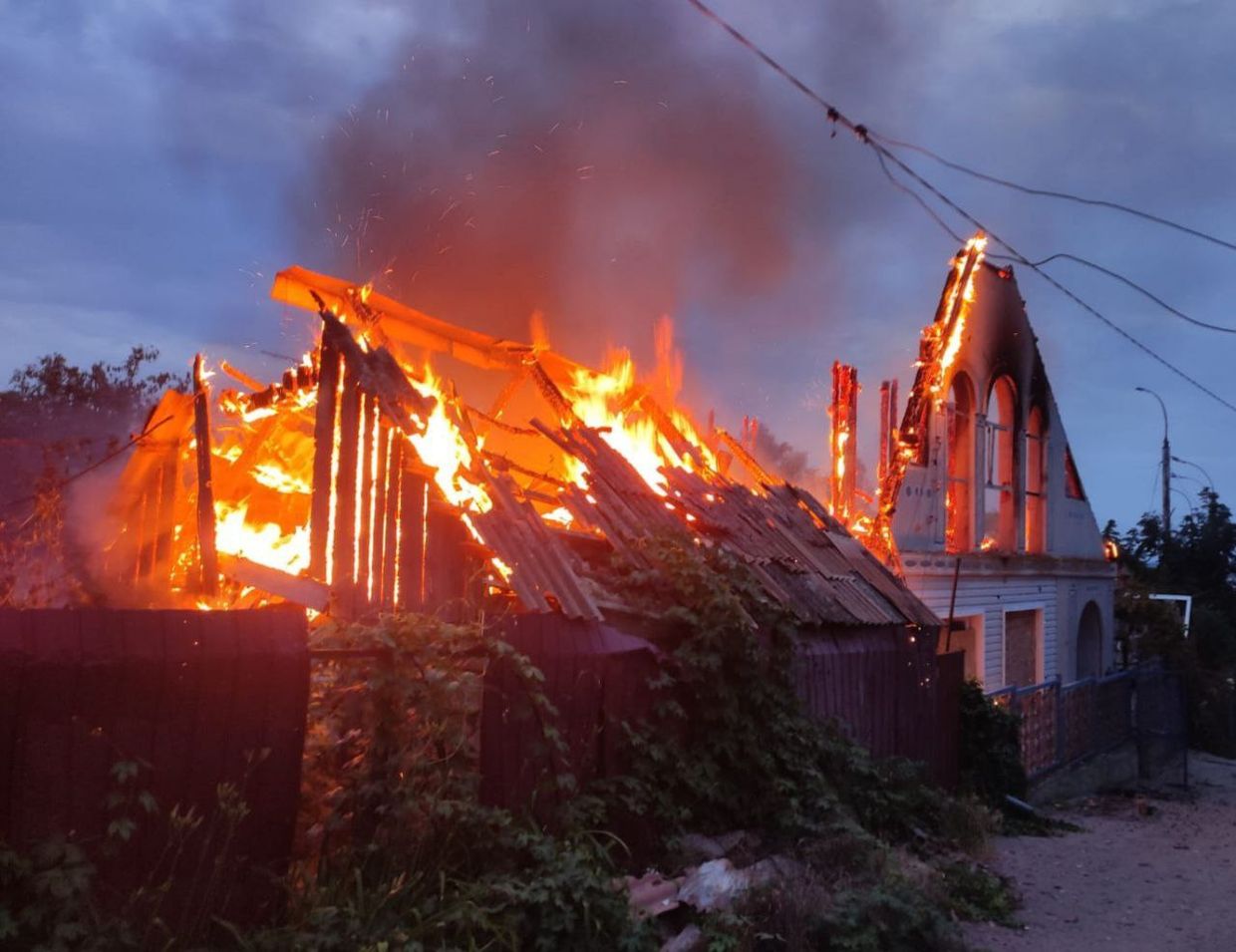
Daily casualties continued across multiple fronts, with Russian attacks killing at least six civilians and injuring 49, including a teenage boy. The strikes involved 58 Shahed-type drones primarily targeting Donetsk, Dnipropetrovsk, and Zaporizhzhia oblasts, with Ukrainian defenses downing 12 drones while 18 disappeared from radars or were intercepted by electronic warfare.
International Repercussions: From Slovakia to Congress
Slovak police sought to detain former Defense Minister Jaroslav Nad over alleged misconduct during 2022 ammunition donations to Ukraine, reflecting the country’s dramatic foreign policy shift under Robert Fico. The investigation concerns 120mm rounds allegedly sold to private companies before repurchasing at higher prices for Ukrainian delivery. Nad, currently in Canada, dismissed allegations as “theater” while expressing pride in Ukrainian support decisions.
Former U.S. Ambassador to Ukraine Bridget Brink announced her congressional candidacy from Michigan’s 7th district, making her resignation over Ukraine policy disagreements a central campaign theme. “I cannot stand by while a country is invaded, a democracy bombarded, and children killed with impunity,” she wrote, transforming diplomatic resignation into political opposition.
The U.S. Senate postponed action on bipartisan Russia sanctions legislation until July, as focus shifted toward Iran and domestic priorities. Senators Graham and Blumenthal had hoped for passage before the G7 summit, but momentum stalled amid Republican reluctance to move without Trump’s explicit support.
Religious Upheaval and Regional Evacuations
Violent confrontations erupted outside the Holy Spirit Cathedral in Chernivtsi as hundreds attempted to force entry following the church’s switch from the Russian-affiliated Ukrainian Orthodox Church to the autocephalous Orthodox Church of Ukraine. Police deployed tear gas after being overwhelmed, with medics treating approximately 30 injured people during the first Ukrainian-language service under new jurisdiction.
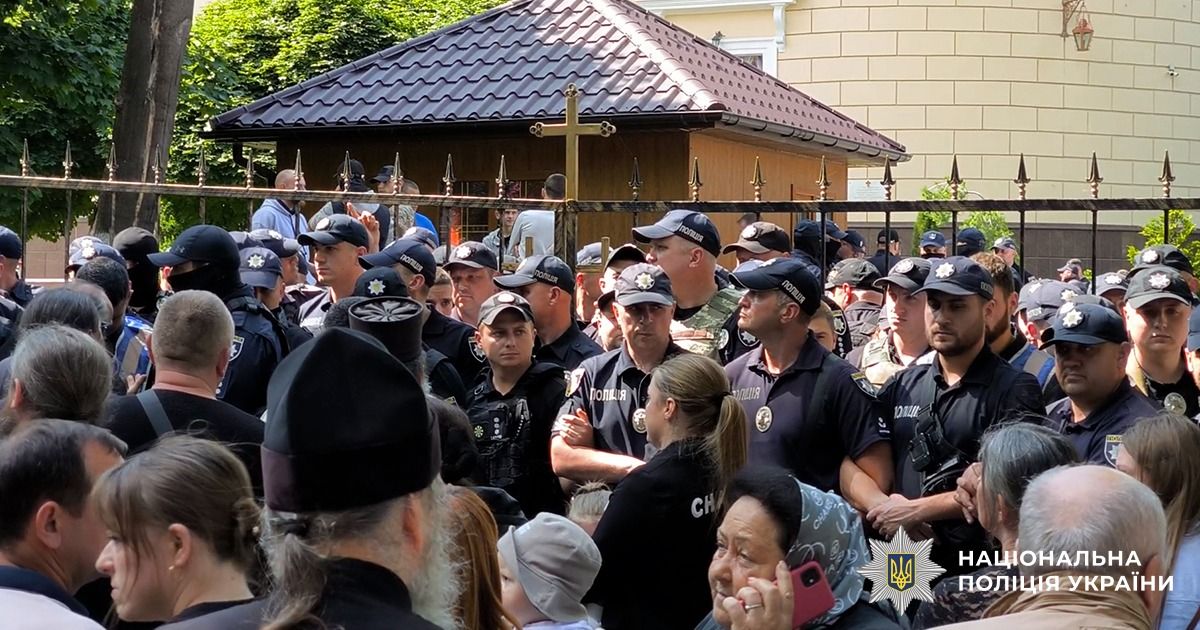
The clashes reflect Ukraine’s broader struggle to sever religious ties with Moscow, implementing August 2024 legislation banning organizations with Russian connections. Over 100 UOC-MP clergymen have been investigated for suspected collaboration, while the Moscow-linked church claims persecution despite critics arguing its independence claims remain symbolic.
Simultaneously, Ukraine prepared evacuations from Israel and Iran as Middle East hostilities intensified, with 293 Ukrainians in Israel and 85 in Iran requesting assistance. The Foreign Ministry developed evacuation plans following Israeli strikes on Iranian nuclear facilities and retaliatory missile attacks that killed five Ukrainian citizens in Tel Aviv, highlighting how regional conflicts intersect with Ukraine’s struggle against Russian aggression supported by Iranian weapons.
Aftermath and Condemnation: Kyiv’s Deadliest Strike
The U.S. Embassy condemned Russia’s massive June 17 attack that killed at least 28 civilians, stating it “runs counter” to Trump’s peace efforts while declaring June 18 a day of mourning. The nine-hour assault involved 472 aerial weapons, making it one of the largest attacks on the Ukrainian capital since the invasion began, with a U.S. citizen among the dead.
Despite the devastation’s scale, Trump appeared unaware when questioned by reporters, asking “When was that? When?” and requiring explanation. As of June 18, the White House had still not issued an official response, highlighting the administration’s delayed engagement with Ukrainian developments while President Zelensky called it “one of the most horrifying attacks on Kyiv.”
Putin’s Veterans Gambit: Building Loyalty While Managing Rebellion Risk
Putin continued promoting his “Time of Heroes” program placing military veterans in government positions but faces growing challenges managing veterans’ demands for rapid advancement. The program has attracted 65,000 applicants across two cohorts, with 45 veterans receiving appointments, yet Kremlin officials acknowledge problems with unrealistic promotion expectations to high-ranking positions.
Putin attempted to temper expectations by suggesting veterans need municipal-level experience before federal appointments, while a Kremlin-affiliated milblogger noted adaptation problems requiring additional education. The strategy serves multiple purposes—reintegrating servicemen, demonstrating regime rewards, and creating loyal militarized officials—but risks empowering individuals who might leverage veteran status for personal agendas, like Putin’s previous accommodation of Wagner Group leader Yevgeny Prigozhin before that relationship deteriorated into armed rebellion.
Looking Forward: Convergence at the Crossroads
As multiple diplomatic initiatives unfold—from Kellogg’s Belarus mission to NATO summit preparations—Ukraine faces a critical period where battlefield developments, international relationships, and domestic reforms converge. The targeted elimination of collaborators demonstrates expanding Ukrainian capabilities while parliamentary productivity shows institutional resilience despite external pressures.
The coming week’s NATO summit will test whether Western unity can overcome American uncertainty, while internal Republican divisions create both challenges and opportunities for Ukrainian advocacy. As shadow operations extend into occupied territories and diplomatic initiatives explore new pathways, the war’s trajectory remains shaped by fundamental questions about Russian maximalist demands versus Ukrainian survival as an independent state.