
Ukraine Daily Briefing | April 9, 2026
Ukraine’s military commander announced that drone forces had killed more Russian troops in four months than Moscow could recruit — while Russia’s own defense minister reportedly told Putin the situation at the front was “critical.” Putin then declared a 32-hour Easter ceasefire, hours after dismissing Zelensky’s identical proposal, even as 119 Russian drones were already airborne over Ukraine. Behind the headlines, a joint investigation revealed 48 deported Ukrainian children listed in Russian adoption databases with no mention of their homeland, while Russian preschools prepared to roll out “Kind Games” — militarism lessons for three-year-olds.
The Day’s Reckoning
Picture a Russian drone operator climbing into a vehicle to reach a launch point close enough to fire. He never gets there. A Ukrainian drone — silent, AI-guided, invisible to his detectors — finds the vehicle before it finds the target. That, in miniature, is what April 9 looked like on the eastern front.
General Syrskyi went public with numbers that would have seemed impossible eighteen months ago: over 11,000 Ukrainian drone missions a day, 150,000 verified targets struck in March alone, and — most striking — more Russian soldiers killed by Ukrainian unmanned systems in four months than Russia managed to recruit in that same period. Russia’s own defense minister reportedly told Putin the situation was “critical.” Russia’s own milbloggers, scientists, and commanders agreed in public, in terms rarely heard from the pro-war camp.
Into this moment came Putin’s Easter ceasefire announcement — a 32-hour pause, framed as a humanitarian gesture, delivered to a country whose skies were already full of Russian drones. Even as Zelensky cautiously said Ukraine would mirror the step, air raid sirens sounded over Kyiv. Outside in the street, Russian drones were already in the air.
And behind the military headlines, the other war continued: 48 deported Ukrainian children whose adoption profiles in Russian databases carry no mention of Ukraine; toddlers in Crimea dressed in military fatigues and bandages for “patriotism lessons”; a woman in Simferopol vanished since November after a 14-day sentence that never ended. Russia was fighting for the battlefield. It was also fighting for the children.
Day 1,506. Ukraine’s drones dominate the sky. Russia’s ceasefire arrives on the same night as its drones. Tomorrow is Easter.
“Virtually Inaudible”: Ukraine’s AI Drones Rewrite the Battlefield
They called them “Martians.” The mayor of Russian-occupied Horlivka said it to TASS — the Kremlin’s own news agency — and TASS ran it anyway. The new Ukrainian drones striking his city were not like the ones Russian forces had learned to jam, hear, or shoot down. They flew at 300 kilometers per hour. They navigated by AI, without an operator guiding them. They were, he said, “undetectable by electronic warfare systems.”
The acknowledgment spread through the Russian information space like a crack in a dam. A Chechen special forces commander confirmed it on Telegram. A Russian drone scientist named Chadayev wrote that Russia had “lost leadership in small-sky drone operations” over the past six months. His specifics were damning: Ukraine had increased production by 250 percent since December, doubled average drone range from 40 to 80 kilometers, and led Russia in both fiber-optic jamming-resistant drones and AI-guided autonomous systems.
Then came the most remarkable report of the day. A Russian milblogger, citing sources, claimed Defense Minister Belousov had told Putin directly: Ukraine has a “significant” technological advantage. The situation is “critical.” Russian conventional defenses — standard detectors, electronic warfare — are ineffective against what Ukraine is now flying. ISW could not verify the account. But Russia’s own expert class was saying the same thing in public.
The strategic implications were visible in Syrskyi’s numbers: Ukrainian interceptor drones downed 2,975 Russian aircraft in January, 3,679 in February, and 7,674 in March. The Unmanned Systems Forces had destroyed nine Russian air defense systems in the first nine days of April alone. Russian reconnaissance drones — the eyes that guide attack drones — were being hunted out of the air before they could identify targets. Russian drone teams were being killed in their vehicles en route to launch points. “Up to 90% of our losses,” wrote scientist Chadayev, “are occurring there.”
Ukraine’s Ministry of Defense was simultaneously testing the next generation: long-range bomber drones with secure communications, flown through more than 20 kilometers of continuous jamming and still reaching their targets. The drone war had not peaked. It had only begun its next escalation.
The Ceasefire That Arrived With Drones: Putin’s Easter Gesture
The Kremlin’s statement came on Thursday evening: a ceasefire from 4 p.m. on April 11 through the end of Easter Sunday, April 12. It was framed as a humanitarian gesture for the Orthodox holiday both nations share. What it did not mention was that Zelensky had proposed exactly this ceasefire ten days earlier — and that Kremlin spokesman Peskov had dismissed that proposal on March 31 as not “clearly formulated.”
The timing was striking. Ukraine’s Officers’ Union member Elkhan Nuriyev was watching from his Kyiv apartment when the news broke. He could hear air raid sirens outside. “There is a ceasefire between Iran and the US,” he said, “and Putin wants to be seen as doing the same. It is nothing but a PR stunt.”
Zelensky’s response was measured: Ukraine had proposed this first and would act accordingly. “People need an Easter without threats,” he said, “and Russia has a chance not to return to strikes after Easter.” The cautious phrasing did not hide what was being implied: that the ceasefire might end the moment Easter Sunday did, and that no one in Kyiv expected otherwise.
The broader diplomatic context helps explain both the announcement and its skeptical reception. US-led trilateral peace talks had been put on indefinite pause as Washington’s attention shifted to Iran. Kremlin envoy Dmitriev was in Washington meeting with Trump administration officials focused on both peace negotiations and an April 11 deadline on extending sanctions relief on Russian oil. A 32-hour ceasefire that costs little fighting time, in exchange for international goodwill on the eve of sensitive negotiations, is not a humanitarian gesture. It is a calculated investment.
The Line Holds: Frontline Operations Across Ukraine
On the ground, April 9 produced no breakthroughs for either side — and that itself was the story. Russian forces attacked in northern Sumy Oblast, northeast of Kharkiv City, south and east of Kupyansk, near Lyman, Kostyantynivka, Druzhkivka, Pokrovsk, Novopavlivka, Oleksandrivka, and along the Zaporizhzhia and Kherson directions. Across every one of these axes, ISW assessed that Russian forces did not advance.
In the Kupyansk direction, Ukrainian forces recorded a rare gain: geolocated footage confirmed an advance in Pishchane, southeast of the city. A Russian milblogger’s own map acknowledged that Ukrainian forces still controlled Kivsharivka, contradicting prior Russian claims. Near Lyman, a Ukrainian brigade reported Russian forces were accumulating infantry and transferring troops from other directions — signs of preparation for a future offensive push, but not one that materialized on this day.
The most technically significant frontline development was the deployment of Russian Chelnok heavy all-terrain unmanned ground vehicles in the Borova direction — their first known frontline appearance since demonstrations in April 2024. Near Vovchansk, Ukrainian forces reported Russian Shahed drones being used as motherships, carrying smaller drones and acting as radio relays — an improvised workaround for Russia’s loss of Starlink access in February.
Near Nikopol, Russian forces had intensified drone strikes and begun dropping leaflets threatening to strike civilian vehicles — a cognitive warfare campaign aimed at depopulating the city. Ukrainian military observers assessed that Russian forces lacked the strength to actually cross the Dnipro River in the area. The leaflet campaign was less a military warning than an act of terror designed to empty a city without having to capture it.
Oil, Fire, and Tankers: Ukraine Squeezes Russia’s Economic Arteries
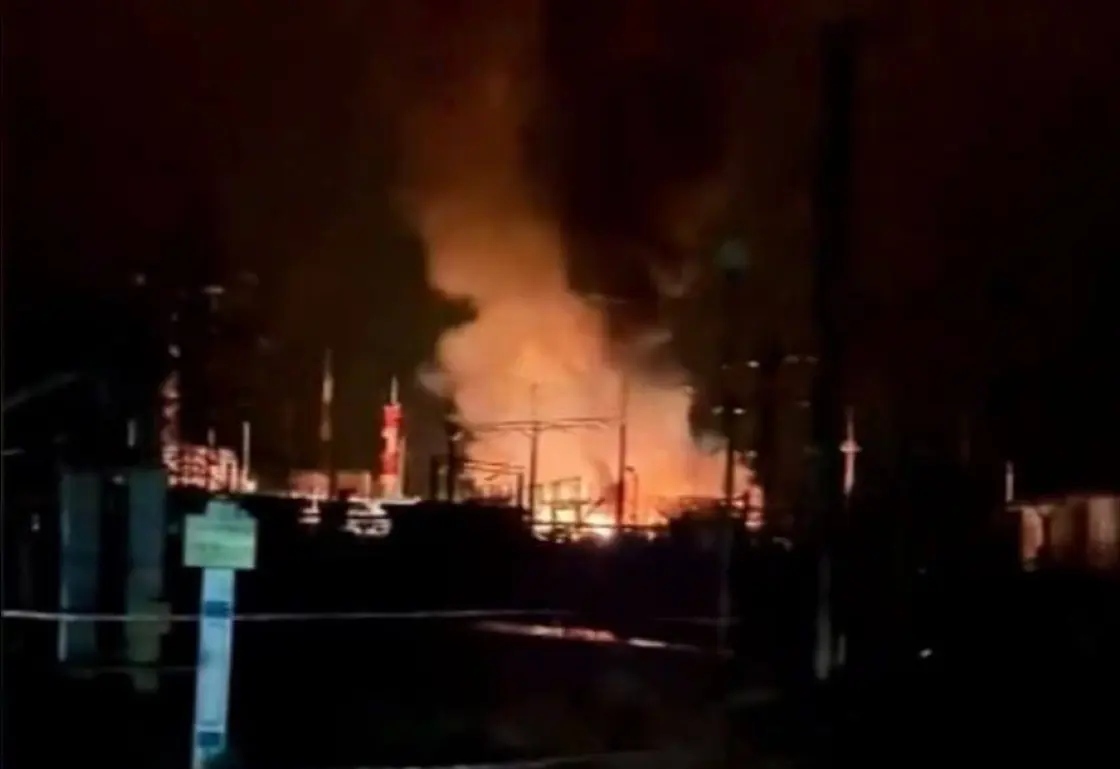
The strike hit the Krymsk oil pumping station in Krasnodar Krai overnight — 115 kilometers from Ukraine, east of occupied Crimea. An electrical substation caught fire. Three people were injured; one person in a nearby village was killed by drone debris. Russia confirmed the strike, as it had to: residents heard explosions and reported a power outage across the area.
It was not an isolated event. Ukraine’s Presidential Commissioner for Sanctions Policy reported that tanker traffic at Russia’s Baltic oil ports had collapsed: 27 crude tankers in January, just 17 in the week of April 1 to 8. Novorossiysk Port had made no shipments since April 4. Satellite imagery showed only eight tankers anchored there, waiting.
The Feodosia oil terminal in occupied Crimea, struck on April 7 to 8, continued to burn. Satellite imagery confirmed at least two fuel storage tanks destroyed — tanks that had survived an earlier Ukrainian strike in October 2025. The pattern of Ukraine’s campaign was unmistakable: find critical infrastructure, strike it repeatedly until it stops functioning, then move to the next target.
The pressure was now threatening Russia’s most sacred political ritual. Reports emerged that authorities were considering canceling or scaling back the May 9 Victory Day parade in Moscow — not because Ukraine could certainly strike Red Square, but because even an air raid siren over the Kremlin during the ceremony would shatter the image of invulnerability Putin had spent decades constructing. A rehearsal on April 5 was abruptly halted. Kremlin spokesman Peskov gave no direct answer when asked about the parade, saying only: “We are preparing for the celebration of Victory Day.”
119 Drones Over Ukraine: The Night Before the Ceasefire
On the night of April 8 to 9, Russia launched 119 strike drones across Ukraine — Shahed, Gerbera, Italmas, and other types — fired from Bryansk, Kursk, Oryol, Rostov, Krasnodar Krai, occupied Crimea, and occupied Donetsk City. Ukrainian air defenses downed 99 of them. Sixteen struck eleven locations. Debris from intercepted drones fell on four additional sites.
The toll was spread across the country. In Zaporizhzhia district, one person was killed and four injured; several houses in the village of Balabyne were destroyed. In Kharkiv Oblast, a 67-year-old woman was killed in Kivsharivka. In Kherson Oblast, a 71-year-old man suffered blast and head injuries. Two people were injured in Dnipropetrovsk. A woman was injured in Sumy. A power substation was knocked out in Odesa Oblast, with outages expected across the region.
Russia also reportedly deployed its new Geran-5 jet-powered drone against Sumy Oblast on April 4, with footage circulating on April 9. Russian milbloggers described it as having cruise-missile characteristics: a range of over 600 kilometers, speed above 350 kilometers per hour, a heavy warhead. Ukraine’s military intelligence put the range at 1,000 kilometers. The Geran-5 represents a meaningful escalation in Russia’s drone arsenal — a long-range, fast-moving system designed to penetrate layered air defenses.
To counter the relentless barrage, Ukraine took an unprecedented step: authorizing private companies to join the air defense network. A senior defense ministry official confirmed 16 companies already approved, some already shooting down Shaheds. Around 50 different interceptor drone models now exist — an industry that barely existed a year ago. The defense minister’s goal: detect 100 percent of air targets, shoot down 95 percent, up from roughly 80 percent currently.
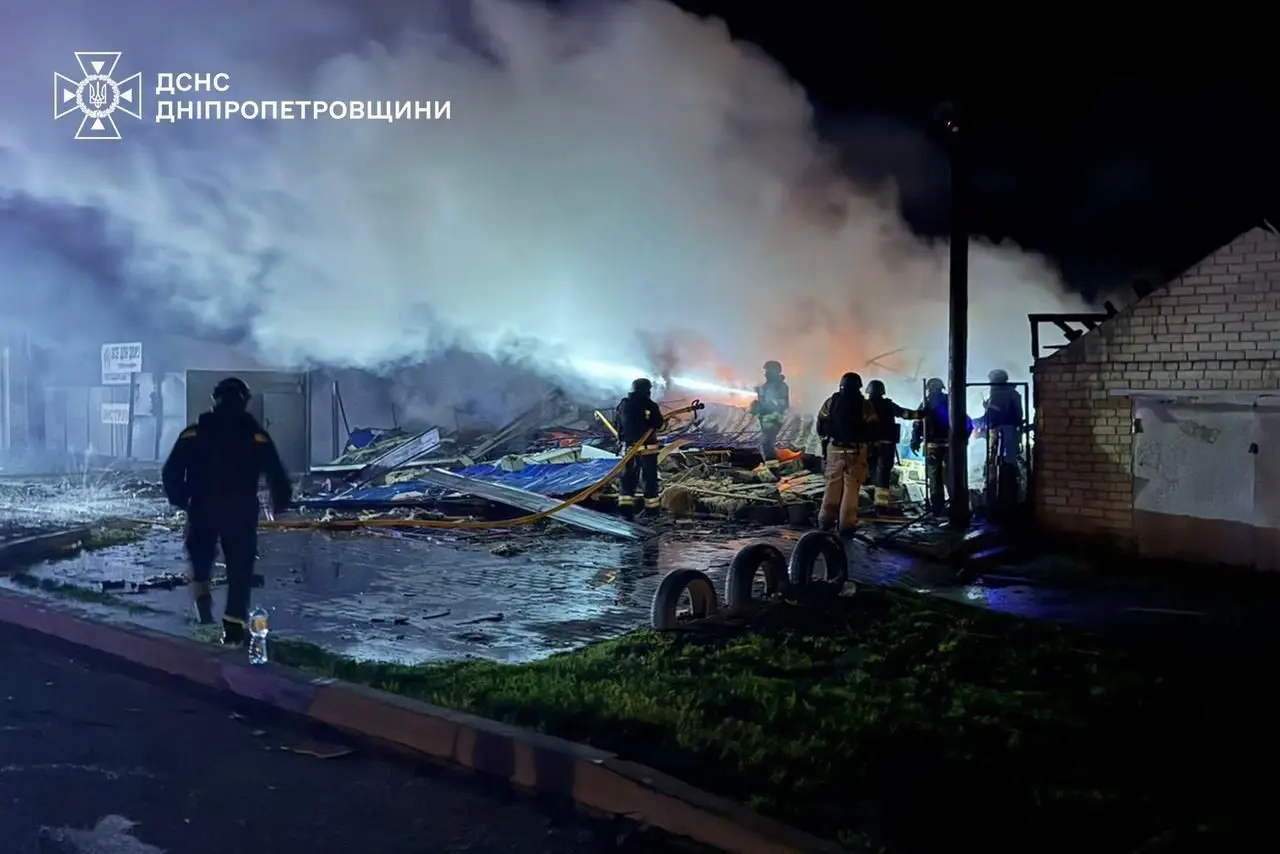
Aftermath of a Russian attack against Dnipropetrovsk Oblast, Ukraine. (Ukraine’s Emergency Service)
The Children of Kherson: Deported, Erased, Listed for Adoption
Somewhere in Russia’s federal adoption database, four Ukrainian children are listed as available for adoption. Their profiles carry no mention of Ukraine. They were taken from the Kherson Regional Orphanage in fall 2022 — part of a group of 48 children deported to the Yolochka orphanage in occupied Simferopol, Crimea. Ukraine has managed to bring ten of those 48 home. The other 38 remain in occupied territory or, in at least four cases, are now listed in the Russian adoption system as if they had no homeland to return to.
A joint investigation published April 7 by Radio Free Europe, Current Time, and The Reckoning Project documented a system Russia had been operating since at least 2016. A December 2024 Yale Humanitarian Research Lab investigation found that Russian medical examiners had conducted examinations on deported children specifically in preparation for placing them in Russian adoption — a clear violation of international humanitarian law.
A parallel mechanism was now emerging through Chechnya. Kherson Oblast occupation officials announced that a Grozny hospital would treat children from occupied Kherson for maxillofacial injuries, with transfers organized by occupation health authorities. The stated purpose was medical. Russia’s documented history told a different story: children sent for “treatment” frequently did not return. ISW assessed that Russia was using medical care as a pretext for the deportation of additional children — children who, under international law, should be treated in Ukraine or in a neutral third state.
“Kind Games” and Young Soldiers: Russia’s War on Childhood
The name was chosen carefully: “Kind Games.” Starting September 1, Russia’s Education Ministry announced, the program would roll out in every preschool classroom in the country — including in occupied Ukraine. Children aged three to five would be shown a map of Russia that includes occupied Ukrainian territories and taught the importance of “protecting our motherland.” In pilot programs already underway across 19 Russian regions, children had been photographed dressed in military uniforms, carrying toy weapons, wrapped in bandages to simulate battlefield wounds.
In occupied Crimea and Kherson Oblast, the program for older children was already running. The “STORM Crimea” tactical training camp in Bakhchysarai — a ten-day program for 120 schoolchildren — covered marksmanship, drone piloting, tactical medicine, parachuting, and diving. Representatives from the Russian FSB, Interior Ministry, and Investigative Committee attended daily career guidance sessions. Children as young as ten appeared in broadcast footage. The explicit goal, stated by the camp director: prepare future conscripts for Russian military service.
A Russian State Duma deputy took the ideological ambition further, proposing to restore Soviet-era youth organization names — Octobrists, Pioneers, Komsomol — reviving the terminology of the tiered system that once funneled Soviet children from preschool to Communist Party membership. The proposal came on the same day as the “Kind Games” announcement. Together they described not a military training program but a generation-wide re-engineering project, aimed at children under occupation and Russian children alike.
Seized Homes, Erased Owners: Russia’s Economic Conquest of Occupied Ukraine
Under Putin’s December 2025 law, properties in occupied Ukraine deemed “ownerless” or “abandoned” could be seized and redistributed. In Kakhovka Okrug, 460 commercial properties had already been taken, along with 123 other properties including 45 plots of land. In Mariupol, the occupation administration posted fresh lists of residential and commercial properties at risk of seizure — including nearly all the industrial premises on the city’s longest street. Owners who had fled could contact the administration to prove their right to their own property. If they failed, the property would be transferred and redistributed with Russian citizens given priority over remaining Ukrainian residents.
On the construction side, Russian Deputy Prime Minister Khusnullin claimed Russia had commissioned nearly 2 million square meters of new housing in occupied Ukraine since 2022, with another 1.8 million currently under construction. Russian development plans published in March 2026 revealed the logic: Russia intends to resettle roughly 114,000 Russians in occupied Ukraine by 2045. The housing was not being built for the Ukrainians who remained. It was being built for the Russians who would replace them.
In occupied Zaporizhzhia Oblast, Russian state banks had installed 16,143 point-of-sale terminals and issued over 554,000 bank cards to residents in 2025 — a 46 percent increase over 2024. POS terminals now equipped buses, market stalls, and fairs. Every transaction deepened the financial integration that made the occupation harder to reverse.
Sentenced for a Postage Stamp: Crimea’s Systematic Persecution
Marina Riff was arrested in November 2025 for “demonstrating extremist symbols” and “discrediting the Russian Armed Forces.” The stated sentence was 14 days of administrative arrest. As of April 6, five months later, her whereabouts remained unknown. She had held pro-Ukrainian views, refused to obtain a Russian passport, and continued living under occupation using Ukrainian documents.
Her disappearance was not anomalous. Crimean Tatar journalist Lutfie Zudieva documented that Russian authorities had arrested at least 50 women in Crimea since 2022 — 29 accused of treason, eight of espionage, five of terrorism — with the actual number likely much higher, and most having had no criminal record before the invasion. A woman who returned to Crimea for her mother’s funeral received 17 years in prison for high treason, her offense a pro-Ukrainian digital postage stamp. A Crimean activist described “traceless torture” used routinely at Women’s Penal Colony No. 7 in Stavropol Krai.
ISW assessed this pattern as a deliberate campaign targeting Crimeans based on ethnicity, politics, religion, and gender — a layered repression designed to eliminate any organized capacity for resistance under occupation. The postage stamp case was not an aberration. It was a message: no expression of Ukrainian identity, however private, was safe.
Submarines and Shadow Fleets: Russia’s Parallel War Against Europe
UK Defense Secretary John Healey stood before Parliament on April 9 and described what British and Norwegian naval forces had tracked over the preceding weeks: a Russian Akula-class attack submarine entering British waters as a deliberate diversion while two GUGI spy submarines spent time directly over critical UK undersea fiber-optic cables and pipelines in the North Atlantic. No damage was found. The submarines eventually withdrew after a month-long tracking operation.
Prime Minister Starmer addressed Putin directly: “We see you, we see your activity over our underwater infrastructure. You should know that any attempt to damage it will not be tolerated and would have serious consequences.” The backdrop was damning: since the full-scale invasion of Ukraine, over 20 subsea cables in the Baltic and Arctic had been damaged. The Akula mission appeared designed to keep the Royal Navy occupied while the GUGI submarines did their work.
On the surface of the English Channel, a different confrontation played out. The Russian frigate Admiral Grigorovich escorted two UK-sanctioned shadow-fleet tankers west through British waters past Plymouth. Britain’s Royal Fleet Auxiliary vessel Tideforce followed but did not intervene, despite Starmer’s March 25 authorization to interdict sanctioned vessels in UK waters. Kremlin spokesman Peskov confirmed the naval presence, framing it as a response to “piracy.” Two more sanctioned tankers entered the Channel heading east the same evening.
The Man Who Tells Trump He’s Wrong: Zelensky’s Diplomatic Tightrope
In an interview with an Italian broadcaster, Zelensky offered a characterization of his relationship with Donald Trump that would have seemed unthinkable from most world leaders: “There are not many people who can tell the president of the United States that he’s not always right.” He framed this not as defiance but as the basis of a genuine relationship — one premised on directness rather than flattery.
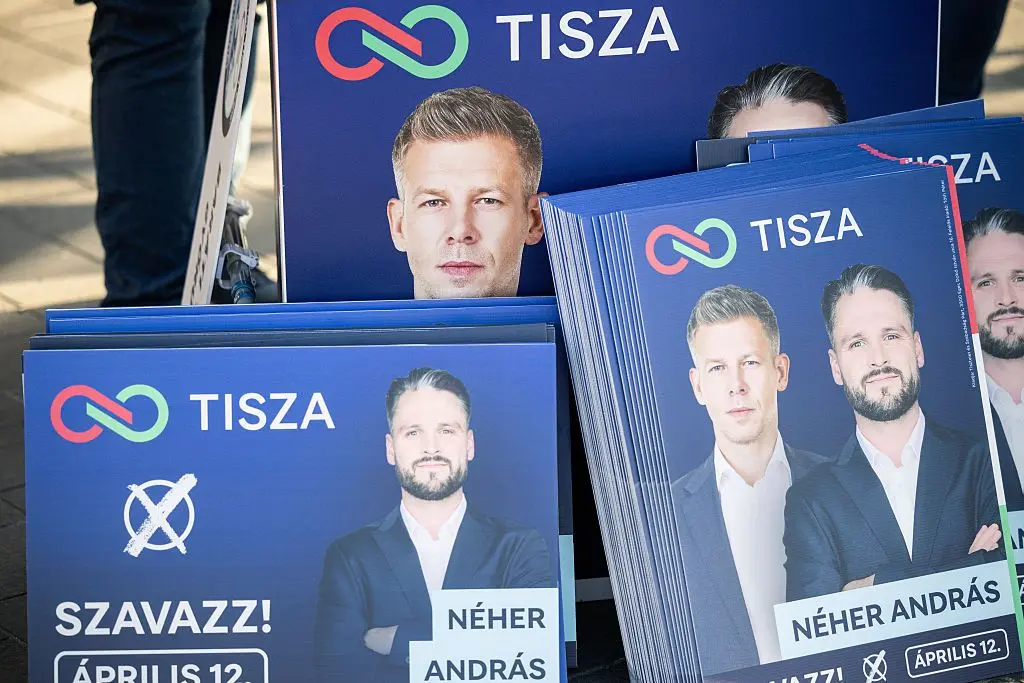
Tisza party campaign signs at a rally ahead of the election in Gyor, Hungary. (Akos Stiller/Bloomberg via Getty Images)
The occasion for candor was urgent. Zelensky said publicly what Ukraine had been saying privately for weeks: Washington was ignoring evidence that Russia was providing Iran with intelligence, including targeting data used against Israeli energy facilities. “The problem is they trust Putin,” Zelensky said on The Rest Is Politics podcast. He argued that US envoys Witkoff and Kushner spent too much time with Russian officials and too little understanding what Russia actually wanted.
He also called JD Vance’s campaigning for Viktor Orban “not helpful” — a pointed understatement given that Hungary’s veto of a €90 billion EU loan for Ukraine was blocking critical infrastructure repairs ahead of winter. Polling published April 9 showed Hungarian opposition party Tisza leading Orban’s Fidesz by 13 points ahead of the April 12 election. If Orban loses, the veto’s future is in doubt. If he wins, Ukraine faces another winter without the funds it was promised.
First of Its Kind: The Drone-Led Bridge Demolition That Changed the War
The Telegraph published a previously undisclosed account on April 7: in early 2025, Ukrainian forces had destroyed a bridge over the Konka River in occupied Kherson Oblast using drones — possibly the first known instance of bridge demolition achieved primarily by unmanned systems. The operation took two months. British Malloy T-150 heavy-lift drones conducted 30 missions, carrying a total of 1.5 tons of explosives that progressively weakened the structure. A final HIMARS strike completed the destruction.
The tactical outcome was significant: Russian resupply to river islands in occupied Kherson Oblast became severely complicated, and strikes against Kherson City decreased afterward. The strategic significance was broader. The operation demonstrated that drones could accomplish what had previously required air power or special operations forces — systematic, precision destruction of infrastructure too well-defended for direct assault. Ukraine had been running this kind of interdiction warfare quietly for over a year before the story became public.
The Last Witnesses: Russia Moves Against Memorial and Novaya Gazeta
On April 9, masked officers arrived at Novaya Gazeta’s Moscow editorial office at noon. Seven hours later, they were still there. Lawyers had been barred from entering. Staff inside had gone silent. The ostensible reason involved investigative journalist Oleg Roldugin and a charge of “illegal use of personal data.” His apartment was searched the same day. The paper was also told the search concerned “informational articles of a negative nature about Russians.” Editor Dmitry Muratov, who had remained in Russia despite the invasion, described it simply: “We are resisting fascism.”
The same week, Russia moved to formally designate the Nobel Peace Prize-winning organization Memorial as “extremist” — a legal escalation beyond its 2021 liquidation that would criminalize any Russian cooperation with Memorial’s exile network. Memorial had documented the Gulag, Russia’s wars in Chechnya and Syria, and currently listed over 1,000 political prisoners in Russian jails, up from 46 in 2015. The “extremist” designation would not silence the work. But it would make helping that work a crime.
One Thousand Names: Ukraine Repatriates Its Fallen
On April 9, Ukraine received 1,000 bodies. The Coordination Headquarters for the Treatment of Prisoners of War confirmed it: Russia had returned what it said were the remains of fallen Ukrainian defenders. Ukraine returned 41 Russian bodies in exchange. Forensic teams would now work to identify the dead before returning them to their families.
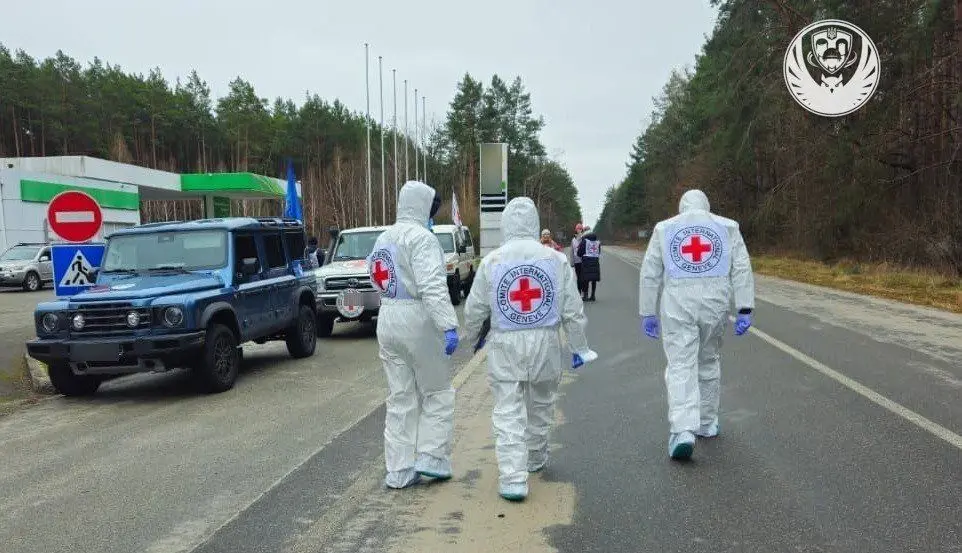
These exchanges are among the only bilateral mechanisms still functioning between Kyiv and Moscow. They do not require trust — only a logistics agreement and the willingness to move vehicles across checkpoints. That they continue even as drones fly and negotiations stall is not evidence of goodwill. It is evidence that both sides need the dead accounted for, and that some transactions survive even when all others collapse. Since the Istanbul Agreements of 2025, Ukraine has received approximately 18,000 bodies total.
Moldova Walks Away: A CIS Exit and What It Signals
Moldovan President Maia Sandu signed into law the withdrawal from the Commonwealth of Independent States on April 8, and the law took effect the same day. The CIS — the Russia-led bloc established from the ruins of the Soviet Union in 1991 — had already lost Georgia in 2008 and Ukraine gradually between 2014 and 2018. Now Moldova was formally departing, pulling westward toward the European Union, where it had held candidate status since 2022 and begun accession negotiations in 2024. Each country that formally severs institutional ties with Moscow narrows the political space Russia uses to claim a sphere of influence over its neighbors. Moldova’s departure, quiet and legally tidy, was part of the same geopolitical gravity that Hungary’s elections were testing.
The air raid siren sounded over Kyiv minutes after Putin’s ceasefire was announced. Somewhere in a Moscow database, four Ukrainian children wait under profiles that do not name their country. In the English Channel, a Russian warship escorted sanctioned tankers past a British vessel that did not stop them. And across eleven cities, families sat without power in the dark, waiting for the repair crews who would come when the drones were gone.
Tomorrow is Easter. The bells will ring in every church that still stands. The greeting “Khrystos Voskres” — Christ is Risen — will be exchanged in candlelit sanctuaries from Odesa to Kharkiv. Soldiers in the trenches will hear it and wonder, as soldiers always do, what the ceasefire will hold. The drones are grounded by decree. Whether they stay that way is another matter entirely.
A Prayer for Ukraine
1. For the Children Whose Names Were Erased
Lord, somewhere in a Russian database, four children from Kherson are listed for adoption without any mention of Ukraine. Their names were entered in a system designed to make them disappear into another country’s story. Thirty-eight others remain in occupied territory, separated from the country that bore them. We ask that You hold each one of them — known to You even when erased from the records of the world. Give them guardians who remember where they came from. Bring them home.
2. For the Ten-Year-Olds in Military Uniforms
God of the innocent, ten-year-old children appeared in footage from Crimea this week dressed in fatigues and bandages, learning to aim and pilot drones, being told this is what it means to love their country. We grieve the childhood being taken from them — not by war’s chaos, but by deliberate policy. We pray for the children of occupied Ukraine being shaped into instruments of the occupation that holds them. Protect what cannot be easily rebuilt: the years of childhood, the freedom to play without purpose, the dignity of growing up unharnessed.
3. For the 67-Year-Old Woman in Kivsharivka
Father, a 67-year-old woman was killed in Kivsharivka yesterday — her name not yet released, her death one line in a regional governor’s Telegram post. She lived near the front and stayed when others left, for reasons known only to her. We do not know her name, but You do. We ask that You receive her gently. We ask that You remember also the 71-year-old man in Kherson, the two children wounded in Kherson Oblast, the person killed in Zaporizhzhia, all those struck across regions that night. Their suffering was not collateral. It was the point.
4. For the Soldiers Running 11,000 Missions a Day
God of justice, the Unmanned Systems Forces flew over 11,000 combat missions today. Each mission is a person at a screen, a calculation, a trigger. The commanders say Ukraine is breaking Russia’s backbone while saving Ukrainian lives. Let it be true. But we pray also for the weight these soldiers carry — the knowledge of what the drone found, what it struck, what it ended. Sustain them in what they are asked to do. Give them the particular mercy of sleep when the shift ends, and the knowledge that the cause for which they fight is just.
5. For the Easter That Has Not Yet Come
Lord, tomorrow Ukraine will say “Khrystos Voskres” in churches and trenches, in basements and in exile, some of them with air raid sirens audible through the walls. A ceasefire has been declared, and no one in Ukraine quite believes it will hold. We do not ask for certainty. We ask only that the guns fall silent long enough for families to gather, for candles to be lit, for the ancient greeting to be spoken without interruption. And if the war resumes Monday, give Ukraine the strength to endure what has not ended.
In Your mercy, in Your justice, in Your time — bring this war to its end, and let the ending be worthy of what Ukraine has endured.