
Washington handed Moscow a financial lifeline on March 13, easing sanctions on Russian oil at sea just as Iran’s war sent crude prices soaring — a move Zelensky warned could funnel $10 billion into the Kremlin’s war machine. Meanwhile, Sweden hunted Russia’s shadow tankers in the Baltic, Ukraine’s drones struck a Russian explosives factory deep inside the motherland, and an exposed FSB kill squad revealed the lengths Putin will go to silence his enemies abroad.
The Day’s Reckoning
Somewhere in the Baltic Sea on the night of March 12, a Swedish Coast Guard cutter closed in on the Sea Owl I — a tanker riding low in the water under a flag almost certainly forged, its hull a floating piece of the sanctions-evasion machine that keeps Russian oil revenues flowing. At almost the same hour, six time zones away, the U.S. Treasury Department quietly issued a license allowing countries to purchase the very crude those shadow tankers exist to carry. One arm of the Western alliance was tightening the noose around Russian oil while the other was loosening it, and that contradiction would define everything that followed on March 13, 2026.
Washington’s sanctions relief handed Moscow a potential lifeline worth billions just as Iran’s closure of the Strait of Hormuz sent global crude prices soaring — a windfall Zelensky would warn in Paris could pour $10 billion directly into the Kremlin’s war machine. The IEA scrambled to release 400 million barrels from strategic reserves to stabilize markets that Russia was now exploiting. Along 1,200 kilometers of frontline, Russian casualties outpaced recruitment for a third consecutive month even as Moscow raced to field 101,000 drone operators by April. Overnight, 126 Russian drones and an Iskander ballistic missile streaked toward Ukrainian cities while Ukrainian drones struck a chemical explosives plant deep inside Russia. And in a Colombian jail cell, a detained FSB operative sat waiting for possible extradition to the United States — the first thread pulled from a newly exposed Kremlin assassination squad that had been hunting Putin’s enemies across continents.
The day’s events reached from the Baltic to Bogotá, from Paris to Pokrovsk, each one connected by the same unresolved question: was the global campaign to constrain Russia holding — or quietly unraveling?
Blood Money at Sea: How Washington Bankrolled Moscow’s War Machine
Treasury Secretary Scott Bessent wanted the world to hear “narrowly tailored” and “short-term.” What the world should have heard was cash registers ringing inside the Kremlin. The license his office issued on March 12 authorized any country to purchase Russian crude oil sitting aboard sanctioned tankers at sea — frozen assets suddenly unfrozen — with a window running through April 11. The justification was global stability: Iran’s closure of the Strait of Hormuz had choked off roughly 20 percent of the world’s oil supply, and Washington needed barrels moving regardless of whose flag flew above the deck. It followed an earlier waiver letting India buy Russian crude on tankers, after months of American pressure on New Delhi to cut those very imports.
But follow the money and the logic collapsed. Russia was already banking an estimated $150 million a day in extra oil revenue since the Iran conflict erupted. Urals crude had surged from roughly $52 to the $70–$80 range, and the Center for Research on Energy and Clean Air calculated Moscow had pocketed an additional 6 billion euros in just two weeks. Reuters projected Russia’s mineral extraction tax on crude alone could hit $7.43 billion — nearly double January’s $3.9 billion. In Paris, Zelensky put the stakes in language no diplomat could soften: the waiver could hand Russia $10 billion to pour directly into its war machine. The IEA’s emergency release of 400 million barrels from strategic reserves only underscored how badly markets had fractured.
The Kremlin could barely contain its satisfaction. Envoy Kirill Dmitriev taunted that “EU bureaucrats will soon be forced to recognize this reality.” In Washington, Senators Schumer, Warren, and Shaheen demanded Bessent testify by March 31, with Shaheen accusing the president of “filling the Kremlin’s war coffers.” Energy Secretary Wright insisted there had been “no change in policy” — a claim that rang hollow when the extraction tax he pointed to was projected to nearly double.
Bleeding Out Faster Than They Can Recruit: The Frontline’s Brutal Arithmetic
Two numbers emerged from Commander-in-Chief Syrskyi’s meeting with Swedish General Mikael Claesson that told the story of a war slowly tilting on its axis. For three consecutive months, Russian casualties had outpaced reinforcements — with the BBC Russian Service and Mediazona verifying over 200,186 losses as of late February. Yet Moscow was racing to compensate with machines instead of men, planning to expand its Unmanned Systems Forces to 101,000 personnel by April 1 while producing over 19,000 FPV drones daily, with drone units accelerating especially in southern Ukraine where Ukrainian counterattacks were inflicting operational damage. Syrskyi thanked Sweden for its 21st military aid package — advanced air defense, deep-strike capabilities, and ammunition — part of Stockholm’s involvement across coalitions supporting Ukraine’s air force, navy, drones, armor, demining, and military IT.
Across 1,200 kilometers of frontline, the pattern held: relentless Russian pressure, no breakthrough. In Sumy, attacks came from multiple directions with nothing confirmed gained. Near Vovchansk in Kharkiv, Chechen Zapad-Akhmat and 128th Motorized Rifle Brigade drone operators hammered Ukrainian positions but met counterattacks that held the line. Around Kupyansk, Ukrainian Joint Forces reported isolating Russian positions as enemy operations decreased under heavy losses. Near Borova, the frontline blurred into confusion after repeated thrusts and counterthrusts.
Ukrainian forces punched back with precision. Geolocated footage confirmed advances in southern Kostyantynivka, while drone strikes in the Slovyansk direction forced Russian Grad MLRS systems to withdraw and disrupted pontoon bridge construction across the Bakhmutka River. In Novopavlivka, footage contradicted Russian claims of advance, showing Ukrainian forces still holding the town center. Near Pokrovsk, a Ukrainian officer flagged that Russia’s Rubikon Center had fielded improved drones with new fragmentation ammunition and expanded significantly — though weather now favored Ukrainian detection. Along the Oleksandrivka axis, Ukraine strung 42 kilometers of anti-drone netting over a logistics line in Dnipropetrovsk Oblast — a physical testament to the threat overhead.
In Hulyaipole, Russian forces attacked without advance as Ukrainian systems downed two Merlin-VR reconnaissance drones; Russia answered with a FAB-3000 glide bomb. In western Zaporizhia, clearing weather unleashed Ukrainian Vampyr heavy bomber drones near Prymorske, while Russian strikes hit a bridge near Zaporizhzhia City and killed a tanker truck driver 39 kilometers from the front. Kherson stayed quiet on the ground, though Russian 205th Brigade drones struck Ukrainian positions in Kozatske. And in occupied Crimea, confirmed footage showed Ukrainian GUR operators had destroyed a Russian Kasta-2E2 radar station in Ponyzivka — while a Russian milblogger lamented insufficient missiles to counter the drone strikes, leaving mobile fire groups as the last line of defense.
Death From Six Directions — And the Drones That Struck Back
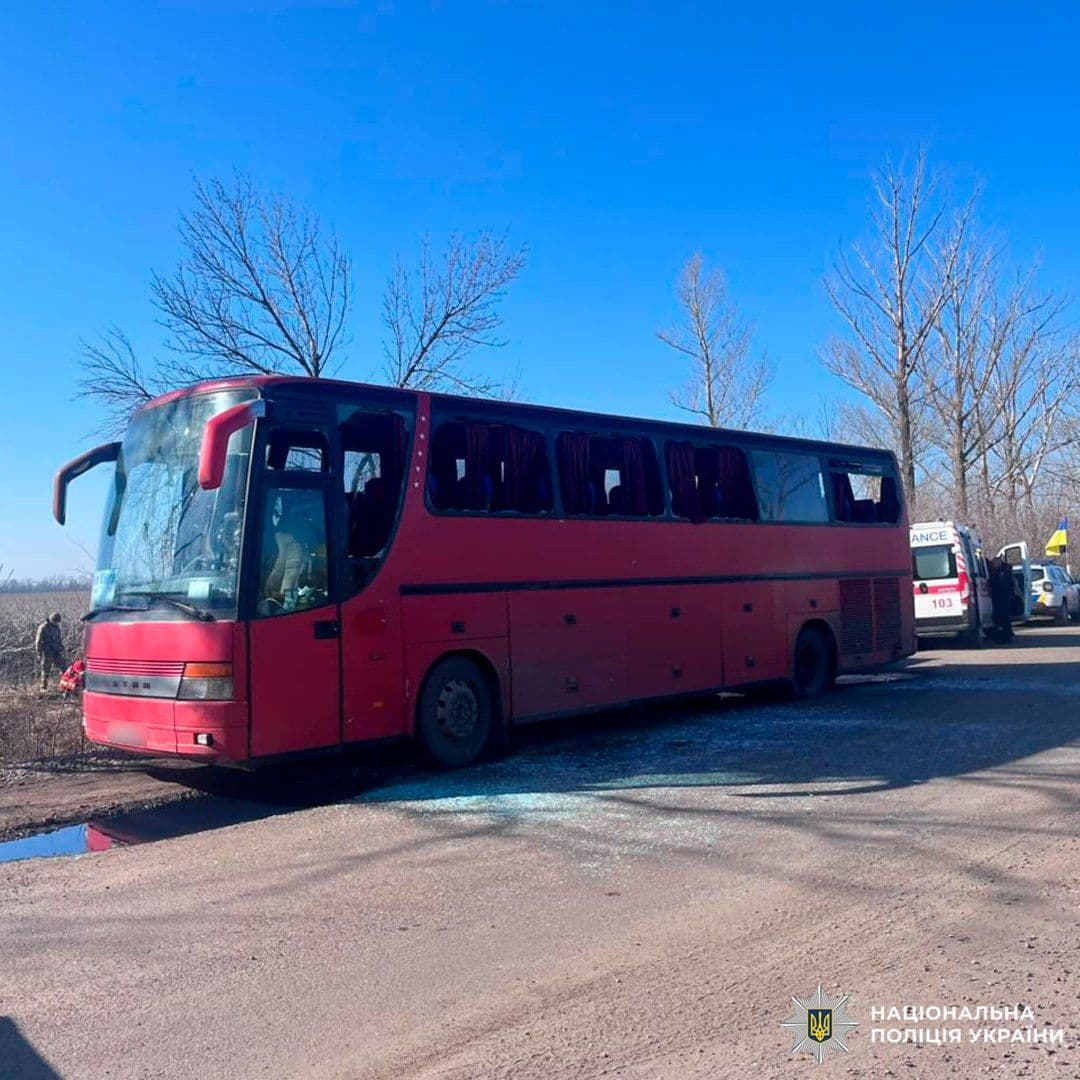
The swarm came from everywhere at once. Between nightfall on March 12 and dawn on March 13, Russia launched one Iskander-M ballistic missile from Rostov Oblast and 126 strike drones — roughly 80 of them Shaheds — converging from six launch corridors: Bryansk, Kursk, Oryol, Millerovo, Primorsko-Akhtarsk, and occupied Crimea. Ukrainian air defenses clawed 117 out of the sky. The missile and eight drones that got through struck civilian enterprises, transport infrastructure, and residential areas across Kharkiv, Mykolaiv, and Odesa oblasts. Near Nova Oleksandrivka in Kharkiv Oblast, a Lancet drone found a civilian bus at 9:15 a.m. — fifteen passengers aboard, twenty kilometers from the combat zone. The 53-year-old driver was killed, four passengers injured. Two days earlier, another bus had been hit in Kherson Oblast, injuring eleven.
But the skies carried traffic in both directions. Ukrainian drones struck the Azot chemical plant in Nevinnomyssk, Stavropol Krai — a facility producing HMX and RDX, the explosive compounds packed into Russian munitions. Geolocated footage revealed a fire at a Russian oil depot in Kendektamak, Bashkortostan, while a mid-range strike hit another depot in occupied Makiivka, 49 kilometers behind the frontline. The arms race overhead kept evolving — Russian forces were now mounting infrared spotlights on Shahed tails to blind Ukrainian interceptor drone cameras, fitting similar systems on Molniya drones at 200 to 300 meters, each adaptation begetting the next.
Standing before parliament, Energy Minister Shmyhal laid out the toll: 69 missiles and roughly 260 drones had struck the Kremenchuk refinery alone. Yet Ukraine had adapted, importing nearly 250,000 tons of fuel in March from more than ten countries, pushing reserves to nearly 100,000 tons each of gasoline and diesel. The resilience was real — but ordinary Ukrainians felt the cost at the pump, where premium diesel had surged from 64 to near 82 hryvnias per liter.
Nobody at the Table: How Peace Talks Collapsed Into Chaos
Imagine being told your country’s survival depends on a negotiation — and then watching every chair at the table empty out, one by one. That was Ukraine’s reality on March 13, a diplomatic landscape Zelensky himself described as “increasingly chaotic.” White House officials couldn’t travel because the Iran war had locked them in Washington. Russia refused to hold trilateral talks on American soil, proposing Switzerland or Turkey instead. Ukraine’s delegation stood packed and ready to fly to Washington or Miami — but there was nobody waiting on the other end.
The last time all three parties had actually sat across from each other was February 16, in Geneva. A follow-up round, initially expected in Abu Dhabi in early March, was shelved the moment U.S.–Israeli strikes on Iran erupted on February 28. The one meeting that did happen — Kremlin envoy Kirill Dmitriev sitting down with Trump’s representatives in Florida on March 11 — excluded Kyiv entirely, reducing the trilateral framework to a bilateral conversation about Ukraine’s future conducted without Ukraine in the room. The architecture of a peace process still existed on paper: designated envoys, proposed venues, a stated commitment from all sides. In practice, it had dissolved into a diplomatic traffic jam where everyone claimed to want movement but nobody could agree on a direction, a destination, or even who belonged in the car.
The Invisible Puppet Master: Putin’s Fingerprints on Iran’s War
When a drone slammed into a British military base in Erbil, northern Iraq, the wreckage told a story that stretched far beyond the Middle East. The Iranian drone that struck the base had flown lower and more effectively than previous waves — tactics that British officers recognized immediately, because they had watched Russian operators refine those same techniques against Ukrainian cities for years. UK Defense Secretary John Healey connected the dots publicly, declaring that “Putin’s hidden hand is behind some of the Iranian tactics and potentially some of their capabilities as well.” The student had learned from the master, and the master was still in the room.
Even Trump acknowledged it, however reluctantly. In a Fox News interview aired the same day, the president offered a half-shrug of an admission: “I think he might be helping them a little bit, yeah, I guess. And he probably thinks we’re helping Ukraine, right?” The casual tone belied the gravity of the concession — particularly since his own special envoy Witkoff had suggested just days earlier, after speaking with Moscow, that “we can take them at their word” on denying intelligence-sharing with Iran.
Healey saw the larger machinery at work and named it plainly: Putin was “benefiting from sky-high oil prices at the moment,” which “helps him with a fresh supply of funds for his brutal war in Ukraine.” Trace the loop and the elegance of Moscow’s position became almost perverse — Russian intelligence helped Iran fight more effectively, Iran’s war drove up global oil prices, higher oil prices poured billions into Russia’s war chest, and that money funded the very conflict generating the intelligence Russia shared with Tehran in the first place. A self-sustaining engine of profit and destruction, spinning faster with each revolution. And Washington, by easing sanctions, had just greased the gears.
The Arsenal Runs Dry — And Washington Won’t Accept Help
Somewhere in the Pentagon’s accounting offices, a number was growing that nobody wanted to say out loud. The Financial Times reported that the United States had burned through “years’ worth” of Tomahawk cruise missiles in just days of combat against Iran. Pentagon officials reportedly told senators that the first six days alone had cost over $11.3 billion, predominantly in ammunition — each Tomahawk a $2 million Raytheon-built weapon disappearing into Iranian targets at a rate the production line couldn’t hope to match. For Ukraine, the implications were devastating. Trump had once dangled the possibility of providing Tomahawks to Kyiv as leverage against Moscow, only to shelve the idea after a tense meeting with Zelensky in October 2025. Now there was nothing left to dangle. Justin Bronk of RUSI confirmed what the math already showed: deliveries were “more unlikely than before.” The quiver wasn’t just empty — it was being emptied faster than it could be refilled.
What happened next defied logic. In the same Fox News interview, Trump dismissed Ukraine’s offer to share the drone defense expertise it had spent three years perfecting under fire: “No, we don’t need their help in drone defense. We know more about drones than anybody. We have the best drones in the world, actually.” The boast hung in the air while more than ten countries — facing the same Iranian Shaheds that Russia had been launching against Ukrainian cities since 2022 — scrambled to request exactly the help Trump was declining. Zelensky had already dispatched expert teams to Jordan, Saudi Arabia, Qatar, and the UAE, with additional advisors reportedly arriving at the U.S.-run Muwaffaq Salti Air Base in Jordan. The world was lining up at Ukraine’s door. Washington alone refused to knock.
Born in a Basement, Built Into an Arsenal: Ukraine’s Drone Revolution Goes Global
Trump could dismiss the offer, but the numbers didn’t care about politics. Behind the diplomatic rebuff lay an industrial transformation so vast it had quietly placed Ukraine alongside China as one of the planet’s dominant drone manufacturers. Defense Minister Mykhailo Fedorov announced in February that Ukraine was on track to produce a record seven million drones in 2026 — rivaling the five to eight million China builds annually. More than 500 companies, some operating from official factories and others from workshops that didn’t appear on any government register, were building the machines reshaping modern warfare.
Consider what $2,000 buys in this new economy of killing. A Wild Hornets STING interceptor — a drone the size of a coffee machine that hunts other drones in the dark, responsible for at least half of all drone-on-drone intercepts over Ukraine according to the company. Compare that to a $4–8 million interceptor missile doing roughly the same job, and the reason ten countries were calling Kyiv becomes obvious. Wild Hornets denied Wall Street Journal reports of a deal with Saudi Aramco, insisting its focus remained on supplying Ukraine’s armed forces, though it acknowledged daily inquiries from Middle Eastern and EU countries. Its latest variant, the Werewolf, reportedly exceeded 300 km/h at ranges of 15–25 kilometers.
The industry had already outgrown Ukraine’s borders. Ukrspecsystems opened a production facility in Suffolk, England — £200 million invested, 1,000 drones monthly, the UK government co-backing a factory whose output would serve British forces alongside Ukrainian ones. Skyeton, which pivoted from light aircraft to military drones after Russia’s first invasion in 2014, now employed over 500 people producing more than 1,000 Raybird reconnaissance drones per month. What began in basements and garages in 2014 had become, by 2026, a global arsenal that nations were lining up to access — whether Washington acknowledged it or not.
Ghost Ships in the Baltic: Sweden’s Lonely Hunt for Russia’s Oil Smugglers
At 8:30 on the evening of March 12, a Swedish Coast Guard cutter pulled alongside the Sea Owl I off the port city of Trelleborg, and boarding teams climbed onto a vessel that embodied everything wrong with the West’s fractured approach to Russian oil. The tanker was sailing empty under a suspected false Comorian flag, heading from Brazil toward the Russian port of Primorsk — its third run toward St. Petersburg since January 2025. It had been under EU sanctions since October 2025. It was the second suspected shadow fleet vessel Sweden had intercepted in just eight days, after the cargo ship Caffa was stopped on March 6. And at the very moment Swedish sailors were documenting violations aboard its deck, the U.S. Treasury was issuing licenses to buy the oil these ships existed to carry.
“The threats to maritime safety and the environment are too great,” said Daniel Stenling of the Swedish Coast Guard — a statement that barely scratched the surface. By March 13, prosecutors had launched a criminal investigation into the ship’s Russian captain. Swedish Civil Defense Minister Carl-Oskar Bohlin elevated the stakes further, calling the shadow fleet “a significant security and environmental threat.” Ukraine’s Foreign Minister Sybiha praised Sweden’s action as striking directly at Russia’s ability to finance its war.
The fleet’s official purpose was crude but effective — move sanctioned oil aboard aging, underinsured tankers flying whatever flag of convenience could be purchased. But Western intelligence agencies increasingly suspected these rusting hulls served darker purposes as well: platforms for Russian hybrid operations including espionage and drone launches, floating extensions of a state that had learned to weaponize everything from energy markets to maritime law. Sweden was hunting them with determination. Whether one NATO ally’s dragnet could offset another’s sanctions relief was the question nobody in Brussels or Washington wanted to answer honestly.
Disconnected: Moscow Goes Dark and Reaches for a Pager
Eight days without reliable internet in one of Europe’s largest capitals, and the coping mechanisms told the story better than any government briefing. Pager sales at Wildberries, Russia’s largest retailer, had jumped 73 percent. Walkie-talkies and landline telephones climbed by more than a quarter. Paper maps of Moscow — the kind tourists used to buy as souvenirs — had nearly tripled in sales. A 21st-century capital was learning to navigate itself with 20th-century tools, and nobody in the Kremlin was apologizing.
The official explanation was security. Ukrainian long-range drones use mobile and GPS networks for navigation and targeting, and Kremlin spokesman Dmitry Peskov insisted the shutdowns would continue as long as “necessary to ensure the safety of our citizens.” He accused Ukraine of deploying “increasingly sophisticated attack methods” that required “more technologically advanced countermeasures” — though shutting off the internet felt less like a technological countermeasure and more like pulling the plug and hoping for the best. The cost of that hope was mounting: an estimated one billion rubles — $12.5 million — per day in business losses. State Duma lawmakers complained they had lost internet access inside parliament itself. Peskov acknowledged that even the presidential administration had been forced onto landline phones.
But many industry experts suspected the blackouts served a purpose beyond drone defense: preparation to sever Russia’s connection to the global internet entirely. Recently approved legislation gave security services blanket authority to order internet providers to suspend mobile services at will, no justification required. Russia already led the world in internet disruptions in 2025, according to the research group Top10VPN. What was unfolding in Moscow looked less like a temporary security measure and more like a rehearsal — a government testing how far it could push its own population into digital isolation, and a population grudgingly discovering it could survive there.
A President Without Rest: Zelensky’s Race Across Europe
The day before, he had been in Romania, signing energy and defense agreements and watching Ukrainian pilots train on F-16s at a facility far from the frontline but essential to it. Now, on March 13, Zelensky stepped onto French soil for the second time in 2026, carrying a diplomatic calendar that read less like a schedule and more like a battle plan — because for a wartime president whose country’s fate turned on alliances as much as ammunition, every meeting was another front.
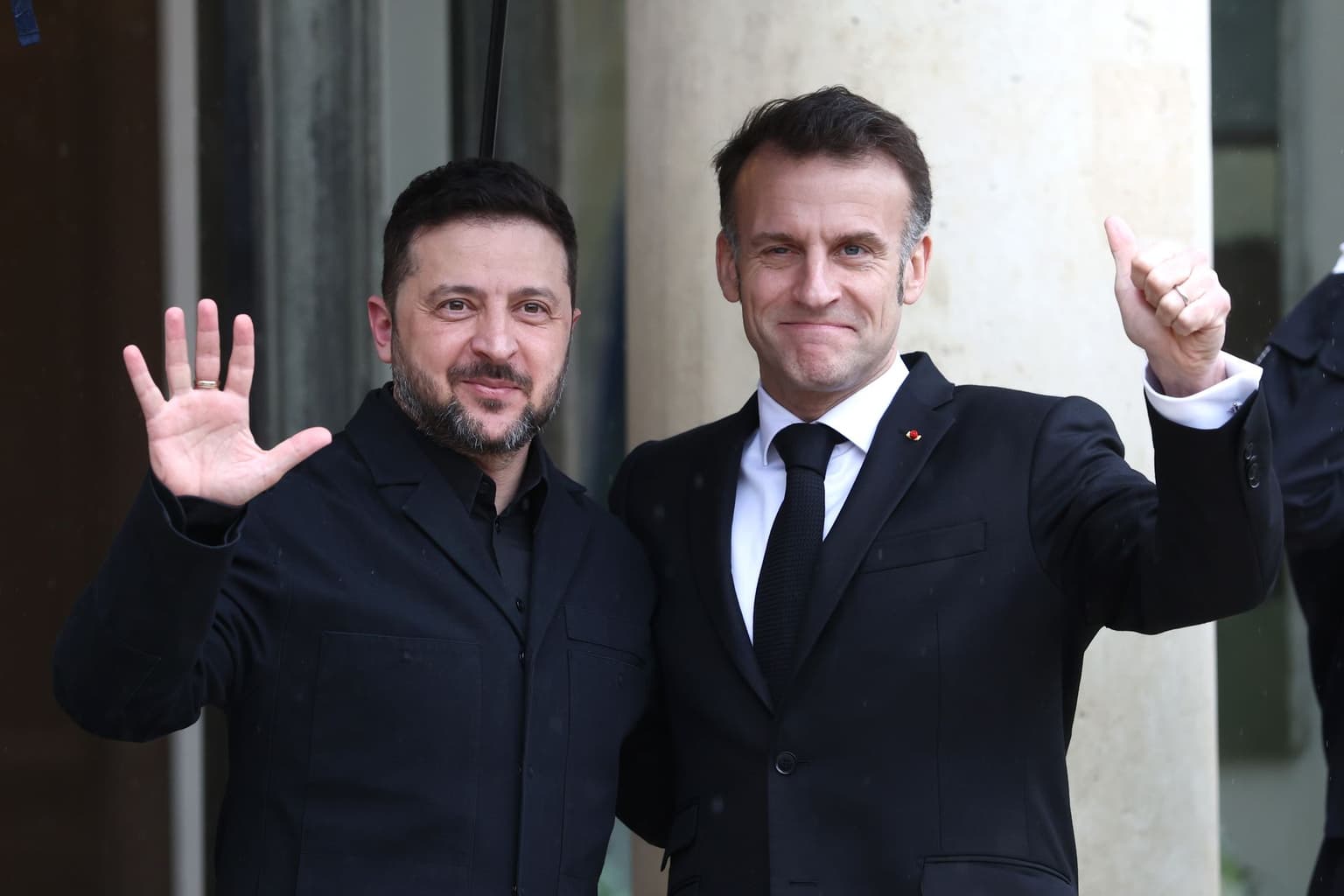
In Paris, Zelensky and Macron discussed air defense, combat aviation, and the potential purchase of up to 100 Dassault Rafale fighter jets and eight SAMP/T air defense systems under a deal signed the previous year. But the hardware was backdrop. The real stage was the joint press conference, where Zelensky looked into the cameras and delivered the number he had come to Paris to plant in every headline: the U.S. sanctions rollback could hand Russia $10 billion — money that “definitely doesn’t help peace.” Macron stood beside him and drew the European line. The EU and remaining G7 members would maintain sanctions regardless of oil market chaos. “The context of rising oil prices should in no way lead us to reconsider our sanctions policy towards Russia,” the French president said, dismissing the American waiver as limited and negligible. The message to Washington was unmistakable even without naming it directly.
Zelensky pressed further, noting that more than ten countries had reached out to Ukraine for help countering Iranian drones — “effectively the same drones that the Iranian regime delivered to Russia, and taught the Russians how to use them against the peaceful Ukrainian population.” The Élysée Palace indicated the leaders also reviewed Coalition of the Willing commitments on post-war security guarantees, with France and the UK having pledged troop deployments at their January 6 summit. Separately, Zelensky met exiled Iranian opposition figure Reza Pahlavi for the second time, following their Munich Security Conference encounter in February. “Ukraine truly wants to see a free Iran that will not cooperate with Russia or destabilize the Middle East, Europe, and the world,” Zelensky said — a wartime president reaching past the current conflict to shape the one that might follow.
A Mole in the Ranks, a Billion-Dollar Verdict, and Missiles Over NATO Skies
The Russian agent hiding inside Ukraine’s own military was a drone operator from a brigade deployed in Kharkiv region — recruited not through ideology or money but through his ex-wife, who lives in Russian-occupied Zaporizhzhia and works for Moscow. His target was Brig. Gen. Andriy Biletsky, commander of the Third Army Corps, former Verkhovna Rada member, and founder of the National Corps political party. Using his access to internal military data, the agent tracked Biletsky’s movements near frontline positions and fed the information to Russian handlers who intended to direct a missile or aerial strike. He was also tasked with pinpointing his brigade’s headquarters and training center for separate attacks. Ukraine’s Security Service uncovered the operation early, documented his contacts with Russian intelligence, and detained him inside a military garrison during the final phase. The threatened locations were secured. He now faces life imprisonment under martial law — betrayal carrying the heaviest sentence the wartime legal system can deliver.
Six thousand kilometers from the frontline, in a Swiss courtroom where the weapons were briefs and precedent, Ukraine won a different kind of victory. Switzerland’s highest court upheld a $1.37 billion arbitration award against Gazprom for refusing to pay transit fees during the full-scale invasion, adding 450,000 Swiss francs in costs and interest to bring the total past $1.4 billion. Naftogaz CEO Serhii Koretskyi confirmed the company would pursue enforcement aggressively, with Ukraine ultimately seeking $6.9 billion in total arbitration damages — turning the legal system into another front in a war Russia was losing in courtrooms even when it advanced on battlefields.
And over Turkey, NATO intercepted a third Iranian ballistic missile entering allied airspace in under two weeks — following intercepts on March 4 and March 9. Turkey’s Defense Ministry demanded Tehran explain itself, declaring that “all necessary measures are being taken decisively and without hesitation.” Since February 28, Iran had launched over 500 ballistic missiles and more than 2,000 drones, though intelligence suggested its stockpiles were thinning. Ukraine, whose expertise in countering these very weapons had been forged under years of Russian Shahed attacks, had dispatched expert teams to help strengthen regional defenses — the war’s hard-won lessons traveling farther than anyone had imagined.
Musical Chairs in the Kremlin: Putin Reshuffles His Enforcers
For nearly 15 years, Colonel General Alexander Gorovoy had served as the MVD’s first deputy minister — a tenure so long it had become part of the ministry’s institutional furniture. On March 12, Putin signed a decree and removed him, replacing Gorovoy with Lieutenant General Andrei Kurnosenko, who had been running the ministry’s economic security and anti-corruption directorate. The official explanation was mandatory retirement at 65, a justification that might have been convincing if Putin hadn’t routinely waived the same rule for other aging loyalists, including Chief of the General Staff Gerasimov. Russian insider sources read the move as the opening act of a broader MVD reshuffling — not a retirement but a repositioning of power. A political Telegram channel added a detail that sharpened the picture: Kurnosenko reportedly has strong ties to Security Council Secretary Alexei Dyumin, who became the youngest-ever member of Putin’s Security Council when appointed in September 2024. In Putin’s Russia, personnel decisions are never just personnel decisions — they are signals about who is rising, who is falling, and whose loyalty is being rewarded with the levers of state enforcement.
Three Dead, Twenty-Seven Wounded: The Toll Nobody Counts Anymore
They were not soldiers. A 32-year-old man in Sumy Oblast, killed by a drone that found him in a place where civilians are supposed to be safe. A 45-year-old nearby, wounded in the same strike. A 52-year-old in Chernihiv Oblast, driving a civilian vehicle when an FPV drone slammed into it. In Donetsk Oblast, at least two people were killed and six wounded — names that would never trend on social media, lives ended or shattered in a region the world had grown numb to hearing about. In Kharkiv Oblast, three more wounded near the Russian border. In Dnipropetrovsk Oblast, two wounded as Russian forces hit five districts with artillery, drones, guided glide bombs, and a missile. In Zaporizhzhia, three wounded. In Kherson Oblast, eleven. In Odesa, Russian drones struck port infrastructure — no casualties reported this time, though the infrastructure that feeds a nation took another blow.
At least three killed and 27 injured across Ukraine in 24 hours. These numbers no longer make international headlines. They no longer provoke emergency UN sessions or trending hashtags or candlelight vigils in foreign capitals. They have become background noise in a war that the world follows in diminishing intervals of attention. But in hospital wards across eight oblasts, the wounded were not background noise. They were people who woke up on March 13 expecting an ordinary day and never got one.
What March 13th Revealed
Stand on the deck of the Sea Owl I as Swedish sailors document violations, then look west across the Atlantic to where the U.S. Treasury is licensing the sale of the very crude these ghost ships exist to carry. Listen to a president dismiss Ukraine’s drone expertise while ten countries line up to beg for it. Watch Zelensky in Paris warning that $10 billion is about to flow into the Kremlin’s war chest while Democratic senators draft letters demanding answers that won’t arrive before March 31.
Day 1,479 did not introduce new contradictions — it stripped the existing ones bare. The economic siege that was supposed to starve Moscow into difficult choices was being loosened by the same government that built it. A drone industry producing seven million units a year, with factories now operating on British soil, was being waved away by the country burning through its own missile stockpiles faster than they could be replaced. One NATO ally hunted Russia’s shadow fleet in the Baltic while another eased the sanctions that fleet was designed to circumvent.
On the ground, the brutal arithmetic ground forward without resolution. Russian casualties outpaced reinforcements for a third consecutive month, yet Moscow was racing to field 101,000 drone operators by April. Ukrainian forces advanced in Kostyantynivka and shattered Russian artillery preparation near Slovyansk, but 126 drones and a ballistic missile still found Ukrainian soil overnight. Fuel prices climbed. Children were wounded in Zaporizhzhia. The Kremenchuk refinery absorbed another round of strikes it was never designed to survive.
Moscow’s residents navigated their capital with pagers and paper maps. Swiss courts ordered Gazprom to pay $1.4 billion. Iranian missiles crossed Turkish airspace for the third time. And in a Suffolk factory, Ukrainian engineers built a thousand drones a month for a war that had rewritten the rules of what air power means.
Day 1,479. The line held. The contradictions deepened. The war ground forward.
Prayer For Ukraine
1. Protection Over the Grinding Frontline Father, across 1,200 kilometers of contested ground, Ukrainian soldiers are holding the line — in Kostyantynivka where they advanced, in Slovyansk where their drones silenced Russian artillery, in Kupyansk where they isolated enemy positions under heavy fire. We ask Your hand of protection over every defender on every meter of that front. Shield the drone operators hunting Russian equipment. Guard the units stringing anti-drone netting over supply roads in Dnipropetrovsk. Give strength to the weary, courage to the outnumbered, and endurance to those who have held their ground for 1,479 days. Let the line hold, Lord, because You hold them.
2. Comfort for the Wounded and the Grieving Lord, we lift to You the 53-year-old bus driver in Kharkiv Oblast who was killed simply doing his job, the four passengers injured beside him, and the families in Sumy, Chernihiv, Donetsk, Kherson, and Zaporizhzhia who woke to ordinary mornings and ended the day in hospital wards. Three killed, twenty-seven wounded in a single day — numbers the world has stopped counting but You have not. Be near to the brokenhearted. Comfort those who grieve. Heal those lying in pain tonight across eight oblasts, and remind them they are not invisible to You or to us.
3. Wisdom for Leaders Navigating Impossible Choices God of wisdom, the path to peace has become chaotic — trilateral talks stalled, allies divided, sanctions loosened while shadow fleets are hunted. We pray for President Zelensky as he fights on diplomatic fronts from Bucharest to Paris. Give him wisdom and stamina. We pray for President Macron and European leaders holding the line on sanctions. And we ask You to convict the hearts of those in Washington making decisions that could fund the very war machine they claim to oppose. Let leaders choose justice over convenience, and courage over calculation.
4. Justice Against the Machinery of War and Assassination Righteous Judge, we have read of Russian agents recruited through family members to assassinate Ukrainian commanders, of a mole inside Ukraine’s own military feeding coordinates to Moscow. We have seen Swiss courts order Gazprom to pay $1.4 billion it stole through broken contracts. We ask for Your justice to continue to expose what is hidden — every plot, every scheme, every manipulation — and to protect those who serve Ukraine faithfully. Strengthen the hands of Ukraine’s counterintelligence. Let the legal victories in courtrooms become as consequential as the victories on battlefields.
5. Endurance for a Nation That Refuses to Break Lord, Ukraine absorbs 126 drones in a single night and stabilizes its fuel supply by morning. Its engineers build seven million drones a year from workshops and factories born of necessity. Its people endure rising prices, shattered infrastructure, and a world whose attention fades while their suffering does not. We praise You for the resilience You have woven into this nation. Sustain it, Father. Strengthen the hands that rebuild. Encourage the hearts that grow weary. Let the world see what we see — a people who will not be broken. Sustain Ukraine, bring justice to the oppressor, and bring this war to an end. Amen.