
As Russian forces tightened the noose around Pokrovsk and drones lit up refineries across Russia, Washington handed Kyiv a peace plan that looked more like surrender.
The Day’s Reckoning
You’re sitting in the Presidential Office in Kyiv on the morning of November 22, staring at a document that transforms three years of sacrifice into 28 numbered points. Your eyes scan each line—territory ceded, military slashed, alliances forbidden. Outside your window, repair crews work on damage from the 104 drones that screamed across Ukrainian skies last night. Inside this room, the weight presses down on your chest: accept terms that feel like capitulation, or risk losing your most powerful ally five days before Thanksgiving.
You set down the document and walk to the window. The war’s center of gravity is shifting from trenches to conference rooms, from Pokrovsk’s rubble to Geneva’s sterile halls. While 150,000 Russian soldiers grind forward through eastern Ukraine and your drone operators hunt helicopters deep inside Russia, the real battle erupts in Washington corridors and European capitals. Trump’s envoys crafted this proposal with Russian negotiators—surrender Crimea and Donbas, cap the military, constitutionally reject NATO membership. The deadline: November 27.
But you’ve also just read the report about your electronic warfare units downing 21 Kinzhal hypersonic missiles using jamming technology. This morning, a Ukrainian drone destroyed a Russian helicopter in flight for the first time. You can still strike back even as diplomacy tries to force surrender.
You hear footsteps in the hallway. By nightfall, your delegation will board planes for Switzerland. European leaders are scrambling to rewrite the American plan. In Pokrovsk, your soldiers fight house to house against an encirclement that might be rendered meaningless by signatures in Geneva. You return to your desk and pick up the document again. Five days to make the hardest decision of the war.
Five Days to Capitulation
You’re reading the document when your assistant brings you the file on Steve Witkoff. A Manhattan real estate developer who spent months walking through Moscow parks with Kirill Dmitriev, Putin’s chief economic negotiator. You flip through surveillance photos—the two strolling through Zaryadye Park last August, talking like old friends while European allies were excluded.
Their collaboration produced this: 28 points reading like the Kremlin’s wish list. You read aloud. Recognize Russian control over Crimea, Luhansk, and Donetsk. Reduce Ukraine’s military. Abandon NATO. Accept it by November 27, or lose American support.
You call Zelensky. His words cut through your training: Ukraine faces either loss of dignity or risk of losing a key partner. You’ve been in this job long enough to recognize a surrender document.
Your phone buzzes with Washington messages. Senator McConnell: “Rewarding Russian butchery would be disastrous to American interests.” Then Halifax—senators revealing Rubio privately told them the plan was essentially a Russian proposal Witkoff agreed to pass along. Not America’s plan. Russia’s. Senator Rounds called it written in Russian.
Then Rubio contradicts his own senators publicly. You close your eyes and rub your temples. The confusion tells you everything: somewhere between Witkoff’s Moscow strolls and Trump’s deadline, American policy became indistinguishable from Russian demands.
You open the Switzerland delegation file. Andriy Yermak will lead. Nine officials including Budanov. You have until November 27 to rewrite enough to make it survivable. You pick up your pen and start marking changes.
The Pocket Tightens
You’re crouched in a basement in Pokrovsk, studying the map. Red markers show Russian positions closing from five directions. Your radio crackles—another infiltration two blocks east. You’ve held this sector for 21 months, watching 150,000 Russian troops press toward this city.
You step outside. The fog lifted, which means your drones can fly but Russian glide bombs will find targets. You count buildings still standing—fewer each day. Every room becomes a battleground.
Your team leader shows you the drone feed. Russian forces advancing along the T-0504 toward Myrnohrad. You see the objective—fix your forces inside while tightening encirclement, blocking every escape until logistics become impossible. A fellow soldier tells you what you know: Pokrovsk is lost. Russian forces cut all logistics into Myrnohrad. The pocket is closing.
You hear the whistle of an incoming FAB-1500 and dive for cover. The explosion sends a shockwave through your chest. When you look up, another building collapsed. But you notice something—the rubble creates better cover for your position. Destruction becomes defense. You radio your team to reposition behind the new obstacle.
By nightfall, you’re exhausted. Russian forces press from every direction. You hold every position you can, abandon those you can’t, and prepare for brutal calculations about which positions are worth dying for. You check your ammunition, refill your water, and settle in for another night. The siege has entered its final phase, and somewhere in Switzerland, diplomats prepare to negotiate terms that might render every death here politically meaningless.
Kupyansk: The Town That Refuses to Fall
You’re manning a checkpoint in southern Kupyansk when you hear it again—Moscow claiming the town has fallen. You look at your squad, and someone laughs bitterly. You’re standing in the town they say they’ve captured. Your positions are active. Your weapons loaded. The Ukrainian flag still flies over the administration building three blocks north.
Colonel Trehubov’s voice comes through command channel, laying out reality. Russian forces keep infiltrating using small groups—three, four, five soldiers bypassing your positions. Their numbers decreased to about 40 personnel as your counterattacks pushed them back. You were part of one yesterday.
You hear movement in the fog to your east. The “kill zone” stretches 20 kilometers wide here—where drone concentration makes any movement lethal. You ready your weapon and signal your partner. Russian forces exploit terrain and weather, moving in small groups through draws and tree lines. But you know every corner of this town, every sightline, every building that can be defended.
The fog lifts slightly and you spot them—four soldiers along the treeline. You call in the drone strike. Within minutes, your FPV operator has eyes on them. The Russians scatter, but they can’t build logistical networks needed for occupation. Infiltration is not conquest.
Your radio crackles with another Moscow broadcast claiming victory. You look at the flag still flying, feel the weapon in your hands, see your squad holding positions. Kupyansk remains what it’s been: contested, damaged, strategically important, and stubbornly unconquered. You’ll keep pushing them back.
When the Sky Swallowed Steel
You’re monitoring the radar screen in the predawn darkness when the contact appears—a Mi-8 transport helicopter cruising at altitude near Kuteynikovo in Rostov Oblast, 190 kilometers behind Russian lines. The crew thinks they’re safe, far from artillery range.
You watch your FP-1 long-range drone climb silently through the cold morning air on your screen. You adjust the approach angle, closing distance at speeds the helicopter’s defensive systems weren’t designed to intercept. Your hands are steady on the controls. The footage from the drone’s camera shows the final seconds—you’re approaching from below, the helicopter pilot sees you too late and tries to evade. The collision sends both aircraft tumbling toward earth in flames.
You’ve just made history. First helicopter downed by drone strike while in flight. Not grounded. Not on the tarmac. In the air, moving, with crew aboard. You radio it in quietly, letting the implications speak for themselves.
But your mission isn’t over. You’re already coordinating the next wave. Across your screens, you track drones heading toward four Russian regions. By dawn, the skies turn orange with industrial fire.
Your colleague monitoring the Saratov feed calls you over. The oil refinery is burning—fourth time this month. You watch Ukrainian drones slip through hundreds of kilometers to strike with precision. Another screen shows Orsk, where the massive Orsknefteorgsintez refinery erupts when drones find its primary refining unit. Black smoke climbs so high you can see it on satellite imagery.
You switch to the Crimea feed. Feodosia’s Marine Terminal becomes a chain of fire as drones dive toward oil storage tanks. You watch Russian anti-aircraft guns open up, tracer rounds carving desperate patterns through darkness. But the drones find their marks.
By morning, you tally the results: four refineries and a power plant smoldering across Russia’s heartland. Airports closed. Power out for thousands. You download the footage and prepare your report. Russia can advance meters in Pokrovsk, but you can reach the refineries sustaining their entire invasion. You’re already planning tomorrow’s targets.
The Weapon Russia Couldn’t Stop
You’re sitting in the Lima EW jamming system truck when the alert sounds—another Kinzhal launch detected. The hypersonic missile is supposed to be unstoppable, designed to slip past every NATO air defense. Your Patriot batteries would have to fire multiple interceptors to bring it down, and you’re running low.
But you’ve discovered something better. You activate the Lima system and watch your screens as it creates a disruption field, preventing the Kinzhal from communicating with Russia’s GLONASS navigation satellites. You can almost feel the missile’s confusion as it loses track of its location. Its guidance systems frantically order course corrections. The missile responds, maneuvering at high speed. The corrections come faster. The turns grow sharper.
Through your sensors, you track the missile’s trajectory growing more erratic. Eventually the airframe simply can’t handle the stress. You watch it tear itself apart, killed by its own defensive maneuvers, crashing miles from its target into an empty field.
You mark it in your log: Kinzhal number 19. Or maybe 21—later reports suggest higher numbers. You’ve been doing this for two weeks now. Not intercepting with Patriots. Not shooting down with missiles. Jamming them into self-destruction with electronic warfare.
Your commander explained the necessity plainly when you got this assignment. Ukraine has a shortage of Patriot interceptors. Russia recently modified its missiles to execute unexpected diversionary maneuvers confusing Patriot systems. You needed an adaptation not depending on limited missile stocks.
A new alert sounds. Another launch. You activate the Lima system again and watch Russia’s most sophisticated ballistic missile—designed to penetrate any defense—fall victim to a jamming system that cost a fraction of what a Patriot interceptor does. You log the intercept and settle back in your chair.
By November 22, you’ve proven something vital: adaptation can defeat sophistication. Engineers can outsmart weapons. And the missile Russia thought was unstoppable can be turned into its own executioner. You check your systems and wait for the next launch. They’ll keep coming, and you’ll keep jamming them.
The Drones Over NATO
You’re on security duty at Volkel Air Base, walking the perimeter on the evening of November 21, when you see them—dark shapes moving against the darkening sky. Drones. Multiple contacts. Your hand goes to your radio as you track them with your eyes.
Within minutes, your team deploys with weapons ready. You take aim at one of the drones, waiting for authorization to fire. The order comes through, but before you can engage, the drones bank away and disappear into the night. You lower your weapon, frustrated. They came, they observed, and they left on their own terms.
You know what’s beneath your feet as you stand here—in facilities no one officially acknowledges, American nuclear weapons rest in their bunkers, part of NATO’s nuclear sharing arrangement. And someone just mapped your defenses.
Your radio crackles with reports from Eindhoven Airport. More drones, forcing them to suspend civilian and military air traffic. You’ve been briefed on the pattern—for months, mysterious drones have plagued European military installations. Denmark, Lithuania, Finland, Estonia, Romania, Germany, Belgium, and now the Netherlands.
You remember the Belgian Defense Minister’s statement after drones circled Kleine Brogel Air Base for three nights. An espionage operation, he’d said, linking them to Russian airspace violations. That base, like yours, houses American nuclear weapons.
You watch the sky as darkness falls completely. The strategic logic is clear in your mind—Russia is conducting Phase Zero operations. Pre-conflict activities designed to destabilize adversaries before actual war begins. Map NATO bases. Test air defense response times. Identify vulnerabilities. All while maintaining just enough deniability to avoid triggering Article 5.
Your shift commander calls you in for debriefing. You walk back across the tarmac, looking up at the empty sky. The drones disappeared without being shot down, without being recovered. They simply left when they chose to, after gathering whatever information they came for. You file your report and head home, wondering when they’ll return.
The Cold That Kills
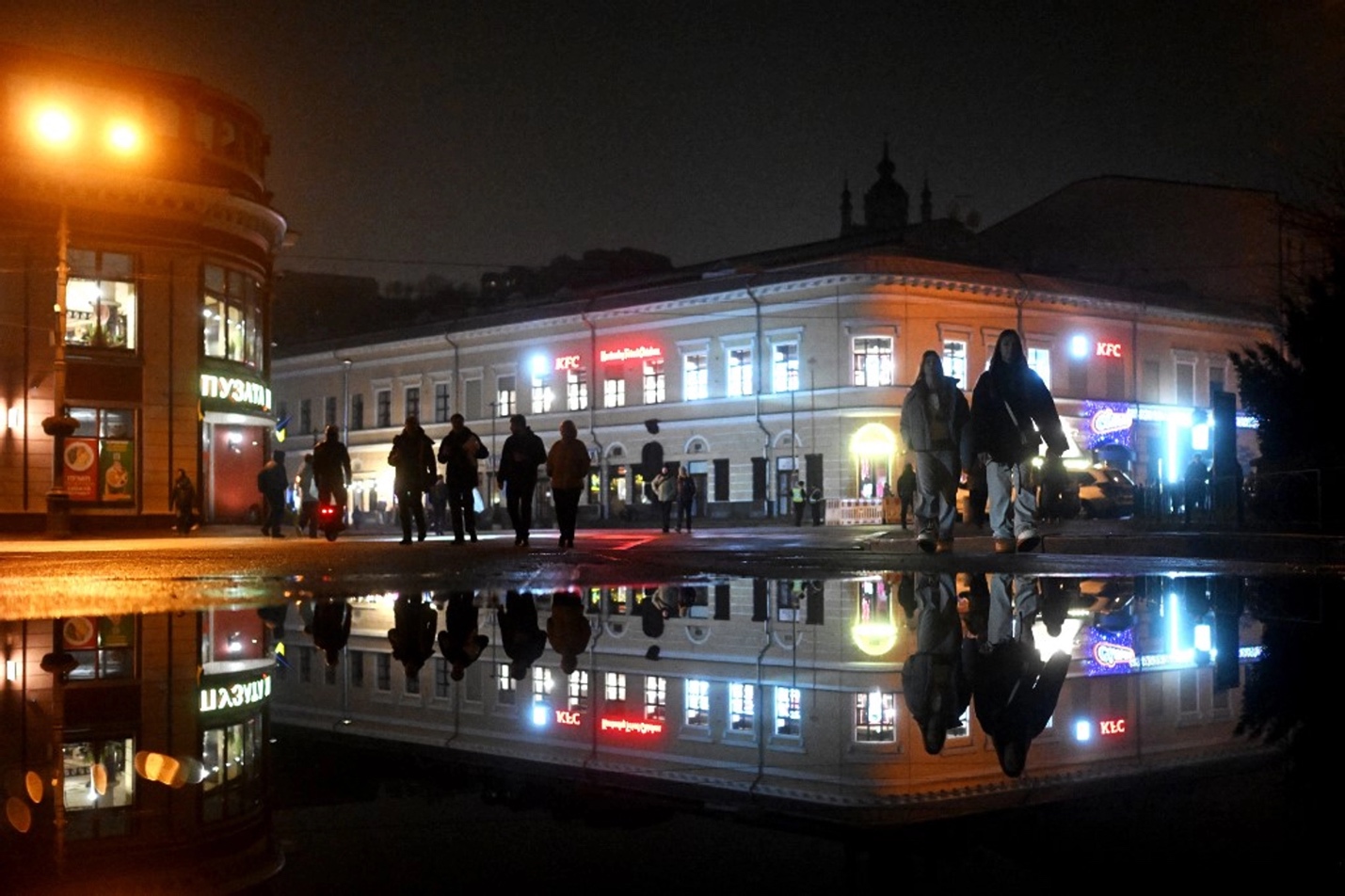
You flip the light switch in your Kyiv apartment, but nothing happens. Another blackout. You check your phone—the schedule says power should be on right now, but the attacks last night must have changed things. You feel your way to the closet where you keep your emergency supplies.
Your hands find the rechargeable lamp first. You click it on, and soft light fills the room. You’ve learned to keep everything charged during the brief windows when power flows. Your power bank is at 85%. Your second lamp is full. You’re better prepared than you were last winter.
Outside your window, the city has become a landscape of darkness and passing silhouettes. You can see a faint glow from luminous dog collars as someone walks their pet below. The capital’s 3.5 million residents are bracing for what could be the toughest winter yet.
You think about your elderly aunt across the city. She lives alone on the eighth floor. No elevator when the power’s out. You tried to get her a generator, but they cost about $1,100—twice your monthly salary. You managed to buy her some rechargeable lamps and a camping stove instead.
Your phone buzzes with the morning’s three familiar messages. First, an alert to honor a minute’s silence for war victims. You stand in your dark apartment and bow your head. Second, the air force report about last night’s drones and missiles—104 drones, they say. Third, a message from Ukrenergo: “As a result of Russian attacks, power outages will be imposed in most regions of Ukraine.”
You look at your watch. The power should return in three hours. You’ll shower then, do laundry, cook food, recharge everything you own. You’ve memorized the blackout schedule like a prayer.
You light your kerosene lamp—something your grandparents once used—and settle in to wait. Russia’s logic is brutally simple: freezing civilians breaks morale. But your adaptation is its own resistance. You’re prepared now. The cold has become another enemy to outlast.
The War Crimes Ledger
You’re reviewing drone footage at your desk when you see it—the video from November 19 near Kotlyne, southwest of Pokrovsk. Your stomach turns as you watch. Five Ukrainian soldiers, captured and disarmed, standing in a field with their hands visible. Russian soldiers approaching. Then gunfire.
You pause the video and close your eyes for a moment. Article 13 of the Geneva Convention is crystal clear—any unlawful act by the detaining power which causes death or endangers the health of a POW while in custody is prohibited. You just watched five violations in rapid succession.
You rewind and watch again, carefully noting timestamps and locations for the report you’re preparing. This isn’t the first such video you’ve reviewed. You’ve observed an increase in Russian war crimes in the Pokrovsk direction in recent weeks as Russian forces approached the town. Prisoners executed. Wounded soldiers shot. Surrender attempts met with bullets.
You understand the calculus even as it sickens you. Taking prisoners requires guards, processing, logistics, eventual exchanges. Killing them requires only ammunition already expended. In urban combat where every soldier is needed for assault, eliminating captured enemies removes a logistical burden. These aren’t accidents. They’re cost-benefit analyses where human lives fell on the expendable side.
You think about what this means for your own soldiers fighting in Pokrovsk. Surrender might mean death rather than captivity. Every position becomes a last stand not by choice but by calculation. If Russia won’t honor the laws of war, then your soldiers have to fight assuming capture means execution.
You finish your report and add the video to the growing file of evidence. The United Nations has documented hundreds of summary executions. Human rights organizations have compiled testimonies. Prosecutors have opened investigations. And none of it has stopped the pattern from repeating.
By November 22, you add five more names to the ledger. Five more violations. You save the file and forward it to the Prosecutor’s Office. Somewhere near Pokrovsk, the fighting continues, and you know the laws of war have become suggestions Russia chooses to ignore.
The Battlefield Without End
You’re monitoring radio traffic from a dozen fronts simultaneously, headphones on, trying to track the chaos. While Pokrovsk burns and diplomats fly to Switzerland, the war grinds forward everywhere at once.
A report comes in from Kharkiv—Russian artillery thudding along the border, drones hunting civilian vehicles. You mark it on your map. One missile struck a car near Kozacha Lopan, driver injured. Small terror achieving nothing except proof they’re still pressing.
You switch channels. Around Vovchansk, exhausted battalions rotating out after months of fighting, replaced by new units arriving half-filled and ill-equipped. You hear the weariness in the commander’s voice as he briefs the incoming troops.
Your screen fills with combat reports from the Donbas. Around Lyman and Siversk, Russian assaults dying on the wire, Ukrainian counter-moves reclaiming meters. You watch geolocated footage from Chasiv Yar—declared “liberated” by Moscow in August—showing Ukrainian defenders posting videos from streets Russia swears it owns.
A new alert: glide bombs hitting Kostyantynivka. You pull up the damage assessment. Apartment blocks, not bunkers. You note it and move on. There’s no time to process each horror individually.
You zoom out on the digital map. The Siversk direction shows both sides advancing and retreating in the same 24 hours. Ukrainian forces pushing along the Donetska Railroad. Russian forces raising flags in Zvanivka’s outskirts. You mark both and know the truth falls somewhere between.
West in Zaporizhzhia Oblast, fog gave Russian forces brief advantages. You review the morning’s reports—small assault groups crept through Uspenivka and Novomykolaivka before Ukrainian drones could engage. When visibility returned, infiltrators found themselves exposed. You watch drone footage of eight Russian vehicles destroyed near Mala Tokmachka.
You remove your headphones and rub your eyes. The front line stretches over 1,000 kilometers, too long to track in real time. But you try. Every report you process, every position you mark, feeds into the same strategic deadlock. Russia advances meters at catastrophic cost. Ukraine endures another day. You put your headphones back on and return to monitoring the radios.
The Shadow Envoy
You’re sitting in a secure briefing room in Kyiv, looking at photographs spread across the table. Steve Witkoff walking through Zaryadye Park in Moscow with Kirill Dmitriev. Witkoff meeting Putin—five meetings, three to four hours each. Witkoff using Kremlin translators during talks. Your intelligence service has been tracking him for months.
Your colleague points to another photo. “Manhattan real estate developer. No diplomatic experience. But Trump trusts him.” You flip through the file. Witkoff’s friendship with Trump dates back to the 1980s New York real estate scene. When Trump needed someone to negotiate with Russia, he sent the developer instead of career diplomats.
You review the meeting logs. February 11, March 13, April 11 and 25, August. After nearly every meeting, Trump declared “great progress was made” while Witkoff echoed Kremlin talking points in media interviews. You’ve been reading those interviews, watching for patterns.
Your supervisor enters and drops another file on the table. “October meeting in Washington. Dmitriev flew in, likely met with Witkoff on October 25.” You open it and scan the surveillance notes. Shortly afterward, the 28-point peace plan emerged.
You lean back in your chair and study the timeline on the wall. Multiple sources confirm Witkoff spent the previous month shaping the framework directly with Dmitriev. European allies excluded. Ukraine cut out. The plan crafted in bilateral discussions between an American real estate developer and a Russian investment fund manager who reports directly to Putin.
You pull up the latest intelligence from Washington. Inside the White House, Witkoff appears to be running a shadow operation aimed at sidelining pro-Ukraine officials. Someone in White House communications feeding media talking points favorable to Witkoff and his Russia-friendly approach. Secretary Rubio caught in an impossible position—privately telling senators the plan was essentially Russian, publicly claiming it was authored by the United States.
You gather the photographs and place them back in the folder. By November 22, Witkoff is packing for Switzerland, ready to present the plan he developed with Dmitriev as if it represents American interests. You write your assessment and mark it urgent priority.
The Choice No One Should Have to Make
You’re standing on the tarmac at Boryspil Airport, watching Andriy Yermak’s delegation board the plane. You’re not going—you’re the liaison who stays behind to coordinate communications. But you helped prepare the briefing books they’re carrying, the alternative proposals they’ll present in Switzerland.
Across the Atlantic, you know Marco Rubio and Steve Witkoff are boarding their own plane with the 28-point plan and Trump’s November 27 deadline. Britain, France, and Germany are sending advisors. Everyone flying toward a negotiating table where Ukraine’s future will be decided by people who aren’t fighting the war.
You think about Zelensky’s address last night. You watched it live, heard the exhaustion in his voice. Ukraine faces either loss of dignity or risk of losing a key partner. You felt those words in your chest.
Your phone buzzes with messages from the front. Soldiers in Pokrovsk fighting house to house while negotiators prepare to discuss capping Ukraine’s military. Defenders at Kupyansk pushing back infiltrators while diplomats consider recognizing Russian territorial claims. Drone operators launching strikes against Russian refineries while Washington contemplates phasing out sanctions.
You walk back to your car, thinking about the separation between battlefield and conference room. On the battlefield, Ukrainian forces are adapting, innovating, striking deep into Russia with drones that destroy helicopters in flight and jam hypersonic missiles into self-destruction. You’ve read those reports with pride.
But in the conference room, those victories might mean nothing if Trump decides peace requires surrender. The deadline—November 27—is five days away.
Your phone rings. European leaders are scrambling to rewrite the plan. Senators are issuing warnings. But Trump’s words echo in your mind: if Zelensky doesn’t approve it, “he can continue to fight his little heart out.”
You drive back to the office. Negotiations begin November 23—tomorrow. And you’ll be here, coordinating, hoping your delegation can change enough to make it survivable. The choice no nation should have to make: compromise sovereignty to keep allies, or fight alone.
What November 22 Revealed
You’re writing the daily intelligence summary, trying to make sense of the contradictions. The day began with a peace plan and ended with burning refineries—two realities that shouldn’t coexist but do, because this war has learned to exist in multiple dimensions simultaneously.
You type the battlefield assessment first. Russia concentrating 150,000 troops toward Pokrovsk—the largest single-axis offensive you’ve tracked. Ukrainian forces trading space for survival, defending house by house. The pocket around Myrnohrad tightening. Kupyansk contested despite Russian victory claims. You’ve been monitoring these fronts for months, watching the slow grind.
But then you pull up the strike reports and everything shifts. A helicopter downed in flight for the first time. Refineries burning in Saratov and Orsk. Power plants struck in occupied territories. You calculate the strategic equation: Russia can seize villages, but Ukraine can destroy the infrastructure sustaining the invasion.
You add the electronic warfare report. Your EW units revealed they downed 19 to 21 Kinzhal hypersonic missiles by jamming navigation—weapons Russia claimed were unstoppable, defeated by technology costing a fraction of Patriot interceptors. You make a note to recommend commendations for that unit.
Then you open the diplomatic file and your optimism drains. Trump’s 28-point peace plan threatens to render all battlefield success irrelevant. You read the demands again: territorial concessions, military caps, alliance prohibitions, sanctions relief. Everything Russia couldn’t achieve through force, handed to them through diplomacy. The deadline is November 27.
You type your conclusion carefully. A real estate developer with no diplomatic experience spent months walking through Moscow parks with Kremlin negotiators, crafting terms senators from both parties call capitulation. Ukrainian drones are hunting targets across Russia while diplomats pack for Switzerland. Soldiers are defending Pokrovsk knowing negotiations might give it to Russia anyway.
You save the file and lean back. Could Ukraine win the war but lose the peace? You don’t have the answer. You only know it will come from Switzerland, not the front lines.