
While weather shields tactical advances in Siversk and Lyman, blackout predictions darken Ukraine’s winter horizon—and the world diverts ammunition meant for Kyiv to other wars.
The Day’s Reckoning
The fog rolled in again, thick as cotton, swallowing villages and tree lines across Donetsk Oblast until even sound seemed to drift without anchor. In Siversk, Russian soldiers moved through the gray murk in groups of two and three—not battalions, not companies, just small teams of men walking carefully through the mist, waiting for the moment when Ukrainian drones sat grounded and blind. By the time the clouds lifted, they were already inside the southern neighborhoods, planting flags for cameras that would stream the footage to Moscow within hours.
But the fog was only one kind of darkness descending on Ukraine. In Kyiv, Ukrenergo’s head warned the nation to prepare for rolling blackouts “throughout the entire winter”—Russian missiles systematically destroying generation capacity faster than repairs could restore it. In Poland, saboteurs recruited by Russian intelligence blew up railway lines connecting Warsaw to weapons shipments. In Israel, TNT meant for Ukrainian ammunition was being diverted to bombs falling on Gaza. And in Madrid, President Zelensky toured defense manufacturers, seeking the air defense systems that might keep the lights on through the coming months.
This was Russia’s new playbook in motion across multiple dimensions: infiltrate through weather, strangle energy infrastructure, sabotage supply lines, and wait for winter to do what ground forces couldn’t accomplish. Meanwhile, Ukrainian ATACMS missiles struck deep inside Russia, proving Kyiv could reach hundreds of kilometers beyond the front. A seventeen-year-old girl died in Berestyn from a missile that served no military purpose. Former Deputy Prime Minister Chernyshov sat in court on corruption charges. And Defense Minister Umerov carried a list of 2,500 prisoner names to Istanbul, hoping Turkey could broker what Moscow refused to give: humanity.
The fog was tactical. The blackouts were strategic. And November 18 proved that Russia’s war had evolved beyond ground combat into a comprehensive assault on Ukraine’s ability to endure—one that would test not just military resilience, but whether a nation can survive winter without power, ammunition without TNT, and hope without relief.
The Infiltration Template: Siversk and Lyman Under Fog
You’re standing in southern Siversk when the first shapes emerge from the fog. Not tanks—those would be suicide here. Just silhouettes moving low through the mist, Russian infantry from the 123rd Motorized Rifle Brigade, carrying assault rifles and cameras to document their arrival. Ukrainian defenders had seen them coming on thermal scopes earlier, but the fog grounded the drones that would normally tear them apart before they reached the tree line.
This is Russia’s offensive template in its purest form: exploit weather, infiltrate in small groups, accumulate forces covertly, then launch larger assaults once the ground freezes. It worked in Pokrovsk—until Ukrainian forces adjusted and Russian commanders lost focus. Now it’s spreading to Siversk and Lyman, targeting Ukraine’s Fortress Belt from multiple angles.
Russian milbloggers openly discuss the “Pokrovsk scenario” coming to Siversk. The infiltrations continue in ones, twos, threes—patient, methodical, waiting for winter to enable mechanized pushes. Ukrainian military intelligence notes that Russian forces are using fiber-optic sleeper drones now, tethered weapons that lie dormant for hours before detonating when a vehicle’s heat signature crosses their path.
A few kilometers west, Russian forces claimed they’d seized Platonivka using fog cover and concentrated FPV drone strikes—claiming control of the highway that feeds Siversk from Lyman. Ukrainian sources say Russian troops never reached the road. The truth lies somewhere in the gray space between propaganda and geolocated footage.
Russia is applying the same infiltration doctrine across kilometers of front. It’s working, in the sense that Russian soldiers are physically entering Ukrainian-held towns. It’s failing, in the sense that Russia lacks the manpower and logistical depth to sustain operations long enough to break through. Every meter gained costs more than it’s worth. And still Moscow orders the attacks to continue, because stopping would mean admitting the strategy has limits.
Pokrovsk’s Paralyzing Paradox
Inside Pokrovsk, the war has become a study in Russian indecision. Stand at the northeastern edge of town and you’ll see the problem: Russian forces have almost encircled the Pokrovsk-Myrnohrad pocket, wrapping around the north and probing from the south, yet instead of closing the noose, they keep lunging straight into the cities themselves—grinding through rubble block by block when flanking maneuvers would cost less and win more.
Russian glide bombs fall daily on Ukrainian positions throughout the pocket, destroying logistics nodes and shelters in a sustained battlefield air interdiction campaign. But on the ground, tactical coherence collapses. The 51st Combined Arms Army, operating on the northern shoulder, should be pushing west to seal the encirclement. Instead, it’s trying to attack southward into Myrnohrad from Krasnyi Lyman—a head-on assault into prepared defenses.
Geolocated footage from November 16 shows Russian soldiers advancing within northeastern Pokrovsk—proof they’re making progress, yes, but progress toward what? Seizing the town building by building, or trapping the defenders by cutting their escape routes? Russian commanders appear unable to choose, so they pursue both simultaneously, achieving neither efficiently.
The reason for the paralysis sits northeast of Pokrovsk in the Dobropillya area, where the 51st Army’s opportunistic push in August created a vulnerable salient that Ukrainian forces now threaten. Russian units that should be completing the encirclement are instead defending their own rear.
The pocket tightens, but it doesn’t close. Pokrovsk burns, but it doesn’t fall. And Russian forces keep attacking because their commanders cannot distinguish between motion and momentum.
ATACMS Reaches Deep Into Russia
The Ukrainian General Staff’s announcement came without fanfare—just a brief statement on November 18 that Ukrainian forces had conducted precision strikes using ATACMS missiles against unspecified military targets deep inside Russian territory. No dramatic footage, no coordinates, no casualty estimates. Just the simple fact that Ukraine could reach hundreds of kilometers beyond the front line and strike with American-made missiles that Moscow had spent months insisting would never be used on Russian soil.
The targets remained classified, but the strategic message was unmistakable: Russia’s rear areas are no longer safe. Ammunition depots, command centers, airfields, logistics hubs—anything within ATACMS range now lives under the shadow of Ukrainian fire. Hundreds of known military objects in Russia sit within that deadly radius, and Moscow’s military has exploited sanctuary space along the Ukrainian-Russian border for years, positioning forces just beyond the reach of Ukrainian artillery.
Not anymore.
ATACMS doesn’t just extend Ukraine’s reach—it changes the calculation for every Russian commander who assumed distance equaled security. Troops massing for an assault, fuel depots feeding the war machine, headquarters coordinating operations—all now vulnerable to strikes that arrive faster than air defense systems can respond.
Moscow will denounce the attacks as escalation, as terrorism, as NATO aggression. But the missiles keep flying, and Russian military infrastructure keeps burning, and the strategic equation keeps shifting in ways that ground combat alone could never achieve. Ukraine can’t match Russia’s artillery production or manpower reserves, but it can make the Russian rear as dangerous as the front.
War Crimes as Standard Orders
In northeastern Pokrovsk on November 10, Russian soldiers from the 1st Motorized Battalion received an order over their radio transceiver. The order was simple, direct, and illegal under international law: use two adults and one child as human shields during your assault. They complied.
Ukrainian Security Service intercepts captured the transmission, preserving evidence that Russia’s military commanders don’t just tolerate war crimes—they order them explicitly, over open communications, without apparent concern for accountability. Article 28 of the Geneva Convention prohibits using civilians as human shields. Russia violated it as casually as a tactical radio call, treating international law as irrelevant to the mechanics of an assault.
This wasn’t an isolated incident born of battlefield chaos. This was premeditated, command-directed criminality—an order given, acknowledged, and executed while the world watched from a distance too great to intervene in real time.
The incident aligns perfectly with patterns documented throughout the war: systematic targeting of civilians, torture of prisoners, mass graves in liberated territories, filtration camps, deportations. Russia’s military doesn’t commit war crimes despite its command structure—it commits them because of it. Commanders order violations. Subordinates obey.
A child was used as a shield. Not metaphorically, not as collateral damage, but as a living barrier placed between Russian soldiers and Ukrainian fire. The child’s name hasn’t been released. The outcome of the assault hasn’t been detailed. What remains is the radio intercept, the evidence, and the knowledge that Russia’s military views human shields as just another tactical tool to deploy when closing with the enemy.
Winter’s Dark Warning: Blackouts Throughout the Season

Vitaliy Zaichenko chose his words carefully when RBC-Ukraine asked whether rolling blackouts could last the entire winter. “Potentially—this is possible,” the Ukrenergo head replied. “The war is not over.”
Ukraine is losing generation capacity “almost every 10 days” to Russian strikes, he explained. The country’s electricity consumption has fallen by around 30 percent since the full-scale invasion began, but generation losses are “much higher”—creating a widening gap that leaves the system vulnerable. Russia shows no sign of reducing attacks on energy facilities.
The nation entered the heating season in better technical shape than a year ago—months of repairs, equipment replacement, large stockpiles of spare parts built with international help. Yet none of that matters if Russian missiles keep finding their targets. “If Russia had not resumed massive attacks, we could even have exported electricity this winter,” Zaichenko said.
Russia may try to split the grid geographically, knocking out east-west transmission links to divide the system in half. It already happened once in 2023 after a major assault. “Now the occupiers are again trying to divide our system, to shut it down—this is the enemy’s main goal,” Zaichenko warned.
Ukraine is building comprehensive protection systems—gabions, reinforced concrete shelters for transformers, underground bunkers for control rooms. About half of Ukrenergo’s transformer fleet now has second-level concrete structures. But effectiveness isn’t immunity, and Russia adapts faster than defenses can be built.
Winter is coming. The lights will flicker. And Ukraine will endure—because the alternative is surrender.
Poland’s Railway Sabotage: Phase Zero Warfare
The explosions came on November 16, two separate blasts targeting the Lublin-Warsaw railway line near Mika and Lublin. Within 48 hours, Polish Prime Minister Donald Tusk stood before cameras with a simple declaration: Russian secret services did this.
The saboteurs were two Ukrainian citizens recruited by Russian intelligence, Tusk explained. They entered Poland from Belarus in Fall 2025, placed explosives on two segments of critical railway infrastructure used to transport weapons and humanitarian aid to Ukraine, then fled back across the Belarusian border after the attacks. Polish Special Services confirmed that “everything” indicates Russian special services commissioned the operation.
Defense Minister Władysław Kosiniak-Kamysz framed the sabotage within Russia’s broader strategy: “to destroy community, destroy alliances, and sow uncertainty.” Chief of the Polish General Staff Wiesław Kukula went further, stating Poland is in a “pre-war situation” in which Russia is creating favorable conditions for “potential aggression on Polish territory.”
This is what Phase Zero looks like—the systematic campaign of destabilization that precedes actual war. Not tanks crossing borders but recruited agents blowing up infrastructure. Not declarations of hostilities, but plausible deniability and gray-zone operations designed to fracture NATO cohesion and test how much damage can be inflicted before the alliance responds.
The railway line wasn’t chosen randomly. It carries weapons to Ukraine, fuel to the front, humanitarian supplies to civilians under siege. Cutting it, even temporarily, disrupts the logistics that sustain Ukraine’s defense and sends a message: your infrastructure is vulnerable, your territory is not safe.
When Drones Strike Newsrooms
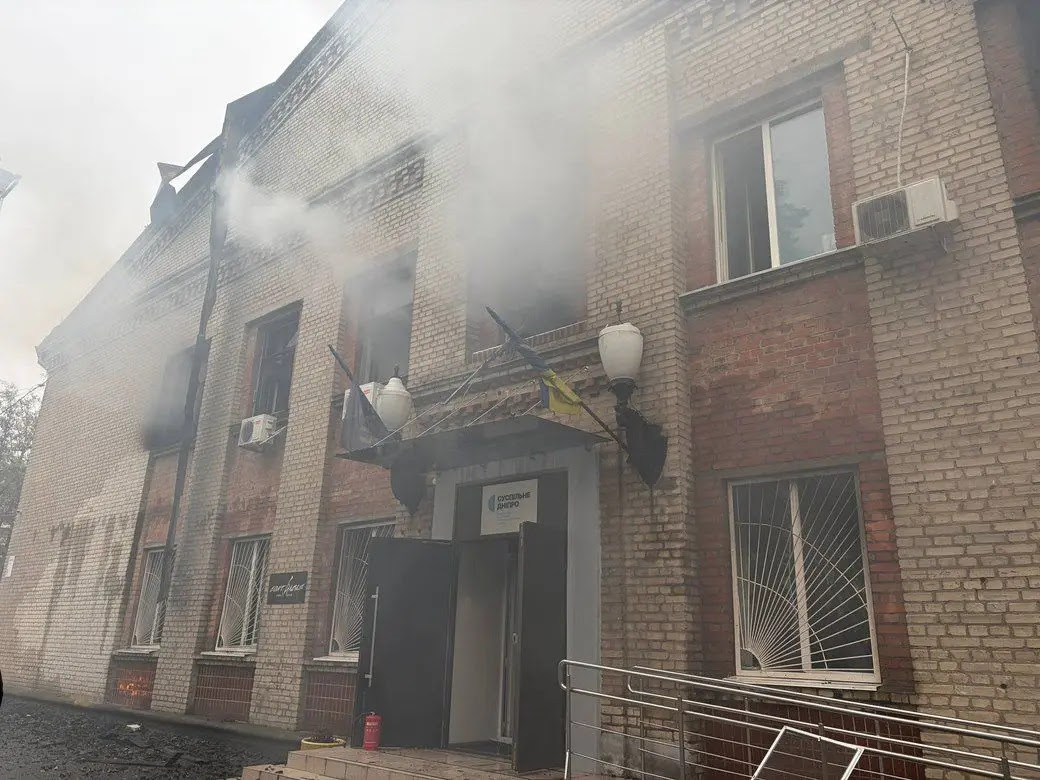
Around 11 p.m. on November 17, the building went dark in Dnipro. Not from power outages—though those were common enough—but from the missile strike that tore through the regional headquarters of Suspilne, Ukraine’s public broadcaster. Cameras destroyed. Editing stations obliterated. Rubble blocking passage to the second floor. A fire briefly raging before being contained.
Across the city, two people were injured—a 58-year-old woman and a 67-year-old man—in an attack that targeted 15 locations across Chernihiv, Dnipropetrovsk, and Kharkiv oblasts. Russian forces had launched four Iskander-M ballistic missiles and 114 Shahed-type drones from Kursk, Oryol, Millerovo, Primorsko-Akhtarsk, and occupied Crimea. Ukrainian air defenses shot down 101 drones; the rest found their marks in residential areas, railway infrastructure, and the Suspilne building that had broadcast news since Soviet times.
“Do you bastards really think we’re still watching analog television like we did in the USSR?” Dnipro Mayor Borys Filatov wrote on Facebook, responding to the strike on both the Suspilne office and the city’s television tower. “Or do you think that if you deprive us of television, we’ll completely collapse?”
The defiance was characteristic, but the question lingered: were these related strikes, or coincidental damage? Yevhen Pedashenko, Suspilne Dnipro’s editor-in-chief, told the Kyiv Independent it couldn’t yet be verified whether the hits constituted a targeted strike on media. But Russian attacks on journalists closer to the front line have increased in frequency in recent months.
“The atmosphere in our newsroom is a working one,” Pedashenko said. “We continue to publish news and live streams on all our digital platforms.” The building might be damaged, but the journalism continues.
Berestyn’s Seventeen-Year-Old
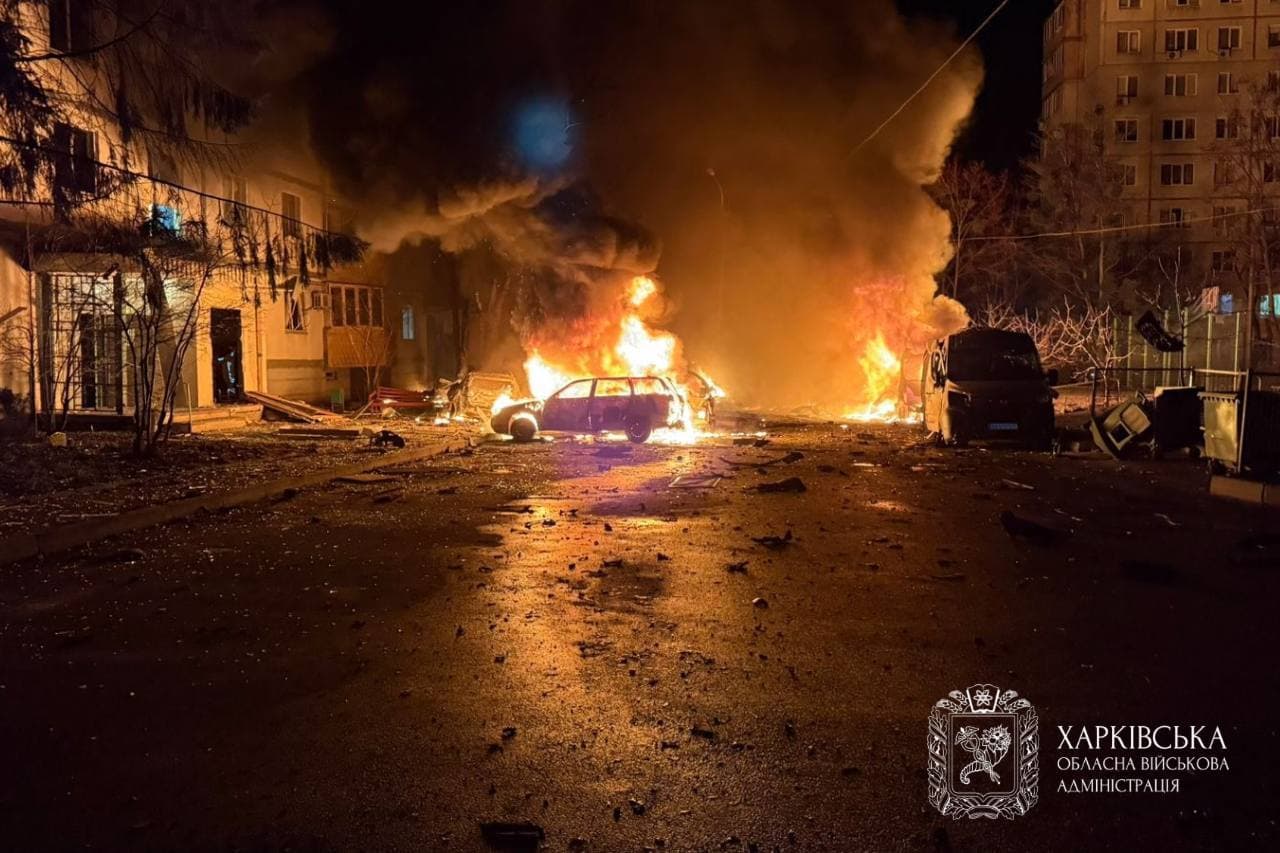
Her name hasn’t been released to the public yet, so we’ll call her what she was: seventeen years old, living in Berestyn in Kharkiv Oblast, far enough from the front to feel almost safe, close enough that Russian missiles still found her.
The strike came overnight on November 18—four Iskander-M ballistic missiles screaming out of darkness into the city, detonating with enough force to critically wound a girl whose entire future collapsed in the blast. She was rushed to a hospital. Doctors tried. She died of her injuries hours later, becoming another name added to the casualty lists that Kharkiv Oblast tallies daily now.
Nine others were wounded in the attack, including a sixteen-year-old boy. Seven required hospitalization for blast trauma—injuries from the shockwave that ripples through buildings when missiles hit nearby. The math is obscene: one dead, nine wounded, zero military targets destroyed.
The attack came one day after a Russian missile strike on Balakliia killed three people and wounded fifteen others, including three children. Kharkiv Oblast has seen its attacks intensify throughout 2025 as Russian forces pushed their offensive closer to population centers.
The same missiles that hit Berestyn also struck railway infrastructure across Kharkiv Oblast, forcing Ukrzaliznytsia to impose temporary restrictions on civilian trains and reroute services. Multiple stations took damage. The network that moves soldiers, supplies, and civilians across the war zone was disrupted.
She was seventeen. She died in a hospital bed, not on a battlefield. The missile that killed her served no tactical purpose and achieved nothing except adding one more casualty to a war that has already consumed hundreds of thousands of lives.
Zelensky in Madrid: The Search for Air Defense

Ukraine’s President Volodymyr Zelensky (L) speaks to Spain’s King Felipe VI during their meeting at the Zarzuela Palace in Madrid (Photo by Oscar DEL POZO / AFP)
Volodymyr Zelensky walked through the Madrid headquarters of Indra—Spain’s state-linked radar and anti-drone manufacturer—surrounded by defense executives who could offer what Ukraine desperately needs: the technology to keep Russian missiles from destroying power plants and killing teenagers in their sleep.
“Advanced radars, drone technologies, essential equipment—all of this means better protection of lives,” Zelensky wrote on X after meeting the executives. Spanish Defense Minister Margarita Robles stood beside him as manufacturers presented anti-drone systems, turrets, aerial and ground drones, long-range detection radars, and munitions.
Diego Martínez Belio, Spain’s secretary of state for foreign affairs, promised to announce a “substantial” assistance package during Zelensky’s visit without providing specifics. Spain has been vocal in its support for Kyiv despite criticism from some NATO allies over its own defense spending levels. In February, Madrid pledged €1 billion in military aid under a 10-year security and defense agreement. Past contributions have included Leopard tanks, Patriot missiles, anti-tank systems, and artillery ammunition.
Zelensky briefed parliamentary leaders on frontline developments and Russia’s attacks on civilians and energy sites. He highlighted opportunities under NATO’s Prioritized Ukraine Requirements List initiative and the EU’s Security Action for Europe instrument—programs designed to funnel weapons to Ukraine through existing alliance structures.
The visit to Spain followed trips to Greece and France, where Zelensky signed an agreement to purchase up to 100 French-made Rafale fighter jets over the next decade. After Madrid, he would travel to Turkey to meet US special envoy Steve Witkoff for discussions on reviving peace talks with Russia.
The diplomatic tour was partly theater, partly desperation. Ukraine needs air defense systems now—not pledges, not future deliveries, but operational systems that can shoot down the drones and missiles currently destroying its energy infrastructure.
Europe’s Drone Defense: Ukraine and Czech Partnership
While Russian drones hunt Ukrainian energy infrastructure nightly, Ukraine is building the countermeasure that might change the calculus. On November 18, state-owned defense enterprise Ukroboronprom announced that it had signed an agreement with Czech aviation parts supplier Air Team for the joint development and production of interceptor drones—autonomous systems designed to hunt and destroy incoming aerial threats.
The Ukrainian-Czech partnership comes amid a broader European effort to learn from Ukraine’s battlefield innovations. Ukraine recently launched serial production of the “Octopus” interceptor drone and announced joint efforts with France’s defense industrial base to produce similar systems. These aren’t traditional air defense missiles—they’re cheaper, faster to produce, and specifically designed to counter the swarm tactics Russia employs with Iranian-made Shaheds.
The strategic logic is simple: Russia can afford to lose dozens of Shahed drones in a single attack if a few get through to destroy a power plant worth millions. Ukraine needs a defense system that costs less than the threat it neutralizes. Interceptor drones provide that asymmetry—relatively inexpensive platforms that can engage multiple targets without depleting expensive missile inventories.
Europe’s interest extends beyond helping Ukraine. Russian drones have already fallen into Romania twice, landing on NATO soil and testing alliance resolve. If Russia’s aerial terror campaign eventually targets European infrastructure, then the tactical lessons Ukraine is learning today become Europe’s defensive doctrine tomorrow.
Ukroboronprom CEO Herman Smetanin framed the partnership as mutual benefit: Ukraine gets production capacity and technical expertise; Europe gets access to battlefield-tested technology. The interceptor drone program isn’t just for Ukraine’s defense—it’s for the defense of Europe itself.
The Ammunition That Didn’t Arrive
The report from the Palestinian Youth Movement landed like a gut punch: TNT shipments meant for Ukraine were being diverted to Israel for its campaign in Gaza. According to initial intelligence, ammunition destined for Ukrainian artillery was redirected in December 2023 when the U.S. government announced it would sell shells worth $147 million to Israel instead.
The TNT supplies are critical for larger ammunition production, including the 155mm rounds Ukraine desperately needs to sustain its artillery-dominated defense. With Europe having only one large-scale TNT plant in Poland, the supply chain is strained amid growing demand from multiple theaters. Following factory closures in the U.S. and Europe, Washington now imports 90 percent of its TNT from Poland, according to Polish Deputy Defense Minister Cezary Tomczyk.
The diversion reveals the brutal calculus of global conflict: Ukraine’s existential war for survival competes for resources with Israel’s operations in Gaza, U.S. military priorities, and NATO’s own stockpile requirements. “These bombs and artillery shells have been exported in their tens of thousands by the U.S. to Israel, where they have been widely deployed in Gaza,” the report notes.
The timing couldn’t be worse. U.S. military aid for Ukraine remains uncertain under President Trump’s administration, forcing Kyiv to count on European support amid an ongoing ammunition shortage. NATO Secretary General Mark Rutte announced in August that Europe can now produce six times more artillery shells annually than two years ago—impressive progress, but still insufficient when supplies are being diverted to other conflicts.
Every shell diverted is one less defensive fire mission, one less artillery strike that might save Ukrainian infantry from a mechanized assault. The rhetoric promises solidarity. The TNT shipments tell a different story.
Istanbul’s List of 2,500 Names
Ukrainian Defense Minister Rustem Umerov landed in Istanbul beneath gray skies, carrying a list that weighed more than paper should. Twenty-five hundred names. Prisoners of war. Men who had vanished into Russian camps, their families waiting for word that might never come, their fates dependent on negotiations that had frozen solid for over a month.
His mission was simple in concept, brutal in execution: restart prisoner exchange talks using Turkey as mediator, the same role Ankara had played earlier in the year when thousands of prisoners were exchanged, and the remains of fallen soldiers repatriated. But everyone in the room understood the equation: Russia doesn’t trade prisoners as an act of humanity—it trades them as leverage.
Each name on Umerov’s list represented a Ukrainian soldier whose continued captivity served Russia’s interests more than his release would. Every exchange becomes another transaction where lives are valued in geopolitical currency, where families wait while diplomats haggle.
Turkey has mediated before. The meetings produced results—exchanges happened, bodies came home, families received closure. But talks have never produced movement toward a ceasefire or broader settlement. U.S. President Trump’s efforts to broker a deal between Kyiv and Moscow have stalled, with Russian President Putin refusing to compromise and declining to meet Ukrainian President Zelensky. A planned summit in Budapest was canceled after Washington reportedly concluded Moscow would not agree to a ceasefire.
Kyiv has called for a ceasefire along current front lines. Moscow has rejected the proposal and continues to demand that Ukraine cede the entire Donbas region—a demand that would legitimize conquest and guarantee future conflict. After Istanbul, Umerov would join Zelensky in Turkey for discussions with US special envoy Steve Witkoff about reviving peace talks. The prospect seemed dim.
The Landmine Legacy: Ukraine’s $29.8 Billion Problem
Imagine trying to rebuild a nation where a third of the territory might explode if you step wrong. That’s Ukraine’s post-war reality—174,000 square kilometers of contaminated land, an area larger than Florida or Greece, laced with millions of landmines that will kill civilians for decades after the last shot is fired.
Humanity & Inclusion, the Nobel Prize-winning NGO, released a report on November 18 estimating the cost of clearing Ukraine’s landmines at $29.8 billion. Ukraine’s Economy Ministry estimates that demining operations may take decades to complete.
The economic toll is immediate and catastrophic. Landmine contamination costs Ukraine an estimated $11.2 billion annually—about 5.6 percent of its pre-war GDP. Agricultural and food exports have fallen by $4.3 billion annually since the war started, with a large portion linked to landmine-related disruptions. For a heavily agricultural country where farming accounts for about 17 percent of GDP, landmines strangle the economy that must fund reconstruction.
“The use of landmines in Ukraine has already left a legacy of human suffering, hampered post-conflict reconstruction, and endangered future generations,” said Duncan Ball, a Humanity & Inclusion representative for Ukraine. An estimated 80 percent of landmine victims are civilians—farmers stepping into fields, children playing near homes, families returning to villages they fled years earlier.
The landmine crisis prolongs the return of millions of Ukrainian refugees. In December 2024, less than half of Ukrainian refugees wanted to return home, compared to 75 percent in November 2022. Fear of landmines is a major factor—people can’t rebuild lives in places where the ground might kill them.
The war will eventually end. The landmines won’t. And Ukraine’s future is being planted in the ground right now.
Corruption in Wartime
While Ukrainian soldiers fought in Siversk and died in Berestyn, former Deputy Prime Minister Oleksiy Chernyshov sat in the High Anti-Corruption Court in Kyiv, facing two months in custody and Hr 51.6 million bail ($1.2 million) in connection with Ukraine’s largest ongoing corruption case.
The charges: illicit enrichment as part of a scheme involving state nuclear power company Energoatom. The evidence: recordings released by the National Anti-Corruption Bureau showing participants in the alleged scheme gave Chernyshov $1.2 million and 100,000 euros. The accusation: Chernyshov used those funds to finance construction of luxury villas near Kyiv—properties allegedly meant for himself, close presidential associate Timur Mindich, and “the country’s leadership.”
Chernyshov’s defense lawyers deny wrongdoing. The President’s Office declined to comment. Seven other suspects have been charged. Mindich is allegedly the scheme’s ringleader. And while the war consumes lives and resources at the front, corruption consumes credibility and international support at home.
This isn’t Chernyshov’s first time facing charges. In June, he was charged with bribery and abuse of office in a separate case, released on Hr 120 million bail in July, then fired from his position as deputy prime minister and minister for national unity later that month.
The timing is devastating. Ukraine requests billions in international aid while fighting an existential war. Donors demand accountability. Corruption cases like this—luxury villas built with funds siphoned from state enterprises—provide ammunition to skeptics who question whether Ukrainian officials can be trusted with reconstruction funds, military aid, or EU membership negotiations.
Soldiers die at the front. Officials enrich themselves behind the lines. Both are facts. Both define Ukraine’s struggle—not just against Russian invasion, but against the internal rot that predated the war.
What November 18 Revealed
When the fog lifted over Siversk and Lyman, the day’s equation remained brutally clear: Russia is waging comprehensive war against Ukraine’s ability to endure—not just to win battles, but to survive winter.
The infiltration doctrine spreading across the eastern front proves Russia can still advance—slowly, expensively, but advance nonetheless. Pokrovsk’s encirclement tightens even as commanders can’t decide whether to close it or attack through it. Every meter costs irreplaceable casualties, but Russia keeps paying because motion looks like momentum.
But ground war is only one dimension. Russia’s energy infrastructure strikes threaten rolling blackouts throughout winter—destroying generation capacity faster than repairs can restore it. Officials warn citizens to prepare for darkness and cold, for the possibility that Russia achieves through missiles what it couldn’t accomplish through tanks.
Meanwhile, allies provide rhetorical support while diverting TNT to Israel’s Gaza campaign. Poland discovers Russian-recruited saboteurs. Spain promises unspecified aid.
Yet Ukraine adapts. ATACMS missiles strike deep into Russia. Czech partnerships produce interceptor drones. Umerov carries his prisoner list to Istanbul.
A seventeen-year-old girl died in Berestyn from a missile that served no purpose except killing her. Russian soldiers used a child as human shield on orders. Suspilne’s headquarters burned. Chernyshov sits in custody on corruption charges while soldiers die for lack of ammunition. Landmines contaminate a third of territory.
This was the 1,703rd day of war calcified into routine: Russia infiltrates through weather, Ukraine strikes through depth, civilians die for terror, prisoners remain hostages, winter approaches with blackout warnings.
The fog was tactical. The blackouts strategic. Ukraine’s survival depends not on dramatic victories, but on enduring one more winter, securing one more ammunition shipment, shooting down one more drone, and refusing surrender—because surrender is the only outcome Russia will accept, and the only outcome Ukraine cannot survive.