
Ukraine has spent years learning how to defeat Iran’s Shahed drones as they struck its cities night after night. Now Kyiv is turning that battlefield experience into diplomatic leverage—offering its proven drone-interceptor systems to Middle Eastern states in exchange for pressure on Moscow to accept a ceasefire. In a war increasingly shaped by technology and alliances, Ukraine’s survival expertise is becoming a powerful bargaining chip.
The Day’s Reckoning
Watch the war’s strange new currency emerge. For three years Ukraine has endured nightly attacks from Iranian-designed Shahed drones. Now the United States and its Middle Eastern partners are confronting the same threat—and they are turning to Kyiv for help.
Zelensky did not simply offer assistance. He attached a condition. Ukraine is willing to send specialists and interceptor systems to help Gulf states defend their skies. But those same governments maintain strong relations with Moscow. Zelensky asked them to use that influence to press the Kremlin for a one-month ceasefire in Ukraine.
What Ukraine learned through necessity is suddenly valuable far beyond its borders. Ukrainian companies now produce interceptor drones costing only a few thousand dollars, capable of destroying Shaheds that otherwise require Patriot missiles worth more than $13 million each. According to reporting confirmed by the Financial Times, the Pentagon and at least one Gulf state are already exploring purchases of these systems. Ukraine’s battlefield improvisation has become strategic currency.
Elsewhere the day revealed the war’s complicated landscape. Two hundred Ukrainian prisoners returned home in the first stage of a major exchange brokered by Washington and Abu Dhabi. In Moscow, authorities arrested Ruslan Tsalikov, the fourth deputy linked to former defense minister Sergei Shoigu to fall in a widening corruption purge. Hungary detained seven Ukrainian bank employees traveling through its territory, triggering accusations in Kyiv of political hostage-taking.
In Brussels, EU ambassadors quietly rejected a proposal that would have fast-tracked Ukraine’s membership by 2027. On the battlefield Ukrainian troops advanced near Kostyantynivka while Russian forces continued their grinding assaults across multiple fronts.
Day 1,373 showed a war still locked in stalemate—but evolving in unexpected ways. Ukraine is no longer only defending itself. It is turning survival into leverage.
When Survival Becomes Leverage
The request came from Washington, but the answer was shaped in Kyiv.
For three years Ukrainian cities have lived beneath the rising buzz of Iranian-designed Shahed drones. Night after night they appeared over rooftops and power plants, forcing Ukraine to invent ways to destroy them with whatever tools were available. Now the same drones are threatening the Middle East, and the United States quietly asked Ukraine for help.
Volodymyr Zelensky agreed—but not without terms.
Ukraine is ready to send specialists and interceptor technology to help Gulf countries defend their skies. Ukrainian teams can help protect cities, energy facilities, and shipping routes. But Zelensky attached a condition. The same Gulf states maintain strong relationships with Moscow. Kyiv wants them to use that influence to press Russia toward a one-month ceasefire in Ukraine.
The logic is simple and forged in war. Ukrainian companies now build interceptor drones costing only a few thousand dollars. These systems hunt Shaheds in the sky and destroy them before they reach their targets. Ukraine reports interception rates approaching ninety percent.
Compare that with the cost of Patriot missiles—more than $13.5 million for a single interceptor.
Several Ukrainian systems now anchor this defense: the Merops drone supported by former Google CEO Eric Schmidt, the STING interceptor developed by Wild Hornets and deployed near Odesa, and other high-speed drones designed specifically to hunt Shaheds using automated targeting.
What began as desperation has become leverage.
Ukraine learned to defeat these drones because survival demanded it. Now Zelensky is turning that hard-earned knowledge into diplomatic currency—offering protection in exchange for something Ukraine desperately needs: time.
Another Piece of Shoigu’s Network Falls
The purge inside Russia’s Defense Ministry tightened again.
Russian authorities arrested former deputy defense minister Ruslan Tsalikov, accusing him of organizing a criminal network involving embezzlement, bribery, and money laundering between 2017 and 2024.
He is the fourth deputy from Sergei Shoigu’s former leadership team to face charges.
Earlier arrests swept up Timur Ivanov, Pavel Popov, and Dmitry Bulgakov. One by one, the officials who once formed Shoigu’s patronage network inside the ministry are being removed.
Tsalikov resigned in May 2023 shortly after Vladimir Putin replaced Shoigu as defense minister. His arrest nearly two years later suggests investigators were building the case quietly in the background.
Few in Moscow see the crackdown as purely about corruption.
Shoigu spent years placing loyal allies across the ministry’s leadership. Now his successor, Defense Minister Andrei Belousov, appears determined to dismantle that network.
Each arrest sends the same message through Russia’s military establishment: the Shoigu era is ending, and the Kremlin will not tolerate rival centers of influence inside the defense ministry.
The Buses of Return
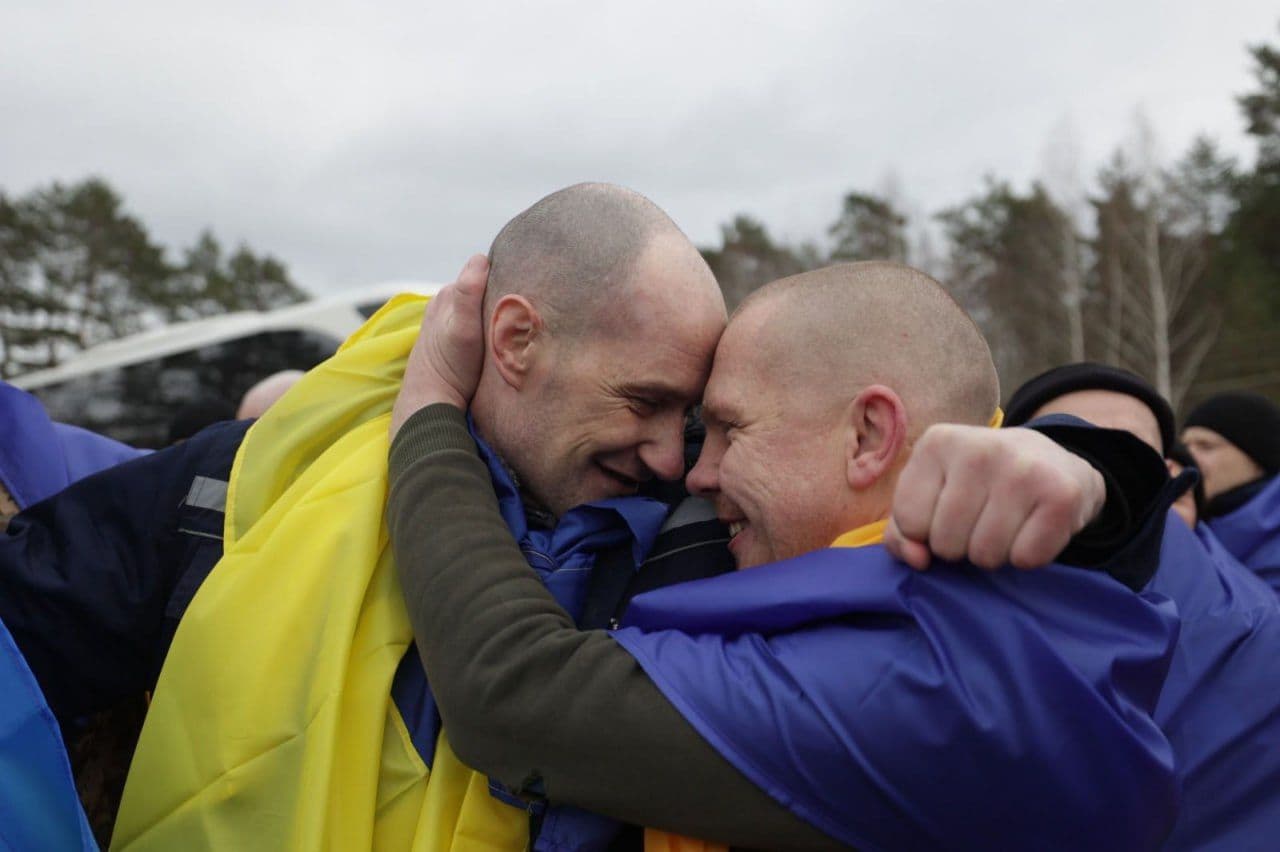
The buses rolled in carrying men who had disappeared into Russia’s prison system and somehow survived.
Two hundred Ukrainian servicemen stepped back onto Ukrainian-controlled ground—defenders of Mariupol, soldiers captured in Donetsk, Luhansk, Kharkiv, and Zaporizhzhia. They came from across the armed forces: regular army units, border guards, National Guard, and transport troops.
“Every time our people return home, it proves that Ukraine is working to return each and every one,” Volodymyr Zelensky wrote. “We do not forget anyone.”
Russia’s Defense Ministry confirmed the exchange: 200 Ukrainian prisoners for 200 Russian soldiers. The swap was brokered by the United States and the United Arab Emirates. The returning Russian prisoners were transferred to Belarus for medical and psychological treatment.
This was only the beginning. Vladimir Medinsky, a senior Kremlin negotiator, confirmed that the exchange was the first stage of a larger 500-for-500 agreement reached during negotiations in Geneva.
The returning Ukrainians carried visible reminders of captivity. Human Rights Ombudsman Dmytro Lubinets said the youngest was 27 and the oldest 59. Many were in fragile psychological condition. Some were dangerously underweight.
Since the full-scale invasion began, Ukraine has brought home more than 7,000 citizens from Russian captivity. Yet thousands remain behind. As of September 2025, officials reported 2,577 Ukrainian soldiers still held in Russian prisons.
Each exchange brings relief—and a reminder.
Every bus that arrives home leaves many more still waiting.
Lavrov’s Tightrope: Blame the West, Protect the Talks
Sergei Lavrov stepped carefully through a familiar diplomatic dance.
Russia’s foreign minister criticized American military operations against Iran, accusing Washington of stirring instability across the Middle East and drawing new countries into conflict. He argued that just as the West had pulled Ukraine into confrontation with Russia, it was now pushing Gulf states toward war with Iran.
But the criticism stopped short of direct confrontation.
Lavrov suggested that unnamed Russian politicians and analysts were worried the timing of U.S. operations could damage peace negotiations over Ukraine. He cited earlier conflicts—from the Israel-Iran war to recent strikes against Iran—as evidence that Washington often negotiates while simultaneously escalating pressure.
Then came the hedge.
Lavrov acknowledged that the “spirit” of the 2025 Alaska summit between Donald Trump and Vladimir Putin might be fading yet insisted that the summit’s “understandings” still mattered more than the atmosphere surrounding it. Moscow, he said, had not seen clear evidence that the United States was negotiating in bad faith.
The message was deliberate.
Russia needed to criticize Washington strongly enough to reassure partners like Iran. At the same time, the Kremlin could not risk collapsing negotiations with the United States.
So, the harsher rhetoric was left to others—figures like Dmitry Medvedev and outspoken Duma deputies—while Lavrov played the moderate voice.
The balance allowed Moscow to prepare its argument for the future: blame the United States if negotiations fail but preserve the diplomatic channel if they succeed.
Moscow’s Attack Dogs Speak
While Sergei Lavrov kept his tone measured, others in Moscow unleashed the harsher message.
Security Council deputy chairman Dmitry Medvedev openly mocked Donald Trump—criticizing American peace efforts even as U.S. forces bombed Iran. In parliament the rhetoric escalated. Foreign affairs deputy Alexei Chepa warned Washington could no longer claim to be an “impartial and honest” mediator. Defense committee member Andrei Kolesnik urged greater Russian support for Iran, declaring Moscow could not allow the country to be destroyed.
The division of voices was deliberate.
Lavrov maintains the appearance of moderation while figures like Medvedev deliver sharper attacks. The system allows the Kremlin to express more extreme positions without placing them directly in Vladimir Putin’s mouth.
The strategy serves several purposes. It reassures partners like Iran that Moscow stands with them. It pressures Washington without committing Russia to direct confrontation. And it prepares the narrative if diplomacy collapses—allowing the Kremlin to blame American actions.
If negotiations survive, the Kremlin simply points to the speakers.
Those statements, after all, came from parliamentarians—not the president.
A Tiny Expansion in Russia’s Army
The decree was brief, but the numbers stood out.
Vladimir Putin signed an order raising the authorized size of Russia’s armed forces to 2,391,770 personnel, including 1,502,640 active troops. The increase from last year: just 2,640 personnel.
Compared with earlier wartime expansions, the change is striking. Russia added 137,000 personnel in 2022, 170,000 in 2023, and 180,000 in 2024 as the Kremlin rebuilt forces battered by the invasion of Ukraine.
This time the adjustment appears far smaller.
Analysts link it to reforms launched under former defense minister Sergei Shoigu in 2023, when Russia reorganized military districts and created new formations that needed staffing.
The decree itself will not change battlefield realities in Ukraine. It defines the force size Moscow intends to maintain in the long term. Whether Russia can actually recruit enough soldiers to fill those positions remains uncertain.
For now, the numbers suggest consolidation rather than another surge in Russia’s war machine.
Bankers Held in Budapest
Seven Ukrainian bankers set out on a routine transit through Hungary. Instead, they stopped in Budapest.
Hungarian authorities detained the employees of Ukraine’s state-owned Oschadbank while they traveled between Austria and Ukraine in two bank vehicles. Officials offered no clear explanation for the detention.
Kyiv reacted immediately. Foreign Minister Andrii Sybiha accused Hungary of “taking hostages” and stealing money, calling the move “state terrorism and racketeering.”
The timing was impossible to ignore.
Only hours earlier Hungarian Prime Minister Viktor Orban had vowed to use “political and financial tools” to force the reopening of the Druzhba oil pipeline. The line, which carries Russian crude to Hungary and Slovakia, has been offline since January after Russian strikes damaged Ukrainian infrastructure. Budapest insists Kyiv halted the flow deliberately. Ukraine says Russian missiles caused the shutdown.
The dispute has already spilled across Europe. Hungary blocked the EU’s twentieth sanctions package against Russia and vetoed a proposed ninety-billion-euro loan for Ukraine until the pipeline resumes operation.
Meanwhile the detained bankers remained in Budapest. Oschadbank’s GPS trackers showed both vehicles sitting in the city center as Ukrainian officials demanded their release and an explanation.
If the detention was meant as pressure over the pipeline dispute, it was a blunt move—one that risks turning an energy argument into a wider diplomatic confrontation.
Europe Slams the Door on a Fast Track
The proposal was supposed to accelerate Ukraine’s path into Europe. Instead, it collapsed almost immediately.
During a routine meeting, EU ambassadors rejected the European Commission’s idea of “reverse enlargement”—a plan that would have allowed Ukraine to join the European Union first and receive full membership privileges gradually afterward. The goal had been ambitious: bring Kyiv into the bloc by 2027.
Diplomats dismissed the idea bluntly.
“It’s done. Reverse enlargement is not going anywhere,” one diplomat told Politico. Another was even more direct, calling the proposal “dead on arrival” and warning it had created false expectations.
Many EU governments insisted the bloc could not abandon its traditional accession process. Membership, they argued, must remain merit-based and follow established procedures rather than being redesigned for a single country.
Some diplomats also worried about precedent. If Ukraine were fast-tracked, other candidate countries would likely demand the same treatment.
EU leaders were expected to reaffirm the existing accession framework at the March European Council meeting, effectively shelving the Commission’s proposal.
For Kyiv, the decision was a sobering reminder. President Volodymyr Zelensky has pushed for a clear timeline for EU membership and even suggested peace negotiations should include an accession date.
The ambassadors’ message was unmistakable: political support for Ukraine remains strong, but the European Union will not rewrite its rules to speed the process.
A Flicker of Power Returns
Just after midnight, electricity crossed Ukraine’s border again.
For the first time since November 2025, Ukraine exported power—twelve megawatt hours sent to Moldova. The amount was tiny. Before the war, Ukraine exported hundreds of megawatts at a time.
But the moment mattered.
For months Russia had hammered Ukraine’s energy grid with missiles and drones, targeting power plants and substations through the coldest winter of the invasion. Cities endured blackouts. Ukraine, once a major exporter, was forced to import electricity from its neighbors.
Energy Minister Oleksiy Sobolev said Russian attacks between October and January damaged 8.5 gigawatts of generation capacity.
Now, briefly, the current moved the other way.
Strong output from nuclear and renewable plants created a small surplus that could be sent across the border. Ukraine still faced scheduled outages and remained far from prewar capacity.
Yet the direction had changed.
Import had become export.
Twelve megawatt hours was a small number—but after months of bombardment, it carried a larger meaning: Russia could damage Ukraine’s energy system, but it had not destroyed it.
A Few Hundred Meters in a Grinding War
The gain was small enough to measure in fields and tree lines.
Geolocated footage confirmed Ukrainian forces recently advanced southeast and south of Kostyantynivka in the Kostyantynivka–Druzhkivka sector—one of the rare confirmed Ukrainian gains along the front.
Elsewhere the pressure continued.
Russian units attacked near Kostyantynivka and pushed toward nearby settlements including Orikhovo-Vasylivka, Pleshchiivka, Ivanopillya, Illinivka, and Stepanivka. Around Druzhkivka they probed toward Minkivka, Markove, Popasne, Rusyn Yar, and Sofiivka.
The front shifted slowly.
A Ukrainian battalion commander reported Russian forces had partially restored communications after losing Starlink access. Using Wi-Fi bridges and directional antennas placed on high ground, they rebuilt roughly half their previous capability.
The adaptation helped sustain their assaults but did not change the wider picture.
The war here moves in increments. Ukrainian troops advance in one place while Russian units probe in several others. Positions change, but no breakthrough follows.
That is why the Kostyantynivka advance mattered.
In a war measured in meters, even a small gain becomes significant.
The Assault Slows Near Pokrovsk
The pressure near Pokrovsk eased slightly, though the fighting continued.
A Ukrainian brigade spokesperson said Russian infiltration attempts had declined. The likely reason was logistical: Russian assault groups lacked enough unmanned ground vehicles to supply forward positions.
Russian units increasingly rely on these robotic carriers to move ammunition and equipment across terrain where Ukrainian drones and artillery make traditional logistics dangerous. Losses and production limits appear to have reduced their availability.
Russian forces still attacked across the sector—near Hryshyne, Rodynske, Bilytske, Chervonyi Lyman, Udachne, Molodetske, and Kotlyne—but the tempo slowed from the near-constant infiltration attempts seen in previous weeks.
The slowdown illustrates a pattern shaping modern warfare.
Drones forced logistics to adapt. Supplies moved through unmanned vehicles rather than trucks and soldiers. But that solution created a dependency of its own.
Fewer vehicles meant fewer supplies reaching assault units—and fewer attacks.
Innovation had changed the battlefield, but it had also created new limits.
Striking Deep Into Russia’s Rear
Ukraine’s strike campaign reached deep again overnight.
Ukrainian forces reportedly hit the Saratov Oil Refinery, a facility processing about 5.8 million tons annually and located roughly 800 kilometers from Ukrainian-controlled territory. The distance placed it well behind multiple layers of Russian air defense.
At sea, strikes earlier in the week damaged the Russian frigate Admiral Essen in Novorossiysk, according to Ukrainian security sources. Fires reportedly burned for nearly eighteen hours, leaving the ship unable to launch Kalibr cruise missiles.
Elsewhere Ukrainian forces struck an ammunition depot near Nyzhnia Krynka, a logistics site near Chystiakove, and a Russian drone repair facility near Zachativka in occupied Donetsk Oblast.
In Crimea, Ukrainian special operations units reported destroying an S-400 air defense system near Orlivka and hitting a drone control point near Chornomorske. The Ukrainian Navy also reported destroying a Russian Ka-27 helicopter over the Black Sea.
Taken together, the strikes showed Ukraine’s growing reach.
Targets stretched from Russia’s Saratov region to Crimea and occupied Donetsk. Oil refineries, naval vessels, ammunition depots, and air defenses all came under attack.
The strikes did not halt Russian operations, but they forced Moscow to defend territory far behind the front—spreading air defenses thinner and diverting resources away from the battlefield.
The Night of 155 Drones
The sound of drones returned overnight.
Russian forces launched 155 unmanned aircraft against Ukraine, about one hundred of them Shahed-type drones. They came from multiple launch sites across Russia and occupied Crimea.
Ukrainian air defenses shot down 136.
But the numbers told the harder truth. Eighteen drones slipped through the defenses, striking eight locations while falling debris damaged three more. Homes, businesses, rail infrastructure, and civilian facilities were hit in Dnipropetrovsk, Kharkiv, and Kherson oblasts. Power outages followed in several regions.
The violence spread to the sea as well. Ukrainian naval officials reported Russian forces struck the Panamanian-flagged cargo ship BULL shortly after it departed Chornomorsk carrying Ukrainian corn—another attack on civilian shipping.
The human toll continued to mount.
Across the country seven people were killed and twenty-five injured. In Donetsk two civilians died. In Kharkiv two women, aged twenty-seven and sixty-four, were killed while thirteen others—including a seventeen-year-old girl—were wounded. Additional casualties were reported in Dnipropetrovsk and Kherson.
Ukraine’s air defenses destroyed most of the drones. The interception rate approached ninety percent.
But the mathematics of the war remains unforgiving.
Even a small percentage that breaks through still leaves fires, shattered buildings, and grieving families behind.
The Missile Gap Ukraine Cannot Close
Volodymyr Zelensky delivered the comparison bluntly.
In just three days of fighting in the Middle East, more than 800 Patriot missiles were fired—more than Ukraine has received during the entire Russian invasion.
“Ukraine has never had this many missiles to repel attacks,” he said.
When Shahed drones first appeared over Ukrainian cities in 2022, defenders used whatever weapons they could find. Over time they adapted, building an air-defense system that now destroys most incoming drones.
But Patriots remain rare.
The American-made system is one of the few weapons capable of intercepting Russian ballistic missiles. The newest PAC-3 version destroys targets by direct impact, giving it precision against high-speed threats.
Now the Middle East conflict threatens to stretch those supplies even further.
Gulf states are burning through Patriots defending against Iranian attacks, and global production cannot keep pace with demand across multiple conflicts.
The imbalance explains Zelensky’s strategy.
If Patriot missiles will always be scarce, Ukraine must rely on something else—its own experience fighting drone attacks. The same battlefield knowledge that helped Ukrainian defenders survive may now become the country’s most valuable export.
Zelensky’s Warning Over the Pipeline Standoff
Volodymyr Zelensky spoke carefully at first.
Without naming anyone, he addressed the blocked 90-billion-euro EU loan meant to support Ukraine’s war effort. “We hope that one person in the EU will not block the funds,” he said, referring to the leader everyone in Europe already had in mind.
Then the tone shifted.
“If it continues,” Zelensky warned, “we will simply give that person’s address to our Armed Forces. Our guys can call him and speak to him in their own language.”
The confrontation centers on Hungary’s Prime Minister Viktor Orban. Budapest has blocked the loan while demanding the reopening of the Druzhba pipeline, which carries Russian crude through Ukraine to Hungary and Slovakia. Before the disruption, the southern branch supplied most of Hungary’s oil imports.
Orban insisted the line could be repaired within weeks if Ukraine cooperated. Zelensky rejected the idea outright.
“To be honest, I would not restore it,” he said. “This is Russian oil.”
The dispute has spilled into Hungarian politics. Opposition leader Peter Magyar demanded Zelensky withdraw his remarks, arguing no foreign leader should threaten Hungary.
Behind the rhetoric lies a wider reality: the pipeline fight now mixes war policy, energy leverage, and domestic politics in Budapest ahead of upcoming elections.
A Prisoner Deal That Bypassed Kyiv
The meeting in Moscow ended with an unusual promise.
Vladimir Putin told Hungarian Foreign Minister Peter Szijjarto that two Ukrainian prisoners of war holding dual Hungarian citizenship would be released. According to the Kremlin, the men had been “forcibly mobilized” into Ukraine’s army. Putin suggested Szijjarto take them back to Budapest on his own aircraft.
Kyiv reacted with anger.
Ukrainian officials condemned the move as a violation of international humanitarian law and the Geneva Conventions. The Coordination Headquarters for Prisoners of War accused Moscow of using captured soldiers as political leverage rather than following established exchange procedures.
Soon afterward Szijjarto released photos showing the two men stepping off his plane at night in Budapest. He declared Hungary would “protect every single Hungarian person from the consequences of this war.”
The images played well at home. But the transfer had bypassed Ukrainian authorities entirely and ignored normal prisoner-exchange protocols.
Legal experts warned the episode revealed a deeper problem.
For years Ukraine has pushed for international monitoring of its prisoners held in Russia. Moscow has resisted, often keeping detainees isolated and beyond outside inspection.
The Budapest transfer demonstrated how easily that system can be manipulated—turning captured soldiers into bargaining chips in a much larger political game.
Poland’s Sweep Signals a Harder Line
Polish police moved across the country in a coordinated sweep.
The operation targeted nearly 2,000 people to verify the legality of their stay. By the end, authorities had begun return proceedings against 147 foreigners, including 91 Ukrainians. Others detained included Georgians, Belarusians, Moldovans, and Russians. Seven individuals were wanted under European arrest warrants.
Officials stressed the proceedings did not mean immediate deportation. Appeals can take weeks or months.
Still, the timing was telling.
The operation came just days after Russia’s invasion entered its fifth year and as Poland introduced new limits on benefits for Ukrainian refugees. Emergency assistance programs created after the 2022 invasion were scaled back. Healthcare coverage now focuses on minors, workers, and vulnerable groups, while broader food and housing aid has been reduced.
Public opinion has shifted as well.
A January poll found support for helping Ukrainian refugees had dropped to 48 percent, nearly matching those opposed. The change reflects growing fatigue in a country that has hosted more than a million Ukrainians since the war began.
Despite the tightening policies, Poland remains a central hub for humanitarian aid and military assistance moving into Ukraine.
Empty Rails in the Sky: Ukraine’s F-16s Run Out of Missiles
For nearly a month in late 2025, Ukraine’s F-16s flew with a dangerous limitation.
A shortage of AIM-9 Sidewinder air-to-air missiles left the fleet with only a handful of weapons between late November and mid-December, according to sources familiar with the situation. At times, some aircraft reportedly had little or nothing to arm them for air-defense missions.
The gap came at the worst moment.
Russia was preparing its winter strike campaign against Ukraine’s energy infrastructure, launching large waves of drones and missiles designed to plunge cities into darkness. Ukrainian pilots still flew, but they had to improvise.
Some missions relied on rotary cannons to shoot down drones during daylight patrols. Night operations—when most Russian attacks occurred—became far more dangerous. Pilots also attempted to reuse missiles that had failed to fire in earlier sorties after maintenance crews reworked them.
Most of Ukraine’s Sidewinders were older variants produced in the 1970s and 1980s. Despite their age, they proved effective and relatively inexpensive tools for intercepting drones and cruise missiles. Ukrainian F-16s have reportedly destroyed roughly 2,000 airborne threats since entering combat.
The shortage ended in December when partner countries delivered new stocks just before another major Russian strike. Germany and Canada later confirmed there had been a temporary dip in deliveries.
The episode exposed a fragile reality: even advanced Western fighters become powerless without a steady flow of missiles.
Washington Breaks Ranks at the IAEA
A quiet vote in Vienna signaled a shift.
During a meeting of the International Atomic Energy Agency’s Board of Governors, the United States voted against a resolution condemning Russian attacks on Ukraine’s energy infrastructure. Washington joined Russia, China, and Niger in opposing the measure.
It was the first time the United States had voted against such a resolution since Russia’s full-scale invasion.
The proposal warned that strikes on Ukraine’s power grid—especially systems connected to nuclear facilities like the Russian-occupied Zaporizhzhia Nuclear Power Plant—posed growing risks to nuclear safety. Ukraine relies on nuclear energy for more than half its electricity, making attacks on the grid both a humanitarian and nuclear-security concern.
The U.S. delegation explained its position briefly: the resolution was “unnecessary” and would not help advance peace negotiations between Ukraine and Russia.
Diplomats reported that 20 countries supported the measure, while 10 abstained.
For observers, the vote carried symbolic weight. The wording of the resolution had already been softened compared to earlier versions, reportedly reflecting diplomatic pressure to avoid disrupting potential negotiations.
Yet the American opposition still stood out.
Since the invasion began, Washington had consistently backed international statements condemning Russia’s strikes on Ukrainian infrastructure. The break in that pattern raised quiet questions in diplomatic circles about whether avoiding friction in negotiations had become the new priority—even when nuclear safety concerns were involved.
When Ukraine’s Drone War Was Mistaken for America’s
A television clip meant to showcase military technology instead exposed a misunderstanding.
Fox News aired footage of an interceptor drone destroying a Shahed-type drone, presenting it as American technology countering Iranian drones in the Middle East. In reality, the drone was Ukrainian.
The system in the video was the STING interceptor developed by Ukrainian engineers from Wild Hornets and used by Ukrainian air defense units against the Iranian-designed drones Russia launches nightly. The footage even carried the Wild Hornets watermark.
During the segment, commentator Brett Velicovich said the video showed how “American artificial intelligence and high-tech arsenal have completely destroyed the Iranian war machine.”
Wild Hornets responded calmly on X, noting that the clip actually showed a Ukrainian interceptor drone developed by its engineers and deployed by Ukrainian forces.
The mistake highlighted a deeper reality. After years of war, Ukraine has built some of the world’s most effective low-cost drone interception systems. Yet outside observers often assume such technology must come from Western arsenals.
The irony was hard to miss. The capability credited on American television to U.S. innovation was actually born from Ukraine’s nightly struggle to defend its skies from Russian drone attacks.
Sanctions Bend When Oil Tightens: Washington’s 30-Day Russian Crude Waiver
A sudden shift in energy policy unfolded in Washington.
U.S. Treasury Secretary Scott Bessent announced a 30-day waiver allowing Indian refiners to purchase Russian oil. The move came after months of American pressure urging New Delhi to cut those purchases.
The explanation was blunt: global supply.
With Middle East tensions disrupting markets, Washington said the waiver would keep oil flowing and prevent further shocks. Bessent emphasized the measure was deliberately temporary and applied only to cargoes already stranded at sea, limiting immediate financial benefit to Moscow.
“India is an essential partner of the United States,” Bessent said, adding that Washington expected New Delhi to increase imports of American crude in the future.
India had become one of Russia’s largest oil buyers after the 2022 invasion of Ukraine, purchasing discounted crude that helped sustain Moscow’s export revenues. Recently, Indian refiners had begun reducing those imports under pressure from Washington.
The waiver briefly reversed that pressure.
For months, U.S. officials argued that limiting Russian oil purchases was necessary to reduce the Kremlin’s ability to fund its war. Yet when Middle East conflict tightened global supply, market stability quickly took priority.
The decision illustrated how sanctions policy often collides with economic reality. When energy markets tighten, even the strongest political positions can soften.
War Fatigue Emerges Inside Russia
A new poll revealed a shift beneath the surface of Russian society.
According to the independent Levada Center, only 24 percent of Russians now support continuing the full-scale invasion of Ukraine—the lowest level recorded since the organization began tracking the question.
At the same time, 67 percent of respondents said the moment had come for Russia to pursue peace negotiations. Support for talks was strongest among younger Russians, women, and citizens who rely on social media for information rather than state television.
Yet the numbers carried contradictions.
Despite declining support for continuing the war, 72 percent of respondents still expressed support for the Russian military operating in Ukraine. More than half—57 percent—also said strikes on Ukraine’s energy infrastructure were justified.
The polling suggested a complicated mood inside Russia.
Many citizens appear tired of the war’s costs and increasingly open to negotiations. But that fatigue does not necessarily translate into opposition to the war’s goals. Instead, the public seems to hold two positions at once—supporting the army while hoping the fighting will end.
The result is a kind of quiet exhaustion: a desire for peace without admitting defeat, and for victory without further sacrifice.
The Man Who Stayed: One Life Inside Kharkiv’s Ruined Tower
In a shattered apartment tower in Kharkiv’s northern Saltivka district, one light still burns.
Grygory Gladysh is 79 years old and the last resident of the building.
His wife and daughter fled to the Netherlands when the war began. Neighbors left as Russian artillery hammered the district in 2022. Floor by floor, apartment by apartment, the tower emptied—until only Grygory remained.
He has now lived through three winters alone.
There is no heating and no running water. The elevator stopped working long ago when shells tore open the shaft. Motors gone. Cables gone. Silence where a building once hummed with life.
Food comes through rations or the occasional visit from neighbors who return briefly to check the building. Sometimes they bring pasta, cereal, sunflower oil, a little condensed milk.
“Just a little bit of everything,” he says.
His days are simple. He sits in his room, scrolling through his phone or reading. He avoids television. Outside, the ruined rooftops of Saltivka stretch toward the horizon.
During the battle for Kharkiv, Ukrainian defenders even used the roof of his building. The fighting eventually collapsed it.
His wife still urges him to leave. He refuses.
“You don’t know the language,” he said of life in the Netherlands. “You’ll just wander around like a sheep.”
So, he stays.
Former tractor driver. Former tank factory worker. Former house painter.
The last resident of a shelled tower, waiting quietly while the war moves on around him.
Moscow Denies Security Guarantees for Ukraine
A sharp contradiction surfaced in the war’s diplomacy.
Russian Foreign Minister Sergei Lavrov said Moscow had neither seen nor approved any Western security guarantees for Ukraine. “We did not approve these guarantees—we have not even seen them,” he told TASS.
The statement directly contradicted remarks from Ukraine’s leadership.
Kyrylo Budanov, Ukraine’s intelligence chief, had recently said Russia previously indicated it would accept U.S.-backed security guarantees for Ukraine and understood it might eventually be forced to accept them.
His comments followed meetings between U.S. and Ukrainian officials in Geneva in late February—talks in which Russia did not participate directly.
Lavrov’s denial created a clear gap between the two narratives.
Either Ukraine overstated Russia’s willingness to consider guarantees, or Moscow is now distancing itself from ideas discussed privately during negotiations.
Both possibilities complicate diplomacy. If Russia truly has not seen the proposals, talks have progressed far less than Kyiv suggested. If Moscow has seen them but denies it publicly, the Kremlin may be avoiding commitments that could constrain future negotiations.
A Fugitive Politician Finds Refuge in London
A London courtroom quietly closed the door on Ukraine’s extradition request.
Westminster Magistrates’ Court ruled that sending former Ukrainian lawmaker Artem Dmytruk back to Ukraine would violate Article 8 of the European Convention on Human Rights—the right to respect for private and family life.
Kyiv had sought his return on assault charges.
Prosecutors say Dmytruk attacked a law enforcement officer in Odesa during an argument and attempted to seize the officer’s weapon. In Kyiv, he allegedly struck a Ukrainian soldier repeatedly, causing moderate injuries.
The former powerlifter entered politics in 2019 on President Volodymyr Zelensky’s Servant of the People party list. He was expelled in 2021 after repeatedly expressing pro-Russian views.
Ukrainian investigators say Dmytruk fled the country in 2024, illegally crossing from Odesa Oblast into Moldova despite wartime restrictions preventing men of military age from leaving. Charges were filed the following day.
Dmytruk has claimed Ukrainian authorities persecuted and tortured him because of his support for the Russian-backed Ukrainian Orthodox Church. Ukrainian officials did not publicly respond to those allegations.
The British court ultimately sided with the defense.
In doing so, it placed European human-rights protections above Ukraine’s criminal case—leaving a fugitive politician in London while Kyiv weighs whether to appeal.
Poland Tightens Refugee Support as War Enters Fifth Year
As Russia’s war moved into its fifth year, Poland quietly changed its approach to Ukrainian refugees.
A new law limiting social benefits took effect on March 5, ending many emergency programs created after the 2022 invasion. Officials said the extraordinary measures introduced during the early months of the war were no longer necessary.
Government spokesman Adam Szlapka said the situation had become more stable and that Poland could move from temporary emergency policies to longer-term systems.
Under the new framework, special healthcare benefits now apply mainly to minors, working adults, victims of torture or rape, and vulnerable groups living in collective housing. Food and housing assistance will also focus only on the most vulnerable.
Support for Ukrainian students—transport, material aid, and extra Polish language lessons—will continue only through the end of the current school year. Ukrainian refugees will still retain protected status in Poland until at least March 2027.
The United Nations refugee agency voiced concern.
A UNHCR spokesperson noted that 2025 had been the deadliest year for civilians in Ukraine since the full-scale invasion began and warned that millions still required humanitarian support.
Poland remains a crucial hub for Ukrainians fleeing the war. Since 2022, about 1.6 million refugees—mostly women and children—have found shelter there.
Yet public support is shifting. Recent polling shows 48 percent of Poles support helping Ukrainian refugees while 46 percent oppose it, the lowest level since the war began.
Minsk Looks East: Belarus and Vietnam Expand Military Talks
Belarusian and Vietnamese military delegations continued cooperation talks that began March 4, extending discussions through March 5 as both sides explored deeper defense ties.
The meetings added another thread to the network supporting Russia’s strategic position. Belarus already hosts Russian forces and has served as a launch platform for strikes against northern Ukraine.
The timing was notable. Iranian Air Force Commander Hamid Vahedi had just completed a four-day visit to Minsk, strengthening Tehran-Belarus military cooperation.
Now Vietnamese officials were exploring their own partnership with Moscow’s closest ally.
Pressure Everywhere, Breakthrough Nowhere
From Sumy to Kherson, the front moved little—but the fighting never stopped.
Russian forces continued attacks across northern Sumy Oblast near Yunakivka and Marine without gaining ground. Drone operators from the Anvar Spetsnaz Detachment reportedly intercepted Ukrainian drones near Marine while elements of the 83rd Airborne Brigade operated along the Kursk border.
In northern Kharkiv Oblast, Russian troops struck near Vovchanski Khutory, Hrafske, and Starytsya while pushing toward Verkhnya Pysarivka. Attacks also continued in the Velykyi Burluk direction, though no confirmed advances emerged.
The Kupyansk sector saw repeated assaults east of Kupyansk near Petropavlivka and Kucherivka, and south toward Kupyansk-Vuzlovyi. Fighting also continued around Borova and toward Cherneshchyna.
Further south, Russian forces attacked in the Slovyansk direction with unconfirmed claims of capturing Yarova. Clashes spread across Lyman’s surrounding villages while Ukrainian counterattacks were reported near Drobysheve.
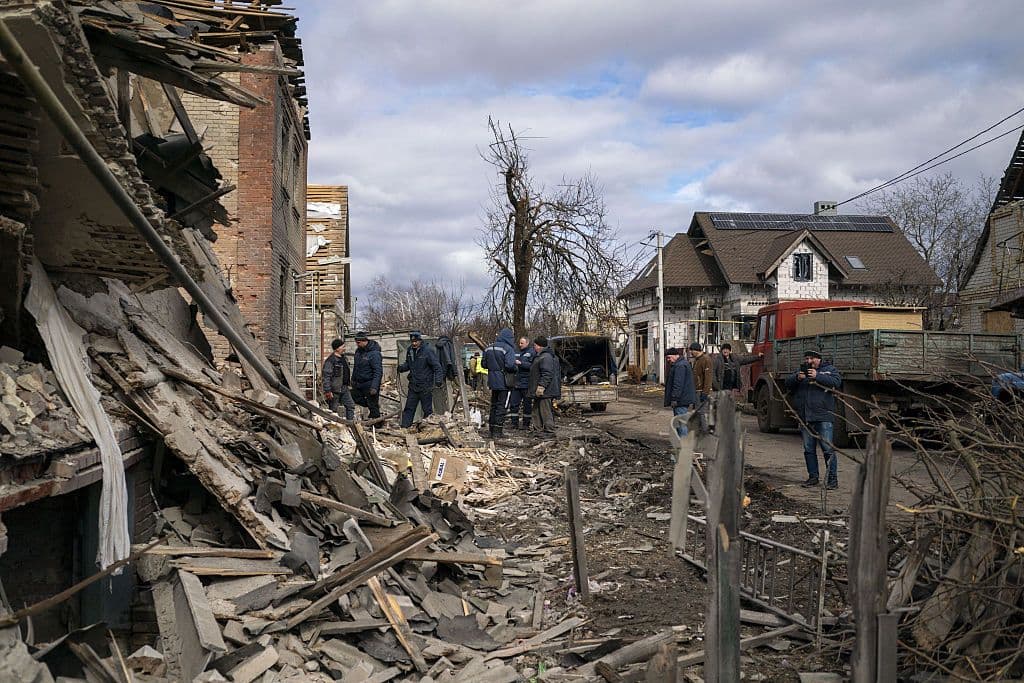
Aftermath of the destruction in a residential area after a guided aerial bomb (KAB) attack in Sloviansk, Donetsk Oblast. (Jose Colon/Anadolu via Getty Images)
Russian troops also pressed forward near Novopavlivka and along the Oleksandrivka line, where bombing struck a dam on the Vovcha River.
In the Hulyaipole direction, Ukrainian forces hit Russian troops near Varvarivka after a failed infiltration attempt. Fighting continued around Hulyaipole, Ternuvate, and nearby settlements.
In western Zaporizhia Oblast, Russian units attacked near Orikhiv while the Defense Ministry credited airborne forces with the earlier capture of Veselyanka.
Near Kherson, limited assaults targeted the Antonivskyi Bridge area and Bilohrudyi Island.
Across the entire front the pattern held: relentless attacks, shifting skirmishes, and no decisive breakthrough.
The Day’s Meaning
March 5 showed how the war is increasingly fought through leverage as much as through weapons.
Ukraine turned battlefield survival into diplomacy. Volodymyr Zelensky offered Gulf states the expertise Ukraine developed intercepting Iranian Shahed drones—knowledge forged under nightly attacks. In exchange, he asked those same states to pressure Moscow toward ceasefires. What began as defensive necessity became negotiating currency.
Elsewhere, governments used pressure in their own ways. Hungary detained Ukrainian bank employees while demanding restoration of the Druzhba pipeline. EU ambassadors rejected proposals to fast-track Ukraine into membership. Washington voted against condemning Russian attacks on infrastructure linked to nuclear facilities, signaling that protecting negotiations sometimes outweighed public condemnation.
Inside Russia, power continued consolidating. Another former deputy of Sergei Shoigu was arrested as Vladimir Putin’s system dismantled old networks inside the Defense Ministry. At the same time, Russian society showed signs of fatigue. Polling indicated support for continuing the war had fallen sharply even as many Russians still backed the army itself.
On the battlefield, the pattern remained grimly familiar. Ukrainian forces made small advances near Kostyantynivka while Russian assaults continued across multiple sectors without decisive breakthroughs. Ukraine’s long-range strikes hit refineries, ships, air defenses, and depots across occupied territory and deep inside Russia, forcing Moscow to defend vast distances.
Each night repeated the same calculation: waves of drones, high interception rates, and the few that still slipped through to damage homes and infrastructure.
Even small signs carried meaning. Ukraine exported electricity again for the first time in months. Two hundred prisoners returned home. Yet in Kharkiv’s shattered Saltivka district, one man still lived alone in an empty tower waiting for a war with no clear end.
The conflict now runs on exchanges—technology for influence, diplomacy for leverage, endurance for time—while victory for either side remains uncertain.
Prayer For Ukraine
- Protection from the Drone War
Lord, as Russia launched another wave of more than a hundred drones overnight, we ask for Your protection over Ukraine’s cities and villages. Strengthen the air defense crews, protect families sleeping under the threat of attack, and shield civilians from the destruction that still falls from the sky. - Comfort for Returned Prisoners and Those Still Captive
Father, we thank You that two hundred Ukrainian defenders were returned home from captivity. Bring healing to their bodies and minds after what they endured. Strengthen those still imprisoned, and give their families hope that one day they too will come home. - Wisdom in Diplomacy and International Pressure
Lord, guide Ukraine’s leaders as they navigate complex diplomacy—from negotiations to international votes and alliances. Turn the hearts of world leaders toward justice, and use even unexpected opportunities to bring pressure for peace. - Justice in International Disputes
We pray for wisdom and restraint in the growing tensions between Ukraine and Hungary after the detention of Ukrainian banking employees. Prevent escalation, protect innocent people caught in political conflict, and lead leaders toward fair and lawful solutions. - Endurance and Recovery for Ukraine
God, we thank You for signs of resilience, like Ukraine exporting electricity again despite months of Russian attacks on its energy system. Strengthen the nation as it rebuilds and endures. Sustain the Ukrainian people with courage until the day peace finally returns.