
August 22, 2026
Prepared by Diana Bozhyk
Vladimir Putin declared victory in Ukraine the defining mission of Russia’s ruling party and dismissed Ukrainian and European peace proposals as “exotic,” even as Ukrainian drones struck three more Russian oil and logistics facilities overnight, killing three civilians, including two children, at a Krasnodar port. Russia answered with 217 drones and fresh ballistic missiles, killing a railway worker in Kyiv and adding six more deaths in daytime strikes on Boryspil and Zaporizhzhia. Germany pledged 60 million euros with progress on Patriot interceptors, France’s president promised faster missile deliveries, and former defense minister Mykhailo Fedorov used a television interview to accuse Ukraine’s own ministry of corruption involving “hundreds of people.”
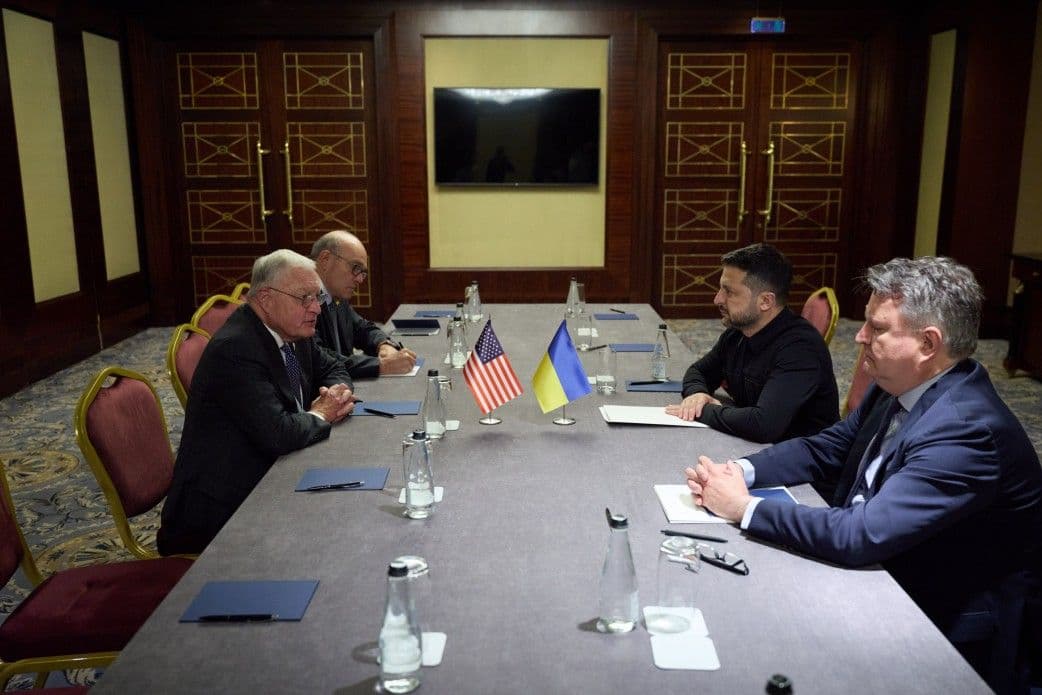
President Volodymyr Zelensky meets with U.S. President Donald Trump’s former envoy to Ukraine Keith Kellogg in Kyiv. (Presidential Office)
THE DAY’S RECKONING
Vladimir Putin stood before his own party today and said something worth translating honestly: Russia isn’t looking for a way out of this war, it’s building a political system around staying in it. He made his ruling party the official “war party,” told his own people Russia is winning on every front — while quietly losing ground in August — and dismissed peace proposals from Ukraine and Europe as “exotic,” whatever that’s supposed to mean.
Ukraine answered the way it usually does now: not with speeches, but with drones. A refinery in Samara burning. A logistics warehouse in the same region on fire. A Krasnodar port hit hard enough that three people, two of them children, didn’t survive the night. Russia answered back with the same brutal arithmetic it’s used all year — 217 drones, fresh ballistic missiles, a railway worker killed in Kyiv, six more dead in daytime strikes nobody bothered warning anyone about first. Germany, France, and a former American envoy all showed up in Kyiv today with money and promises. Fedorov, once Ukraine’s own defense minister, spent his day accusing his old ministry of corruption on national television. Everyone had somewhere urgent to be today. Nobody had anywhere closer to peace.
PUTIN’S DAY: A “WAR PARTY,” FAKE GAINS, AND “EXOTIC” PEACE OFFERS
Vladimir Putin spent today doing two things at once: building a political system that can’t easily reverse course on the war, and lying to his own public about how that war is actually going.
At Russia’s ruling United Russia party congress, Putin declared the party has a duty to do “everything possible to achieve victory” in Ukraine — effectively making pro-war loyalty the party’s central platform ahead of September’s parliamentary elections, in which Yabloko, Russia’s only nominally anti-war party, has already been barred from running. Analysts say the move positions United Russia’s near-certain election victory as manufactured proof that ordinary Russians support a war most had no say in starting, while giving Putin political cover to demand further sacrifice — quite possibly including the involuntary reserve call-up Ukrainian officials have warned may follow the vote.
In a separate interview the same day, Putin claimed Russian forces are “advancing in all directions” at an increased pace — a claim directly contradicted by independent battlefield tracking, which shows Russia actually lost more territory than it gained in August so far, at a cost of roughly 1,074 casualties for every square kilometer seized. Putin did concede that Ukrainian long-range strikes are causing real “economic damage” and acknowledged Russia’s air defenses need improvement, a rare admission of vulnerability. But on diplomacy, he offered nothing: calling Ukrainian and European peace proposals “exotic” and “unacceptable,” while refusing to explain what he meant, and insisting Russia will only negotiate based on “ground realities” — a phrase that, in practice, means Ukraine’s surrender on Russian terms.
UKRAINE’S DEEP STRIKES: REFINERIES, WAREHOUSES, AND A PORT THAT KILLED TWO CHILDREN
Ukraine’s long-range campaign kept pace with Russia’s own barrage overnight, hitting three separate economic targets deep inside Russian territory — one of which came at a real civilian cost.
Ukrainian forces struck the Novokuibyshevsk Oil Refinery in Samara Oblast, roughly 560 miles from the front, along with an Ozon logistics center in nearby Chapayevsk — Ozon being Russia’s second-largest online retailer and Wildberries’ main competitor, now increasingly a target in its own right after months of Ukrainian strikes against Wildberries facilities. Ozon confirmed the drone strike; Samara’s regional governor acknowledged damage to both sites. Separately, Ukraine’s General Staff confirmed a strike on fuel and lubricant storage tanks at the Yeysk oil terminal complex in Krasnodar Krai, a facility capable of handling 6.8 million tons of cargo annually, including over a million tons of petroleum products the military said directly supplies Russian forces.
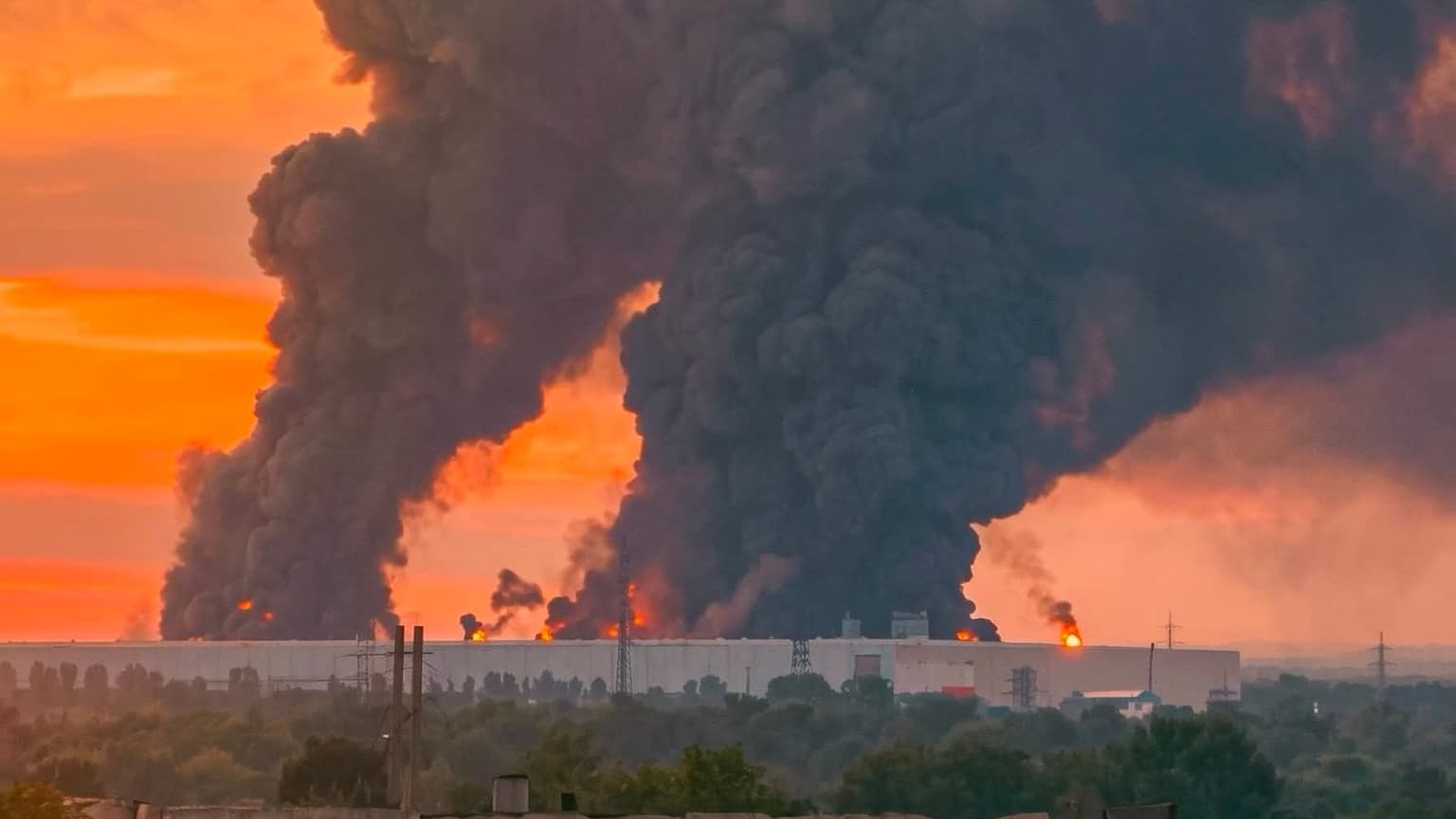
A purported photo of a fire burning at an OZON logistics center in Russia’s Samara Oblast overnight, following a reported Ukrainian attack. (Monitor / Telegram)
The Yeysk strike carried a human cost Ukrainian officials didn’t shy away from: Krasnodar’s own governor confirmed three people were killed in the district during the attack, including two children, with one more person hospitalized. It’s a sobering reminder that strikes aimed at military-linked infrastructure don’t happen in a vacuum — even when the target is a legitimate supply hub for Russia’s war, the surrounding area is still full of people whose lives have nothing to do with the war Russia started. Separately, Ukraine’s General Staff confirmed an earlier strike on a drone storage site in Primorsko-Akhtarsk damaged a Russian early-warning radar and 18 separate drone warehouses, while a fire of unclear origin also broke out overnight at a St. Petersburg warehouse complex near another Ozon facility.
OVERNIGHT BARRAGE HITS KYIV’S RAILWAYS
Starting late Friday evening, Russia launched Iskander-M and S-400-derived ballistic missiles, three Kh-31 and Kh-59 cruise missiles, Banderol loitering munitions, and 217 drones — more than 50 of them jet-powered — at Ukraine from six separate directions, including Russia’s Kursk, Bryansk, Belgorod, Oryol, and Rostov regions, the Black Sea, and occupied Crimea. Ukrainian forces intercepted three cruise missiles, six Banderols, and 182 drones; the rest struck 41 locations, with debris landing at 12 more, hitting residential, postal, industrial, fuel, energy, and port infrastructure across seven oblasts.
The strike carried a direct human cost in the capital: a ballistic missile hit a railway enterprise in Kyiv’s Darnytsia district almost simultaneously with the air-raid warning, killing a Ukrainian Railways foreman before the rest of the staff could evacuate, and igniting a warehouse fire. Ukrzaliznytsia’s CEO confirmed Russian forces separately struck the railway network in Odesa, badly damaging the Rozdilna station building, and hit train locomotives near Mykolaivka in Dnipropetrovsk Oblast and Barvinkove in Kharkiv Oblast with Geran-type drones — despite which, the company said, overall train schedules across the country remained unaffected. A separate overnight strike also briefly knocked out the Tabaky border crossing into Moldova in Odesa Oblast, restored only after emergency repairs. The barrage came just two days before Ukraine’s 35th Independence Day, with Ukraine’s security service having already warned citizens to expect exactly this kind of escalation around the anniversary.
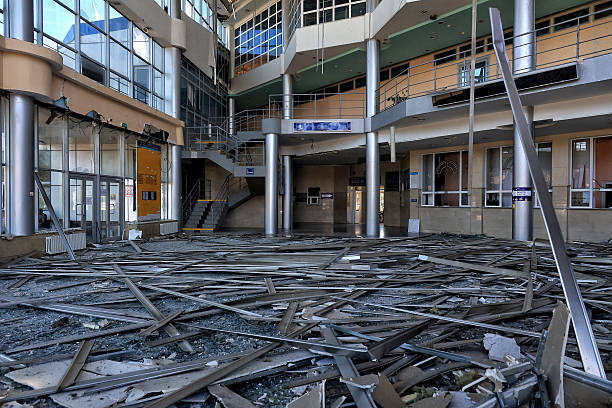
The terminal of the Rozdilna railway station is seen damaged by a nighttime Russian drone attack on Odesa Oblast. The drone struck the station building directly leading to an ensuing fire. (Nina Liashonok/Ukrinform/NurPhoto via Getty Images)
A DAY OF STRIKES ACROSS UKRAINE
Russia didn’t stop at overnight strikes. In the early afternoon, a ballistic missile hit the Boryspil district near Kyiv, killing two people and injuring five more, damaging a warehouse, a parking lot, several vehicles, a private home, and a gas station, according to regional officials. Separately, Russian forces launched seven strikes against Zaporizhzhia district, killing three people and injuring 15 more, including a child, and damaging multiple private homes.
Combined with strikes reported earlier in the day across the country, the toll piled up region by region. Kherson Oblast lost three people, with 13 more injured as strikes damaged houses and apartments; a Russian drone separately burned a shopping center to the ground in Kherson City itself, though no casualties were reported there. Donetsk Oblast lost one person with seven injured, five of them in Kramatorsk. Sumy Oblast lost one man killed by a drone strike on his home, with six more injured, including a 12-year-old boy and a 37-year-old man whose truck was targeted directly. “Every day that Ukraine lacks air defense is a day that results in casualties that could have been avoided,” Zelensky wrote, renewing his appeal for interceptor deliveries. By day’s end, the strikes across Ukraine had killed at least 11 people and injured more than 45, spread across six regions in a single 24-hour span.
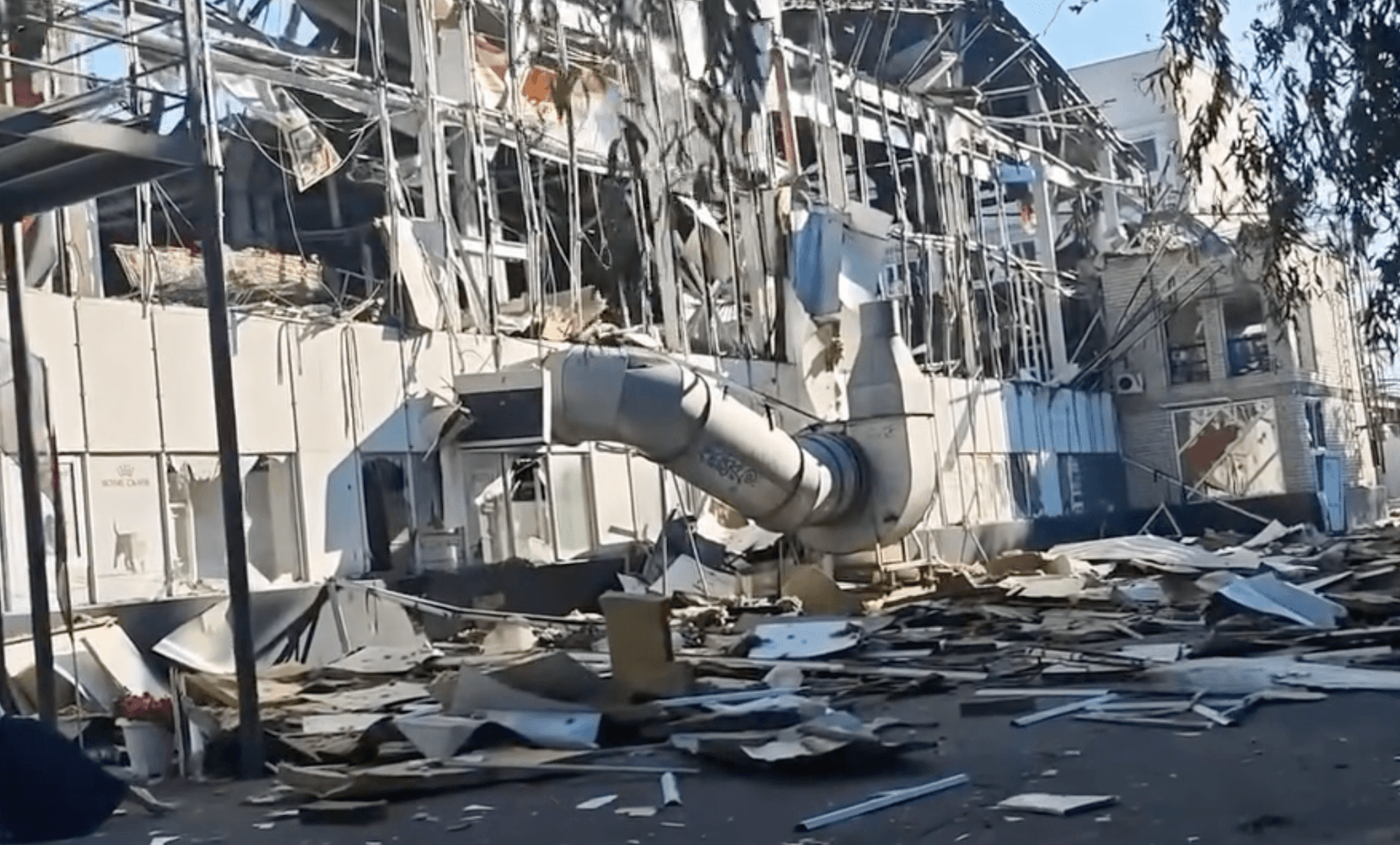
A shopping center in Kherson destroyed by a Russian drone. (Yaroslav Shanko/ Facebook)
MEANWHILE, AT THE ACTUAL FRONT — THE NORTH AND EAST
Away from headline strikes, the ground war moved in small increments, with Ukrainian counterattacks holding firm in several sectors even as Russia adapted its own tactics under mounting strain.
In northern Sumy Oblast, Ukrainian forces reportedly advanced near Kindrativka and counterattacked near Yunakivka and Sadky, pushing back against continued Russian pressure along the border. In Kharkiv Oblast, Russian forces attempted to outflank the long-contested settlement of Kozacha Lopan from the west, after months of failed attempts from the north and east dating back to early June. In a notable structural shift, Russian sources reported that military command is disbanding tank battalions in two regiments operating across northern Sumy and Kharkiv oblasts, reallocating younger soldiers to drone units and the remainder to assault infantry — further evidence that Russia is deliberately moving away from mechanized warfare toward a slower, positional style of fighting built around drones and small infantry assaults rather than armor.
Near Kostyantynivka, Ukrainian forces advanced in the city’s center even as Russian sources continued a pattern of doctored and mislabeled footage, falsely claiming gains in locations where geolocated video actually shows fighting happening elsewhere — deliberate disinformation, researchers say, meant to avoid contradicting Russia’s premature claim of capturing the city back in July. Russian forces are reportedly launching between 1,500 and 2,000 first-person-view drones daily against Druzhkivka alone, with another 1,200 daily in the Dobropillya direction, on top of an unknown and uncountable number of fiber-optic drones immune to jamming — a staggering volume that illustrates just how drone-saturated this stretch of front has become on both sides.
MEANWHILE, AT THE ACTUAL FRONT — THE SOUTH
Further south, Ukrainian forces posted modest gains and struck a significant blow against Russian command structure, even as occupied Crimea’s power grid buckled further under sustained pressure.
Near Oleksandrivka, Ukrainian forces advanced northeast of the settlement, continuing to hold ground gained during the broader counteroffensive there, while Russian forces conducted only limited attacks without confirmed progress. Northwest of Hulyaipole, Russian forces made no advances, and Ukraine’s Unmanned Systems Forces disclosed a significant strike: drone operators hit a car carrying Colonel Dmitry Shabaev, commander of Russia’s 64th Separate Motorized Rifle Brigade, roughly 50 miles behind the front line in Zaporizhzhia Oblast, severely wounding him — an injury Ukrainian officials assess will likely end his military career if he survives. West of Orikhiv, Ukrainian forces advanced northeast of Stepove, adding to a string of small but real gains across the sector this week.
In occupied Crimea, the peninsula’s own energy operator confirmed it’s now imposing electricity restrictions across the entire occupied territory due to sustained Ukrainian drone strikes — not just isolated districts, but the whole peninsula. Local monitors reported fresh fires near the Perove Solar Park and a substation near occupied Klyuchi, along with a possible strike on a communications tower atop Mount Pasha-Tepe near Feodosia. Even a Russian military blogger complained openly that strike intensity on Crimea has quadrupled since last August, criticizing Russian authorities for failing to improve coordination or air-defense competency and instead shifting blame onto local officials. Separately, a Russian source claimed Ukrainian forces struck the ferry Ural in the Black Sea, though this couldn’t be independently confirmed.
GERMANY PLEDGES €60 MILLION AND NEARS A PATRIOT BREAKTHROUGH
German Foreign Minister Johann Wadephul arrived in Kyiv today with both money and diplomatic momentum, announcing €60 million in fresh aid and reporting real progress in allied talks over additional Patriot interceptor missiles.
Speaking alongside Ukrainian Foreign Minister Andrii Sybiha, Wadephul said discussions with European and other partners on further air-defense capabilities have gone well, and that he expects a favorable outcome soon, with follow-up talks planned next week including a meeting with US Secretary of State Marco Rubio. The new funding splits into €50 million in humanitarian assistance — channeled through UN organizations and NGOs to provide generators, housing repairs, and heating equipment ahead of winter — and €10 million toward NATO’s Comprehensive Assistance Package, supporting decentralized military energy supplies, hospital equipment, and anti-drone systems.
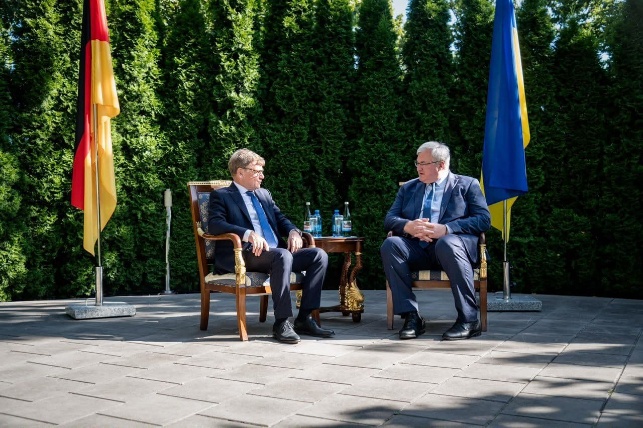
German Foreign Minister Johann Wadephul (L) and Foreign Minister Andrii Sybiha (R) meet in Kyiv. (Andrii Sybiha)
Wadephul didn’t mince words about the stakes: “The outcome of the war must ensure the rule of law prevails over the law of the jungle.” He also confirmed Germany and Ukraine are ready to formally sign a drone-development deal covering high-speed BARS jet-powered drones, building on an agreement reached last month. He and French Foreign Minister Jean-Noël Barrot have jointly appealed to multiple countries for help securing Ukraine’s energy grid through the winter, framing European unity as the clearest signal that Putin won’t achieve his war aims regardless of how long the fighting continues.
MACRON’S TWO-HOUR CALL AND A RENEWED MISSILE PLEDGE
French President Emmanuel Macron pledged to speed up missile and military equipment deliveries to Ukraine following a nearly two-hour phone call with President Zelensky, a conversation that came just as a week of deadly Russian strikes on Ukrainian civilians reached its bloodiest stretch in weeks.
“It is crucial to provide Ukraine with all the necessary means to defend its skies,” Macron wrote, confirming he’d told Zelensky directly that France would strengthen its support, including additional interceptors. Zelensky said Macron also agreed to help Kyiv in its communications with other countries that hold Patriot systems — a diplomatic assist aimed at unlocking supply from nations that have Patriots but haven’t yet committed to transferring them. Zelensky separately thanked Macron for confirming France’s willingness to license Ukraine to produce its own missiles domestically, building on a deal reached last month allowing Ukraine to manufacture ASTER missiles for SAMP/T air-defense systems and SCALP cruise missiles under French license.
The renewed pledge lands against the backdrop of a genuinely brutal week: 16 people killed at a Kryvyi Rih shopping center on August 21, 15 more in Kyiv on August 20, and now Kyiv’s railway network and two more cities struck again today. For Zelensky, each new French, German, or American commitment matters less as an isolated gesture and more as one more piece of a Patriot-interceptor pipeline he’s said, repeatedly, remains Ukraine’s single most urgent unmet need heading into another winter of Russian bombardment.
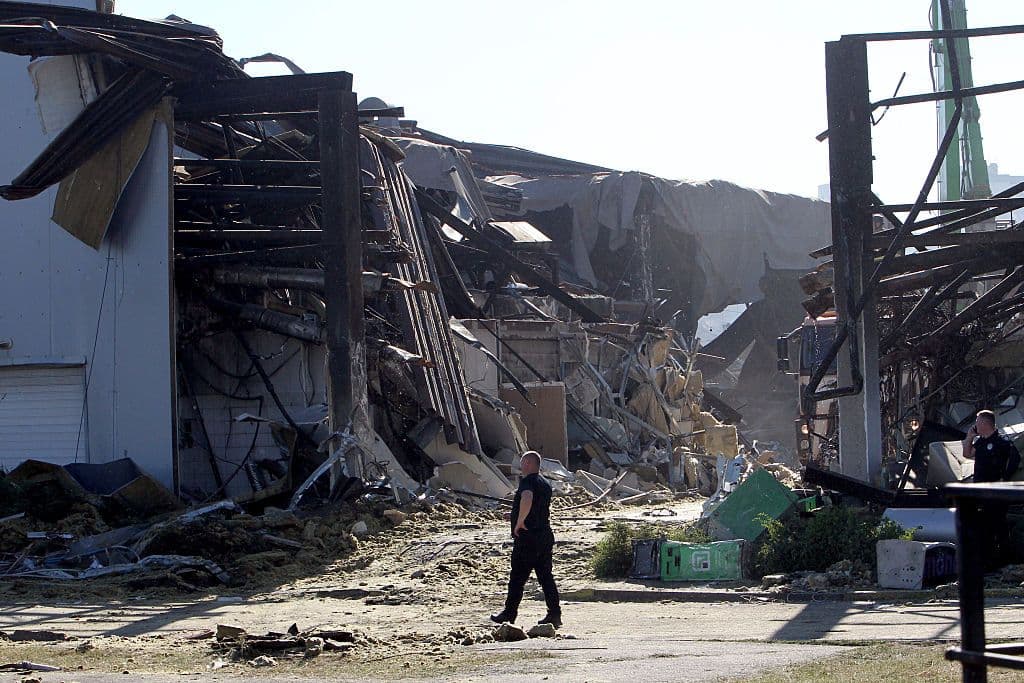
A shopping center damaged by a drone strike in Kryvyi Rih, Dnipropetrovsk Oblast. (PMykola Miakshykov/Ukrinform/NurPhoto via Getty Images)
FORMER MINISTER AIRS THE DEFENSE MINISTRY’S DIRTY LAUNDRY
Mykhailo Fedorov, dismissed as defense minister just over a month ago, used a wide-ranging television interview today to level his most detailed public accusations yet against the ministry he used to run — describing corruption involving not a handful of officials, but what he called “hundreds of people.”
“There are many people who have built various schemes around their own interests, and they are essentially slowing down the adoption of the right decisions,” Fedorov said, adding that Ukrainians “will learn these names” eventually through law-enforcement recordings and press coverage, though he declined to name anyone directly today. “Corruption actually prevents us from ending the war from a position of strength,” he said, framing the issue as a genuine obstacle to Ukraine’s ability to fight effectively, not just a political scandal.
Fedorov also renewed his call for Ukraine to prepare for “the restoration of the democratic cycle” — elections at the local, parliamentary, and presidential level — arguing the country shouldn’t wait for a crisis to force the issue and that many objections to wartime elections amount to easily dispelled myths. Asked directly about his own political ambitions, Fedorov stayed deliberately vague, saying only that he’d decide later whether to support another candidate, run independently, or step back from politics altogether, while confirming his immediate plans center on private-sector defense-tech work and university teaching rather than another government post.
ACCOUNTABILITY, TWO WAYS
Two separate accountability stories today illustrated very different stages of Ukraine’s reckoning with institutional failure — one addressing a systemic reform requirement, the other examining a specific, deadly lapse.
President Zelensky signed decrees appointing 16 new judges to Ukraine’s High Anti-Corruption Court and its Appeals Chamber, fulfilling a specific reform benchmark the European Union has required as part of Ukraine’s accession path — a bureaucratic-sounding step that nonetheless expands the court’s capacity to actually process the growing backlog of corruption cases the country’s anti-graft agencies keep uncovering.
Separately, Ukraine’s Interior Minister confirmed police have opened criminal negligence proceedings against the director of a supermarket inside the Kryvyi Rih shopping center struck in yesterday’s deadly double-tap attack, after reports that the store stayed open through an air-raid alert and the roughly 20 minutes that passed before the first drone actually hit. A significant number of the attack’s dead were reportedly found inside that supermarket specifically. Investigators will examine whether staff and shoppers were properly warned, whether evacuation procedures were followed, and reports that shelter doors were found blocked — with the inquiry extending to senior management at both the supermarket chain and the broader shopping complex. “During air raid alarms, it is crucial to react promptly to prevent crowds from forming and to protect lives,” the interior minister said, appealing directly to business managers in frontline regions to take the threat seriously going forward.
POLAND’S QUIET LEDGER OF SUPPORT
Amid months of headlines about political friction between Warsaw and Kyiv, Poland’s foreign ministry released a reminder today of just how substantial its support for Ukrainian refugees has actually been since the war began.
Poland has provided legal and financial protection to 1.7 million Ukrainian citizens forced to flee the invasion, according to the ministry, with roughly 77 percent of Poles reporting they’ve actively helped Ukrainian refugees in some way and 7 percent opening their own homes to host them directly. Polish society has spent more than 10 billion zlotys — roughly $2.7 billion — supporting Ukrainians since 2022, a figure the ministry described as one of the largest displays of public solidarity in the country’s modern history.
The numbers matter partly because of the context they’re arriving in: Poland has weathered real strain over the war’s duration, including rising domestic debate over the costs of continued support and periodic tension tied to historical disputes between the two nations. Against that backdrop, the scale of ordinary Polish generosity — measured not in government pledges but in millions of individual households choosing to help — offers a different picture than the political headlines alone tend to capture, even as Poland’s government continues navigating the harder diplomatic and military questions the war keeps raising for its own security.
AN ACTOR’S VISIT AND A REMINDER OF WHAT’S AT STAKE
American actor Liev Schreiber, a longtime United24 ambassador with Ukrainian heritage through his grandfather, toured the site of Russia’s August 20 strike on Kyiv’s Solomianskyi district today, using the visit to publicly renew calls for stronger Western air-defense support.
Schreiber walked through a damaged nine-story residential building standing beside a school and a children’s hospital — structures caught in the same barrage that killed at least 17 people and injured 42 across the capital two days earlier. “It’s so clearly an attack designed to hit civilians,” he said in a video recorded at the site, calling missile defense “essential” and specifically appealing for the US to resume Patriot-related support. “America used to provide that. Hopefully, we can figure out how to get that program going again,” he said.
Schreiber’s visit followed a United24 summit the day before, where President Zelensky awarded him Ukraine’s Order of Merit, First Class, recognizing years of advocacy that include co-founding the charity BlueCheck Ukraine and helping raise roughly $3 million for hospital generators back in 2022. It’s a small story next to refineries and ballistic missiles, but a telling one regardless: even a celebrity visit, on a day this heavy with strikes and diplomacy, kept circling back to the same single request nearly every Ukrainian official made today in one form or another — more air defense, delivered faster, before winter makes the gap even more costly.
A PARTY CONGRESS, A BURNING PORT, A RENEWED PLEDGE
By nightfall, the day’s throughline was unmistakable: Russia is organizing its entire political system around continuing this war, while everyone trying to help Ukraine survive it keeps circling back to the same unmet need. Interceptors. Patriots. Air defense that actually works before the next barrage, not after.
A refinery in Samara is burning because of drones built in Ukraine. A railway worker in Kyiv won’t come home. Three people near a Krasnodar port, two of them children, didn’t survive a strike aimed at fuel tanks. And a former defense minister spent his evening on television, naming no one directly but promising that Ukrainians will eventually learn exactly who profited while their country fought for its life. Nothing today brought an ending closer. Everything today made clear just how much both sides are still willing to spend proving they haven’t run out of road.
A PRAYER FOR UKRAINE
1. For the Children Lost Near a Krasnodar Port
Lord, two children are dead tonight near Yeysk, killed in a strike aimed at fuel tanks that had nothing to do with their own small lives. We grieve every child this war claims, on either side of a border neither of them chose. Receive them gently, comfort whatever family remains to mourn them, and let their deaths matter enough to someone, somewhere, to change how carefully strikes are aimed.
2. For a Railway Worker Who Didn’t Get to Evacuate
Father, a foreman in Kyiv died at his post this morning, caught by a missile before he could follow his own colleagues to safety. Ordinary work, ended without warning. Comfort his family, and give every railway worker still showing up for early shifts the protection their courage deserves. Let his death be remembered, not folded quietly into tomorrow’s larger numbers.
3. For the Twelve-Year-Old Boy Whose House Was Hit
Lord of the young, we lift up a child in Sumy Oblast injured today when a drone struck his own home — a place that should have meant safety, not danger. Heal him fully, in body and in whatever fear now lingers. Protect every child in this country still learning to associate ordinary rooms with sudden violence, and give them, eventually, a childhood this war hasn’t fully stolen.
4. For Honesty About What’s Broken, Even When It’s Uncomfortable
God of truth, we pray for the harder conversations happening today — about corruption inside Ukraine’s own defense ministry, about whether a supermarket’s negligence cost lives in Kryvyi Rih. Give leaders and investigators alike the courage to follow these questions all the way through, even when the answers implicate people close to power. Let truth-telling strengthen this country rather than simply exhaust it further.
5. For Every Ally Still Choosing to Show Up
God of provision, we pray for the countries still sending money, missiles, and diplomats to a war that’s dragged on far longer than anyone hoped. Give their leaders follow-through that matches their promises, and give Ukraine the patience to keep asking even when the answer arrives slower than the need demands. Let solidarity outlast fatigue, on every side still willing to offer it.
In Your mercy, in Your justice, in Your time — bring this war to its end, and let the ending be worthy of what Ukraine has endured.