
In Shandryholove, more than 500 Russian soldiers walked into open terrain in daylight — and most didn’t walk back. In Leningrad Oblast, four crude oil storage tanks burned at Russia’s largest export terminal as Ukraine’s drones reached 1,400 kilometers deep into Russian territory. In Miami, American envoys held peace talks without Russia in the room, while back home Trump weighed inviting Belarus’s dictator to Mar-a-Lago. Day 1,490 — the day Russia’s long-promised spring offensive met the drone wall it never prepared for.
The Day’s Reckoning
A Russian State Duma deputy stood before his constituents on March 23 and promised that Russian forces would advance toward Slovyansk and Kramatorsk at a “leisurely pace.”
That same morning, General Oleksandr Syrskyi released the week’s casualty figures: 8,710 Russian troops killed or wounded. Roughly 1,245 per day. Nothing leisurely about that.
Russia’s Spring-Summer 2026 offensive had arrived — confirmed by the Institute for the Study of War, confirmed by Syrskyi, confirmed most brutally by 619 Russian assaults in just four days. The Kremlin’s plan was blunt: overwhelm Ukraine’s Fortress Belt with sheer mass and finally seize Slovyansk and Kramatorsk — objectives Moscow has been reaching for since 2014.
The offensive met Ukraine’s drones.
Near Shandryholove, more than 500 Russian infantrymen moved across open terrain in daylight. Minefields, artillery, and drone swarms stopped them cold. The 3rd Army Corps reported hunting down retreating survivors. Russia’s Defense Ministry said nothing — no claims of advance, no acknowledgment of the battle. The silence was the story.
Eight hundred kilometers north of the front, four oil storage tanks burned at the Transneft-Port Primorsk terminal near St. Petersburg. Further southeast, flames rose from a refinery in Bashkortostan — 1,400 kilometers inside Russia. The same night, Ukrainian forces destroyed the 28th Russian air defense system since March 1st.
In Miami, Steve Witkoff and Jared Kushner sat across from Ukrainian officials for a second day of talks. Russia wasn’t in the room. The trilateral process, Kremlin spokesman Peskov had said, was “on pause.”
Three simultaneous wars: on the ground in Donetsk, in the skies over Russia, and in hotel conference rooms in Florida.
Day 1,490. The Fortress Belt held. The drones flew. The diplomats talked.
500 Soldiers Walked Into the Open. Most Didn’t Walk Back.
They’d been watching for months. Satellite feeds. Convoy counts. Troop movements rolling toward eastern Ukraine. Russia’s Spring-Summer 2026 offensive was the worst-kept secret in Europe — debated by milbloggers since January, anticipated by Western intelligence, prepared for by Ukrainian engineers building the Fortress Belt. Everyone knew it was coming.
Nobody knew it would bleed this fast.
On March 23, General Syrskyi released the numbers: 619 Russian assaults in just four days, March 17 to 20. Six thousand and ninety killed or wounded in that window alone. Over the full week, 8,710 casualties — 1,245 soldiers removed from the battlefield every single day.
Near Shandryholove, you could see what those numbers looked like on the ground. More than 500 Russian infantrymen, backed by dozens of armored vehicles, buggies, and ATVs, pushed across open terrain in broad daylight. The minefields found them first. Then the artillery. Then the mortars. Then the drones — bomber drones dropping payloads into formations, FPV kamikazes chasing survivors trying to fall back. Ukraine’s 3rd Army Corps reported stopping the assault entirely. The retreating Russians were hunted as they ran.
The Kremlin said nothing. From Friday through Monday, Russia’s Defense Ministry announced zero offensive operations, claimed zero ground gains. No triumphalist Telegram posts. No state media footage of advancing columns. Just silence — which, for a government that celebrates every meter gained, was a confession.
Meanwhile, in the Pokrovsk direction alone, Ukraine’s 7th Rapid Reaction Corps had destroyed roughly 26,000 Russian drones over eight months. One thousand per week. Every destroyed drone a data point. Every clear-sky day another day the drone wall held.
Moscow was already praying for fog.
The Night Ukraine Set Russia on Fire — From the Baltic to the Urals
Sometime after midnight on March 23, four massive crude oil storage tanks at the Transneft-Port Primorsk terminal began to burn.
The terminal sits near St. Petersburg, on the Baltic coast, processing 60 million tons of crude annually — one of the critical arteries pumping war revenue into the Kremlin. Leningrad Oblast Governor Alexander Drosdenko confirmed the strike. That confirmation mattered. Russian officials routinely downplay Ukrainian deep strikes. When they acknowledge one, the damage is too large to hide.
Fifteen hundred kilometers southeast, a second fire was starting.
Ukrainian drones found the Bashneft-Ufaneftekhim refinery in Bashkortostan — deep in the Russian interior, approaching the Ural Mountains, 1,400 kilometers from the Ukrainian border. The facility supplies six to eight million tons of refined petroleum products annually, feeding Russian military operations. It sat in territory Russian planners had long considered untouchable.
The flames disagreed.
In Bryansk Oblast, closer to the front but still inside Russia, Ukrainian forces added two more targets: a 2S6 Tunguska air defense system and a “Nebo-U” radar station near Suponove. The Nebo-U is one of Russia’s rarest systems — designed to track cruise and ballistic missiles across vast areas, the architecture that makes other air defense systems work. Without it, gaps open. Commander Robert “Magyar” Brovdi noted it was the 28th Russian air defense system destroyed since March 1st.
Nearly one per day.
Russia had struck Ukrainian railway and logistics infrastructure 160 times in recent months. Ukraine was now hitting back along the same logic — fuel nodes, radar arrays, supply chains. The war of infrastructure was being fought simultaneously on both sides of every border.
Four tanks burning near St. Petersburg. A refinery ablaze near the Urals. One more radar gone dark.
The map of safe Russian territory was shrinking.
Attacks Everywhere. Advances Nowhere.
Russia’s strategy was simple and brutal: hit the entire eastern front simultaneously, stretch Ukrainian reserves thin, find the weak point. On March 23, from Kupyansk in the north to Hulyaipole in the south, Russian commanders pushed their units forward across Kharkiv, Donetsk, and Zaporizhzhia.
The pattern held everywhere. Attacks. No confirmed advances.
At Kupyansk, the offensive’s internal rot was showing. Russian forces struck in four directions simultaneously — north, east, southeast, and into the city itself. But military analyst Kostyantyn Mashovets reported that the 6th Combined Arms Army and 1st Guards Tank Army were fighting with hollowed-out units, some regiments reduced to a battalion’s worth of combat-capable infantry. They were attacking with whatever was left. Ukrainian forces held central Kupyansk.
Near Slovyansk — one of Moscow’s primary objectives — it was Ukraine that advanced. Geolocated footage confirmed Ukrainian forces pushed forward in western Zakitne. A Russian mechanized assault by elements of the 144th Motorized Rifle Division ended with three tanks destroyed, eleven infantry fighting vehicles burning, and over 80 motorized vehicles wrecked. Battalion-sized assault. Stopped cold.
In Kostyantynivka, the fighting shrank to the size of doorways. Ukraine’s Liut special operations unit cleared a two-story building by throwing anti-tank mines through the entrance, collapsing most of the structure onto the Russian soldiers sheltering inside. Building by building. Room by room.
At Pokrovsk, Russian armored vehicles, motorcycles, and infantry hit the city’s outskirts. The 79th Air Assault Brigade reported clear skies made Russian infantry easy to find. Bomber drones found dugouts. FPV drones found soldiers.
South in Hulyaipole, Russia extended its drone kill zone to 20 kilometers and redeployed assault units — including two naval infantry divisions — from other sectors to reinforce the push.
They were pulling troops from everywhere to break through somewhere.
It wasn’t working.
Putin Admits the Numbers. The Numbers Are Damning.
For four years, the Kremlin’s economic messaging never wavered: sanctions weren’t working, Russia was resilient, the wartime economy was strong. On March 23, Vladimir Putin stood up and quietly dismantled that narrative himself.
GDP in January 2026 was 2.1 percent lower than a year earlier. Putin called for a return to “sustainable economic growth” — language that only means something when growth has become unsustainable. He cited 2.2 percent unemployment as evidence of stability.
It wasn’t stability. It was a labor crisis wearing stability’s clothes.
At 2.2 percent unemployment, Russia isn’t fully employed — it’s running out of workers. The military and defense industries have consumed the labor pool. Civilian employers can’t compete. Wages rise to attract workers who aren’t there. Rising wages drive inflation. Inflation compounds everything. Putin described a healthy economy. The mechanism he described was a feedback loop eating itself.
Then came the oil confession. Putin told Russian energy companies to use windfall revenues from rising global oil prices — driven by the Middle East conflict — to pay down their debts to domestic banks. Read that sentence again. The Kremlin spent years insisting sanctions caused no meaningful damage. Putin just told his own oil companies to use sanctions-relief windfalls to cover debts accumulated while fighting a war those sanctions were meant to stop.
The gold picture was worse. Russia’s Central Bank reserves dropped to 74.3 million troy ounces in February — the lowest since March 2022, the invasion’s first month. Half a million ounces sold between January and March alone. Moscow began liquidating gold in November 2025 after its sovereign wealth fund ran dry. Now Middle East instability was pushing gold prices down, eroding the value of the reserves Russia was burning through.
A state selling its savings to fund a war it can’t afford to stop.
Putin’s own words confirmed it.
Four Years of Burning Pipelines — Putin Finally Arms the Guards
For four years, Ukrainian drones struck Russian oil terminals, refineries, and pipelines. For four years, the private security guards protecting those facilities watched with weapons designed for deterring trespassers.
Rifles. Against drones.
On March 23, Putin signed a law to fix that. The legislation authorizes private military companies attached to Russian fuel and energy companies, strategic enterprises, and state corporations to obtain combat-grade weapons and ammunition directly from Rosgvardia — Russia’s national guard. The process requires FSB approval by region. A bureaucratic chain, but now a legal one with a weapons pipeline attached.
State Duma Security Committee head Vasily Piskarev explained the gap the law was closing: PMCs already guard over 80 percent of Russia’s fuel and energy infrastructure. They’ve been doing it for years. But their standard-issue weapons couldn’t reach UAVs, counter USVs, or stop UGVs. Russian milbloggers had been documenting this failure publicly — Ukraine hitting oil infrastructure while guards stood and watched.
The law was an admission dressed as legislation.
It acknowledged, in legal language, what four years of drone strikes had already proven: Ukraine’s campaign had degraded Russian critical infrastructure seriously enough to force a fundamental restructuring of how Russia defends its energy sector. The same night Putin signed the law; four storage tanks were burning at the Port of Primorsk.
The timing made the point better than any press release could.
What the law couldn’t fix — at least not quickly — was the distance between authorization and capability. Signing legislation is straightforward. Training security guards to defeat coordinated drone swarms is not.
The drones aren’t waiting for the training to finish.
Peace Talks in Florida, Drone Stations in Belarus — Washington Pulls in Two Directions
The talks were supposed to happen in Abu Dhabi. Russia was supposed to be there. Neither thing happened.
Instead, on March 23, Steve Witkoff and Jared Kushner sat across from Ukrainian Defense Council Secretary Rustem Umerov in Miami for a second day of bilateral talks — bilateral because the Kremlin had put the trilateral process “on pause.” Witkoff called the conversations “constructive.” Zelensky noted possible progress on prisoner swaps, said there were “indications that further exchanges may take place,” and declined to specify anything further.
Then Zelensky said the quiet part out loud: “It is clear that the US side’s attention at the moment is focused primarily on the situation surrounding Iran and the wider region, but Russia’s war against Ukraine must also be brought to an end.”
One sentence. The entire diplomatic problem.
Washington was simultaneously running a hot war against Iran, negotiating Tehran’s nuclear program, managing surging oil prices, and trying to broker a Ukraine ceasefire. American attention was finite. Ukraine was competing for its share.
NATO Secretary General Mark Rutte went on CBS and defended Trump’s approach — “critical intelligence support and weapons flow” still flowing, Trump “crucial” to pressuring Moscow. He navigated carefully around the sanctions relief question: Treasury estimated it would hand Russia $2 billion in additional revenue. Zelensky’s estimate was $10 billion. Rutte didn’t resolve the gap.
Then came the Belarus signal. US Special Envoy John Coale told the Financial Times that Washington was considering inviting Alexander Lukashenko to the White House or Mar-a-Lago. After Coale’s March 19 visit to Minsk, Lukashenko released 250 political prisoners. Washington eased sanctions. Lukashenko said Trump had proposed a “big deal.”
The same Belarus Russia is currently wiring with drone control stations aimed at Ukrainian cities.
Nobody explained how those two things fit together.
Belarus Is Becoming a Russian Missile Platform. Washington Is Inviting Its Leader to Dinner.
After meeting with HUR Director Oleh Ivashchenko on March 23, Zelensky delivered a specific warning: Russia plans to deploy four new ground control stations for long-range drones into Belarus, plus an unspecified number into occupied Ukrainian territory.
Not repeaters. Control stations. The difference matters.
Repeaters guide drones already in flight. Control stations direct them from launch — extending Russia’s ability to strike deeper into Ukraine, compressing the time between takeoff and impact, turning Belarusian soil into a drone warfare platform aimed at northern and western Ukraine.
This wasn’t a sudden escalation. It was an acceleration of a documented pattern. Russia and Belarus signed an agreement on February 5 authorizing Russian “military objects” on Belarusian territory. Russian forces were already using Belarus for Shahed strikes. The new stations would expand that capability substantially.
“We will react accordingly,” Zelensky said — pointed enough to signal intent, vague enough to keep options open. He instructed Ivashchenko to brief Western allies immediately.
The ISW assessment has been consistent for months: Russia has de facto annexed Belarus. Lukashenko’s government is not a neutral neighbor — it is a cobelligerent. Every new Russian installation on Belarusian soil tightens that integration, making the distinction between Russian and Belarusian military capability increasingly theoretical.
Which made Washington’s simultaneous diplomatic courtship of Lukashenko difficult to reconcile.
Prisoner releases. Sanctions relief. A potential White House visit. The Trump administration was pursuing a careful opening with Minsk at the same moment Minsk was being wired into Russia’s strike architecture against Ukrainian cities.
Two policies. One Belarus.
Whether Washington considered these tracks connected or separate, the Florida talks produced no answer.
Moscow’s Double Game: Seeking Peace with Washington, Feeding Intelligence to Its Enemy
The drone connection between Russia’s war and the US-Israeli campaign against Iran had been visible for months. Tehran supplied Shaheds to Moscow. Moscow used them on Ukrainian cities. Ukraine sent its own experts to help Middle Eastern countries shoot them down.
On March 23, Zelensky added a new thread.
“Ukraine has irrefutable data that Russia continues to share intelligence with Iran,” he said after meeting with HUR Director Ivashchenko. Russia was deploying “its own capabilities in radio-technical and electronic intelligence, as well as some intelligence shared by partners in the Middle East.”
Translation: while seeking sanctions relief and a negotiated settlement with Washington, Moscow was actively feeding intelligence to the country Washington was bombing.
The diplomatic context made it sharper. Three days earlier, Politico had reported that Russia offered a trade — stop sharing intelligence with Iran in exchange for the US halting intelligence sharing with Ukraine. Washington rejected it. The offer itself was the tell. You don’t bargain with something that doesn’t exist. The Kremlin’s willingness to put Russia-Iran intelligence cooperation on the table confirmed it was real, significant, and valuable enough to weaponize in negotiations.
Zelensky’s “irrefutable” claim days later suggested Ukrainian intelligence had independent confirmation of what US officials had already been told privately.
The timing was its own kind of pressure. Zelensky’s disclosure landed precisely as Trump was telling Florida reporters that Iran had agreed to “almost all points” in nuclear talks and that he’d ordered a five-day pause in strikes on Iranian energy facilities.
Washington was moving toward a deal with Tehran. Moscow was still helping Tehran fight.
What exactly did Russia expect to get from maintaining both relationships simultaneously?
Nobody in Florida had a clean answer.
A 21-Year-Old. An Online Game. A Mother Held Hostage by Drone.
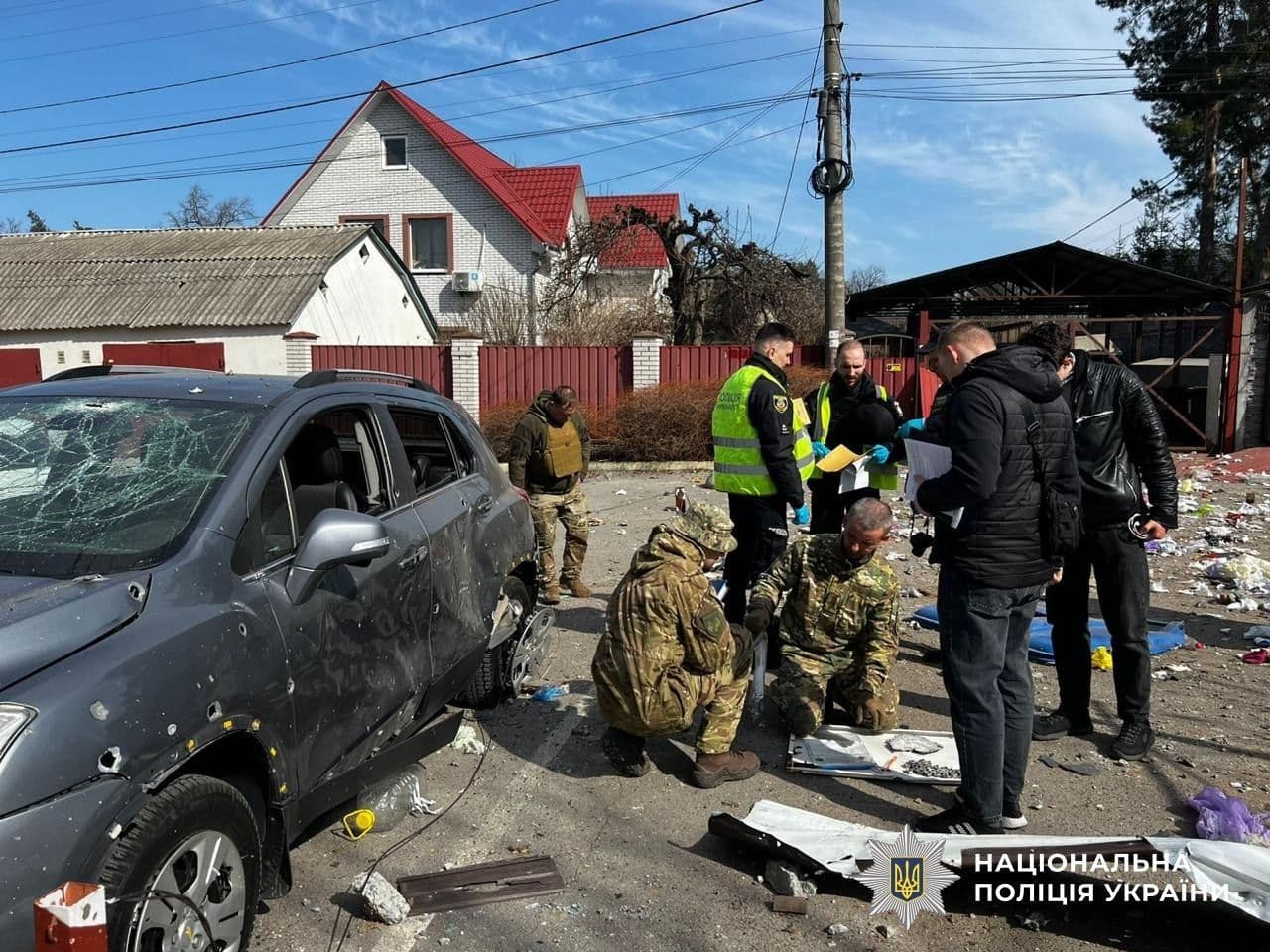
At 5:35 a.m., a woman in Bucha called police. Something had exploded near her building. Windows were shattered.
Officers arrived. Firefighters arrived. Bomb disposal units arrived.
Then the second bomb went off.
The double-tap — a follow-up strike timed to hit first responders — is a signature of Russian aerial bombardment, replicated here at street level. Two law enforcement officers were hospitalized with moderate injuries. They survived.
Within hours, police had a suspect in custody. He was 21 years old.
The Interior Ministry reconstructed what had happened. The young man had been playing an online game when he encountered an unknown individual who eventually revealed he was being watched — his mother was under drone surveillance, her life the price of non-compliance. Plant the devices or she dies. The SBU said he received mobile-detonated IED instructions: one bomb under a bench near a building entrance, one near a garbage container.
Blackmail. A video game. A mother. Two bombs.
This was not an isolated improvisation. On February 22, a Russian-backed attack in Lviv killed one police officer and injured more than 20. The next day, seven officers were wounded in Mykolaiv. Shortly after, an explosion hit the Dnipro police building. The template was consistent across all of them: identify a vulnerable individual, exploit a personal pressure point, provide materials remotely, target law enforcement to erode public confidence in Ukrainian security.
What changed in Bucha was the recruitment channel. Not a handler in a café. Not a compromised contact. A video game — a platform law enforcement had not fully mapped as an intelligence vector.
Russia was finding its recruits where young men spend their evenings.
“Turned Out It Was One of Ours”
The recording lasts only a few seconds. It tells you everything.
A voice on a Russian military radio channel describes shooting someone who approached his position in the dark. Matter-of-fact. Almost casual. “A guest came to me just now; I had to take him out — turned out it was one of ours.”
Another voice asks for the victim’s callsign and unit.
The shooter’s answer: “He didn’t say a word, not a single word, he just sneaked up to me here, so I took him out.”
A third voice offers an explanation — the dead man had probably decided to reposition on his own, moved without telling anyone, and walked into a friendly position in the dark.
He never made it back.
Ukraine’s HUR released the intercept on March 23. The agency’s framing was clinical: the exchange reflected conditions where fear and disorganization had become so severe that any movement after dark could draw fire from your own side. Unit mixing. Communication breakdown. Paranoia generated by extreme attrition. When regiments are reduced to a battalion’s worth of combat-capable infantry — as Mashovets reported for units near Kupyansk — the organizational cohesion that keeps soldiers from shooting each other simply dissolves.
This wasn’t an aberration. It was a data point.
Ukrainian intelligence has built a catalog of these intercepts across four years of war — soldiers hunting for vodka in stolen tanks, men describing abandoned comrades, the unfiltered chaos that follows Russian military disasters. The Kremlin’s official communications describe a disciplined, advancing force.
The radio traffic describes something else entirely.
Eight thousand seven hundred and ten casualties in one week. And somewhere in that number, at least one Russian soldier shot by the man standing next to him.
Five Volunteers in 2022. Two Hundred People in 2026. America’s First Check.
The confrontation in the Oval Office — Zelensky, Trump, cameras rolling, the minerals deal collapsing in real time — was fourteen months ago. On or around March 23, the fund that emerged from that wreckage wrote its first check.
The recipient: Sine Engineering, a Lviv-based startup that didn’t exist before the invasion.
In 2022, Andriy Chulyk and four other volunteers started building software. By March 2026, they had 200 employees, a NATO Innovation Range award, and technology that over 100 drone manufacturers — Ukrainian and international — depend on in combat.
What Sine built was unglamorous and essential: navigation software that works when GPS doesn’t. Electronic warfare is the invisible battlefield over eastern Ukraine — Russian jamming systems constantly trying to blind Ukrainian drones, knock them off course, turn them into expensive debris. Sine’s software keeps them flying. More recently, the company developed technology allowing a single pilot to control multiple drones simultaneously — multiplying the effectiveness of every operator on the front line.
Because the technology is dual-use, Sine can export it. Most Ukrainian defense companies can’t.
The fund itself had a complicated birth. Trump originally proposed Ukraine’s rare earth resources as repayment for US military aid — a concept Kyiv rejected as de facto asset seizure. After months of negotiation, it became something different: a jointly managed private equity arrangement, $75 million from each side, all profits reinvested in Ukraine for the first decade. Over 130 projects applied.
They chose drone navigation software first.
Not minerals. Not infrastructure. The technology keeping Ukrainian drones airborne in jammed environments while Russia’s spring offensive tries to break through below.
The priorities were visible in the first check.
Ukraine Knew His Name for a Year. They Chose This Week to Say It.
The SBU had identified him in 2025. They waited.
On March 23 — as Viktor Orban escalated his anti-Ukraine rhetoric ahead of a heated Hungarian election — Ukraine’s Security Service released the name: Zoltan Andre, a staff member of Hungary’s military intelligence, the officer who allegedly ran a spy network in Zakarpattia Oblast until it was dismantled in May 2025.
The timing was not coincidental.
Andre’s network had one focus: Ukraine’s westernmost region, bordering Hungary, home to a significant ethnic Hungarian minority. His objectives, according to the SBU, included mapping Ukrainian air defense systems and assessing how local residents might react to a Hungarian military deployment in the area. He recruited primarily among former or active military and law enforcement personnel and approached civilians seeking Hungarian citizenship — offering money for cooperation.
Before targeting Ukraine, Andre had spent four years running intelligence operations under diplomatic cover in Georgia. He knew the work.
When the network was first exposed in 2025, it triggered a diplomatic rupture — tit-for-tat expulsions, a formal confrontation between Kyiv and Budapest. The SBU identified Andre then but kept his name in reserve.
They spent a year waiting for the right moment.
The disclosure landed on terrain already scorched by multiple disputes. Hungary’s Foreign Minister Peter Szijjarto faced European scrutiny over reports he’d been briefing Kremlin officials on confidential EU meetings for years. The Druzhba pipeline suspension had poisoned relations further — Budapest accused Kyiv of deliberately cutting oil transit; Kyiv said a Russian strike damaged the pumping station.
Espionage. Leaked EU secrets. A pipeline dispute. An election campaign.
Orban had been using Ukraine as a political target. Ukraine just handed the campaign a different headline.
Trump Pauses the Bombing. Iran Says There Were No Talks. Russia Cashes the Check.
Four weeks into the US-Israeli air campaign against Iran, the uprising that Mossad had promised Washington still hadn’t materialized. No mass protests. No collapsing government. Just an intact Iranian state launching retaliatory strikes across the region and threatening to mine the Persian Gulf.
On March 23, Trump blinked — or negotiated, depending on who you asked.
Standing before reporters in Florida, he announced a five-day pause in planned strikes on Iranian energy facilities. “We have major points of agreement, I would say, almost all points of agreement,” he said. “They’re not going to have nuclear weapons anymore. They’re agreeing to that.”
Tehran’s Foreign Ministry said no talks had taken place. An Iranian official attributed the pause to Trump’s fear of military retaliation and market pressure.
Both things could be true.
While Washington and Tehran disputed the facts of their own negotiations, Russia was quietly collecting the proceeds. Middle East disruption had driven global oil prices up. Putin was already directing Russian energy companies to use the windfall revenues to pay down war debts. The US had eased Russian oil sanctions to offset Iran-related supply disruptions — handing Moscow what Zelensky estimated at up to $10 billion in additional revenue.
Russia was feeding intelligence to Iran. Selling oil inflated by the chaos Iran was generating. Seeking peace terms from the country bombing Iran. Simultaneously.
Ukraine had offered to help. Its experts understood Iranian drone technology better than almost anyone — they’d been shot at by Shaheds for years. Trump dismissed the offer. When a reporter asked whether US strikes on Iranian energy infrastructure resembled Russian tactics in Ukraine, Trump said the situations were “a lot different.”
He didn’t explain how.
251 Drones. Seven Dead. One Woman Weeding Her Garden When the Shrapnel Found Her.
They came from every direction.
Shahed-type, Gerbera-type, Italmas-type drones launched from occupied Crimea, from Smolensk and Rostov Oblasts deep inside Russia, from the direction of Bryansk and Oryol. Two hundred and fifty-one of them, crossing into Ukrainian airspace on the night of March 22 to 23.
Ukrainian air defenses destroyed 234. Seventeen got through. They struck 11 locations. Debris from downed drones hit eight more.
The seven who died were scattered across the map.
Three killed in Zaporizhzhia Oblast, three more wounded. One dead in Donetsk Oblast, four injured. Two killed in Dnipropetrovsk Oblast. One killed in Kherson Oblast, where Russian forces targeted 27 separate settlements in a single night — including the regional capital. In Sumy Oblast, three people were wounded, among them two boys aged 13 and 14. Two injured in Kirovohrad Oblast.
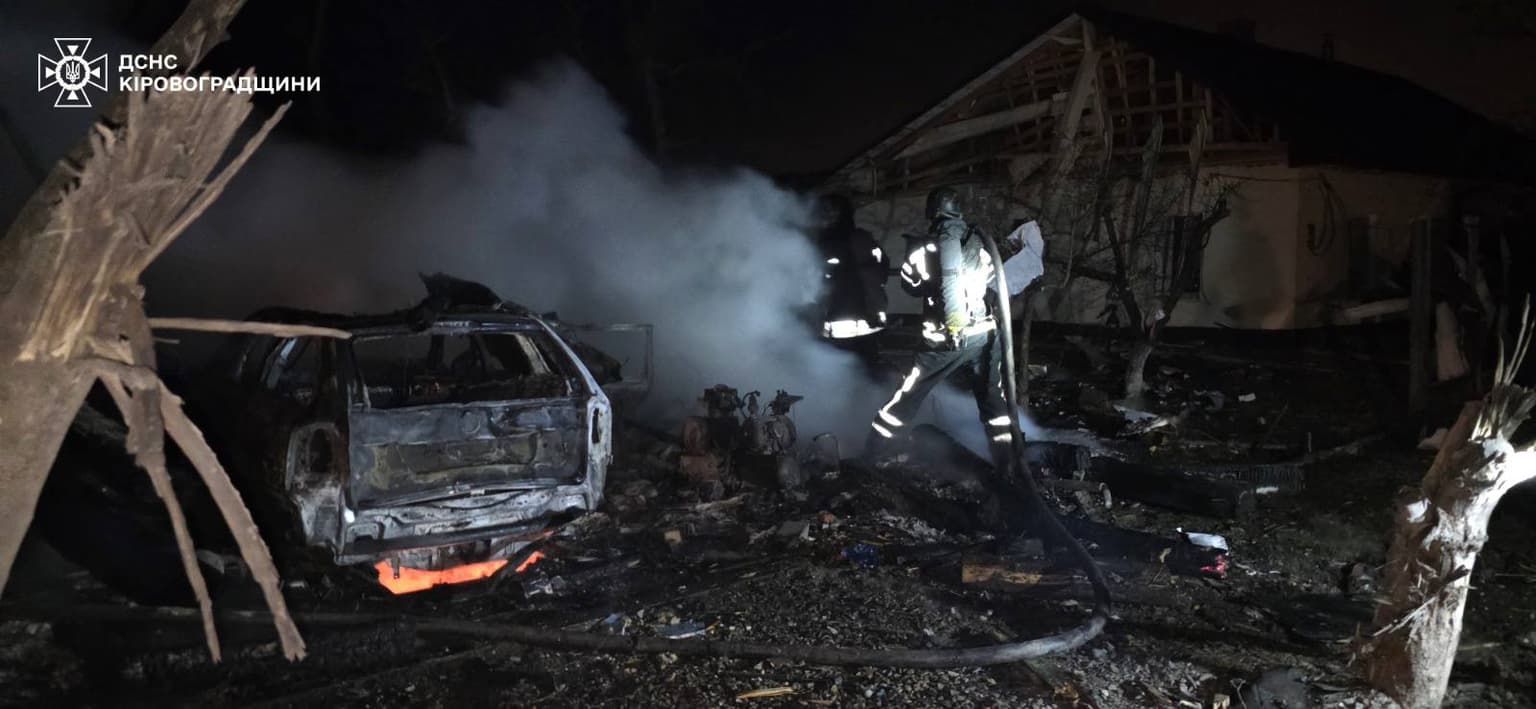
In Chernihiv Oblast, a 64-year-old woman was working in her garden when shrapnel found her. Russian forces carried out 28 attacks across the region, hitting homes and businesses. She survived.
The strategy behind the numbers was deliberate and consistent. Mass launches overwhelm air defenses through volume alone — force defenders to choose what to protect, accept that some percentage gets through. Spread the strikes across multiple oblasts simultaneously so no single region can be fully shielded. Target civilian infrastructure to exhaust repair crews and erode morale.
It worked at 93 percent interception. Seven people died anyway.
At 251 drones per night, the math doesn’t require precision. It requires persistence.
Russia was persistent.
What March 23 Revealed
A Russian soldier shot a man approaching his position in the dark. Turned out it was one of his own.
A State Duma deputy promised a “leisurely pace” toward Slovyansk. Syrskyi counted 8,710 casualties.
Four oil tanks burned at Primorsk. Diplomats in Florida discussed “durable security frameworks.”
Trump said Iran agreed to almost everything. Tehran said no talks occurred.
This was Day 1,490.
Russia’s spring offensive arrived with exactly the mass and mechanized force analysts predicted — and met exactly the drone wall Ukraine had been building. The Kremlin threw tens of thousands of soldiers at the Fortress Belt. The Fortress Belt held. Moscow’s Defense Ministry went silent for four days. That silence was the most honest assessment of the week’s results anyone in Russia offered.
The economics ran on the same logic. GDP down. Gold reserves at their lowest since the invasion began. The sovereign wealth fund empty. The oil windfall from Middle East chaos going straight to debt service, not capabilities. Putin’s war had consumed the financial cushion built over two decades — and stopping now would cost him more than continuing.
The diplomacy offered motion without resolution. Florida talks produced possible prisoner swap progress and no framework. The Lukashenko outreach produced released prisoners and no clarity on what happens to the Russian drone stations being installed on his territory. NATO’s secretary general defended Trump in language so carefully hedged it revealed everything about how little certainty anyone had.
Meanwhile a 21-year-old in Bucha planted bombs for a stranger who threatened his mother through a video game. A Lviv startup got America’s first check from a fund born in an Oval Office confrontation. A Hungarian spy’s name dropped into an election campaign like a grenade.
Day 1,490. The Fortress Belt held. The drones flew. The fires burned.
The war ground forward at 1,245 casualties per day.
Nobody called that leisurely.
Prayer For Ukraine
- Protection Over the Fortress Belt
Lord, as Russia’s spring offensive crashes against Ukraine’s defensive lines, we pray for every soldier holding position in Donetsk, Kharkiv, Zaporizhzhia, and Sumy. They are outnumbered and under relentless pressure — 619 assaults in four days, drones filling the skies, armored columns probing for weakness. Cover them with Your protection. Steady their hands and their courage. Let the line hold not just through Ukrainian strength, but through Your mercy over each life defending it.
- Comfort for the Seven Who Will Not Come Home
Father, seven people died last night in six oblasts — killed not on a battlefield but in their homes, their gardens, their streets. Among them a woman weeding her garden in Chernihiv when the shrapnel found her. Two boys in Sumy, aged 13 and 14, wounded by a war they did not choose. We lift their families to You. Comfort those who are grieving. Heal those still in hospital beds. Remind a watching world that behind every casualty number is a name You know.
- Wisdom for Leaders Navigating an Impossible Moment
God of wisdom, we pray for the leaders carrying the weight of these negotiations — Zelensky in Florida, pressing allies whose attention is divided; Witkoff and Kushner, searching for frameworks that don’t yet exist; NATO’s secretary general, balancing alliances under strain. Grant them clarity where there is confusion, courage where there is pressure to compromise what matters, and the discernment to know the difference between a real opening and a diplomatic illusion.
- Justice for Those Recruited Into Russia’s Shadow War
Lord, a 21-year-old in Bucha was blackmailed through a video game into planting bombs that injured two police officers. He was a weapon aimed at his own community by people who threatened his mother’s life. We pray for justice against those who weaponize the vulnerable — who turn young men into instruments of terror through fear and manipulation. Expose the networks. Protect the innocent. And have mercy on those coerced into serving evil they did not choose.
- Endurance and Hope for a Nation Entering Its Fourth Year
Father, Ukraine is in its fourth year of full-scale war. Today a defense startup in Lviv received its first American investment — five volunteers who became two hundred engineers building the technology keeping Ukrainian drones airborne. Soldiers are holding a Fortress Belt they built with their own hands. A nation is still standing that Russia expected to fall in days. Sustain that endurance. Let every act of resilience — every drone intercepted, every position held, every child who goes to school despite the sirens — be a testament to the strength You place in those who refuse to surrender. Bring justice to this land. Bring an end to this war.