
In Leningrad Oblast, Ukrainian drones hit Russia’s Baltic oil terminal for the fifth night running, putting 40 percent of Russia’s shipping capacity at risk. In Mykolaiv, a Russian drone found a playground and killed a child. In Donetsk, Russia’s much-heralded Spring offensive ground to a complete halt — not a single confirmed meter gained in seven days. Day 1,495 of the war: the army that can’t advance is still bombing children, and the army that’s losing ground is setting Russia on fire.
The Day’s Reckoning
A Russian drone finds a playground in Mykolaiv Oblast on a Sunday night. The blast kills one child and wounds ten others — eight of them children. At the same moment, 1,500 kilometers north, one of Russia’s largest Baltic oil terminals lights up the sky outside St. Petersburg. The fifth time in seven days Ukrainian long-range drones have found it. The fifth time Russian engineers couldn’t stop them.
Two wars, running simultaneously, on the same night.
Russia launched 442 drones and a Kinzhal missile across Ukraine before dawn. Five KAB-250 glide bombs hammered Kramatorsk — schools, apartment blocks, civilians. Sixteen projectiles got through the air defenses. Debris fell on fourteen more locations. From Sumy to Kherson, from Kharkiv to Zaporizhzhia, the wounded were counted in the morning.
Ukraine, meanwhile, was burning things 1,500 kilometers inside Russia.
On the ground in Donetsk, Russia’s Spring-Summer offensive — the great push promised since March — had quietly stopped moving. Not a single confirmed meter gained in seven days. The advance toward Slovyansk, gateway to Ukraine’s Fortress Belt, stalled against defenses that refused to break.
In a Kharkiv building that can’t be named, a drone commander named Yuri sat for an interview and explained, without drama, how Ukraine fights a country ten times its size. Not with numbers. Not with tanks.
With engineers. With innovation. With 3-D printers and a hundred types of strike drones Russia can’t copy fast enough.
The playground. The burning terminal. The stalled offensive. The quiet commander.
Day 1,495. Four stories, one war — and none of them pointed toward an ending.
Stuck in the Mud: Russia’s Great Spring Offensive Runs Out of War
Somewhere east of Slovyansk, Russian infantry are waiting for the trees to grow leaves.
That’s the assessment from the front. Ukrainian military observer Kostyantyn Mashovets confirmed what battlefield footage already suggested: the Russian 3rd Combined Arms Army — which had clawed forward near Kryva Luka and Zakitne through February and early March — hasn’t moved in a week. Since March 22, not one verified meter gained. The tactical penetration they punched open between Kryva Luka and Riznykivka at considerable cost sits frozen. Russian control of Riznykivka itself is uncertain. A few small infantry groups operate in the settlement. That’s it.
The flanking armies aren’t helping. The 20th and 25th Combined Arms Armies pushing toward Lyman, the 8th Army grinding near Kostyantynivka — all advancing far slower than the 3rd CAA, leaving it isolated, exposed, and mathematically unable to drive on Slovyansk alone. Mashovets was blunt: a direct assault without coordinated flanking support means catastrophic casualties for negligible ground.
So, Russia waits. A Ukrainian frontline colonel offered the explanation no Kremlin briefing will: Russian commanders are holding for spring foliage — tree cover for the infiltration missions they need to approach Lyman unseen. ISW had marked March 17–21 as the offensive’s opening, signaled by a battalion-sized mechanized push in the Borova-Lyman direction. The momentum burned fast and then stopped.
The Kremlin’s information war runs on the image of unstoppable simultaneous advances — Ukrainian lines cracking everywhere at once. The stall near Slovyansk breaks that image.
Russia’s generals face three bad options: keep hammering a wall that isn’t moving, pull the 3rd CAA sideways to support Lyman or Kostyantynivka, or wait — and hope nobody notices the offensive has gone quiet.
The Fires Putin Can’t Put Out: Ukraine Hits Russia’s Oil Lifeline for the Fifth Time
The port of Ust-Luga sits on Russia’s Baltic coast, west of St. Petersburg — roughly as far from the Ukrainian front as Chicago is from New York. It is one of Russia’s largest crude oil export terminals. The kind of facility that converts sanctioned barrels into war funding.
It burned again on the night of March 28–29.
SBU Alpha unit long-range drones hit it for the second time in a single week. The fifth Ukrainian strike against Leningrad Oblast oil infrastructure in seven days. Governor Aleksandr Drozdenko confirmed the fire. His air defenses had downed 36 Ukrainian drones over the oblast that night — and still couldn’t stop it.
The fires weren’t limited to Ust-Luga. NASA heat-monitoring satellites flagged anomalies at the TolyattiAzot chemical plant in Samara Oblast — 700 kilometers deeper inside Russia. The local governor confirmed a drone strike. The Yaroslavl refinery, one of Russia’s five largest at over 15 million tons annual capacity, was reportedly hit overnight on March 28 as well.
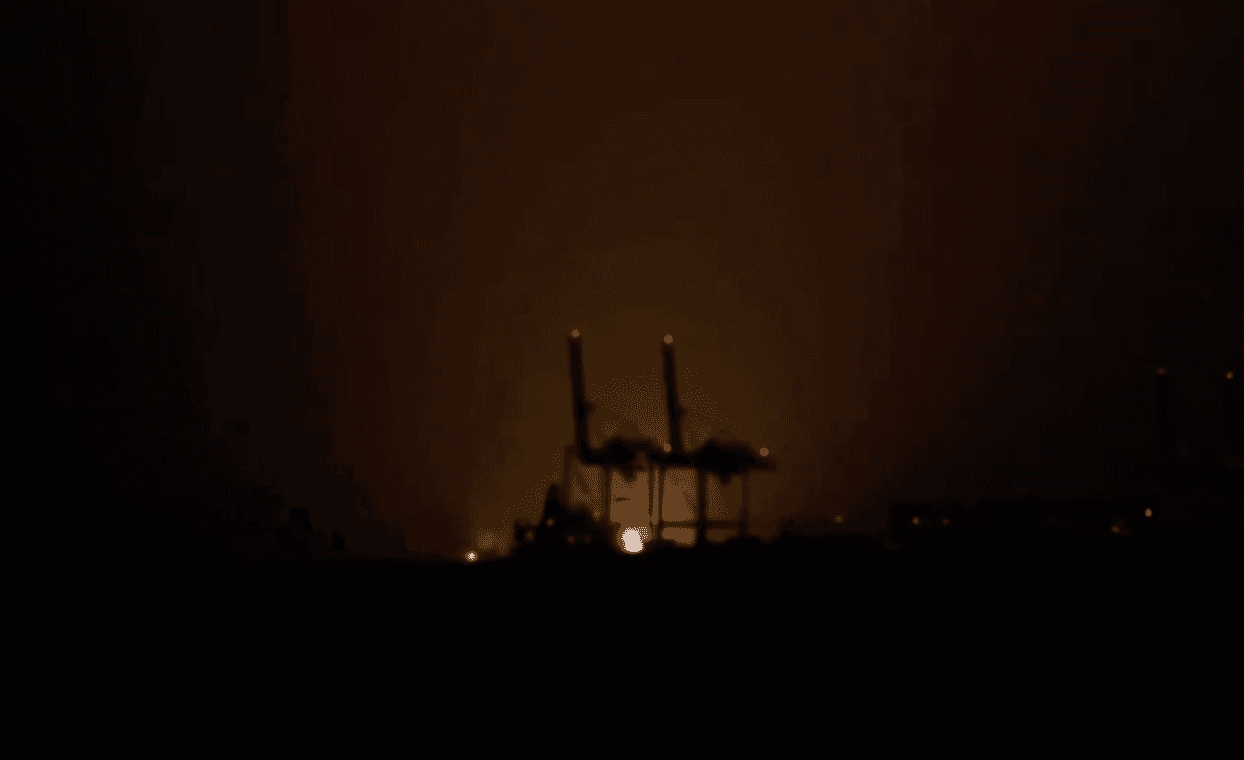
Reuters ran the numbers: at least 40 percent of Russia’s oil shipping capacity has now been disrupted by the cumulative drone campaign.
On Russian Telegram, the fury was unfiltered. One prominent milblogger tore into the Kremlin for failing to act — pointing out, with barely concealed contempt, that Ukrainian drones had already struck the Kremlin itself without triggering meaningful policy changes. Another asked, publicly, who exactly is responsible for defending Russian infrastructure. Nobody answered.
The strategic trap is real. Every air defense battery redeployed to protect an oil terminal is one fewer battery on the front. Ukraine has forced Moscow to defend everything — which means defending nothing well.
The terminals keep burning.
Three Dead, Thirteen Wounded: Russia Turns Kramatorsk Into a Weapon
Five KAB-250 glide bombs. One city. One morning.
The strikes hit Kramatorsk on March 29 — residential buildings, schools, more than 30 civilian infrastructure objects damaged. Three people killed. Thirteen wounded. Then, as rescue teams moved through the rubble, Russian forces shelled the city again. This time with cluster munitions.
This is not chaos. It’s doctrine.
Military analysts call it battlefield air interdiction — BAI — using air power to degrade the logistics and fortifications supporting Ukraine’s Fortress Belt before ground forces push forward. ISW’s assessment was starker: Russian forces have integrated intentional civilian harm into the template. The schools and apartment blocks aren’t collateral damage. They’re the point.
The same logic is playing out in Kupyansk, 150 kilometers north. A Ukrainian brigade commander described the shift in plain terms: Russian forces used to avoid hospitals. Now they target them. Jet-powered Shahed and Gerbera drones struck a hospital in Shevchenkove on March 25. Fiber-optic FPV drones — unjammable, guided by physical cable rather than radio signal — hunt ambulances and emergency response vehicles through the streets.
Ambulances.
The commander left no room for interpretation: hospitals and emergency vehicles are deliberate targets now. Not accidents. Not proximity to military positions. Deliberate.
The strategic logic, if you can call it that, is coldly coherent. Break the city’s ability to function. Destroy the infrastructure that keeps defenders supplied and civilians alive. Make Kramatorsk expensive to hold before a single Russian soldier sets foot inside it.
Three dead. Thirteen wounded. Thirty buildings. And cluster munitions falling on the rescue workers.
One Night, One Child, 442 Chances to Kill: Russia’s Drone Apocalypse
At some point before dawn, the Kinzhal came first.
Then the drones — 442 of them. Shaheds, Gerberas, Italmas, a rolling wave of metal and explosive launched across Ukraine in a single night. Ukrainian air defenses worked through the dark, tracking, targeting, firing. They downed 380.
Of the 62 that slipped through, sixteen found their targets — striking seven locations across the country. Debris from downed drones fell on fourteen more.
The human ledger, region by region: In Sumy Oblast, a 20-year-old woman died in an artillery strike. A 75-year-old man was killed when a drone exploded as he approached a road. Five others wounded, including a six-year-old girl. In Kherson, one dead, two wounded. In Donetsk, five wounded. In Kharkiv, five wounded — among them an 89-year-old woman. In Zaporizhzhia, three women injured near the regional capital. In Odesa, an energy facility hit, power out across multiple settlements.
In Mykolaiv, a drone found a playground.
One child killed. Eight children wounded. There is no military analysis that makes that sentence mean something different than what it says.
Zelensky put the night in context. In the seven days between March 22 and 29, Russia launched 3,000 drones, 1,450 guided aerial bombs, and 40 missiles. March alone produced four strike packages exceeding 400 projectiles each — including the largest single strike in the war’s history: nearly 1,000 drones across March 23 and 24.
This is not escalation. It’s a system. Sustained, calculated, designed to exhaust Ukrainian air defenses one interceptor at a time — and to break Ukrainian will one destroyed city block, one dead child, at a time.
The drones will come again tomorrow night.
Ukraine Hits Back: Ground Gained, Fuel Burning, Rockets Destroyed
While Russia’s spring offensive froze north of Slovyansk, Ukrainian forces were moving forward.
Geolocated footage published March 28 confirmed advances in northeastern Kostyantynivka — ground where Russian sources had been claiming their own presence. The footage settled the argument. Ukrainian forces hold it. In Dobropillya, Pokrovsk, and Novopavlivka, Russian forces attempted to advance. They didn’t.
In Zaporizhzhia Oblast, more footage — this time from March 29 — shows Ukrainian forces pushing east of Pryluky, northwest of Hulyaipole. Two confirmed advances in two directions on the same day Russia’s headline offensive sat frozen.
In a war measured in hundreds of meters, that’s not nothing.
Behind Russian lines, Major Robert “Magyar” Brovdi — commander of Ukraine’s Unmanned Systems Forces — was running a different kind of operation. His drones hit Russian fuel tanks near Novosvitlivka, 128 kilometers from the front. A fuel and ammunition depot near Aidar, 104 kilometers out, burned. In occupied Volnovakha, 70 kilometers deep into Russian-held Donetsk, an FP-2 strike drone found a Russian diesel locomotive and destroyed it.
In Crimea, Ukrainian forces struck a BM-30 Smerch multiple launch rocket system. Then found three more Smerch launchers west of Yany Kapu and hit those too.
The logic is simple and it’s working: find Russian fuel, ammunition, and artillery as far behind the lines as possible and destroy them before they reach the front. Every depot that burns is shells that never fall on Ukrainian positions. Every rocket launcher destroyed is a battery that never fires.
Russia advances nowhere. Ukraine advances in two directions and burns the supply chain feeding the troops that aren’t advancing.
Yuri’s War: The Man Who Fights Russia With a Hundred Types of Drone
The location can’t be disclosed. Somewhere in Kharkiv, a senior officer of Ukraine’s Typhoon special drone unit sits across a table and explains how a smaller army beats a larger one.
“We understood that we could not fight Russia symmetrically,” Yuri said. “We had fewer infantry, fewer resources and fewer people. So, we needed to become smarter, more technically advanced, more modern and more flexible.”
Typhoon began with personal credit cards and crowdfunding. Early in the war, Ukrainian military commanders considered UAVs toys. Yuri and his founding officers — all experienced FPV pilots — knew otherwise. They built the unit themselves.
Now Typhoon operates across three concentric zones: targets within 20 kilometers, targets out to 50, and targets beyond. Ninety percent of their drones are Ukrainian-made. They run their own hardware laboratory, modifying and upgrading systems that arrive from manufacturers not yet good enough.
The electronic war never stops. Russian jammers multiply every month, blanketing front-line areas with interference. Typhoon maps the “jamming clouds” — zones where radio signals die — and routes around them. Where radio fails entirely, fiber-optic drones take over: physically tethered, unjammable, capable of landing and waiting in low-power standby until a Russian vehicle rolls past. Russia leads in fiber-optic numbers. Ukraine leads in something else: Russia fields roughly 10 types of strike drone. Ukraine fields close to 100.
Yuri had expected Russia to seek a ceasefire by November 2026. The Iran war changed that calculation — oil revenues buying Moscow another year, perhaps through late 2027.
He wasn’t bitter about it. Just clear.
“We have lost too many friends. We do not really have a choice. We have to fight until the end. I strongly believe we will not get tired before the Russians do.”
11,000 Tanks: How Ukraine’s “Housewives” Humiliated Europe’s Biggest Arms Maker
Rheinmetall’s CEO had a thought. He shared it.
Ukrainian weapons, he suggested, were “Legos made by housewives.” The kitchen 3-D printers churning out drone parts? “Not innovation.”
Oleksandr Kamyshin — Ukraine’s defense advisor and former infrastructure minister — did not hold a press conference. He did not issue a formal rebuttal. He posted eight words and a hashtag:
“Rheinmetall says our #LEGODrones are #MadeByHousewives in their kitchens. Fine. Meanwhile our #LEGODrones already burned more than 11 thousand of Russian tanks.”
Rheinmetall issued a statement on March 29 expressing “utmost respect” for Ukraine’s immense efforts and praising its fighting spirit as an inspiration. The company continued shipping tanks, 155-millimeter rounds, mortar shells, and surveillance drones to Kyiv.
The backpedal was total. The damage was done.
What makes the episode sting beyond the embarrassment is what it revealed: the CEO of one of Europe’s premier defense manufacturers had watched four years of the most intense drone warfare in history — the same war Yuri described from his Kharkiv laboratory, with 100 types of strike drones, fiber-optic ambush systems, and hardware modifications arriving weekly — and concluded it wasn’t serious.
The housewives he dismissed had already burned eleven thousand Russian tanks.
The gap between what Western arms executives understand about this war and what is actually happening in it is not a minor misunderstanding. It is a strategic blind spot — in a company that is supposed to be supplying the tools to win it.
From Supplicant to Supplier: Zelensky Sells Ukraine’s Hard-Won Expertise to the Gulf
While Russian drones hunted playgrounds in Mykolaiv, Zelensky was in Doha closing a defense deal.
The context matters. On February 28, U.S. and Israeli strikes hit Tehran. Iran responded with missiles and drones against its neighbors. Suddenly, Gulf states that had watched Ukraine’s drone war with detached professional interest found themselves living it. Incoming projectiles. Overwhelmed defenses. No doctrine for what was hitting them.
Ukraine had the doctrine. Four years of it, written in blood.
Zelensky signed a 10-year defense partnership with Qatar on March 28 — one day after signing with Saudi Arabia. The UAE agreement was days away. These aren’t arms sales. They’re comprehensive arrangements: co-production agreements, factories built in both countries, Ukrainian specialists already deployed to help Gulf air defense crews intercept the same Iranian systems that have been killing Ukrainians for three years.
Then he flew to Jordan.
Back in Europe, a different fire needed extinguishing. Reports surfaced that the Pentagon was weighing whether to redirect Patriot interceptor missiles — weapons funded through NATO’s Prioritized Ukraine Requirements List — toward the Middle East campaign instead. At the G7 Foreign Ministers’ Summit in France, Secretary of State Marco Rubio told Ukrainian Foreign Minister Andrii Sybiha directly: nothing has been redirected. No plans to do so.
Sybiha relayed the reassurance publicly. He also announced a new country had joined the PURL program — now 24 nations strong, including Australia and New Zealand.
Ukraine entered this war begging for weapons. It is leaving this week as a defense exporter, teaching the world how to survive the weapons it learned to defeat.
The War Comes Home: Taganrog Burns in Russia’s Worst Drone Attack
Taganrog sits 40 kilometers from Ukraine. Close enough that residents have heard the distant war for three years.
On the night of March 29, it arrived.
Drones hit the city in what residents described as the most intense attack since Russia’s full-scale invasion began. One person killed. One injured. A drone struck a school. Air defenses fired. Some got through anyway.
Rostov Oblast Governor Yuriy Slyusar didn’t reach for euphemism: “Emergency services are working at the scene in the areas where the drone debris fell. There are fires and destruction on the ground.”
Fires and destruction. In Russia. On Russian streets, visible to Russian civilians who were told this war was happening somewhere else.
Russian state media can manage a headline. It cannot manage flames that neighbors film on their phones. It cannot manage the school with a hole in it. It cannot manage the governor’s own words confirming what everyone can already see.
Taganrog is not an isolated incident. It is a data point in a trend — Russian cities along the Azov coast absorbing strikes that, three years ago, would have been unthinkable. The war that Moscow sells to its population as a distant “special military operation” has a habit of showing up uninvited.
One dead. One wounded. A school. And fires the cameras caught before anyone could stop them.
Sign Here to Die: Russia’s Drone Recruitment Campaign Is Failing
The pitch sounded good: join the Unmanned Systems Forces, operate drones, stay off the infantry assault lines where Russian soldiers are dying in the hundreds daily.
University students weren’t buying it.
The Kremlin launched the USF recruitment campaign in January 2026, targeting campuses with promises of specialized drone warfare roles. The problem emerged quickly, spreading through student networks and Russian Telegram channels: the contracts contain standard military provisions. The Ministry of Defense can transfer any recruit to any unit it chooses. Sign up as a drone specialist, end up in an assault formation.
Word spread. Signatures didn’t follow.
Russian milbloggers — the same voices that have been documenting battlefield failures for three years — piled on with a deeper diagnosis. Russian generals, one wrote, dislike adopting innovations they don’t understand. The institutional resistance to genuine drone warfare doctrine runs from the top down. You can’t build an effective unmanned systems force inside a military culture that doesn’t believe in it.
The numbers behind the recruitment failure are severe. In January 2026, Russia’s recruitment rate fell below its casualty replacement rate for the first time since the invasion began. The volunteer bonus system that sustained force generation through 2023 and 2024 has lost its pull. ISW assesses the Kremlin is now preparing for something it has spent three years trying to avoid: involuntary reserve callups.
Forced mobilization. The political grenade Moscow keeps in the drawer and hopes never to pull.
The USF campaign was supposed to be the smarter alternative — attract technical talent voluntarily, build a modern drone force. Instead it produced a cautionary tale: in Russia’s military, even the fine print goes to war.
Putin’s New War Chest: $37 Billion in Russian Retirement Savings
Thirty-seven million Russians never chose a pension fund manager. They left that decision for later.
Later has arrived.
Ukraine’s Foreign Intelligence Service reported that the Kremlin is preparing to redirect approximately 3 trillion rubles — around $37 billion — sitting in those undirected pension accounts toward state infrastructure projects. The money would flow through Russian Railways, Gazprombank, and VEB, the state development institution. Translation: into the war economy.
This has happened before. In 2014, after Crimea, Moscow froze the funded portion of pensions and redirected contributions to cover immediate obligations. Officials called it temporary. It has now been in place for over a decade.
The voluntary alternative failed. A savings program launched in 2024 was supposed to channel household capital into the domestic financial system. Two years later it had attracted 717 billion rubles from 10 million participants — a fraction of what the state needs. Putin urged the government to “more actively encourage” enrollment. Enrollment didn’t respond.
So, the Kremlin is moving toward the next option.
The pension raid doesn’t stand alone. Tighter VAT controls, stricter oversight of importers, increased monitoring of cash transactions — the fiscal pressure on ordinary Russians is rising across every register. Behind closed doors, Putin has been meeting with oligarchs, pressing them for increased war contributions. At least some, according to reports, indicated they would pay.
The war is expensive. The sanctions are working. And the Kremlin is now reaching into the retirement accounts of citizens who were promised that money decades ago.
Temporary, they’ll call it. They always do.
Wrong Country: Ukrainian Drones Land in Finland
Two Ukrainian drones came down near Kouvola, Finland on March 29.
Not Russia. Finland. A NATO member, 50 kilometers from the Russian border, now hosting wreckage from Ukraine’s campaign against Leningrad Oblast oil infrastructure.
Finnish Defense Minister Antti Hakkanen confirmed it immediately: drones had entered Finnish airspace, security authorities had responded, an F/A-18 Hornet was scrambled. Two UAVs found on the ground — one north of Kouvola, one east. President Alexander Stubb identified at least one as Ukrainian in origin and was careful with his words: “I want to emphasize that there is no military threat to Finland.” Prime Minister Petteri Orpo noted the drones hadn’t been shot down. They fell on their own.
No casualties. No damage. Measured official responses all around.
But the geography tells the real story. Ukraine’s drones targeting oil terminals near St. Petersburg are flying through one of the most compressed military corridors in Europe — Russian territory on one side, Finnish NATO territory on the other. The margin for navigational error is thin. When drones get damaged, lose signal, or simply drift, the next piece of ground they find could be Finnish.
This won’t be the last time.
Kyiv and Helsinki will need a conversation. Ukraine’s Baltic campaign is strategically vital and geometrically awkward — and Finnish patience, however genuine, has limits that wayward drones will keep testing.
The Flag at the Curtain Call: Ukraine’s Voice Reclaims the Met Stage
In spring 2022, six weeks after the invasion began, Liudmyla Monastyrska flew to New York to replace Anna Netrebko in Turandot at the Metropolitan Opera. At the curtain call, she walked out holding the Ukrainian flag.
This spring, she’s back. Same role. Same stage. This time with Ukrainian conductor Oksana Lyniv in the pit.
Monastyrska told Kyiv Post how the flag happened. She asked Met general manager Peter Gelb for permission. He took two hours to think it over — then came back with his answer and personally brought the Ukrainian flag himself. Five performances of Turandot. The flag at every one.
She was candid about the limits of Western solidarity. “If we speak frankly, canceling Russian culture in the West is extremely complicated — even for people who sincerely support Ukraine.” Russians remain embedded throughout European opera — in choruses, in supporting roles, in major houses. The Met moved faster than most, parting ways with Netrebko, Gergiev, and others almost immediately. Most institutions haven’t.
She was asked why she still lives in Ukraine when she could live anywhere.
“I simply cannot imagine my life anywhere else. Ukraine is my place of strength.”
In the fifth year of a war measured in drone strikes and casualty reports, Monastyrska and Lyniv sharing the Met stage is something different — two Ukrainian women at the top of their profession, on the world’s most watched opera stage, with one word printed beside their names on the playbill.
Ukraine.
The Tanker Washington Waved Through: Russia, Cuba, and a Sanctions Policy Unraveling
The Anatoly Kolodkin left the Russian port of Primorsk carrying 650,000 barrels of Urals crude. It was headed for Matanzas, Cuba. The Trump administration knew. It let the ship through anyway.
Cuba hasn’t received oil imports in three months. Gasoline rationing. Nationwide blackouts, repeated. The island’s energy crisis deepened in January when U.S. forces captured Venezuelan President Nicolás Maduro — removing the ally who had kept Cuba supplied with subsidized oil for years. Washington then blocked Venezuelan shipments to Havana and threatened tariffs on any country that kept supplying the island. Mexico stopped exporting. The pressure worked.
Until a Russian tanker appeared on the tracking screens and someone in Washington decided not to act.
The New York Times confirmed the shipment was cleared — citing a U.S. official who said it was unclear why. Not a policy decision. Not a strategic exception. Unclear.
The confusion is itself the story. The Trump administration has simultaneously imposed a de facto oil blockade on Cuba, temporarily eased Russian oil sanctions to stabilize markets disrupted by the Iran war, and is now watching a Russian tanker deliver Urals crude to Havana while an estimated 5,000 Cuban fighters serve alongside Russian forces in Ukraine.
Three policies. One ship. No coherent explanation.
The rules-based order that sanctions are supposed to enforce runs on consistency. When a Russian tanker bound for a country whose soldiers are fighting in Ukraine gets waved through by the country enforcing the sanctions — the framework isn’t bending.
It’s breaking.
Trade Territory for Guarantees: The Peace Deal Ukraine Hasn’t Agreed To
Ukrainian Foreign Minister Andrii Sybiha chose his words carefully at the G7 Foreign Ministers’ Summit in France — and still said more than Moscow wanted to hear.
The U.S., Sybiha said, is “the only country that can force Russia to peace.” Russia is “currently the only obstacle” to finalizing U.S.-led peace efforts. He acknowledged differences in vision and prioritization between Kyiv and Washington — but didn’t specify what they were.
Zelensky had already specified them.
In a Reuters interview published March 25, the president laid out what Washington is actually proposing: security guarantees for Ukraine, finalized at the highest level, in exchange for Ukrainian forces withdrawing from portions of Donbas still under Kyiv’s control. “The Americans are prepared to finalize these guarantees at a high level once Ukraine is ready to withdraw from Donbas,” Zelensky said.
Nobody in Kyiv has said yes.
The gap between Sybiha’s careful diplomatic language and Zelensky’s plain description of the U.S. proposal is the gap between what Ukraine can say publicly and what it is actually being asked to do — surrender territory it still holds in exchange for promises about its future security.
Then Sybiha turned to Hungary. In February, Budapest vetoed the EU’s 20th sanctions package against Russia — alone, against the rest of the bloc. “This is unacceptable,” Sybiha said, accusing Hungary of holding “practically the entire European Union and the entire sanctions policy hostage.”
The West presents a unified front against Russia. Except when it doesn’t. One country. One veto. The whole sanctions architecture frozen.
What March 29th Revealed
Yuri is in a building that can’t be named, routing drones around jamming clouds. The Ust-Luga terminal is burning for the fifth time in seven days. In Mykolaiv, a playground is a crime scene.
These things happened on the same day.
Russia’s spring offensive — the great push that was supposed to crack Ukraine’s Fortress Belt — hasn’t moved in a week. Its drone recruitment campaign is collapsing because students read the fine print. Its pension funds are being eyed for the next round of war financing. Its oil infrastructure is on fire from the Baltic to the Volga.
Ukraine advanced in two directions Russia was supposed to be rolling through. Signed defense deals with Gulf states who now want what Ukraine learned at catastrophic cost. Struck fuel depots 128 kilometers behind Russian lines.
Russia launched 442 drones and a Kinzhal in a single night. Ukraine stopped 380 of them — and a child still died in a playground.
That’s the arithmetic of this war. Ukraine intercepts 86 percent of what Russia launches and still buries children.
Four years in, neither side is broken. Russia can’t advance but won’t stop. Ukraine can’t expel Russia but won’t surrender. The U.S. is offering security guarantees in exchange for territory Ukraine still holds. Hungary is blocking EU sanctions alone. A Ukrainian soprano is carrying her flag onto the Met stage because that, too, is a front.
Day 1,495. The offensive stalled. The terminals burned. The negotiations circled.
Nobody knows which of these threads pulls first — or what unravels when it does.
Prayer For Ukraine
- Protection Over the Defenders of the Fortress Belt
Lord, we lift up the Ukrainian soldiers holding the line east of Slovyansk — the men and women standing in the way of Russia’s spring offensive, absorbing assault after assault in the cold and the mud. They have not yielded a meter in a week. Sustain them, Father. Strengthen their bodies when exhaustion sets in, steady their nerves when the drones come, and cover them with Your protection when the mechanized columns push forward again. Let their courage outlast the enemy’s ambition.
- Comfort for the Children of Mykolaiv
Heavenly Father, a child did not come home from the playground last night. Eight other children were carried away wounded. We have no words adequate to this grief — so we bring it to You. Hold the family of the child who was killed. Sit with the children in the hospital beds. Remind the people of Ukraine, who absorb this kind of loss with heartbreaking regularity, that You have not looked away. That every child is known to You by name.
- Wisdom for Leaders Navigating an Impossible Peace
God of wisdom, the men and women carrying Ukraine’s future in their diplomatic briefcases face choices with no good options — territory for guarantees, unity fractured by a single Hungarian veto, an ally distracted by a second war. Grant President Zelensky and Foreign Minister Sybiha clarity of mind and steadiness of purpose. Give them the discernment to know which compromises preserve Ukraine and which ones slowly surrender it. And where human wisdom runs out, let Yours begin.
- Justice for the Victims of Kramatorsk
Lord of justice, five glide bombs fell on Kramatorsk — on schools, on apartment blocks, on the places where ordinary life tries to continue amid war. Three people were killed. Thirteen wounded. Cluster munitions followed the bombs. We cry out for justice for the dead and the maimed, and for all the civilians across Sumy, Kharkiv, Kherson, Zaporizhzhia, and Odesa who were wounded or killed in a single night. Let the record of these crimes be kept. Let accountability come. And restrain the hands that target hospitals, ambulances, and playgrounds as instruments of war.
- Endurance for a Nation That Will Not Break
Father, on the same day Russian drones hunted civilians, a Ukrainian soprano was preparing to carry her country’s flag onto the stage of the Metropolitan Opera. Ukrainian drone operators were mapping jamming clouds and routing around them. Ukrainian soldiers were advancing — quietly, meter by meter — in Kostyantynivka and Hulyaipole. This is who Ukraine is in the fifth year of this war: still creating, still innovating, still moving forward. Sustain that spirit, Lord. Restore what has been destroyed. Protect what remains. And bring this war — with justice, with truth, and with Ukraine’s sovereignty intact — to its end. Amen.