
In Bucha, Zelensky dismissed Russia’s two-month ultimatum with open contempt, calling it militarily impossible. Along the Baltic coast, Ukrainian drones turned a 50,000-ton oil tank into a fireball, cutting Russia’s weekly crude exports by 1.75 million barrels a day. In Kyiv, security services dismantled a Russian GRU assassination network hours before it could kill a Ukrainian commander. Day 1,491 — when Moscow’s demands outran its army’s ability to deliver them.
The Day’s Reckoning
Zelensky stood at a podium in Bucha — the city where Russian soldiers executed civilians in the streets — and delivered his verdict on Moscow’s latest ultimatum with barely concealed contempt.
“They will never be able to take anything in two months.”
Behind him hung the weight of the massacre’s anniversary. Before him, European allies. And somewhere in the diplomatic machinery, a Russian demand that Ukraine surrender the Donbas or face harsher terms when Russia seized it by force.
While Zelensky spoke, Ukrainian drones were burning a 50,000-ton oil tank at Ust-Luga port, five hundred kilometers from the front. By day’s end, Bloomberg would calculate the week’s Baltic strikes had cost Russia more than $1 billion in oil revenue — crude that funds the very army Moscow claims will take Donbas in sixty days.
The gap between Russian rhetoric and Russian reality yawned wide.
Four people sat in Ukrainian detention cells — a security executive, a cop, a convict, a woman — arrested hours before they could execute a GRU-directed contract killing of a Ukrainian volunteer commander. Iranian cluster missile debris lay thirty meters from Ukraine’s embassy in Tel Aviv. In Tatarstan, an explosion at Russia’s largest petrochemical plant killed three workers and left nine missing.
In a Kyiv conference room, Japan’s first defense tech investor signed a partnership with a Ukrainian drone company.
The war Russia said was nearly won was attracting foreign capital. The army Moscow said was unstoppable was advancing at less than half the rate of a year ago. The fortresses Russia demanded Ukraine abandon had never once fallen to Russian assault.
Day 1,491. The demands kept coming. So did the drones.
“Surrender Donbas in 60 Days” — Or What, Exactly?
The demand didn’t arrive with fanfare. It came through back-channels, passed quietly to Washington: Ukraine had two months to withdraw from the remainder of Donetsk Oblast. By late May. Voluntarily. Because Russia was coming to take it anyway.
Zelensky chose Bucha — of all places — to answer it publicly.
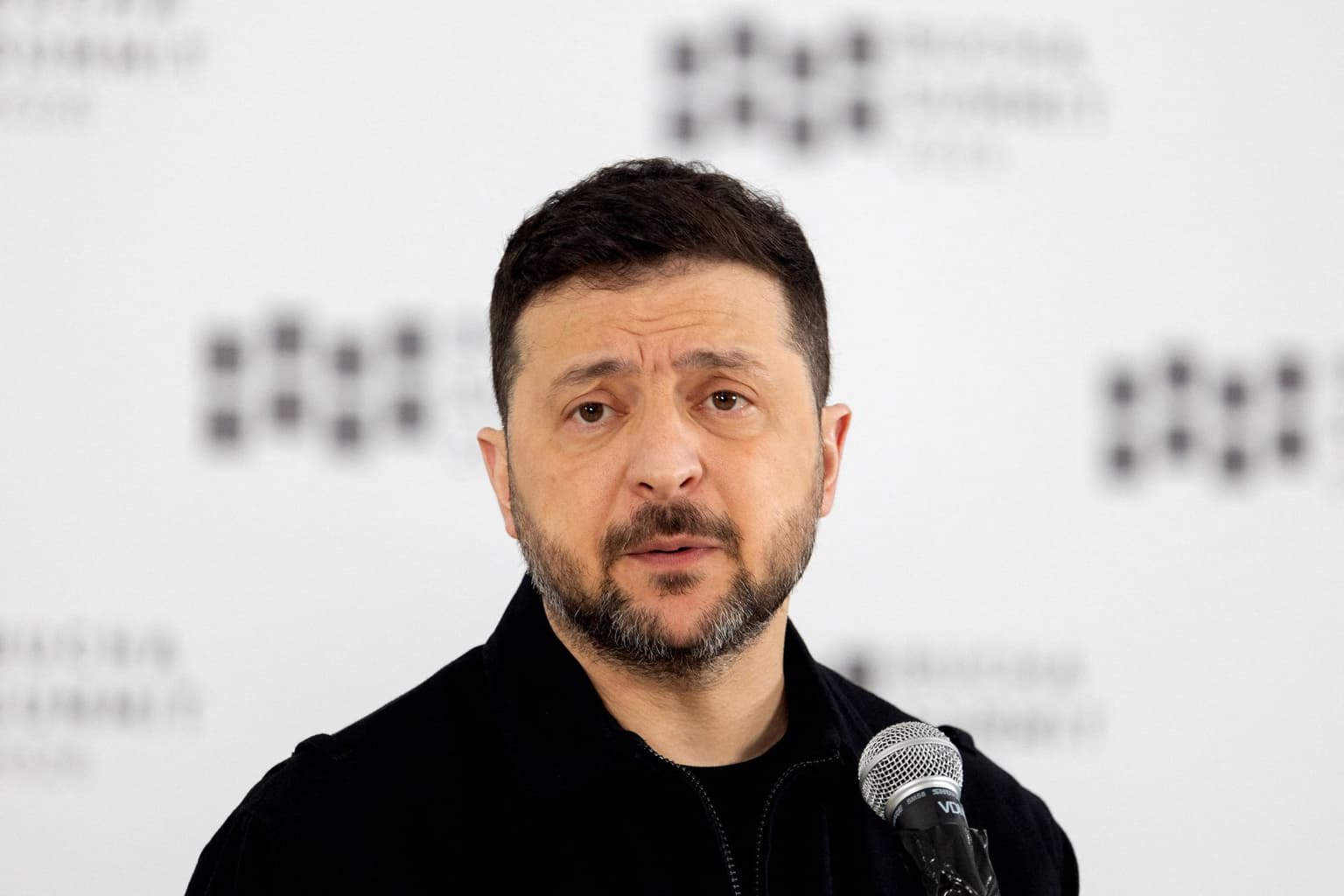
“I am surprised how anyone can believe this.” He paused, looking at the journalists. “After so many years, they continue pushing this narrative.”
Then came the knife: “If their goal is only Donbas, why do they say they will go further and impose other conditions?”
No one answered. No one could.
The math destroys the ultimatum before Zelensky even speaks. Russia attempted to seize Ukraine’s Fortress Belt — the heavily fortified cities anchoring the Donetsk interior — in 2014. Failed. Tried again in 2022. Failed again. These cities have never fallen to Russian assault.
The advance numbers tell the same story. From October 2025 through March 2026, Russian forces seized 1,929 square kilometers — averaging 10.66 square kilometers per day. A year earlier, that rate was 14.9. In the first three months of 2026 alone, it collapsed to 5.5 square kilometers per day.
Russia’s own ultranationalist milbloggers — men who want Ukraine destroyed and pull no punches about Russian failures — have spent weeks complaining about the deteriorating battlefield situation. Russian officials have quietly begun preparing the public for a slow, costly spring offensive.
Peskov’s confident declarations exist for one audience: American negotiators.
Zelensky will join the next round of U.S. talks online April 1, alongside Rustem Umerov and American envoys Steve Witkoff and Jared Kushner. He’ll bring an energy truce proposal. Moscow has signaled no interest.
Washington, meanwhile, is increasingly distracted by its own war with Iran.
Eight Days on the Baltic: How Ukraine Cut Russia’s Oil Lifeline
Sometime after midnight on March 30, a Ukrainian drone found a 50,000-ton oil tank at Ust-Luga port.
It didn’t miss.
By morning, Leningrad Oblast Governor Aleksandr Drozdenko was confirming the damage. By the time Bloomberg ran its numbers, the picture was staggering: Ukraine’s eight-day Baltic campaign had cost Russia more than $1 billion in oil revenue. Weekly crude flows from Primorsk and Ust-Luga had fallen by 1.75 million barrels per day. Tankers loading at both ports dropped from 18 the week before the strikes began to just six the week after.
Eighteen tankers. Then six. Twelve ships sitting idle while a war needs funding.
The campaign began March 23 and struck with methodical precision. The Kinef oil refinery in Kirishi. The Novatek facility at Ust-Luga. The Transneft terminal at Primorsk. Then something unusual — a Project 23550 Purga-class patrol icebreaker at the Vyborg Shipyard. These are Arctic-capable dual-use vessels, part warship, part supply platform. Hitting one signals Ukraine is targeting Russian naval infrastructure, not just petroleum.
The timing is pointed. Washington recently lifted some oil sanctions against Russia as part of negotiations — a concession designed to draw Moscow toward the table. Ukrainian drones are now undoing that concession barrel by barrel, physically blocking crude from reaching the tankers that sanctions no longer restrict.
Every barrel that stays in the tank is a barrel that doesn’t pay for ammunition. Doesn’t cover soldier bonuses. Doesn’t sustain the political economy that keeps this war running.
Washington relaxed the pressure. Kyiv applied it differently.
289 Drones, One Night, Twenty-Two Ways to Be Wounded
They came from four directions simultaneously.
From Oryol and Kursk in the north. From Millerovo in Rostov Oblast to the east. From Primorsko-Akhtarsk in Krasnodar Krai to the southeast. From occupied Hvardiiske in Crimea to the south. Russia launched 289 drones — Shaheds, Gerberas, Italmas, and others — designed not just to strike Ukraine but to overwhelm it, forcing air defense systems to choose which threats to chase.
Ukrainian defenders shot down 267 of them. Ninety-two percent.
Twenty got through.
Those twenty struck 11 locations. Debris from intercepted drones fell at six more. Across Ukraine, one person died and 39 were wounded — numbers that compress individual tragedies into statistics.
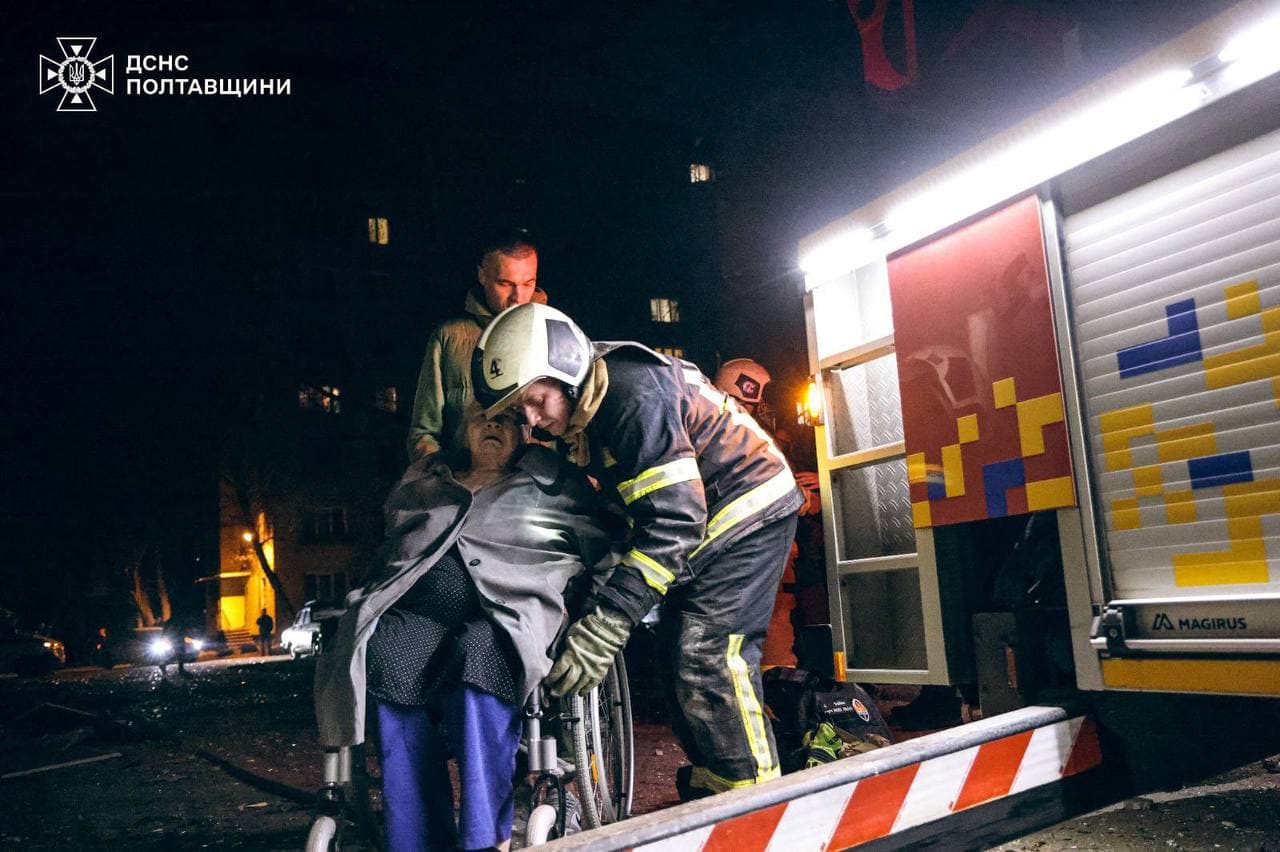
Aftermath of a Russian strike on Poltava Oblast. (Ukraine’s Emergency Service)
In Poltava Oblast, four people were injured alongside the one who didn’t survive — including two children who had nothing to do with anyone’s war aims. In Sumy Oblast, 17 civilians were wounded, among them a six-year-old. Donetsk, Kherson, Dnipropetrovsk, Kharkiv, Zaporizhzhia, and Odesa all reported casualties or damaged infrastructure before dawn.
Zaporizhzhia had the worst of it on the ground. Russian forces carried out a record 1,121 strikes across 43 settlements in a single day — artillery, drones, everything. By morning, energy operator Ukrenergo was reporting power outages across five oblasts: Kharkiv, Donetsk, Dnipropetrovsk, Zaporizhzhia, and Poltava.
Five oblasts waking up without power.
Twenty drones was Russia’s success rate. Ninety-two percent interception was Ukraine’s. Both numbers will be cited as evidence — depending on who’s doing the citing.
The Drone That Pretends to Fight Back
It can’t fire. It has no guidance system. It will never shoot down a Ukrainian aircraft.
But it doesn’t need to.
Buried in the post-attack analysis, defense minister adviser Serhii “Flash” Beskrestnov flagged something new: Russian forces have begun mounting mock-up R-60 air-to-air missiles on Shahed drones. Soviet-era short-range missiles — replicas only, incapable of launching — bolted onto kamikaze drones for one purpose.
To make Ukrainian pilots flinch.
“The aim is to intimidate our aviation and draw the attention of interceptor units,” Beskrestnov said.
The trick exploits a brutal arithmetic at the heart of Ukrainian air defense. When 289 drones arrive from four directions, defenders can’t chase all of them. They triage — which threats are most dangerous, which can be ignored, which interceptor drones to vector where. A Shahed carrying what looks like an air-to-air missile jumps the queue. It becomes priority. Interceptors converge on the decoy while Shaheds carrying actual warheads slip through behind it.
Waste Ukrainian resources. Spend nothing real.
The first actual R-60-equipped Shahed — a real missile, not a replica — appeared in late 2025. The shift to mock-ups tells its own story: Russia wants the psychological effect without expending scarce missiles to achieve it. Fake the threat. Get the same result.
“We need to consider how to distinguish Shahed drones equipped with fake missiles,” Beskrestnov said.
That sentence is the whole problem. Every time Ukrainian defenders solve Russia’s latest adaptation, Russia adapts again. The cat-and-mouse has no finish line.
Ukraine’s Secret Air Defense Weapon: Corporate Drone Hunters
Somewhere over the Kharkiv region, a privately operated air defense unit acquired a Shahed drone in its sights.
Then a Zala.
Both went down. First kills for what Ukraine hopes becomes a nationwide network of corporate air defenders — businesses protecting their own facilities while feeding into the national defense grid.
The program started from necessity. Russian forces increasingly targeted industrial sites and warehouses, infrastructure the military couldn’t always spare assets to defend. Ukraine’s answer: let the companies defend themselves — but do it inside a unified military command structure.
Thirteen enterprises are currently forming units. One is already operational.
The architecture matters as much as the concept. These aren’t security guards with shoulder-launched missiles operating independently. Private unit commanders plug into the Ukrainian Air Force’s digital command-and-control system, receiving real-time targeting coordination and situational awareness. Equipment comes through military supply chains. Kills get logged in the same system tracking every other air defense engagement.
State, military, and business — one network.
“We created a model where the state, military and business work as a single system,” Defense Minister Mykhailo Fedorov said. “Our goal is to build a multi-level air defense system that will provide maximum coverage.”
The market logic is cold and practical. Every Shahed a corporate unit destroys is one fewer missile, one fewer interceptor drone, one fewer frontline asset Ukraine has to spend defending a warehouse. Distribute the defense. Multiply the coverage. Don’t strain resources that are already stretched.
Russia sends 289 drones in a single night. Ukraine’s answer is to ensure that more people — and now more companies — can shoot back.
They Were Hours Away From Killing Him
Four people. That’s all it takes.
A private security executive. A law enforcement officer. A former convict. A woman who handled transport. Together, directed by a serving officer of Russia’s General Staff, they had spent months building the infrastructure of a professional assassination.
Weapons pulled from caches in Kyiv and Cherkasy oblasts. Access to restricted government databases — someone on the inside, pulling files. Vehicles fitted with emergency flashing lights, the kind that move through Kyiv without being stopped, the kind that can leave a crime scene without anyone thinking twice.
Their target: a Ukrainian volunteer unit commander in Kyiv.
Ukrainian security services arrested all four hours before the planned hit. During searches they seized weapons, phones, SIM cards, and intelligence materials. The commander never knew how close it came.
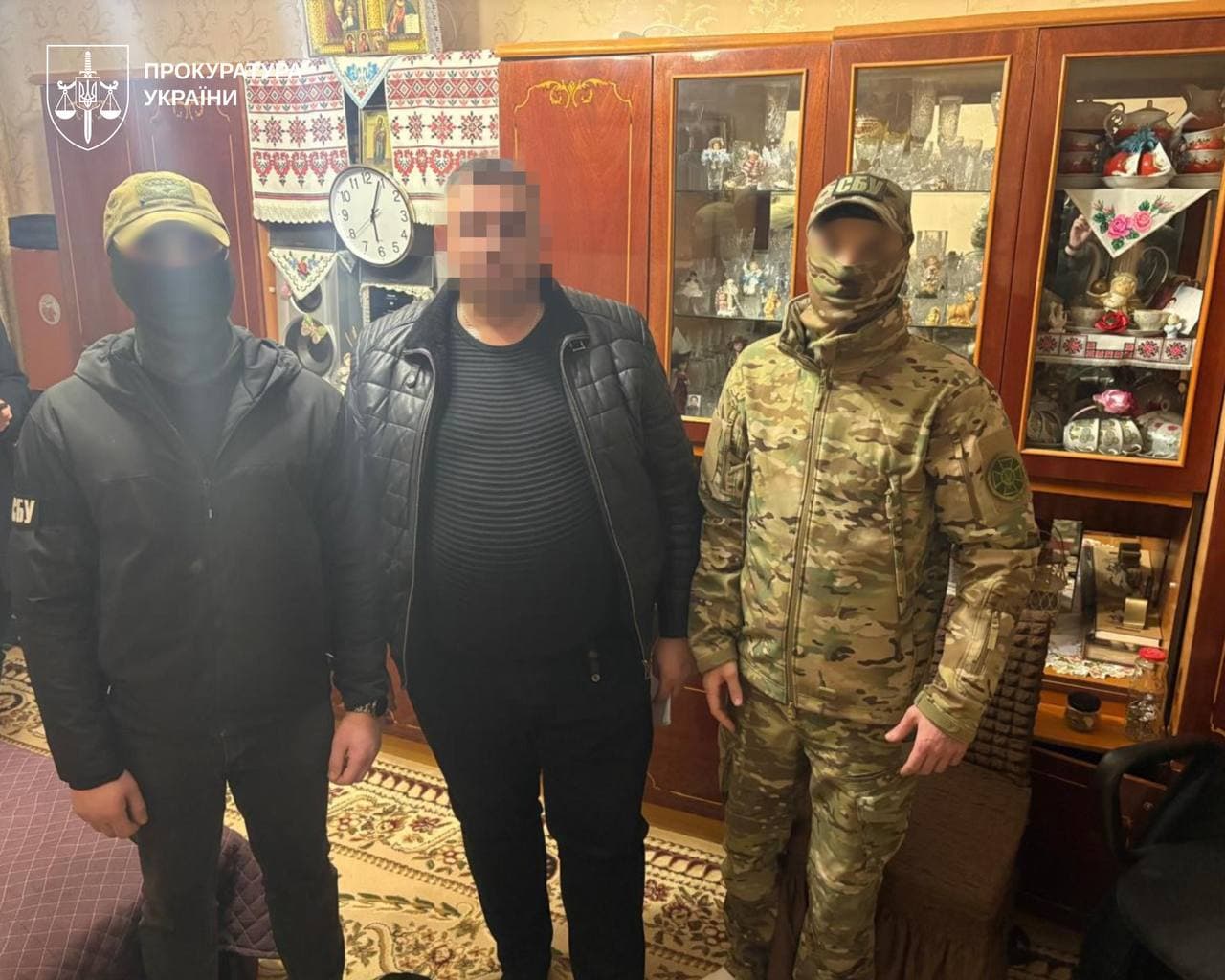
All four face charges of high treason, attempted contract killing, and unauthorized handling of classified information. The Russian handlers in Moscow face attempted sabotage charges. They remain free.
This wasn’t improvised. Database access takes time to arrange. Weapons caches require pre-positioning. Cover identities don’t appear overnight. Someone in Moscow had been running this operation for months, building toward a single moment that Ukrainian intelligence interrupted at the last possible hour.
The pattern is spreading. In February, Moldova and Ukraine launched a joint investigation into a Russian plot targeting Ukrainian public figures. In Poland, a court jailed a man for three and a half years for offering to help Russian operatives kill Zelensky.
Russia fights this war on two fronts. One with drones. One with people who look exactly like everyone else.
Fog, Hunger, and a Dead Russian Officer: The Front Holds
In the pre-dawn dark near Hryshyne, Russian soldiers moved through morning fog trying to use the weather as cover. Someone had decided that mist and poor visibility gave them a window.
Ukrainian forces killed the company-level officer leading the advance.
The attack collapsed. Russian troops in the area are now reported to be suffering food and water shortages, unable to push into central Hryshyne. Geolocated footage confirmed Ukrainian forces had meanwhile advanced in western Udachne, southwest of Pokrovsk — pushing forward while Russia struggled to hold what it had infiltrated.
Near Kupyansk, Ukrainian forces advanced in northeastern Petropavlivka. Russian forces attacked across multiple villages north of Sumy City and gained nothing confirmed. In Kharkiv, a Ukrainian brigade spokesperson explained the uptick in Russian assault tempo simply: spring is arriving, the ground is drying, and warmer weather lets FPV drones operate more effectively.
The war follows the seasons now.
Russian forces did make confirmed advances in southeastern Kostyantynivka and on its eastern outskirts — real gains, mapped and verified. Near Dobropillya, Russian opposition outlet Meduza reported elements of the elite 76th Airborne Division repositioning to attack — potentially to develop a westward assault toward Kramatorsk. No confirmed movement yet. But the 76th doesn’t reposition for nothing.
Behind the lines, Ukrainian drone operators kept dismantling Russia’s air defense architecture. A Buk-M3 system struck in occupied Luhansk Oblast. A Tor system hit 44 kilometers from the front. Four power substations and the Alchevsk Metallurgical Plant destroyed 65 kilometers deep.
Every Russian air defense system that burns behind the lines is one fewer layer protecting the next target.
Russia’s Secret Mobilization: Employers Ordered to Deliver Soldiers
While Kremlin spokespersons insisted the war was going exactly as planned, a decree signed on March 20 by Ryazan Oblast Governor Pavel Malkov told a different story. Medium and large businesses in the region—those with 150 to 500 or more employees—are now legally required to select two to five workers to sign contracts with the Russian Ministry of Defense. The law runs through at least September 20, 2026.
This is covert mobilization with bureaucratic camouflage. By making employers responsible for identifying which workers get sent to war, the Kremlin achieves two goals: it generates frontline manpower without triggering the political backlash of a formal draft, and it deflects responsibility for the selection downward—to the company executive who chose the employee, or the regional governor who issued the decree, rather than to the Kremlin that created the conditions requiring it.
The underlying crisis is stark. Russian recruitment rates fell below casualty rates for the first time since 2022 in January 2026. The previous mechanism—large one-time signing bonuses—has lost effectiveness as potential recruits calculate that no bonus is worth the casualties they’re witnessing. The Russian MoD is now hunting for new populations to target and new mechanisms to coerce them, with regional covert mobilization becoming the preferred instrument precisely because it avoids the political danger of another Kremlin-level draft announcement.
The Election Russia Wants to Run — Inside Ukraine
Ella Pamfilova delivered the announcement with a straight face.
The Russian Central Election Commission, she said, would work to “ensure” that Ukrainian citizens living in Russia have the right to vote in any future Ukrainian election.
Concern for democratic participation. From Moscow.
The machinery behind the statement is worth examining carefully. Russia has spent months constructing a legal and rhetorical framework with one purpose: to reject any future Ukrainian election as illegitimate before it happens. The logic runs in a tight, cynical circle. Millions of “Ukrainians” now live under Russian occupation. Any Ukrainian election that fails to accommodate their votes is therefore unfair. Any peace agreement signed by the resulting “illegitimate” government can be torn up at Moscow’s convenience.
Russia occupies the territory. Russia controls who votes there. Russia then declares that excluding those votes proves the election was fraudulent.
The trap is elegant. Ukraine cannot hold a free election in territory Russia controls by force. Russia will cite that impossibility as proof of Ukrainian democratic failure. ISW assessed the Kremlin is simultaneously setting conditions for massive election interference and building the pretext to reject any peace deal it later finds inconvenient.
Pamfilova’s announcement is the public face of that operation — dressed in the language of enfranchisement, aimed at delegitimization.
The target isn’t Ukrainian voters.
It’s the peace agreement that hasn’t been signed yet.
Three Dead in Tatarstan: Accident, or Something Else?
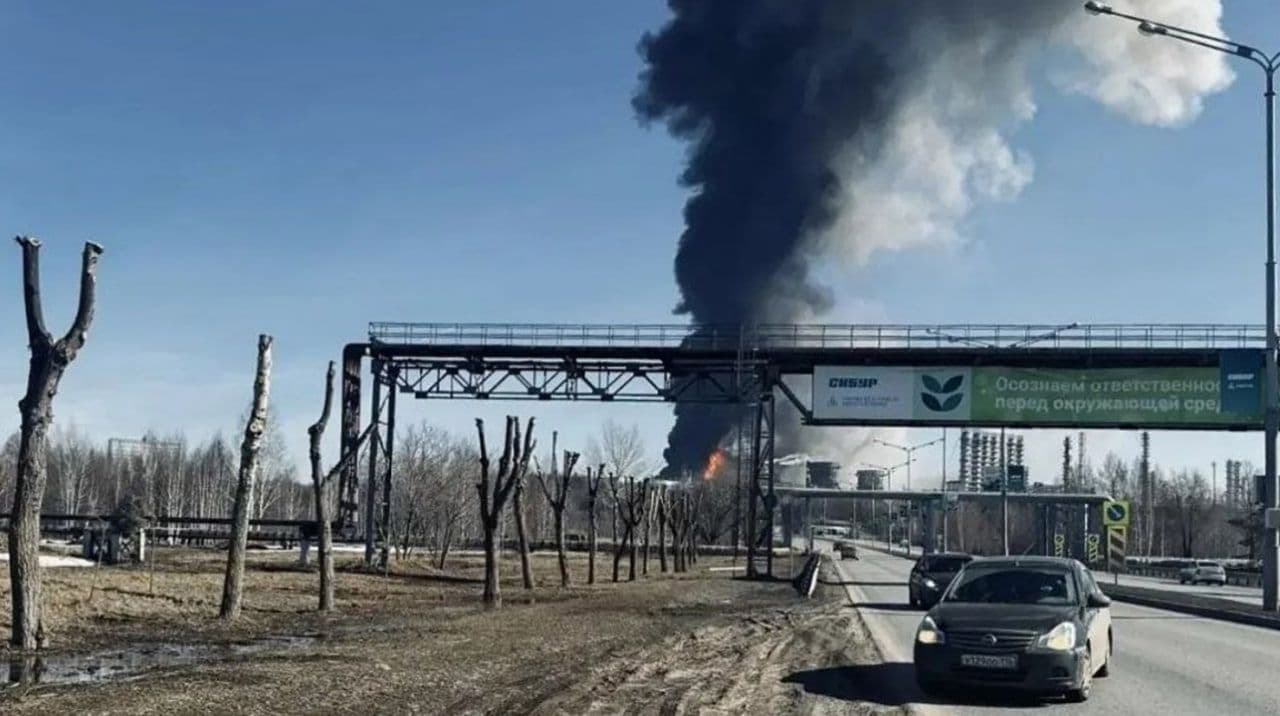
Three workers died. Twenty-two were wounded. Nine were missing.
The fire at the Nizhnekamskneftekhim synthetic rubber plant in Tatarstan spread across 1,500 square meters of outdoor processing equipment before 60 emergency personnel and 19 units of equipment could contain it. Plant owner Sibur called it an “equipment malfunction.” Aviation authorities quietly restricted air traffic at the nearby airport.
Aviation monitoring channels were reporting a drone threat in the region at the time of the blast.
Ukrainian Telegram channel Supernova+ suggested a drone strike had triggered the explosion. Ukrainian authorities declined to comment. The cause remains officially unconfirmed.
What is confirmed: the plant produces synthetic rubber used in tires, industrial seals, and military applications. It is a key node in Russia’s petrochemical sector — the kind of facility that keeps defense production functioning. And it was burning in Tatarstan on the same night Ukrainian drones were burning oil tanks in Leningrad Oblast, 1,500 kilometers to the northwest.
Accident or attack, the pattern is the same.
Russian industrial infrastructure is under pressure from multiple directions simultaneously — Baltic port terminals losing tankers, refineries taking hits, and now a rubber plant in the Russian interior in flames with nine workers still unaccounted for.
Sibur says equipment malfunction. The airport closure says something made someone nervous. The missing nine say the human cost doesn’t wait for official explanations.
Tehran’s Accusation Lands 30 Meters From Ukraine’s Embassy
Iran’s UN Ambassador Amir Saeed Iravani sat down and wrote a letter to Antonio Guterres accusing Ukraine of “material and operational support for military aggression.”
His evidence: Ukrainian counter-drone specialists deployed to Gulf countries to shoot down Iranian drones.
“Ukraine bears international responsibility arising from aiding or assisting another party in committing unlawful acts,” Iravani wrote.
Hours later, debris from an Iranian cluster missile landed thirty meters from Ukraine’s embassy in Tel Aviv. Foreign Minister Andrii Sybiha confirmed no one was injured — visitors happened to be inside. Then he stated what needed no elaboration: “This incident once again proves that the Iranian regime poses a threat to everyone in the region.”
Ukraine’s Foreign Ministry didn’t let the accusation stand quietly. Since 2022, nearly 60,000 Iranian-designed drones have struck Ukrainian cities, hospitals, and power stations. Russia builds its own version now — the Geran — but the silhouette is identical, the lineage unmistakable.
“Not a single Ukrainian drone has ever hit Iran,” spokesperson Heorhii Tykhyi said.
The math of Iran’s complaint collapses under examination. Tehran supplies the drones that burn Ukrainian cities. Ukraine teaches Gulf states to shoot them down. Iran calls this aggression. Meanwhile Qatar, and other Middle Eastern nations, have been sending military delegations to tour Ukrainian air defense facilities — not because Ukraine asked, but because they’ve watched what Iranian drones do and want to know how to stop them.
The market for Ukraine’s expertise exists because Iran created it.
The Japanese CEO Who Ignored Tokyo’s Travel Warning
Toru Tokushige booked his flight to Kyiv anyway.
Tokyo’s government had strongly discouraged Japanese executives from visiting Ukraine. Tokushige went regardless, spent time with over 100 Ukrainian defense tech companies, and came back convinced he was looking at the future of warfare.
On March 31, his company Terra Drone — listed on the Tokyo Stock Exchange — announced a partnership with Kharkiv-based Amazing Drones, becoming the first Japanese firm to invest in Ukraine’s defense sector.
The calculation was simple. “China’s threat is increasing,” Tokushige said. “So now is the time to increase our capabilities to protect Japan.” Japan’s 2026 defense budget is its largest ever — 9.04 trillion yen, roughly $58 billion. The money is there. The question was where to spend it.
Iranian drone strikes against U.S. allies in the Middle East answered it. Tokushige watched footage of million-dollar air defense missiles being fired at drones worth a few hundred dollars and understood the problem immediately. Amazing Drones builds interceptors for $2,500 to $3,000 each — 32-kilometer range, 300 kilometers per hour, 15 minutes of flight time.
Affordable. Scalable. Manufacturable at volume.
The partnership runs into Ukraine’s unresolved export tension. Restrictions prevent Ukrainian firms from freely selling abroad even as their specialists help Gulf states shoot down Iranian drones. Some companies have opened foreign factories to circumvent the rules — earning Zelensky’s public rebuke on March 29.
Amazing Drones CEO Maksym Klymenko didn’t hide his frustration: “Whatever you built a year ago, Ukraine has already moved past it.”
The technology isn’t waiting for the policy to catch up.
Russia’s Drone False Flag: Hitting Finland, Blaming Ukraine
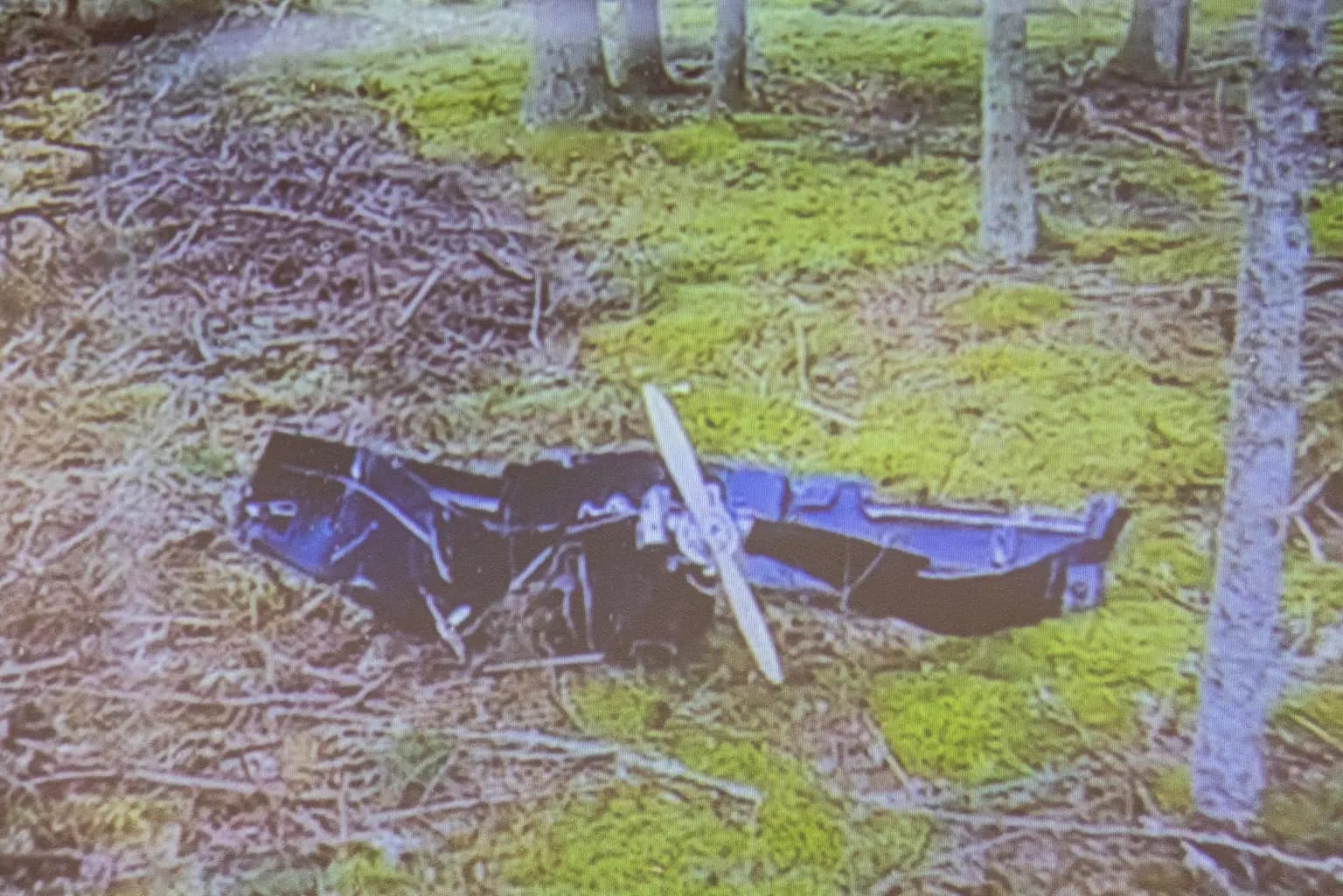
Two drones crashed in Finland on March 30.
Finnish authorities identified one as Ukrainian in origin. The second remains unknown. Ukraine’s Foreign Ministry acknowledged the incident, shared data with Helsinki, and apologized. Standard protocol for a navigation error — except Foreign Minister Sybiha doesn’t believe it was one.
“We have intelligence data confirming that in all these cases, these were deliberate and targeted actions by Russia,” he said.
Standing beside him at the Kyiv press conference: EU foreign policy chief Kaja Kallas. The timing was pointed — the Bucha massacre anniversary, European solidarity on public display. The message was that this particular wedge wasn’t going to fit.
The operation’s logic is straightforward. Estonia, Latvia, Lithuania, and Finland have been among Ukraine’s most reliable supporters throughout the war. If Russian drones can be made to appear as Ukrainian accidents over their territory, the resulting friction — diplomatic complaints, public anger, demands for explanation — costs Ukraine relationships it cannot afford to lose. Russia spends a drone. Ukraine spends political capital defending itself to its allies.
Sybiha confirmed Ukraine is in constant contact with all four countries about the incidents. The conversations are happening. The relationships are being managed.
But the pattern is the point. Each “accident” requires Ukraine to explain, apologize, and reassure. Each explanation is another conversation that isn’t about weapons deliveries or security guarantees. Russia doesn’t need the drones to cause damage when they land.
It needs them to cause doubt before they do.
What March 31st Revealed
Peskov told the world the front was moving in Russia’s favor.
At that exact moment, twelve tankers sat idle at Baltic ports that had handled eighteen the week before. A 50,000-ton oil tank burned at Ust-Luga. Bloomberg was calculating the damage: more than $1 billion in a single week.
The gap between what Moscow says and what Moscow can deliver has rarely been this measurable — or this expensive.
Russian forces are advancing at less than half the rate of a year ago. The Fortress Belt they’re demanding Ukraine abandon has never fallen to Russian assault — not in 2014, not in 2022, not now. Employers in Ryazan Oblast are being legally required to hand over employees to the military because voluntary recruitment has collapsed below casualty rates. The milbloggers who want Ukraine destroyed are publicly complaining about Russian battlefield failures.
Meanwhile Ukraine dismantled a GRU assassination network hours before it could act. Launched 92% interception rates against a 289-drone night attack. Burned Russian air defense systems 65 kilometers behind the front. Signed its first Japanese defense investment. Built corporate drone hunters into its air defense grid.
None of this resolves the war. Russia still holds Ukrainian territory. Ukrainian cities still wake without power. The dying continues at a rate neither side will state honestly.
But March 31st posed a question Moscow can’t answer cleanly: if the front is moving in your favor, why are your employers conscripting workers, your milbloggers filing complaints, and your oil terminals standing empty?
Day 1,491. The ultimatums kept coming. The fires kept burning. The gap kept widening.
Prayer For Ukraine
1. Justice for the Names We Don’t Know
Lord, three workers died in Tatarstan when a rubber plant exploded and nine remain missing — their names unreported, their families waiting. Whether the cause was drone or malfunction, they were someone’s father, someone’s son. We ask Your comfort for those who wait without answers and Your justice for a war economy that demands ordinary workers pay its costs. See the missing nine. Hold them — and the families who cannot yet grieve because they do not yet know.
2. Protection Over Every Ukrainian City That Woke Without Power
Father, 289 drones came from four directions in a single night. Twenty broke through. Five oblasts — Kharkiv, Donetsk, Dnipropetrovsk, Zaporizhzhia, Poltava — woke without electricity. In Sumy, seventeen civilians were wounded including a six-year-old who had no part in anyone’s strategic calculations. In Poltava, two children were hurt alongside the one person who did not survive. Guard every child who has learned to sleep through air raid sirens. Let no more six-year-olds enter the casualty reports.
3. Wisdom for Zelensky at the Negotiating Table
Lord, on April 1st Zelensky will sit down online with Steve Witkoff, Jared Kushner, and Rustem Umerov to discuss a war that Washington is increasingly distracted from by its own conflict with Iran. He carries an energy truce proposal Moscow has already dismissed. Grant him wisdom that outlasts the other side’s bad faith. Give him clarity when ultimatums arrive dressed as diplomacy. Let what is true about the battlefield be heard by those with the power to act on it.
4. Courage for the Commander Who Almost Didn’t Survive the Day
Father, a Ukrainian volunteer commander went to sleep not knowing four people with weapons caches, false identities, and database access were hours away from killing him. He is alive because Ukrainian intelligence moved first. We ask Your continued protection over every commander, every public figure, every soldier this war has marked for elimination. Guard those whose names appear on lists in Moscow. Let the networks that hunt them be found before they can act. And comfort those who carry the knowledge of how close it came.
5. Endurance for a Nation Told to Surrender What Cannot Be Taken
Lord, Russia demanded Ukraine abandon its Fortress Belt within sixty days — cities that have never fallen to Russian assault in 2014, in 2022, or now. Zelensky answered at Bucha, of all places, with quiet certainty: they will never take it. We ask You to sustain that certainty — in the soldiers holding the fog-covered approaches to Hryshyne, in the drone operators striking air defense systems 65 kilometers behind Russian lines, in the corporate air defense crews shooting down Shaheds over Kharkiv. Ukraine has not surrendered what Russia cannot capture. Lord, in Your mercy, in Your justice, in Your time — sustain what has not broken, and bring this war to its end.