
In Cherkasy, four Ukrainians approached a downed Russian drone in an open field — and died when its warhead detonated beneath the spring sun. In Washington, Zelensky’s envoys described their talks with Trump’s team as “positive” while Shahed swarms were still crossing Ukrainian airspace. In Moscow, Kremlin spokesman Peskov told reporters Zelensky should have ordered his troops out of Donbas “yesterday” — then upped the deadline to immediately. Day 1,132: the day Russia answered a ceasefire offer with its largest daytime drone assault of the war.
The Day’s Reckoning
At 1:00 p.m. in Cherkasy Oblast, four people walked toward a downed Russian drone in an open field. The warhead hadn’t gone off on impact. They were curious. Maybe relieved. Then it detonated. All four died in the grass while an air raid alert was still sounding overhead. The Cherkasy Prosecutor’s Office opened a war crimes investigation before the bodies were moved.
That same afternoon, President Zelensky was on a video call with Steve Witkoff, Jared Kushner, NATO chief Mark Rutte, and Senator Lindsey Graham, pitching a ceasefire for Easter. He would later call the conversation “positive.” Over 80 Russian drones were still crossing Ukrainian airspace while he said it.
In Moscow, Dmitry Peskov was telling reporters that Zelensky should have ordered his troops out of Donbas the day before. State Duma deputies were floating demands that would eventually include Odesa and Kharkiv. The Russian Ministry of Defense announced — for the third time in this war — that Russian forces had seized all of Luhansk Oblast. The two villages still outside their control went unmentioned.
Seven hundred drones flew in two waves, night and day, hitting eleven oblasts. Satellite imagery showed oil tanks burning at Russia’s own Baltic ports, struck by Ukrainian drones the night before. In Ryazan, businesses were receiving mandatory military recruitment quotas. In the Black Sea, a new Russian naval drone built to defeat jamming had reportedly entered combat for the first time.
Diplomacy and destruction. Ultimatums and advances. The war’s full machinery, running at once.
This is what Day 1,132 looked like.
They Waited Out the Night. Russia Came Back at Dawn.
At 6:00 p.m. on March 31, the first drones lifted off. Not dozens. Hundreds. Shahed-type, Gerbera-type, Italmas-type, launched simultaneously from six directions — Bryansk, Kursk, Oryol, Millerovo, Primorsko-Akhtarsk, occupied Crimea, Donetsk City. A coordinated ring closing around Ukraine from every compass point.
The overnight wave numbered 339. Ukrainian air defenses knocked down 298 — 88% of everything thrown at them. Impressive. But the 20 that got through found Lutsk: a retail warehouse, a residential building, a Nova Poshta terminal, all hit before sunrise. In Khmelnytskyi, a factory burned. From Kyiv to Kryvyi Rih, people huddled in shelters listening to the city absorb what the sky was sending down.
Then the all-clear came. People emerged. Stepped outside. Breathed the morning air.
Russia launched again.
Between 8:00 a.m. and 6:00 p.m., 360 more drones crossed into Ukrainian airspace — 250 of them Shaheds, sweeping in from the southeast, heading west. Defenses downed 345. Fourteen still hit. And this time, the streets weren’t empty.
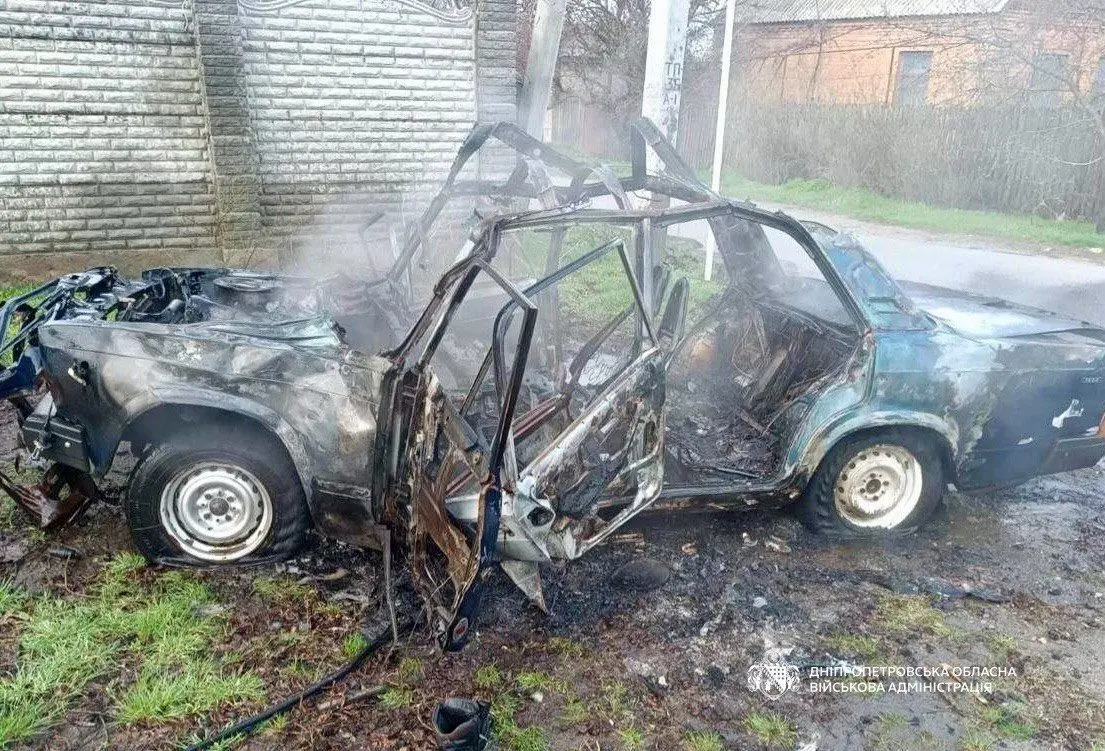
In Cherkasy, a drone fell in an open field. Its warhead didn’t go off on impact. Four residents walked over to look. It detonated. All four died. Three bus passengers were hit by debris in a separate strike. In Poltava, a drone crashed onto private property, wounding four — including a child. The map kept lighting up. Eleven thousand homes lost power in Ivano-Frankivsk’s Kolomyia district.
The Institute for the Study of War named the strategy: make Ukrainians choose between sheltering constantly — and strangling their own economy — or going outside and accepting the risk. Iran has been running the same play against Israel. Russia studied it, adapted it, and deployed it as spring arrived and more people were spending time outdoors.
Seven hundred drones. One day. A new doctrine.
Ceasefire for Easter. Russia’s Answer: More Drones.
The call connected while Shaheds were still in the air.
Zelensky, Witkoff, Kushner, Rutte, Graham, Presidential Office head Kyrylo Budanov — all on screen, discussing whether Russia might agree to stop shooting for twelve days. The ask was modest: a mutual pause in strikes against energy infrastructure during the Orthodox Easter holidays, starting April 12. “A pause on Easter could serve as a signal to everyone that diplomacy can succeed,” Zelensky said afterward. He called the conversation “positive.” Teams would stay in close contact to strengthen a security guarantees document between Ukraine and the United States.
The Kremlin had already said no before the first word was spoken.
It kept launching drones through the meeting to make the rejection unmistakable — not just a statement, but a demonstration. “Ukraine openly made this proposal to Russia,” Zelensky said. “Russia is responding with Shaheds.”
Reading between the lines: Zelensky isn’t expecting yes. The U.S.-mediated process has produced little tangible progress, with Russia pressing maximalist territorial demands while Washington’s attention is pulled toward the war with Iran. Every public peace gesture Zelensky makes is also a document — a record of who keeps refusing, built for European allies and skeptical American legislators who need to see which side won’t come to the table.
The proposal was real. The rejection was emphatic. And somewhere over central Ukraine, another wave of drones was already heading west.
Moscow Moves the Goalposts — Then Moves Them Again
Peskov stepped to the podium with the air of a man whose patience had already expired.
The day before, Zelensky had revealed that Russia gave Ukraine two months to withdraw from Donbas or face harsher terms. Two months wasn’t enough. “Zelensky should have made this decision yesterday,” Peskov said. “He needs to take responsibility and make this difficult decision.”
The Duma didn’t wait. Defense Committee Member Andrei Kolesnik said Zelensky should have withdrawn “the day before yesterday.” International Affairs Committee First Deputy Head Alexei Chepa went further still — non-compliance, he suggested, would eventually cost Ukraine not just Donbas but Zaporizhzhia, Kherson, and the cities of Odesa, Mykolaiv, Dnipro, and Kharkiv.
The Russian MoD punctuated the pressure with a familiar flourish: it announced that Russian forces had seized all of Luhansk Oblast. Third time this claim has been made. Shoigu made it in July 2022. LNR head Pasechnik repeated it in June 2025. The reality, per ISW: Russian forces control 99.84% of the oblast. Two villages — Nadiya and Novoyehorivka — remain outside their reach. The announcement isn’t a battlefield report. It’s a negotiating weapon, designed to make Western mediators feel Ukrainian collapse is imminent and concessions are overdue.
Zelensky called it directly: Russian forces have failed to meet their own deadlines in Donetsk Oblast, repeatedly. ISW was blunter — Kremlin claims of an inevitable sweep through Donetsk, let alone Odesa or Kharkiv, “are absurd and do not correspond with current battlefield realities.” Russian advances have actually slowed since January.
Then came the footnote that stung. The Kyiv Independent reported that the U.S. side does not oppose Russia’s Donbas demand, with one Trump administration official calling territorial decisions “up to” Kyiv and Moscow. Ukraine holds roughly a quarter of Donetsk Oblast, including a fortified defensive belt. It has rejected forced concessions.
Washington’s position remains unclear. That ambiguity is doing real work.
Thirty-Two Dead on Motorcycles. This Is What Running Out of Options Looks Like.
General Syrskyi named Pokrovsk the hottest point on the map. He wasn’t wrong.
Ukrainian forces pushed forward in northwestern Hryshyne while simultaneously holding off Russian attacks at Bilytske, Rodynske, Myrnohrad, and a string of settlements to Pokrovsk’s southwest. Both sides claimed counterattacks in the same fields. The Russian MoD rushed its newly formed 120th Naval Infantry Division — built from the 336th Naval Infantry Brigade — to stabilize the Novooleksandrivka direction northwest of Pokrovsk. Fresh units to plug a line that keeps bending.
Then came the motorcycles.
In the Slovyansk direction, Russian forces assembled sixteen bikes — three or four per group, each carrying two or three soldiers — and sent them across open terrain toward Ukrainian positions. The largest motorcycle assault in this direction since January 2026. Ukrainian forces destroyed all sixteen. Killed all 32 riders.
Motorcycles. Not tanks. Not armored personnel carriers. This is what crossing a kill zone looks like when better options are gone.
Ukrainian forces confirmed a separate advance in Yarova, northwest of Lyman. Russian troops infiltrated Berestok near Kostyantynivka — a probe, analysts assessed, without lasting terrain change. Military observer Kostyantyn Mashovets described Russia’s broader ambition: envelop Kostyantynivka-Druzhkivka from multiple directions, bypass rather than assault. His assessment of their current capacity to execute it: insufficient.
In Hulyaipole, Ukrainian forces advanced north of the T-0814 highway and struck a Russian drone control point and command post. In western Zaporizhzhia, Russian forces were pushing FPV drone and mortar crews toward Ukrainian lines, trying to reach deeper into the rear. In Kherson Oblast, one civilian was killed and six wounded. A boy born in 2007 died in a drone strike on March 31.
In Kharkiv Oblast, Russian forces attacked near Vovchanski Khutory. The MoD claimed Verkhnya Pysarivka was seized. It couldn’t be confirmed. Near Kupyansk, geolocated footage showed Ukrainian forces operating in terrain Russia had previously declared under its control. In Sumy, attacks near Mala Korchakivka drew Ukrainian counterattacks.
The front held. Barely, expensively, everywhere at once.
The Smoke Rising Over Primorsk Was Visible from Orbit
NASA saw it first.
Heat-anomaly sensors and Planet Labs satellite imagery captured on April 1 showed multiple storage tanks destroyed at the Ust-Luga oil terminal in Leningrad Oblast. Sixty kilometers up the coast at Primorsk, grey smoke was still rising from oil tanks that Ukrainian drones had reached more than a week earlier and kept hitting since. Both ports are critical choke points in Russia’s Baltic oil export network — the infrastructure through which Russian crude reaches paying customers.
A spokesperson for Ukraine’s Unmanned Systems Forces explained the logic plainly: hit the bottlenecks, and you don’t just damage one facility — you disrupt the entire interconnected network of Russian oil refining and exports. Revenue that can’t flow can’t fund the war.
Overnight, Ukrainian forces went further inland. The target: the “Strela” Joint Stock Company in Bryansk Oblast, hundreds of kilometers from the nearest front line. Strela manufactures cruise missiles for the Russian military.
It burned too.
Medvedev Said There’s No Manpower Problem. Ryazan’s Businesses Just Got Recruitment Quotas.
On state television, Dmitry Medvedev was reassuring. “Since the beginning of 2026, more than 80,000 people have signed a contract for military service,” he told viewers. “At the present moment, there is absolutely no need to announce a new wave of mobilization.”
That same week, 185 kilometers from Moscow, Ryazan Oblast Governor Pavel Malkov signed a decree.
Every medium-to-large business in the region — government-run or private — must now identify employees as military recruitment candidates and deliver their names to army recruiters. The quotas are specific: 150–300 employees, submit two names; 300–500 employees, three names; over 500 employees, five names. Non-compliance: fines up to 1 million rubles. Effective immediately. Independent Russian news agency SOTA called it what it is — under-the-radar conscription, avoiding the political explosion an official draft would detonate.
Ryazan is not alone. University rectors at Russia’s largest institutions have been told that at least 2% of their student bodies must sign defense ministry contracts — potentially 44,000 soldiers from universities alone, 76,000 if technical schools are included. Official documents from Khabarovsk revealed plans to recruit 78,000 personnel for Russia’s Unmanned Systems Forces by year’s end, 58,000 from civilian pools. In Belgorod, foreigners are being pressured to enlist in exchange for residency permits. In Irkutsk, military-aged men with criminal records are being screened. In Novgorod, recruiters showed up at a teacher’s college.
Zelensky laid out the arithmetic without embellishment: Russia planned to mobilize 409,000 people in 2026. As of March, roughly 80,000 had signed — about 20% of the target. “They have lost more than they have mobilized,” he said. “This is an important signal.”
The businesses of Ryazan are now making lists of names. Medvedev’s television appearance did not mention that.
While Ukraine Burns Russian Oil Tanks, the Middle East Is Filling Them Back Up
In trading floors from London to Singapore, the numbers were moving in Russia’s favor.
Bloomberg reported it on April 1: aluminum prices hitting four-year highs, with American and European buyers — the same buyers who joined sanctions against Russia — quietly contacting Rusal about spare capacity. The Strait of Hormuz closure was severing fertilizer supply chains, and Russia, with its 18.7-million-ton export quota, was positioned to fill the gap. Russian wheat exporters operating in occupied Ukraine were expanding port infrastructure in occupied Mariupol to ship stolen Ukrainian grain into markets suddenly short on supply. European governments ran the oil math: if Urals crude stays elevated through 2026, Russia collects up to $40 billion in additional export revenue.
Translation: the war in the Middle East is bankrolling the war in Ukraine.
ISW assessed that elevated commodity revenues may enable the Kremlin to keep financing its offensive in the medium term. That assessment lands as a direct challenge to Ukraine’s Baltic port campaign. Every tank Ukraine ignites at Ust-Luga and Primorsk cuts into Russian revenue. Every disruption to Hormuz shipping adds it back.
Ukraine is striking one side of the ledger. The Middle East is rewriting the other.
Russia’s Frozen Billions Are Paying for Ukraine’s Defense — and Moscow Can’t Stop It
More than €200 billion in Russian central bank assets sit frozen in European depositories, untouchable under EU sanctions. The Kremlin cannot move them. Cannot spend them. Can only watch.
But the interest keeps accumulating. And on April 1, Ursula von der Leyen announced the EU was sending another round of it to Ukraine — €1.4 billion, roughly $1.6 billion, the fourth such transfer since the mechanism was established in 2024.
Ninety-five percent flows to the Ukraine Loan Cooperation Facility, helping Kyiv service the debt it has accumulated borrowing from EU and G7 partners to stay in the fight. The remaining 5% goes to the European Peace Facility — weapons and defense. The transfer arrived alongside a separate €90 billion loan package for 2026–2027, hammered out in overnight talks in Brussels.
The principal stays frozen. Belgium, which holds a significant share, has raised concerns about legal exposure. Hungary and Slovakia have objected. The debate over whether to seize the assets outright continues.
Meanwhile the interest compounds. The EU redirects it. Russia funds the war being fought against it.
Two Signatures Away from Putting Putin’s War on Trial
Standing beside EU foreign policy chief Kaja Kallas in Kyiv, Foreign Minister Andriy Sybiha announced it: the UK, Germany, and Moldova had signed on to the Special Tribunal for the Crime of Aggression against Ukraine.
Fourteen nations now. Sixteen required to open the court’s doors.
The list — Estonia, Spain, Costa Rica, Latvia, Lithuania, Luxembourg, Moldova, the Netherlands, Germany, Slovenia, Ukraine, Croatia, Sweden, the UK — is two short of the legal minimum. Sybiha didn’t hide his impatience. “Sixteen is only the legal minimum. I urge all colleagues to actively work on expanding this list.”
The tribunal exists to fill a gap the International Criminal Court cannot. The ICC prosecutes war crimes, crimes against humanity, genocide — but has no jurisdiction over the crime of aggression itself. This court would go directly after the Russian leadership for ordering the invasion. Not the soldiers who carried it out. The men who gave the orders.
Putin cannot be physically arrested while in office. Sitting heads of state carry immunity. But investigations proceed regardless. Cases are built. Charges are prepared. The legal record accumulates — and immunity, unlike an indictment, has an expiration date.
Two more signatures. The clock is running.
Russia Launched a Drone That Jamming Can’t Stop. Ukraine Says It Built One First.
The name translates from Russian as “Eggshell.” What’s inside is harder to crack than the name suggests.
TASS claimed on March 31 that Russia’s first fiber-optic naval drone — the Skarlupa — had been deployed in combat against Ukraine. If true, it’s the first known use of a fiber-optic naval drone in warfare anywhere.
The technology matters because of what it defeats. Jam a radio-controlled drone and you blind it. Spoof its signal and you own it. A fiber-optic drone has no radio signal to jam — it talks to its operator through a physical cable, unspooling behind it as it moves. On a 50-kilometer spool, the Skarlupa could approach coastal targets from open water while remaining completely invisible to every electronic warfare system Ukraine has deployed. It’s also a mothership — designed to carry and launch multiple smaller drones. Built by Ushkuynik, the same company behind the KVN fiber-optic FPV drone that Ukraine has identified as one of Russia’s most widely used battlefield systems.
Viktor Perfetsky of the Ukrainian Council of Defense Industry urged restraint. No confirmed use at meaningful scale yet. Still in trials. “There is no confirmed combat use of these systems at a scale that would allow us to speak of leadership,” he said. Ukraine is developing comparable systems of its own.
His closing point landed with quiet confidence: “When it comes to naval and river drone systems, Ukraine is undoubtedly a global leader.” Russia isn’t pulling ahead. It’s closing a gap Ukraine opened first.
Seven Drones Down in NATO Territory. Ukraine Says Russia Put Them There.
One in Lithuania. Two in Latvia. Two in Estonia. Two in Finland. Nine days. Five countries.
The first explanation was technical: Russian electronic warfare had knocked Ukrainian drones off course, sending them across borders they weren’t meant to cross. Plausible. These things happen in a war saturated with jamming signals.
Then Foreign Minister Sybiha sharpened the assessment. Ukrainian intelligence now believes Russia is “deliberately directing drones toward the Baltic states for informational and propaganda effects.”
That’s a different thing entirely.
Jamming for defense disrupts. Jamming to redirect is a weapon — one designed not to destroy Ukrainian hardware but to deposit it on NATO soil, manufacturing incidents that fuel narratives about Ukrainian recklessness and strain Kyiv’s relationships with the allies it cannot afford to lose. Every drone that comes down in Finland or Estonia is a headline. Every headline is a question asked in a European parliament about whether Ukraine can be trusted with advanced weapons.
Seven drones. Nine days. The pattern is too consistent to be coincidental.
29 Dead in Crimea. Russia Says It Was an Accident. Ukraine Isn’t Saying Anything.
At 6:00 p.m. on March 31, a Russian An-26 twin-turboprop dropped off radar somewhere over occupied Crimea. Six crew. Twenty-three passengers. Search and rescue dispatched into mountainous terrain.
By April 1, all 29 were confirmed dead.
TASS reported the aircraft struck a cliff. The Defense Ministry offered its explanation: technical malfunction, no evidence of external damage. A criminal case was opened — violations of flight rules and regulations governing flight preparation. Military investigators, rescue workers, police, and forensic experts worked the remote crash site.
Ukraine’s military said nothing.
That silence sits alongside a specific piece of history: in September 2025, Ukrainian military intelligence destroyed two Russian An-26 transport aircraft in a drone attack on occupied Crimea. The peninsula has been a target of Ukrainian strikes since Russia seized it in 2014.
Russia says it was an accident. Ukraine isn’t confirming or denying. Twenty-nine people went into the Crimean mountains and didn’t come back, and the full story — if there is one beyond mechanical failure — remains wherever the wreckage is.
He Wrote the Drones Off as Lost. Then He Bought a Mercedes.
Between November 2024 and March 2026, a Ukrainian unit commander and two civilian accomplices ran a straightforward operation: declare combat drones lost or destroyed, remove them from the books, then sell them through anonymous online accounts across Donetsk, Kharkiv, Zaporizhzhia, and Dnipropetrovsk oblasts.
More than 340 drones. Losses exceeding ₴15.2 million — about $370,000. The proceeds went to real estate, jewelry, and luxury vehicles.
When investigators came, they found ₴1.48 million in cash. A Toyota Land Cruiser. Mercedes-Benz models. Property documents. The commander faces separate charges of illicit enrichment — unexplained assets worth more than ₴10.7 million, a figure that dwarfs anything his salary could account for.
All three are in pretrial detention. Investigators are still identifying others.
Somewhere on the front line, units were filing requests for replacement drones. The drones were already gone — written off, sold, converted into a Land Cruiser parked outside someone’s house.
Russia Has Hit Nova Poshta Five Times. It’s Still Delivering.
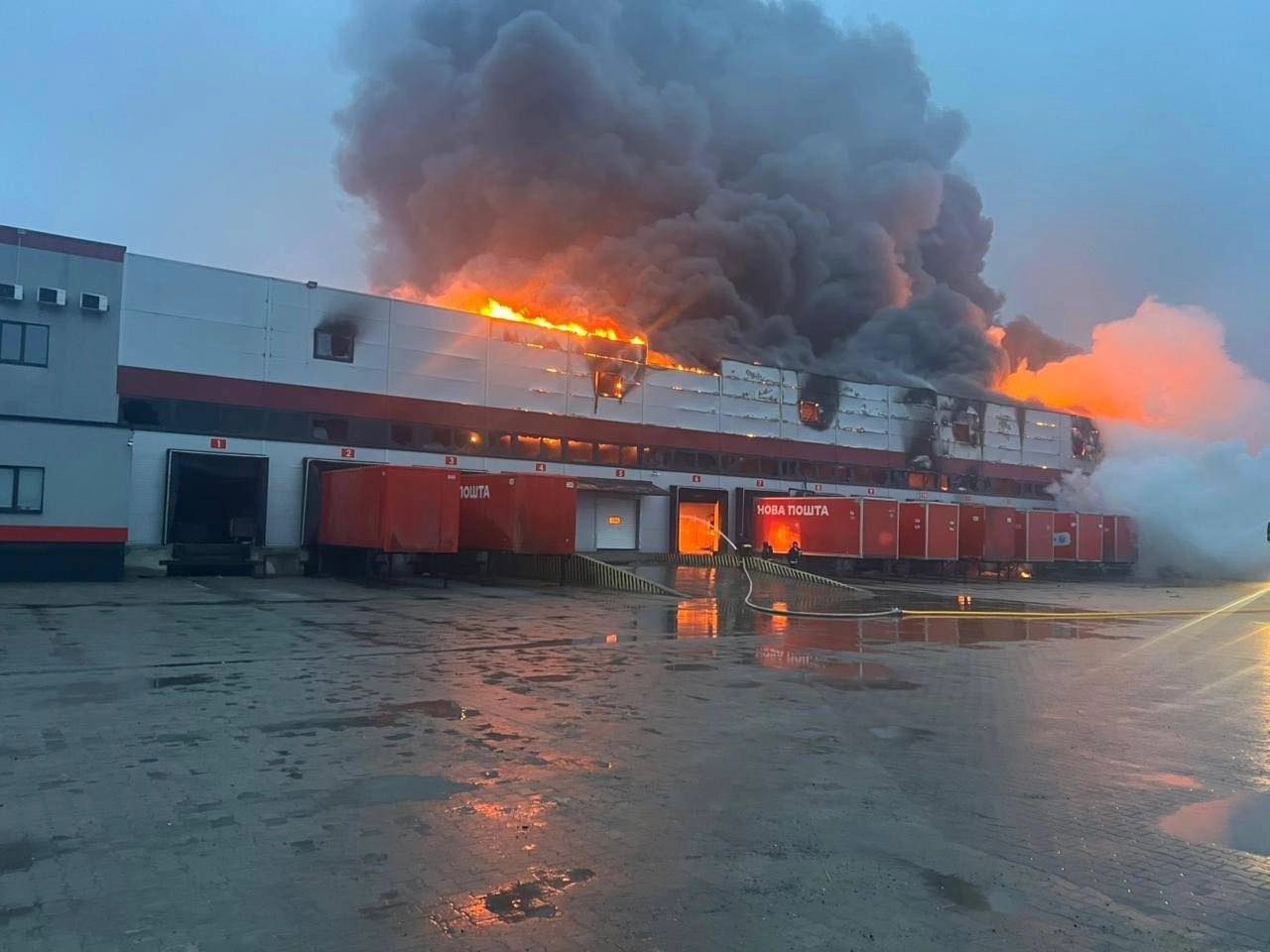
The Lutsk terminal was not an accident of war. It was the latest entry on a list.
March: a hub in Zaporizhzhia destroyed. January: a Kharkiv branch struck by missile — four employees killed. December 2025: an Odesa branch taken out by drone, ₴2 million in damaged parcels. Before that: the last Svyatohirsk location shuttered because Russian forces were hunting delivery vehicles near the front line.
Now Lutsk. A terminal gone, a warehouse hit, a residential building caught debris from the same strike. All employees were in shelters. They survived. The building did not.
Nova Poshta committed to compensating every affected customer and pledged to keep expanding internationally.
Russia’s logic is legible: destroy what holds Ukrainian daily life together. Power grids. Grain. The courier network that moves medicine, documents, and packages for a country at war. Break the infrastructure of normalcy and you break something harder to rebuild than a factory.
Nova Poshta’s answer has been equally legible: rebuild, compensate, expand. Five strikes. Still delivering.
The Slow Merger: Russia Keeps Tightening Its Grip on Belarus
No tanks required.
State Secretary of the Russia-Belarus Union State Sergei Glazyev announced that the two countries are preparing to launch the first products bearing a “Union State Goods” quality mark — machine tools, electronics, buses, cars. A branding initiative, on the surface. Underneath: another thread binding Belarus’s industrial capacity to Russian economic and military systems, making any future pivot westward more expensive and more complicated with every passing month.
This is how absorption works when it isn’t called absorption. Shared product standards. Integrated supply chains. Economic architecture that makes separation feel like amputation.
Separately, Russia is rotating forces on the northern axis. Elements of the 51st and 119th VDV airborne regiments are being pulled from Sumy Oblast and redeployed to the Kherson direction — heavy losses in the north requiring rest and reconstitution somewhere quieter. Arctic motorized rifle units are moving in to replace them.
Units cycling out. Units cycling in. The front doesn’t pause for the shuffle.
The Governors Filed Their Reports. Here Is What One Day Cost.
Kherson Oblast: one killed, six injured. Among them, a boy born in 2007 — killed by a Russian drone the day before. He was seventeen.
Sumy Oblast: a 37-year-old man killed. Russian forces hit 29 settlements with 60 attacks.
Donetsk Oblast: 11 wounded across Sloviansk, Kramatorsk, Druzhkivka, and Kostyantynivka.
Kharkiv Oblast: six wounded, including a two-year-old boy. Twelve settlements struck.
Dnipropetrovsk: two men injured in artillery and drone strikes. Three more hit by an FPV drone in a separate attack.
Zaporizhzhia: four wounded. Forty-two settlements. Nine hundred and seventy-five Russian strikes in a single day.
Poltava: a drone down on a facility in Myrhorod district. One injured.
March closed with a number worth examining: Ukrainian air defenses intercepted 89.9% of all Russian missiles and drones launched during the month — 5,935 projectiles stopped before they hit. The highest sustained intercept rate of the war.
The other 10% killed and wounded hundreds. Knocked out power for tens of thousands. Set fires across half a dozen oblasts.
Effectiveness and sufficiency are not the same thing.
What the Day Revealed
Three patterns emerged from the noise.
Russia is learning from Iran. The double-wave drone campaign — night strike, then day strike, then repeat — isn’t improvisation. It’s doctrine, imported and adapted. Its target isn’t just infrastructure. It’s the moment Ukrainians stop taking the sirens seriously. The four dead in Cherkasy walked toward a downed drone during an active air raid alert. That’s what desensitization costs.
Russia’s ultimatums are a message to Washington, not Kyiv. Peskov’s “already today,” the Duma’s demands for Odesa and Kharkiv, the third announcement of Luhansk’s fall — none of it reflects battlefield reality, where Russian advances have slowed since January. It reflects a calculation: that maximalist pressure, amplified through American mediators who reportedly don’t oppose the Donbas demand, might extract concessions Ukraine would never grant at a negotiating table operating in good faith.
And Russia is running out of soldiers while pretending it isn’t. Medvedev’s television reassurances and Ryazan’s business recruitment quotas cannot both be true. The mobilization math — 409,000 planned, 80,000 reached, losses exceeding recruitment for four straight months — points one direction.
What remains unresolved: whether Ukraine’s Baltic port campaign can outpace the Middle East windfall refilling Russian revenues. Whether two more nations sign the aggression tribunal before momentum stalls. Whether Washington reads the battlefield data or the Kremlin’s press releases.
Day 1,132. The parallel realities held — diplomacy and destruction, advances and retreats, frozen assets and burning oil tanks. Nobody knew which would matter more.
In a field in Cherkasy, a criminal investigation was just getting started.
Prayer for Ukraine — April 1, 2026
1. For the Four Who Walked Toward the Drone
Lord, they heard the siren. They saw it fall and walked toward it — curious, perhaps relieved. They did not know what was coming. We ask Your mercy for them, Your comfort for their families, and Your justice for a weapon designed to kill twice: once on impact, and once when the curious arrive.
2. For the Boy Born in 2007
Father, a teenager in Kherson Oblast was killed by a drone. The governor’s report listed his birth year, not his name. You know his name. Hold him. Comfort his family. And let his smallness — and the smallness of the two-year-old wounded in Kharkiv, the child hurt in Poltava — weigh on every conscience that could end this war and has not.
3. For the Leaders in the Room
Lord, Zelensky sat in a call with American envoys while drones crossed Ukrainian airspace outside. He called it positive. He kept making the case for peace to people whose attention is divided and whose patience is finite. Grant him endurance. Grant the mediators clarity. Let the truth of this battlefield reach those with the power to act on it.
4. For the Defenders
Father, 89.9% intercepted. The other 10% still kills. Sustain every crew at every air defense battery, every soldier on a line the Kremlin has declared already lost. Let what has not broken hold.
5. For Justice That Moves Slowly but Moves
Lord, the tribunal is two signatures away. The frozen assets are paying for Ukraine’s defense. The accounting is being built, slowly, in the language of law. Let it reach completion. In Your mercy, in Your justice, in Your time — bring this war to its end, and let the ending be worthy of what Ukraine has endured.