
A True Story of Escape, Loss, and the Long Road Home
─────────────────────────────
This story is real. The events happened. The families are real people who survived extraordinary danger. Out of respect for their ongoing security and privacy, certain identifying details have been altered and all names have been changed. Everything else is true.
PART ONE: THE BRIDGE
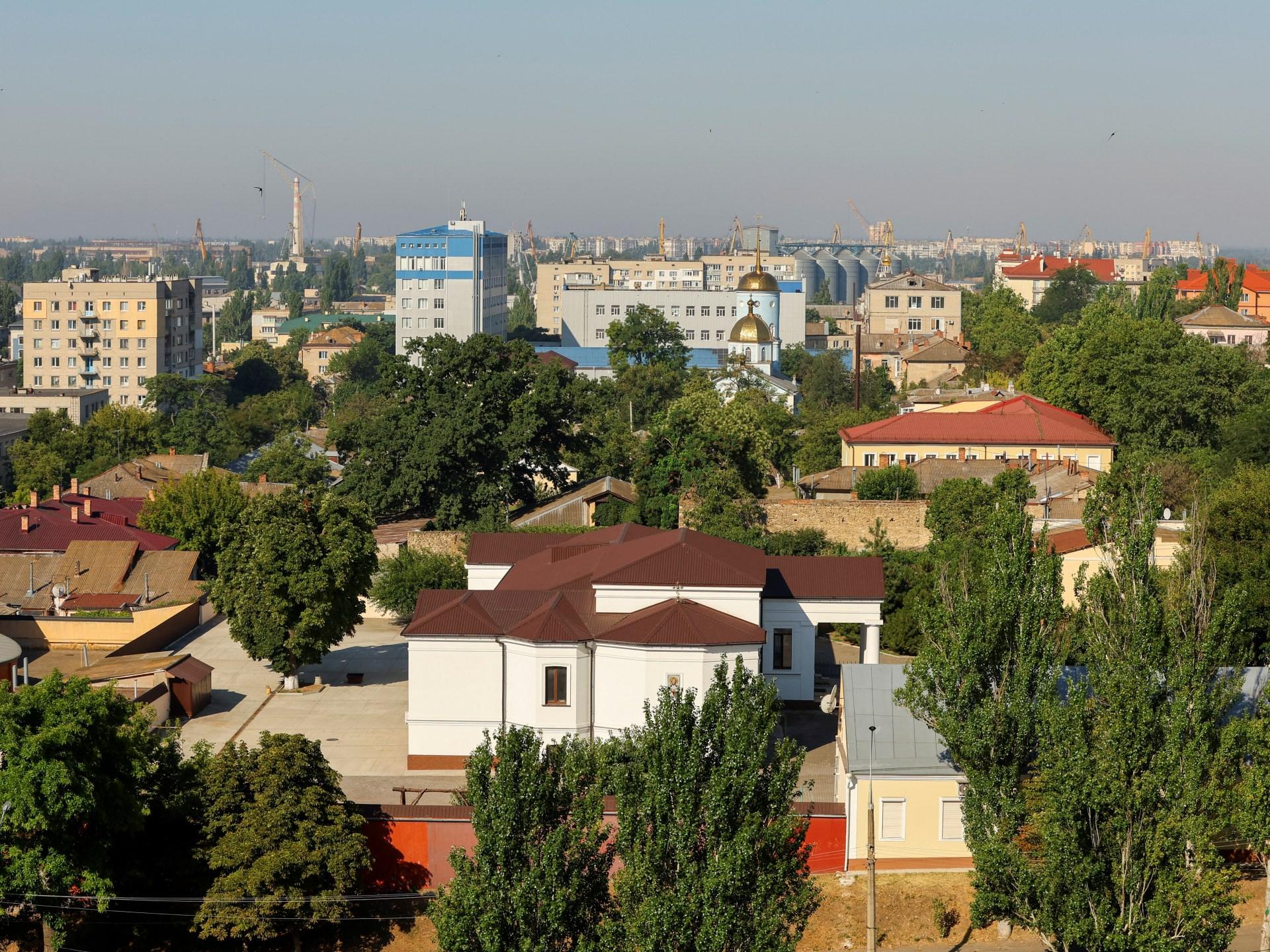
It was a quiet town of 24,000 souls—the kind of place where nothing much happened and nobody really minded. Oleshky sat across the Dnipro River from the city of Kherson, lazily connected to it by the Antonivsky Bridge. Every morning, the men drove the five miles over that bridge to work. Their wives visited the markets. Their children went to school. Life moved slowly, as it always had.
Then came February 24, 2022.
In the pre-dawn darkness, 25,000 Russian soldiers with armored vehicles and tanks crossed into the region and raced for the bridge. They took it within hours. A week later, Kherson fell. And Oleshky—the quiet, forgotten suburb on the other side of the river—became occupied territory.
Three families woke up that morning and did not yet know how completely their lives had just changed.
The Kovalenkos: Pastor Pavel, his wife Helena, and their son Sasha. Pavel had retired from pastoral ministry to run a group home for Ukrainian orphans. Sasha, with the strong work ethic common among Ukrainian evangelicals, had built his own successful construction company. They were people of faith, community, and deep roots.
The Bondarenkos: Sergey and Natalia, and their daughters Lena and Ira. Sergey worked security at a local bakery; Natalia baked the bread. Ira, the younger daughter, had married young, had a son named Anton, and after a painful divorce had moved back home. Lena had married Sasha Kovalenko, drawn to the family through years of evangelical summer camps.
The Tkachenkos: Dima and Nina, and their daughters Maria and Vika. An Orthodox family woven into the fabric of both other families—Nina worked alongside Natalia at the bakery. Dima drove trucks, often delivering construction supplies to Sasha. Their daughter Maria was the only one not in Oleshky on the day the soldiers came. She was studying at university in Odesa, 220 miles away—mercifully unaware that the world she would return to no longer existed.
These three families. Three futures. All about to be swallowed by the same war.
PART TWO: THE FIRST TO RUN
In those first chaotic weeks, the Russians were focused on Kherson. Oleshky was an afterthought—which meant there was still a window. Still a chance.
Sasha saw it. And so did Lena’s sister Ira. She had her own urgent reason to run: rumors were spreading that Russian authorities were targeting vulnerable children—orphans, children of single mothers, anyone they could claim to “protect” by shipping them to Russia. Ira was a single mother with a thirteen-year-old son, Anton. She could not stay. She would not.
The two sisters left Oleshky together. But their roads quickly diverged.
Sasha and Lena had something Ira did not: a network. Fellow believers, church contacts, communities of faith ready to open doors and spare rooms across unoccupied Ukraine. Sasha and Lena traveled to Dunaivtsy, a town with a large evangelical community that received them without question. Within weeks, Sasha had partnered with another builder who had also fled Oleshky, and together they began rebuilding—not just their business, but their lives. They would spend a year there, putting down roots, growing the business, and becoming—without yet knowing it—the destination that would draw the others out.
Sasha did not know it yet, but Dunaivtsy was only the beginning. He had just become the first anchor.
Ira had no such network. No community waiting. No one to call. She headed for the place that felt safest—Uzhhorod, as far from the front as you could get while still being in Ukraine. She and Anton arrived there alone, carrying little more than uncertainty and a frightened teenage boy—her sister now hundreds of miles away, surrounded by a church family, while Ira had no one.
What she found surprised her. The Transform Uzhhorod Alliance—a coalition of twelve churches and fourteen NGOs working together to bring transformation to the city—had mobilized to meet people exactly like her. It was through one of the Alliance’s member churches, an Adventist congregation, that Ira and Anton were first received. From there, UMCOR—the United Methodist Committee on Relief—had purchased a small hotel to house displaced families, and it was there that Ira and Anton were given longer-term shelter.
And it was there that Ira met Igor.
Igor was recovering in the same hotel from injuries he had received defending the front lines. Two people marked by war, finding each other in a building that existed only because of the generosity of people praying and giving far away. They married. Together, they chose not just to heal—but to serve. They went to Odesa to help wounded soldiers, then felt called even closer to the front, to the besieged city of Pokrovsk.
But the war does not always stay at the front.
In Pokrovsk, the sounds, the pressure, the unrelenting proximity to violence brought something dark rushing back into Igor’s mind. PTSD—buried during the urgency of action—began to surface. When Ira became pregnant, they moved to Rivne, hoping a fresh start would help.
It did not.
The man who had served others began to unravel. Violence entered their home. For the second time in her life, Ira faced the decision to leave a marriage—this time with a newborn and a teenage boy and nowhere obvious to go.
She called her parents. By then—though how they had made it out is a story we will come to—Sergey and Natalia had just arrived in Uzhhorod. The details of their escape would prove to be the most harrowing of all. But for now, they were there. And that was enough.
Within days, Ira gathered her children—Anton and newborn Timur—and went to them.
PART THREE: LIFE UNDER OCCUPATION
For those who stayed behind, Oleshky changed slowly at first—and then all at once.
The bridge was still open in those early months. Residents could still drive to Kherson, though military checkpoints made every trip an exercise in anxiety. Soldiers stopped people on the streets and demanded to see their mobile phones—scrolling through photos, messages, contacts, looking for any sign of loyalty to Ukraine.
People stayed indoors. When they spoke outside, they whispered.
The stores stayed open, but the supply lines from Ukraine were severed. Russian supply lines were insufficient. The shelves emptied. The banks closed. The ATMs ran dry. Cash became a memory.
By summer, Ukraine launched counterattacks and destroyed the Antonivsky Bridge—the only road connecting Oleshky to Kherson, the only economic lifeline the residents had. Then came the bombs that knocked out their electricity. Then the gas.
Sergey Bondarenko, practical as ever, walked through the abandoned homes of neighbors who had fled and collected their solar panels. He patched together a makeshift electrical system. His hands had always been his resource. He would use them again and again in the years ahead.
Pastor Pavel ran his generator to keep the orphanage running. Five children depended on him.
The Tkachenkos had no such resources. Life became unbearable. Nina desperately wanted to leave for Odesa—to see Maria, to hold her daughter—but leaving now was not simply a matter of packing a bag. The routes were dangerous. The risks were real.
Then, in the autumn, came the news that broke something inside all of them.
Russia announced a referendum. The residents of Oleshky, they claimed, had voted to become part of Russia.
Almost no one had gone to the polling stations. It didn’t matter.
Overnight, the nature of the occupation shifted. What had been endurable as a temporary situation—an occupation that Ukraine would eventually push back—became something darker. Something permanent. Ukrainians were ordered to exchange their Ukrainian passports for Russian ones. Schools were overhauled to teach Russian propaganda, and parents faced a grim choice: send their children, or don’t. Businesses were forced to re-license under Russian authority or shut down. The bakery—where Sergey, Natalia, and Nina had all worked—chose to close.
The shelves emptied further. The pressure mounted.
And for those who resisted—those who tried to leave, who refused the new passports, who were caught speaking too freely—there were consequences. People disappeared. Some were found. Others were not.
The three families clung on, growing food in their private plots, hoping and praying the war would turn.
Six weeks after the referendum, Ukrainian forces liberated Kherson. The Dnipro River became the new front line. And Oleshky—once a lazy suburb—became a frontline town.
The attacks increased. Home became a cage.
PART FOUR: THE LONG WAY OUT
The Russian authorities came to Pastor Pavel with a threat wrapped in bureaucracy: accept a Russian passport or lose the five orphans in his care.
He had given his retirement to those children. He had fed them, sheltered them, loved them through war. He would not hand them over to a government that had already stolen everything else.
He and Helena made their decision. They would leave. They loaded the five children into a van. Nina, desperate to reach her daughter Maria in Odesa, begged to come. The authorities had been threatening to take young Vika away if Nina didn’t surrender her Ukrainian passport. She had run out of time.
Dima could not come. His elderly mother refused to go. He could not leave her. He kissed his wife and daughter goodbye and watched the van pull away.
They set out in January 2023. The drive to Odesa was only 135 miles. But that route no longer existed for them. Instead, they began a journey of 2,800 miles—east into Crimea, then north through Russia, then west toward the last open border: Latvia.
The journey was harrowing. On the roads, they hid from Russian patrols hunting escapees. In Crimea, they paid bribes for paperwork that said they were traveling to Russia to visit friends—a lie with a price tag. They crossed the Kerch Bridge, which Ukrainian drones attacked regularly, and drove through the Caucasus foothills to Krasnodar. They found small village hostels along the highway that would take their letter of permission without demanding to see their Ukrainian passports.
They drove through the heart of Russia. Toward Moscow. Toward the enemy’s capital.
Six days later, they crossed into Latvia.
Helena and Nina held each other and wept. They had made it.
Pastor Pavel held back his relief. He was not a man to celebrate prematurely. He knew the road was not yet over—there were still borders to cross, still children to protect, still uncertainty ahead. But he let himself breathe.
A refugee center gave them shelter for a night. Then the next leg of the journey: three stops with Christian churches—arranged in advance by Sasha from Dunaivtsy—that welcomed them, fed them, and gave them a bed. Ten days after they left Oleshky, the van pulled into Dunaivtsy.
Pastor Pavel and the five orphans settled in Dunaivtsy with Sasha and Lena. Nina spent a few days resting, then traveled on to Odesa and collapsed into the arms of her daughter Maria. One family was partially free. But Dima and the Bondarenkos were still behind the river.
Pavel had friends in Kharkiv—Ukraine’s second city, far to the east but still free—who offered him a home for himself, Helena, and the five children. It felt like stability at last. After everything they had endured, they finally had a place to settle.
But the war had other plans.
Russia began targeting Kharkiv with relentless missile strikes. The city that had seemed like sanctuary was now under siege. For the third time, Pavel loaded the children into a van. For the third time, he started over.
By now, Sasha’s construction business in Dunaivtsy had grown strong enough that a new opportunity had opened far to the west—a partnership that would expand to Uzhhorod and the nearby village of Veliky Lazy. Sasha and Lena made the move, and Sasha reached out to our ministry, becoming a neighbor to the IDP community we were building there for families displaced by war. He had become exactly what he never set out to be: a lifeline.
Pavel followed his son west to Uzhhorod. Sasha offered Dima a job at his new operation in Veliky Lazy and arranged with our ministry for a home in the community for him and Nina. Their daughters Maria and Vika would remain in Odesa, Maria finishing her university studies. The western anchor was set. What remained was getting the rest out.
PART FIVE: THE FLOOD
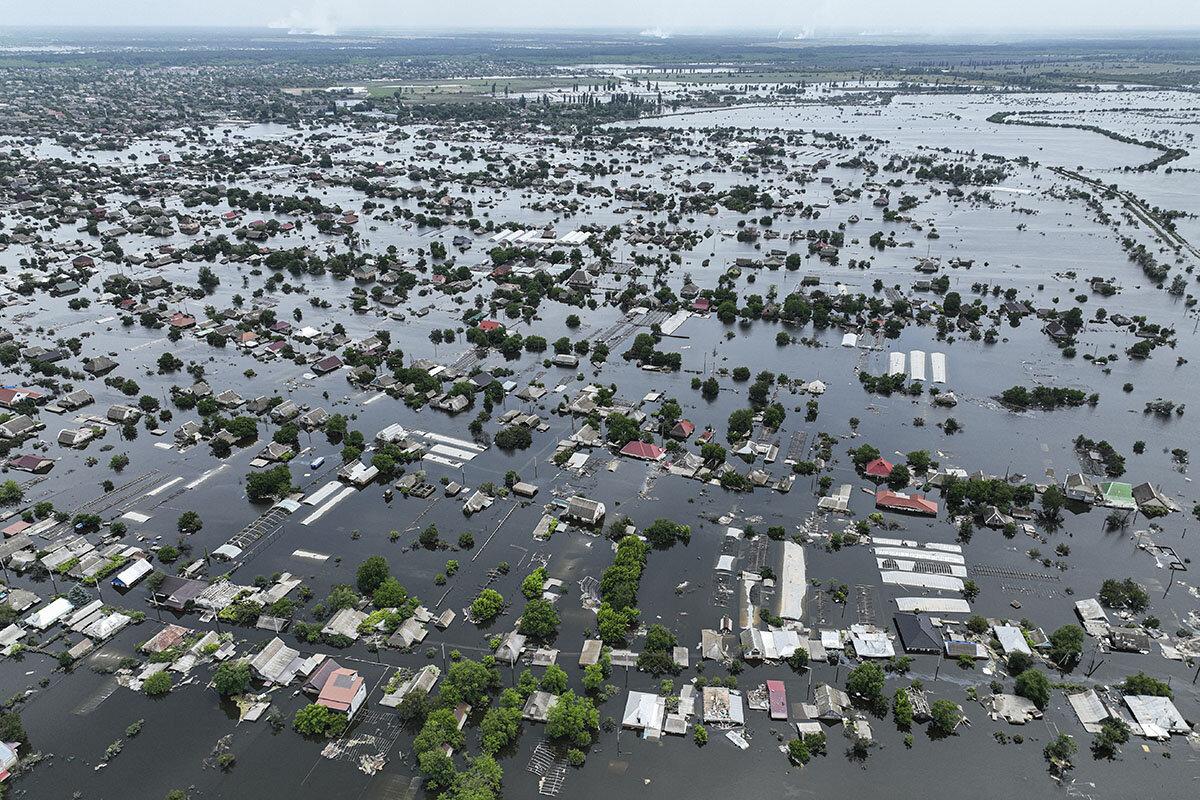
On June 6, 2023, Russia destroyed the Kakhovka Dam.
The Dnipro River swallowed Oleshky. The waters rose fifty feet. They lapped at rooftops. What the occupation hadn’t taken, the flood tried to finish.
Dima and the Bondarenkos were on higher ground—their homes were spared the water—but the reservoir that had supplied their water was gone. The city’s infrastructure collapsed entirely.
For Dima’s mother, this was the moment. She had refused to leave through occupation, through front lines, through months of threat. But when the water came for her town, something in her relented. When the whole town was forced to relocate, the paperwork to travel became—for once—almost easy to obtain.
Dima turned his home over to neighbors who had lost everything in the flood. Then he set out to find his wife and daughter.
He made it to Odesa. The Tkachenko family was whole again.
Two families were now free. The third was still waiting.
The Bondarenkos were alone now—the last ones in Oleshky.
They stayed. Sergey dug a well with his hands. They grew food. They endured. For four more years after the occupation began, Sergey and Natalia held on in the rubble of what had once been a normal life, waiting for something to change.
PART SIX: THE LAST ONES OUT
Then came the knock they had always feared.
Not literally—it was worse than that. Word reached Sergey that his cousin—a former city deputy—had a son serving in the Ukrainian army. The cousin had already been arrested and imprisoned in Crimea. In the world the Russian occupation had built, connections were currency. And guilt, in their system, traveled through bloodlines.
Sergey was related to a man whose son fought for Ukraine. That was enough.
For the first time in four years of occupation, staying was no longer a choice.
They fled through occupied territory into Crimea. The Latvian border had long since closed. They turned south, then west through the vast interior—Russia, then Belarus, then to Brest, the border city where their final stretch waited.
They walked it. Two miles on foot into Ukraine. One backpack. A lifetime reduced to what they could carry.
Sasha was waiting.
PART SEVEN: THE HOME THAT WAS WAITING
In April 2026, Sergey and Natalia arrived in Veliky Lazy. Their faces, when I sat with them to hear their story, were still blank—still in shock, still somewhere between the war they had left and the safety they had not yet learned to trust.
Ira and Anton had arrived just two days before, escaping their own kind of violence. They had not seen each other in years.
And waiting for them—all of them—was something none of them had dared to imagine: a home.
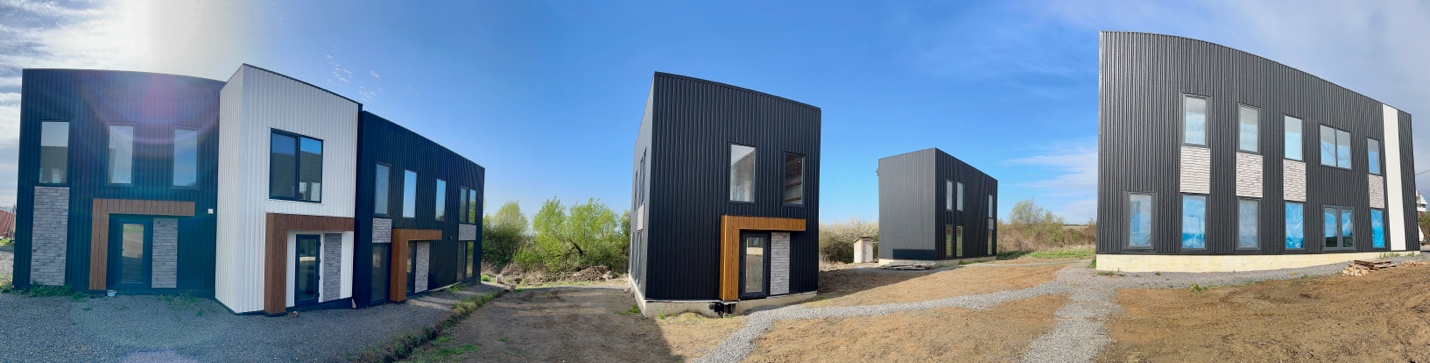
Through our ministry—made possible by the prayers and financial support of partners like you—a community of homes had been built in Veliky Lazy for families displaced by war. UMCOR, the same organization that had sheltered Ira in those desperate early days, had helped build these homes. One was left.
It had been waiting.
For them.
Now all three families are together again in safety. Sergey and Natalia are in one of the homes our ministry operates. Dima and Nina are next door, in another—their daughters still in Odesa finishing their studies, but their parents finally safe. And Sasha’s house is just across the creek, close enough to walk to. Pastor Pavel, Helena, and their five foster children are only fifteen minutes away in Uzhhorod.
The bridge that once connected them to their old life was destroyed by war. But a new bridge was built—not from steel and concrete, but from prayer, from generosity, from strangers across the world who chose to give and to believe that ordinary people in extraordinary danger were worth fighting for.
You helped build that bridge.
The families are home. It will take time—months, perhaps years—before the trauma fully releases its grip. But for the first time in four years, they are together. They are safe. And slowly, one day at a time, they are beginning to breathe again.
─────────────────────────────
Thank you for being part of this story.