
Ukraine Daily Briefing | July 4, 2026 | Day 1,592 of the Full-Scale Invasion
Prepared by Dayana Bozhyk
Russian President Vladimir Putin staged a meeting with his commanders on July 3 and 4 to claim Russian forces had seized Kostyantynivka and all of Luhansk Oblast, alongside a broader set of exaggerated advance claims that ISW’s own tracking shows overstate real Russian gains roughly five-fold. Ukraine’s military flatly denied the claims, with Zelensky calling it “yet another Russian lie designed to generate some sort of news.” Ukrainian forces struck the St. Petersburg Oil Terminal and the Kronstadt Naval Base, 850 kilometers inside Russia, and hit power infrastructure in Belgorod, as Ukraine’s General Staff reported Russian oil refining capacity has fallen to 42.47 percent of design capacity. Zelensky visited wounded soldiers in Odesa and marked July 4 by thanking the United States and speaking with President Donald Trump, who separately spoke with Putin by phone for over an hour about ending the war.
THE DAY’S RECKONING
Here is what Putin told his generals on July 3: Russian forces have seized 133 settlements and more than 3,000 square kilometers since January. Here is what ISW’s own tracking, built from geolocated footage and satellite imagery rather than a stage-managed briefing, actually shows: 64 settlements and 621.7 square kilometers. Not a rounding error — a fivefold exaggeration, delivered with a straight face, timed for a slow American holiday weekend when fewer people would be checking the math.
Ukraine spent July 4 doing two things at once: denying the lie, and giving Russia something real to worry about instead. A drone strike found the St. Petersburg Oil Terminal, 850 kilometers from the border, in Vladimir Putin’s own hometown. Zelensky spent part of the day in an Odesa hospital room, pinning medals on soldiers who won’t walk the same way again, and part of it on the phone with Donald Trump, marking an American holiday by asking, again, for the missiles that keep more of those hospital rooms from filling up. Somewhere in Moscow, Putin was on the phone too — with Trump, for over an hour, inviting him to visit Russia. Both conversations happened the same day Putin’s own general staff spokesman was telling a Ukrainian newspaper that the city Putin claimed to have captured was still, in fact, being defended by Ukrainian troops.
PUTIN’S STAGED MEETING: A FIVEFOLD EXAGGERATION
Putin met Chief of the General Staff Valery Gerasimov and senior grouping commanders on the evening of July 3, reiterating his claim that Russian forces control all of Luhansk Oblast and are advancing across the entire front. Gerasimov claimed Russian forces are advancing fastest in Sumy Oblast, northern Kharkiv Oblast, and the Oleksandrivka and Hulyaipole directions — notably not Donetsk Oblast, where Russia’s actual main offensive effort is concentrated. Putin claimed Russian forces have seized 133 settlements and more than 3,000 square kilometers since January 1; Gerasimov claimed 29 settlements and 636 square kilometers in June alone. ISW’s own tracking, based on geolocated footage and satellite imagery, shows Russian forces have seized or infiltrated only 64 settlements and roughly 621.7 square kilometers since January, and just 20 settlements and 30.42 square kilometers in June — even counting only-partially-infiltrated settlements in Russia’s favor. Commanders also claimed Russian positions 10 kilometers from Sumy City’s northern outskirts, 22 kilometers past Siversk, inside Dobropillya and Hannivka, and nine kilometers from Zaporizhzhia City’s southern outskirts; ISW’s tracking places the real closest infiltrations roughly twice as far away in most cases.
Commanders devoted substantial time to sub-tactical detail about Kostyantynivka specifically — individual battalions claimed to have seized named factories, churches, and neighborhoods — a level of granular, stage-managed reporting ISW says was designed to let Russian officials savor an “informational victory” regardless of what has actually happened on the ground. The Russian Ministry of Defense published at least ten separate pieces of flag-raising footage on July 3 alone, footage ISW says it cannot yet confirm is AI-generated but which fits a well-established pattern of manufactured claims: no footage has emerged of Russian vehicles, mortars, or artillery operating inside the city, which would indicate genuine control rather than scattered infiltration. Putin used the meeting to signal he intends to keep fighting exactly as he has, telling commanders Russian forces will expand a “buffer zone” through Sumy, Kharkiv, and Dnipropetrovsk oblasts in response to Ukraine’s long-range strikes — then immediately undercut his own security rationale by calling the same Ukrainian territory “historically Russian, Russian soil.” ISW notes that a “buffer zone” would do nothing to stop strikes carried out by drones and missiles with ranges of hundreds of kilometers, and assesses Putin is instead using Ukraine’s strike campaign as cover to justify continued offensive operations and rising Russian casualties — which, at June’s rate of roughly 1,298 per square kilometer seized, would cost Russia over 6.5 million soldiers to finish taking the rest of Donetsk Oblast alone.
UKRAINE PUSHES BACK: KOSTYANTYNIVKA STILL STANDS
Ukraine’s Eastern Group of Forces “East” and General Staff spokesperson Major Andrii Kovalev both rejected Putin’s claim on July 4, saying Russian infantry groups have entered the city but that the 19th Army Corps continues defensive operations on designated lines within Kostyantynivka and its approaches. “During July 3, the enemy carried out 11 assaults in the specified direction, but no success was achieved,” Kovalev told Ukrainska Pravda, adding that Russian commanders “not for the first time” resorted to disinformation. Zelensky raised the lie directly with German Chancellor Friedrich Merz: “If Kostiantynivka were currently under Russian control, then surely Putin would have no problem meeting me there and finding diplomatic solutions to finally end the war,” he said. Gerasimov, for his part, told Reuters the city — home to 67,000 people before the war — had fallen and called it one of the main defensive hubs of the Sloviansk-Kramatorsk-Kostiantynivka “fortress belt.” Ukrainian military sources maintain Ukrainian troops still outnumber the roughly 100 to 250 Russian infiltrators inside the city.
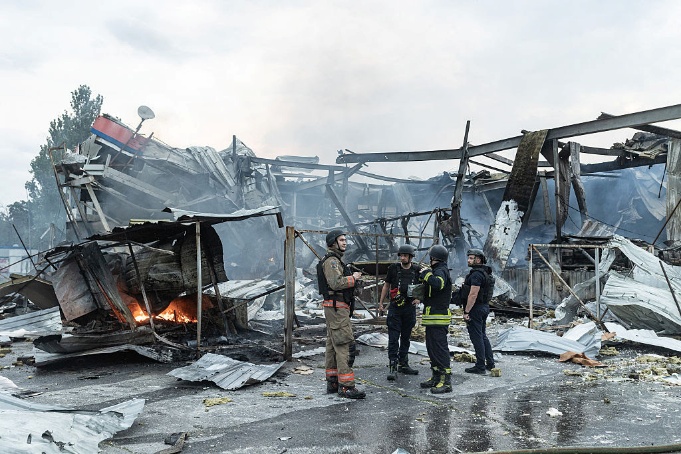
Firefighters operate near a supermarket destroyed in a Russian strike on Kramatorsk, Donetsk Oblast. (Diego Herrera Carcedo/Anadolu via Getty Images)
NO ADVANCES, FRONTLINES HOLD
Neither side made confirmed advances anywhere along the front on July 4. Fuel shortages are now visibly hampering Russian operations near Kupyansk, where Ukrainian spokesperson Colonel Viktor Trehubov said Russian logistics are struggling even as Russian forces try to cut off Ukraine’s bridgehead on the Oskil River’s west bank. Near Slovyansk, a Ukrainian brigade officer reported Russian forces have intensified to 20 to 30 assaults daily since early summer, continuing to strike civilian buildings with drones and aerial bombs; a Russian glide bomb hit a Kramatorsk shopping center, injuring at least five civilians. Near Dobropillya, a Russian milblogger himself conceded that Ukrainian Hornet drone strikes are disrupting Russian rear logistics. Russian forces made no confirmed progress in Pokrovsk, Novopavlivka, Oleksandrivka, Hulyaipole, or western Zaporizhzhia, where Ukrainian forces continued counterattacking; no ground activity was reported in the Kherson direction at all.
Ukraine’s intermediate-range strike campaign kept pace behind the line: a railway bridge over the Siverskyi Donets near Stanytsia Luhanska, a drone warehouse and repair unit near Starobilsk, a fuel and lubricant warehouse in Luhansk City, two command posts near occupied Shakhtarske, a fuel truck near occupied Berdyansk, and a Russian helicopter struck over the Sea of Azov. In occupied Crimea, USF commander Robert “Magyar” Brovdi reported Ukrainian forces struck 25 electrical substations in the first three days of July alone, with occupation officials confirming outages across more than ten raions; Ukraine’s military intelligence also released battle-damage footage confirming a June 25–26 strike on Belbek Airfield destroyed a MiG-29 and an airfield launch system, losses HUR estimated in the tens of millions of dollars.
UKRAINE STRIKES ST. PETERSBURG AND KRONSTADT
Ukrainian forces struck the St. Petersburg Oil Terminal and the Kronstadt Naval Base — the main base of Russia’s Baltic Fleet — overnight in Leningrad Oblast, roughly 850 kilometers from the border and in Putin’s own hometown, a city Ukrainian strikes have rarely reached given its concentrated air defenses. “Last night, our Ukrainian long-range sanctions against Russia over this war were carried out near St Petersburg,” Zelensky said, adding the strikes hit “port oil infrastructure that is funding the Russian war” alongside Kronstadt, “a key military target.” The terminal, one of the largest fuel transshipment points in the Baltic with a 12.5-million-ton annual capacity, caught fire, as did the naval base; St. Petersburg’s governor acknowledged a drone strike on the city, and Leningrad Oblast’s governor claimed debris fell near Vysotsk. The strike lands almost exactly a month after Ukraine’s attacks on the city during the St. Petersburg economic forum, and days after Russia’s own deadliest-ever assault on Kyiv on July 1.
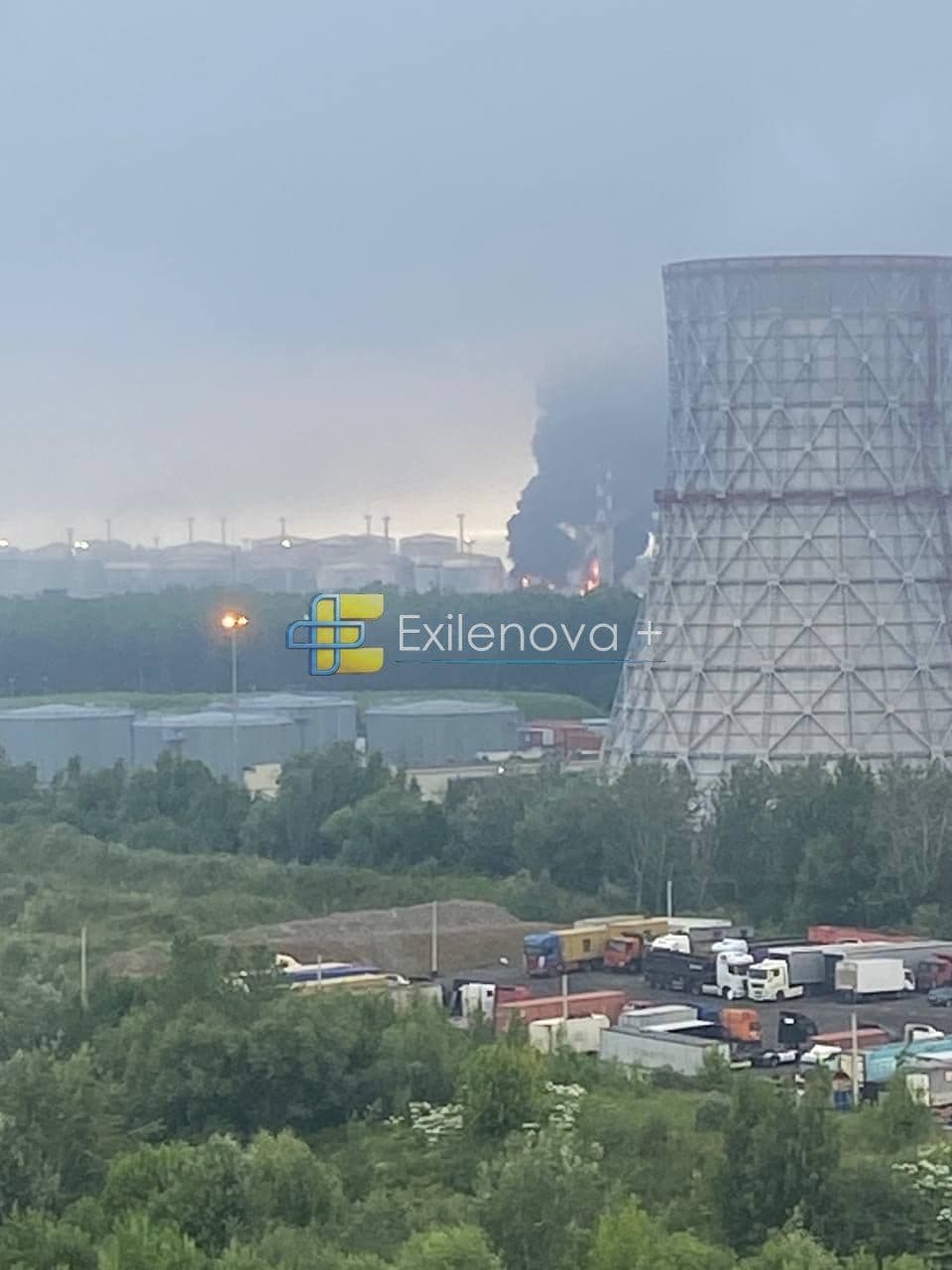
A purported photo of the aftermath of a reported Ukrainian drone strike on the St. Petersburg Oil Terminal. (Exilenova_plus/Telegram)
Ukrainian forces separately struck three electrical substations and thermal power infrastructure in Belgorod City, causing water and power outages the acting governor confirmed without disclosing targets, and Ukraine’s General Staff reported that its campaign against Russian oil infrastructure has cut national refining capacity to just 42.47 percent of design capacity as of early July — the result of strikes on eight refineries in June alone that destroyed or critically damaged more than 60 fuel storage tanks.
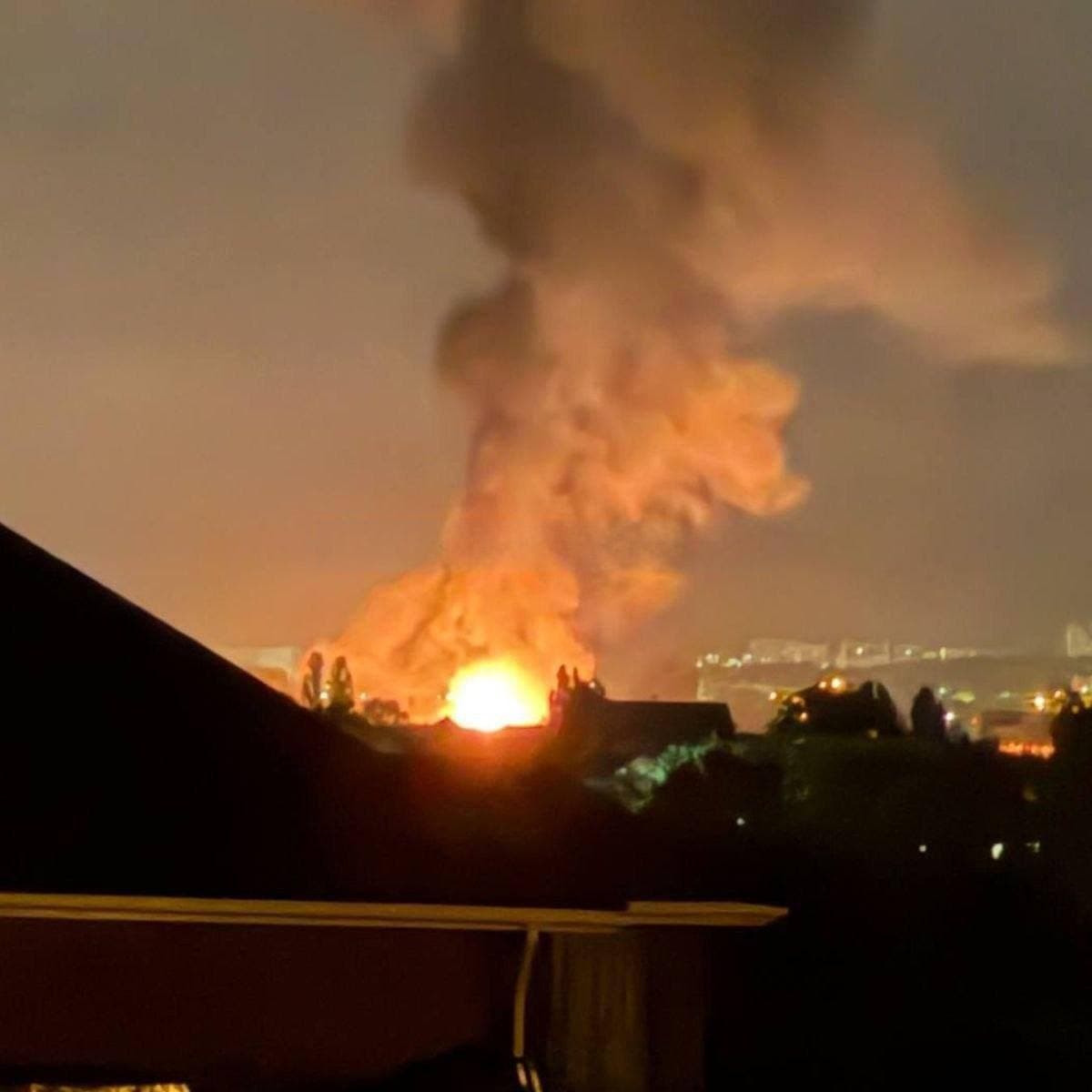
Smoke and flames rise over the Russian city of Belgorod overnight, following a reported Ukrainian missile strike on the city. (Exilenova-Plus / Telegram)
A SHOPPING CENTER, A MINE, AND A DAY OF SCATTERED STRIKES
Beyond the frontline, Russian strikes hit a wide scatter of Ukrainian cities through July 3 and 4. In Zaporizhzhia, a Russian drone strike on a Nova Poshta postal branch killed a 50-year-old driver and damaged the facility, while a separate strike damaged the regional administration building, a residential building, and several vehicles, injuring one woman. In Dnipropetrovsk Oblast, a ballistic missile strike on a private enterprise in Dnipro injured seven people aged 21 to 63; separately, a strike on a DTEK mine administration facility killed a security guard, injured five more employees, and briefly trapped 86 miners underground before all were safely evacuated. In Poltava Oblast, Russian drones struck an industrial enterprise and an energy facility, leaving roughly 600 consumers without power but causing no casualties. In Odesa, a missile strike hit a food storage warehouse, injuring two and damaging nearby facilities. Kharkiv’s Kyivskyi district saw a drone strike injure a 45-year-old woman, while an artillery strike on Bilozerka in Kherson Oblast injured a 66-year-old woman with shrapnel wounds and a concussion.
SUMY’S VICTIMS NAMED
Sumy police confirmed July 4 that the mother and daughter killed in the previous day’s guided-bomb strike on central Sumy were the wife and five-year-old daughter of an officer serving in the region’s special police battalion. The couple’s 13-year-old daughter was injured in the same strike and remains hospitalized.
ZELENSKY IN ODESA: MEDALS FOR THE WOUNDED
Zelensky visited wounded soldiers and veterans in Odesa on July 4, presenting awards to those undergoing treatment and rehabilitation. “It is good to see you. Thank you for your service, for defending our country, and for your courage,” he told them. He and First Lady Olena Zelenska separately met veterans and graduates of Ukraine’s Superhumans rehabilitation program, which began in Lviv and has since expanded to Odesa and Dnipro; Zelenska sits on the program’s supervisory board and has championed a linked mental health initiative. “One of the answers is you and your example,” Zelensky told the group, describing how Ukrainians manage to keep going despite the war’s toll. Medical staff at the facility received Ukraine’s Order of Danylo Halytskyi.
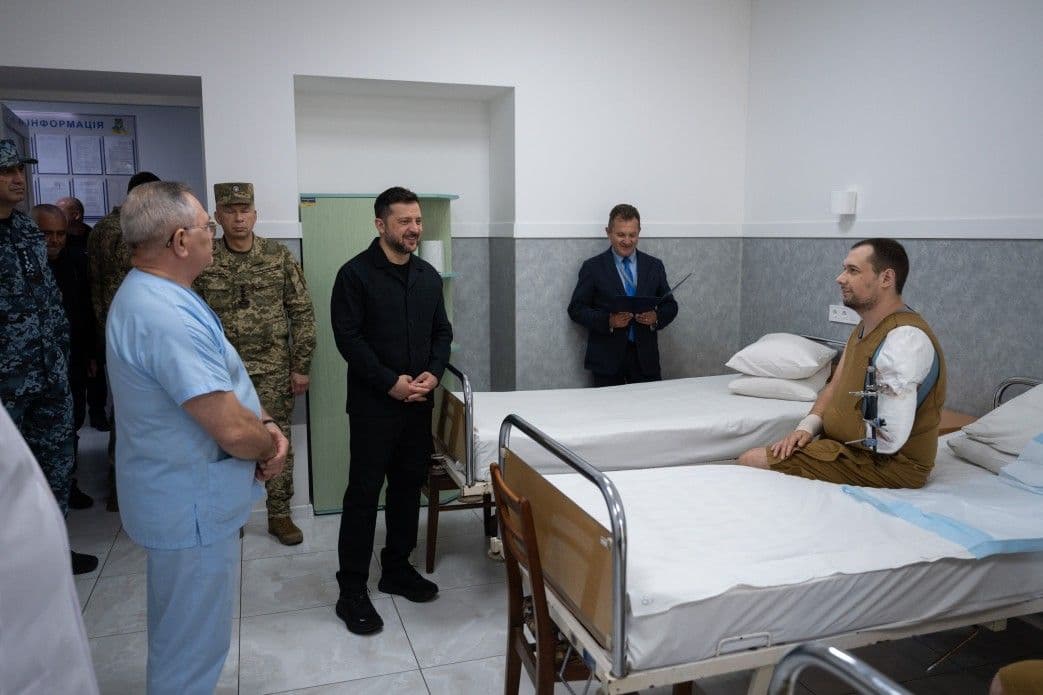
President Volodymyr Zelensky greets a wounded soldier at a hospital in Odesa. (Presidential Office)
A PANTHEON AT UKRAINE’S HOLIEST SITE
Ukraine’s Cabinet of Ministers decided July 1 to site the country’s planned National Pantheon — a memorial complex for state builders, military leaders, and cultural figures, modeled more on Paris’s Pantheon than Rome’s — on the grounds of the Kyiv Pechersk Lavra, one of the holiest sites in the Orthodox Christian world. Ukraine’s Institute of National Remembrance celebrated the decision in a July 4 post as the result of “a long journey from an idea expressed over 30 years ago.” The choice carries extra weight given the Lavra’s own Dormition Cathedral was set ablaze in a Russian strike on June 15, prompting France’s foreign minister to compare the damage to Notre Dame’s 2019 fire. The law establishing the Pantheon requires Ukraine’s Culture Ministry to weigh heritage-protection obligations before finalizing the site and to hold an architectural competition for its design.
INDEPENDENCE DAY: GRATITUDE, DIPLOMACY, AND A CALL TO MOSCOW
Zelensky marked the 250th anniversary of American independence by thanking the United States “from the Javelins that President Trump decided to give to Ukraine to the Patriots that most reliably protect the lives of our people,” drawing a direct parallel between Ukraine’s fight and America’s founding cause. He and Trump spoke by phone, agreeing to continue discussions in person at the upcoming NATO summit in Ankara; Zelensky said “there is a real opportunity to end this war, and America’s determination will be decisive.” Foreign Minister Andrii Sybiha echoed the comparison, saying Ukraine’s fight “proves that the words liberty and independence have not lost their meaning over 250 years.” Separately, Trump also spoke with Putin for more than an hour, in a call Kremlin aide Yuri Ushakov said the White House initiated; Putin invited Trump to visit Russia, the two discussed Kostyantynivka and prospects for ending the war, and Ushakov said envoys Steve Witkoff and Jared Kushner remain ready to travel to Moscow again. The dueling calls capped a day that began with Zelensky accusing Putin of choosing America’s Independence Day specifically to “lie to the world and to the President of the United States about the situation on the front.”
By the end of July 4, the day’s two phone calls to Washington said more than either side’s battlefield claims did: Kyiv still asking, patiently, for the missiles it needs to keep defending a city Moscow has already declared captured, and Moscow still calling the White House to talk about visits and vague openness, while its own general staff kept publishing footage of flags that prove nothing at all.
A PRAYER FOR UKRAINE
1. For the Wife and Five-Year-Old Daughter of a Police Officer
Lord, an officer in Sumy learned this week that his wife and five-year-old daughter did not survive a bomb meant to prove a lie about a war he still has to go fight tomorrow. His older daughter is thirteen and still in the hospital. We ask for mercy for him, for her, and for every family asked to keep serving a country that could not keep them safe.
2. For the Guard Who Died Getting Others to Safety
God of the ordinary and unnoticed, a security guard was killed today at a Dnipropetrovsk mine so that eighty-six miners underground could make it back to the surface alive. We don’t know if he thought of it that way. We ask that his family know he mattered, and we thank You that the eighty-six came home.
3. For a City the World Was Told Had Already Fallen
Father, Kostyantynivka has not fallen, whatever was announced in Moscow this week — but the soldiers still holding it are fighting under a claim broadcast to the world before it was true. We pray for their endurance, for accurate information to reach the families waiting at home, and for the day this city stops being a line on anyone’s map of contested ground.
4. For the Wounded Being Honored, and the Ones Still Arriving
Lord who heals, today President Zelensky pinned medals on soldiers rebuilding their lives in Odesa — men and women learning to walk, to work, to be home again after this war took something from them. We pray for their healing, for the program that is helping them find it, and for every soldier still on a stretcher who hasn’t reached that room yet.
5. For the Phone Calls Being Made in Washington’s Name Today
God of nations, on America’s Independence Day, Ukraine’s president called Washington to ask, again, for weapons to protect his people, and Russia’s president called the same White House to talk about a future visit. We do not know which conversation will matter more. We ask only that whichever one does, it moves this war toward its end — and that You watch over everyone still living through the time between now and then.