
Ukraine Daily Briefing | July 3, 2026 | Day 1,591 of the Full-Scale Invasion
Prepared by Dayana Bozhyk
Russian President Vladimir Putin claimed late on July 3, in a staged meeting with General Valery Gerasimov, that Russian forces had seized Kostyantynivka — a claim contradicted by all available evidence, with Ukrainian sources indicating more Ukrainian than Russian soldiers remain inside the city. The timing, ISW assesses, was designed to shape Western media coverage heading into the July 4 holiday weekend in the United States. Separately, US officials reportedly warned Poland that Russia may be weighing a limited military provocation against NATO’s eastern flank in the coming months. Russian guided bombs killed four people, including a one-year-old girl, in Sumy, and two more in Zaporizhzhia, while President Volodymyr Zelensky confirmed the death toll from July 2’s Kyiv barrage had risen to 30. Ukraine’s Security Service opened a war crimes case against Gerasimov personally, and the UN reported that Russian attacks killed 1,270 Ukrainian civilians between December and May — a 40 percent increase over the previous year.
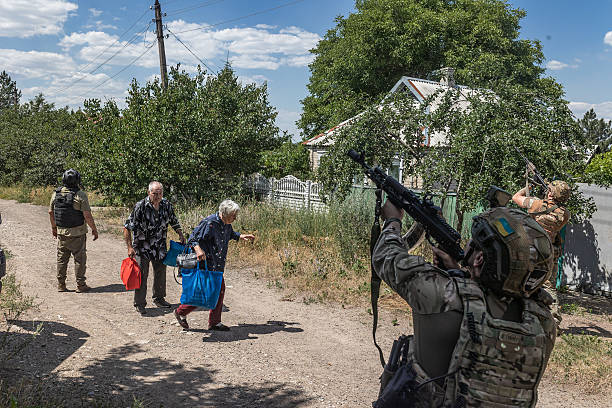
Members of the ‘White Angels’ police evacuation unit point their guns to the sky, aiming at Russian drones, as they evacuate civilians from Druzhkivka, Donetsk Oblast. (Diego Herrera Carcedo/Anadolu via Getty Images)
THE DAY’S RECKONING
Vladimir Putin sat down with his generals on the evening of July 3 and announced that Kostyantynivka had fallen. It hadn’t. Ukrainian military sources count more of their own soldiers inside the city than Russian ones — somewhere between 100 and 250 Russian infiltrators scattered among Ukrainian positions, not an army holding a conquered city. Putin has made some version of this announcement, in some contested town, roughly once a month since January, always timed for maximum press coverage. This one landed the Thursday before an American holiday weekend, when fewer editors would be at their desks to check it against a map.
Ukraine’s actual answer to Putin’s theater arrived quietly, the way it usually does now: a second strike on the Saky airfield in Crimea, seven more aircraft damaged or destroyed; a war crimes case opened against Gerasimov himself, by name, for the strikes that killed 30 people in Kyiv two nights earlier. And while Putin was staging his victory announcement, guided bombs were finding a one-year-old girl in Sumy and two men in Zaporizhzhia — the actual currency this war still trades in, whatever gets announced in Moscow that evening.
PUTIN CLAIMS KOSTYANTYNIVKA’S FALL, ON A SCHEDULE
Putin met Chief of the General Staff Valery Gerasimov and senior commanders late on July 3 and claimed Russian forces had seized Kostyantynivka, alongside a broader set of aggrandized claims about advances across the theater — including in western Zaporizhzhia Oblast, where Russian forces are actually losing ground. ISW assesses Russian forces have made only tactical gains within Kostyantynivka, holding the city with small infiltrator groups interspersed among Ukrainian positions rather than controlling it outright; Ukrainian military sources indicated roughly 100 to 250 Russian soldiers were present as of mid-June, fewer than the Ukrainian garrison as of June 23. Putin, Gerasimov, and other senior commanders have staged similar highly publicized, aggrandized claims at least once a month since January as part of a deliberate cognitive-warfare campaign aimed at convincing the West that Russian forces can rapidly overrun the entire front. Russian advances in June 2026 amounted to only a fraction of June 2025’s pace, and the broader Spring-Summer offensive has yet to achieve any operationally significant breakthrough. ISW assesses Putin likely timed the announcement specifically to dominate Western coverage heading into the American July 4 holiday weekend, when newsrooms thin out and claims go unchallenged longer. Visiting an auxiliary command post of Russia’s Joint Group of Forces the same day, Putin told commanders that “massive, coordinated strikes against the infrastructure of Ukraine’s military-industrial complex and the facilities supporting its operation must continue” — a direct justification, two days after killing 30 people in Kyiv, for continuing to frame residential strikes as military necessity.
WASHINGTON WARNS WARSAW OF A POSSIBLE PROVOCATION
Polish outlet Onet reported June 30, citing five sources including Polish special services, the Defense Ministry, and figures close to President Karol Nawrocki, that US officials have repeatedly warned Poland that Russia may be weighing a limited military provocation against NATO’s eastern flank, potentially including Poland itself, in the coming months. The scenarios described include drone strikes on critical infrastructure such as power plants, a simulated large-scale air attack designed to force Poland to activate its air defenses, or a hybrid border incursion — possibly involving Belarusian forces — that Russia could later explain away by claiming lost troops, GPS disruption, or a helicopter rescue mission gone wrong. A security source from an unspecified Baltic state separately told the Telegraph on July 2 that Moscow is discussing similar plans against the Baltic states, and that Russia may claim afterward that Ukraine, not Russia, carried out any such provocation. European security sources told the Telegraph that Russia prefers targeting Poland specifically over the Baltic states. Sources close to Nawrocki said Washington systematically briefs Warsaw on any new Russian planning against NATO’s eastern flank. ISW assesses these warnings are consistent with Russia’s broader “Phase Zero” campaign of drone incursions, sabotage, and electronic interference designed to set psychological and political conditions for a possible future confrontation with NATO — though the precise nature and timing of any operation remain unclear.
NO ADVANCES, FRONTLINES HOLD: BRIDGES, BOMBS, AND A DOCTOR KILLED IN KHERSON
Neither side made confirmed advances anywhere along the front on July 3. In the Kupyansk direction, Ukrainian forces counterattacked near Kurylivka and Kupyansk-Vuzlovyi as Russian drone activity continued preventing large-scale Russian operations across the Oskil River. Near Pokrovsk, Ukrainian 7th Rapid Reaction Corps commander Brigadier General Yevhen Lasiychuk reported Russian forces are now using modified BM-35 strike drones and occasionally Starlink terminals, conducting 70 to 80 percent of strikes with drones and the remainder with artillery. Russian forces conducted an infiltration mission in western Kostyantynivka in mid-June, geolocated only in footage published July 3, while milbloggers claimed further advances northeast of the city that ISW could not confirm. Two Ukrainian military units operating near Hulyaipole refuted Russian claims of capturing Lisne and Kopani, releasing footage showing continued Ukrainian control and reporting that Ukrainian forces destroyed the attacking Russian group and captured an infiltrator in Kopani. In the Oleksandrivka direction, the Russian Ministry of Defense claimed a seizure and published flag-raising footage ISW could not yet confirm as AI-altered, but which is consistent with a broader pattern of manufactured advance claims, given Oleksandrivka sits 15 kilometers from the nearest confirmed Russian infiltration.
In Kherson, Russian forces struck a hospital directly, killing a doctor and injuring a nurse, while no ground activity was reported in the Kherson direction itself. Ukraine’s intermediate-range strike campaign continued across occupied territory: a drone control point near occupied Ukrainsk, a Tor-M2 air defense system near occupied Smyrnove, a command post near occupied Novhorod, strikes on Russian vehicles near occupied Tokmak and in Skadovsk, and confirmation that a June 29 strike destroyed two spans of a bridge near occupied Azovske while a July 1 strike destroyed three spans of a bridge over the Kalka River near occupied Hranitne — both bridges Russian forces used to move troops and supplies to the front.
CRIMEA’S AIRFIELDS BURN AGAIN
Ukraine’s Security Service struck the Saky military airfield in occupied Crimea for the second time since July 1, damaging or destroying seven aircraft and seven hangars sheltering Su-30SM, Su-30, and Su-24 jets, and separately hit two Shahed drone hangars at the Hvardiiske airfield, confirmed by satellite imagery. Ukrainian forces also struck a railway bridge over the Krasnohvardiiske Canal used to move Russian troops and supplies across Crimea, an electronic warfare station near occupied Artemivka, and a radio intelligence unit in Sevastopol. Geolocated footage confirmed fires at Belgorod City’s Michurinskaya Thermal Power Plant substation and the Yuzhnaya Electrical Substation following a reported Ukrainian strike, which Belgorod’s occupation headquarters said also damaged unspecified infrastructure and caused outages. Separately, Russian opposition outlet The Insider reported that retired and reserve Russian officers recently took part in a wargame simulating a Ukrainian landing in Crimea, while Crimea-based partisan group Atesh reported that occupation authorities ordered municipal offices in Kerch and Feodosia to evacuate valuable documents and equipment by July 4, with some officials already relocating to Krasnodar Krai.
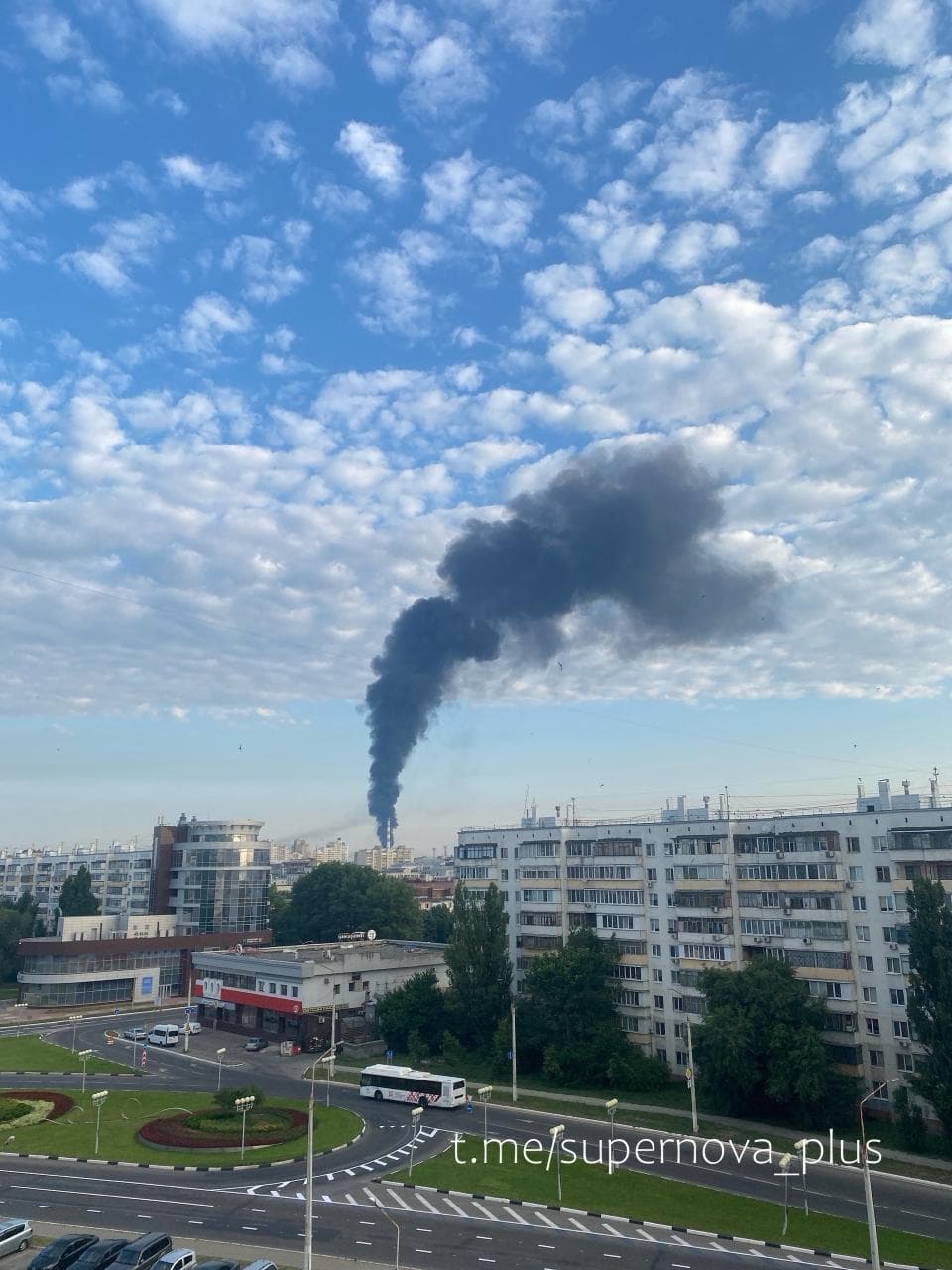
A photo of the aftermath of a purported Ukrainian strike on an energy equipment plant in the Russian city of Belgorod. (Supernova_plus/Telegram)
SUMY BURIES A CHILD: THE DAY’S TOLL BEYOND KYIV
Russian forces struck a busy central street in Sumy on the evening of July 3 with six guided aerial bombs, hitting apartment buildings and shops. Governor Oleh Hryhorov confirmed four dead — three adults and a child — and 27 injured, including seven children. The dead included a five-year-old girl who medics could not resuscitate at the scene, her 34-year-old mother, and a 61-year-old man; a 16-year-old girl was among the critically injured. “Indescribable pain,” Hryhorov wrote. “Our sincere condolences to the relatives and friends of the victims.” Zelensky wrote that Russian forces used guided bombs “directly against ordinary people in the city center” and that people could still be trapped under rubble. Separately that morning, a Russian jet-powered drone struck a gas station in Sumy’s Zarichnyi district, injuring four workers, two critically; and elsewhere in Sumy Oblast’s Romenskyi community, a Russian drone strike on a home killed a mother and her two-year-old daughter, while a further drone strike killed a 49-year-old woman.
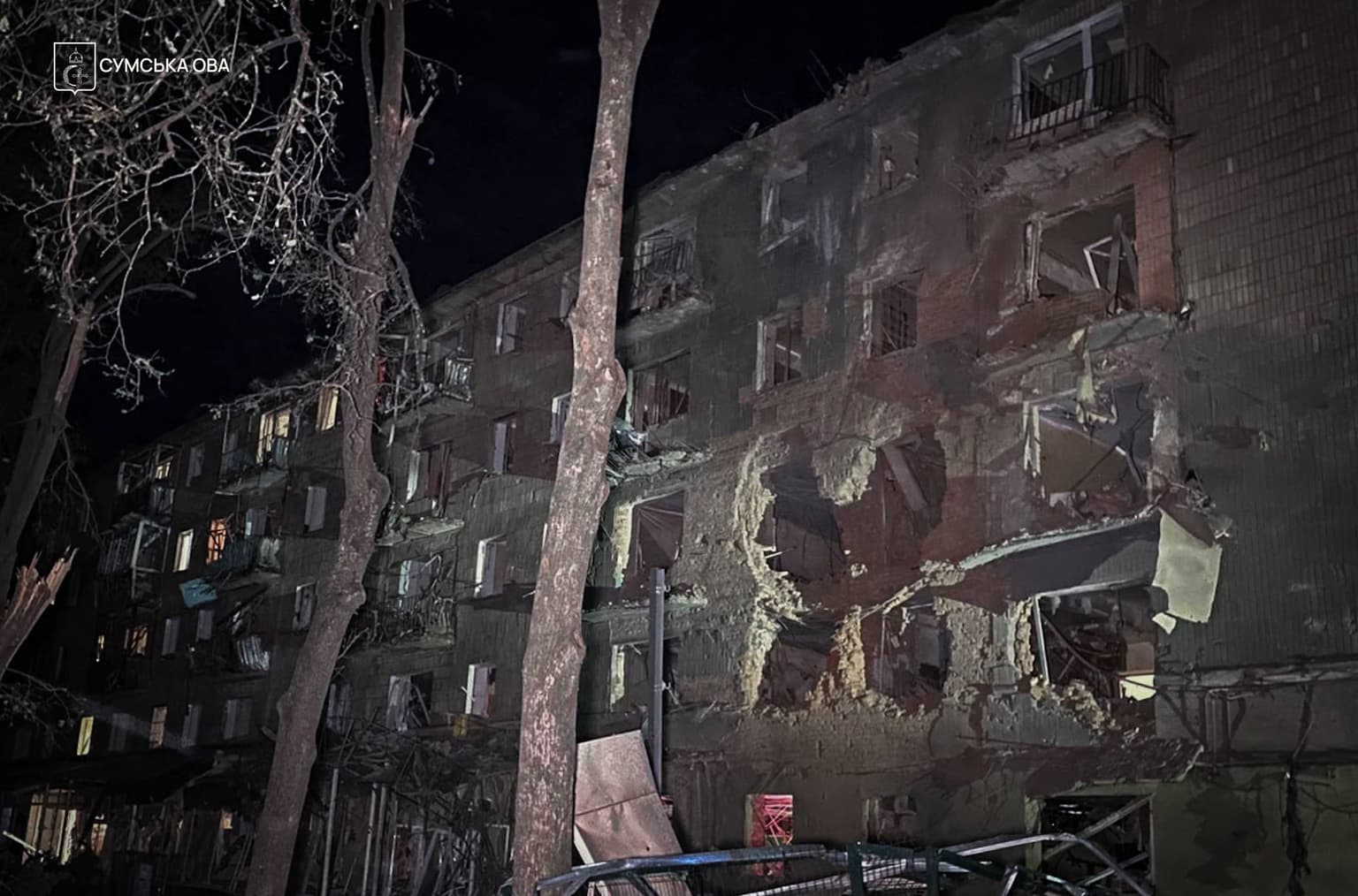
An apartment building in Sumy damaged by a Russian attack. (Oleh Hryhorov / Telegram)
The following night brought a second nationwide barrage on top of Sumy’s tragedy, killing at least 17 people and injuring 125 more across the country, including two more children killed and at least ten injured. Dnipropetrovsk Oblast lost three people, including a seven-year-old girl and a 66-year-old man, with 24 injured including an 11-year-old girl and a 14-year-old boy; a follow-up strike around 10 a.m. killed one more person and wounded five. Donetsk Oblast recorded four killed and 12 injured. Kherson Oblast — beyond the doctor killed at the city hospital — lost two more people with 16 injured. Kharkiv Oblast lost one person with 16 injured, including four children; in Losova, a Geran-2 drone struck a residential area and injured a family of six, leaving a 10-year-old girl hospitalized in critical condition with burns covering 40 percent of her body. Mykolaiv Oblast lost one person, a 45-year-old man killed when a Shahed struck a gas station, with seven more injured. Zaporizhzhia Oblast, on top of its own daytime toll, saw four children among 11 more injured overnight. Regional Zaporizhzhia officials separately confirmed the day’s earlier guided-bomb and shelling attacks killed two men and injured 19, including an 11-year-old child and two women hit in a daytime street attack. In Dnipropetrovsk Oblast’s Kryvyi Rih, an earlier overnight strike injured seven and damaged nine apartment buildings, while a gas station strike in Sofiyivka killed one person and injured three.
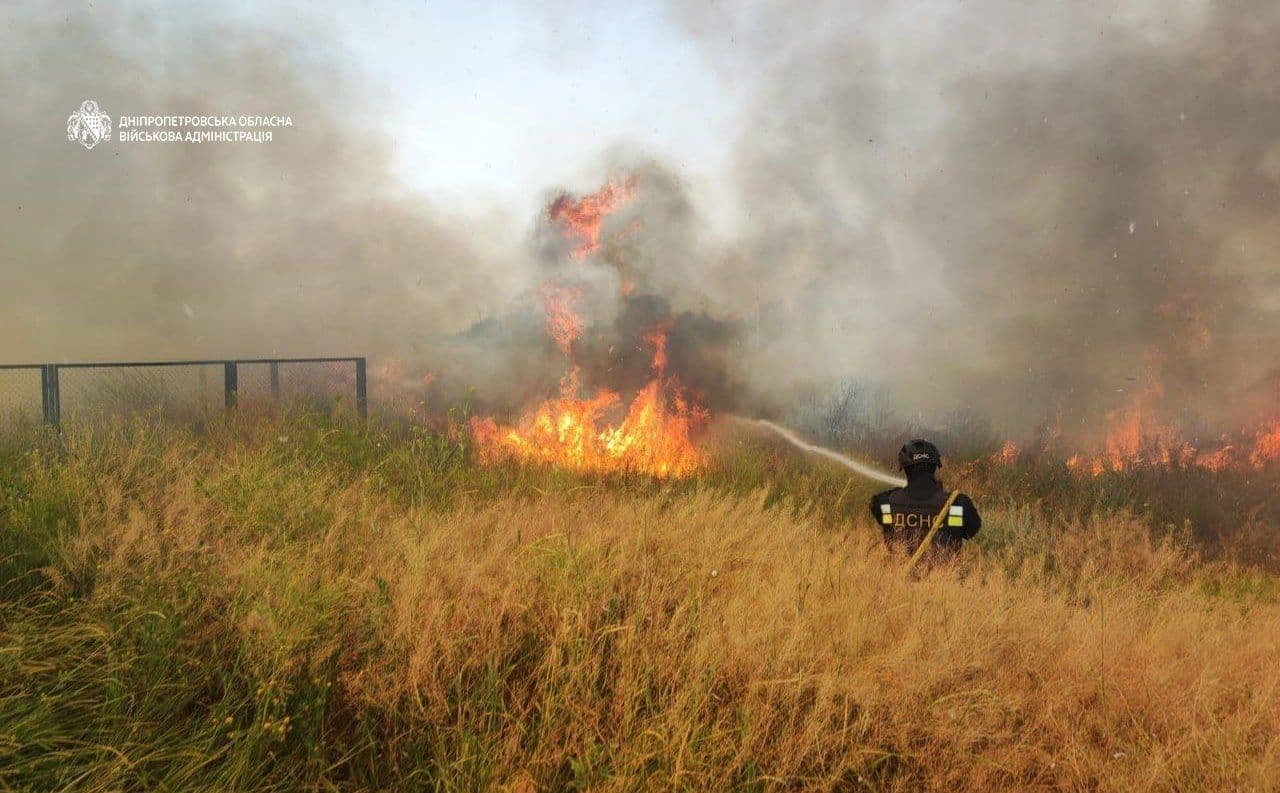
A firefighter extinguishes a fire after a Russian attack on Dnipropetrovsk Oblast overnight. (Local authorities/Telegram)
Amid this, Zelensky confirmed the confirmed death toll from Russia’s July 2 barrage on Kyiv had climbed by nine to 30, with ten people still listed missing and search operations continuing at three sites for a second day; the attack had damaged 40 locations across the capital. Smoke from the fires and windless, hot weather pushed Kyiv’s air quality to hazardous levels, with PM2.5 readings hitting 160 — on par with New Delhi — prompting officials to urge residents to keep windows shut and stay indoors until rain arrived. Ukraine’s State Emergency Service called it the largest assault on Kyiv’s residential sector of the entire war, noting rescue crews came under repeated strikes at nearly every site while searching for survivors.
KYIV OPENS A WAR CRIMES CASE AGAINST RUSSIA’S TOP GENERAL
Ukraine’s Security Service, working with the Prosecutor General’s Office, opened criminal proceedings against Gerasimov personally, citing his direct role in planning and organizing the missile and aviation strikes on Kyiv and Kyiv Oblast, carried out using Kh-type, Kinzhal, Kalibr, Iskander, and Zircon missiles alongside Shahed-type drones. Investigators are proceeding under Article 438 of Ukraine’s criminal code, covering violations of the laws and customs of war. Gerasimov, chief of the Russian General Staff since 2012 and overall commander of Russian forces in Ukraine since January 2023, is already subject to an International Criminal Court arrest warrant issued in June 2024 over strikes on Ukrainian electrical infrastructure. Separately, Zelensky announced that the Netherlands has agreed to host the Special Tribunal for the Crime of Aggression against Ukraine, calling it a “historic decision” that will allow Russia’s top political and military leadership to be prosecuted specifically for launching the war, not only for its consequences; the tribunal, backed by 36 countries and the EU, will work alongside the ICC, which handles individual war crimes rather than the decision to invade itself.
RUSSIA’S FUEL CRISIS DEEPENS
Reuters reported July 3 that Russia will begin importing jet fuel from Japan within weeks, routed through intermediaries in South Korea to obscure its final destination, while Prime Minister Mikhail Mishustin signed decrees temporarily lowering the required domestic exchange sale of gasoline from 15 to 10 percent of production and permitting refineries to produce lower-grade Euro-3 gasoline through September. Neither measure has stopped the shortages: Telegram footage showed long lines at a Rosneft station near Chita, and Novorossiysk in Krasnodar Krai briefly suspended all gasoline sales citywide on July 3, with eight stations left selling only diesel. A State Duma deputy publicly blamed federal authorities for failing to manage the crisis, which ISW says now affects occupied Ukraine and nearly every Russian federal subject except five. Ukraine, meanwhile, is discussing a new sanctions mechanism with the European Commission specifically targeting countries that export gasoline to Russia; presidential sanctions commissioner Vladyslav Vlasiuk said Russia has already begun importing gasoline from India and Kazakhstan and roughly 100,000 to 150,000 tons monthly from Belarus, even as Russia’s own fuel production fell 25 percent year-on-year in June.
CONSCRIPTION BY FORCE: PRESS GANGS IN PENZA
Russian nationalist commentator Sergei Morozov reported that police in Penza and nearby Kamenka and Kuznetsk have been detaining men off the street — outside shops, on public transport, leaving their own homes — and delivering them to military recruitment offices, where witnesses say they faced beatings and sleep deprivation until they “voluntarily” signed military contracts. If confirmed, rights researchers say the incidents, affecting several dozen men, would mark Russia’s first documented use of public press gangs during the war. Morozov was briefly detained by the FSB after publicly warning that such tactics risked provoking attacks on recruitment centers, and now faces a criminal charge carrying up to five years in prison for “seditious speech.” Local witness Natalya Solomyna’s June videos of women confronting recruiters outside enlistment offices drew wide attention before Penza’s military commissar dismissed them as staged; Penza authorities deny running press gangs but confirm conducting “targeted raids” against “migrants and draft dodgers.” Enlistment bonuses in Russia currently range from roughly $10,300 to $58,000 depending on region, with monthly pay of $2,700 to $4,000 — figures that have evidently stopped being enough on their own.
A NEW AUTONOMOUS DRONE THREAT IN ZAPORIZHZHIA
Ukrainian defense technology adviser Serhiy “Flash” Beskrestnov reported July 3 that Russia has begun mass-deploying an autonomous, AI-controlled version of its Molniya attack drone in Zaporizhzhia Oblast, warning that “drone detectors no longer save you” since the new variant needs no operator link and therefore emits almost no detectable signal. Ukrainian intelligence separately confirmed Russia has upgraded reconnaissance-focused Molniya-2R drones with Starlink terminals and 10x optical zoom cameras, part of a broader expansion of AI-enabled Russian drone warfare that Ukrainian forces are still working out how to counter.
ZELENSKY: UKRAINE CAN OUT-PRODUCE RUSSIA
Following a meeting of the Supreme Commander-in-Chief’s Staff with Ukraine’s leading arms manufacturers, Zelensky said Ukraine has reached a production capacity that could, over the long term, exceed Russia’s in high-tech weapons, covering drones, ground robotics, missiles, and electronic warfare systems. He instructed the foreign and defense ministries to intensify efforts to secure additional international financing, said air defense would remain Ukraine’s top diplomatic priority in all upcoming talks, and announced a review of Ukraine’s domestic ballistic missile and anti-ballistic defense programs. Separately, Ukraine approved a new regulatory framework requiring foreign volunteers to enlist only through vetted, government-accredited Ukrainian companies that must post a roughly $112,000 security deposit and guarantee legal compliance, covering everything from visas and transport to medical checks and eventual contract signing — a shift Defense Minister Mykhailo Fedorov said would let Ukraine “systematically strengthen combat units while preserving the lives of Ukrainian service members.”
GERMANY CONFRONTS CHINA OVER SECRET MILITARY TRAINING
Germany’s Foreign Ministry summoned China’s ambassador July 3 after Reuters reported that Chinese military facilities secretly trained Russian soldiers last year in a program personally approved by Russian Defense Minister Andrei Belousov, involving at least four senior Russian and Chinese officers and including a three-week course in Beijing on radiological, biological, and chemical defense. “China’s decisive and growing support for Russia’s brutal war of aggression directly impacts our security,” a German ministry source said. China’s embassy called the allegations “entirely unfounded,” maintaining its position on the war “has remained consistent.” EU foreign policy chief Kaja Kallas said last month that Brussels had independently confirmed the training occurred and is assessing further measures, building on earlier Reuters reporting that roughly 200 Russian soldiers trained in China in late 2025 before some deployed to Ukraine.
THE UN’S NUMBERS: A 40 PERCENT SURGE IN CIVILIAN DEATHS
UN High Commissioner for Human Rights Volker Türk told the Human Rights Council July 3 that Russian attacks killed 1,270 Ukrainian civilians and injured more than 6,850 between December 2025 and May 2026, a 40 percent increase over the prior year, with 96 percent of casualties occurring in government-controlled Ukrainian territory. He cited a mid-May barrage that killed 27 and injured 83 across eight regions, and noted short-range drone strikes near the front caused a 57 percent jump in casualties, killing roughly 380 people and injuring more than 2,000 — including strikes on clearly marked humanitarian vehicles. Türk’s office has verified the execution of at least 20 captured Ukrainian servicemen since mid-November, and said virtually all of 129 released Ukrainian POWs interviewed described torture or ill-treatment in captivity, including sexual violence. He also cited a Ukrainian strike on an educational complex in Russian-occupied Starobilsk on May 22 that killed 21 civilians, and noted Russian authorities claim 205 civilians killed and 1,302 injured on Russian territory over the same period — a figure his office cannot independently verify, since Moscow continues denying access. Türk also reported that Russian occupation authorities continue forcing residents to swear allegiance to Russia and conscripting them into the Russian military, that courts have issued arrest warrants or fines against more than 160 people for anti-war or pro-Ukrainian speech, and that nearly 40,000 residential properties were at risk of confiscation as of December. He cited Yale’s Humanitarian Research Lab finding that more than 35,000 Ukrainian children have been identified as transferred to at least 210 facilities across Russia and occupied territory, and noted that on June 29, Russian courts sentenced three employees of a queer club to up to seven years in prison — the first criminal case explicitly tied to Russia’s “LGBT movement” extremism designation. Calling the war a driver of instability that has now caused more than two million military casualties combined, Türk urged renewed negotiations toward “a sustainable peace, grounded in human rights.”
SANCTIONS SPLITS AND A DIPLOMATIC RESET WITH POLAND
EU unity is fraying on two fronts. Italy joined Bulgaria in objecting to a proposed visa ban on Russian Orthodox Patriarch Kirill, a vocal Kremlin ally facing Ukrainian war crimes charges since 2023, with Rome citing discomfort over sanctioning a religious leader and Bulgaria citing its large Orthodox population. Separately, EU diplomats clashed over whether to freeze the $44-a-barrel cap on Russian oil at its current level rather than let it rise automatically past $64 following Middle East-driven price spikes, with Greece, Malta, and Cyprus — all significant shipping nations — opposing any delay. Amid this, Ukrainian Foreign Minister Andrii Sybiha traveled to Warsaw and proposed a package of “anti-crisis steps” to Polish counterpart Radosław Sikorski: joint foreign-ministry consultations, a meeting of the World War II historians who took part in May’s Polish-Ukrainian Congress, and outreach to religious leaders in both countries. “It is time to set emotions aside,” Sybiha said. “History will not forgive us if this opportunity is squandered.” Polish Prime Minister Donald Tusk, asked about reports of a possible Russian provocation, said Poland was “preparing for various scenarios” and that “the coming months could truly be critical” — while separately cautioning that Warsaw should be careful pledging further aid to Kyiv at the coming NATO summit, arguing Poland already carries the primary burden of defending the EU’s eastern border. NATO allies are expected to pledge €70 billion for Ukraine in 2026–2027 at the Ankara summit July 7–8, though Bloomberg reported the figure includes no genuinely new money, simply repackaging NATO’s existing annual pledge with EU loan funding. In Chișinău, Moldovan Prime Minister Alexandru Munteanu resigned July 3 over what he described as being unable to govern “in accordance with my principles,” with President Maia Sandu confirming the split was over her wanting more involvement in complex decisions.
Separately, EU civil servants agreed July 3 to let Ukraine and Moldova submit negotiating positions on a second EU accession cluster, covering foreign-policy alignment — a modest step forward after Hungary spent weeks blocking any further progress beyond the first cluster opened in mid-June. A formal signing ceremony is expected July 14, leaving Ukraine two of six clusters unlocked, with the remaining four, covering harder issues like agricultural competition, still requiring unanimous EU approval. The news came as Ireland formally assumed the EU’s rotating Council presidency July 1, with Taoiseach Micheál Martin naming EU integration a top priority.
A BOMBING IN MONACO
Monaco issued an Interpol red notice July 3 for a 39-year-old Ukrainian woman, Anastasiia Berezovska, believed to be hiding in Germany, in connection with a June 29 bomb that tore through an apartment building and severely injured Dnipro-born businessman Vadym Iermolaiev and his partner, Anna Nasobina, who has reportedly had both legs amputated. Iermolaiev, once among Ukraine’s richest people before he took Cypriot citizenship in 2019, has been under Ukrainian sanctions since 2023, including a decade-long freeze on his financial operations in the country. French media reported his son Artur was arrested in Cyprus in December over alleged scam call centers that defrauded victims of roughly $114 million; the motive behind the Monaco bombing remains unknown.
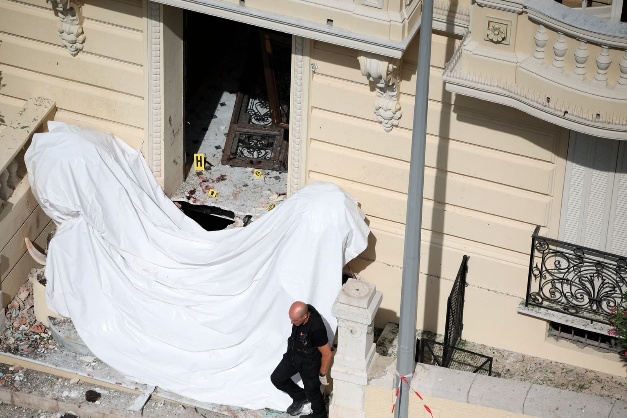
A member of a bomb disposal team operates in the lobby of the residential building in Monaco where the night before Vadym Yermolaiev and his partner were seriously injured in an explosion. Photo: Valery Hache/ AFP via Getty Images.
LITHUANIA MOVES TO ALLOW NUCLEAR WEAPONS ON ITS SOIL
Lithuanian President Gitanas Nauseda said July 2 that leaders of the country’s parliamentary factions have agreed in principle to remove the constitutional article banning weapons of mass destruction and foreign military bases, calling the ban “obsolete” amid Germany’s permanent troop deployment to Lithuania and France’s expanding nuclear-umbrella offer to Europe. “It would be truly unfortunate if we became the weak link or a grey zone within NATO,” Nauseda said, noting Lithuania already spends 4 percent of GDP on defense, second only to Poland in the alliance, and hosts up to 5,000 permanently stationed German soldiers. Lawmakers must still decide whether to pursue the change through parliament or a referendum.
SMALLER STORIES: A CAR BOMB, A TRAINING PROGRAM, A FUNERAL IN TEHRAN
An explosive detonated against a car carrying Rylsk Raion administration officials in Russia’s Kursk Oblast on July 3, injuring the raion head and three colleagues; Kursk’s governor did not identify who was responsible. Belarusian Security Council Secretary Alexander Volfovich urged Belarusians to avoid traveling to Russia after Russian sources accused Ukraine of drone-striking a Minsk-to-Krasnodar passenger bus — a claim Ukraine’s General Staff again denied as a fabricated distraction from Russia’s own strikes on Kyiv, noting Belarusian officials themselves stopped short of blaming Ukraine directly. The UK’s Operation Interflex, which has trained more than 63,000 Ukrainian soldiers since 2022, announced it is shifting from mass infantry instruction toward specialist aviation, medical, engineering, and helicopter training as Ukraine’s needs evolve into a fifth year of war. And in Tehran, former Russian President Dmitry Medvedev arrived for the funeral of Iran’s Supreme Leader Ali Khamenei, with ceremonies running July 4 through 9 ahead of burial in Mashhad.
By the end of July 3, Vladimir Putin had announced a city that never fell, and the war had gone on exactly as it does on days when nothing gets announced at all: a doctor dead in a Kherson hospital, a one-year-old girl dead in Sumy, a general in The Hague’s crosshairs by name for the first time, and a UN office in Geneva quietly confirming, with real numbers, what everyone living through this already knew — that it has gotten worse, not better, and that the gap between what Moscow claims and what actually happens keeps growing wider than any single map can show.
A PRAYER FOR UKRAINE
1. For the One-Year-Old Girl and Her Mother in Sumy
Lord, a guided bomb found a Sumy street today and took a one-year-old girl and, alongside her, the mother who was holding her. We do not have the words for a loss like that. We ask only for mercy for whoever is left to grieve them, and for the strength of the responders still working through rubble to bring home everyone still missing.
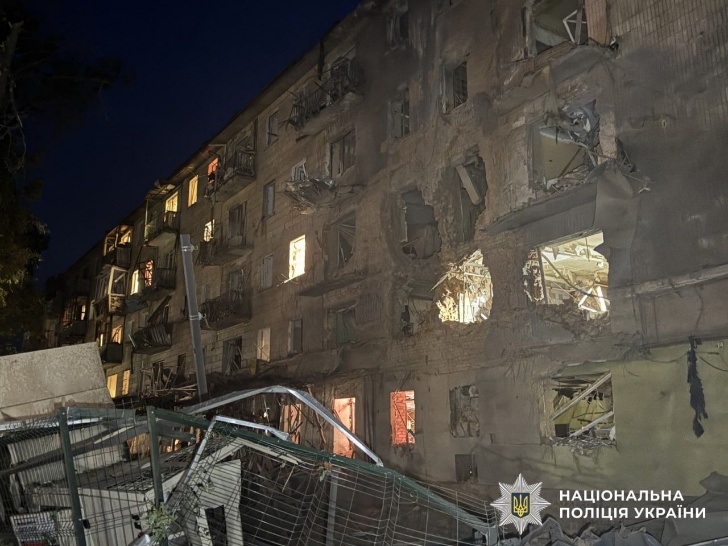
The aftermath of a Russian airstrike against a residential building in central. (Ukraine’s National Police / Telegram)
2. For the Doctor Killed at His Post in Kherson
God who heals, a doctor died today doing his job inside a hospital that a Russian strike hit directly, and a nurse beside him was hurt. We pray for the people he can no longer treat, for his colleagues who kept working anyway, and for every medical worker in this country who goes to a hospital each morning knowing it might be struck.
3. For the Prisoners Who Came Home Broken, and the Twenty Who Never Will
Father, the UN confirmed today that at least twenty captured Ukrainian soldiers have been executed since November, and that nearly every released prisoner it interviewed described torture. We pray for the ones still held, for the families who don’t yet know which category theirs falls into, and for whatever justice a war crimes case against a single general can begin to offer a country owed so much more of it.
4. For a Country Being Told, Again, That It Has Already Lost a City It Hasn’t
Lord of truth, tonight Vladimir Putin announced Kostyantynivka has fallen, and by every account that matters, it hasn’t. We pray for the soldiers still holding that ground against a claim broadcast to the world before it was true, and for their families watching the news and trying to decide which version to believe.
5. For Every Family in Poland, the Baltics, and Ukraine Bracing for What Comes Next
God of peace, this week brought word that Russia may be planning a provocation against Poland or the Baltic states, on top of everything already aimed at Ukraine. We pray for the wisdom of everyone trying to prevent that from happening, and, in Your mercy, for an end to this war before it finds a way to reach even more of Your children than it already has.