
Ukraine Daily Briefing | Monday, July 13, 2026 | Day 1,601 of the Full-Scale Invasion
On July 13, 2026, a Russian strike set a Togo-flagged cargo ship ablaze as its crew unloaded fertilizer in the port of Odesa, killing five people — three of them foreign sailors — while twenty-five heads of state gathered in Paris to launch an Anti-Ballistic Missile Coalition built around Ukraine’s homegrown Freya interceptor. Ukraine’s drone blockade of the Sea of Azov reached 105 vessels in eight days and left the water nearly empty, while in occupied Crimea gasoline became more expensive than vodka. It was the day Europe promised Ukraine a shield — and Russia showed again exactly why it needs one.
The Day’s Reckoning
Picture the deck of a cargo ship flying the flag of Togo, tied up at an Odesa berth, cranes swinging mineral fertilizer out of its holds. Then the strike — fire racing through the superstructure, rescuers pulling bodies from the smoke, the toll climbing from three to five as the flames die down.
Fifteen hundred kilometers west, chandeliers burn at Les Invalides, where twenty-five heads of state sit down with Volodymyr Zelensky to promise Europe a missile shield of its own — and to keep their seats for a Bastille Day parade dedicated to Ukraine.
In the Sea of Azov, satellite radar shows a sea nearly swept clean: 132 vessels a week ago, 43 now, after Ukrainian drones hit their 105th ship. And at Crimean gas stations, drivers film receipts proving that a liter of gasoline costs more than a liter of vodka.
A shield promised in twelve months. Sailors dead by nightfall. A blockade nobody declared, working anyway. Day 1,601, when the war’s arithmetic — of alliances, of fuel, of ordinary lives — all came due at once.
Five Dead at the Fertilizer Berth: Russia Strikes a Togo-Flagged Ship in Odesa
The ship had nothing to do with the fighting. A civilian merchant vessel under the Togolese flag lay moored in the port of Odesa, its crew unloading mineral fertilizer — cargo for farms, not armies. The Russian strike hit the superstructure, and the ship caught fire. First reports counted three dead and five wounded. Then rescuers, working through the flames, found two more bodies. By evening the toll stood at five killed, including three foreign crew members, with ten injured sailors in Ukrainian hospitals.
“Such attacks threaten the safety of international navigation, the stability of global trade, and the world’s food security,” said Oleksii Kuleba, Ukraine’s deputy prime minister for restoration. The Sea Ports Administration counted the wider cost: six people killed at Ukraine’s ports within days — “port workers, drivers, and sailors who were doing their jobs and had nothing to do with the fighting.”
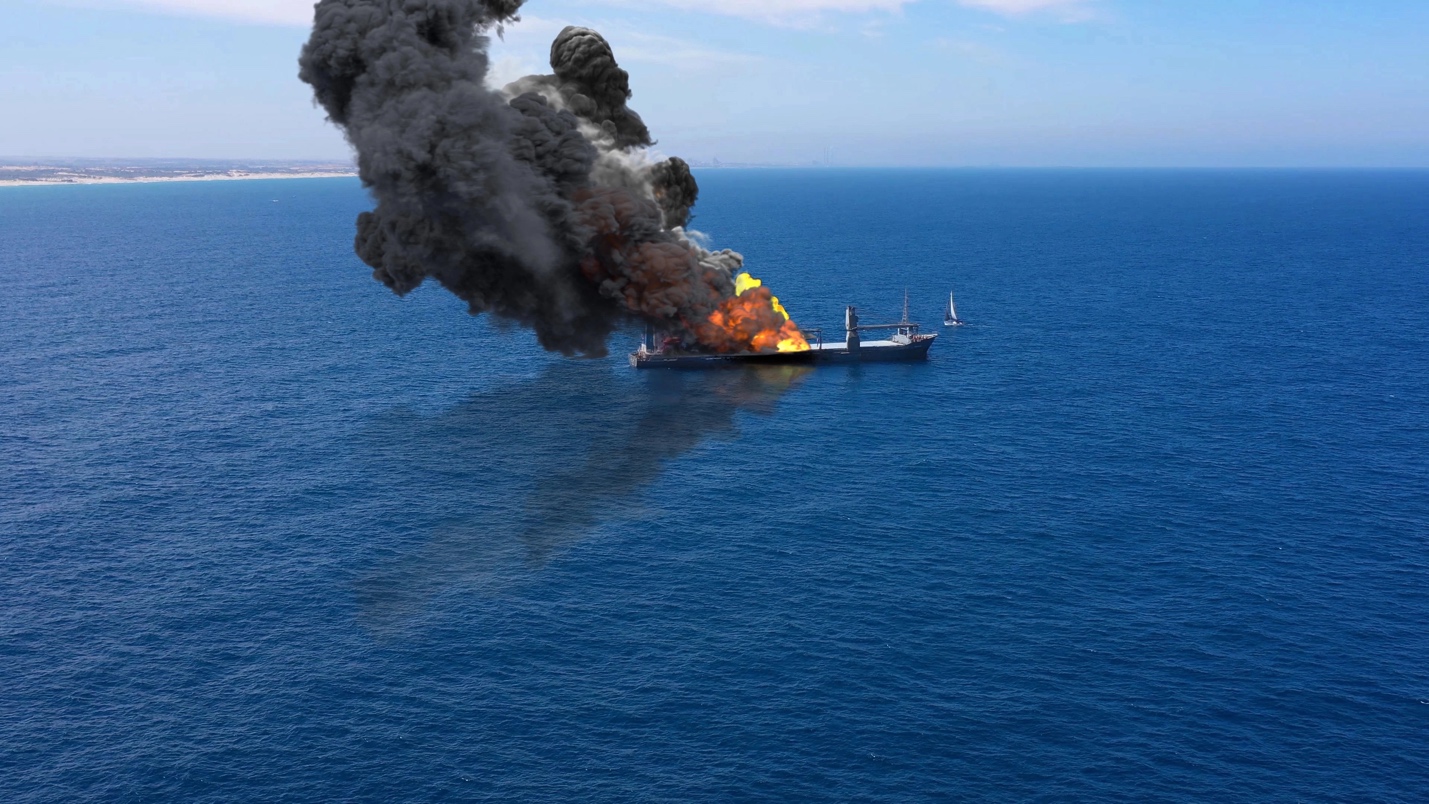
The pattern is systematic. Grain exporter Kernel Holding reported the same day that Russian strikes on the Chornomorsk port on the nights of July 10–11 and 11–12 destroyed, damaged, or blocked 45,000 tons of wheat and 9,000 tons of sunflower oil, wrecking silos, storage tanks, power lines, and the loading equipment that moves Ukrainian food to the world. Russia has hammered Black Sea ports and commercial shipping throughout the full-scale invasion, even after a maritime corridor reopened grain exports; by Kyiv’s count, submitted to the International Maritime Organization in June, Russia has attacked 59 merchant vessels since 2022.
Ships flying African flags, carrying fertilizer and wheat. This is what Russia’s war looks like at the waterline — and why Ukrainian officials insist the world’s food supply is under fire too.
Les Invalides: Twenty-Five Leaders, One Parade, No Ceasefire
Beneath the dome that holds Napoleon’s tomb, representatives of all 37 members of the Coalition of the Willing took their seats on Monday — at least 25 of them heads of state — for the group’s most consequential gathering since France and Britain founded it. The agenda began and ended with air defense: Ukraine’s interceptor stocks have been strained by weeks of intensified Russian ballistic missile attacks, and the coalition weighed mustering more U.S.-designed Patriot interceptors, deploying additional French-Italian SAMP/T systems, and developing a cheaper European-Ukrainian alternative.
Military sources said the summit would announce the first joint exercises of the Multinational Force for Ukraine — the reassurance force intended for deployment once fighting ends. France, Britain, and Spain have said they are prepared to send troops; the Kremlin has warned it would treat any foreign forces in Ukraine as “legitimate targets,” and spokesman Dmitry Peskov dismissed the gathering as a “coalition of warmongers.”
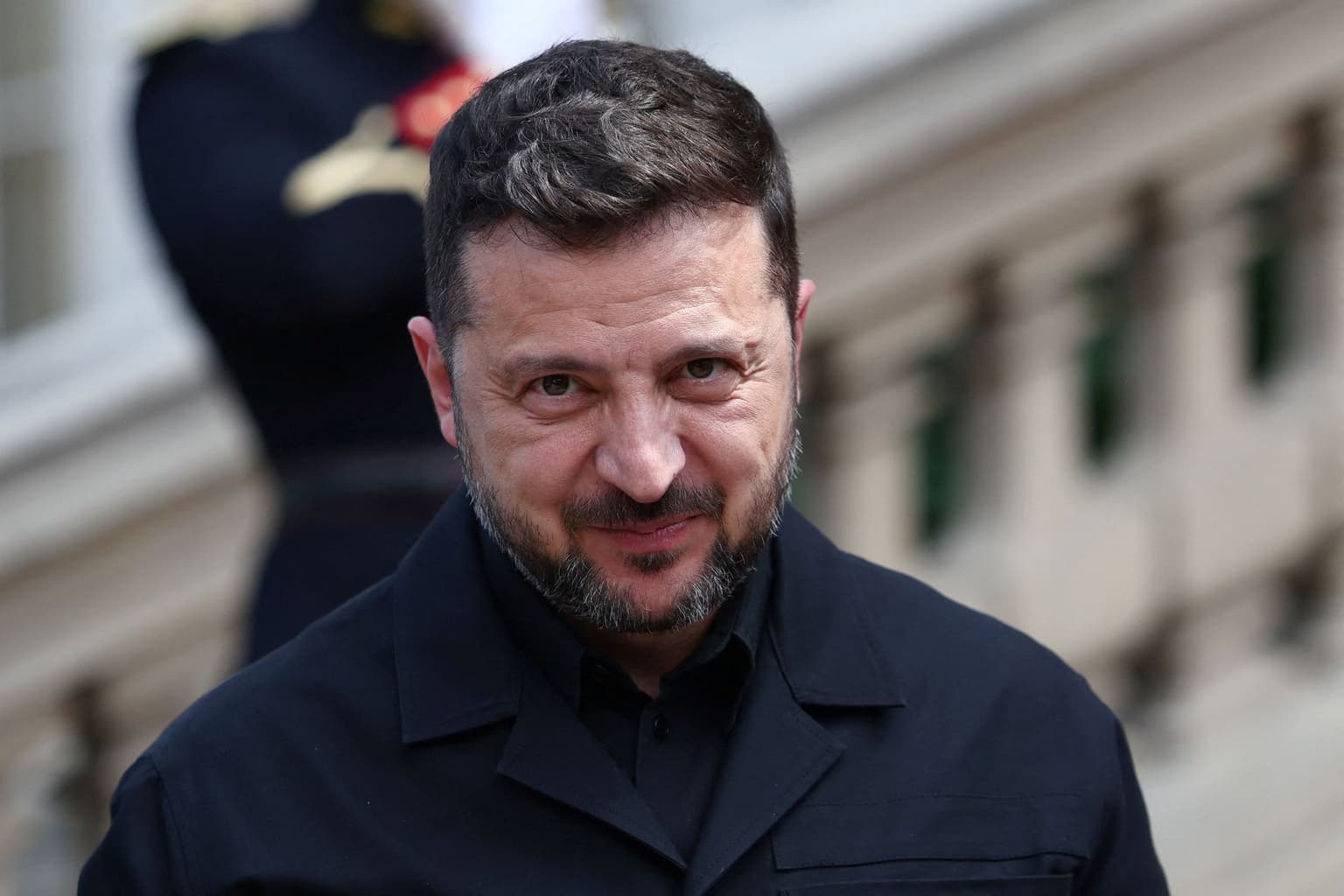
The United States is not a formal member and rules out ground troops, though it says it would help monitor a ceasefire. But the American drift was unmistakable. Donald Trump signaled greater support at the June G7 and at the NATO summit in Ankara on July 7–8, where Washington confirmed it would license Ukraine to produce Patriot missiles. Congress advanced bipartisan legislation targeting buyers of Russian energy. Trump has even privately urged Zelensky to act more boldly — reportedly impressed by a Ukrainian campaign that has halved Russia’s rate of advance this year.
The leaders will stay for Tuesday’s Bastille Day parade on the Champs-Élysées, dedicated this year to Ukraine. Macron, addressing troops before the holiday, pledged to defend peace and the rule of law “at the cost of blood if necessary.” No ceasefire exists. The Paris Declaration’s monitoring framework, adopted in January, still waits for a war that refuses to pause.
Freya’s Shield: Ukraine and Nine Nations Launch the Anti-Ballistic Coalition
The summit’s concrete deliverable came with a Norse name. Denmark, France, Germany, Italy, the Netherlands, Norway, Spain, Sweden, and the United Kingdom joined Ukraine in a joint declaration establishing the Anti-Ballistic Missile Coalition — a pledge, citing the growing Russian missile threat, to “build a shared anti-ballistic missile capacity for Europe.”
At its center is Freya, designed by the Ukrainian company Fire Point as an affordable counterpart to the American Patriot — a system able to intercept ballistic missiles, the weapons Ukraine struggles most to stop. Zelensky stressed that Freya is not meant to replace European capabilities but to supplement them: a way to “create a strong shield over the entirety of Europe” faster and at lower cost. He hopes the system can be up and running within twelve months. Around the table sat Europe’s defense-industrial establishment — Thales, HENSOLDT, Diehl Defence, Saab, Kongsberg, Weibel, Leonardo, MBDA, Eurosam, Safran, and Destinus, alongside Fire Point — and the declaration’s language contained a quiet admission: “We acknowledge the unique experience of Ukraine.” Europe’s missile shield will be designed with the help of the only country on the continent that intercepts ballistic missiles nightly.
Zelensky held bilateral talks with Macron and awarded him the Order of Freedom, calling him “a true friend of Ukraine.” First Lady Olena Zelenska was set to meet UNESCO Director-General Khaled El-Enany on the sidelines. “Strong and sufficient anti-ballistic capabilities are essential to bringing Russia’s war against Ukraine to an end,” Zelensky wrote.
If Freya works, it inverts the arithmetic of the past four years: the country that has depended on Western air defense would become the supplier of Europe’s.
The Sea That Emptied: Ukraine’s Azov Blockade Reaches 105 Ships
Overnight, Ukrainian drones found fifteen more vessels in the Sea of Azov — seven tankers, five cargo ships, a ferry, and two tugboats — bringing the total struck since July 6 to 105, according to Unmanned Systems Forces Commander Robert Brovdi, the officer known by his callsign “Madyar.” The Sea of Azov is one of Russia’s essential arteries, carrying military logistics alongside exports of oil, grain, and steel through the Kerch Strait.
“The peninsula’s transshipment infrastructure is being stung every night, traffic through the strait has stopped, and cargo unloading has been reduced to a minimum,” Brovdi wrote. The claims cannot be independently verified — but the satellites suggest they hardly exaggerate. Open-source analysis of synthetic aperture radar imagery found the number of vessels in the Azov collapsed from 132 on July 6 to just 43 by July 12, with tankers and bulk carriers down severalfold and mostly small craft like tugboats still afloat on the water.
Kyiv’s rationale is blunt: Russia’s tanker traffic — the “shadow fleet” — finances the invasion, as Deputy Prime Minister Oleksiy Kuleba argued to the International Maritime Organization in June, calling the vessels “critical to the generation of budget revenues for the Russian Federation and the continuation of its war effort.”
In eight days, without a single warship, Ukraine has done what navies once needed fleets to accomplish. It is a blockade no one declared — enforced entirely by machines — and it is working.
One Night, a Dozen Targets: The Deep-Strike Web From Kerch to Moscow
The Security Service of Ukraine (SBU) described the night of July 12–13 as a single, simultaneous operation — and the target list reads like a demolition survey of Russia’s southern logistics. Two Mangust-class patrol boats struck in the Black Sea. Hangars of military equipment at the Baherove air base in occupied Crimea. Three radar stations Russia uses to detect Ukrainian sea drones. The ferries Yeisk and Maria at Kerch’s Krym terminal, and the Lavrentiy and Panagia — plus three oil tanks — at Port Kavkaz in Krasnodar Krai, along with a railway warehouse of oil tanks at the Kavkaz freight station and a tank farm at an oil depot in Vyazniki, Stavropol Krai, where the Mikhailovskaya depot burned some 620 kilometers (385 miles) from Ukrainian-held territory.
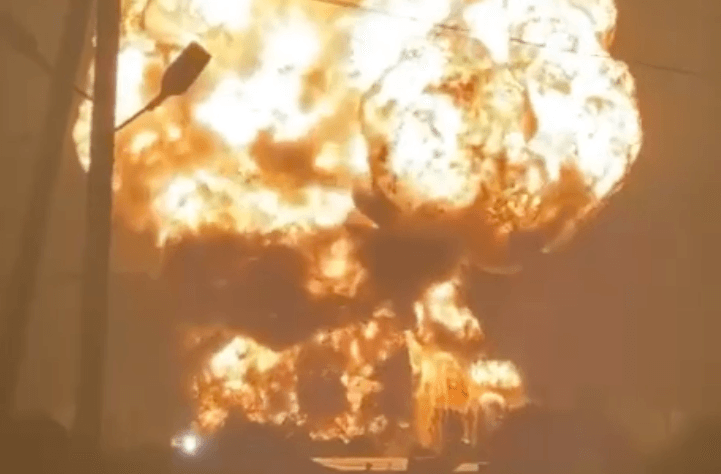
Brovdi added his own ledger: eleven energy facilities hit across Crimea and occupied territory, including nine substations, a gas pumping station, and the Kuban-Crimea electricity bridge linking the peninsula to Russia’s grid — plus five air defense assets destroyed, among them an S-400 launcher, a Tor-M2, a Pantsir-S1 (the short-range gun-and-missile system built to stop exactly these drones), and two Nebo-U radars. Crimean monitors reported a semi-underground logistics hub struck near Armyansk, heat signatures of burning fuel tankers near the Chonhar Bridge, and Russian fuel trucks in Simferopol now disguised as civilian vehicles.
The reach extended to Moscow Oblast, where officials claimed 81 drones downed; a residential building was struck in Solnechnogorsk, and Governor Andrey Vorobyov said a drone crash in the village of Pionersky killed three people and injured three more. Ukraine’s General Staff also confirmed its July 11–12 strike on the Syzran refinery damaged the plant’s AVT-5 and AVT-6 primary processing units.
The logic is singular: sever Crimea — its bridges, rails, ferries, and fuel — and the southern front starves.
Dearer Than Vodka: Russia’s Fuel Crisis Comes Home
In Yevpatoria, a Russian influencer posted her receipt: 5,380 rubles — $70.07 — for twenty liters of A-95 gasoline, about $3.50 a liter. In Yalta, Crimea’s ritziest resort, a receipt showed 450 rubles ($5.85) per liter of high-test fuel — roughly $22 a gallon, the highest price researchers spotted anywhere on the peninsula. A driver in Mirniy put it plainly on video: fuel now costs more than milk, more than vodka — “it would be better to pour liquor into your car and drive on that.” He was not wrong: economy-brand Green Mark vodka retails at $10.50–$11.50 a liter, less than some Crimean pumps. Rosstat, Russia’s statistics agency, insists the average Crimean price is $1.52 a liter; researchers found no station selling at anything close to it. Rationing limits drivers to 20–40 liters a day — police and senior officials exempt — and some stations take only cash.
The crisis is national. A 600-kilometer stretch of highway between Chita and Ulan-Ude went a week with no fuel at all. Izvestiya reported canceled state fuel tenders — no supplier for a Samara medical center, Tambov’s government motor pool, Stavropol’s rescue services — because selling retail pays better than any government contract. On Friday, Deputy Prime Minister Alexander Novak finally admitted Russia faces a national fuel crisis “due to the strikes”; the stock market fell to its lowest level since February 2023. Moscow’s remedies: legalize leaded fuel, tap strategic reserves, sell the army’s stocks, and open import talks with China and Japan. Ukrainian intelligence says Russian farmers fear losing 30 percent of the harvest; the outlet Verstka reports even volunteer aid groups cannot fuel their trucks to reach the war zone.
Into this walked Boris Nadezhdin, 63, the man who tried to challenge Putin in 2024 — detained Monday and summoned to trial Friday on “extremist symbols” charges over a 2023 video showing Alexei Navalny’s photo, three days after being branded a “foreign agent,” as he gathers signatures for September’s parliamentary elections. His campaign message names the “petrol crisis” outright, and warns where Putin’s path leads: “God forbid, to the example of 1917.”
The Night of 134 Drones: Odesa’s Buses Burn, Moldova Wakes to an Explosion
The drones came from five directions — Kursk, Oryol, Millerovo, occupied Donetsk, and Crimea — 134 of them, Shahed-, Gerbera-, and Italmas-type attack drones mixed with Parodiya decoys, alongside three Kh-59/69 guided missiles launched from over the peninsula. Ukrainian air defenses downed all three missiles and neutralized 123 drones; six struck targets at five locations, and debris fell at four more.
In Odesa, drones found a transport depot and set the buses burning — six destroyed, eleven more damaged, along with six vehicles, four private homes, and a sanatorium. At least four people were hurt, among them a five-year-old child. It followed a Sunday-night strike that hit an apartment building in the Raiduzhnyi complex and an Epicenter hypermarket. In the north, strikes left nearly 70,000 electricity customers without power in Chernihiv region, with outages in Kharkiv, Sumy, and Zaporizhzhia oblasts as well.
One drone kept going. A Geran-2 — Russia’s version of the Iranian Shahed-136 — crossed into Moldova and exploded near the village of Copanca, 25 kilometers from the border. No one was hurt, but the count is damning: Russian drones or debris have hit Moldovan territory more than 20 times and Romanian territory at least 30 times since 2022 — a pattern analysts at the Institute for the Study of War say shows Putin treats NATO airspace violations as an acceptable cost of business.
Air Force spokesman Yuriy Ihnat added a chilling technical note: a quarter to a third of Russia’s strike packages now use jet-powered Shaheds — low, fast, diving — designed to terrify, with the aim of making Kyiv “completely unlivable.” Zelensky’s verdict on the night: Russia again “defeated” only “ordinary passenger buses, ordinary residential buildings, and an ordinary hospital.” Its leadership, he said, “has gone crazy over war.”
A Ledger of Ordinary Places: Fifty-Seven Wounded in a Day
The daily accounting from regional governors reads like a census of ordinary life under fire — at least 57 people injured across Ukraine in a single day.
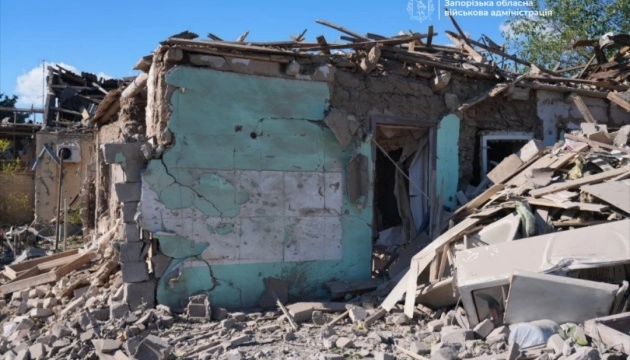
Kherson Oblast: eighteen injured, with damage to critical infrastructure, three apartment buildings, gas stations, passenger buses, and civilian cars. Zaporizhzhia Oblast: thirteen injured, including a child, amid 932 Russian strikes on 51 settlements — a 41-year-old woman and a 15-year-old boy remain in critical condition after drones hit homes, vehicles, and a hospital. Then, around 4 p.m., Russia struck Zaporizhzhia city again: twelve injured in that strike alone, with 54 people examined by medics by evening, thirteen of them people with disabilities. Kharkiv Oblast: eight injured, including three children, across seventeen settlements hit with missiles, rocket artillery, and Shahed, Lancet, and FPV drones. Dnipropetrovsk Oblast: six injured in nearly sixty attacks, with seventeen drones downed over Kryvyi Rih. Donetsk Oblast: three injured, and in Kramatorsk twenty-five homes and five apartment blocks damaged. Chernihiv Oblast: a 63-year-old woman wounded, a school and a home damaged. And in Kherson city, a Russian drone hit a gas station in the Dniprovskyi district, injuring three employees at work.
None of these places is a front line. All of them are targets. The wounded of July 13 were riding buses, pumping gas, sitting in apartments — doing the things the war has turned into acts of endurance.
The Grinding Front: Infiltrators, Anti-Drone Nets, and AI Propaganda
Across a thousand-kilometer front, July 13 was a day of pressure without progress. In Sumy Oblast, geolocated footage showed Ukrainian forces destroying a Russian position north of Komarivka after another infiltration attempt across the border. In northern Kharkiv Oblast, Russian assaults continued without confirmed gains — a milblogger claimed movement in southern Kozacha Lopan — while Ukrainian authorities strung anti-drone nets over sections of the Kharkiv ring road, where Russian FPV drones have taken to hunting civilian traffic. Governor Oleh Synehubov warned the area north of the city remains too dangerous to drive.
In the Kupyansk direction, Russian infiltrators occupied a building in Kupyansk-Vuzlovyi until Ukrainian fire ended the attempt; a FAB-500 glide bomb struck near Blahodativka. At Borova, Slovyansk, Pokrovsk, Novopavlivka, and Hulyaipole, Russian attacks brought no confirmed advances — Ukrainian troops still hold Rai-Oleksandrivka east of Slovyansk and Novyi Donbas near Dobropillya, despite Moscow’s earlier claims to both. In Kostyantynivka, where Russian infiltration continues, even the head of the Russian proxy administration admitted Ukrainians still operate in the city’s north — while Russian channels circulated likely AI-altered footage of flag-raisings, part of a documented pattern of manufacturing victories on video that do not exist on the map.
The cruelest pressure fell on Druzhkivka, where officials say Russia is intensifying glide bomb, Shahed, and fiber-optic drone strikes to seize the access roads and force evacuation. Four thousand residents remain there without power, water, or gas — repairs impossible because the repair crews keep getting wounded. And Ukraine’s own intermediate-range drones kept reaching into the occupied rear: a Russian Navy vessel struck in Mariupol’s port, 115 kilometers from the front, and trucks and fuel sites hit along highways deep in occupied Donetsk. The map barely moves. The killing does not stop.
Oleksandrivka: The Victory Announcement That Vanished
For a few hours on July 13, a Ukrainian regiment fighting in the Oleksandrivka direction posted remarkable news: six settlements liberated — Ternove, Zaporizke, Novoheorhiivka, Vorone, Sichneve, and Maliivka — 120 square kilometers reclaimed, an advance 25 kilometers deep. Then the post disappeared, deleted without retraction or explanation, though Ukrainian media had already republished it.
The claim fits a real trajectory. Ukrainian counterattacks in this direction began in the winter, and Kyiv’s forces have retaken roughly 480 square kilometers across Dnipropetrovsk and Zaporizhzhia oblasts since January. The method, as the regiment described it, is the signature of Ukraine’s 2026 way of war: strike the Russian drone crews and supply lines first, starve the defense, then advance. The unit reported inflicting critical losses on elements of Russia’s 120th Naval Infantry Division and destroying a personnel concentration of the 656th Motorized Rifle Regiment at Temyrivka — the logistics node local Russian forces depended on — forcing a retreat.
Whether the deletion reflected operational security, premature celebration, or the fog of a moving battle, no one has said. What analysts can say is what the campaign accomplishes regardless: every kilometer Ukraine claws back here forces Moscow to choose between defending against counterattacks and feeding its priority offensives elsewhere. Russia does not have the resources to do both — and Ukraine’s strategy is built on exactly that shortage.
Machine-Gun Nests on Reactor Roofs: Europe’s Largest Nuclear Plant as Fortress
Ukraine’s military intelligence directorate (GUR) published its most detailed picture yet of what Russia has made of the occupied Zaporizhzhia Nuclear Power Plant — Europe’s largest — and it describes not a power station but a fortified base. Military equipment sits in the engine rooms of four power units. Weapons depots fill the basements and bomb shelters. Machine-gun nests and missile systems stand on the roofs of reactor compartments; ammunition is stored beneath the technical passages connecting the units.
From the plant’s grounds, the GUR says, Russian forces launch Geran- and Gerbera-type strike drones — with the involvement of underage student workers brought from the Alabuga Special Economic Zone, the facility already notorious for using teenagers to build Shaheds. Technical facilities near the shore of the dried-up Kakhovka Reservoir have been mined. Fifteen hundred Russian soldiers guard the complex.
The International Atomic Energy Agency, meanwhile, is permitted to see only what its escorts allow: inspectors are denied full access to the power units and confined to approved routes. And the plant itself is quietly degrading — 7,500 workers remain of a pre-war 11,000, and the replacements imported from Russia lack qualifications for a plant that differs significantly from anything they have operated.
The world’s nuclear watchdog can neither see the weapons nor count the mines. A facility built to power four million homes now shelters drone launch crews behind the one kind of wall no one dares to strike.
The Robot That Stormed a Beach: Kinburn Spit’s Unmanned First
No landing craft. No marines wading ashore under fire. On the Kinburn Spit, a Ukrainian sea drone motored up to the Russian-held shore, lowered its ramp, and released a ground drone that rolled onto occupied sand to fight — what Ukraine’s 123rd Territorial Defense Brigade called the “first combat mission of this type known.”
“A ground-based robotic complex was delivered to the enemy shore by an unmanned sea platform, landed on the occupied territory and used to perform a combat mission,” the brigade said. “This is a new approach to war, where the most dangerous tasks are performed by a machine, and the Ukrainian military creates new rules of modern combat.” Video shows the Tanchik Droid-type vehicle disembarking and later firing at a target; analysts could not yet assess the mission’s purpose or results.
The geography explains the ambition. The Kinburn Spit is a 40-kilometer (25-mile) ribbon of sand between the Dnipro-Buh Estuary and the Black Sea, held by Russia since March 2022 and commanding the shipping approaches to Kherson and Mykolaiv. Ukrainian strikes have strangled Russian supply lines there — troops reportedly withdrew from parts of the spit, and Ukrainian soldiers raised the national flag on it in late June, though whether Russian positions remain is unclear.
Amphibious assaults are among the costliest operations in warfare; Ukraine just executed one in which the only thing that could die was a machine. The rules, as the brigade said, are being rewritten — in real time, on a sandbar.
The Minister and the Murder Case: Ukraine’s Defense Establishment Shakes
President Zelensky is considering replacing Defense Minister Mykhailo Fedorov, a senior official told the Kyiv Independent — though even insiders are guessing. “Fedorov and the President spoke alone; no one else heard them,” the official said. Removing him would be combustible: half of Ukrainians trust Fedorov, the technocrat who persuaded Elon Musk to cut Russia’s Starlink access in February — a loss one analyst called “truly game changing” for Russian command and drone operations — and who launched the “logistics lockdown” drone campaign now strangling Russian supply lines. But he has dragged out mobilization reform, stopped answering lawmakers, and feuds openly with Commander-in-Chief Oleksandr Syrskyi — “a conflict between a young technocrat and a general from a largely post-Soviet military school,” as one veteran leader put it. Fedorov’s allies claim he is the target of “information attacks” for cutting off corrupt funding streams inside the ministry.
The same day brought the army’s ugliest domestic story to a courtroom’s doorstep. Stanislav Luchanov, former commander of the 155th “Anne of Kyiv” Brigade, was detained in Kyiv — riding in a car with his lawyer — in connection with the abduction and murder of brothers Maksym and Roman Moseichuk, taken from their home in Kalynivka on the night of June 27–28 and killed in Poltava Oblast. Their father died serving in Ukraine’s military. Ten suspects are now in custody. “Establishing the full truth and bringing everyone responsible to justice is something the whole country needs,” Zelensky said.
The French-trained 155th was meant to be a flagship; it has instead lurched from desertion scandals to command failures, and Luchanov — who took over in February after his predecessor’s arrest — came from the 425th “Skelia” regiment, itself under investigation for abusing soldiers. A ministry in flux, a brigade in disgrace: Ukraine’s military is fighting on two fronts, and one of them is internal.
Brussels and London Strike Back: Cyber Sanctions and a Torture List
For the first time, the European Union and Britain moved together against Russia’s hackers. Brussels sanctioned nine people and four entities; London added 24 names to its blacklist — GRU military intelligence officers and “cybercriminals” working with the Russian state — in what the British government called a response to “the Russian state’s persistent and increasingly reckless attempts to sow chaos and division across Europe.”
The centerpiece accusation belongs to the FSB’s Centre 16 hacking hub: an attempted cyberattack on Polish critical infrastructure, including the power grid, that “failed but could have caused 500,000 citizens to lose electricity in the depths of winter.” France said the campaign has targeted ministries, companies, and rail operators — sabotage as well as espionage — and confirmed that a group which targeted the Paris 2024 Olympics is on the list. France, Germany, Poland, Cyprus, the Netherlands, Austria, Slovakia, Romania, and Finland have all been hit in a campaign stretching back years; several capitals summoned Russian diplomats to protest.
That evening, the EU added a darker list: fifteen individuals and one entity sanctioned for “serious human rights violations against Ukrainian prisoners of war and civilian detainees” — among them Dmitry Neelov, an official at the Olenivka prison in occupied Donetsk, accused of torturing, beating, and humiliating Ukrainian prisoners.
Sanctions freeze assets and ban travel; they do not open cell doors. But they do something the Kremlin cannot undo — they put names on the record, for the day the record is finally read aloud in a courtroom.
The Door Narrows: Europe Rewrites the Rules for Ukrainian Refugees
The European Commission is preparing the most significant overhaul of its Temporary Protection Directive since the scheme was created for Ukrainians in 2022 — and the change carries a startling signature: Kyiv reportedly asked for it. According to the Polish daily Rzeczpospolita, future applicants for temporary protection would have to present an official Ukrainian certificate confirming they are not subject to military mobilization. The requirement would apply to men and women alike.
The amendments are expected to be announced this month but would take effect only in March 2027, when the current protection scheme expires — and only for new applicants, not the 4.3 million Ukrainians already sheltered across the EU, including 1.2 million in Germany and roughly 960,000 in Poland. Warsaw is on board: “Work on the changes is nearing completion. Poland supports them,” said Deputy Interior Minister Maciej Duszczyk.
The backstory is a mobilization headache of Ukraine’s own making. After Zelensky lifted foreign-travel restrictions for men aged 18–22 last year, more than 121,000 of them entered Poland within three months, many continuing to Germany; about 50,000 applied for protection in Poland within weeks. Earlier Ukrainian appeals for European governments to deport men who left illegally went nowhere — so Kyiv turned to the eligibility rules instead. Adult men make up 26.6 percent of all beneficiaries: roughly 1.15 million Ukrainian men across the bloc.
The message from both Kyiv and Brussels is quietly converging: Europe’s open door for Ukrainians, held wide for four years, will come with a condition — and the condition is the war itself.
The Day’s End
By evening the fire at the Odesa berth was out, and the families of five sailors — three of them a world away from home — began the arithmetic of grief. In Paris, the leaders adjourned to prepare for a parade held in Ukraine’s honor, having promised a shield that will take a year to build. Between the promise and the protection lie nights like this one: 134 drones, a sea swept empty, gasoline dearer than vodka, a fifteen-year-old boy in critical condition in Zaporizhzhia. The war does not wait for the shield. It never has.
A Prayer for Ukraine
1. For the Five at the Fertilizer Berth
Lord, You watched the fire take them — sailors and dockworkers unloading fertilizer meant for someone’s harvest, three of them far from home under a Togolese flag. Receive them. Comfort the families who will learn of this from across oceans, and heal the ten who survived the flames. Let no one call their deaths collateral. You know their names, even where the news does not.
2. For the Boy in the Zaporizhzhia Ward
Father of mercies, a fifteen-year-old boy lies in critical condition tonight, and near him a woman of forty-one — struck in their own city, in their own homes. Be nearer to them than the machines that keep watch over them. Steady the hands of their surgeons, and guard the five-year-old wounded in Odesa. Give back to these children the ordinary days that were stolen from them.
3. For Those Who Carry the Decisions
God of wisdom, twenty-five leaders sat beneath a gilded dome and promised a shield, and a president weighs whether to replace the minister who armed his drones. Grant them clarity that outlasts the cameras and courage that survives the parade. Let the promises made at Les Invalides become interceptors in the sky over Ukrainian cities — not another declaration filed away while the buses burn.
4. For the Defenders
Lord of hosts, be with the ones holding Druzhkivka without power or water, the drone crews who emptied a sea without firing a rifle, and the soldiers who sent a machine ashore so that no mother’s son had to storm that beach. Guard them from despair as You guard them from shrapnel. And where commanders betray the uniform, give the honest ones strength to keep faith.
5. For Justice That Does Not Sleep
God of justice, two brothers were taken from their home in the night and did not come back; their names were Maksym and Roman. Torturers were named on sanctions lists today — let naming become accountability. Do not let the guilty hide behind rank, borders, or time. In Your mercy, in Your justice, in Your time — bring this war to its end, and let the ending be worthy of what Ukraine has endured.