
Ukraine Daily Briefing | July 15, 2026 | Day 1,603 of the Full-Scale Invasion
Prepared by Dayana Bozhyk
President Volodymyr Zelensky dismissed Defense Minister Mykhailo Fedorov on July 15 over an unresolved conflict with Commander-in-Chief Oleksandr Syrsky, and nominated Naftogaz CEO Serhii Koretsky as Ukraine’s next prime minister. The moves came as Ukraine marked Statehood Day, with European Commission President Ursula von der Leyen making her 11th wartime visit to Kyiv to sign a new EU-Ukraine Drone Deal worth up to €18 billion. Russia resumed strikes on Ukrainian Black Sea ports that have halted grain exports, while the US began formally processing Ukraine’s license to produce Patriot interceptors, and Russian attacks nationwide killed at least 12 people and injured over 100, including a third consecutive night of strikes on Odesa.
THE DAY’S RECKONING
Ukraine celebrated its Statehood Day on July 15 the way it now celebrates most things: with one hand accepting gifts and the other hand rebuilding what fell overnight. Ursula von der Leyen landed in Kyiv for the eleventh time since the war began, signed a new defense deal, and called Ukraine “a net security provider for Europe.” A few kilometers away and a few hours earlier, a missile had hit an apartment building in Odesa for the third night running, killing three people who woke up to an ordinary Wednesday and didn’t get much further than that.
In between the ribbon-cutting and the rubble, Zelensky fired his defense minister — a young reformer credited with cutting off Russia’s Starlink access and choking Crimea’s supply lines — over a feud with his own top general that, by one lawmaker’s account, had “crossed all lines.” He nominated a gas company executive to run the government through what he warned could be Ukraine’s hardest winter yet. None of it was random. All of it happened on the day meant to mark, of all things, the country’s endurance. Ukraine didn’t pause the war to celebrate surviving it. It just kept doing both at once, the way it has for three and a half years now.
FEDOROV’S DOWNFALL: A FEUD WITH SYRSKY
Zelensky dismissed Fedorov as defense minister on July 15 following a meeting with military leadership, with lawmakers telling Ukrainian outlets the decision stemmed from an “unresolved systemic conflict” between the 35-year-old former digital transformation minister and Syrsky. “He said that ideally both Fedorov and Syrsky should be dismissed, but he can’t do that right now,” one lawmaker who attended a closed-door Servant of the People faction meeting said, describing Zelensky’s private explanation. Zelensky also reportedly cited unresolved problems with draft officers and mobilization as a factor, and told the faction Klymenko would be expected to prioritize those issues. Publicly, Zelensky would only say he wants Ukraine’s military “united” and “on the same page,” with dialogue between the army and the ministry as the priority.
Fedorov confirmed his dismissal on Telegram, calling the job “a great honor” and listing more than 20 achievements from his seven months in office, topped by persuading Elon Musk to cut Russian forces off from Starlink in February and launching the “Logistics Lockdown” campaign against Russian supply lines feeding Crimea. He acknowledged three unfinished goals: fully overhauling the ministry to NATO standards, moving procurement to a fully competitive tender system, and building a lasting culture of accountability, adding pointedly that “we needed to be even more decisive in dismissing those who were hindering change.” His adviser Serhii Sternenko announced he would no longer advise the ministry, calling Fedorov “the best defense minister in our entire history” and adding, “it’s unfortunate that today our country is much further from victory.” Veteran and activist Dmytro Koziatynskyi called for street protests against both the dismissal and what he called Zelensky’s “constant reshuffles.” Analysts described the clash as generational: Public Anti-Corruption Council head Yuriy Hudymenko called it “a conflict between a young technocrat and a general from a largely post-Soviet military school.” Interior Minister Klymenko, who led Ukraine’s National Police from 2019 to 2023, told colleagues he was surprised by the offer but would defer to “the supreme commander-in-chief’s word”; parliament is expected to vote on his nomination July 16.
UKRAINE NAMES A NEW PRIME MINISTER
Stefanchuk confirmed Zelensky has formally nominated Koretsky, chief executive of state energy company Naftogaz, to succeed Svyrydenko as prime minister, with a parliamentary vote expected the morning of July 16. Servant of the People faction leader David Arakhamia said Koretsky’s record keeping natural gas flowing through last winter’s Russian strikes made him “the best-prepared person” to lead the government through what Zelensky called potentially “the most difficult winter in [Ukraine’s] history.” Koretsky told the faction his priorities would be social support, heating-season preparation, strengthening the military, and protecting infrastructure. Separately, Mykolaiv Oblast Governor Vitalii Kim confirmed he has accepted an offer to become veterans affairs minister, a move one official called “a complete shock” even to Kim’s own team; he would replace Natalia Kalmykova. Svyrydenko herself has been offered the post of Ukraine’s ambassador to the United States but had not yet accepted as of July 15.
STATEHOOD DAY IN KYIV
Von der Leyen arrived in Kyiv on her eleventh wartime visit, declaring “the tide is turning” and signing a new EU-Ukraine Defense Industrial Partnership she called “our very own Drone Deal.” The European Commission disbursed €1 billion for drones immediately, part of a broader €10 billion package earmarked for additional drones, deep-strike missiles, and Gripen fighter jets, with both sides agreeing to develop a joint “Defense Industrial Pact” potentially drawing up to €10 billion more from the EU’s €150 billion SAFE loan program. Romanian President Nicușor Dan, Moldovan President Maia Sandu, Slovenian Prime Minister Janez Janša, and Serbian President Aleksandar Vučić also arrived in Kyiv for the fifth Ukraine-Southeast Europe Summit, a regional cooperation forum.
In his Statehood Day address, Zelensky said Ukraine now produces 10 million drones a year and is targeting 20 million with allied support, and that Ukrainian long-range weapons can now reach targets nearly 2,900 kilometers away. “Our main goal is not Russia without gasoline, but Ukraine without Russia, Ukraine without war, Ukraine with Europe,” he said. He presented von der Leyen with the first-ever Order of Europe, a newly created state honor, and awarded the Order of the Golden Star to the mother of a fallen Hero of Ukraine, alongside honors for Svyrydenko, First Deputy Prime Minister Denys Shmyhal, French Ambassador Gaël Veyssière, and others who “defend, rescue, rebuild, and work” for the country. He also personally handed Ukrainian passports to 10 young citizens, including children of fallen and captured defenders.
PATRIOT PRODUCTION MOVES FROM PROMISE TO PROCESS
A senior Ukrainian official told Kyiv Post that the US has begun formally processing Ukraine’s license to produce Patriot interceptors, with Lockheed Martin backing the move and officials no longer expecting the months-long delay once anticipated. “We expect that by the end of 2026, our Ukrainian team will have the technical capability to produce U.S. missiles,” Zelensky said, thanking Trump for “a historic political decision” that “will help save the lives of thousands of people in Ukraine.” Only Japan and Germany currently hold similar licenses outside the US itself.
RUSSIA RESUMES ITS WAR ON UKRAINIAN PORTS
ISW assessed that Russia has intensified strikes on Ukrainian Black Sea port infrastructure since at least July 10, part of an apparent effort to degrade Ukraine’s economy and choke its export capacity, and possibly in retaliation for Ukraine’s own campaign against Russian shipping. Odesa Oblast head Oleh Kiper reported Russian forces struck Tanzanian- and Liberian-flagged merchant ships and a Marshall Islands-flagged vessel at Odesa’s port on July 14, while grain exporter Kernel Holding said strikes on the Chornomorsk terminal destroyed roughly 25,000 tons of sunflower oil. Agricultural consultant Bohdan Kostetskyi of Barva Invest said the strikes have effectively stopped deep-water grain exports, with major traders suspending purchases and shipowners increasingly refusing Ukrainian ports, citing force majeure. Russian officials have been amplifying the strikes for propaganda purposes, ISW noted, while Russian shipping and agriculture ministries insisted the parallel Ukrainian campaign against Russian vessels in the Sea of Azov — 136 struck since July 6 — would not affect Russia’s own grain export obligations.
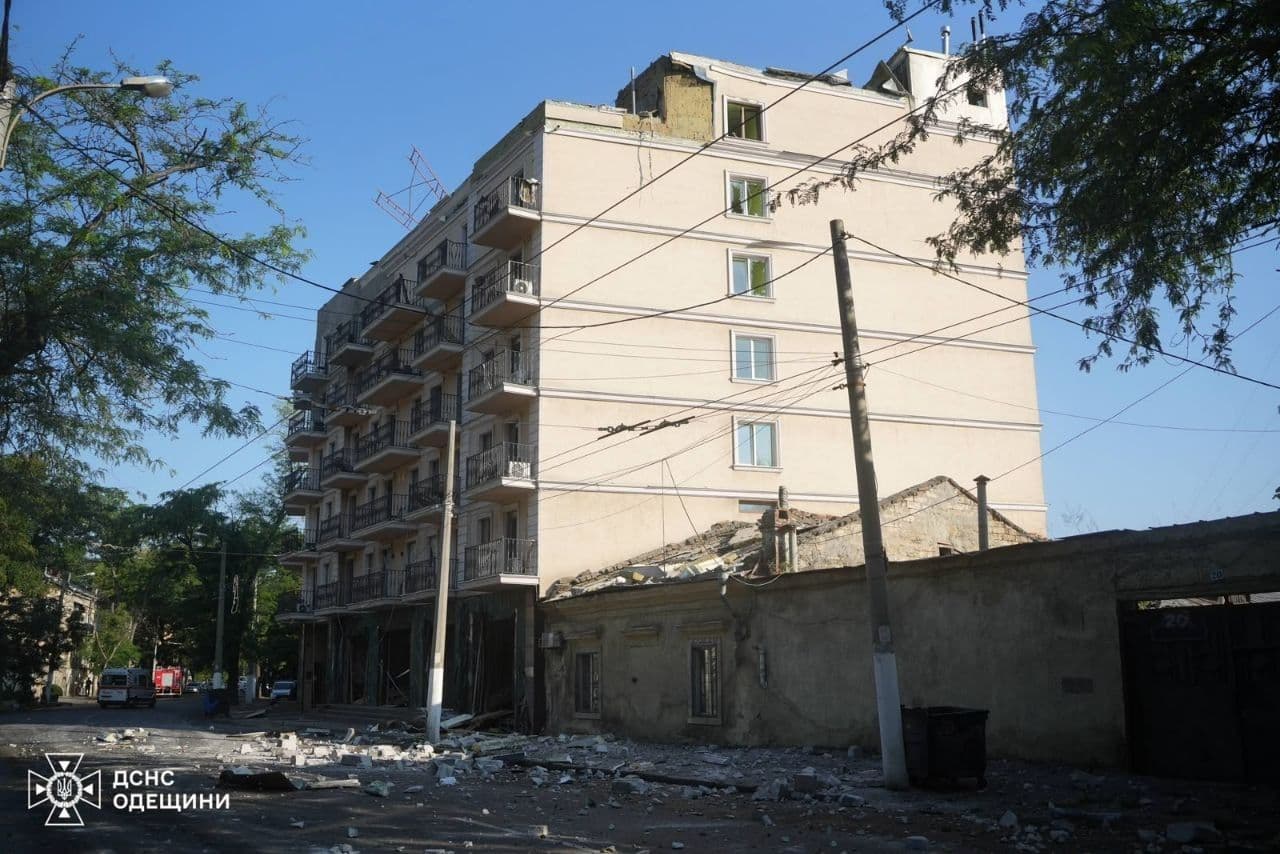
Aftermath of Russia’s overnight attack on Odesa. (Ukraine’s State Emergency Service / Telegram)
RUSSIA’S REFINING COLLAPSE BY THE NUMBERS
Reuters reported the Salavat petrochemical complex in Bashkortostan halted operations entirely July 14 after Ukraine’s strike two nights earlier damaged its CDU-6 and CDU-4 primary refining units. Oil intelligence firm Kpler reported Russian refining volumes have fallen to a 21-year low of 3.8 million barrels a day, with roughly 4.3 million barrels a day of capacity — 58 percent of Russia’s total installed refining capacity — now offline from strikes and maintenance combined, and refined product exports down to 1.2 million barrels a day in July from 2.3 million a year earlier. Bloomberg separately reported Ukraine has struck at least 24 of Russia’s 34 large refineries in 50 attacks over the past 100 days. Bloomberg also found Russia’s crude oil exports holding steady near 4.21 million barrels a day even as roughly 135 million barrels sit stranded at sea on tankers without a confirmed final destination — evidence Russia can still pump and load crude but increasingly cannot refine it. Separately, Radio Liberty reported satellite imagery shows Russia has quietly redeployed large numbers of S-300 and S-400 air defense batteries away from the Arctic and toward more central regions — researchers estimate 580 of roughly 927 transporter-erector launchers have moved from permanent posts — a shift one Norwegian defense researcher said suggests Moscow no longer fears an imminent NATO threat in the far north and needs the batteries elsewhere.
NO ADVANCES, FRONTLINES HOLD
Neither side made confirmed advances anywhere on July 15. Ukrainian military observer Kostyantyn Mashovets reported Russia has committed a reinforced army corps-sized force — elements of the 1st Guards Tank Army, 6th Combined Arms Army, and 11th Army Corps — to the Kupyansk direction, seeking to split Ukraine’s foothold there and capture the city’s eastern districts; he said Russian numerical superiority and dense urban terrain are slowly eroding Ukraine’s position, but that claims of an imminent Russian breakthrough are premature, since Russian command appears unwilling to redirect forces from other sectors to reinforce Kupyansk. In northern Sumy Oblast, Ukraine’s Kursk Grouping of Forces said Ukrainian troops still control Myropillya and Zapsillya despite Russian claims of capturing them. Russian forces continued glide-bomb strikes on a Ukrainian pontoon bridge over the Siverskyi Donets near Mayaky for a second time, and a glide-bomb and Smerch rocket strike hit Kramatorsk, injuring one person and damaging 17 houses. A Ukrainian officer in Kostyantynivka said Russian forces still do not control the city despite Kremlin claims, continuing infiltration and “scorched earth” strikes on both military and civilian targets. Ukraine’s General Staff reported repelling 235 engagements as of 10 p.m., with Russia firing 170 guided bombs across 52 airstrikes, 6,001 drones, and 2,273 shelling attacks over the day; the Pokrovsk direction saw the heaviest fighting, 32 Russian attacks, with 30 Russian soldiers reported killed there alone.
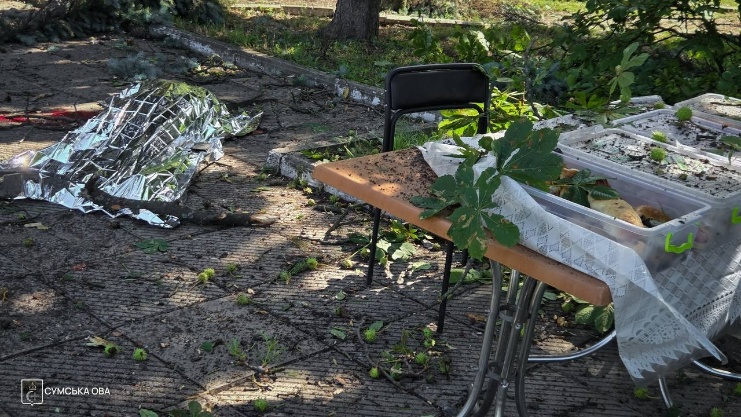
Aftermath of Russia’s attack on Sumy. (Oleh Hryhorov / Telegram)
CRIMEA’S BLACKOUTS DEEPEN
Ukraine’s Special Operations Forces confirmed striking the Balaklava Thermal Power Plant in occupied Sevastopol overnight July 13–14, aided by underground resistance operatives; the strike damaged the machine hall housing the cooling system for one of the plant’s Siemens turbines, with repairs to pumping equipment potentially taking two to five months. The SSO said Balaklava supplies nearly half of Crimea’s electricity. Separately, Kerch City’s occupation head Ivan Koshel confirmed the city was plunged into a total blackout overnight July 15 after Ukrainian drone strikes. Russian opposition outlet Agentstvo reported power outages have hit Dzhankoi, Yany Kapu, and Armyansk for at least eight of the past ten days, and Sevastopol for seven; water shortages have affected Alushta for seven days, Simferopol for six, and Yevpatoria for five, prompting Crimea’s occupation water utility to impose peninsula-wide rationing and local charities to begin collecting drinking water for residents in the north.
A NEW FRONT AT SEA
USF commander Robert “Magyar” Brovdi announced Ukraine’s naval drone campaign, dubbed Operation MoLoChKa (Dairy), has expanded from the Sea of Azov into the Black Sea, striking 20 additional Russian vessels overnight to mark Statehood Day — 17 oil tankers, two gas tankers, and a tugboat. “The first round of the maritime battle is over. Now it’s the Black Sea,” Brovdi wrote, putting the Azov total at 136 vessels struck since July 6. Rostov Oblast’s agriculture ministry said it is developing alternative shipping routes to work around the disruption. Russian milbloggers, meanwhile, kept airing frustration with their own military’s defenses, with one questioning why no protective boom nets guarded the port near a recent Ukrainian strike on an FSB vessel and another criticizing officials’ general inattentiveness to unmanned system threats.
BALTIC AND POLISH OFFICIALS WARN AGAIN
Lithuanian President Gitanas Nausėda said July 15 that Lithuania holds unspecified intelligence pointing to Russian plans for “targeted kinetic operations” against NATO infrastructure, without confirming Lithuania itself as the target, and said the country has increased protection of critical transport and energy sites in response. Polish Foreign Minister Radosław Sikorski said a day earlier that Poland suspects Russia may stage drone strikes disguised as Ukrainian attacks against a NATO country or Russian territory itself, potentially as pretext for a Russian “response.” Estonian Defense Minister Hanno Pevkur said Russia conducted an unannounced live-fire exercise on Lake Peipus, on the Russian-Estonian border, on July 9 — the first such drill on the lake rather than near the land border, which Estonian officials called unusual and consistent with the broader pattern of Russian provocations along NATO’s frontier.
THE EU EXTENDS PROTECTION FOR UKRAINIANS, WITH A NEW CATCH
EU ambassadors agreed July 15 to extend temporary protection status for displaced Ukrainians until March 2028, continuing coverage for the more than 4.3 million Ukrainians currently benefiting across the bloc. But going forward, new applicants must prove compliance with Ukraine’s military obligations to qualify — a restriction requested by Kyiv itself as part of efforts to curb men leaving the country illegally, and one that will not affect anyone already covered. Separately, EU ambassadors agreed to freeze the bloc’s $44.10-a-barrel price cap on Russian oil for another week rather than let it rise automatically, buying more time to negotiate the long-delayed 21st sanctions package, now pushed to a July 23 deadline after Greece continued blocking a proposed ban on Russian LNG transiting EU ports over fears it would gut Greek shipping revenue. Diplomats said most of the package’s original proposals have already been watered down or scrapped entirely, including a fish-industry restriction Portugal opposed, while a symbolic visa ban on Russian soldiers who fought in Ukraine will require a separate future unanimous vote to actually take effect — a compromise France and Italy pushed for as both countries continue issuing tourist visas to Russians.
THE DAY’S TOLL
Russia launched two Kh-59/69 cruise missiles and 122 drones overnight; Ukraine’s Air Force downed 101 drones, while the missiles and 18 drones struck 19 locations and debris fell at seven more. A missile hit a multi-story apartment building in Odesa for the third consecutive night of strikes on the city, killing three people and injuring six, including two children pulled from the rubble; Governor Kiper said the strike also damaged a gas pipeline, a production facility, and a warehouse. Regional authorities reported at least 12 people killed and over 100 injured nationwide. Sumy Oblast absorbed a guided-bomb strike on Sumy City that killed three, including reportedly a 16-year-old boy among the 17 injured, with 13 more injured elsewhere in the oblast. Kharkiv Oblast lost two people with 10 injured across 22 struck settlements. Kherson Oblast lost one person with 23 injured, including a child. Chernihiv Oblast lost a 37-year-old man to a Geran drone strike in Ozeriany, while a separate FPV strike left an 18-year-old man in Prybyn fighting for his life. Donetsk Oblast lost one person with seven injured; Zaporizhzhia, one killed and four injured; Dnipropetrovsk, nine injured. Russian state media claimed its air defenses downed 93 Ukrainian drones overnight across Belgorod, Bryansk, Kursk, Rostov, Moscow, Krasnodar, and occupied Crimea.
SMALL ITEMS
Kremlin aide Nikolai Patrushev, head of Russia’s Maritime Collegium, told state media Russia’s naval strategic nuclear forces remain in “full combat readiness” across all maritime theaters, a statement Zelensky’s own recent remarks suggest is aimed partly at reassurance: he told reporters July 9 that China delivered Russia an “unequivocal,” near-ultimatum message rejecting any nuclear use in the war after Russian media floated the idea. The International Handball Federation followed the IOC’s lead and provisionally lifted its ban on Russian and Belarusian teams, a week after the IOC’s own reversal, prompting renewed criticism from Ukraine and nine EU countries that have urged the European Commission to defund sports bodies readmitting Russian athletes. Ukraine’s 427th Unmanned Systems Regiment destroyed a Russian Mi-28 attack helicopter worth roughly $19 million using a $400 FPV drone near Vyazove, Belgorod Oblast — only the third confirmed drone-on-helicopter kill of the war. And Spain unlocked €570 million to support Spanish companies in Ukraine’s reconstruction and pledged to raise its 2026 bilateral defense support to €1 billion, bringing total Spanish military aid since 2022 to roughly €3.8 billion, even as Spain’s trade relationship with the Trump administration remains openly strained.
By the end of July 15, Ukraine had marked its statehood with a new European partnership, a new prime minister nominee, and a defense minister pushed out over a feud that outlasted his seven months in office — all while a third straight night of missiles fell on Odesa and a teenager in Sumy waited to see if he would survive the day’s guided bombs. The country did not get to choose which of those things defined its birthday. It just had to hold all of them at once, the way it always does.
A PRAYER FOR UKRAINE
1. For Odesa, Struck a Third Night Running
Lord, Odesa has now been hit three nights in a row, and this time an apartment building came down with people still inside. We pray for the three who did not survive, for the two children pulled from the wreckage, and for a city that keeps having to learn how to sleep through what comes after dark.
2. For the Teenager Fighting for His Life in Chernihiv
God of the young, an eighteen-year-old man in Prybyn is fighting for his life tonight after an FPV drone found him. We ask for his healing, for the doctors working to save him, and for his family, holding on to hope in a hospital hallway somewhere tonight.
3. For a Government Reshaping Itself Mid-War
Father, this week brought a new prime minister, a new defense minister, and a country still arguing about whether any of it was the right call. We pray for wisdom for everyone making these decisions, for a government that can change its own leadership without losing its footing, and for the trust between a country and its leaders that a war like this tests every single day.
4. For Every Family Still Deciding Whether to Come Home
Lord, this week the EU extended protection for millions of displaced Ukrainians while adding a new condition for those who haven’t yet left. We pray for every family weighing an impossible decision — stay displaced, or come home to a country still at war — and for the Ukraine they are hoping to return to someday.
5. For a Country That Celebrated Its Birthday in the Middle of a War
God of endurance, today Ukraine marked a thousand years of its own history while still fighting for its next day. We give thanks for a nation that keeps choosing to exist, keeps building even while rebuilding, and we ask, in Your mercy, that its next Statehood Day be one it gets to celebrate in peace.