
Ukraine Daily Briefing | July 14, 2026 | Day 1,602 of the Full-Scale Invasion
Prepared by Dayana Bozhyk
Ukraine’s parliament dismissed Prime Minister Yuliia Svyrydenko on July 14, opening a broader government reshuffle that saw Ukroboronprom’s general director resign the same day. In Paris, the Coalition of the Willing reaffirmed its demand for binding security guarantees for Ukraine and launched a new Integrated Anti-Ballistic Missile Coalition, while France granted Ukraine licenses to produce its own glide bombs and cruise missiles and confirmed an initial order of 16 Rafale fighter jets. US Senator Lindsey Graham, a leading advocate for Ukraine in Congress, died of a sudden illness on July 11 days after visiting Kyiv; a bipartisan sanctions bill he championed advanced the same week as a tribute to him. Ukrainian forces struck the Salavat Oil Refinery in Bashkortostan, the last major Russian gasoline producer untouched in 2026, and sank a Russian FSB border patrol ship tied to the 2018 Kerch Strait incident. Russian attacks nationwide killed at least nine people and injured 78, and the UN reported that June 2026 was Ukraine’s deadliest month for civilians since April 2022.
THE DAY’S RECKONING
Ukraine’s government changed shape on July 14 in ways that had nothing directly to do with any battlefield. Parliament voted out the prime minister. Ukraine’s largest defense manufacturer lost its chief the same afternoon, a resignation that traces back eight days to an ammunition depot in a Kyiv suburb that should never have been there. In Washington, a senator who flew to Kyiv and back one more time than his body could apparently take died of a sudden illness — and the sanctions bill he’d spent years pushing suddenly found the votes to move, as if grief were the missing ingredient the whole time.
None of that stopped a drone 1,500 kilometers deep into Russia from finding the Salavat refinery, the last major gasoline plant in the country Ukraine hadn’t already hit this year. None of it stopped a Ukrainian sea drone from sinking a Russian border ship that helped seize three Ukrainian vessels in the Kerch Strait back in 2018 — a debt paid, eight years later, by a machine with no crew at all. And none of it stopped a Russian drone from hunting an 86-year-old man and a 68-year-old man through the streets of Kherson, one after another, in what residents there have taken to calling, without much exaggeration, a human safari. A government can change. A war does not pause to let it.
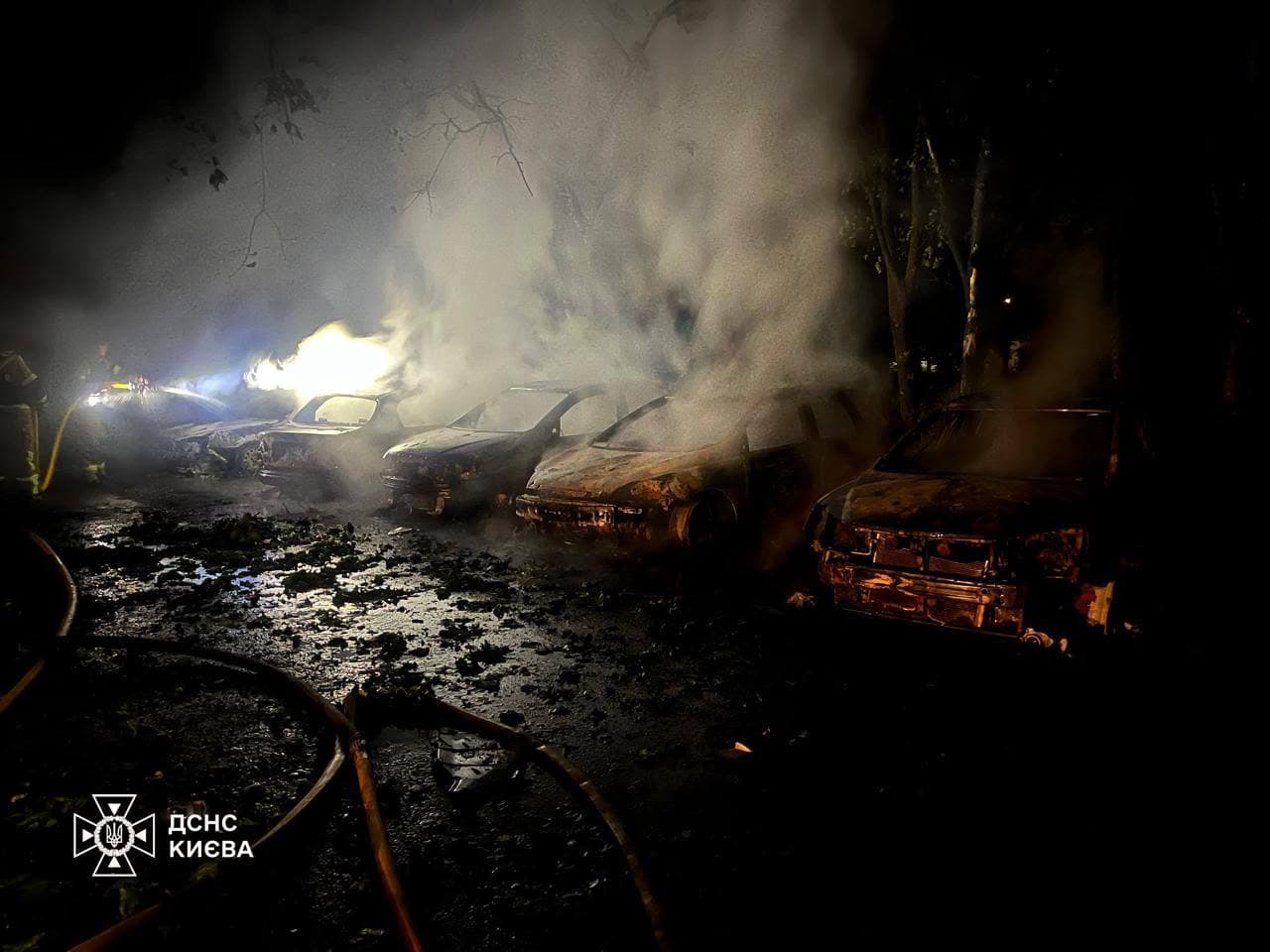
Aftermath of Russia’s overnight attack on Kyiv, which damaged 16 sites across the capital. (Ukraine’s Emergency Service)
UKRAINE’S GOVERNMENT RESHUFFLES
Ukraine’s parliament voted to dismiss Prime Minister Yuliia Svyrydenko on July 14, opening the way for a broader cabinet reshuffle Kyiv insiders say has been under discussion for weeks. Legal policy committee chair Denys Maslov, who has led Ukraine’s contentious judicial reform push, is widely expected to move into the cabinet as justice minister as part of the changes. Hours later, Ukroboronprom General Director Herman Smetanin announced his resignation without specifying a reason, saying only that leading Ukraine’s largest state defense conglomerate “has been an honor.” Deputy Defense Minister Serhiy Boyev will serve as acting director while Ukroboronprom’s supervisory board runs a competitive selection process for a permanent replacement. It was Smetanin’s second stint atop the company; he first led it from 2023 to 2024 before serving as strategic industries minister, then returned last summer.
The resignation follows a week of fallout from the July 6 explosion of an Ukroboronprom ammunition depot in the Kyiv suburb of Vyshneve, which killed seven people and injured 29 during a Russian missile barrage. Ukroboronprom confirmed it has already dismissed the heads of two state enterprises found to have violated ammunition storage regulations, along with other officials whose negligence may have contributed to the blast, saying it remains committed to “the principle of inevitability of accountability” and that those responsible will face criminal charges in addition to losing their jobs.
COALITION OF THE WILLING MEETS IN PARIS
The Coalition of the Willing convened in Paris on July 13, hosted by President Emmanuel Macron with more than 25 heads of state and government, and issued a joint statement calling for an “immediate and complete ceasefire” alongside direct peace negotiations involving Ukraine, Russia, the US, and Europe. The coalition reaffirmed that no peace agreement touching European or Ukrainian security can be legitimate without European and Ukrainian participation, and backed Trump’s July 7 NATO summit pledge to help secure binding guarantees for Ukraine once a ceasefire holds. Nine countries — Denmark, France, Germany, Italy, the Netherlands, Norway, Spain, Sweden, the UK, and Ukraine — signed a separate declaration launching the Integrated Anti-Ballistic Missile Coalition to accelerate production of interceptor systems. Zelensky said he hopes Ukraine’s homegrown Freya interceptor will be operational within 12 months, and that France will be the first to supply Ukraine with the new Franco-Italian SAMP/T NG air defense system, delivering two full systems this year.
Polish Prime Minister Donald Tusk announced Poland will host the coalition’s first joint military exercises this fall, with British and French troops training alongside Polish forces to prepare for a future “reassurance force” that would help guarantee Ukraine’s security after any ceasefire; Poland has ruled out sending its own troops into Ukraine but will provide logistics. “Given Russia and Putin’s tough stance, it is currently unlikely that a ceasefire or peace agreement can be reached in the near future,” Tusk said, predicting Moscow will try to drag the war out at least until winter. Bulgaria, by contrast, formally withdrew from the coalition the same day. “We’re not participating in a coalition that insists on continuing financial and military aid to Ukraine,” said Prime Minister Rumen Radev, a Russia-friendly former president whose party won April’s elections and has since halted Bulgarian arms shipments to Kyiv and blocked EU sanctions on Patriarch Kirill.
FRANCE ARMS UKRAINE’S OWN INDUSTRY
Zelensky and Macron announced July 14 that France has licensed Ukraine to domestically produce AASM precision-guided glide bombs and SCALP cruise missiles, while France and Italy jointly licensed Ukraine to produce Aster 30 surface-to-air missiles through the end of 2026. The two countries also confirmed Ukraine’s initial order of 16 Rafale fighter jets, the first tranche of the 100 Ukraine committed to buying in November 2025; France will deliver the first four aircraft once Ukrainian pilots and mechanics complete training, which could begin this year, alongside air-to-ground and air-to-air munitions including MICA and long-range METEOR missiles. A larger Rafale fleet would let Ukraine launch more SCALP/Storm Shadow missiles to sustain its intermediate-range strike campaign against Russian logistics.
THE KREMLIN REJECTS SECURITY GUARANTEES
Russian Foreign Minister Sergey Lavrov claimed July 14 that unspecified “Europeans” are undermining agreements Russia says it reached with the US at the August 2025 Alaska summit — agreements Secretary of State Marco Rubio has already confirmed were never actually signed. Lavrov repeated Putin’s 2024 maximalist demands: complete Ukrainian withdrawal from Luhansk, Donetsk, Zaporizhzhia, and Kherson oblasts and abandonment of NATO membership, as preconditions for any ceasefire. Kremlin spokesperson Dmitry Peskov said the same day that Russia opposes any European role in peace negotiations and will not accept security guarantees for Ukraine without Russia’s own participation in shaping them — the latest instance of a now-familiar Kremlin pattern of trying to cast Washington and Moscow as the only legitimate parties to the war’s resolution.
RUSSIA’S RECRUITMENT CRISIS DEEPENS
Ukraine’s Foreign Intelligence Service (SZRU) reported Russia has signed just 195,000 of its 409,000-soldier annual contract recruitment target as of early July, with daily recruitment falling from about 1,200 people in 2024 to roughly 1,070 to 1,090 in mid-2026. Russia’s casualty rate has outpaced its recruitment rate since March, SZRU said, forcing the Kremlin to loosen medical standards and lean harder on students, foreign nationals, and residents of occupied Ukrainian territory — including plans to recruit roughly 7,900 people from occupied territory this year, which SZRU noted constitutes a war crime. A push to recruit 50,000 students largely failed despite what the agency called “unprecedented propaganda and administrative pressure.” Foreign recruitment targets have risen from 16,000 to 18,500, with migrants frequently coerced into signing contracts under false pretenses. SZRU said Russia lost 196,700 troops in 2026 alone, including roughly 115,300 killed outright, and Ukrainian government estimates put total Russian losses since 2022 above 1.4 million as of July 14. Commander-in-Chief Oleksandr Syrsky separately reported Russian forces are now suffering more than 400 casualties for every square kilometer seized in Donetsk Oblast specifically — a narrower but consistent echo of ISW’s own theater-wide finding that Russia lost roughly 1,298 soldiers per square kilometer captured in June, against just 68 per kilometer a year earlier.
UKRAINE STRIKES RUSSIA’S LAST UNTOUCHED REFINERY
Ukraine’s General Staff and Special Operations Forces struck the Gazprom Neftekhim Salavat Oil Refinery in Bashkortostan overnight, roughly 1,300 kilometers from the border — a drone flight of some 1,500 kilometers from launch to target. Ukrainian officials said it was the last major Russian gasoline production facility left unstruck in 2026; the refinery processes about 10 million tons of crude annually, and satellite imagery confirmed Ukrainian strikes hit both its AVT-6 and AVT-4 primary processing units, starting a fire regional head Radiy Khabirov acknowledged. Ukrainian forces also struck the Afipsky Oil Refinery in Krasnodar Krai, one of southern Russia’s key oil facilities, and an oil transshipment hub near Gelendzhik that supports Russian naval logistics; both fires were confirmed by regional officials.
SENATOR LINDSEY GRAHAM DIES DAYS AFTER VISITING KYIV
US Senator Lindsey Graham, one of Ukraine’s most consistent advocates in Congress, died of a sudden illness on July 11, shortly after returning from a trip to Kyiv. A bipartisan group of senators unveiled an updated version of Graham’s long-stalled Russia sanctions bill on July 14, negotiated with the White House and framed explicitly as a tribute to him. “I know that Lindsey wanted it very badly,” Trump told reporters, adding “there is a good chance it gets done.” The revised bill scales back an earlier proposed 500 percent tariff on countries buying Russian oil and gas to a maximum 100 percent tariff applied to the five largest buyers, re-evaluated every 180 days, with exemptions for countries importing less than 15 percent of their gas from Russia and actively reducing that share; it would also impose mandatory sanctions on Putin personally, Russia’s central bank, Sberbank, Gazprombank, and major LNG projects. Democratic co-sponsor Richard Blumenthal called it “a fitting tribute to Senator Graham’s fierce support for Ukraine’s freedom.” The legislation had been stalled in Congress since April 2025 amid shifting White House positions, but gained fresh momentum as Ukraine’s battlefield performance and Trump’s own posture toward Moscow have shifted in recent weeks.
NO ADVANCES, FRONTLINES HOLD
Neither side made confirmed advances anywhere on July 14, though Russian forces continued gradual infiltration in northern Sumy Oblast, western Kostyantynivka, and southeast of Slovyansk. A Ukrainian brigade spokesperson in the Kupyansk direction said Russian forces are exploiting rain and heavy winds to infiltrate near Kupyansk-Vuzlovyi, increasingly relying on FPV drones rather than larger drones to deliver supplies since larger aircraft cannot survive Ukraine’s “kill zone,” and are not yet using ground robots to resupply or evacuate troops in that sector. Ukrainian forces filmed a rare combined-arms tactical mission using ground robots armed with Browning M2 machine guns, backed by FPV drones, against Russian positions likely near Dobropillya. In occupied Crimea, Sevastopol imposed a “special regime” at energy facilities and rolling two-hour power blocks after a large-scale Ukrainian strike Ukrainian monitors linked to the Balaklava Thermal Power Plant, one of two facilities supplying roughly 90 percent of the peninsula’s electricity; occupation head Mikhail Razvozhaev acknowledged only a “technical failure” without confirming the cause. Crimean Tatar Mejlis chair Refat Chubarov said fuel and power shortages have forced small and medium businesses, including farms, to halt operations and revert to manual labor for tasks power outages have interrupted, with prolonged blackouts in northern Crimea also disrupting water supply. Ukrainian strikes on occupied Melitopol overnight also knocked out power across several nearby settlements, and Crimea-based partisan group Atesh reported Ukrainian strikes have destroyed nearly all of Russia’s high-speed boats supporting river operations near Kherson.
OPERATION DAIRY: A REVENGE SINKING NEAR NOVOROSSIYSK
USF commander Robert “Magyar” Brovdi reported Ukrainian forces struck five tankers, five dry cargo ships, and a tugboat in the Sea of Azov overnight, bringing the total vessels hit since July 6 under what Ukraine calls Operation Dairy to 116. Separately, Ukraine’s Navy announced it sank the Russian FSB border patrol ship Izumrud near Novorossiysk using a Sargan-3000 uncrewed surface vessel, killing and wounding crew members. The Navy said the Izumrud took part in Russia’s November 2018 seizure of three Ukrainian naval vessels in the Kerch Strait, an incident in which Russian forces rammed and fired on Ukrainian ships transiting from Odesa to Mariupol, wounding six sailors and capturing 24 more who spent nearly a year in Russian detention before a 2019 prisoner exchange. “Revenge is inevitable. To be continued,” the Navy wrote, releasing satellite imagery it said showed the sunken vessel at its pier. Russia’s Ministry of Transport claimed it is working to maintain cargo logistics despite the mounting strikes, and Russia’s grain exporters’ union insisted export obligations would be met in full; market analysts remain skeptical given Russia’s dependence on the Sea of Azov corridor.
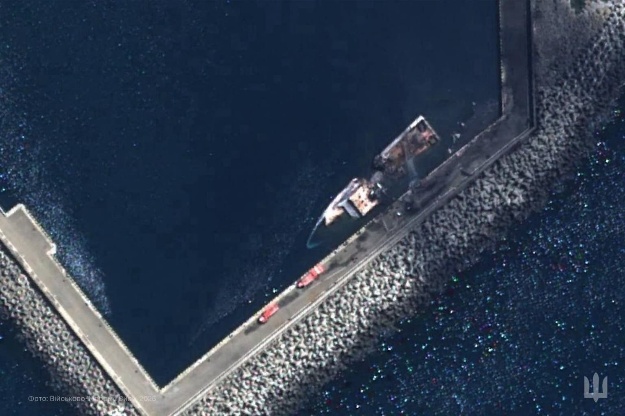
Satellite imagery released by the Ukrainian Navy, purporting to show the sunken Russian border guard patrol ship the Izumrud. (Ukrainian Navy/X)
EU OPENS A SECOND DOOR FOR UKRAINE
Ukraine and Moldova formally opened their second EU accession cluster, covering foreign policy, defense, and hybrid-threat alignment, in Brussels on July 14, a month after opening their first cluster on rule of law. EU Enlargement Commissioner Marta Kos praised Ukraine’s transformation “under the most difficult circumstances imaginable” while noting Moldova has edged ahead on reform speed, particularly judicial and anti-corruption work. Four clusters remain, covering economic policy, environment, agriculture, and transport — areas Kos acknowledged will be harder to advance given some EU states’ fears of Ukrainian competition. European Commission President Ursula von der Leyen is set to visit Kyiv July 15 for Ukraine’s Statehood Day, with reports suggesting she will announce a combined support package worth up to €18 billion, including roughly €10 billion in SAFE defense loans and a possible mobilization of €6.6 billion from the European Peace Facility, though EPF disbursement decisions remain contested among member states. Separately, Hungarian Defense Minister Romulusz Ruszin-Szendi said Budapest is “closing the door” on Russia and rebuilding trust with its allies under Prime Minister Péter Magyar’s more pro-European government, adding that Russian intelligence has tried to reassert influence “through the back door” now that Hungary has shifted away from Moscow.
THE UN: JUNE WAS UKRAINE’S DEADLIEST MONTH SINCE APRIL 2022
The UN Human Rights Monitoring Mission in Ukraine reported June 2026 was the deadliest month for Ukrainian civilians since April 2022, with at least 293 killed and 1,990 injured — surpassing May’s already-record toll of 282 killed and 1,794 injured, and 37 percent higher than June 2025. The mission documented 1,396 civilians killed and 7,978 injured across the first six months of 2026 alone, a 37 percent increase over the same period last year and 114 percent higher than the first half of 2024. Long-range missiles and drones caused 45 percent of June’s casualties, mostly in urban centers far from the front, while short-range drone strikes near the front line killed 89 and injured 588 — the highest monthly total of the war for that category. Zaporizhzhia Oblast recorded the most casualties in June, 23 killed and 229 injured, followed by Kherson Oblast with 18 killed and 236 injured. Since the invasion began, the UN has verified at least 16,431 civilian deaths, including 803 children, though it says the true toll is almost certainly higher given its inability to verify reports from occupied territory.
A BRIGADE COMMANDER’S MOTIVE, AND WHY KYIV’S SIRENS COME LATE
A Kyiv Oblast court ordered former 155th Separate Mechanized Brigade commander Stanislav Luchanov held without bail for 60 days on charges of organizing the kidnapping and murder of brothers Maksym and Roman Moseichuk from Kalynivka, Kyiv Oblast. Prosecutors say Luchanov, detained July 13 as the case’s tenth suspect, ordered subordinates to abduct the brothers and hold them at a military base near Poltava before ordering their execution to cover up the kidnapping; a battalion commander allegedly carried out the killings and buried the bodies. Luchanov denies guilt, and his defense lawyer says the case file contains no direct evidence linking him to the murders, pointing instead to another servicemember witnesses identified as having given the orders.
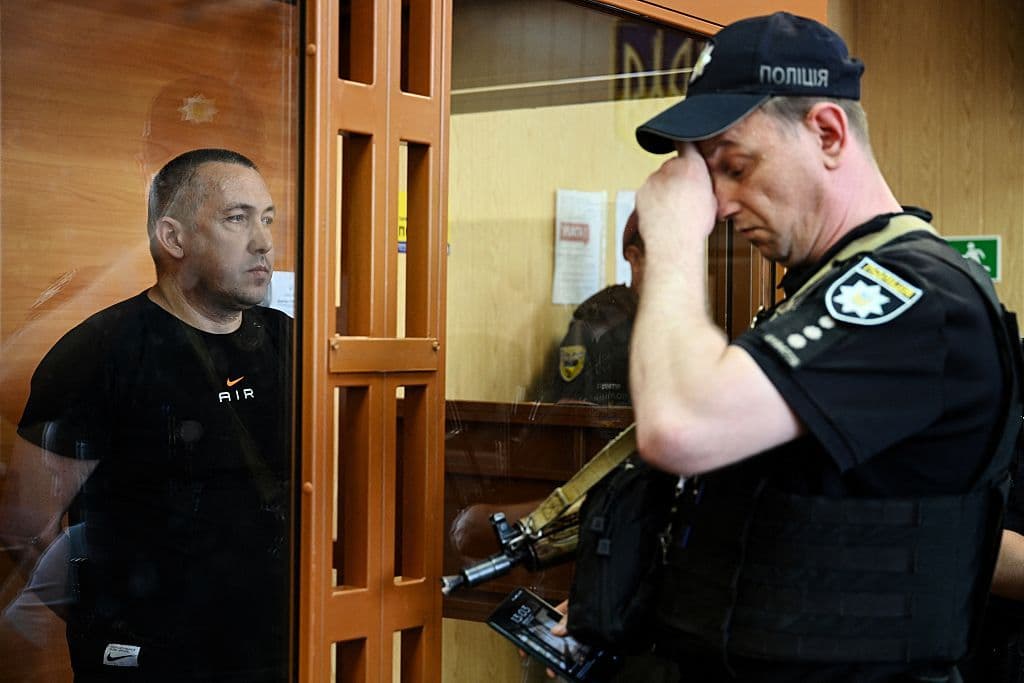
Stanislav Luchanov (L), suspected of being implicated in the kidnapping and murder of two brothers, stands in the defendants’ dock during a court hearing in Kyiv Oblast. (Genya Savilov / AFP via Getty Images)
Separately, Defense Minister Mykhailo Fedorov’s adviser Serhiy “Flash” Beskrestnov publicly addressed why Kyiv’s air raid sirens sometimes sound only after missiles have already struck — as happened during the July 11 attack, when explosions preceded sirens by roughly two minutes. Beskrestnov said Ukraine’s alert data comes entirely from partner nations’ satellite surveillance of launch sites, which cannot always distinguish launch preparation from an actual launch, and that a ballistic missile reaches Kyiv in just two to four minutes, leaving almost no margin for any transmission delay. “No system can be perfect, so failures do occur,” he wrote.
THE DAY’S TOLL
Russia launched eight Iskander-M/S-400 ballistic missiles, two Kh-59/69 cruise missiles, and 135 drones overnight; Ukraine’s Air Force downed seven missiles and 108 drones, while one ballistic missile and 25 drones struck 17 locations and debris fell on 10 more. Sirens sounded in Kyiv at 12:15 a.m. and explosions followed; 16 sites were damaged, including a school, though Zelensky said no casualties were reported in the capital itself. Regional authorities reported at least seven killed and 78 injured nationwide through the day, a toll that grew further that evening. Kherson Oblast lost three people with 25 injured, including a child, as Russian forces continued using camera-equipped FPV drones to hunt residents in what locals call a “human safari” — separate morning strikes left an 86-year-old man and a 68-year-old man with blast injuries and shrapnel wounds, while artillery fire on the Korabelnyi district injured a 17-year-old girl and a 54-year-old woman. Dnipropetrovsk Oblast’s toll from a July 13 strike on Synelnykove rose to two killed and four injured overnight, with six more injured elsewhere in the region including Nikopol and Kryvyi Rih. Zaporizhzhia Oblast lost one person — a woman killed when an FPV drone struck her car in Tavriiske — with 17 injured, including a child. Kharkiv Oblast reported 11 injured, including an 11-year-old girl; Chernihiv, three injured; Sumy, one killed and five injured; Donetsk, three injured. That evening, Russia struck a civilian cargo ship flying the Marshall Islands flag in Odesa’s port for the second consecutive day, killing two; a Togolese-flagged vessel unloading fertilizer had been hit the day before, killing five people including three foreign crew and injuring 10 more — the fifth consecutive day of Russian strikes on Odesa’s port infrastructure and shipping. Combined with the morning’s national toll, Russian attacks killed at least nine people across Ukraine on July 14.
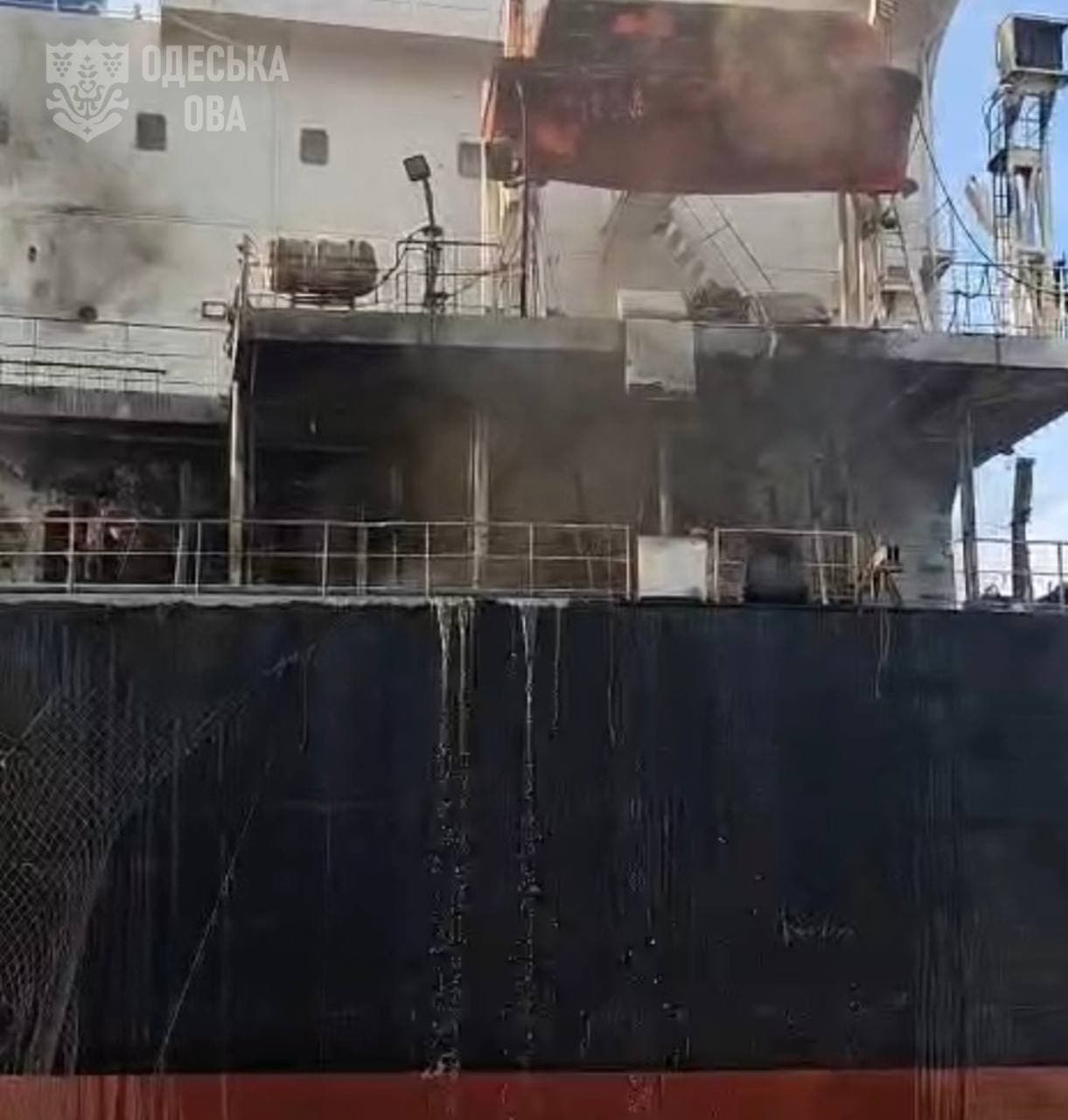
The aftermath of a Russian strike on a ported foreign vessel in Odesa Oblast. (Oleh Kiper/Telegram)
By the end of July 14, Ukraine had lost a prime minister and gained new missile-production licenses in the same 24 hours, while Washington mourned a senator whose final trip abroad was to the country he’d spent years defending in the Senate. The war outside all of it kept its own schedule: a refinery burning in Bashkortostan, an old warship sinking off Novorossiysk, and an old man in Kherson learning what it feels like to be hunted in his own city.
A PRAYER FOR UKRAINE
1. For the Old Men Hunted in Kherson’s Streets
Lord, an 86-year-old man and a 68-year-old man were each struck by drones today in Kherson, hunted the way no person should ever be hunted, in the city where they have likely lived their whole lives. We pray for their healing, and for every resident of that city who now has to calculate the risk of simply walking outside.
2. For the Brothers Taken From Kalynivka
Father, the details emerging about Maksym and Roman Moseichuk’s deaths are hard to hold — kidnapped, held, and killed by the very soldiers meant to be defending their country. We pray for their family, for a full and honest accounting of what happened, and for a military justice system willing to follow the truth wherever it leads.
3. For a Senator Who Kept Coming Back to Kyiv
Lord, Senator Lindsey Graham made this country’s cause his own, again and again, until his last trip home from Kyiv was also his last trip anywhere. We give thanks for everyone who has stood with Ukraine when it was neither easy nor popular, and we pray for the strength of everyone carrying that work forward now.
4. For a Country Changing Its Own Leadership Mid-War
God of wisdom, Ukraine’s government reshaped itself today — a prime minister dismissed, a defense company’s director gone, more change still to come. We pray for stability in the middle of that change, for leaders who rise to the moment rather than merely surviving it, and for a country that can hold its own institutions accountable even while defending itself from an enemy outside.
5. For Every Civilian Counted in June’s Terrible Record
God of the grieving, the United Nations confirmed today that June was the deadliest month for Ukrainian civilians in over four years — 293 people who did not live to see July. We ask for comfort for every family behind that number, and, in Your mercy, that July does not have to break the same record again.