
UKRAINE DAILY BRIEFING
Sunday, July 19, 2026
Last night, Russia threw more ballistic missiles at Kyiv in forty minutes than in any single attack of this entire war — and by the end of the day, twenty Ukrainians were dead across the country, including five sailors on a ship whose only cargo was grain. Ukraine hit back where it hurts: oil depots deep inside Russia went up in flames, and the ferry fleet that keeps occupied Crimea supplied is now mostly scrap metal. Meanwhile, for the third night in a row, Ukrainians packed their city squares to demand that their president fire his own top general.
The Day’s Reckoning
It’s 1:24 in the morning and the sirens are wailing over Kyiv. Here’s what that sound means: a ballistic missile is coming, and a ballistic missile crosses the sky at several times the speed of sound. You have maybe three or four minutes. Not enough time to dress, wake the kids, and get to a shelter. Now imagine that happening forty-one times in a little over an hour.
That was last night in Kyiv — the most ballistic missiles Russia has ever fired at the capital in one attack. By sunrise, rescue workers were pulling a body from a burning building, and a woman at an open-air market was setting out cottage cheese next to a wrecked metro station, explaining why she isn’t afraid anymore.
But here’s the twist: Ukraine had a big day too. Oil depots burned 370 miles inside Russia. The ferries that supply occupied Crimea are floating wrecks. Ukrainian troops liberated a town on the eastern front. And in a dozen cities, huge crowds spent a third straight night demanding the president fire his top general — while that general’s fellow commanders lined up to defend him.
A capital hammered like never before. A peninsula being cut off ship by ship. An army winning ground while its bosses feud in public. That was Sunday.
Forty Missiles in Forty Minutes: Why Last Night Was Different
You’ve probably heard that Russia attacks Kyiv with drones all the time. Drones are slow — they buzz like mopeds, you can hear them coming, and Ukraine shoots most of them down. Last night was not a drone night. Starting around 1:30 a.m. and lasting until 2:38, Russia fired roughly forty missiles at the capital: twenty-five ballistic missiles, ten hypersonic Zircons, three Onyx missiles, and three cruise missiles — plus 125 drones and swarms of decoys to confuse the defenses.
Two of those weapons deserve a plain-English translation. A Zircon is a missile Russia built to sink aircraft carriers — it flies at many times the speed of sound. An S-400 is actually an air-defense missile, designed to shoot planes out of the sky. Russia fired both at apartment buildings. When you’re using your shield as a club, that tells you something about your priorities — and your inventory.
Ukraine’s defenders did better than anyone had a right to expect: 108 drones down, plus seventeen ballistic and hypersonic missiles and a cruise missile. But there’s only one system that reliably stops ballistic missiles — the American-made Patriot — and the whole world is short on Patriot interceptors right now. So, twenty-three missiles and ten drones got through, hitting five districts of Kyiv and the suburbs beyond, where warehouse fires near Bucha injured two people. Nearly 600 emergency workers deployed. One person was killed; seventeen were injured. President Volodymyr Zelensky said Russia had spent days saving up missiles for exactly this moment.
The Morning After: Broken Glass, Cottage Cheese, and a Missing Son
“It was the scariest night of my life,” said Eleonora Belei, thirty, standing outside her damaged apartment building. Her neighborhood — Lukianivska, where the metro station’s street entrance is now wrecked and trains roll through without stopping — gets hit almost every month. “But it was the first time it was that close.” Around her, neighbors swept up glass next to burnt-out cars. Another resident, Olha, just shrugged at her blown-out windows: “We’ll fit new windows. The main thing is that everyone’s safe.”
Here’s the detail that stays with you. At the open-air market next to that broken station, the vendors showed up at dawn anyway. By 8 a.m., people were buying fruit and dairy. Maia Lagovska rides up to two hours each way, every day, to sell her cottage cheese bake — and she came this morning too.
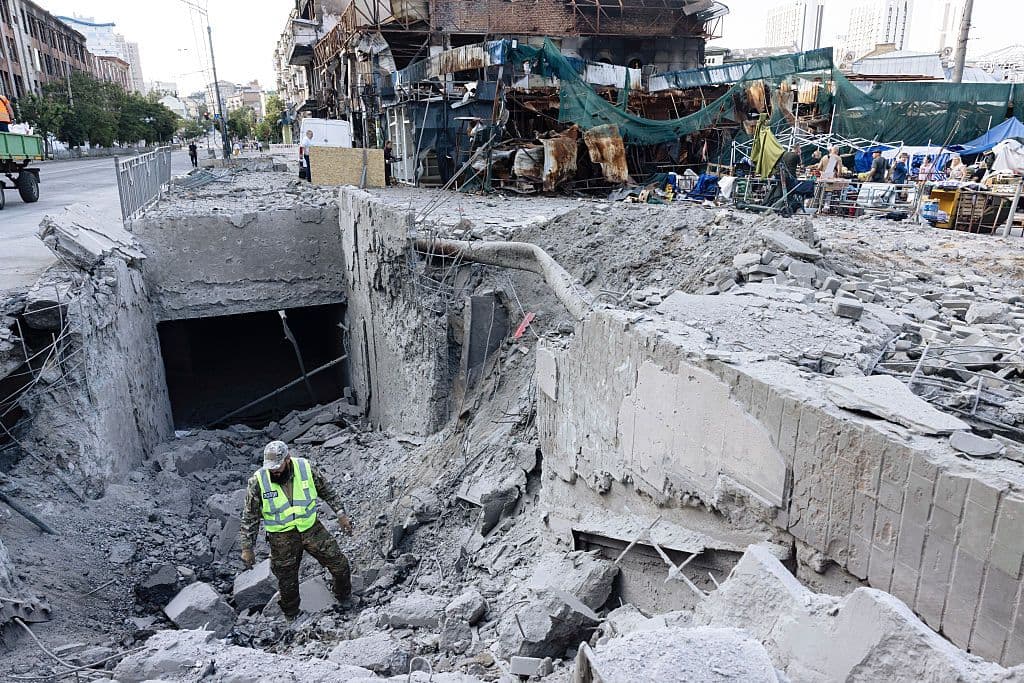
“I’m not scared anymore, as everything has already been taken from me — the war took my child,” she said, crying. Her only son, thirty-four, has been missing in action for six months. She keeps working in the hope that he’s alive somewhere in Russian captivity. “So, I have to work and hope.”
The missiles also flattened a factory called UKRTAC that makes body armor for Ukrainian soldiers. The whole plant — buildings, machines, everything — was destroyed by a direct hit. The one piece of good news: not a single worker was hurt.
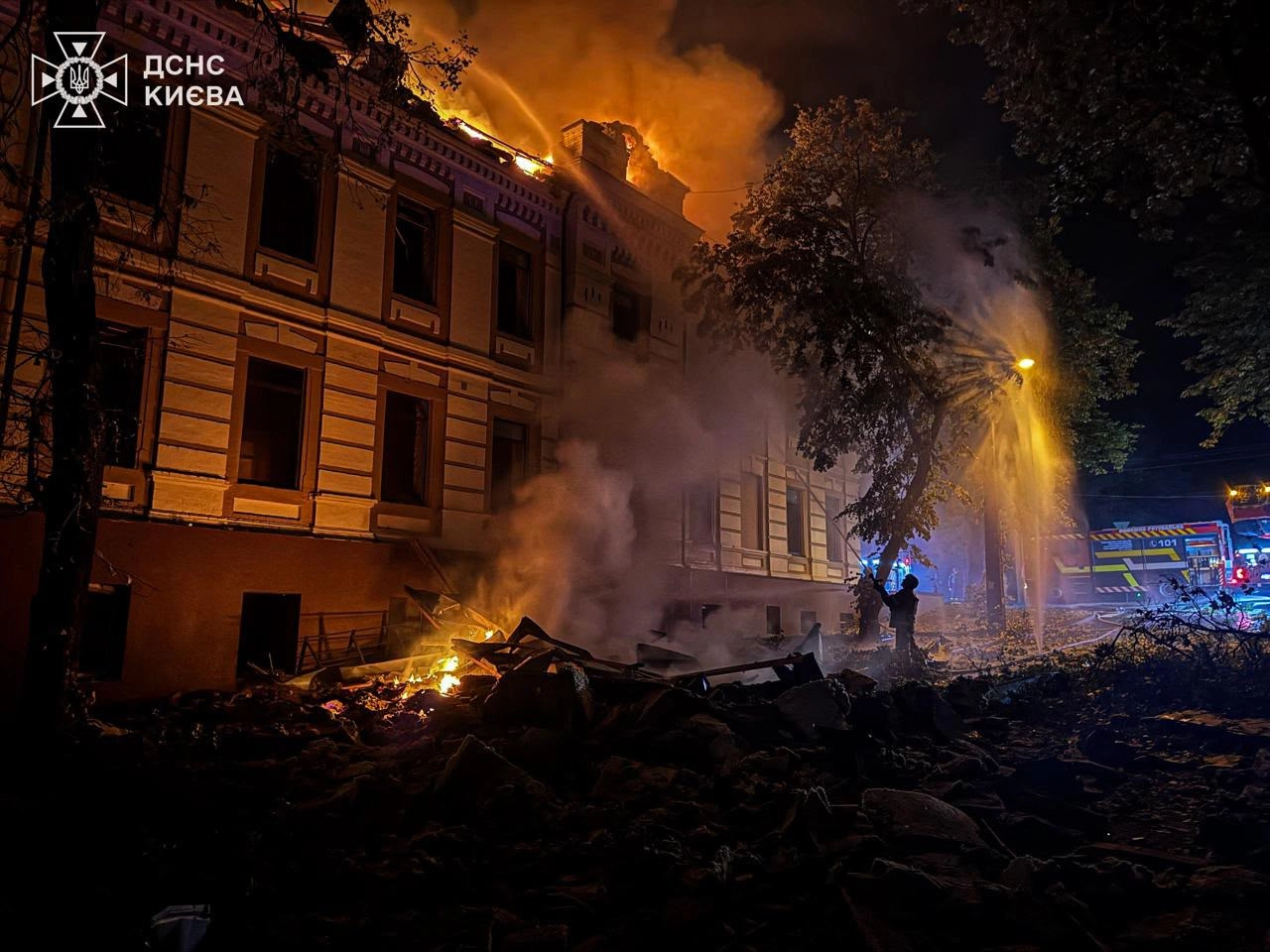
The aftermath of a strike on the Kyiv region. (Photo: State Emergency Service/Telegram)
Russia’s Math Problem: Firing Missiles Faster Than It Can Build Them
Here’s a number that should keep the Kremlin’s accountants up at night. Ukrainian intelligence estimates Russia’s factories can build about sixty Iskander ballistic missiles and forty S-400 missiles per month. In July alone, Russia has already fired 107 ballistic missiles and twenty Zircons at Ukraine — more than a full month’s production. One Ukrainian defense outlet calculates Russia burned through as much as two-thirds of its planned annual Zircon production in just this one month.
Think of it like a paycheck. If you spend your whole paycheck and then raid your savings account every single month, you can live large for a while — but the account runs down. Russia is spending down its missile savings, and it’s doing it on purpose. Why? Because ballistic missiles get through Ukraine’s defenses far more often than drones do, especially with Patriot interceptors scarce worldwide. So, Russia flipped its strategy: drone launches dropped from 5,749 in June to 2,955 so far in July, while the missile barrages got bigger and meaner.
Zoom out one week and the scale is staggering: about 1,450 attack drones, more than 1,640 guided bombs, and ninety-nine missiles thrown at fourteen Ukrainian regions. “Interceptors are needed every day,” Zelensky said after the strike. “These packages are literally saving lives during every massive Russian attack.” So, the race is on: does Russia’s missile stockpile run out before the world’s supply of interceptors does? The answer will shape the autumn.
They Bombed the Mail: Kharkiv’s Deadly Sunday
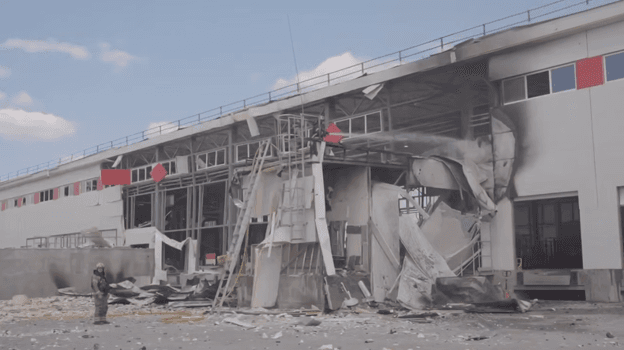
Picture Russia bombing a FedEx hub at lunchtime. That’s what happened in Kharkiv, Ukraine’s second-largest city. Around midday, Russian missiles hit a sorting terminal belonging to Nova Poshta — the delivery company that functions as Ukraine’s FedEx and Amazon rolled into one, the service that keeps packages, medicine, and small businesses moving in a country at war. Three separate strikes, by the company’s count. At least four people were killed — among them three men aged twenty-four, forty-five, and sixty-two — and at least nineteen were injured, three of them seriously. The company says this is part of a deliberate Russian campaign against postal infrastructure. Not soldiers. Not weapons. The mail.
Hours earlier, in Izium — a battered town near the front line in the same region — a Russian drone smashed into a five-story apartment building on a Sunday morning. Seventeen people were injured, including a one-year-old boy. The count kept climbing all day as rescue crews dug; the first reports said eight wounded before the number more than doubled.
Add the rest of Kharkiv Oblast — the surrounding region — and the past day’s toll grows by two more killed and twenty injured. Notice the pattern in the targets: a parcel depot, an apartment block, a town that’s already suffered years of this. None of it military. All of it aimed at making ordinary life impossible.
“Putin’s Definition of a Military Target”: Cheap Bombs, Wings Attached
First, a quick weapons lesson, because this one matters. A KAB is an old-fashioned “dumb” bomb from Soviet stockpiles with a cheap kit bolted on — pop-out wings and satellite guidance. That kit lets a Russian jet toss the bomb from about forty miles away and glide it onto a target without ever flying into range of Ukraine’s air defenses. It’s terror on a budget, and Russia has tens of thousands of them.
On Sunday morning, Russian jets lobbed seven of these at the city of Sumy, hitting homes and an industrial area. A man’s body was pulled from the rubble; three people went to the hospital. One of the strikes destroyed a rehabilitation center for children and adults with disabilities. Ukraine’s acting foreign minister, Andrii Sybiha, posted the wreckage with one acid line: “A rehabilitation center for children and people with disabilities. This is Putin’s definition of a military target.”
The same weapons fell on Bilozerka, a village in the southern Kherson region. A seventy-five-year-old woman was killed inside her own house. Two women in their fifties were hospitalized with shrapnel wounds and brain trauma; two elderly neighbors were treated on the spot; more than twenty homes were damaged or flattened. Across the Kherson region, the day’s total came to two dead and twenty-nine injured — four of them children. The night before, a drone hit an apartment building in Kherson city, injuring five people, two of them kids.
Five Dead on a Grain Ship: Russia Attacks the World’s Food Supply
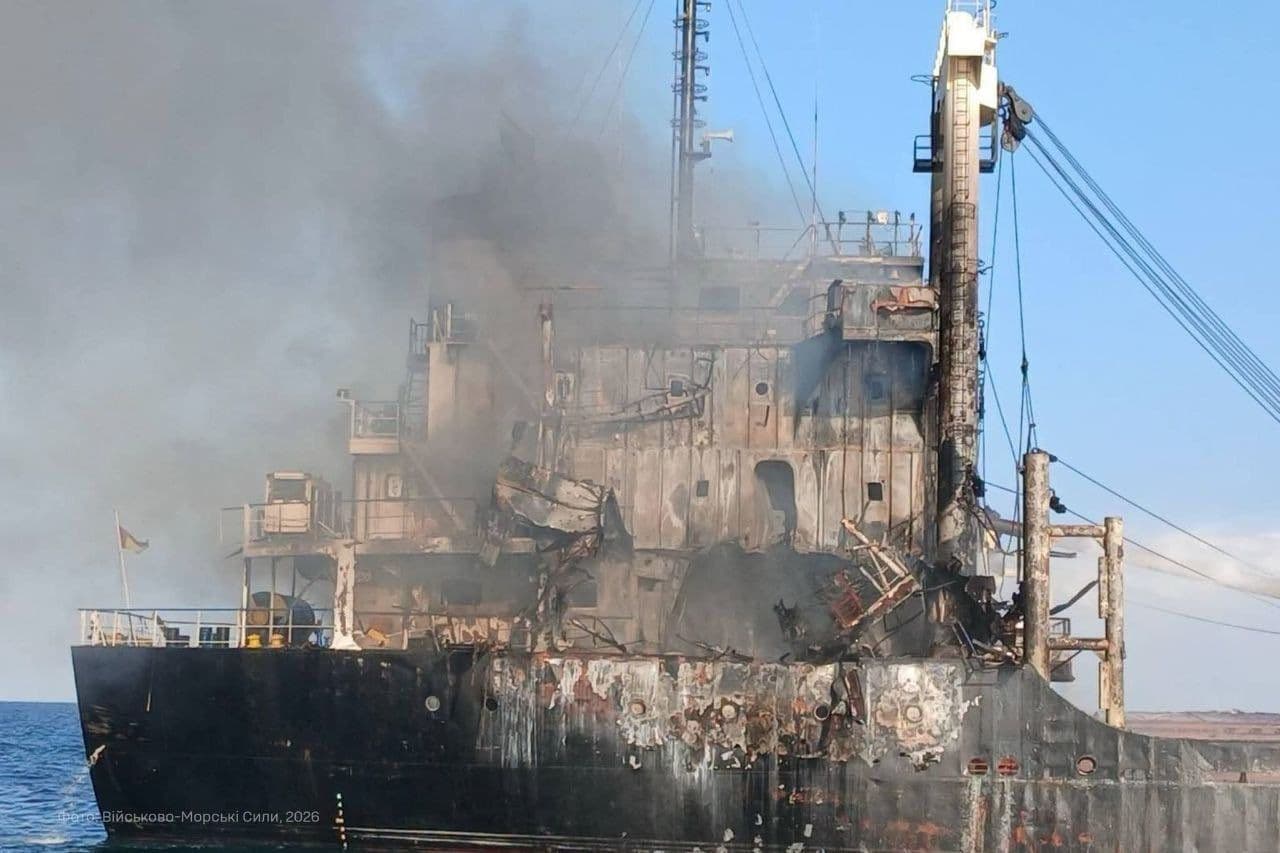
The Golden Leo had the most harmless job on the sea: hauling grain. Quick explainer — ships often fly the flag of a country like Guinea-Bissau for registration reasons, the way American companies incorporate in Delaware, and this one was owned by a Turkish company with Syrian and Indian crew members aboard. In other words: an international civilian ship, carrying food, leaving Ukraine through a corridor specifically set up so the world can keep eating Ukrainian grain.
Russia put three cruise missiles into it. The strikes hit the ship’s superstructure — the part where the crew lives and works — and set it on fire. Five people were killed, including the Ukrainian maritime pilot guiding the ship out. Eight crew members were rescued. Five more were still missing as search teams combed the water. Ukraine’s Navy called it “an act of terror against peaceful navigation” and began notifying the International Maritime Organization and the home countries of the dead.
And it wasn’t a one-off. The day before, Russian missiles hit a cargo ship flagged to Antigua and Barbuda in Odesa, killing one person — then a second strike hit the rescue crews as they responded. On Friday, a strike damaged a ship flagged to the Marshall Islands, injuring four crew. Three foreign civilian ships in three days. Meanwhile, an overnight missile strike on the Odesa region killed three people, including a sixteen-year-old boy, and injured twelve — among them a two-year-old.
An Ambulance, a Train, and a Number You Shouldn’t Skip Past
In the Zaporizhzhia region, a Russian FPV drone — the small kind a pilot steers by camera, like a video game with real explosives — chased down an International Red Cross ambulance and blew it up. Nobody was inside, thankfully. But think about what it means that the pilot could see the red cross on the vehicle and fired anyway.
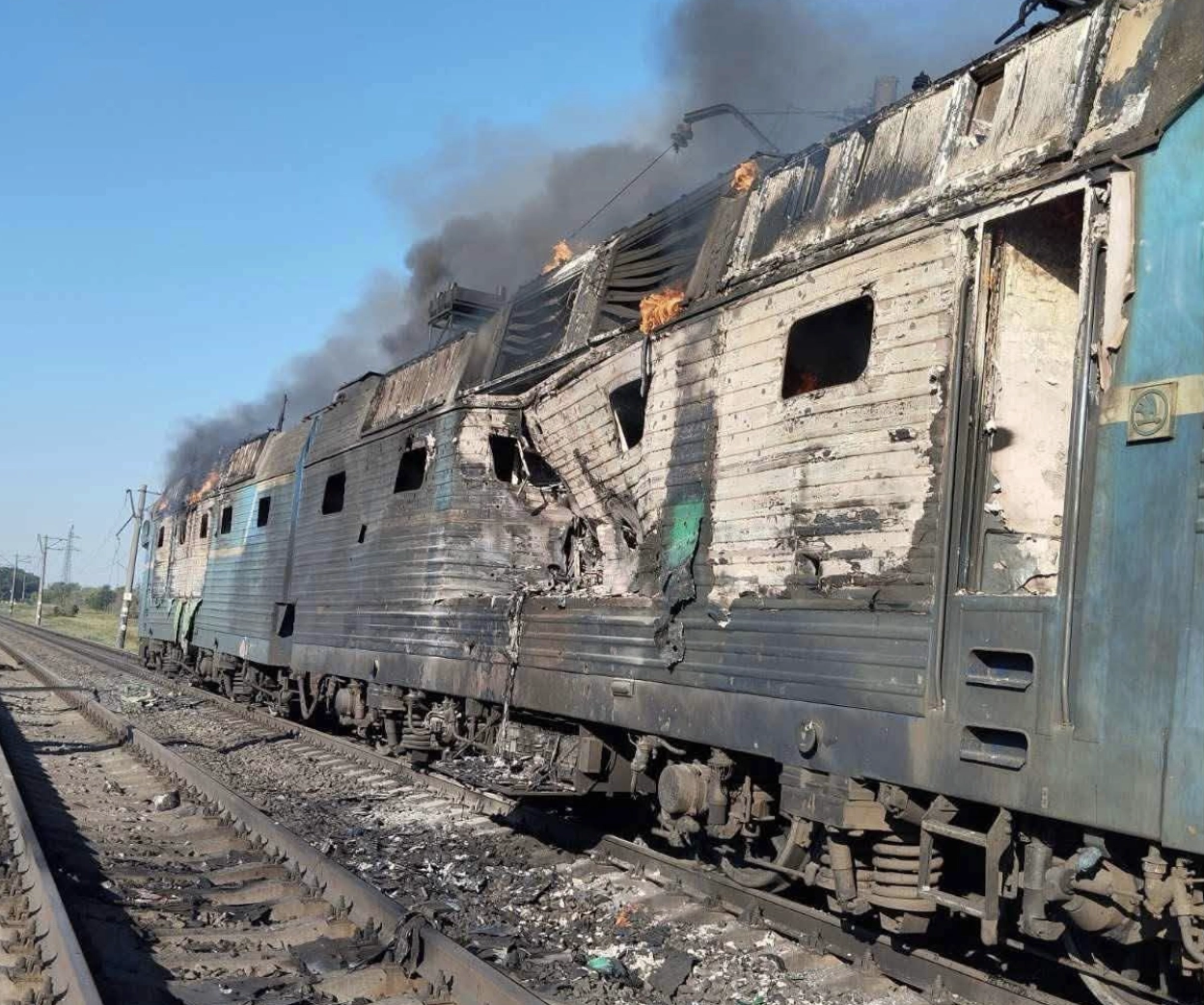
Nearby, another drone hit a passenger train headed for the city of Zaporizhzhia. This story ends better, and it’s worth knowing why: Ukraine has monitoring teams that watch for incoming threats along rail lines, and one of them ordered the passengers evacuated before the strike hit. The only casualty was a conductor with light injuries. Everyone else finished the trip by bus. Thirteen more people, including two children, were wounded across the region over the past day.
Now the number: twenty people killed and at least 142 injured across all of Ukraine in a single day. Five dead in the Donetsk region. One killed by drones in the Dnipropetrovsk region, a day after a drone killed a civilian in the city of Kryvyi Rih. One injured in Odesa. Plus, everyone you’ve already read about in Kharkiv, Sumy, Kherson, and Zaporizhzhia. It’s easy to let a number like that blur. Don’t. Every one of them was somebody’s Maia, somebody’s missing son.
Ukraine Burns Down “Russia’s Amazon” — and Calls It Sanctions Enforcement
Now for Ukraine’s side of the ledger, and it starts with a term worth learning: “long-range sanctions.” Regular sanctions are rules — Western countries ban selling Russia the parts it needs to build weapons. The problem is that Russia cheats, smuggling in banned components for drones and navigation systems through middlemen. Ukraine’s answer: if the smuggled parts are sitting in a warehouse, burn the warehouse. Sanctions enforced by drone — no customs officers required.
Overnight into July 18, Ukrainian drones flew more than 300 and 430 miles into Russia and hit two of those logistics hubs, in the Moscow and Tambov regions — warehouses Zelensky said were storing “navigation equipment, components for drone production, and other supplies for the Russian army.” An oil depot in the town of Noginsk that fuels the army caught fire in the same wave.
Two of the burning buildings belonged to Wildberries — essentially Russia’s Amazon. One fulfillment center processed 7.4 million items a day; the other handled 1.4 million and could store fifty-four million units. An independent Russian investigative outlet estimated the damage could top 100 billion rubles — roughly $1.2 billion, from one night. When Zelensky says “our long-range sanctions worked,” that’s the price tag he means.
The Oil Fires Spread: 370 Miles Inside Russia and Counting
Why does Ukraine keep hitting oil? Because oil is both Russia’s paycheck and its gas tank — selling it funds the war, and refining it fuels the tanks and jets. Hit the oil, and you hit both at once.
Overnight into Sunday, Ukraine’s security service reported striking three oil depots in Russia’s Stavropol region — about 370 miles from the border — setting off large fires and explosions at all three; Zelensky counted four. One town, Mikhailovsk, has now been hit three times in a few weeks. Even the Russian regional governor admitted the explosions could be heard in the regional capital. At sea, Ukrainian naval drones — basically remote-controlled speedboats packed with explosives — hit the tanker Avero, which had been hauling embargoed Russian crude to China and India, plus two more tankers, a floating crane used for military cargo, and an air-defense system in occupied territory. A major oil terminal in the Russian port of Novorossiysk caught fire and stopped loading entirely.
The occupied territories got no rest either: Ukrainian drones hit thirteen electrical infrastructure sites across Crimea and other occupied areas. Parts of Yalta lost power. Explosions rattled Kerch and briefly shut the Kerch Bridge — Russia’s only road link to Crimea. Russia claimed it shot down 140 Ukrainian drones overnight, which, even if true, mostly proves how crowded the sky was.
Operation “Moscow Will Fall Because of Crimea”: Death of a Ferry Fleet
Two more terms, and they’re the key to this whole story. The “shadow fleet” is Russia’s workaround for oil sanctions: a swarm of aging tankers registered under foreign flags so Russia can keep selling oil above the price limit the West set. And the Kerch ferries are occupied Crimea’s driveway — the boats that haul trucks, fuel, and military supplies from Russia to the peninsula.
On July 6, Ukraine launched an operation against both, with a grin built into its name: MoLoCHKa, a Ukrainian acronym meaning “Moscow will fall because of Crimea.” Two weeks in, the scoreboard: 176 Russian vessels struck — tankers, cargo ships, ferries, floating cranes, tugboats — thirteen of them in the past day alone. The ferry fleet is essentially finished. Of the four ferries plus one spare that once moved up to 250 vehicles a day (eighty percent of it military traffic), three are destroyed or beyond repair, and the last two can’t sail under their own power — they’re being dragged around by tugboats like dead whales. Total capacity: down seventy-five percent.
Here’s the part that helps Ukrainian soldiers most: Russia is now pulling up to 200 teams from Rubicon — one of its best drone units — off the front lines to stand guard over ships, one team per vessel. That’s like benching your star players to guard the parking lot. Former defense minister Mykhailo Fedorov predicted Crimea would become “an island.” Watch the ferries drifting behind tugboats and tell him he’s wrong.
Third Night in the Streets: Why Ukrainians Are Protesting Their Own Government
Now the story happening inside Ukraine — and if you’re new to it, here’s the thirty-second version. On July 15, President Zelensky fired his defense minister, Mykhailo Fedorov: young, tech-savvy, hugely popular, the guy credited with getting Elon Musk to cut Russian troops off from Starlink internet and with organizing the long-range strikes you just read about. Fedorov had been feuding with the army’s top general, Commander-in-Chief Oleksandr Syrskyi — an old-school, Soviet-trained commander whom many soldiers accuse of micromanaging and wasting lives. When forced to choose, Zelensky kept the general and dumped the reformer. Ukrainians noticed.
For the third straight night, thousands filled central Kyiv, with protests in Odesa, Lviv, Dnipro, and at least eight other cities. The crowds have exactly two demands: bring back Fedorov, and fire Syrskyi. Stop and appreciate how remarkable this is — a country under nightly missile attack, holding open protests against its own wartime government, peacefully. That’s democracy with the volume turned all the way up.
And it may be working. “Changes are definitely coming,” Fedorov told supporters. “There is a dialogue.” Zelensky said he’d spoken with both men: “Of course, I hear what people are saying… Decisions regarding the army will be worked out.” Then the Financial Times reported the real headline: Zelensky is considering firing Syrskyi if he can find the right replacement, and on Sunday he met with three top officers — including Mykhailo Drapatyi, one of the most respected generals in the country.
The Generals Pick Sides — and the Accusations Get Ugly
Then Syrskyi’s fellow commanders started posting, one after another, like teammates defending a coach the fans want fired. The Navy commander called wartime doubts about the army “unacceptable” and said only the president gets to judge the commander-in-chief. The Air Assault Forces commander dismissed “categorical judgments from people who have never issued combat orders.” The Territorial Defense chief urged troops to “remain above politics” and pledged “unwavering support.”
One asterisk worth knowing: the Air Assault Forces are widely seen as Syrskyi’s favorites — first in line for supplies, several commanders of ordinary mechanized brigades told the Kyiv Independent, while the bigger brigades actually holding the front line get shortchanged. When the best-fed units vouch for the man feeding them, weigh it accordingly.
And the accusations driving the protests are brutally specific. In a July 17 livestream, activist Serhii Sternenko — a former Fedorov adviser — accused Syrskyi of covering up “friendly fire” incidents, meaning cases where troops accidentally attack their own side. He described one on the Pokrovsk front: a suspended regiment commander allegedly sent soldiers into an armored assault with no reconnaissance and no warning to the units next door. The disoriented troops attacked a fellow Ukrainian brigade’s positions. Soldiers died on both ends. The General Staff hasn’t responded to questions. Meanwhile, some of Ukraine’s most respected veterans have demanded Syrskyi’s removal for years. This fight was coming; Fedorov’s firing just lit the fuse.
Meanwhile, at the Actual Front: Ukraine Takes Back a Town
While the politicians and generals argued, the army delivered the day’s best news: Ukrainian forces have likely liberated the town of Novopavlivka on the eastern front. A respected military observer reports Ukrainian troops clearing the town, pushing south of it, and advancing six miles or more in places. In a war where progress is normally measured in single tree lines, six miles is a genuinely big deal.
Russia, meanwhile, pushed almost everywhere and gained almost nowhere — small advances in the northern Sumy region, and confirmed nothing around Kharkiv, Slovyansk (where Ukrainians counterattacked), Pokrovsk, or half a dozen other hot spots. Two details tell you what this war has become. Near Lyman, Ukrainian drones have made the roads so deadly that Russian soldiers now carry supplies on foot for dozens of miles — imagine hauling everything an army needs, on your back, because any vehicle gets spotted and destroyed. Near Pokrovsk, Russian assault teams are sneaking forward on electric bikes, hiding under summer leaves.
And when the map disappoints Moscow, Moscow lies about the map. Russia’s Defense Ministry claimed to capture a village called Vilne — which sits more than eight miles beyond the furthest point any evidence shows Russian troops reaching. Analysts have a name for this: cognitive warfare. Announce a victory on television, and hope nobody checks the coordinates. Somebody always checks the coordinates.
Two Thousand Georgians: A Debt Thirty Years Old, Paid Back in Drones

Mamuka Mamulashvili in Odesa (Photo by Sergii Kostezh/Kyiv Post)
Here’s a story about why people fight for a country that isn’t theirs. Mamuka Mamulashvili was fourteen when he first fought Russia — not in Ukraine, but in his native Georgia, during a war in the early 1990s when Russia backed separatists tearing his country apart. He spent three months as a prisoner alongside his father, a general. And he never forgot the one group of foreign volunteers who showed up to help Georgia back then: Ukrainians.
So, in 2014, when Russia first invaded Ukraine, Mamulashvili founded the Georgian Legion to return the favor. Today it numbers about 2,000 fighters — the largest foreign unit in Ukraine’s army after the Latin American formations — and it has evolved with the war: these former special-operations soldiers are now roughly ninety percent drone operators. This week, Mamulashvili announced something publicly for the first time: the Legion will soon stop being a volunteer outfit and become a regular, official unit of Ukraine’s Armed Forces.
The bitter irony: Georgia’s own government is now, in his words, “absolutely pro-Russian” and supports neither Ukraine nor its citizens fighting there. “But Georgian society is pro-Ukrainian,” he says, “and we are the ambassadors of the Georgian nation here in Ukraine.” And he’s playing a long game: the drone skills his soldiers are mastering may one day rebuild Georgia’s own army.
The World Responds: One Sentence That Explains the Whole Day
Estonia’s foreign minister, Margus Tsahkna, answered the Kyiv barrage within hours — and packed the entire day into a single sentence: “Moscow resorts to terror when it knows strategic gains through other means are slipping out of reach.” Read that again with everything above in mind. Russia can’t win at the front, can’t protect its oil, can’t keep its ferries afloat — so it empties its missile stockpile onto sleeping cities. “Pressure must intensify,” Tsahkna wrote. “Sanctions must deepen.”
Ukraine’s ask is specific, and it’s stuck. “The 21st EU package must be unblocked now,” Sybiha demanded. Translation: the European Union has drafted its twenty-first round of sanctions against Russia, but EU sanctions require every member country to agree — which means a single friendly-to-Moscow government can hold the whole thing hostage. That’s where it sits.
The other ask is interceptors — the missiles that shoot down missiles — delivered daily, not eventually. Zelensky thanked “everyone who takes our agreements seriously,” which is diplomatic language with a blade in it: a pointed reminder to every country whose promised deliveries are running late while forty ballistic missiles fall on Kyiv in a single night.
What Sunday Revealed
Hold the day’s two pictures side by side. In Kyiv, a mother sells cottage cheese beside a wrecked metro station, working for a son who may or may not be alive, hours after the heaviest missile barrage her city has ever taken. In the Kerch Strait, the ferries that fed Russia’s occupation hang dead in the water behind tugboats.
Russia can still make Ukrainian nights terrifying — but only by spending missiles faster than it can build them. Ukraine is taking back towns and choking off a peninsula — while its people pack the squares arguing over who should lead the army that’s doing it. Neither side’s contradiction got resolved on Sunday. And the market still opened at eight.
A Prayer for Ukraine
1. For Maia, Who Sells Cheese and Waits for Her Son
Father, You saw her at dawn beside the broken metro station, setting out cottage cheese with tears in her eyes — a mother whose only son has been missing for six months, who works “on his behalf.” Hold her hope without letting it crush her. If he lives in captivity, sustain him and bring him home. And bless every vendor who swept up the glass and opened anyway. Their stubbornness is a kind of prayer; receive it.
2. For the Children Wounded Before Breakfast
Lord of the little ones, a one-year-old boy was pulled injured from an apartment block in Izium; a two-year-old and a seventeen-year-old bled in Odesa, where a sixteen-year-old boy will not grow older. Heal their bodies and guard their sleep from what they have seen. Comfort the parents keeping vigil in hospital corridors. You said to let the children come to You — but now they need You to come to them.
3. For the Sailors of the Golden Leo
God of the deep, five men who carried grain — bread for the world — died under missiles that hunted a harmless ship, and five are still missing in the water. Receive the dead, including the Ukrainian pilot guiding them out; be swift with the searchers; steady the eight who survived. Comfort families in Syria, India, and Ukraine who sent sailors to sea and received grief. Do not let the sea swallow the truth of what was done.
4. For a President and the Crowds Beneath His Windows
Sovereign Lord, Volodymyr Zelensky must choose between generals while missiles fall, and his people fill the squares for a third night. Give him wisdom beyond loyalty and pressure — to hear the soldiers’ grievances, weigh the commanders’ warnings, and decide for the nation, not the moment. Keep the protests peaceful and the army united. Let disagreement remain democracy’s strength, never the enemy’s opening.
5. For Justice That Outlasts the Arsenal
God of justice, Russia is emptying its stockpiles onto sleeping cities — forty missiles in forty minutes — as though terror could substitute for victory. Let the arithmetic of evil fail. Remember the rehabilitation center in Sumy, the grandmother in Bilozerka, every name in this day’s ledger, and hold their attackers to account.
In Your mercy, in Your justice, in Your time — bring this war to its end and let the ending be worthy of what Ukraine has endured.