
UKRAINE DAILY BRIEFING
July 20, 2026
Prepared by Diana Bozhyk
Russian missiles and Shahed drones killed at least fourteen people across six Ukrainian regions overnight, tearing through an apartment block in Zaporizhzhia and a postal terminal outside Kharkiv. Ukraine hit back by finishing off the ferry fleet that keeps occupied Crimea supplied — three of its five ships are now wrecks — while Ukrainian drones set fires across Moscow’s outskirts for the second time in three days. And for the fifth straight day, Ukrainians filled Kyiv’s streets demanding their president fire his own top general.
THE DAY’S RECKONING
It’s just past dawn, and in a five-story apartment building in Zaporizhzhia, rescue crews are still pulling bodies out of the rubble. A guided glide bomb — an old, unpowered bomb fitted with cheap pop-out wings and a satellite guidance kit, so it can be dropped from a safe distance and still hit its target — did this, along with five others that hit the city overnight. Two hundred and fifty miles away, in occupied Crimea, the picture is almost the reverse: it’s Russia’s own supply ships sinking or limping home. Three of the five ferries that ran the Kerch Strait — Crimea’s last real link to Russia — are now wrecks, or barges towed by tugboats because they can no longer move on their own. In Kyiv, thousands are back in the streets for a fifth day, demanding the president fire his own army chief. Over Moscow, meanwhile, more than 400 Ukrainian drones proved overnight that no Russian city is truly out of reach. One country is bleeding at its front lines and in its own cities. The other is bleeding in its capital’s suburbs. Neither is close to stopping.
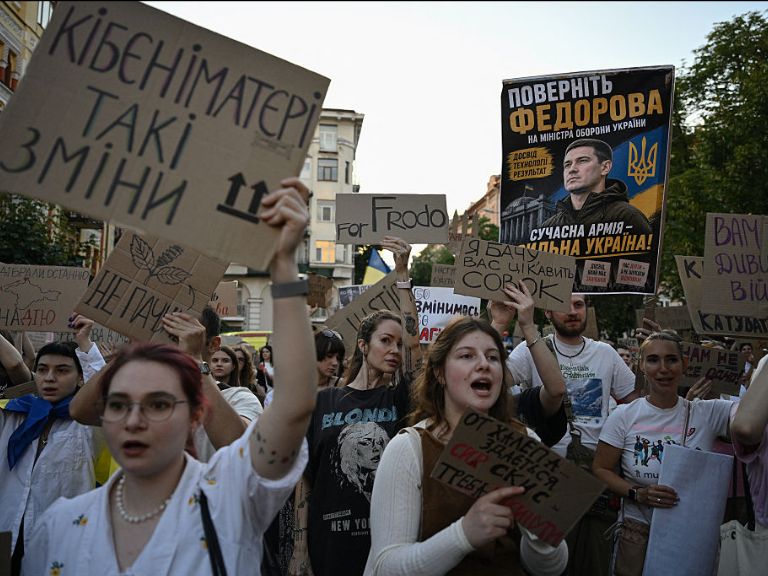
People take part in a protest against the ouster of reformist Defense Minister Mykhailo Fedorov and call for the dismissal of Ukraine’s Commander-in-Chief Oleksandr Syrskyi in Kyiv. (Genya Savilov / AFP / Getty Images)
FOURTEEN DEAD BY MORNING: A NIGHT OF BOMBS ACROSS SIX REGIONS
Imagine getting six different phone calls before breakfast, each one from a different part of your country, each one worse than the last. That was the shape of the morning for Ukraine’s regional governors. Overnight, Russia launched two Kh-59/69 cruise missiles — guided missiles fired from aircraft, precise enough to pick a specific building — from occupied Crimea, along with 94 Shahed-type strike drones, the slow, buzzing, exploding drones Russia has been mass-producing since 2022. Ukraine’s air force says it shot down 81 of the drones; one missile and nine drones still got through, hitting nine separate locations.
The deadliest single strike hit Zaporizhzhia, where six glide bombs tore through four sites, killing three people and wounding at least 78. Rescuers spent hours digging through a collapsed five-story apartment building to recover the bodies. “Where there should have been children’s laughter and a safe home, today there are ruins,” said regional governor Ivan Fedorov. In Kharkiv Oblast, an attack on a terminal belonging to Nova Poshta — Ukraine’s version of FedEx and Amazon combined — killed four people; in Izium, guided bombs, rocket systems, and drones wounded 22 more, including a one-year-old boy who went into acute shock. A rehabilitation center for children and adults with disabilities was destroyed in Sumy Oblast, killing one person. “This is Putin’s definition of a military target,” Ukraine’s acting foreign minister wrote bitterly on social media. Kherson, Donetsk, and Dnipropetrovsk oblasts absorbed the rest of the night’s damage. By the time governors finished counting, the toll stood at 14 dead and 162 wounded — one ordinary Sunday night, repeated across an entire country.
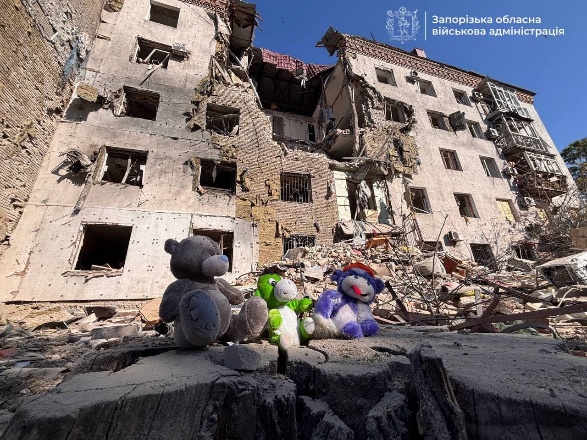
Stuffed toys lie amid the rubble of an apartment building damaged in a Russian guided aerial bomb attack on Zaporizhzhia, Ukraine. (Zaporizhzhia Oblast Military Administration/Telegram)
RECORD JUNE: THE DEADLIEST MONTH SINCE 2022
Here’s a number that’s easy to read past and hard to actually feel: 293. That’s how many Ukrainian civilians the United Nations says were killed by the war in June 2026 alone — the highest monthly total since the first weeks of the full-scale invasion in 2022. The UN’s Human Rights Monitoring Mission in Ukraine, the body tasked with independently tracking casualties, also recorded at least 1,990 people wounded that month, a roughly 10 percent jump from May’s already-record toll of 282 killed and 1,794 injured.
Long-range missiles and drones — not front-line combat — did most of the killing: 45 percent of June’s civilian deaths, 126 people, came from strikes far from the trenches, the kind that hit apartment blocks and postal terminals rather than soldiers. Since the start of the year, long-range strikes alone have killed 1,396 civilians and wounded 7,978 — a rate 37 percent higher than the same period last year. Meanwhile, short-range drones, the kind that hunt individual people and vehicles, caused the most casualties of any single weapon near the front line. Don’t let the numbers blur together: this is not a war winding down. By every measure the UN can track, it is getting more dangerous for ordinary Ukrainians with each passing month, not less.
SINKING THE FERRIES: UKRAINE’S TWO-WEEK SIEGE OF CRIMEA
Picture a peninsula that can only be reached by boat or by one long highway — and now picture Ukraine spending two straight weeks trying to wreck both. That is exactly what has been happening to occupied Crimea since July 6, when Ukraine’s Unmanned Systems Forces launched what its commander, Major Robert “Magyar” Brovdi, calls a “logistics lockdown.” The campaign has an unofficial name too: Operation MoLoCHKa, a Ukrainian acronym that translates to “Moscow will fall because of Crimea.”
Two weeks in, the results: Ukrainian forces have struck 183 vessels since the operation began, including 119 in the Sea of Azov and 64 in the Black Sea. But the clearest sign of success sits at the Kerch Strait, the narrow waterway between mainland Russia and Crimea. Before the campaign, five ferries there could move 180 to 250 vehicles a day — roughly 80 percent of it military cargo. Now three of those ferries are destroyed outright, and the remaining two have lost the ability to move under their own power; they are being towed like barges. Ferry capacity is down 75 percent, and overall traffic between Russia and Crimea has fallen to 30 percent of June’s volume. Brovdi’s forces have also hit 103 pieces of Crimea’s energy infrastructure since July 1. Cutting a peninsula off from its own power grid and its own bridge isn’t subtle — it’s meant to make Crimea useless to the army occupying it.
Even some of Russia’s own hardliners aren’t buying the official story anymore. When Moscow’s handpicked governor in occupied Zaporizhzhia Oblast told Vladimir Putin this week that Russian forces had achieved “complete control” over the M-14 highway — the road connecting mainland Russia to occupied Crimea — Russian military bloggers publicly called him out, noting that Ukrainian drones still fly over the highway routinely, driving up insurance costs for the fuel convoys that use it. Independent analysts have confirmed at least four Ukrainian strikes on the road since July 1. When your own side’s cheerleaders won’t repeat your good news, that tells you something.
PAYPHONES AND BLACKOUTS: LIFE INSIDE THE BLOCKADE
Here’s a strange image to sit with: a Soviet-style landline payphone, freshly installed on a street corner in occupied Crimea in the year 2026, because the mobile network can no longer be trusted to work. Russian occupation authorities began bolting these devices onto poles this week in the city of Dzhankoi, where cell service now runs on a fixed schedule — twice a day, four hours at a time. A similar payphone appeared on Theatre Square in the city of Yevpatoria. They’re free to use and can reach emergency services even without electricity, officials say — which tells you plainly how unreliable both power and cell coverage have become.
Crimea’s Moscow-installed governor, Sergei Aksyonov, admitted this week that authorities can no longer even draw up a fixed schedule for power outages; he’s ordered reduced street lighting across the peninsula and is shipping in generators to towns that have gone dark for more than 12 days straight. In Sevastopol, officials have abandoned their old “two hours on, six hours off” rationing plan entirely and now tell residents to just listen to the radio and hope. Fuel is so scarce that rationing isn’t even possible anymore; ordinary drivers who don’t work for the government or emergency services are being told to find other ways to get around. On the roads leading to Crimea, Ukraine’s cheap, $2,000 carbon-fiber “Hornet” drones have been swarming Russian supply routes, with an estimated 3,000 to 5,000 freight trucks burned since mid-June alone. Crimea’s tourist industry — once the peninsula’s pride — is reporting its worst summer since Russia’s 2014 annexation, with bookings down 80 percent. This is what an unwinding military logistics chain looks like from the inside: not headlines, but payphones, generator deliveries, and drivers giving up on driving.
MOSCOW’S SECOND FIRE IN THREE DAYS
For the second time in three days, the skies over Russia’s own capital region lit up with drone alarms. Moscow Mayor Sergei Sobyanin said more than 400 Ukrainian drones approached the city and surrounding Moscow Oblast between 8:30 p.m. Sunday and 5 a.m. Monday, with 85 shot down on final approach — meaning, by his own account, hundreds more got through or were intercepted only after reaching populated areas.
Video verified by independent Russian outlets showed at least two large fires and thick black smoke rising from Podolsk, a town roughly 25 miles south of the Kremlin, after drones struck an oil depot there. One of Wildberries’ largest warehouses — Wildberries being Russia’s rough equivalent of Amazon — was hit in the nearby town of Koledino; the company denied damage but confirmed it evacuated staff. A separate logistics complex covering more than 160 acres was destroyed in the Yuzhnye Vorota industrial park near Domodedovo. A drone also slammed directly into a residential apartment building in Domodedovo, hospitalizing six people, including three foreign nationals. President Volodymyr Zelensky confirmed the strikes targeted an oil depot and logistics facilities more than 250 miles from Ukraine’s border, saying in a video address that the warehouses hit were linked to Russia’s military supply chain. It’s the second reported strike on Russia’s logistics infrastructure in three days: on July 18, Ukrainian drones hit two more Wildberries warehouses, in Elektrostal and Tambov Oblast, in an attack Russian media say damaged up to 15 percent of the company’s entire warehouse capacity nationwide. Some of the small businesses that lost merchandise in those fires are now scrambling for financing just to stay open. The war that Moscow’s residents were long told was happening somewhere else keeps arriving at their own back door.
PICKING APART RUSSIA’S AIR SHIELD
Before Ukrainian drones can reach Russian oil depots and warehouses, something has to clear a path through the air defenses meant to stop them — and that quieter, less photogenic campaign has been grinding on for weeks. Overnight, Ukraine’s Unmanned Systems Forces struck six more Russian air defense assets in Russia’s Krasnodar region, including a Tor-M2 mobile air defense system and four separate radar stations. Commander Brovdi says his forces have now destroyed 25 Russian air defense assets since July 1 alone — 12 air defense systems, 12 radars, and one electronic warfare unit.
It’s the accumulation, not any single strike, that matters here. Every radar or missile launcher taken offline is one fewer set of eyes watching for the next wave of drones — which is part of why Ukraine’s deeper strikes into Russia have kept getting bolder. Separately, satellite imagery published July 19 confirmed something Ukraine had claimed for days: a Russian Tu-95 strategic bomber — one of the aircraft Russia uses to launch cruise missiles at Ukrainian cities from hundreds of miles away — was destroyed in strikes on the Engels-2 airbase in Saratov Oblast back on July 15–16. Each bomber destroyed on the ground is one that never takes off to threaten Ukrainian cities again. Quietly, methodically, Ukraine is trying to make sure that the sky over Russia’s own territory stops feeling safe to its military.
DEATH AT SEA: THE GOLDEN LEO AND RUSSIA’S WIDENING TARGET LIST
A ship called the Golden Leo left the port of Odesa on July 19 carrying nothing more threatening than grain. It was Turkish-owned, flying the flag of Guinea-Bissau, and it was struck by three Russian Kh-59/69 cruise missiles anyway. At least 10 sailors were killed. Ukrainian officials called it a deliberate attack on civilian shipping — and a prominent Russian military blogger all but confirmed the intent, claiming Russia has begun deploying heavier anti-ship missiles because ordinary drones and lighter missiles weren’t doing enough damage to large tankers and cargo ships. Only multiple cruise missiles or heavy anti-ship weapons, the blogger said, can reliably punch through a ship that size — an escalation described openly, in public, by people sympathetic to those ordering it.
The attacks on Odesa didn’t stop there. Later the same day, a Russian strike on a civilian enterprise in the Odesa region killed six people and wounded six more, rupturing a gas pipeline; air raid alerts followed for two nearby districts. It was at least the third reported Russian strike on Odesa’s port area or merchant shipping in a week. Russia, for its part, claimed a Ukrainian strike hit a passenger bus in Shebekino, Belgorod Oblast, killing five Russian civilians including a child — a claim that, if accurate, is a genuine tragedy, though it comes from a Russian official and has not been independently verified.
Ukraine’s own attacks on shipping tell the opposite story. Overnight, Ukrainian forces struck three Russian shadow fleet tankers and four oil depots more than 300 miles inside Russia’s Stavropol Krai, while a Ukrainian naval drone — a remote-controlled speedboat packed with explosives — sank the tanker Avero in the Black Sea. The Avero had spent months hauling sanctioned Russian crude to China and India, part of the fleet Russia uses to dodge the price cap the West imposed to choke off its oil revenue. War has a way of making every side’s ledger of victims real at once — but only one side is choosing which ships to sink.
RUSSIA’S MATH PROBLEM: MORE MISSILES THAN IT CAN BUILD
Here’s a strange kind of warning sign: an army firing weapons faster than its own factories can replace them. In the first 19 days of July alone, Russia launched 107 ballistic missiles and 20 of its 3M22 Zircon missiles — a weapon marketed as hypersonic, though missile analyst Fabian Hinz argues it’s more accurately a “quasi-ballistic” missile, one that follows an arcing, near-space flight path with some steering ability, rather than a true hypersonic cruise missile. Either way, it’s hard for air defenses to stop. Ukraine’s military intelligence agency, HUR, estimates Russia can only manufacture around 100 ballistic missiles a month combined. Russia has already blown past that pace in barely three weeks — and burned through roughly two-thirds of its entire planned annual output of Zircons doing it. Before this latest wave, HUR estimated Russia’s stockpiles held over 100 Iskander-M missiles, more than 400 S-400 interceptor missiles, and over 120 Zircons. Spending a stockpile faster than it’s refilled is like spending your whole paycheck and then raiding your savings account every single month — sustainable for a while, but not forever.
Russia is also leaning harder on jet-powered drones and a newer weapon called the S8000 Banderol, a hybrid of drone and missile that flies at roughly 370 miles per hour, fast enough that Ukrainian officials compare it to a cruise missile. Its supply chain is its own small scandal: Ukrainian intelligence says it uses a Chinese jet engine — the Swiwin SW800Pro, sold for roughly $16,000 on the shopping site AliExpress — and a battery pack made by Japan’s Murata, with only its antenna made in Russia. A New York Times investigation published July 12 alleges Russia ran a spy network inside Japan, operated by its military intelligence service, specifically to smuggle out components its own industry can’t produce.
THE FORTRESS BELT HOLDS — FOR NOW
Kostiantynivka was once home to more than 100,000 people. Today it’s the southernmost anchor of what Ukrainians call the Donbas “fortress belt” — a cluster of cities, including Kramatorsk and Sloviansk, that stands as the last real obstacle to Russia seizing all of Donetsk Oblast. This week, the fight for it turned into a fight over whether it had even happened. On July 18, a Ukrainian regiment called Skelia published footage of soldiers raising a Ukrainian flag inside the city’s House of Culture, claiming the building — and the city — were clear of Russian troops. A day later, Russia’s Defense Ministry released its own video: two Ukrainian soldiers, seemingly the same ones, now prisoners, saying the city was under Russian control. Skelia confirmed the men were captured but rejected the claim that the city itself had fallen, calling the display of prisoners “extremely painful news” that proved nothing about its status. Analysts who track the war believe some of Russia’s footage may be artificially altered.
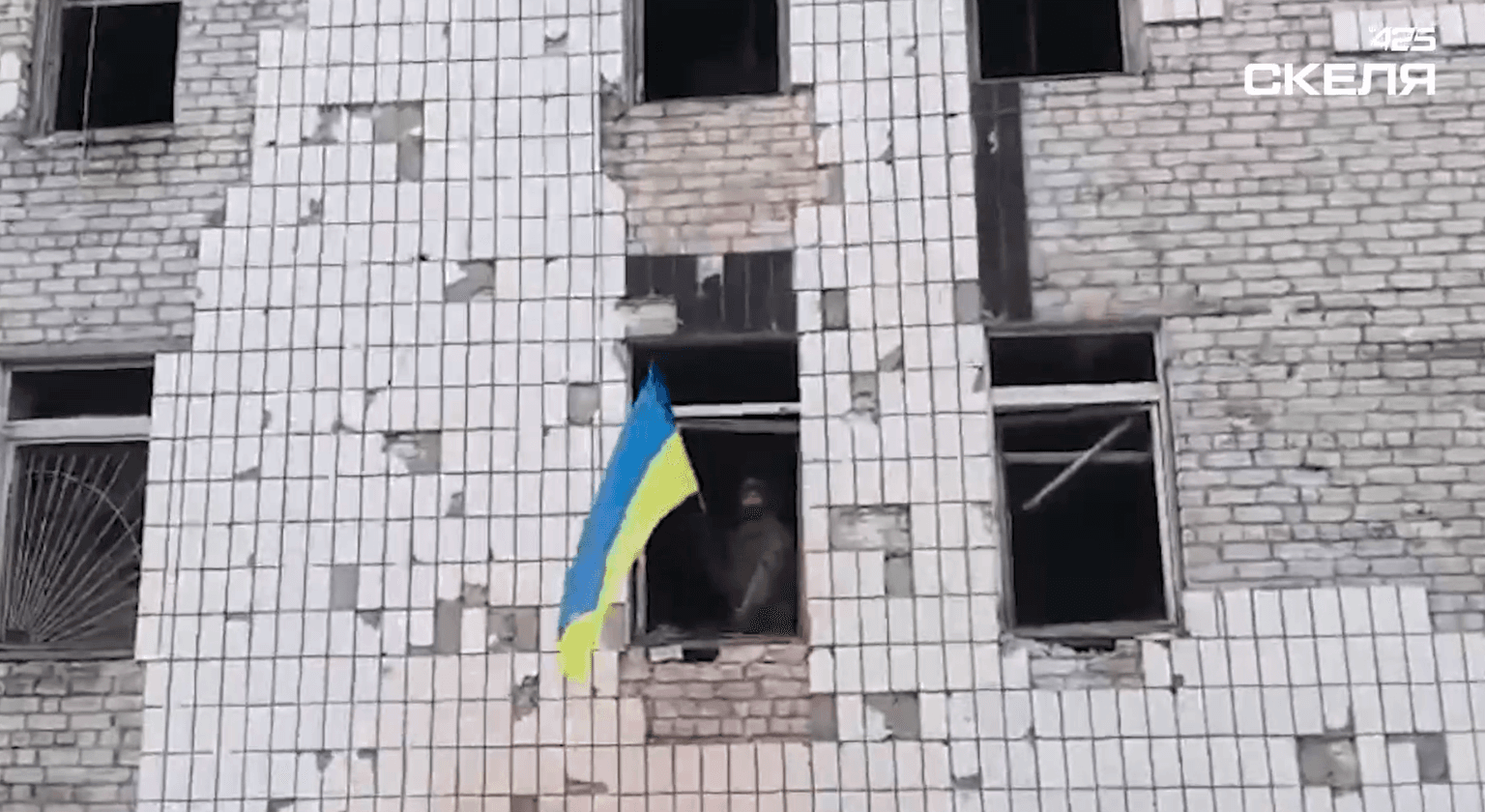
A screenshot from a video showing what appears to be a Ukrainian soldier from the Skelia Assault Regiment holding a Ukrainian flag inside a building in the embattled city of Kostiantynivka, Donetsk Oblast. The video was published, although the exact date of the operation has not been confirmed. (Skelia Assault Regiment/Telegram)
What both sides seem to agree on is messier, and in a way more honest: nobody fully controls Kostiantynivka. Russian troops have infiltrated much of it in small groups without holding it outright; Ukrainian defenders are still there too, reaching their positions largely on foot because the two access roads are under constant Russian fire. “The Russians move in, build up their forces, and we try to drive them out. Our presence there remains,” one Ukrainian veterans’-group official said, describing a city with no clean front line — just overlapping, contested neighborhoods. Commander-in-chief Oleksandr Syrskyi said Ukrainian troops killed 21 Russian soldiers and struck six shelters there in a single day this week, with up to 145 Russian troops now concentrated in the area. The city is holding, barely — and everyone involved knows “holding” and “controlling” are not the same thing.
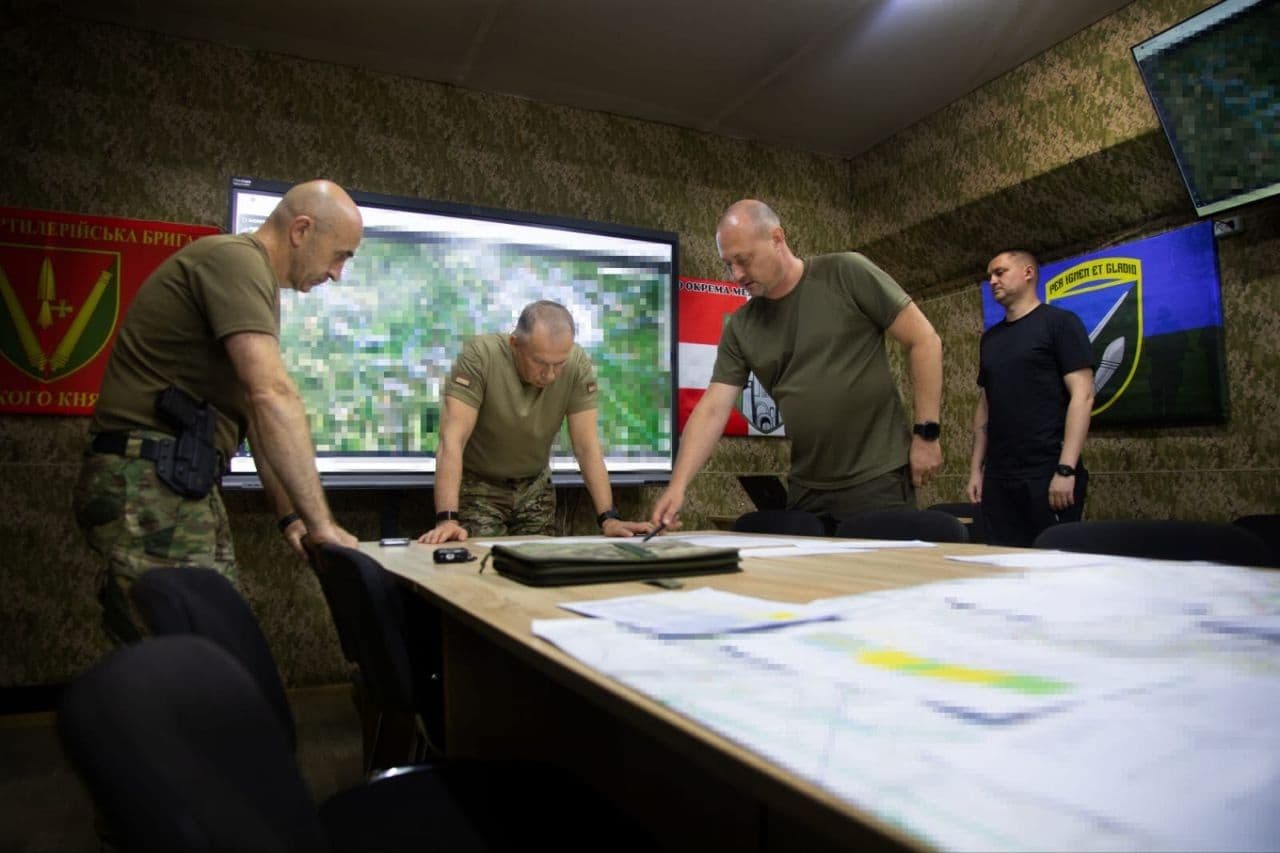
Commander-in-Chief Oleksandr Syrskyi receives a briefing from military commanders during a visit to the Kostiantynivka sector in Donetsk Oblast, Ukraine. (Oleksandr Syrskyi/Telegram)
QUIET EVERYWHERE ELSE: THE LINE THAT DIDN’T MOVE
Away from Kostiantynivka’s headlines, most of the 600-mile front line simply didn’t move — which, in this war, counts as its own kind of news. Russian forces pushed at Ukrainian lines north and northeast of Kharkiv City, in the Kupyansk and Borova areas, in the Slovyansk direction, and near Pokrovsk and Dobropillya, but made no confirmed advances anywhere along that stretch. Russian milbloggers claimed small gains near Lyman and around Kostiantynivka’s outskirts, but Ukraine’s own military did not confirm them, and past claims from the same sources have repeatedly turned out to be exaggerated or false.
Where Ukraine did move, it moved forward. In the Novopavlivka direction, footage suggests Ukrainian troops hold more ground than previously thought, with a Russian military blogger even admitting Russian forces had pulled back from some infiltrated positions. And in the Hulyaipole direction, in western Zaporizhzhia Oblast, a Ukrainian assault regiment cleared several villages — Kosivtseve, Vozdvyzhivka, Rizdvianka, and Verkhnia Tersa — of Russian infiltration groups whose actual mission, Ukrainian officers say, was never to fight at all: it was to sneak behind Ukrainian lines, hunt for drone crews, and plant Russian flags in empty villages for propaganda videos claiming territory that was never really lost. Ukrainian troops captured 64 of those infiltrators. In the south, Ukraine’s own SBU security service ran a very different kind of operation, sending 13 drones to hit a Russian FSB coordination hub hidden inside a boarding house in occupied Kherson Oblast, where roughly 100 Russian personnel and 70 vehicles were reportedly stationed. No ground shifted hands there either — but for a night, that hub stopped functioning.
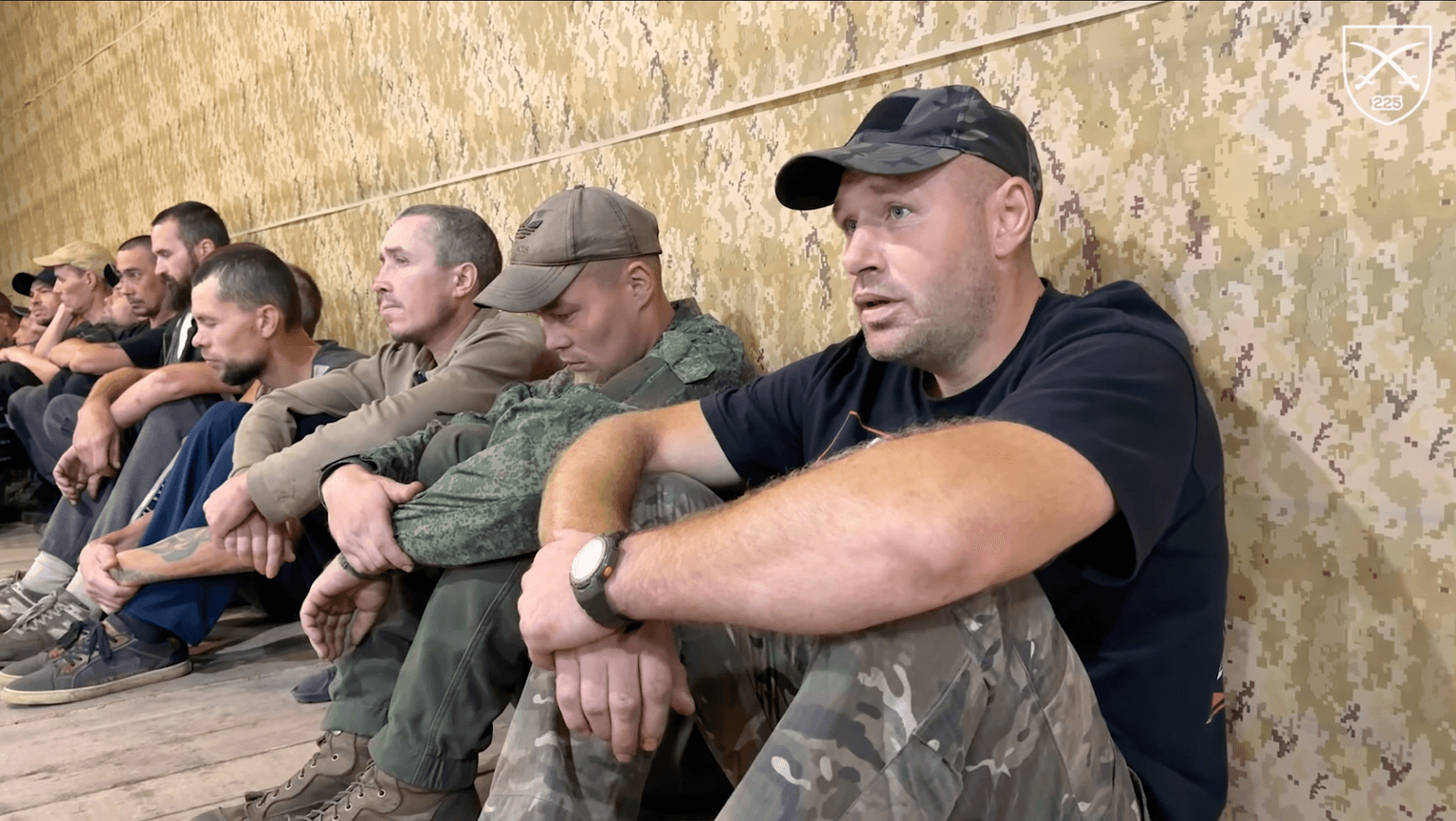
A screenshot of a video allegedly showing Russian soldiers taken in Ukraine’s captivity during missions in Zaporizhzhia Oblast. (Facebook / Ukraine’s 225th Assault Regiment)
A GENERAL ON TRIAL BY PROTEST
For five straight days now, Ukrainians have been showing up in Kyiv’s squares — not to protest the war itself, but to protest who’s running it. The anger traces back to July 15, when President Volodymyr Zelensky fired his young, widely popular defense minister, Mykhailo Fedorov, in a broader cabinet reshuffle. Protesters, including soldiers and veterans, have settled on two demands: bring Fedorov back, and remove commander-in-chief Oleksandr Syrskyi, whom many blame for pushing Fedorov out over a long-simmering personal rivalry. Organizers say they’ve given Zelensky until Friday to act, after which they plan to pause for three days before deciding what comes next.
Into that pressure walked Syrskyi himself, breaking a long habit of staying out of public disputes to publish a personal column defending his record. “It was a surprise to learn that the minister and I had a conflict,” he wrote, insisting their disagreements were the normal friction of two institutions at war, not personal enmity. He denied micromanaging the army, denied resisting the shift toward drone warfare — noting that he personally helped create Ukraine’s dedicated drone force and picked its commander — and pushed back on claims he lacks a strategy, arguing that publishing one publicly would simply be handing it to the enemy. “Reducing this war to a confrontation between two individuals is the greatest favor we could do for the enemy,” he wrote. Fedorov, for his part, has reportedly turned down other government roles Zelensky offered him, saying he’ll only accept his old job back. And according to Bloomberg, Zelensky is now actively weighing whether to replace Syrskyi anyway — with Joint Forces chief Mykhailo Drapatyi, a favorite among protesters, as the leading name among eleven candidates under consideration. A decision could come within days.
NEW GOVERNMENT, SAME WAR
While the argument over Ukraine’s top general dominates the streets, a quieter transition has already happened around him. Ukraine’s parliament confirmed a new prime minister this month, Serhii Koretskyi — a former head of the state oil and gas company Naftogaz — after 258 lawmakers voted to remove his predecessor, Yuliia Svyrydenko, in the same reshuffle that cost Fedorov his job. European Commission President Ursula von der Leyen called Koretskyi this week, their first conversation since he took office, and both pledged to keep Ukraine’s European Union membership bid moving. “We will continue cooperating closely on reforms that move Ukraine’s EU accession process forward,” von der Leyen wrote afterward. Koretskyi, in turn, said Ukraine is counting on “the European Union’s continued unity in support of Ukraine” as accession talks proceed — talks that outside monitors say have already begun slowing, even with two of six required negotiation areas formally opened.
The reshuffle claimed one more casualty on the European integration front: Taras Kachka, until recently deputy prime minister for EU and Euro-Atlantic integration, was replaced by former ambassador Vsevolod Chentsov. Von der Leyen also highlighted a recently signed “Drone Deal” — an agreement to use European industrial capacity to help build Ukraine’s most advanced drones at scale — alongside a separate Defense Industrial Partnership signed last week that includes roughly $12.5 billion for drones, jets, and missiles for Ukraine. Governments can change hands in the middle of a war; what both sides insist won’t change is the money and machinery still flowing toward the fight.
BRITAIN GETS A NEW PRIME MINISTER
Six thousand miles from any front line, one of Ukraine’s most important wartime allies just changed leaders. Andy Burnham, the former mayor of the English city of Manchester, was sworn in this week as Britain’s new prime minister, succeeding Keir Starmer, who resigned last month after his popularity slid despite a landslide election win two years ago. Burnham is now the fifth British prime minister in office since Russia’s full-scale invasion began in 2022 — a reminder of how much political churn Britain has weathered while its support for Kyiv has stayed largely constant.
Burnham wasted no time signaling continuity, placing early calls to both Zelensky and U.S. President Donald Trump and pledging that British support for Ukraine would remain “steadfast and resolute.” Zelensky, congratulating him publicly, called Britain “one of the global leaders” and said the two countries would soon meet to discuss deepening the Anti-Ballistic Missile Coalition, a group of nations working to help Ukraine intercept Russian ballistic missiles. Analysts caution, though, that Burnham — a career politician with little foreign-policy experience — is likely to spend most of his early energy on Britain’s own troubles: a sluggish economy, strained public services, and a rising populist right. Support for Ukraine, in other words, may stay strong even as it competes for a busy new prime minister’s attention.
THE MISSILE UKRAINE CAN’T LIVE WITHOUT
There is exactly one weapon in Ukraine’s arsenal that can reliably shoot down Russia’s Iskander-M ballistic missile — a weapon carrying a half-ton warhead capable of collapsing a quarter to half of an ordinary apartment building. That weapon is the American-made PAC-3 interceptor, fired from Patriot air defense batteries, and Ukraine doesn’t have nearly enough of them. The shortage became undeniable this month: during a Russian barrage of 24 ballistic missiles on July 1–2, Ukraine managed to intercept only four; during a barrage of 23 missiles on July 5–6, it intercepted none at all, nor did it stop any of the Zircon missiles fired in either wave.
Help may be coming, eventually. Lockheed Martin announced this week a new, cheaper interceptor called the PAC-3 Adapted Capability Effector, designed to counter the same threats as the current $4 million-per-missile PAC-3 for less than half the cost — though initial production is still up to three years away. Ukraine’s own path to more interceptors may run through building them domestically: at a NATO summit in Ankara on July 8, President Trump announced Washington would license Ukraine to manufacture its own Patriot systems, and Poland’s defense minister has said preparations for Ukrainian production could begin within weeks, even though the actual manufacturing is expected to start in Germany first. None of that solves today’s shortage. Lockheed itself has admitted it cannot guarantee delivery timelines even to established customers like Poland, Germany, and Japan, as Washington prioritizes rebuilding its own reserves first. For a country facing missiles it cannot stop, “eventually” is a hard word to sit with.
WHISPERS FROM MOSCOW AND WARNINGS FROM THE BALTICS
Russia’s own internal politics keep offering small, telling glimpses of a system tightening its grip. Boris Nadezhdin, a 63-year-old opposition politician who once tried to run against Vladimir Putin on an explicit pro-peace platform, announced this week that he is ending his political career entirely, abandoning a planned run for parliament in September. The pressure was direct: he was fined for “extremist symbols” over a social media post referencing the late opposition leader Alexei Navalny, labeled a “foreign agent” — a Soviet-era term implying espionage that bars him from office — and barred from leaving the country. “They are silencing me, forcing me out of politics,” he wrote. Separately, Politico reported that FBI Director Kash Patel is expected to travel to Moscow and St. Petersburg in October, likely hosted by Russia’s security service; American officials would not say why.
Further west, NATO allies are growing more vocal about where Russia might turn next if it can’t win in Ukraine. Lithuania’s defense minister, Robertas Kaunas, said bluntly this week that Russian society is already asking its own government why the war hasn’t produced a victory — and warned the Kremlin may look for “a new escalation, some kind of new victory” against the Baltic states or Poland to change the subject. Germany’s army chief has said it’s now “NATO-agreed intelligence” that Russia could be ready to test a NATO member militarily as early as 2029. NATO’s top military officer, Admiral Giuseppe Cavo Dragone, insists the alliance is ready regardless: “They would lose a lot, much more than what they could gain just by touching Poland or the Baltic states.” Whether that confidence is tested is, for now, still a question for the future — but fewer people in the alliance seem willing to bet on the answer.
TWO COUNTRIES, TWO KINDS OF BLEEDING
By nightfall, Zaporizhzhia’s rescue crews will have finished counting their dead, and somewhere in the wreckage of a Kerch Strait ferry, the current will still be pulling at metal that will never carry another truck to Crimea. Both images are true at once, the way they have been true, in some combination, for more than four years now: a country absorbing loss it did not choose, and a country inflicting loss on the machine that keeps choosing it. Tonight, thousands of Ukrainians will go back to Kyiv’s squares to demand accountability from their own leaders, not because the war has paused, but because it hasn’t, and never seems to. Somewhere between an apartment block in ruins and a ferry that will never sail again sits the whole shape of this war — punishing on both ends, decisive on neither.
A PRAYER FOR UKRAINE
1. For the Rehabilitation Center in Sumy
Lord, a place built for children and adults who already carried more than most people ever will has been reduced to rubble. You know each of them by name — the ones who lived there, the staff who cared for them, the routines that gave their days shape. Where cruelty called their home a target, be their shelter now. Rebuild what was broken, in body and in spirit, and let no one who depended on that place be forgotten in the noise of this war.
2. For the Boy Who Cannot Yet Understand
Father, a one-year-old in Izium felt his small body flood with fear he has no words for, and will not remember, though it may shape him still. Hold him and every child too young to understand why the ground shakes. Give his parents strength for nights that are hard even without bombs, and give this boy, in time, a country whose loudest sounds are ordinary ones.
3. For Those Choosing Who Leads the Army
God of wisdom, a president weighs whether to remove the man commanding his army while thousands wait in the streets for an answer. Give him more than political instinct — give him discernment that serves the soldiers dying under whatever chain of command he chooses. Protect this nation from being divided by the loyalties of those who lead it, and steady every hand asked to decide.
4. For the Defenders of Kostiantynivka
Lord of hosts, in a city no one fully controls, Ukrainian soldiers walk to their positions on foot because the roads are watched by enemy fire. Some were captured this week; more will be tested tomorrow. Be with them in the confusion of a front line that bends and blurs by the hour. Grant them courage that does not depend on knowing whether the ground beneath them will still be theirs by morning.
5. For the Ten Sailors of the Golden Leo
God of justice, ten men sailing with nothing more dangerous than grain in their hold did not come home. Receive them, and comfort those who loved them, in whatever language they prayed. Let their deaths be recorded and remembered, not filed away as one more line in a long and terrible ledger.
In Your mercy, in Your justice, in Your time — bring this war to its end, and let the ending be worthy of what Ukraine has endured.