
July 22, 2026
Prepared by Diana Bozhyk
Ukraine’s former commander-in-chief, now ambassador to the UK, broke his public silence to warn that Mykhailo Drapatyi’s new job as army chief will be “far more difficult than he imagines.” The Kremlin, meanwhile, quietly dropped an earlier offer to withdraw from parts of Sumy and Kharkiv oblasts, hardening its demands just as Foreign Minister Sergei Lavrov heads to Manila to press Washington on a summit deal the US says never existed. Ukraine’s drones hit 13 more Russian shadow fleet tankers in two days, and protest organizers announced they’ll be back in Kyiv’s squares Friday, still demanding Mykhailo Fedorov’s old job back.
THE DAY’S RECKONING
One day after Ukraine got a new commander-in-chief, the man who used to have that job weighed in from London. Valerii Zaluzhnyi, fired as army chief back in 2024 and now serving as ambassador to the UK, doesn’t comment on Ukrainian politics anymore — but he made an exception for Mykhailo Drapatyi, posting a photo of himself hugging his successor and warning that the job ahead is harder than anyone imagines. It read less like congratulations and more like a warning label. Meanwhile in Moscow, the Kremlin was busy taking something off the table: an earlier hint that Russia might withdraw from occupied parts of Sumy and Kharkiv oblasts as part of a peace deal has quietly disappeared, replaced by the same maximalist demands Vladimir Putin made back in 2024, when his army was actually advancing. It isn’t advancing now. And in Kyiv’s squares, organizers who got half their demand met yesterday — Syrskyi is gone — served notice that half isn’t enough: they’ll be back Friday, chanting for Fedorov.
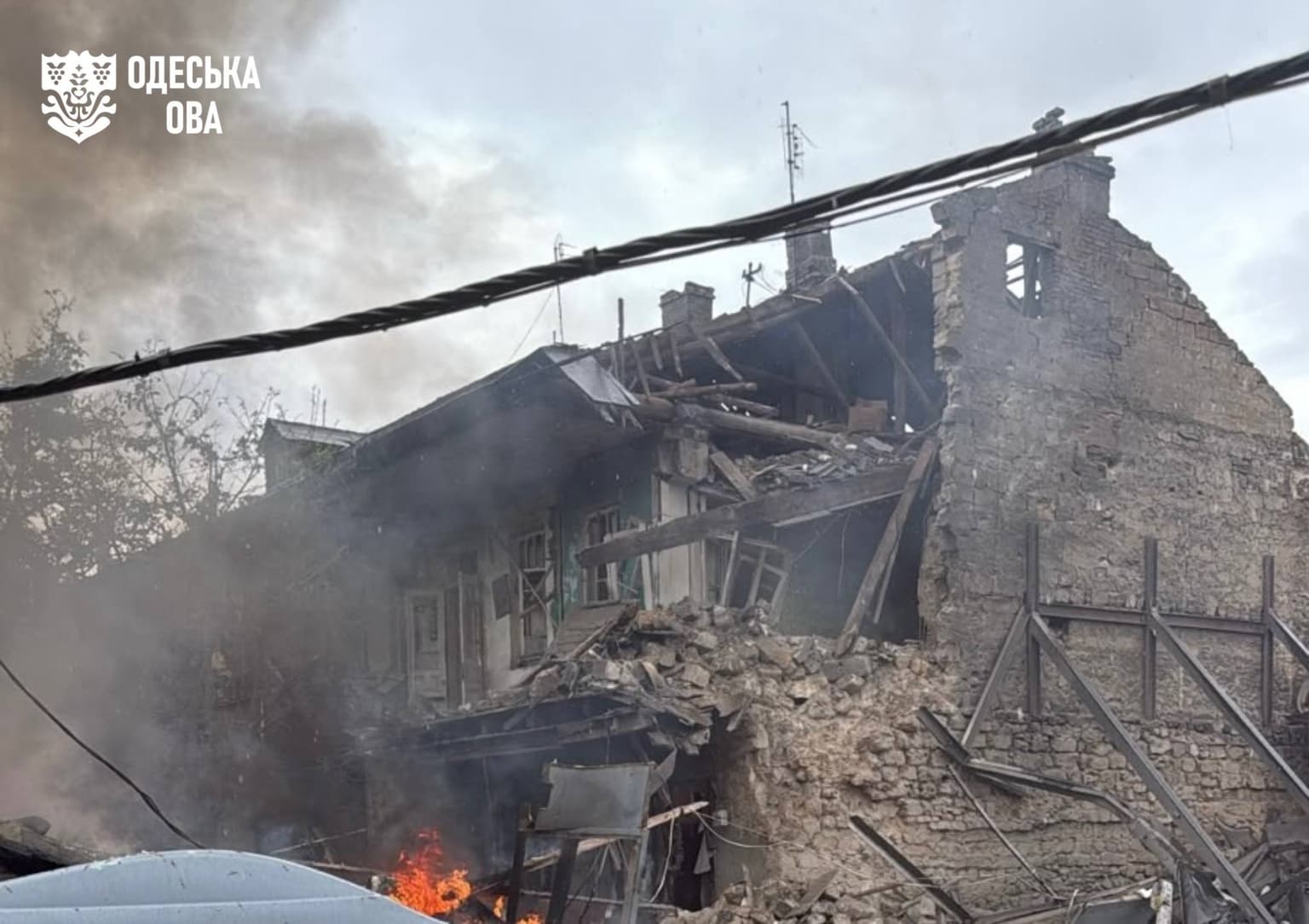
A photo capturing a daytime Russian drone strike on the southern port city of Odesa, which hit a two-story residential building and injured two people, according to the local authorities. (Odesa Oblast Governor Oleh Kiper / Telegram)
THE GENERAL UKRAINE’S SOLDIERS WANTED
A day after his appointment, reaction to Mykhailo Drapatyi’s promotion to commander-in-chief kept rolling in — none of it from the Kremlin’s side particularly comforting. Valerii Zaluzhnyi, the general Drapatyi once served under and who now represents Ukraine in London, broke his usual silence on domestic politics to call the new job “incredibly difficult — far more difficult than he imagines,” pairing the warning with a photo of the two men embracing. It was as close to a public endorsement as Zaluzhnyi has offered anyone since his own dismissal.
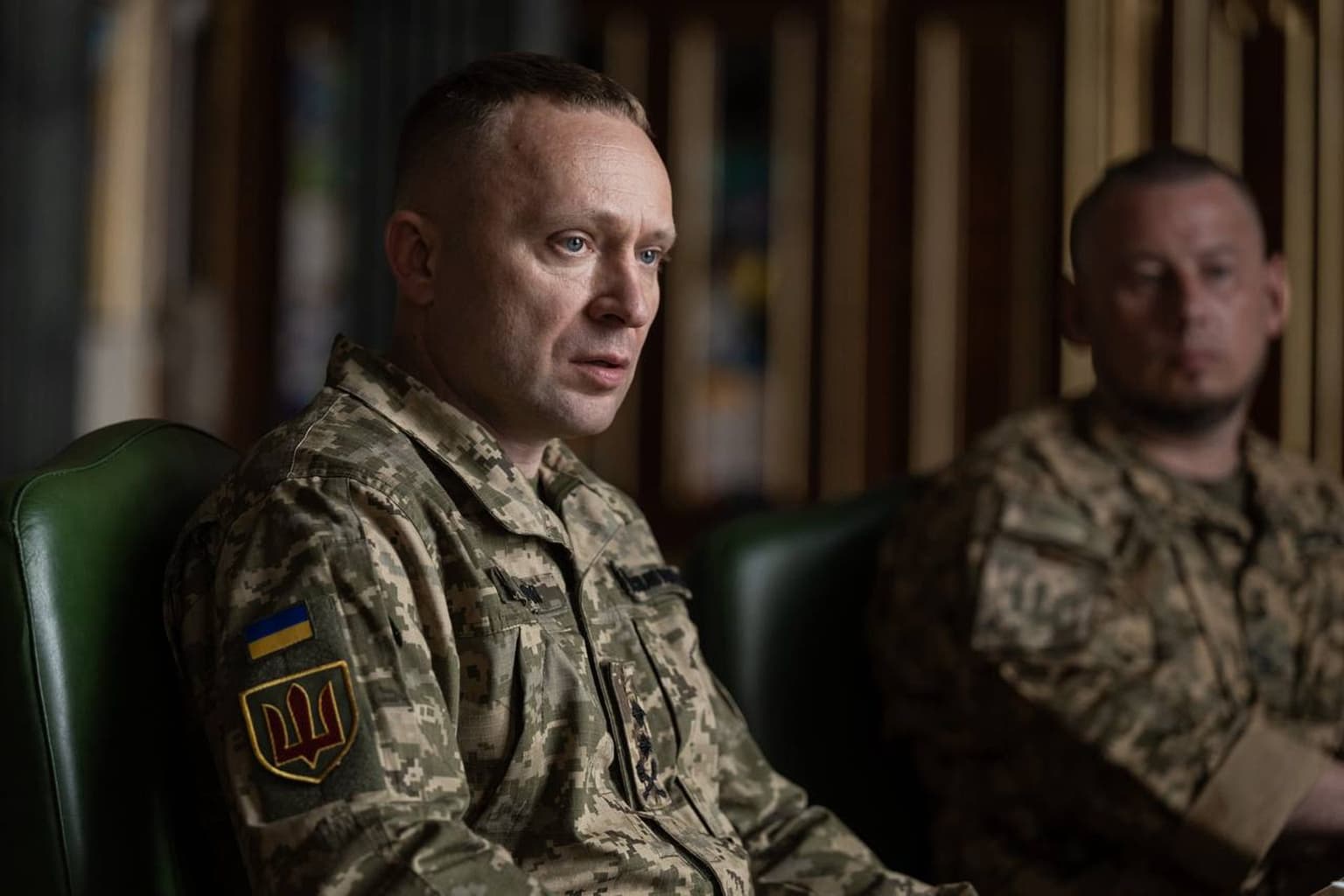
New Commander-in-Chief of Ukraine’s Armed Forces Mykhailo Drapatyi during his meeting with President Volodymyr Zelensky in Kyiv, Ukraine. (Ukrainian Presidential Press Office / AP)
Russian military bloggers, meanwhile, reacted less like analysts and more like men bracing for bad news. One with half a million Telegram subscribers dug up old footage of a young Drapatyi driving an armored vehicle through a pro-Russian barricade in Mariupol back in 2014, writing that Drapatyi “hates us, and he hates us consistently… that means he will try to kill us, regardless of any moral constraints.” Another blogger, while calling Syrskyi’s removal bad news for Russia, predicted Drapatyi would clash with Zelensky and not last long in the job. A third commenter, invoking the callsign of Ukraine’s drone forces commander, put it more bluntly: “‘Madyar’ has free rein now. Now it’s going to be Armageddon.” Whatever else is true, Ukraine’s new commander appears to have earned the one endorsement that matters most in this war: the fear of the people he’s fighting.
TRUST, BY THE NUMBERS
A poll conducted in the two days after Fedorov’s firing offers a blunt verdict on who won the argument. Trust in Mykhailo Fedorov jumped from 35 percent to 65 percent in a single week, according to Rating Group, a well-known Ukrainian pollster — putting the fired defense minister ahead of President Zelensky himself, who sits at 59 percent. Seventy-two percent of respondents said they disapproved of Fedorov’s dismissal; only 5 percent supported it.
Oleksandr Syrskyi’s numbers moved the opposite direction, cratering from 39 percent to 23 percent over the same week — and 55 percent of respondents told pollsters they supported his firing, against just 15 percent opposed. The most trusted public figure in Ukraine right now isn’t a politician at all: Valerii Zaluzhnyi tops the list at 70 percent, with military intelligence chief Kyrylo Budanov close behind at 62 percent. In a hypothetical presidential first round, Zelensky still leads at 22.3 percent, but Zaluzhnyi (14.9 percent) and Fedorov (13.4 percent) aren’t far behind — numbers that help explain why this particular political crisis felt too dangerous for Zelensky to simply wait out.
A NEW DEADLINE FOR FRIDAY
The protests that forced Syrskyi’s dismissal aren’t stopping just because half their demand was met. Organizers announced Ukrainians will return to Kyiv’s streets on July 24 — a Friday — still insisting on the other half: Fedorov reinstated as defense minister, not shuffled into some other role. “Well, guys, get ready for Friday — we still gotta bring back Fedorov,” veteran and protest organizer Dmytro Koziatynskyi wrote, warning that an unmet deadline would mean organizers declare an “indefinite protest.”
Zelensky has offered Fedorov what his office called a prominent position focused on Ukraine’s tech sector — anything, apparently, except his old job. Fedorov has made clear he’s not interested in anything else. The dispute that started this entire month of unrest was never really about Fedorov’s specific title; it was about who controls the direction of Ukraine’s military modernization, Fedorov’s reform-minded technocracy or Syrskyi’s more centralized, Soviet-influenced command style. Removing Syrskyi settled that argument in Fedorov’s favor without actually giving him back his job — a compromise that, judging by Friday’s planned protest, nobody involved considers finished.
THE KREMLIN HARDENS ITS TERMS
Just as Ukraine works through a leadership shakeup, Moscow used the week to close a door it had left slightly open. Bloomberg reported, citing people close to the Kremlin, that Russia has abandoned an earlier signal it might withdraw from occupied parts of Sumy and Kharkiv oblasts in exchange for Ukraine ceding the rest of Donetsk and Luhansk. Putin, the sources said, now believes the “spirit of Anchorage” — informal understandings Russian officials claim were reached with the Trump administration at last August’s Alaska summit — has collapsed, so he’s reverting to the same maximalist demands he made in 2024: complete Ukrainian withdrawal from four oblasts and abandonment of NATO ambitions, before any negotiations even start.
There’s a problem with the timing. Putin made those demands in 2024 while Russian forces were still advancing quickly; Kremlin spokesperson Dmitry Peskov reasserted them this week even as Russian state media inflated 2026 territorial gains more than twenty-fold — claiming 2,226 square kilometers seized this year against an actual count, by independent analysts, of roughly 81. Russia is asking for the same surrender it demanded when it was winning, at a moment when it isn’t. Foreign Minister Sergei Lavrov added his own wrinkle, telling reporters in Manila that Washington still hasn’t formally rejected proposals he says were agreed at Anchorage — a claim the US State Department has repeatedly denied outright.
MOSCOW’S QUIET ADMISSION
Vladimir Putin spent part of his week trying to convince his own government that Russia’s economy is fine. It’s a harder sell than it used to be. Putin held a meeting on the fuel crisis and economic pressures Ukraine’s long-range strikes have caused, insisting Russia’s GDP grew — modestly, by his own word — 0.3 percent in May and 0.2 percent across the first five months of 2026, and that the government ran a small budget surplus in June.
The details underneath tell a rougher story. Russia’s own food industry association told state media the cost of a basic monthly food basket has climbed nearly 8 percent since January. The Moscow Exchange’s main index suffered its worst single-day drop since September 2022 earlier this month. Russian business paper Kommersant reported that the country’s refineries — battered by Ukrainian drone strikes — have failed to fulfill more than 81 percent of domestic gasoline purchase orders, even as officials insist supply is stabilizing. Putin himself, notably, used the word “modest” to describe growth he’s otherwise trying to sell as strength. When the man in charge undersells his own good news, it’s rarely because there’s better news he’s not mentioning.
SETTING THE STAGE FOR THE UNPOPULAR
Two pieces of Russian legislation passed this week point toward the same uncomfortable possibility: that the Kremlin is quietly preparing for a wider, more disruptive mobilization than it has dared attempt so far. The State Duma passed a bill allowing citizens with active, unexpunged criminal records — including for drug and nuclear-material smuggling, organized crime, and mishandling state secrets — to sign military contracts, expanding the pool of Russians eligible to fight. A previous investigation found Russian soldiers returning from Ukraine, many of them former convicts recruited the same way, have killed at least 551 people inside Russia since the war began. Separately, Russia’s militarized internal security force, Rosgvardia, proposed new civil defense powers to protect Russian society from unspecified “dangers” during mobilization or martial law — the kind of bureaucratic groundwork governments lay before announcing something unpopular, not after.
The pressure behind it is real: Ukrainian intelligence assesses Russia has signed only 195,000 of a 409,000-troop annual recruitment target so far this year, while losing roughly 196,700 troops in 2026 alone. Whether Putin actually pulls the mobilization trigger remains, as it has for years, a decision he alone will make and the rest of the world will only see afterward.
REACHING DEEPER INTO RUSSIA
Ukraine’s long-range strike campaign kept widening its reach into Russian territory overnight. President Zelensky said Ukrainian forces struck logistics centers supplying Russian forces with drone components and navigation equipment, plus an oil depot, in Krasnodar and Stavropol krais. Krasnodar’s mayor confirmed a fire at a logistics warehouse and said three people were injured; in Nevinnomyssk, Stavropol Krai, the regional governor confirmed a Wildberries warehouse — Russia’s rough answer to Amazon — caught fire after a drone strike, injuring five. It’s the fourth time in recent days Wildberries facilities specifically have been hit, following earlier strikes in Moscow and Tambov oblasts.
The cumulative effect is visible even in Moscow’s own airspace rules. Russian aviation regulator Rosaviatsia lowered permitted flight altitudes near Moscow City and banned transit flights over the capital entirely — a tighter version of restrictions first imposed in June, extended because, as one Russian business outlet dryly noted, Ukrainian strikes have only intensified since then. Separately, UNICEF confirmed this week that a Russian strike had destroyed a UNICEF warehouse in Bilohorodka, Kyiv Oblast, wiping out 106,000 items of humanitarian aid — a reminder that Russia’s own strikes on Ukraine haven’t slowed even as its rear grows more exposed.
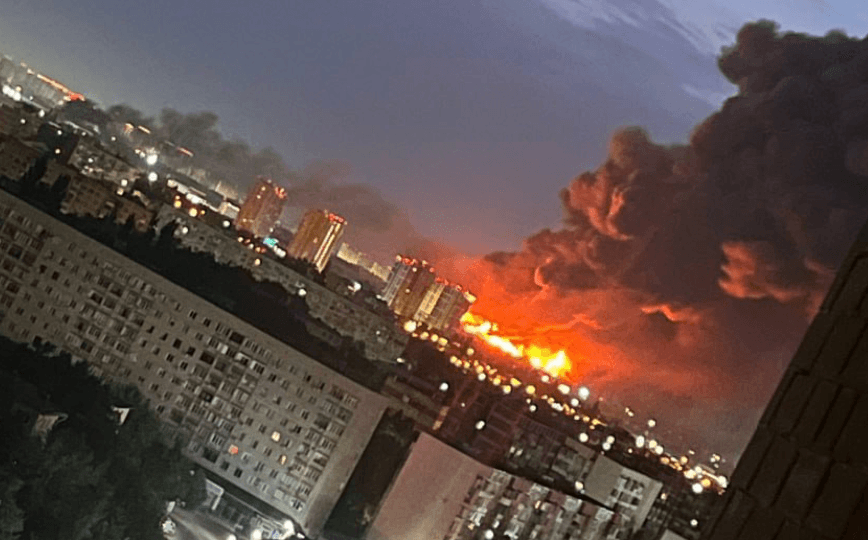
What purports to be the aftermath of Ukrainian strikes on the Russian city of Krasnodar overnight. (Supernova Plus/Telegram)
KOSTIANTYNIVKA, AND A NEW THREAT AT DOBROPILLYA
Kostiantynivka remains exactly what it’s been for weeks: a city nobody fully controls. Newly reviewed footage, some of it dating back to July 7, continues to show Ukrainian positions in neighborhoods Russian forces have claimed to hold, even as Russian troops keep infiltrating in small groups throughout the city’s north, center, east, and southwest. Analysts who track the war say the picture hasn’t meaningfully changed; Russian forces still don’t control the city, whatever senior Russian commanders claim.
The more urgent development is a few miles away, at Dobropillya, where Russian forces appear to have made a genuine advance — likely seizing the settlement of Novooleksandrivka after weeks of infiltration in the area. A Ukrainian military observer reports Russian command has committed elements of at least two full combined arms armies to the push, reinforcing with artillery and armor in what looks like preparation for a larger effort. The goal, according to that assessment, is to open a path toward Druzhkivka and free up troops for a broader assault on the Donbas “fortress belt” this summer or fall — though the same source cautions Russian forces could just as easily get stuck fighting street by street for Dobropillya itself, the way they already have at Kostiantynivka, bogging down the entire plan instead of accelerating it.
THE REST OF THE LINE
Elsewhere, the war’s shape held mostly steady. Russian forces claimed to seize two villages northeast of Kharkiv City — Artilne and Hrafske — though ISW flagged the Hrafske flag-raising footage as likely AI-altered, part of a recurring Russian pattern of staged claims. In the Kupyansk direction, a Ukrainian brigade spokesperson offered an unusually specific explanation for why Russian troops aren’t advancing: the Russian unit assigned there is critically short on fuel, limiting its own scout vehicles and motorcycles, and short on trained personnel altogether, while Ukraine’s drone density is thick enough to suppress most Russian drone activity in the area outright.
In Slovyansk, Russian glide bombs damaged six homes and a school, wounding two people, as Russian units continued costly small-group assaults despite what a Ukrainian officer called still-substantial Russian reserves in the sector. In Kherson Oblast, Russian drone operators killed one person in a strike on a civilian minibus in the city center — the kind of targeted attack on ordinary vehicles and pedestrians that Ukrainian and international monitors have taken to calling a “human safari,” describing Russian operators who deliberately hunt civilians on the Dnipro’s right bank rather than military targets. Neither side reported ground activity in Kherson itself, or in the Hulyaipole and western Zaporizhzhia directions, where Russian assaults again gained no confirmed ground.
CRIMEA AND KHERSON GO DARK AGAIN
Ukraine’s campaign against occupied Crimea’s power grid claimed at least seven more substations overnight, from Alushta to Yalta to Alupka, part of a rolling blackout campaign that Crimea’s own occupation energy operator confirmed is causing continued outages across the peninsula. In occupied Kherson Oblast, occupation authorities blamed a vaguely worded “technical disruption” for power outages across every district — the kind of phrasing that avoids naming Ukrainian strikes as the cause while conceding the outcome is the same.
Neither disruption is incidental. Ukraine’s drone forces commander separately confirmed strikes on Crimean and other occupied-territory energy hubs as part of the same sustained pressure campaign that has made blackouts close to routine on the peninsula — an approach less about any single dramatic strike than about not letting Crimea’s grid ever fully recover.
UKRAINE’S SHADOW FLEET COUNT KEEPS CLIMBING
Ukraine’s drone forces hit 13 more Russian shadow fleet vessels over a 48-hour stretch — 10 dry cargo ships, two tugboats, and a tanker — commander Robert “Magyar” Brovdi reported, warning that Russian vessels had been “warned by fire” against sailing the Azov and Black seas at all. Since the campaign began roughly three weeks ago, Ukraine’s drones have now struck 126 vessels in the Sea of Azov and 70 in the Black Sea, according to Brovdi’s tally — figures the Kyiv Independent said it could not independently verify.
The London-based defense think tank RUSI frames the campaign as a form of “kinetic sanctions,” designed to raise costs and insurance premiums for the aging, opaquely owned tankers Russia uses to keep exporting oil around Western price caps. Ukraine has gone further diplomatically too: a June letter from Deputy Prime Minister Oleksii Kuleba to the International Maritime Organization argues shadow fleet vessels may no longer legally qualify as ordinary civilian shipping at all, given their role sustaining Russia’s war economy — a legal argument that, if it gains traction internationally, would make Ukraine’s strikes far harder to characterize as attacks on neutral shipping.
THE WORLD MOVES TO SQUEEZE THE FLEET
Ukraine isn’t alone in tightening the net. The European Union’s top diplomat, Kaja Kallas, announced that EU countries have authorized the ATALANTA naval mission — normally an anti-piracy operation off Somalia — to begin boarding suspected shadow fleet vessels in the Indian Ocean, following a fourth successful boarding by the EU’s Mediterranean operation IRINI just two days earlier. France, Sweden, Belgium, and the UK have each separately boarded suspected shadow fleet ships in their own territorial waters in recent months. The EU is also racing to finalize a 21st sanctions package before Brussels empties for summer, proposing roughly 250 new listings — the largest single batch since the war began, if approved.
Ukraine’s foreign minister, meanwhile, escalated on a different front, formally requesting an emergency UN Security Council session for July 27 over Russian strikes on civilian shipping in the Black Sea. “Russia is holding global food security hostage,” Andrii Sybiha wrote, noting that zero vessels passed through Ukraine’s Black Sea grain corridor that day, at the height of harvest season. Danish shipping giant Maersk announced the same day it would suspend service to Ukraine’s Chornomorsk port entirely, rerouting cargo through Constanta, Romania, instead — a quiet acknowledgment from one of the world’s largest carriers that the math on continuing to sail there no longer works.
HUNGARY’S VETO STALLS KYIV’S EU PATH
A modest diplomatic win Ukraine hoped to bank before Europe’s summer recess didn’t happen. Hungary blocked a move to open two further EU accession negotiating “clusters” for Ukraine and Moldova — chapters covering everything from financial services to taxation and education, together representing more than half of the EU’s entire rulebook. Hungarian Prime Minister Peter Magyar has been explicit that he doesn’t want Ukraine fast-tracked, and instructed his diplomats to slow the process cluster by cluster; Lithuania’s delegation countered that all remaining clusters are ready to open without further delay.
Every step of EU accession requires unanimous agreement from all 27 member states, which hands any single government an effective veto — and Hungary has used it before. With the EU’s institutions taking August off entirely, the earliest another attempt can happen is September 1, meaning Ukraine’s accession process will sit frozen for at least six weeks over a disagreement that, by the Commission’s own assessment, has nothing to do with whether Ukraine has actually done the required work.
WASHINGTON’S AMBIVALENT THAW
Diplomacy between Kyiv and Washington showed more motion this week than it has in months, even if none of it produced anything binding. Zelensky met in person with US Ambassador to NATO Matt Whitaker and General Curtis Buzzard, head of NATO’s Ukraine mission, to discuss Patriot missile deliveries and a pending drone-purchase deal; separately, he held a phone call with Trump envoys Steve Witkoff and Jared Kushner that he described as building diplomatic momentum, though neither envoy has yet visited Kyiv itself. “Peace is needed — a dignified peace — and Ukraine has been ready for it for a long time,” Zelensky said afterward.
Zelensky is also weighing a trip to Washington next week to attend the funeral of Senator Lindsey Graham, a staunch Ukraine ally who died July 11 shortly after returning from a Kyiv visit; his office hasn’t confirmed whether he’ll go or send a senior official instead. Any Washington trip would coincide with Lavrov’s own scheduled meeting with Secretary of State Marco Rubio in Manila on July 23 — a reminder that even as Kyiv and Washington inch toward warmer contact, Moscow is working the same diplomatic calendar from the opposite direction.
A NEW INTERCEPTOR, AND WARNINGS FROM THE WEST
Ukrainian drone maker Skyfall unveiled a new interceptor this week built specifically to hunt Russia’s jet-powered Shahed drones — the JetKiller, capable of 230 miles per hour and reaching nearly six miles in altitude, guided by an AI targeting system the company says spots targets faster than a human eye can. Serial production is set to begin in August, with Skyfall targeting an eventual 50,000 units a month, a scale that would matter given how fast Russia has been upgrading its own drone fleet with jet engines.
Britain used a different platform to make its own point this week: a formal warning to the OSCE that Russia’s missile and drone campaign is raising the risk of wider escalation across Europe, citing a Romanian apartment building hit by a stray Russian drone in May and a Shahed that exploded in Moldova in July. “The greatest contribution Russia could make to European security would be to end its aggression,” UK military advisor Colonel Joby Rimmer told the OSCE. Poland, meanwhile, is fighting a quieter war of its own: state investigators identified a coordinated disinformation campaign using AI-generated video of fake “soldiers” blaming Ukrainian refugees for rising crime, seeded with fabricated Volhynia-massacre references clearly designed to strain Polish-Ukrainian relations — deepfakes sloppy enough that Polish researchers found literal Russian-to-Polish translation errors and stray Cyrillic characters buried in the footage.
ONE GENERAL DOWN, ONE ARGUMENT STILL OPEN
Ukraine spent the day absorbing a decision it had spent a week demanding, only to discover the underlying argument hasn’t actually closed. Syrskyi is gone, but Fedorov isn’t back, and the people who filled Kyiv’s streets to get half of what they wanted have already picked their next date to ask for the rest. Command changed in Kyiv this week. In Moscow, positions only hardened. Neither city is done making its case.
A PRAYER FOR UKRAINE
1. For the School Children of Slovyansk
Lord, glide bombs fell on Slovyansk this week and damaged a school along with six family homes — buildings meant to hold nothing more dangerous than lessons and dinner. Protect the children whose classrooms took that damage, and the teachers who will stand in front of them again regardless. Let learning survive in a city that keeps absorbing war it did not choose.
2. For the Passenger of an Ordinary Minibus
Father, a single passenger in Kherson climbed onto an ordinary minibus, on an ordinary street, and did not survive the ride — hunted, not caught in crossfire. Receive this person by name, known fully to You even where we have none. Hold this city’s people as they keep leaving their homes anyway, knowing what waits for some of them outside the door.
3. For the New Commander, and the One Who Warned Him
God of wisdom, one general steps into command while another, from a distance, warns him the job is harder than he knows. Give Mykhailo Drapatyi the clarity that warning intends to offer, not fear. Watch over every soldier whose life now turns, in part, on decisions made by men still learning the weight of this particular chair.
4. For Those Still Marching on Friday
Lord, a people who won half of what they demanded are choosing to keep asking for the rest, rather than settle for less than they believe is right. Give them patience alongside their persistence, and give their leaders humility enough to actually listen. Let this argument, however it resolves, strengthen this country rather than divide it further.
5. For the Sailors Still at Sea
God of mercy, ships keep burning in these waters — some struck for carrying Russia’s oil, some simply for sailing near a war they didn’t start. Watch over every crew member still working those routes tonight, whatever flag their ship happens to fly. Grant wisdom to those deciding, in boardrooms and government offices, whether any cargo is worth what these waters now cost.
In Your mercy, in Your justice, in Your time — bring this war to its end, and let the ending be worthy of what Ukraine has endured.