
August 17, 2026
Prepared by Diana Bozhyk
Russia has quietly built dozens of new drone-launch sites within striking distance of NATO territory, even as one of its own weapons crashed into a Moldovan cornfield during an attack on Odesa. Overnight strikes killed nine people and wounded 43 more across seven Ukrainian regions, while satellite imagery confirmed Ukraine’s strike on a Russian rocket-fuel plant destroyed two production workshops outright. Zelensky moved to decentralize battlefield command as a Mariupol volunteer revealed Russia’s security service blackmailed him with his own son’s life, and a Russian opposition figure was sentenced to eleven years for simply calling for peace.
THE DAY’S RECKONING
Somewhere in western Russia, satellite cameras just photographed something that should worry more than Ukraine: 59 new drone-launch rails, built at 10 separate sites, some capable of housing over a thousand drones each — and positioned to reach not just Kyiv, but Poland, Romania, and the Baltic states. That’s not a hypothetical anymore. It’s infrastructure, already built, already photographed.
Hours later, as if to underline the point, a Russian cruise missile actually did cross into a NATO-adjacent country — not Poland or Romania this time, but Moldova, where it exploded in a farmer’s cornfield twelve miles from the Ukrainian border. Nobody died. Nobody was supposed to. But the pattern is now impossible to ignore: this war keeps spilling past its own borders, testing how much the rest of Europe will absorb before it responds. Inside Ukraine, the ordinary math continued regardless — nine dead, dozens wounded, a rocket-fuel plant burning, a father who traveled into enemy territory to save his son from being drafted against him. Different scales, same war, same relentless arithmetic.
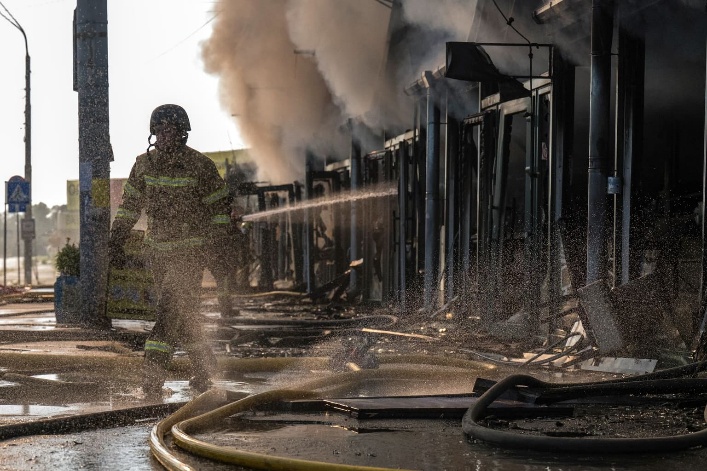
Firefighters work to extinguish a fire at a book market in Kyiv, Ukraine, after a Russian overnight attack with ballistic missiles and jet-powered drones destroyed one of Ukraine’s largest book markets and injured two people. (Maxym Marusenko/NurPhoto via Getty Images)
RUSSIA BUILDS DRONE BASES WITHIN STRIKING DISTANCE OF NATO
A new investigation is forcing a harder look at just how far Russia intends this war to reach. The Telegraph, working with a drone intelligence firm, identified 59 newly built drone-launch rails spread across 10 sites along Russia’s border with Ukraine and Belarus — some repurposed from old military bases or civilian airports, others built fresh in open countryside. One site alone can house more than 1,000 long-range drones at a time, and construction on several more launch rails is still underway.
The positioning matters as much as the scale. Several of the new bases sit close enough that drones launched from them could plausibly reach not just Ukraine, but NATO territory — Poland, Romania, Turkey, Estonia, Lithuania, and Latvia all fall within range depending on the launch site and drone model used. Roughly 20 of the new rails are unusually long, suggesting they’re specifically built to launch Russia’s newest jet-powered Geran-4 and Geran-5 drones, which can fly between 280 and over 600 miles and carry a 90-kilogram warhead — faster and harder to intercept than the propeller-driven Shaheds Ukraine’s air defenses have spent years learning to counter. Ukrainian officials assess the buildup serves two purposes at once: protecting Russian drone infrastructure from Ukrainian strikes by moving it further from the front, and quietly expanding Russia’s capacity to launch large-scale strikes against NATO members, should Moscow ever decide the risk is worth it.
MISSILES OVER MOLDOVA, WARNINGS FROM NATO
A Russian S8000 Banderol cruise missile — a small, relatively cheap weapon Russia increasingly favors for strikes on Odesa — crossed into Moldovan airspace during an overnight attack and crashed in a cornfield near the village of Talmaza, roughly 12 miles from the Ukrainian border. Moldovan authorities briefly closed airspace over the surrounding region, tracked the object until it disappeared from radar, and confirmed an explosion at the crash site; nobody was hurt, though wreckage and fire damage are still being assessed. Moldova’s foreign ministry condemned the incursion, calling it a continued threat to the country’s security from a war it isn’t formally part of.
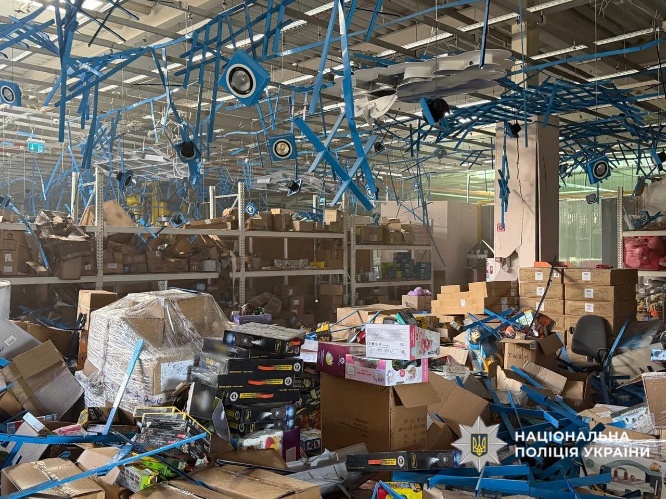
Russian forces attacked a post office in a shopping center in Odesa Oblast, injuring seven people. (Ukraine’s National Police / Telegram)
It’s part of an accelerating pattern. Ukraine’s disinformation-monitoring center counted at least 12 likely Russian drones or missiles crossing into European airspace in the past month alone, and Moldovan President Maia Sandu has previously said she believes some of these incursions are deliberate tests of how neighboring countries will respond, not accidents. Just a day earlier, Spanish fighter jets flying a NATO air-policing mission over Romania shot down a suspected Russian drone near the Moldovan border — the fourth such incident this year. Against that backdrop, NATO’s top military official, Admiral Giuseppe Cavo Dragone, told reporters the alliance is prepared to respond to any hostile Russian move, warning Moscow “would lose a lot, much more than what they could gain, just by touching Poland or the Baltic states.” Separately, Germany’s army chief has said it’s now formal NATO intelligence that Russia could be ready to test a member state directly by 2029.
CONFIRMED: UKRAINE WRECKED A ROSTOV ROCKET-FUEL PLANT
New satellite imagery is filling in exactly how much damage Ukraine’s strike on Russia’s Kamensky Plant actually did — and the picture is worse for Russia than initial reports suggested.
Ukraine’s General Staff published fresh satellite photos confirming that yesterday’s strike on the plant, which manufactures solid rocket fuel for Russian multiple-launch rocket systems and other munitions, completely destroyed two separate explosive and gunpowder production workshops and damaged four more. A Ukrainian open-source intelligence channel separately reported that the same strike also hit several Russian air-defense systems stationed near the plant to protect it — suggesting Ukraine’s forces either overwhelmed local defenses outright or specifically targeted them first to clear a path for the main strike.
The plant sits roughly 110 miles from the front line, deep enough inside Russian territory that its operators likely assumed distance alone offered real protection. It didn’t. Facilities like this one are precisely the kind of target Ukraine’s deep-strike campaign has increasingly focused on this year: not just fuel and ammunition stockpiles, but the actual manufacturing infrastructure that replaces them, on the logic that a destroyed production line costs Russia far more time and money to rebuild than a single destroyed shipment ever could.
MEANWHILE, AT THE ACTUAL FRONT — THE NORTH AND EAST
Away from headline strikes, the ground war continued its familiar rhythm: contested claims, small infiltrations, and a front line that mostly held its shape.
Near Kharkiv City, Russian forces kept pushing infiltration attempts through Kozacha Lopan and toward Ivanivka, with some small groups reportedly nearing the southern edge of the former settlement. Russian tactical aircraft struck Ukrainian drone control centers near the border with a mix of guided missiles and heavy glide bombs, aiming to degrade the very systems Ukraine uses to track and intercept Russian infiltrators in the first place. Near Kupyansk, Russian sources claimed to have seized the northwestern part of the town along with part of a residential district on its southwestern edge — a more significant claim than most daily reports, though it remains unconfirmed by independent monitors. Nearby, Ukrainian forces struck back at Russian troops caught mid-infiltration in the town’s northern district.
Around Kostyantynivka, Ukrainian forces appear to have cleared Russian infiltrators from part of the town’s eastern edge, pushing back against a Russian presence that had been building there for days. Russian sources claimed a further seizure near Andriivka, west of Druzhkivka — a claim independent researchers assess is exaggerated, with actual Russian forces likely still several miles short of the settlement itself, a familiar pattern of Russian military reporting racing ahead of what troops on the ground have actually achieved. Near Oleksandrivka, Russian forces are trying to break through to relieve small units that Ukrainian troops have encircled deep inside recently liberated territory — a sign that some of the Russian soldiers claimed to be “advancing” in the area are, in reality, trapped and fighting to escape rather than to gain ground.
MEANWHILE, AT THE ACTUAL FRONT — THE SOUTH
Further south, Ukrainian forces spent the day both clearing infiltrators and absorbing a deliberately cruel style of attack that’s become disturbingly familiar.
Near Hulyaipole, Ukrainian troops appear to have cleared Russian infiltrators from a contested pocket southwest of the town, even as Russian forces claimed — via footage of soldiers raising flags — to have seized a separate nearby settlement. In Marhanets, across the Kakhovka Reservoir from occupied Enerhodar, Russian forces conducted a “double-tap” strike, hitting emergency workers who had responded to an earlier round of shelling — the same war-crime tactic that’s killed and injured Ukrainian rescuers repeatedly this year. In Kherson Oblast’s Novokairy village, a Russian first-person-view drone killed two men, aged 58 and 66, in a targeted strike that regional officials described without ambiguity as deliberate.
Ukraine, meanwhile, kept up its own intermediate-range strike campaign across the south: hitting a Russian drone relay and power station on the Tendra Spit in Kherson Oblast, and striking three separate targets in occupied Crimea overnight — a strike-drone storage and launch facility near Hvardiiske, a Russian drone control station near Novofedorivka, and a ground relay station used to guide Russian Geran and Gerbera drones near Olenivka. Ukraine’s 1st Army Corps also disclosed that it has run a monthlong campaign, nicknamed “Hell-2,” specifically targeting Russian military fuel and supply depots in occupied Donetsk Oblast — a quieter, sustained effort that doesn’t always make headlines but has reportedly degraded Russian logistics in the region substantially over the past several weeks.
NINE DEAD, FORTY-THREE WOUNDED: THE OVERNIGHT TOLL
Overnight, Russia launched 128 Shahed-type, Gerbera-type, and jet-powered decoy drones at Ukraine from four separate directions. Ukrainian forces shot down 106; the rest struck 14 locations outright, with debris landing at two more. Strikes hit port infrastructure in Odesa Oblast — including a Togo-flagged civilian cargo vessel — along with civilian infrastructure in Chernihiv Oblast and postal facilities in Donetsk Oblast.
The human toll spread wide. In Kramatorsk, Russian strikes killed two people and injured 11 more, with six additional injuries reported elsewhere in Donetsk Oblast. In Kherson Oblast’s Novokairy, the FPV drone strike already noted above killed two men outright, with six more people injured by separate attacks across the region. In Zaporizhzhia Oblast, two people were killed and three injured by guided glide bombs — part of a single day’s bombardment that regional officials said included 20 glide bombs, 846 drones, and 350 artillery strikes against the region alone. Sumy Oblast lost a 75-year-old man and a 72-year-old woman, with three more injured. Dnipropetrovsk Oblast reported one death and six injuries, while Kharkiv Oblast, including the city of Izium, reported three injuries with no fatalities. By day’s end: at least nine people killed and 43 injured nationwide, spread across seven regions in a single 24-hour window.
THE STATE OF THE AIR WAR
Two separate reports released today sketch the same picture from different angles: Russia’s air campaign against Ukraine keeps growing in volume and sophistication, and Ukraine’s infrastructure keeps absorbing the cost.
Ukraine’s state energy company, Naftogaz, reported that Russian forces struck its facilities 13 times in drone and missile attacks over just the past week, with one unnamed facility hit multiple times and mining infrastructure singled out as a particular focus. Since the start of the year, Naftogaz says it has now been struck 293 separate times — a number that speaks less to any single dramatic attack than to the sheer, grinding persistence of Russia’s campaign against the infrastructure that keeps Ukrainian homes heated and businesses running.
On the technical side, a Ukrainian air-defense officer offered a rare, detailed look at exactly how Russia is adapting its drone fleet to beat Ukrainian defenses. Colonel Artem Skurativsky said Ukrainian forces currently intercept 80 to 93 percent of Russia’s older, propeller-driven Geran-2 and Shahed-136 drones — a high enough success rate that Russia has increasingly shifted toward jet-powered Geran-3 variants, which can fly from the Belarusian border to Kyiv in just 35 minutes, four times faster than older models. Those faster drones now make up roughly a fifth of Russia’s total Geran-type drone use in major strikes, Skurativsky said, though they do have real weaknesses: their larger size makes them easier to spot on radar, and their heat signature leaves them more vulnerable to shoulder-fired air-defense missiles than their slower, quieter predecessors.
ZELENSKY RESHUFFLES MILITARY COMMAND
President Zelensky used his evening address to announce a new appointment and a broader shift in how Ukraine’s military makes decisions on some of its most contested ground.
Zelensky named Yurii Pohrybnyi as the new commander of Ukraine’s Logistics Forces, the branch responsible for supplying, repairing, and transporting the weapons, ammunition, fuel, and equipment that keep the army running — replacing former commander Volodymyr Karpenko. Pohrybnyi has served since Russia’s initial 2014 invasion and most recently commanded a repair and recovery regiment, giving him direct, hands-on experience with the exact logistics challenges he’ll now oversee at a national level.
More significant than the individual appointment was Zelensky’s broader announcement: following discussions with Commander-in-Chief Mykhailo Drapatyi, experienced commanders in some of the war’s most intense sectors — Sloviansk, Kostyantynivka, and Pokrovsk — will now receive greater authority to make decisions at the corps and force-group level, rather than waiting on approval from further up the chain of command. “It is very important that experienced commanders have greater capabilities to act,” Zelensky said, describing it as the first of several personnel and structural decisions still to come. The shift reflects a recurring criticism of Ukraine’s military bureaucracy throughout the war: that decision-making bottlenecks at the top have sometimes cost precious time in fast-moving frontline situations where local commanders understand conditions better than anyone reviewing a report from Kyiv.
A FATHER WHO WENT TO RUSSIA TO SAVE HIS SON
Some stories from this war don’t involve missiles or front lines at all — just the quiet, personal cruelty Russia’s security services are willing to deploy against people who’ve spent years helping Ukraine.
Mykhailo Puryshev, a well-known Ukrainian volunteer famous for evacuating roughly 200 civilians from besieged Mariupol in a battered red van during the war’s earliest days, revealed that Russia’s FSB blackmailed him into traveling to Russia by threatening to forcibly conscript his son, who lives there from a previous marriage. In a recorded phone call he posted publicly, an FSB agent warned him directly: prevent your son from joining the Russian army, or risk him one day standing in a trench across from the very Ukrainian soldiers Puryshev has spent years supporting.
Puryshev described the choice bluntly in his own words: cooperate with the FSB and betray his country to protect his son, refuse and risk his son being killed, or take a third option — travel into Russia himself and accept whatever happens to him there, so long as his son is spared. He chose the third option. “I have arrived in Russia for the sake of my son,” he wrote in a followup post. It’s a stark illustration of a tactic human rights monitors have documented before: Russia using family members as leverage against Ukrainians who’ve become inconvenient, embarrassing, or simply too visible in their opposition to the war.
UKRAINE PUSHES BACK ON RUSSIA’S SOFT POWER
Two separate Ukrainian statements today took aim at the same broader target: the ways Russia keeps using culture, energy, and international institutions to launder its global image despite the war.
Foreign Minister Andrii Sybiha renewed Ukraine’s push for the European Union to sanction Rosatom, Russia’s state nuclear energy company, after Politico reported that a Rosatom-built nuclear plant in Egypt suffered from serious safety and engineering violations. Ukraine sanctioned Rosatom itself back in 2023, but the company continues operating freely across Europe — building a new reactor in Hungary, constructing Turkey’s Akkuyu nuclear plant, and maintaining ties to a nuclear project in Germany. Lithuania has backed Ukraine’s push, but EU sanctions require unanimous agreement among all 27 member states, and that consensus doesn’t currently exist. “We cannot put economic interests above our security interests,” Lithuania’s foreign minister said, echoing Sybiha’s argument that no country understands the risks of trusting Moscow with nuclear safety better than Ukraine, given Chornobyl’s legacy.
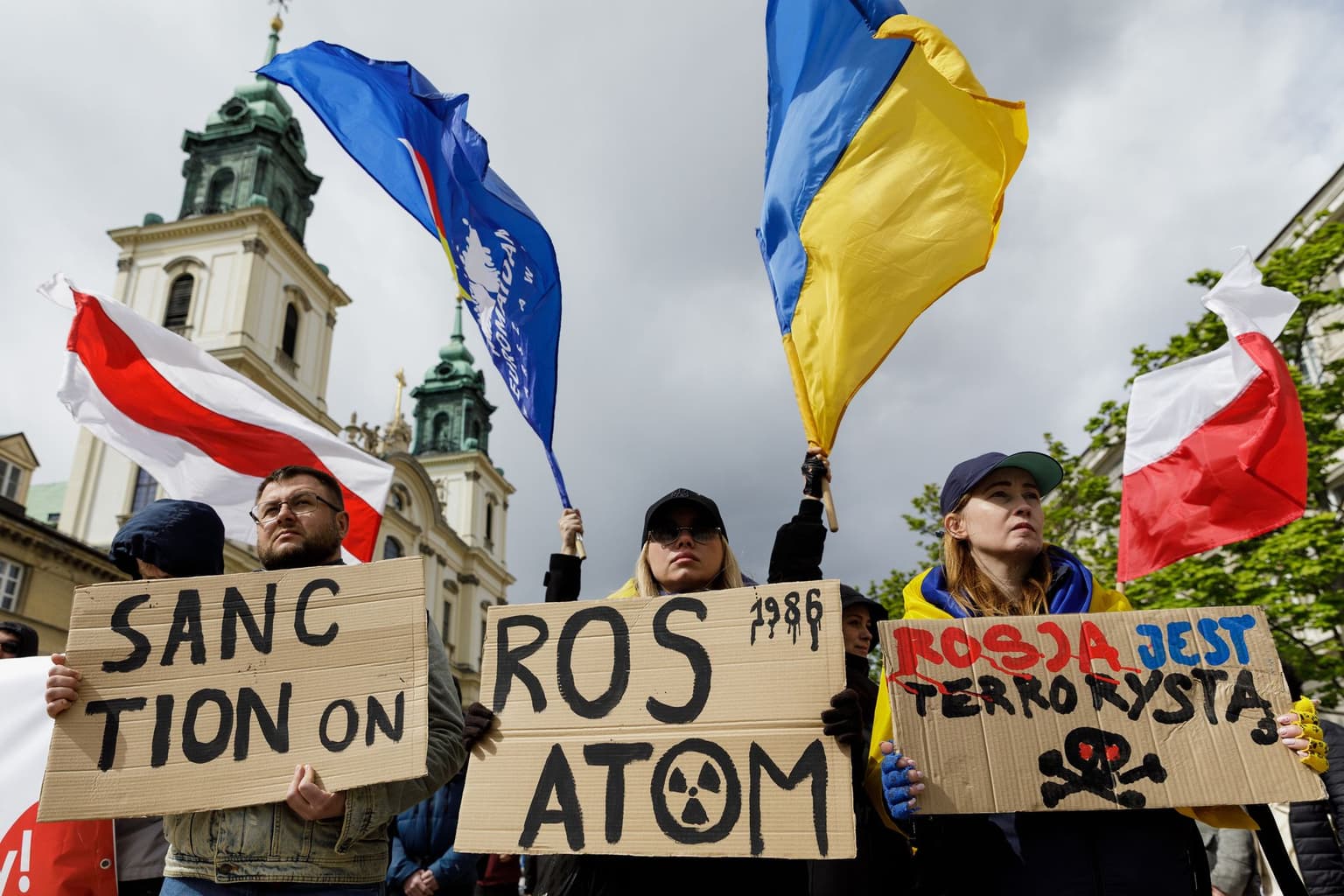
Activists are seen holding placards reading “Sanction on Rosatom” and “Russia is a terrorist” in an undated picture. (Volha Shukaila/SOPA Images/LightRocket via Getty Images.)
Separately, Ukraine’s foreign ministry formally condemned the inclusion of a controversial Russian-linked film, “Dau,” in this year’s Venice International Film Festival. The project, filmed partly in Kharkiv and financed by a Russian businessman under Western sanctions for supplying communications services to Russia’s military, has drawn years of controversy over allegations that participants were subjected to psychologically abusive conditions during filming. Ukraine’s ministry framed its objection not as a call for censorship, but as a warning that Kremlin-linked cultural projects shouldn’t be treated as politically neutral while Russia wages a war that’s actively destroying Ukrainian cultural heritage.
TWENTY THOUSAND DRAFT-EVASION CASES
Ukraine’s National Police revealed the scale of a problem that’s quietly undermined public trust in the military mobilization system throughout the war: more than 20,000 criminal cases of draft evasion opened since martial law began, alongside sprawling corruption investigations into the recruitment centers meant to enforce it.
Acting police chief Maksym Tsutskiridze said his officers have received 1.5 million requests from recruitment offices to help locate people suspected of dodging mobilization, and have issued formal corruption notices to 76 heads of regional recruitment centers — officials accused of running schemes ranging from selling medical exemptions to falsifying registry records for a fee, with one Kherson scheme reportedly charging $7,000 per person. Separately, police say 6,500 medical fitness rulings have been thrown out as fraudulent since the war began, with over 1,600 more recruits sent back for re-examination, and 2,500 additional cases are under investigation involving businesses illegitimately claiming employees as exempt from service through fictitious jobs.
The numbers put hard figures behind a grievance that’s simmered publicly for months — that Ukraine’s conscription system, however necessary, has also become a machine some officials exploit for personal profit, extracting bribes from families desperate to keep sons and husbands out of a war with no clear end date, while honest recruits shoulder a burden others found ways to buy their way out of.
ELEVEN YEARS FOR WORDS
A Russian court handed down a sentence today that illustrates exactly what happens to dissent inside Russia now: Lev Shlosberg, a longtime opposition politician, was sentenced to 11 years and one month in prison for publicly opposing the war.
Shlosberg, a member of Yabloko — the only Russian political party formally opposed to the war, and one the Kremlin barred from September’s parliamentary elections just days ago — was convicted on two charges: “discrediting” Russia’s army for advocating a ceasefire during a recorded debate, and spreading “fake news” for reposting a British tabloid cover from the invasion’s opening days, depicting a bloodied Ukrainian woman beside Vladimir Putin under the headline “her blood… his hands.” Yabloko’s regional branch called the sentence a reflection of the collapse of Russia’s justice system, noting Shlosberg’s actual offense amounted to criticizing his own governor’s competence and refusing to leave the country rather than emigrate in silence.
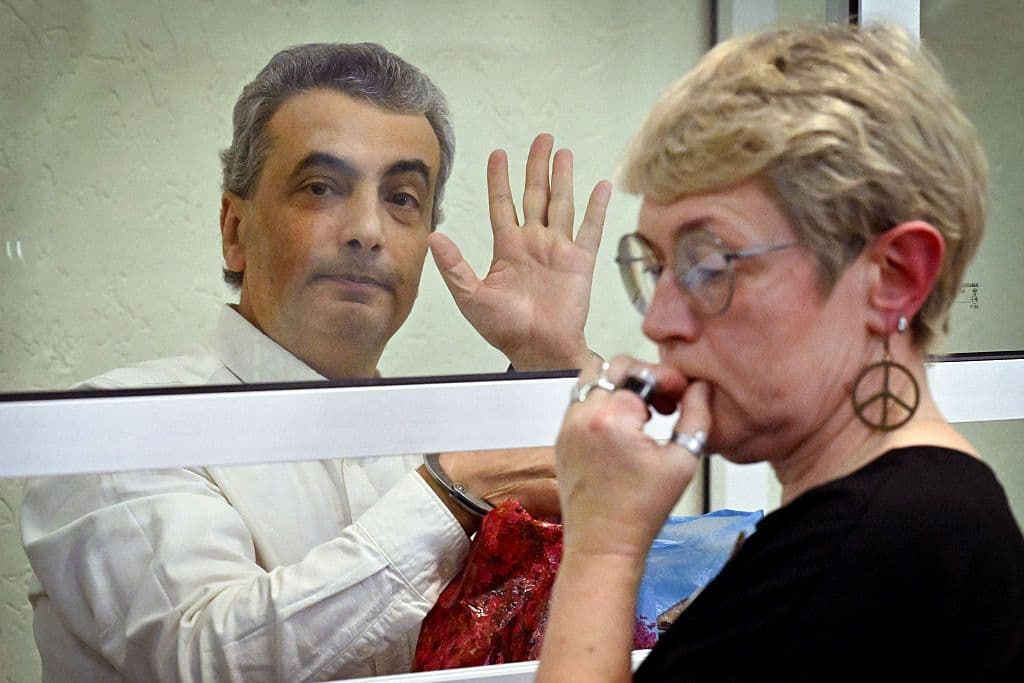
Russian opposition politician Lev Shlosberg (L), next to his wife Zhanna Shlosberg-Kozlovich, gestures as he attends a city court session in Pskov, Russia, on Aug. 17, 2026 via Getty Images)
The sentence lands as one more data point in a pattern that’s become impossible to miss: Russia isn’t merely discouraging antiwar sentiment anymore, it’s systematically imprisoning anyone willing to state it publicly and by name. Eleven years is a long time to spend in a penal colony for reposting a newspaper cover and saying, out loud, that a ceasefire might save lives. That’s precisely the point Russia’s courts seem determined to make to anyone else considering doing the same.
A CORNFIELD, A ROCKET PLANT, A FATHER’S CHOICE
By nightfall, the day had reached in every direction the war now touches: a Moldovan cornfield, a burning Russian rocket-fuel plant, a Ukrainian father who chose captivity over betraying his country. None of it moved the front line. All of it moved the war’s true shape further into view.
Russia is building the infrastructure for a fight it insists it doesn’t want with NATO, even as its own weapons keep crossing borders it claims to respect. Ukraine keeps grinding through Russia’s supply chains one workshop at a time, one draft-office bribe uncovered at a time, one Rosatom reactor challenged at a time. And somewhere in a Russian penal colony tonight, a man who simply asked for a ceasefire begins an eleven-year sentence for saying so. Nothing about any of it suggests this war is close to over. Everything about it suggests both sides now understand exactly how long it might still run.
A PRAYER FOR UKRAINE
1. For the Two Men Killed in Novokairy
Lord, two men — one 58, one 66 — were killed today by a drone deliberately aimed at them, not at any target of strategic value, simply at their lives. We cannot make peace with a war that targets people this specifically, this cruelly. Receive them both by name, and comfort whatever family and neighbors now carry this loss in a village most of the world will never hear of.
2. For the Elderly Couple Lost in Sumy
Father, a 75-year-old man and a 72-year-old woman died today in Sumy, lives that had already carried decades of history now ended by strikes neither of them chose. Grant their families comfort that doesn’t rush past this loss, and grant the survivors patience with a grief that will likely outlast the headlines. Let their long lives be remembered as more than a final, violent chapter.
3. For Mykhailo Puryshev and His Son
Lord of impossible choices, we lift up a father who walked into danger rather than betray either his country or his child. Protect him now, in a place built to punish people like him. Protect his son from a war he never chose to be part of. Give this family a path back to safety, together, that neither the FSB nor circumstance can take from them.
4. For Every Recruit Caught Between Corruption and Duty
God of fairness, we pray for the countless Ukrainians navigating a mobilization system that too often rewards bribery over honesty. Give investigators the resolve to keep exposing what’s broken, and give honest recruits — the ones who show up despite every unfair advantage others buy their way around — the recognition and support they deserve. Let corruption never outlast the courage of those who serve without shortcuts.
5. For Every Voice Russia Is Trying to Silence
God of justice, we pray for Lev Shlosberg and every Russian citizen facing prison simply for asking their own government to stop the killing. Give them endurance behind bars that their captors cannot break. And give the wider world clarity to recognize eleven years for a ceasefire plea as exactly what it is: not justice, but fear, dressed up in a judge’s robe.
In Your mercy, in Your justice, in Your time — bring this war to its end, and let the ending be worthy of what Ukraine has endured.