
UKRAINE DAILY BRIEFING
August 24, 2026
Russia marked Ukraine’s 35th Independence Day by putting a drone through a Chernihiv apartment building and sending strike debris crashing into a Russian childcare center hundreds of miles away, killing two Russian children in the fallout of Ukraine’s own campaign. As Kyiv hosted Western leaders for the holiday, Britain handed over the technical blueprints for its Storm Shadow cruise missile, and the Kremlin threatened to bomb the factories that will build it. Ten Ukrainian soldiers who’d been missing for years walked free from Russian captivity the same day Europe wired Kyiv another $7.1 billion to keep its skies covered.
The Day’s Reckoning
It’s Independence Day in Ukraine — the 35th since 1991, the fifth spent under Russian bombardment — and at noon in Chernihiv, a Russian drone finds an apartment building. Twenty people are hurt, three of them children, as fire tears through the ground floor of a nine-story block. Six hundred miles away in southern Russia, the war reaches back the other direction: debris from a Ukrainian strike on a retail warehouse falls onto a childcare center in Krasnodar, killing two Russian children.
Two front doors on the same war, on the same day. While Ukrainians buried their dead and flew their flag, Western leaders landed in Kyiv bearing gifts with sharp edges: Britain handed over the blueprints to build Storm Shadow missiles on Ukrainian soil, and the EU wired another $7.1 billion for air defense. Ten Ukrainian soldiers, some missing since 2024, came home from Russian captivity. On the frontline, meanwhile, almost nothing moved — the war ground on exactly where it has been for months.
Independence, it turns out, is something you have to keep proving. Ukraine spent its 35th year of it doing exactly that.
Noon in Chernihiv: A Drone Finds an Apartment Block
The Chernihiv City Council said Russian forces hit the city in three separate waves on Independence Day. It was the third wave, arriving around noon, that found its mark: a drone slammed into a residential building in the center of the city. Police bomb-disposal officers said it was likely a Geran-5 — a jet-powered version of Russia’s mass-produced attack drone, faster and harder to shoot down than the older, propeller-driven models that have terrorized Ukrainian cities for years.
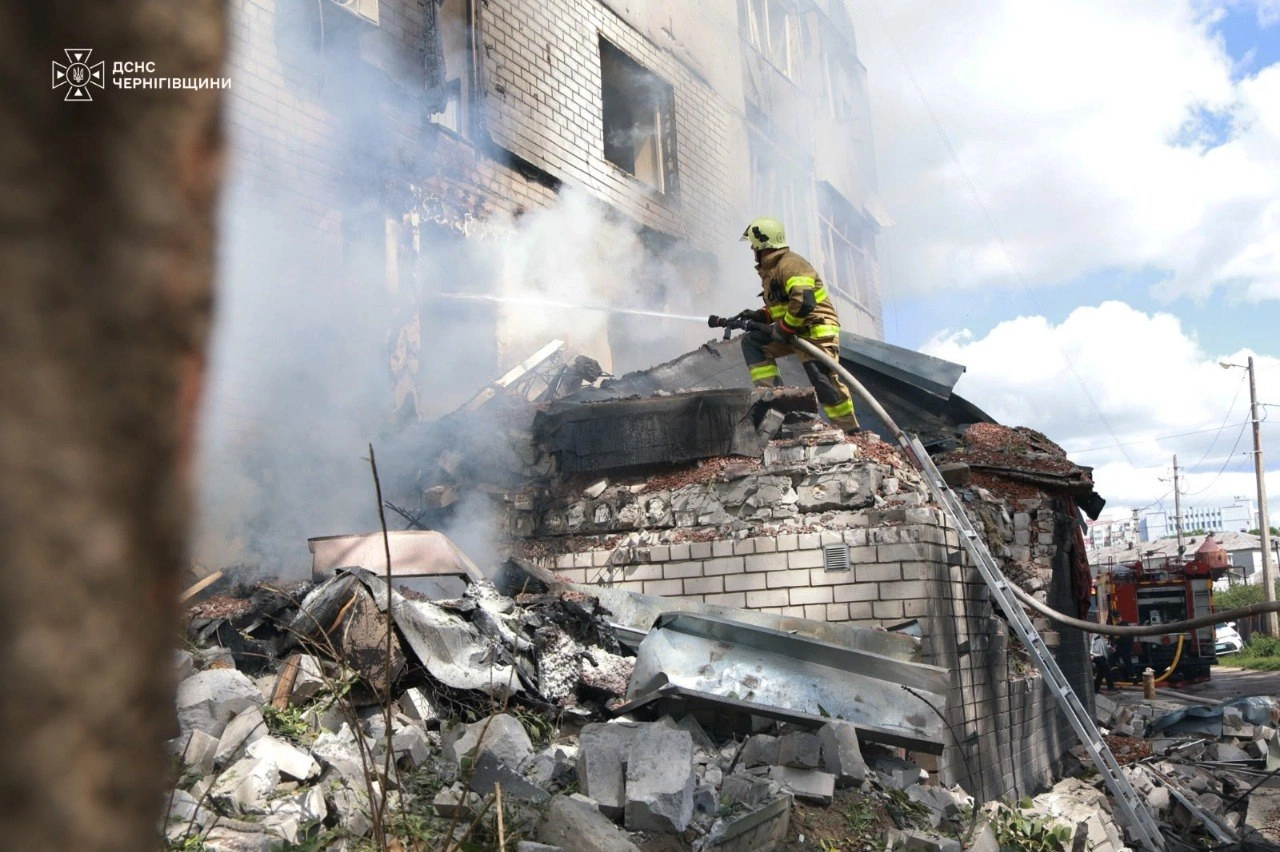
Fire broke out on the ground floor of the nine-story block. Rescuers pulled 14 residents out before firefighters got the blaze under control. By the time the smoke cleared, at least 20 people were hurt, including three children.
“Cynical strike by Russian terrorists on a residential building in Chernihiv. Right in the middle of the day — on Independence Day,” said Chernihiv Oblast Governor Viacheslav Chaus, who didn’t bother disguising the point: a strike timed to land on the one day Ukrainians set aside to celebrate the country existing at all.
The Chernihiv strike was one entry in a much longer overnight and daytime tally — Russia launched two anti-ship missiles, six guided air-launched missiles, and 143 drones at Ukraine, damaging infrastructure in six different oblasts. But it’s the one that landed on a holiday, in daylight, in the middle of a city, that captured what the day was actually like for the people living through it.
Sixty-Six Targets in One Night: Ukraine Hits Back Across Russia
While Chernihiv was burning, Ukraine was busy proving it could reach just as far into Russia as Russia can reach into it. Overnight into Aug. 24, Ukrainian forces struck 66 targets across Russian territory and occupied Ukraine, according to Robert “Madyar” Brovdi, commander of Ukraine’s Unmanned Systems Forces — a branch of the military built from scratch around exactly this kind of long-range drone campaign.
The target list reads like a shopping list for crippling a war machine. A MiG-29 fighter jet and a Ka-52 attack helicopter, destroyed on the ground at Millerovo Air Base. Four radar systems — two Kasta-2E2s, a Nebo-SV, and an ST-68 — the eyes Russia uses to spot incoming drones before they arrive. A Russian riot-police base in occupied Kherson Oblast. Energy facilities in occupied Ukrainian territory. And in the Black Sea, two vessels from Russia’s “shadow fleet” — the aging, barely-insured tankers Russia uses to smuggle sanctioned oil past Western restrictions, since no legitimate shipper will touch it anymore.
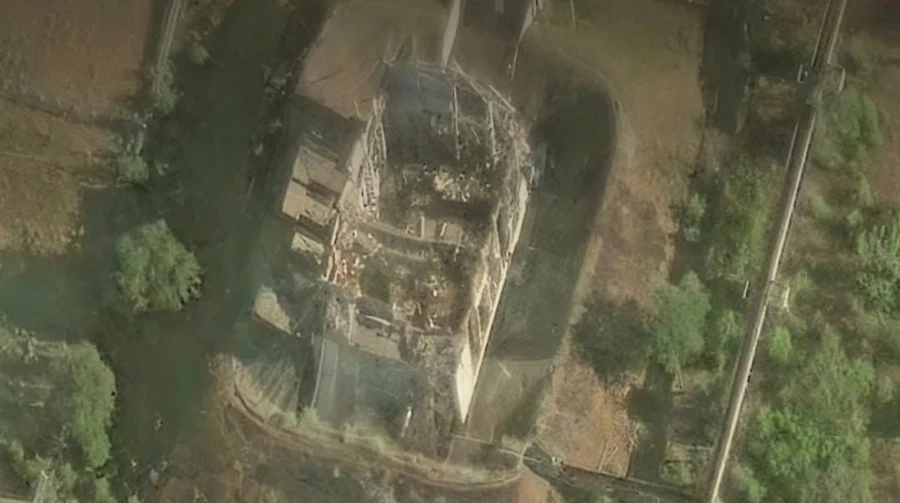
The centerpiece was Kombinat Kamensky, a defense-industrial plant in Russia’s Rostov region that makes solid rocket fuel — the propellant packed inside multiple-launch rocket systems and a range of Russian missiles. Ukraine’s General Staff confirmed the strike started a fire there; how much of the plant it took out is still being assessed.
Three Ozon warehouses also went up — in Dagestan, Stavropol Krai, and Adygea — part of a systematic campaign against Russia’s two biggest online retailers that has been running for weeks. Ozon’s stock dropped 12% the same day.
When the War Comes Home: Two Children Killed in Krasnodar
Not every target in that overnight campaign burned cleanly. In Krasnodar, drone debris — wreckage from an intercepted or destroyed Ukrainian drone, falling back to earth under its own weight — came down on a childcare center. Two children were killed. Seven more children and two adults were injured.
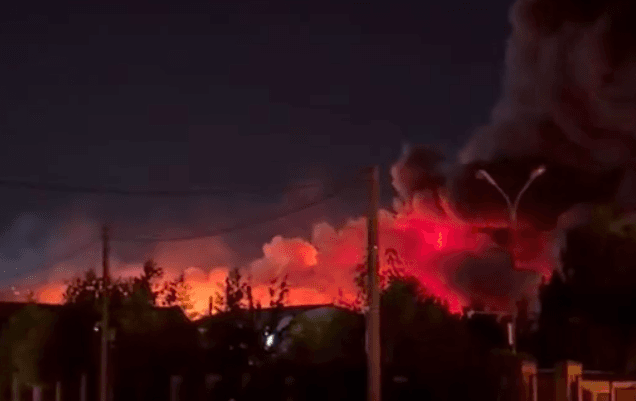
Krasnodar Krai Governor Veniamin Kondratyev said debris also hit residential buildings and apartment blocks under construction nearby, and sparked a fire at warehouse facilities in the region — among them a plant belonging to the home-goods retailer Kuchenland, which caught fire in the same wave of strikes.
This is the ugly physics of drone warfare that rarely makes headlines: a drone doesn’t have to hit its target to kill someone. Intercepted or damaged mid-flight, it and its warhead keep falling — and gravity doesn’t check what’s underneath before it lands. Ukraine’s strikes that night were aimed at Ozon’s logistics network, not at children. The debris didn’t know the difference.
None of the casualty figures from Russian or Crimean channels could be independently verified — a standard caveat for any report sourced entirely from Kremlin-aligned governors and Telegram channels. But the pattern is now familiar enough to name: as Ukraine’s strike campaign against Russian retail and industrial infrastructure has intensified through August, the collateral toll inside Russia has climbed with it.
Krasnodar sits roughly 155 miles from Russian-occupied Berdiansk in southeastern Ukraine, and 225 miles from the nearest Ukrainian-held territory — a reminder of just how far this war now reaches on both sides of the border.
Britain Hands Over the Blueprints: The Storm Shadow Deal
The biggest structural news of the day arrived without an explosion. Britain agreed to let defense firm MBDA share classified technical information on British-made components in the Storm Shadow cruise missile — known as SCALP in its French-built variant — with Ukraine, clearing the way for Kyiv to start building the weapon domestically instead of depending on donated stockpiles.
Quick explainer, because this one matters: Storm Shadow is a long-range cruise missile, launched from a jet, that flies low and fast toward a pre-planned target and can operate day or night in bad weather. It weighs about 1,300 kilograms, runs 17 feet long, and can hit targets up to 155 miles away. Ukraine has used donated versions to destroy a Russian command post in Luhansk and a defense-industry microelectronics plant in Bryansk. What it hasn’t been able to do is make more of them itself.
New UK Prime Minister Andy Burnham announced the decision on his first visit to Kyiv since taking office — a first foreign trip that says something about where his government’s priorities sit.
The Kremlin’s response was immediate. Spokesperson Dmitry Peskov called the move “fuel on the fire,” accused London of sabotaging the peace process, and said Russian forces were already gathering intelligence to locate and destroy any facility that starts producing the missiles. It’s a threat with teeth — Russia has bombed Ukrainian defense sites before — but also a familiar pattern: when allies improve Ukraine’s capabilities, Moscow threatens the infrastructure rather than changing course.
Analysts caution the timeline is longer than the announcement suggests. Building an actual production line, rather than assembling missiles from delivered parts, typically takes years — though Ukraine’s defense industry has repeatedly moved faster than outsiders expected.
Ukraine’s War Gets a Brain: The AI Partnership With Britain
The same day, on a quieter track, Ukraine and the UK signed a second deal: British universities and companies will get access to Ukraine’s “Avengers Labs” — a platform built from five million frames of real battlefield footage, captured by thousands of cameras and infrared sensors across the front, used to train artificial intelligence to recognize tanks, artillery, air-defense systems, and soldiers automatically.
Here’s why that matters. Modern militaries have spent decades trying to build software that can look at a video feed and correctly identify what it’s seeing, fast enough to matter in combat. Ukraine has something almost no other country has: three and a half years of continuous real war, recorded. Its AI systems, trained on that data, can already identify 70% of enemy targets in real time.
In exchange, Britain will share its own AI expertise, and the two countries are already running pilot projects — one that turns ordinary fiber-optic cables into AI-powered sensors to protect infrastructure, another developing low-power AI chips small enough to fit inside a drone. The deal sits inside a broader 100-year defense partnership the two countries signed in 2025.
“Ukraine is pushing the frontier of defense innovation as they bravely resist Putin’s illegal invasion,” UK Defense Minister Wes Streeting said. It’s a partnership built on an uncomfortable trade: Ukraine has the battlefield data because Ukraine has the battlefield. Britain gets a research edge; Ukraine gets an ally with a permanent stake in seeing this war through to a good outcome — since Britain now owns a piece of the technology being built to win it.
Ten Names Off the Missing List
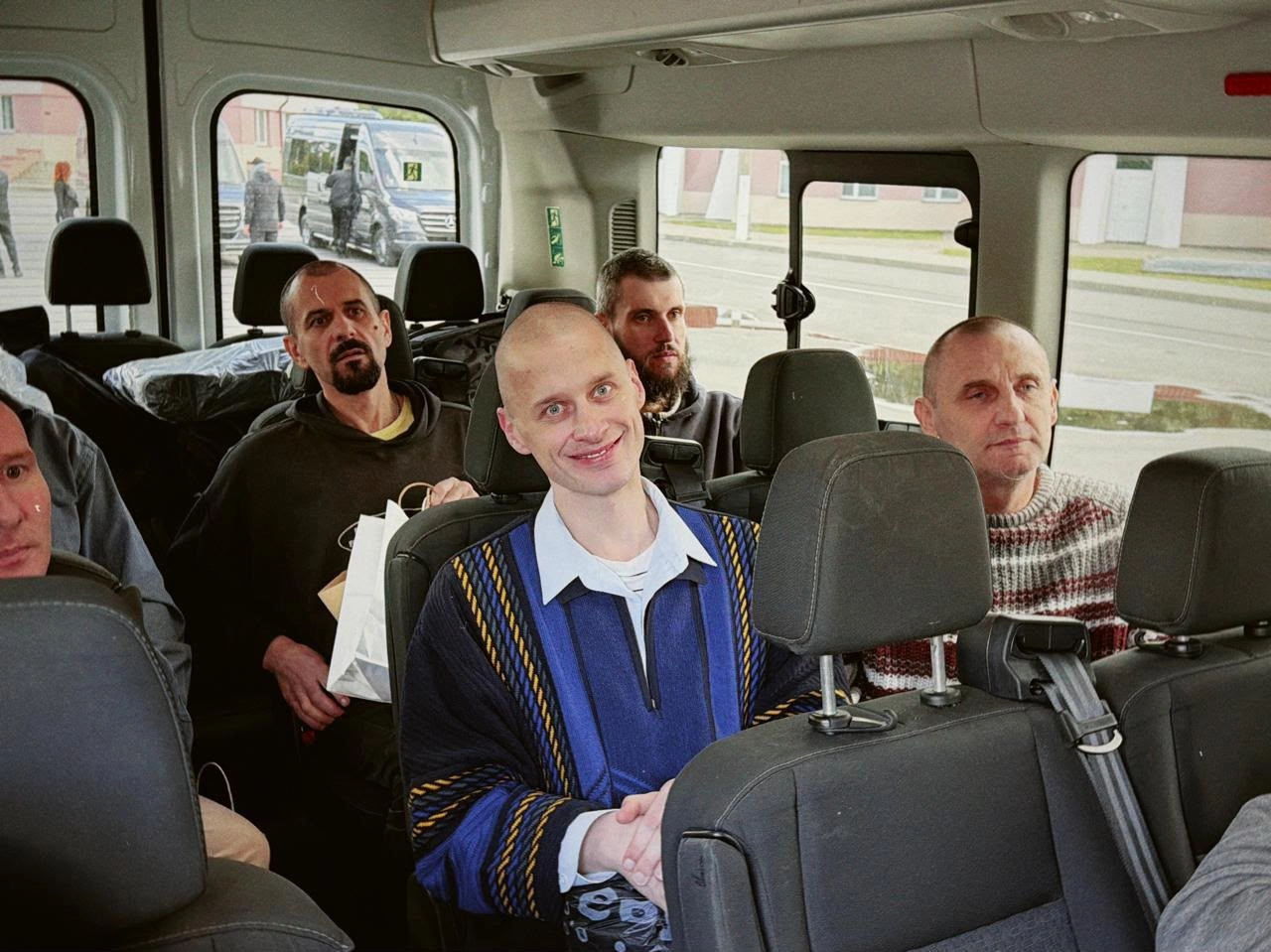
Ten Ukrainian service members who’d been listed as missing in action came home from Russian captivity on Independence Day, in what officials called a “special exchange” routed through Belarus. President Volodymyr Zelensky announced it personally.
Two of the ten had been missing since 2024. The other eight had been missing since 2025. All served in the Armed Forces or National Guard, fighting in the Donetsk sector — sergeants, soldiers, and sailors, according to Ukraine’s Human Rights Commissioner Dmytro Lubinets.
“Missing in action” is a harder status than it sounds, and worth explaining plainly: in a war where the front line moves, where occupation cuts off access to bodies, and where identification requires DNA testing that can’t happen mid-battle, a soldier can go months or years with no confirmed fate at all — neither the relief of “alive” nor the finality of “dead.” Some who are listed as missing turn out to be alive in Russian captivity the whole time, unrecorded until an exchange like this one surfaces their names.
“We remember every man and woman who remains in captivity,” Zelensky said. “We are searching for every name. And we will do everything to free them and bring them home.” The ten will now go through medical treatment and rehabilitation. It’s the second stage of the latest prisoner swap — five days after Ukraine brought home 103 POWs on Aug. 19 — and a reminder that even as the front lines stay frozen, the accounting of the war’s human cost keeps moving, name by name.
Another $7.1 Billion, and Still Not Enough
The European Commission approved another 6.1 billion euros — $7.1 billion — in defense loans for Ukraine on Independence Day, earmarked for air defenses, missiles, ammunition, and radars. It’s a slice of the EU’s larger 90 billion euro Ukraine Support Loan, finalized in April to cover two-thirds of Ukraine’s defense and budget needs through 2027.
“On Ukraine’s Independence Day, Europe shows our support is unfaltering and concrete,” European Commission President Ursula von der Leyen said. The money matters because the alternative source has largely dried up: the EU has effectively become Kyiv’s lead military supplier and financier since the Trump administration wound down most U.S. defense aid to Ukraine.
But money and math don’t line up yet. Zelensky told allies gathered in Kyiv that Ukraine faces a $27 billion defense budget shortfall this year, and used the anniversary to release numbers his government usually keeps closely guarded: Ukraine received 675 Patriot interceptor missiles — the system that actually stops Russia’s fastest, highest-arcing ballistic missiles — across all of 2023. In 2025, that number was 364. For 2026, the current projection is 264, even as Russian missile attacks have increased. Ukraine is asking for at least 300 more ahead of winter.
Zelensky also said Ukraine could triple its own drone production — currently 200-300 a day, well behind Russia’s roughly 1,000-drone daily attacks — for less money than Russia spends on its drone industry, if the financing existed. “We need more money, much more,” he said. Finnish President Alexander Stubb, at the same meeting, called continued deep strikes into Russia “a sensible military strategy” and the only real path back to negotiations, since it raises the price Russia pays for continuing the war.
The Frontline That Didn’t Move
For a day defined by long-range strikes and diplomatic handshakes, the actual front line was almost eerily quiet — which is itself the story, since quiet on defense doesn’t mean quiet in casualties.
In Sumy Oblast, Russian forces kept pushing to build a buffer zone along the border but made no confirmed advances, despite claiming to have seized the village of Pershe Travnya. In Kharkiv Oblast, Russian units tried again near Vovchansk and were counterattacked by Ukrainian forces; further south, near Velykyi Burluk, Russia struck a Ukrainian observation post with a three-ton glide bomb but still didn’t advance. Along the Oskil River — Russia’s attempted route to cross westward into Kharkiv and Donetsk — nothing changed in either the Kupyansk or Borova sectors, though Russian forces kept hammering the logistics hub at Izyum with repeated strikes.
Donetsk Oblast, the war’s main battleground for three years running, saw the most movement — in both directions. Ukrainian forces advanced near Slovyansk, east of the village of Dibrova. Russian forces claimed to have taken Kucheriv Yar near Dobropillya, while Ukraine held its positions at nearby Hannivka. Around Pokrovsk, the city that has anchored months of grinding combat, nothing changed at all.
Further south, in Zaporizhzhia, Ukrainian forces actually gained ground — clearing Russian infiltrators near Hulyaipole and advancing in Orikhiv — even as Russian channels published what analysts believe was AI-altered footage claiming to show a flag-raising in the nearby village of Dolynka. It’s a small, telling detail: when the real battlefield isn’t cooperating, fabricate the footage instead.
A Deadlier Summer: Counting the Day’s Dead
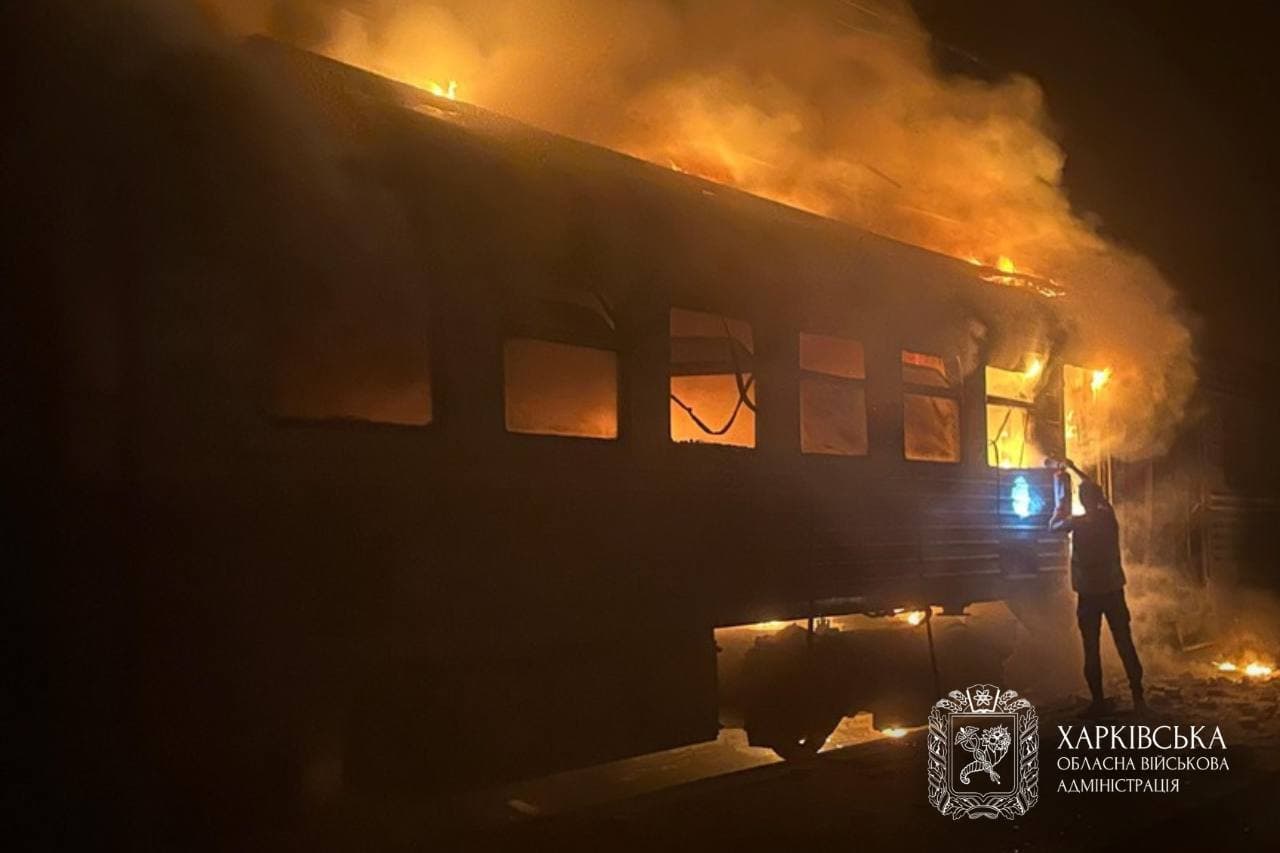
Russian attacks killed at least eight people and injured 43 across Ukraine over the 24 hours spanning Independence Day. In Kharkiv Oblast’s Lozova community, a Russian drone struck railway infrastructure overnight, killing two women and injuring six others, including an 11-year-old girl who was left in serious condition with burns after her mother was killed in the same strike. Elsewhere in Kharkiv Oblast, five more people died and 17 were hurt across 16 separate settlements. In Kramatorsk, Donetsk Oblast, two people were killed; six more were wounded elsewhere in the region. Sumy Oblast recorded one death and 12 injuries from more than 50 separate Russian attacks on 25 settlements. Zaporizhzhia logged 518 Russian strikes against 38 settlements, injuring three people. Chernihiv, beyond the Independence Day strike itself, saw a gas station worker hurt in a separate drone hit.
Set against the wider trend, Aug. 24 was an ordinary day of an increasingly abnormal war. The U.N.’s Human Rights Monitoring Mission reported that July 2026 was the deadliest month for Ukrainian civilians since March 2022 — the earliest weeks of the full-scale invasion. At least 437 civilians were killed and 2,610 injured in July alone, a 30% jump from June, which had itself just set the previous record. Civilian casualties were 70% higher than the same month a year earlier. Seventeen children were killed and 166 injured — the worst monthly toll for children since April 2022.
The pattern behind the numbers: Russia has been launching mass strikes of up to 1,000 drones in a single night, alongside ballistic and cruise missiles that Ukraine’s homegrown air defenses can’t intercept on their own — which is exactly why the Patriot interceptor shortage described above isn’t an abstract budget line. It’s the gap between these casualty figures and a lower ones.
Putin’s New Power to Seize Anything He Wants
While Ukraine counted its dead and its allies counted their commitments, Vladimir Putin signed a decree quietly reshaping how much control the Russian state has over its own economy. The decree lets the government seize any “critical infrastructure facility” — a category defined broadly enough to cover fuel, energy, industrial, communications, transport, or utility sites — if the private owner fails to adequately protect it from drone strikes or doesn’t repair damage quickly enough.
Translate that: any company Ukraine has bombed, or might bomb, is now vulnerable to a state takeover dressed up as national security. The seized assets go under “temporary management” that only Putin himself can end — meaning temporary, in practice, means indefinite. A state agency called Rosimushchestvo, whose whole job is channeling revenue from nationalized property into the federal budget, will run whatever gets seized.
Analysts at the Institute for the Study of War read this as Putin setting conditions to nationalize private wealth as the war’s cost strains Russia’s finances — a way to grab revenue without raising taxes on a public already feeling the pinch. It would conveniently let the Kremlin stop quietly bailing out companies like Wildberries and Ozon, whose warehouses Ukraine has been dismantling for weeks, and instead simply take them.
The same week, Putin extended the term of 73-year-old Investigative Committee head Alexander Bastrykin to 2027 — the latest in a pattern of Putin rewriting mandatory retirement rules to keep loyalists in power past the age limits that would otherwise force them out. Bastrykin has run Russia’s top investigative agency since 2010. Keeping him in place, analysts suggest, keeps a reliable enforcer available for whatever the nationalization campaign requires next.
Russia’s Amazon Is Bleeding, and the Kremlin Is Bailing It Out
Ozon and Wildberries are, roughly, Russia’s answer to Amazon — the two giants of a fast-growing online retail sector that between them employ over a million sellers and ship to 100 million Russian customers. For the past several weeks, they have also been Ukraine’s most persistent target.
At least 23 Wildberries facilities have been hit since mid-July, destroying or damaging an estimated $5.7 billion worth of goods, according to Data Insight analysts. The company has lost roughly a third of its warehouse space — more than a fifth of its total capacity, by a separate Reuters estimate — and one Moscow-based delivery contractor said his daily parcel volume had dropped from 400 to about 150. “Wildberries has almost run out of its biggest warehouses,” one analyst said. “Every single day one warehouse after another is getting methodically destroyed.”
Ukraine’s rationale: Wildberries sells first-person-view drone components and fiber-optic cable — dual-use goods with clear military applications — making its warehouses legitimate targets, even though the company denies supplying Russia’s armed forces directly. On Aug. 24 alone, Ukrainian strikes hit three more Ozon sites, in Dagestan, Stavropol Krai, and Adygea.
Russia’s response has been to soften the landing rather than the strikes. The Finance Ministry proposed deferring tax and insurance payments for a year for any retailer whose losses exceed 5% of annual revenue, followed by a further year to pay it all back in installments. Russian military bloggers — usually cheerleaders for the war — have started grumbling that the marketplaces are exploiting state generosity instead of paying to defend their own warehouses. It’s an unusual crack in Kremlin messaging: even people who support the invasion are starting to ask who’s picking up the bill for it.
Cheap Drones, Expensive Answers: Europe Builds a Wall in the Sky
A drone crossed from Ukraine into Moldovan airspace before dawn on Independence Day, then continued into Romania — the second such incursion into Moldova in three days, and one more data point in a problem NATO’s eastern members can no longer treat as a nuisance.
For years, alliance jets watched Russian drones drift across their borders and mostly let them go, wary of anything that looked like escalation. That restraint is cracking. After a Russian drone injured civilians in Romania and jamming kept diverting stray Ukrainian strike drones into the Baltics, NATO fighters started shooting intruders down — four over Poland in one incursion last September, others over Estonia and Latvia since.
The trouble is cost. Firing a $400,000 missile at a $35,000 drone is, as one expert put it, an expensive answer to a cheap problem. So Europe is racing toward something more proportionate: NATO’s “Eastern Sentry” reinforces the flank with existing jets, the EU’s “Drone Wall” aims to layer radars, jammers, and interceptor drones along the border, and Poland is fielding its own “Eastern Shield” alongside a joint Baltic system with Finland, Latvia, Lithuania, and Estonia.
The interceptor drones are the more promising fix — $15,000 systems credited with roughly 40% of Shahed shootdowns in Ukraine, now being bought by Poland, Romania, and Lithuania. But most won’t be operational until late 2026 or later, which is why the past year’s intercepts have almost all still been fighter jets. Analysts warn the patchwork of national projects risks duplicating effort — and that the harder obstacle isn’t technology, but political will, which only shifted after a Russian drone hit a home in Romania and a stray Ukrainian one helped topple a government in Latvia.
Independence, Corruption, and the Long List of Who Showed Up
Ukraine’s 35th Independence Day drew a large diplomatic crowd to Kyiv: 30 officials from the EU and NATO gathered for a Coalition of the Willing summit chaired by Burnham with French and German counterparts, joined by European Council President Antonio Costa, Luxembourg’s Luc Frieden, and a string of Baltic and Nordic leaders. Latvian Prime Minister Andris Kulbergs warned that Russia’s hybrid war on Europe — migration funneled through Belarus, cyberattacks, election interference — has “made NATO stronger,” pointing to Sweden and Finland’s recent membership as proof it backfired.
Zelensky used his address to reject any deal that treats Ukraine’s sovereignty as something for larger powers to negotiate away. “Ukrainians will not be paving stones beneath the feet of tsars and leaders,” he said, awarding state honors to soldiers and civilians, living and posthumous, for sustaining the country.
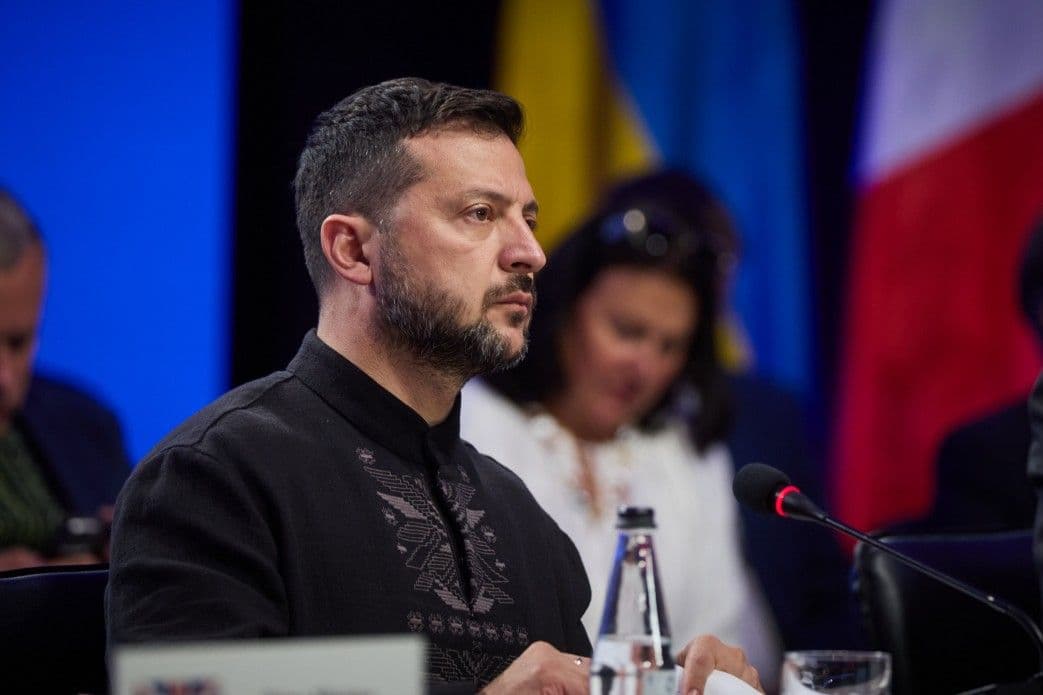
He also addressed something less celebratory: a scandal involving Iryna Mudra, a former deputy head of his own office, whom NABU recordings allege laundered money — including funds used to post bail for an ex-minister in a separate graft case. A partially redacted name on the tapes, starting with B, has fueled speculation about Kyrylo Budanov, head of the President’s Office. “I have no questions from the anti-corruption agencies,” Zelensky told reporters — a claim that will be tested regardless, since a sitting president is constitutionally immune from prosecution while the investigation runs.
Elsewhere: First Lady Olena Zelenska hosted counterparts from 14 countries on national resilience; a Berlin installation of anti-drone netting called on Germany for more air defense; and reports surfaced that a British man, Bradley Townsend, was killed in June fighting for Russia — the first UK national confirmed to have died on that side of the war.
The Closing
Back in Chernihiv, the fire on the ground floor is out by evening, 20 injured counted, three of them children. Six hundred miles away, in Krasnodar, two other children won’t come home at all — killed by debris from a war their government started and continues to wage on people who never chose a side.
Thirty-five years since a parliament in Kyiv declared Ukraine free of the Soviet Union, independence still looks like this: soldiers coming home from captivity in the morning, blueprints for a new missile signed in the afternoon, a building on fire by noon. Nothing about the frontline changed today. Nearly everything else did.
A Prayer for Ukraine
1. For the Children Caught in the Crossfire
Lord, tonight there are children on both sides of this border who will not sleep in their own beds. Three in Chernihiv, hurt when a drone found their home on a holiday. Two others in Krasnodar, who will never come home at all, killed by wreckage from a war they had no part in starting. We do not ask you to weigh whose side caused which wound. We ask you to hold what no side can undo, and comfort every parent counting fingers and toes tonight.
2. For the Girl From Lozova
Father, an eleven-year-old girl lies burned tonight, her mother killed in the same strike that hurt her. She did not choose this war, and she will carry its marks long after the front line has moved on from Lozova. Be near to her in whatever room she wakes up in. Send people who know how to care for a body and a grief that young, and give her, somehow, a future not defined by this one terrible night.
3. For the Leaders Who Carry This Weight
God of wisdom, tonight the people asking allies for money they don’t have enough of, and rationing missiles they wish they had more of, are exhausted in ways their public statements can’t show. Give Zelensky and the officials around him clarity where the choices are impossible, and honesty where the news is bad. Protect them from the corruption that power under siege invites, and give the nations weighing how much to give an urgency equal to their Independence Day promises.
4. For the Ten Who Came Home
Lord of the captives, ten men walked free today after years missing — some their families didn’t know for certain were alive. We thank you for every name recovered from uncertainty. We ask you now for the ones still unaccounted for, still nameless in some Russian record, still waited for by someone who refuses to stop searching. Bring them home too, in your time, and heal what captivity has done to the ten who returned today.
5. For the Long Arc of This War
God of justice, thirty-five years ago this nation declared itself free, and it has spent every year since proving that declaration true against people determined to erase it. We do not ask for an ending that ignores what has been done. We ask for one that answers it. In Your mercy, in Your justice, in Your time — bring this war to its end, and let the ending be worthy of what Ukraine has endured.