
August 30, 2026
Prepared by Diana Bozhyk
Ukrainian forces destroyed air-defense and radar systems at two Russian military airfields overnight, part of a widening campaign to blind Russia’s rear-area defenses, as President Zelensky confirmed the death toll from Friday’s ammunition warehouse explosion near Kyiv has risen to 38. A Russian Iskander missile struck a charity memorial run in Kharkiv Oblast, killing three people including a police officer, while an improvised explosive device targeted the car of a Russian penal-colony official implicated in the 2022 Olenivka POW massacre. Kyiv endured a fourth consecutive day of Russian drone strikes as Belgium flatly rejected a renewed European push to use frozen Russian assets to fund Ukraine, and former defense minister Mykhailo Fedorov offered to help Washington build its own drone army in exchange for Patriot interceptors.
THE DAY’S RECKONING
Thirty-eight. That’s the number President Zelensky confirmed today for the dead in Myla, up from the count reported just yesterday — a grim reminder that these tolls rarely stop climbing the moment the fires go out. Four people are still unaccounted for. The search continues into a fifth day.
Everywhere else, the war kept its own accounting. Ukrainian drones blinded two Russian airfields’ worth of radar and air defense overnight, part of a campaign to make Russia’s rear areas as exposed as its front line. A missile found a charity run in a Kharkiv Oblast village, killing three people who’d gathered to honor fallen soldiers, not become casualties themselves. A car bomb in occupied Donetsk may have finally caught up with a man accused of murdering Ukrainian POWs three years ago. And in Kyiv, the sirens kept sounding for a fourth straight day, wearing down a capital that’s had less and less time to simply exhale between attacks. Belgium said no to using frozen Russian money. A former defense minister, still without a government job, tried making his own case directly to Washington. Nobody today moved any closer to an ending. Everyone today kept doing exactly what the day before required of them.
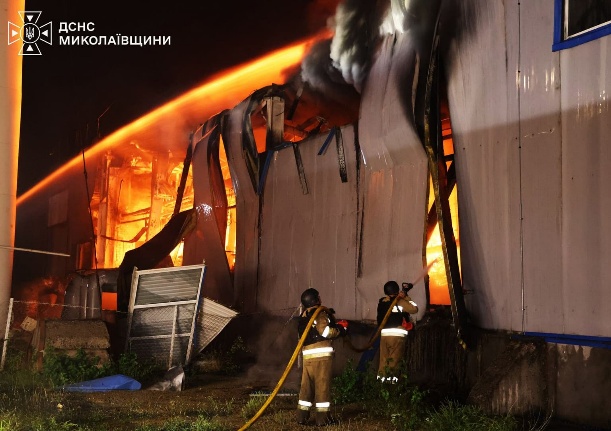
Firefighters work to extinguish a large fire at a food industry facility in Mykolaiv Oblast, Ukraine, following a Russian attack. (Ukraine’s State Emergency Service in Mykolaiv Oblast / Telegram)
UKRAINE DESTROYS AIR-DEFENSE SYSTEMS AT TWO RUSSIAN AIRFIELDS
Ukrainian forces struck the Yeysk Airfield in Krasnodar Krai and the Millerovo Airfield in Rostov Oblast overnight, destroying air-defense systems, radar installations, and ammunition depots at both sites roughly 105 to 110 miles from the front line. Unmanned Systems Forces Commander Robert “Madyar” Brovdi said Ukrainian forces destroyed a Pantsir-S1 air-defense system, a Sopka-2 radar, and an aviation weapons depot at Yeysk, while at Millerovo, strikes took out Kasta 2E2, RSP-27, and Nebo-SV radar systems along with aviation facilities and a separate depot. Satellite imagery showed fires and heat anomalies at both sites following the attacks.
Brovdi identified the primary target as a DRL-27 module within Millerovo’s aircraft landing radar system — equipment used both to detect incoming aerial threats and to guide Russian aircraft safely to the ground, meaning its destruction degrades the base’s basic operational capacity, not just its defenses. The strikes fit a deliberate pattern Ukraine has intensified in recent weeks: systematically blinding and disarming heavily defended Russian military airfields across Rostov Oblast, Krasnodar Krai, and occupied Crimea, following a similar strike on the Engels-2 Airbase in Saratov Oblast just two days earlier. Separately, Ukraine’s General Staff confirmed strikes on a radar station in Pavlychi, Bryansk Oblast, and additional analysis confirmed a Pantsir-S1 destroyed near Kletnya in the same region days earlier — evidence that Ukraine’s suppression campaign against Russian air defenses along the border is producing a steady accumulation of confirmed kills, not just isolated hits.
A CAR BOMB KILLS OLENIVKA’S DEPUTY WARDEN
An explosive device detonated under the car of Dmytro Neielov, first deputy head of the notorious Olenivka penal colony, in occupied Donetsk overnight — a man Ukrainian prosecutors have formally charged with war crimes for his role in one of the war’s most infamous atrocities against Ukrainian prisoners.
Neielov has been implicated in the systemic torture, beating, and humiliation of Ukrainian POWs and civilians held at Olenivka, and Ukraine’s Prosecutor General identified him specifically for involvement in the mass killing of Ukrainian prisoners there in July 2022. That earlier atrocity remains one of the war’s starkest documented war crimes: Russian forces detonated explosives inside a barracks housing Ukrainian POWs, many of them defenders of Mariupol’s Azovstal steel plant, killing roughly 50 prisoners and injuring more than 130 — an attack Russian authorities unsuccessfully tried to blame on a Ukrainian missile strike at the time. Neielov’s current condition following today’s blast remains unknown.
The attack fits a now-familiar pattern of targeted killings against Russian military and occupation officials implicated in war crimes or logistics for the invasion. In June, Russian Colonel Damir Davydov — the Defense Ministry’s head of missile and artillery command — was killed by a car bomb in a Moscow suburb, less than a kilometer from where a Russian lieutenant general died in a nearly identical bombing roughly a year earlier. Russia’s FSB has since tightened security around senior officers nationwide, a defensive posture that clearly hasn’t prevented today’s attack from reaching one more figure directly tied to documented atrocities against Ukrainian POWs.
A MISSILE HITS A MEMORIAL RUN IN KHARKIV OBLAST
A Russian Iskander-M ballistic missile struck the village of Natalyne in Kharkiv Oblast at roughly 9:30 a.m. yesterday, hitting participants of an annual charity event called “Honor the Warriors, Run for the Heroes of Ukraine” and killing three people, including community police officer Oleksii Zahvazdin, with two more injured.
The event, organized by the local village military administration specifically to honor fallen Ukrainian soldiers, became itself a target — an irony that hasn’t gone unnoticed by Ukrainian officials, who opened a criminal negligence investigation into whether organizers adequately accounted for the security risk of gathering a crowd in a frontline region before the run went ahead. Investigators say they’ll examine what safety measures, if any, were considered given the ongoing threat environment in the area.
It’s a grim addition to a broader pattern this year of Russian strikes deliberately or opportunistically targeting gatherings — funerals, markets, and now a run held in tribute to the very soldiers Russia’s own war keeps killing. Attacks on Kharkiv city and its surrounding area over the same 24-hour period injured eight more people, according to regional governor Oleh Synehubov, adding to a weekend that saw the region absorb violence on multiple fronts at once, from ballistic missiles striking rural memorial events to ordinary drone strikes hitting the city itself.
KYIV’S FOURTH CONSECUTIVE DAY UNDER FIRE
Kyiv endured its fourth straight day of Russian strikes today, with explosions and air-defense fire reported across the city throughout the morning and afternoon, continuing into the overnight hours. A fire broke out at a non-residential building in the Shevchenko district around 1:26 p.m., followed by a loud explosion in the city center roughly 15 minutes later. A medical crew was dispatched to the Holosiivskyi district after a cafe was damaged by falling drone debris, though no casualties were reported there. Further explosions and air-defense activity followed near the city’s TV tower in the mid-afternoon, and a residential building in the central Pechersk district was damaged by falling debris around 4 p.m. Two more people were injured in Kyiv Oblast — one near Fastiv after a house fire, another in Vyshhorod after two garages caught fire.
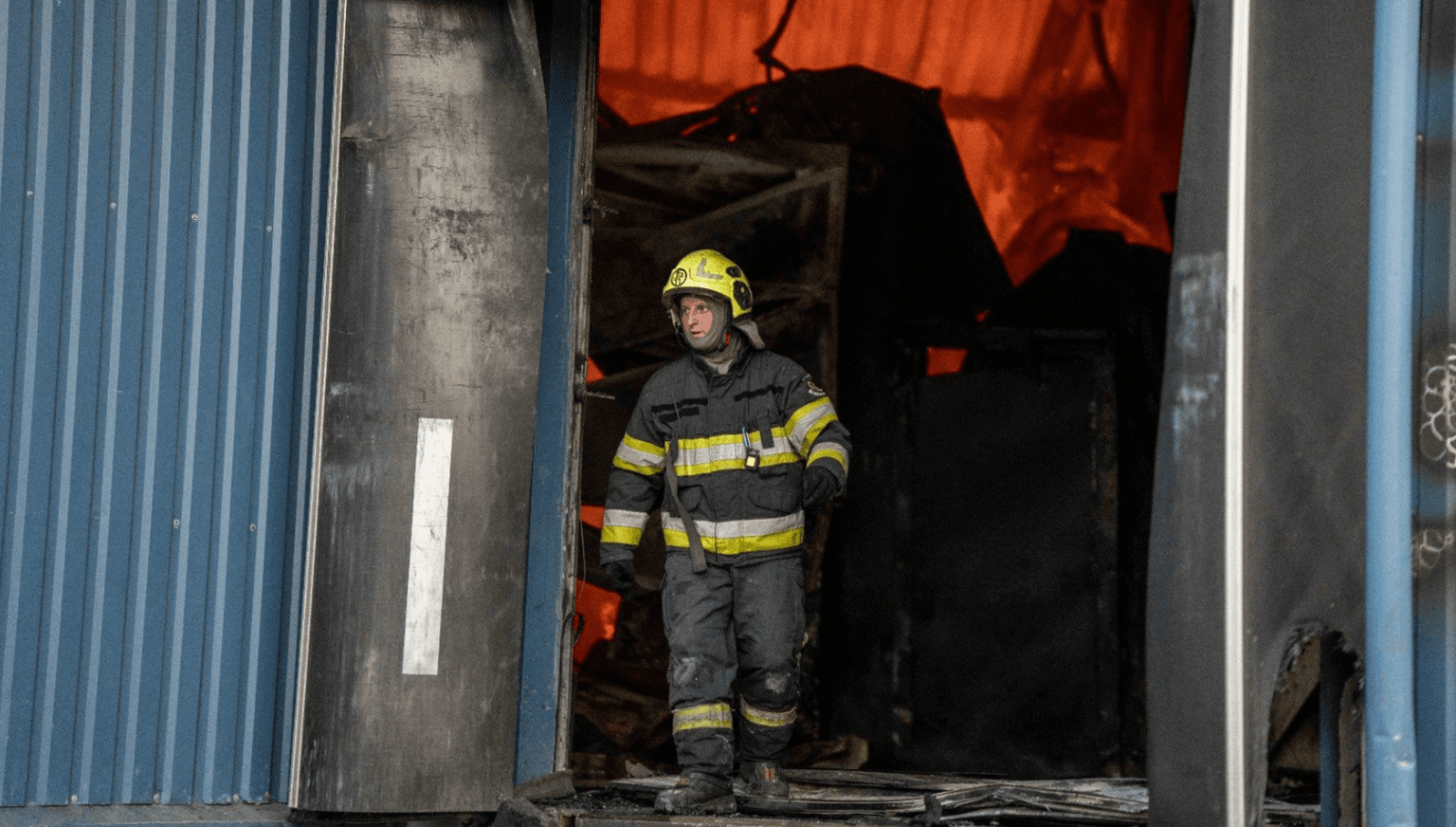
Emergency services at the scene of an attack in Kyiv, Ukraine. (Ukraine’s Emergency Services / Telegram)
President Zelensky said Russia launched roughly 800 jet-powered drones over the past four days alone, part of nearly 1,500 total drones fired at Ukraine in that same span — figures that fit a broader weekly tally he shared today: nearly 2,000 attack drones, more than 1,600 glide bombs, and 31 missiles, including North Korean ballistic missiles, launched against Ukraine over the past seven days. “Right now, Russia’s tactic is to wear down Ukraine and Ukrainians — first and foremost, our people,” Zelensky said, describing a deliberate shift toward daytime kamikaze drone attacks meant to keep the capital in a constant, exhausting state of alert. He said four Ukrainian companies have developed interceptor drones specifically to counter Russia’s jet-powered Shaheds, with one showing particularly promising results, and set a goal of raising Ukraine’s interception rate “well above 90 percent” by fall.
THE FINAL TOLL FROM MYLA: 38 DEAD
President Zelensky confirmed today that the death toll from Friday’s ammunition warehouse explosion in Myla, Kyiv Oblast, has risen to 38, with 20 people injured, including two children, and four individuals still unaccounted for as search operations continue into a third day. State Emergency Service pyrotechnic units are working around the clock to detect and neutralize unexploded ordnance scattered across what officials described as a heavily contaminated blast area, even as most of the resulting fires have now been extinguished.
Zelensky used the update to renew his call for stronger air defense, pointing to frontline and border communities — Nikopol, Kramatorsk, Kherson, and settlements across Kharkiv and Sumy oblasts — that face what he called near-constant bombardment, and promising a “just response” to the sustained escalation. The criminal negligence investigation into how military ammunition ended up stored so close to residential housing continues, with Prime Minister Serhii Koretskyi having already drawn a direct comparison to a nearly identical July tragedy in Vyshneve that killed eight people under similar circumstances. For the families of the 38 confirmed dead and the four still missing, the investigation’s findings will matter less than the fact that a number which started at “at least 27” late Friday night has now, three days later, stopped rising only because nearly everyone still trapped in the wreckage has finally been accounted for.
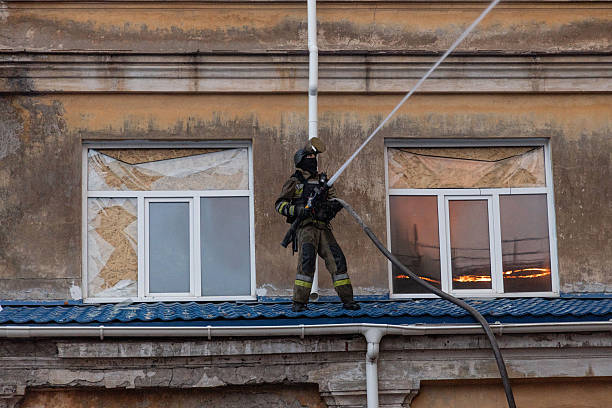
A firefighter operates at a fire in a building following a Russian airstrike in Kramatorsk, Donetsk Oblast. (Francisco Richart/Anadolu via Getty Images)
MEANWHILE, AT THE ACTUAL FRONT
Ukrainian forces conducted a platoon-sized infantry clearing mission in the Kupyansk direction, seizing roughly two square kilometers of forested terrain southwest of Zapadne after apparently suppressing Russian drone capabilities in the area beforehand — geolocated footage showed Ukrainian troops moving freely across open ground, a sign Russian forces couldn’t effectively contest the advance. It builds on an earlier seizure of seven and a half square kilometers of windbreaks nearby, part of a broader effort by both sides to restore genuine tactical maneuver to a battlefield that’s spent most of the past two years reduced to static, drone-dominated stalemate.
Near Sumy City, Ukraine’s Kursk Grouping of Forces refuted fresh Russian claims of seizing Sadky and Velykyi Prykil, stating Ukrainian forces control both settlements. Near Slovyansk, Ukrainian forces advanced east of Novoselivka, with Russian sources acknowledging the Lyman direction has grown “more dynamic” following a string of Ukrainian counterattacks. Near Kostyantynivka, drone operators from Russia’s Sirin Air Defense Battalion appeared on the battlefield for the first time, a notable order-of-battle detail suggesting Russian command is redeploying specialized units into an already saturated sector. Near Hulyaipole, Ukraine’s Center for the Study of Occupation reported Russian forces are moving substantial engineering equipment from occupied Mariupol to build concrete fortifications along the front — a buildup analysts assess is likely preparation for renewed offensive operations rather than purely defensive positioning.
RUSSIA’S MARKETPLACE SQUEEZE DEEPENS
Ukraine’s campaign against Russian e-commerce is producing measurable financial strain well beyond the immediate cost of destroyed warehouses. Sberbank’s deputy chair, Taras Skvortsov, said consumer spending on Russian online marketplaces has dropped 15 percent in recent weeks, even as those marketplaces account for 15 percent of all Russian consumer spending overall — a meaningful contraction in a sector Russia’s domestic economy has come to depend on.
Ukraine’s Foreign Intelligence Service reported that Russian marketplaces have sharply raised commissions to offset their losses, with Ozon charging sellers commissions and logistics fees averaging 47.8 percent of product value between April and June, rising as high as 55 percent for sellers using Ozon’s own warehouses. Average marketplace retail profitability has collapsed from roughly 15 percent to just 5 percent between 2025 and 2026, rendering entire product categories unprofitable to sell. Separately, Ukrainian forces struck the Kirishi Oil Refinery in Leningrad Oblast overnight — a facility with 20 million metric tons of annual processing capacity, hit for the fifth time since March 2025 — with Bloomberg reporting Ukraine struck Russian refineries at least 21 times throughout August alone, a monthly record that’s helped push Russian refining output to its lowest level in more than two decades.
RUSSIA THREATENS “MASSIVE STRIKES” ON UKRAINE’S GRID THIS WINTER
Russia’s Defense Ministry announced today that it’s preparing to launch “massive strikes” against Ukraine’s energy infrastructure, framing the coming bombardment explicitly as retaliation for Ukraine’s own long-range campaign against Russian oil refineries and commercial logistics hubs, which Moscow characterized — despite years of striking Ukrainian civilian infrastructure itself — as attacks on “civilian infrastructure.”
The announcement follows an annual pattern Russia has repeated every autumn and winter since 2022: intensifying strikes on Ukraine’s power grid specifically to break morale and strain the country’s ability to keep homes heated during the coldest months. What’s different this year is the explicit framing as retaliation, an acknowledgment — however indirect — that Ukraine’s deep-strike campaign against Russian refineries has genuinely hurt Moscow enough to warrant an announced response rather than simply continuing the war’s usual rhythm of unexplained escalation.
For Ukrainian officials already bracing for a difficult winter, the threat changes little in practical terms, but it does confirm what most had already assumed: that whatever pressure Ukraine’s strikes are placing on Russia’s economy, Moscow intends to answer it by making Ukrainian civilians, not Russian oil executives, pay the visible price. The pattern is well documented at this point — each of the past three winters has brought a fresh wave of strikes targeting substations, heating plants, and transmission infrastructure, timed deliberately to inflict maximum discomfort during the coldest stretches rather than any specific military objective.
UKRAINE REACHES ITS WINTER GAS TARGET EARLY
Ukraine has stockpiled enough natural gas to meet its baseline winter requirements a full month ahead of schedule, First Deputy Prime Minister and Energy Minister Denys Shmyhal announced, with underground storage facilities now holding 14.6 billion cubic meters of gas.
Shmyhal credited Ukrainian gas producers, the state gas transmission operator, and Naftogaz for hitting the milestone early, even as work continues on physically protecting that infrastructure from further Russian strikes. The early stockpile complements a broader national preparation effort: roughly 100,000 residential buildings — 70 percent of the government’s target — have already been readied for the heating season, alongside 12,400 boiler houses and more than 11,700 kilometers of heating networks.
Ukraine has allocated nearly $152 million toward repair work and infrastructure protection, with a particular focus on decentralizing the energy system so that heating and water networks can keep functioning autonomously even during extended blackouts — a lesson drawn directly from harder winters earlier in the war, when a single successful strike on a centralized facility could leave entire districts without power for days. Local authorities in Kyiv have separately begun compiling lists of residents who may need temporary relocation if heating outages stretch on this winter, a quiet acknowledgment that preparation alone may not be enough to fully offset whatever Russia’s promised strikes ultimately bring.
BELGIUM SLAMS THE DOOR ON FROZEN RUSSIAN ASSETS
Belgium’s defense minister delivered an unambiguous rejection today of a renewed push by Sweden, Poland, the Netherlands, and Spain to use roughly $233 billion in frozen Russian assets — most of them held at Belgium’s Euroclear — to fund Ukraine’s defense. “This is non-negotiable, the door is closed,” Theo Francken told Flemish broadcaster VRT, pointedly criticizing the Baltic states for repeatedly reviving a proposal Belgium’s prime minister already blocked at a dramatic European summit last December.
The rejection isn’t universal within Belgium’s own government: Foreign Minister Maxime Prévot has signaled more openness to the idea this month, provided all EU countries share the legal risk equally rather than leaving Belgium exposed alone to potential Russian legal retaliation. That’s precisely the fear driving Francken’s hard line — Belgium argues that seizing sovereign assets, however sympathetic the cause, opens the door to legal claims from Moscow that could specifically target Belgian institutions given where the money physically sits. European foreign ministers are set to revisit the topic at a meeting in Ireland next week, though today’s blunt rejection suggests any resolution remains far from settled, even as Ukraine’s own defense ministry confirmed this week it’s facing a $27.2 billion funding gap that frozen assets could, in theory, meaningfully help close.
A NEW DEFENSE MINISTER RESTRUCTURES HIS MINISTRY
Defense Minister Yevhen Khmara outlined his strategy today for closing Ukraine’s defense funding gap, proposing to advance portions of a planned European loan while actively soliciting new contributions from international partners, alongside a broader reshuffle of his ministry’s leadership team.
Khmara announced Mykola Shvydkyi will oversee frontline operations, Liubov Halan will lead human capital development, Serhii Boiev returns to manage international partnerships, and Hanna Hvozdiar will head the defense-industrial complex and export division, with additional appointments still being finalized for digital transformation and cognitive warfare roles. He also revealed Ukraine has developed four potential interceptor drones designed specifically to counter jet-powered Shahed attacks, all of which have already passed field testing, with the immediate priority now scaling production to thousands of units.
Notably, Khmara said he’s offered his predecessor, Mykhailo Fedorov, an open format to continue collaborating on defense projects, though he’s still awaiting a response following a meeting the two held back in July — a small gesture toward continuity in a ministry that’s seen five different leaders since the war began. Khmara stressed that the military, government, defense industry, and international partners must operate as a unified system, adding that he and Commander-in-Chief Mykhailo Drapatyi share a common vision and are working as a cohesive team, a pointed contrast to the friction that reportedly defined his predecessor’s final months in the role.
FEDOROV’S WASHINGTON PITCH: DRONES FOR PATRIOTS
Former defense minister Mykhailo Fedorov, on an international trip that’s already taken him through Italy, told the Financial Times he’s seeking American investment for a new defense technology fund and proposed a direct trade: Ukrainian help building America’s own drone capabilities in exchange for Patriot interceptors Ukraine desperately needs for the coming winter.
“This is not exactly a classic venture fund,” Fedorov said. “We’re writing a new history of the war.” He said the fund would focus initially on battlefield robotics, high-speed interceptor drones capable of countering Russia’s jet-powered attack drones, and AI-guided low-cost missiles — technology Fedorov said Ukraine has already tested and could scale rapidly with additional investment. “I’m ready to make that trade,” he told the FT, framing the exchange explicitly around Ukraine’s Patriot shortage.
On his earlier call for wartime elections, Fedorov pushed back against the idea that it targets Zelensky personally: “It’s about the fact that we need to update the state’s operating system,” he said. He confirmed he remains in regular contact with Elon Musk, though he declined to say whether the two planned to meet during his Washington visit, or whether he’d meet with Trump administration officials. The Washington stop follows Fedorov’s earlier agreement to serve as an unpaid adviser to Italy’s defense minister, and he told the FT he’s considering similar advisory arrangements with other partner countries, potentially including France, suggesting his post-government career is increasingly taking shape as an international one rather than a purely domestic political project.
WEEKEND STRIKES ACROSS THE SOUTH
Russian strikes killed at least eight people and injured 41 more nationwide over the weekend, spreading damage across multiple regions in a pattern that’s become grimly routine. In Donetsk Oblast, two people, including a 13-year-old child, were killed when Russian forces dropped bombs on houses in Bilbasivka, near Sloviansk, damaging dozens of homes; seven more were injured elsewhere in the region the previous day. Kherson Oblast lost three people and counted 17 injured as Russian strikes damaged six apartment blocks, 14 houses, and numerous vehicles including buses, taxis, and garbage trucks.
In Zaporizhzhia Oblast, a first-person-view drone killed one woman and injured two men, part of 942 separate Russian strikes against the region in a single day; a 73-year-old woman was separately killed and five others wounded in earlier weekend strikes on the settlements of Yulivka and Kushuhum. Odesa Oblast absorbed an overnight strike that injured three people and destroyed a food storage warehouse — among the damaged facilities, a PepsiCo production site in Mykolaiv Oblast, which the company confirmed was hit though no employees were injured. It’s the latest disruption for a company that previously relocated production away from Mykolaiv specifically due to its proximity to the front line, only to see this facility struck regardless.
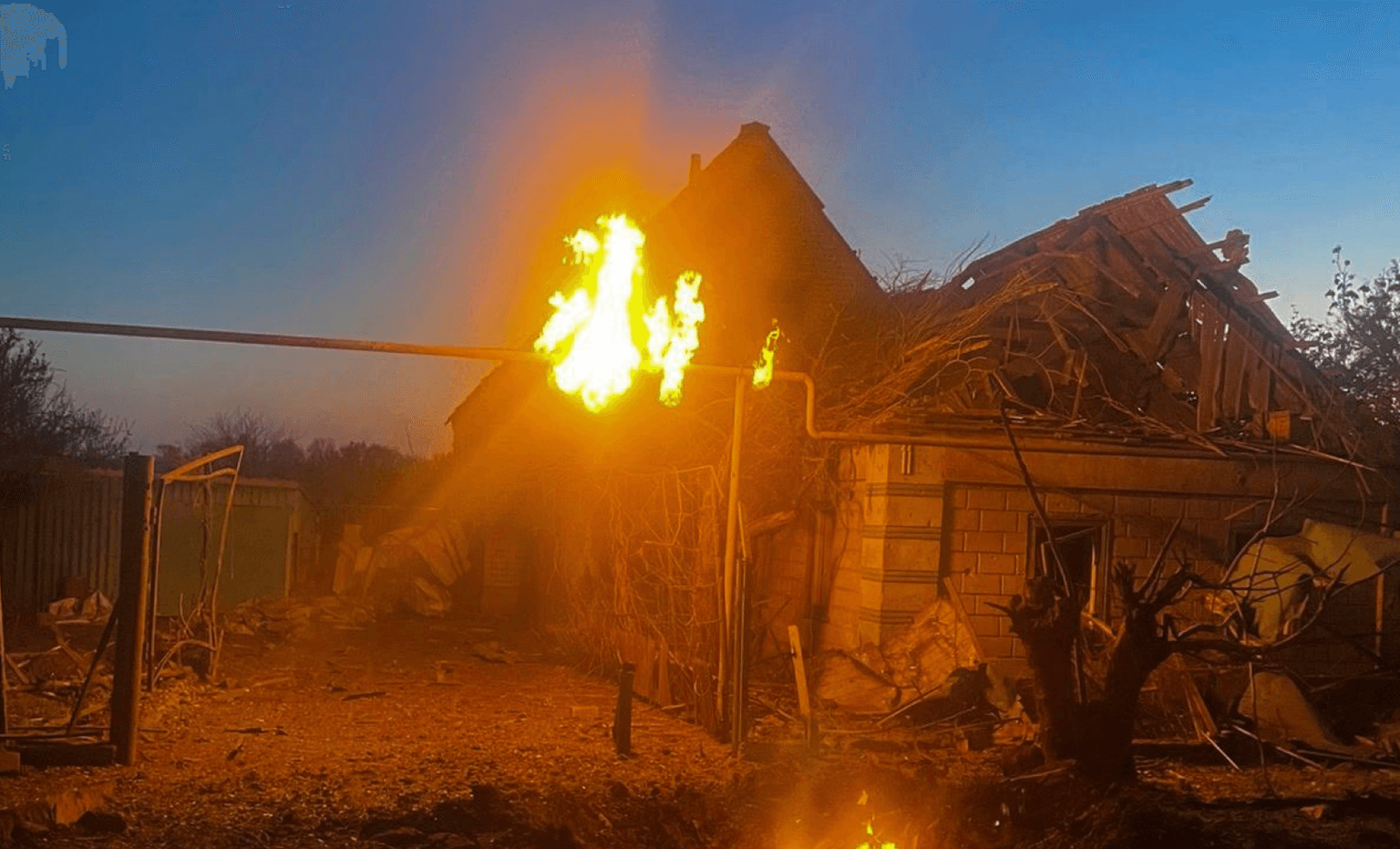
A damaged house in Zaporizhzhia Oblast following Russian strikes. (National Police / Telegram)
TURKEY SUMMONS UKRAINE’S AMBASSADOR OVER BLACK SEA STRIKES
Turkey summoned Ukraine’s ambassador to its Foreign Ministry after two Turkish-operated vessels were struck near the Russian port of Tuapse, Turkish state media reported, with a second boat hit while attempting to tow the first to safety. Turkish officials used the meeting to issue warnings and stress the importance of ensuring safe passage for shipping in the Black Sea, a region increasingly caught between Ukrainian strikes on Russian oil infrastructure and Russian strikes on Ukrainian ports and shipping.
Turkey has positioned itself as a potential mediator on Black Sea security, calling earlier this month for a maritime ceasefire as attacks in the region escalated through spring and summer. Ukraine has said it’s willing to accept such a moratorium, but Moscow has shown no genuine interest in de-escalating, and Russian strikes on Ukrainian ports continue effectively blocking much of the country’s maritime exports — forcing Ukraine to increasingly rely on the Danube River and rail routes instead, even as Ukrainian forces continue striking Russian shadow-fleet vessels and legitimate oil infrastructure near the Turkish coast in the same contested waters.
The episode underscores how difficult it’s become to keep the Black Sea’s remaining commercial shipping lanes genuinely neutral, given how densely both countries’ strike campaigns now overlap in the same relatively narrow stretch of water. Turkish-flagged vessels have already been caught up in similar incidents before, including a fatal strike on a fishing boat near occupied Crimea earlier this year — a reminder that even ships with no direct role in the war keep absorbing risk simply by operating anywhere near ports both militaries consider legitimate targets.
A SANCTIONS BILL, A SUMMIT CONDITION, A STRIKE ON BELGOROD
Democratic Senator Richard Blumenthal urged the US House to pass long-stalled Russia sanctions legislation when it reconvenes tomorrow, calling the moment one of “extreme urgency” given Putin’s economic strain, in an interview following his own recent visit to Kyiv for Independence Day. The bill, which cleared the Senate overwhelmingly earlier this month, would impose tariffs up to 100 percent on the world’s five largest buyers of Russian energy — a scaled-back version of the original proposal, reworked through negotiations involving the late Senator Lindsey Graham before his death in July.
Separately, Kremlin spokesperson Dmitry Peskov said a potential summit between Putin, Trump, and Zelensky could happen only to formalize agreements already reached through other channels, not to negotiate substantive terms — a framing that keeps any real breakthrough conditional on progress Russia has shown little willingness to make. “Such a meeting is possible only to formalize agreements,” Peskov told reporters, adding that a genuine settlement remains “very complicated” and involves “a huge number of details” rather than anything close to resolution.
And in Russia’s Belgorod Oblast, a missile strike damaged an Ozon sorting and delivery hub along with, according to unverified local reports, the regional thermal power plant and an area near the city’s television tower; Russian officials claimed two people were killed and 16 injured, figures that couldn’t be independently confirmed. The strike adds to a growing list of Ukrainian operations reaching directly across the border into Belgorod itself, a region that sits close enough to the front line that it’s increasingly absorbed the same kind of logistics and infrastructure targeting Ukraine has applied further into Russian territory throughout the summer.
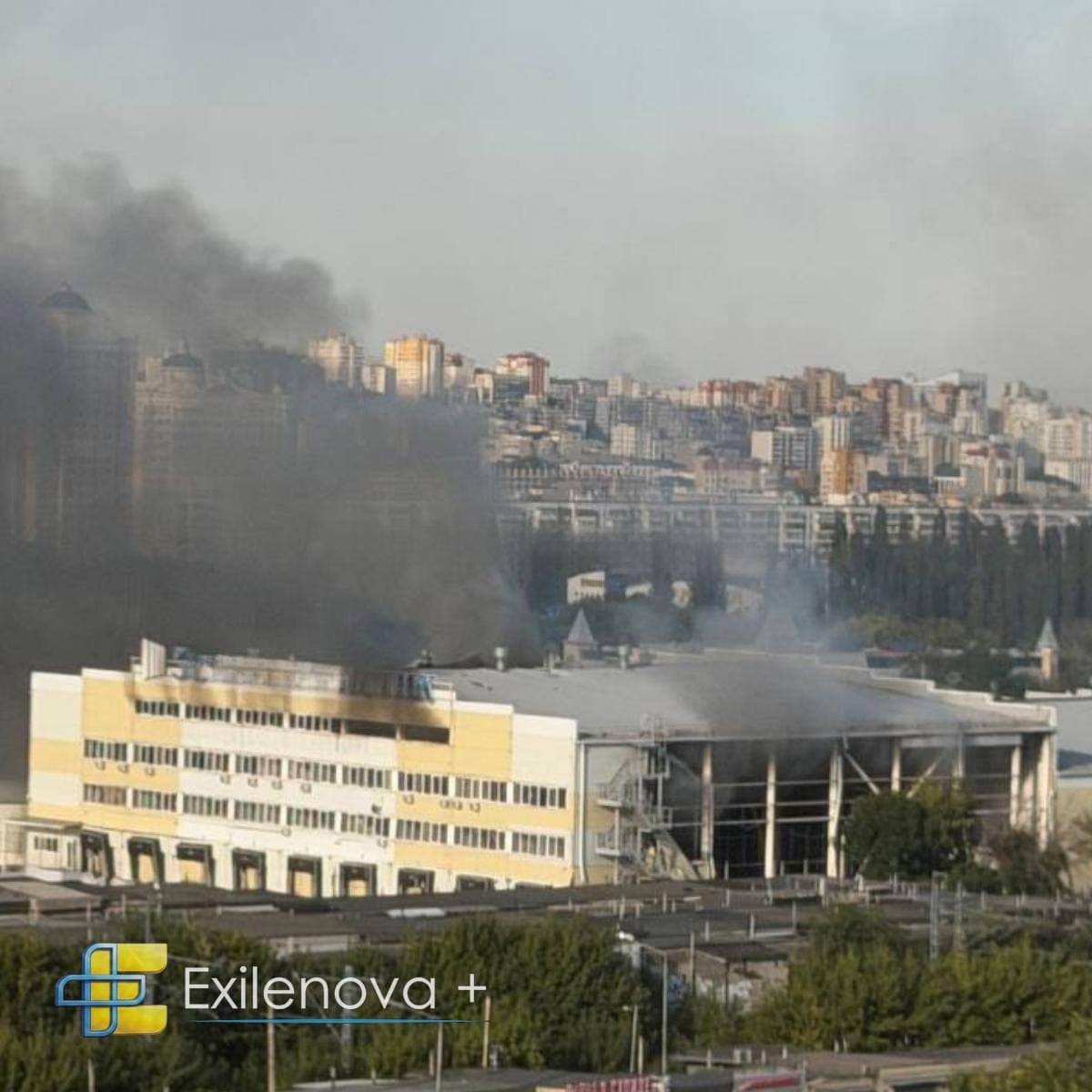
Smoke rises over Belgorod, Russia, following a reported missile strike. (Exilenova+ / Telegram)
AN AIRFIELD BLINDED, A DEATH TOLL FINAL, A CAPITAL STILL UNDER FIRE
By nightfall, the day’s threads pulled in every direction this war now reaches: a radar system in Rostov Oblast gone dark, a car bomb finding a man accused of murdering prisoners three years ago, a capital entering its fourth sleepless day, and a Belgian minister closing a door that could have meant billions for Ukraine’s defense. None of it resolved into anything simple.
Thirty-eight people in Myla won’t come home. Three runners in Natalyne died honoring soldiers already lost. And somewhere in Washington tonight, a man without a government title is still trying to trade what Ukraine knows about drones for the missiles it needs to survive winter. Nothing today ended. Everything today measured, once more, exactly how much this war still demands from everyone still standing inside it.
A PRAYER FOR UKRAINE
1. For the Thirty-Eight Lost in Myla
Lord, the number from Myla has reached thirty-eight tonight, and four more are still unaccounted for. We grieve a toll that kept rising for days after the fire itself went out. Receive each person by name, comfort the families still waiting on final word, and let the four still missing be found, however painful that finding may be, so their families are spared the cruelty of never knowing.
2. For the Runners of Natalyne
Father, three people died today at a race meant to honor Ukraine’s fallen soldiers — a tribute turned into another tragedy by a single missile. We cannot make peace with a war that finds people even in the act of remembering its cost. Comfort the families of Oleksii Zahvazdin and the others lost, and give this community strength to keep honoring its heroes despite what today took from them.
3. For a Capital Worn Thin by Its Own Sirens
Lord of rest, we lift up Kyiv, four days into sirens that won’t fully stop. Grant its people sleep they cannot currently find, and patience for a routine that keeps interrupting even ordinary Tuesdays. Protect them through whatever comes tonight and tomorrow, and let exhaustion never be mistaken for surrender in a city that keeps choosing, every single day, to simply keep going.
4. For Justice That Reaches Even the Hidden Corners
God of justice, we pray for accountability to reach the people responsible for atrocities committed far from any camera — prison officials, occupation authorities, anyone who has treated Ukrainian captives as less than human. Let truth eventually surface for every victim of Olenivka and places like it, whatever form that justice ultimately takes, and let no crime committed in the dark stay permanently hidden.
5. For the Winter Still Ahead
God of provision, we pray for Ukraine as it prepares for a season its enemy has openly promised to make harder. Give engineers and officials wisdom in the work still ahead, and give ordinary families the resources this winter will demand. Let the preparation already done hold firm against whatever strikes are still coming, and let this be the winter that breaks the pattern, not deepens it.
In Your mercy, in Your justice, in Your time — bring this war to its end, and let the ending be worthy of what Ukraine has endured.