
UKRAINE DAILY BRIEFING
Saturday, September 26, 2026
Russia spent another night flinging jet-powered drones at Ukraine — hitting a medicine factory in Kyiv, the data centers that carry the country’s news, and apartment blocks in Sumy where the wounded included an 11-month-old. Ukraine answered by knocking two Russian oil refineries offline, one of them more than 900 miles away, and by smashing a factory that builds the eyes of Russia’s guided missiles. And near the town of Lyman, Russian commanders are discovering what it costs to lie to one another.
The Day’s Reckoning
It’s just after midnight in Kyiv, and the air-raid alert is wailing. By ten in the morning it will have sounded five times — fifteen since Friday. What’s coming is a jet-powered drone: a flying bomb with a jet engine instead of a propeller, fast enough to leave the gunners below seconds, not minutes.
One slams into a shopping mall. Another finds a medicine factory hit only days ago. Websites freeze and TV channels go dark, because Russia has started hunting the buildings that hold Ukraine’s internet.
Far to the southeast, inside Russia, the night sky over a village called Ilsky turns orange. A Ukrainian drone has found its oil refinery again, and by morning the plant is shut down. Another refinery, more than 900 miles from Ukraine, has already gone quiet.
Near Lyman, in the east, Ukrainian soldiers are pushing forward with an unlikely ally: Russian officers who report victories that never happened. And Vladimir Putin is talking as if he has found a new plan for winning.
Russia is betting the winter on drones it can build by the thousand. Ukraine is betting on the money that pays for them. Both bets were placed again today.
Five Alerts Before Breakfast: Kyiv’s Second Sleepless Night
Imagine the sirens going off, then stopping, then going off again — five times before ten in the morning, some alerts lasting hours. That was Kyiv. Since Friday, the capital has heard fifteen of them, and for the second day running the danger overhead was a jet-powered drone.
Mayor Vitali Klitschko reported five people injured across four districts. The Solomianskyi district, southwest of downtown, took the worst of it: a drone struck a five-story apartment building, forcing 20 people out, while falling debris set an office roof on fire and a second office building was hit. In Darnytskyi, a fire broke out near warehouses. In Obolonskyi, debris landed beside an apartment block and blew out its windows. In Sviatoshynskyi, a drone flew straight into a shopping and entertainment center, starting a fire and damaging one shop; media reports pointed to the French-owned Auchan supermarket at the Lavina Mall, which said it was open as usual by morning.
The suburbs were not spared. In Boryspil, a fire at a production facility injured two people. A lyceum — Ukraine’s word for an academic high school — was damaged in the Vyshhorod district. Houses, outbuildings, cars, and a warehouse were hit across the Fastiv, Obukhiv, Brovary, and Bucha districts.
And then there was Darnytsia, one of Ukraine’s pharmaceutical makers. Russia hit its plant on Wednesday. It hit it again this morning. No one was hurt, said Kateryna Zagoriy of the company’s strategic council, but the company asked the public for “informational silence” — no photos, no locations, no details in the comments. Here’s why that matters: every picture of a strike is free targeting data for the next one.
That request says a great deal about where this war has gone. Which brings us to the rest of Russia’s target list.
Medicine, Internet, and Trains: Russia’s New Target List
First, a pattern. On September 14, Russian strikes hit a BaDM pharmaceutical warehouse and an Eva retail sorting center in the Odesa region, and struck the ArcelorMittal steel plant in Kryvyi Rih, killing at least two people. On September 3, drones hit warehouses run by Teva, a global drug company, and a warehouse of the World Health Organization. The WHO says another of its Odesa-region warehouses was hit this week — its fourth in Ukraine in three months.
Now add data centers. A data center is the warehouse of the internet: rooms full of computers that store websites, stream video, and route traffic. Since September, Russia has been knocking them out one after another — UTELS on September 23, cutting service to about 100,000 households; Domonet, Kievnet, Faust, and MiroHost on the 24th; Datagroup and Cosmonova on the 25th. Today Cosmonova said its center had been hit a second time and was out of operation.
The effect was instant. The TV channel Novyny.LIVE suspended broadcasting. The military channel Army TV went off the air. The public broadcaster Suspilne couldn’t play video on its website. Russia’s defense ministry openly claimed the hits, saying Cosmonova supported mobile internet and Starlink — Elon Musk’s satellite internet, which Ukraine’s army relies on.
Why does this matter beyond a frozen video? In 2023, when hackers wiped part of the telecom giant Kyivstar, air-raid sirens went silent in some areas. Russia is also hitting trains, border crossings, and gas stations.
“The internet will not disappear completely,” said Anatolii Frolenkov of the 1-IX internet exchange. “There will be outages, there will be problems.” Backup equipment helps, he explained, but it’s expensive, and many providers can’t afford it. Zelensky says the government will now strengthen protection for data centers — a sign Kyiv expects this to continue.The Toll Beyond Kyiv: Sumy, Zaporizhzhia, and a Child in Dnipropetrovsk
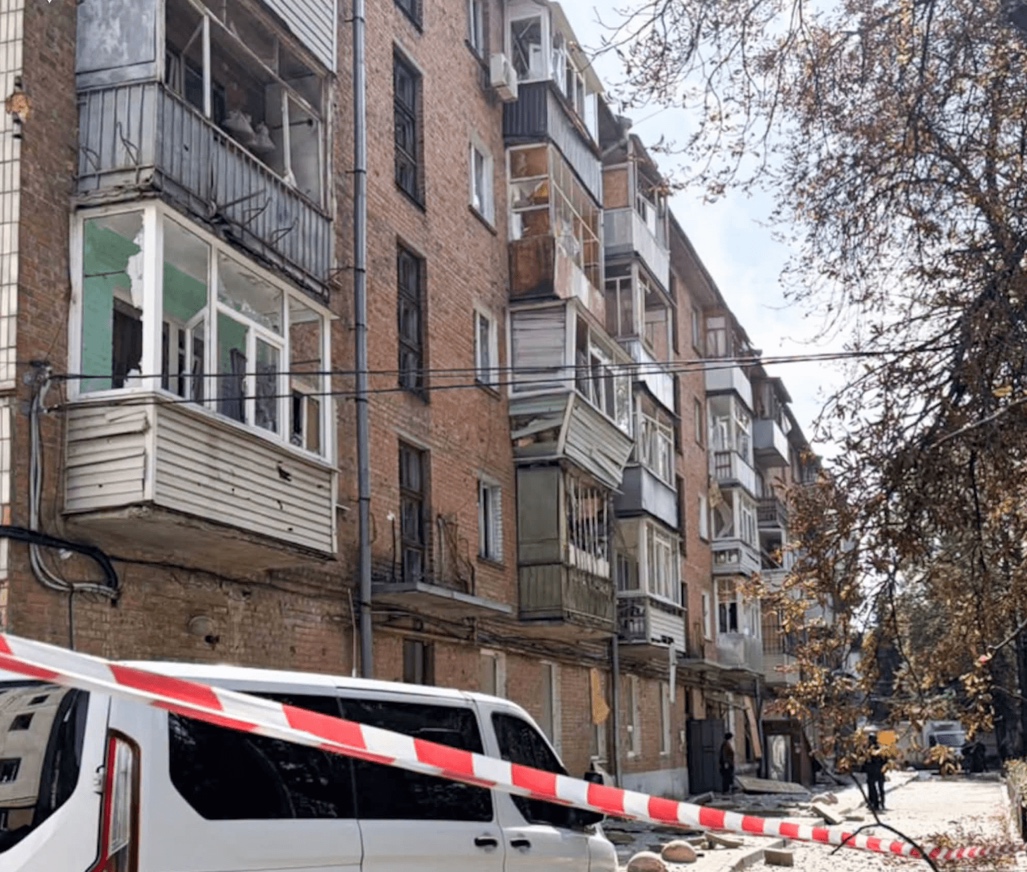
Picture a residential neighborhood in Sumy, a city near the Russian border in Ukraine’s northeast, when the glide bombs arrive. Quick explainer: a glide bomb is an old-fashioned heavy bomb with pop-out wings and satellite guidance bolted on, dropped from a jet miles away so it can glide to its target without the pilot coming close.
By evening, Governor Oleh Hryhorov said the strikes had killed two people and injured 23, including four children. Three children were hospitalized — girls aged 14 and 8, and an 11-month-old baby. Earlier reports had listed a six-week-old infant and a 15-year-old boy among the wounded, and a Russian drone killed a 69-year-old man elsewhere in the region. Dozens of apartment buildings, two kindergartens, a cultural center, and more than 20 cars were damaged.
It’s easy to let a number like that blur. Don’t.
In Zaporizhzhia, two women were killed. In Druzhkivka, in Donetsk Oblast (an oblast is a Ukrainian province), two people died. In the Dnipropetrovsk region, two were killed, one of them a child. In Kherson Oblast, Russia attacked 35 settlements, killing one. Kharkiv and Nikopol reported more wounded. Local authorities counted six killed and 45 injured nationwide; Foreign Minister Andrii Sybiha put the toll since Friday at at least 10 dead, including a child.
Friday itself had been brutal in Kyiv: seven killed and 59 injured by one count (Sybiha cited at least four dead and 47 injured). Among the dead was a 14-year-old boy, an Israeli citizen, killed when a strike hit an apartment building in the central Pecherskyi district.
Sybiha listed a kindergarten, a lyceum, and a university among the targets. “There is a clear pattern — these are civilian sites,” he said. “Russia is testing how much violence the world will tolerate.”
Faster Than the Guns: Why Jet Drones Are the War’s New Problem
Here’s the thirty-second version. For years, Russia’s main long-range weapon has been the Shahed — an Iranian-designed flying bomb that Russia builds under the name Geran. The old ones buzz along on a propeller like a lawnmower with wings. The new Geran-4 and Geran-5 have jet engines. The Geran-5 can reportedly hit 373 miles per hour, fly 590 miles, and fly as high as 19,700 feet.
During the day on Friday, Russia launched 162 drones, 76 of them jet-powered; Ukraine downed 127, including 44 jets. Overnight came 173 more, over 50 of them jets, mixed with decoys designed to soak up Ukraine’s air defenses and “loitering munitions” — drones that circle until they find a target. Ukraine downed 134. Strikes landed at 19 locations.
The trend is the story. Ukraine’s Air Force says jet-drone launches rose eightfold in two months — from 350 in June to 2,850 in August. Zelensky says more than 2,730 came in September. Ukraine stops about 55 percent of them, compared with more than 90 percent of the old propeller models. Russia has also shifted from giant swarms to nonstop launches around the clock, which is why Kyiv now runs a two-tier siren system so some businesses can keep working through constant alerts.
And Russia is doubling down. Zelensky said Ukrainian military intelligence obtained internal Russian documents showing Moscow plans to spend $12 billion next year on jet drones and loitering munitions alone. “There will be a response,” he said: Ukraine is scaling up interceptor drones — drones built to hunt other drones — and several prototypes are already being tested in combat. Ukraine has now signed 11 drone deals with other countries, the latest with Finland this week, with a 12th expected soon.
So what does Putin think these drones will buy him?
Putin’s New Theory of Victory: Win the Winter From the Air
To understand this one, rewind to June 2024. That’s when Putin laid out what analysts call his “theory of victory”: keep advancing on the ground — slowly, even painfully — and eventually Ukraine’s defenses will crack and Kyiv will give up.
There’s a problem. According to the Institute for the Study of War (ISW), an American think tank that tracks the fighting daily, Russian forces have made near-zero net gains since March 2026, while Ukraine has counterattacked successfully near Kupyansk, Oleksandrivka, and Lyman. Putin has likely been fed rosy reports by his own commanders.
On Friday, Putin sounded like a man changing plans. He claimed Ukraine wants a ceasefire on strikes against energy targets because Russia’s attacks are “so…destructive,” and because Ukraine supposedly has no answer to the modernized Geran drones — a claim ISW calls incorrect. Ukraine, he said, “must feel” Russia’s “retaliatory” strikes. A Kremlin-friendly military blogger added that the best way to weaken Ukraine at the negotiating table is to wreck its economy.
Read that as the strategy it is. If ground advances won’t force surrender, maybe a freezing, dark winter will. ISW assesses that Putin is therefore very unlikely to accept the US- and Ukrainian-proposed pause on energy strikes, or offer any real concessions, before winter ends.
The plan has a weak spot. It depends on jet drones getting through in large numbers. Russia also pairs them with ballistic missiles — the fast, high-arcing kind that only America’s Patriot interceptors reliably stop, and Ukraine is short on Patriots. But Russia’s ballistic missiles are limited and slow to build. Drones alone can’t do what drones plus missiles can.
So, this winter becomes a race: Russia trying to break Ukraine’s power grid before Ukraine’s interceptors catch up. Nobody knows yet who wins it.
Two Refineries Down: Ilsky Burns, Perm Goes Dark
Around midnight, residents of Ilsky, a village about 30 miles from Krasnodar in southern Russia, heard explosions and air defenses firing. Their air-raid siren sounded two hours later.
By dawn, the A.A. Shamar Ilsky Oil Refinery — which processes about 6.6 million tons of oil a year — was on fire. Fire Point, the Ukrainian company that builds the FP-1 long-range drone, said the strike hit three main processing units and the tank farm and forced the refinery to shut down. Ukraine’s Security Service (SBU) reported fires at the tank farm and a crude-processing unit. The strike, carried out by drone units including the 414th Unmanned Systems Brigade — nicknamed “Madyar’s Birds” — flew roughly 250 miles from launch. Ukraine’s General Staff called it “an exercise of Ukraine’s inherent right to self-defense under Article 51 of the UN Charter.”
Krasnodar’s governor, Veniamin Kondratyev, confirmed the attack and said there were casualties, a damaged apartment building, and fires at two businesses he wouldn’t name. The independent Russian outlet ASTRA says Ilsky had been hit at least 16 times by June, with more strikes since, most recently August 8.
The Lukoil refinery in Perm — more than 900 miles from Ukraine’s border, farther than New York to Chicago — halted operations after Friday’s strike damaged its pipelines, storage, and processing units, according to industry sources. It’s Russia’s seventh-largest refinery, hit repeatedly this year.
Why does Ukraine keep hitting oil? Because oil is both Russia’s paycheck and its gas tank. Ukraine claimed by early July to have shut down 43 percent of Russia’s refining capacity. In August alone, Russia imported three times the seaborne fuel it imported in all of 2025, while exports fell 7 percent and revenue 8 percent. Russia claimed it downed 645 Ukrainian drones overnight, 20 of them over Moscow.
Blinding the Missiles: The Strike on Azov’s Optical Plant
Every guided missile needs eyes — a “seeker” in its nose that uses radar or heat to find its target. Destroy the factory that makes the eyes, and you slow down every missile that needs them.
That’s the target Ukraine chose. Overnight, the SBU’s Alpha special operations unit, working with the Ukrainian Navy, struck the Azov Optical-Mechanical Plant in Azov, in Russia’s Rostov region, about 125 miles from the front. The SBU says the plant belongs to Russia’s Tactical Missiles Corporation and makes “radar and infrared homing heads for guided missiles, thermal imaging devices, and electronic systems for high-precision artillery.” Preliminary reports say the strike damaged the optical and foundry production lines, an assembly area, a galvanic (metal-plating) shop, and a circuit-board workshop. It was last hit on July 10.
The SBU also hit fuel-filled rail cars in Azov and a Pantsir-S2 — a truck-mounted Russian air defense system carrying both missiles and guns — probably to clear a path for the attack. Separately, drone commander Major Robert “Magyar” Brovdi reported a strike on the Gubinskaya oil depot in Belgorod Oblast, about 37 miles from the front, and Zelensky said Ukraine hit unspecified targets in the Black Sea.
Two weapons lessons, because this is a homemade arsenal. The Neptune is Ukraine’s own cruise missile — the one that sank the Russian flagship Moskva in April 2022 — and an updated version may reach about 620 miles. The Palanytsia, Ruta, and Bars are “drone-missiles”: cheaper hybrids with wings and a jet engine. The Palanytsia reaches a reported 400 miles; the Ruta, over 280 miles, with guidance said to resist jamming; the Bars, 435 to 500 miles, carrying a 110-to-220-pound warhead.
The point: Ukraine is fighting deeper into Russia with weapons it builds itself.
Operation Vivaldi: How Ukraine Is Starving Russia’s Infiltrators Near Lyman
Picture a squad of Russian soldiers who have slipped behind Ukrainian lines — what’s called an infiltration group. Russia now fights this way everywhere: small teams sneak past Ukrainian positions, hide in the ruins, and wait for reinforcements on motorcycles and ATVs to join them.
Ukraine has figured out a counter. Near Lyman, a town in Donetsk Oblast, a Ukrainian battalion commander described the first phase of “Operation Vivaldi.” Instead of hunting each hidden squad right away, Ukrainian forces went after the reinforcements — striking the motorcycles, the ATVs, and the supply roads behind them. The stranded infiltrators, cut off and short on supplies, lost heart. Then Ukraine cleaned them up. Surprise let Ukrainian troops push deep enough to reach Russian drone pilots and electronic-warfare teams (the specialists who jam enemy signals), while jamming, strikes on command posts, and “disinformation” scrambled Russian communications. A brigade in northern Kharkiv Oblast says its reconnaissance drones are now tracking Russian supply routes the same way — suggesting the method is spreading.
Here’s Ukraine’s unlikely helper: Russian dishonesty. A Kremlin-affiliated military blogger complained that exaggerated Russian reports of success around Lyman let Ukraine attack by surprise. A Ukrainian commander agreed — Russian headquarters didn’t see the preparations coming because its own reports said Russia was winning.
Now the map. Russian bloggers say Ukrainian drones and infiltrators are swarming near Yampil, Ozerne, and along the Siverskyi Donets River, and that Ukraine is trying to push Russian troops back across the Zherebets River, threatening the Serebryanske forest. One Russian source even claimed Russian forces are pulling out of southern Lyman to avoid being encircled, as Ukraine counterattacks near Dibrova and Yampil and builds up near Stavky.
If this spreads, it could help Ukraine do something rare in this war: move again.
Victories Only on Paper: The North and the Oskil River
Russia’s defense ministry announced today that its troops had captured Marine, a village east of the city of Sumy. Ukraine’s 8th Air Assault Corps had a sharp reply: Ukraine controls Marine — and has since May 2025, when Russia first claimed to have taken it. Captured twice, held never.
Why does this keep happening? A Ukrainian brigade spokesperson in northern Kharkiv Oblast explained that Russian squads slip between Ukrainian positions, turning the front into something like a chessboard, while Russian drone crews push their launch points into the “gray zone” — the no-man’s-land between the lines — to reach deeper. Russian sources then claim everything the squads walked through. That’s how Russia is claiming to have encircled Ukrainian troops east of Vovchansk, between Volokhivske and Ivashkyne, even though ISW has seen no sign of Russian forces there. Near Zarubynka, in the Velykyi Burluk direction, Russian strikes on Ukrainian positions showed Ukraine is still holding ground Russia claimed. Ukraine hit Russian infiltrators near Chuhunivka and Dovzhanka and, in Sumy Oblast, in Ulanove. Colonel Viktor Trehubov, spokesman for Ukraine’s Joint Forces Group, said Russian squads keep trying to dig into tree lines there.
Farther south, the Oskil River is the real story. Russia holds a toehold — a “bridgehead” — on its western bank north of the town of Kupyansk. Trehubov said Ukraine is shrinking it and aims to push Russia back across the river. The Russian command responsible for this area is also running the fight at Lyman, and it can’t be everywhere at once. Near Borova, Russian sources claimed attacks; ISW saw no advances.
Behind Russian lines in occupied Luhansk Oblast, Ukraine hit an ammunition depot near Sievierodonetsk, about 22 miles from the front, and a substation in Perevalsk caught fire.
The Fortress Belt: A Siege That Exists Only in Russian Reports
Russia’s grand prize in Donetsk Oblast is what analysts call the Fortress Belt — a chain of heavily defended cities: Slovyansk, Kramatorsk, Druzhkivka, and Kostyantynivka. Russia is trying to surround it from several sides. Today’s news from that effort was mostly about fiction.
Russian commanders are claiming they have encircled Dobropillya, a town southwest of the belt, just as their plans for fall 2026 called for. Ukraine’s 1st Azov Corps says the town and its approaches remain in Ukrainian hands, and that the encirclement exists only in the Russian military’s false battlefield reports. Near Chernihivka, southeast of Dobropillya, Ukraine hit a Russian soldier who had slipped through.
There was real movement, too, in both directions. East of Slovyansk, Ukrainian troops cleared a Russian position in eastern Mykolaivka where Russians had infiltrated. In western Kostyantynivka, though, a Ukrainian airstrike on a Russian position suggests Ukraine likely no longer holds that part of the town — a genuine Russian gain.
Around Kramatorsk, a Ukrainian battalion commander reported that Russia is dropping more glide bombs on civilian buildings and sending more infiltration squads. Those two things are connected: Russia often bombs towns just behind the front to create ruins its infantry can hide in on the way forward. Think of it as demolishing a neighborhood to build cover.
Farther west, where Russia is pushing into Dnipropetrovsk Oblast, Russian forces kept up small attacks near Novopavlivka and Oleksandrivka but did not advance. Ukraine struck infiltrators in southeastern Andriivka and southern Nove Zaporizhzhia.
The pattern repeats across the map: Russia claims the city, Ukraine still holds the streets.
The Dried-Up Reservoir and the Starving Town
The Kakhovka Reservoir was once a huge lake on the Dnipro River in the south. Today much of it is a dried-out bed choked with vegetation — and a Ukrainian regiment commander warns that Russian infantry are using it as a hidden highway. In fall and winter, heavy growth, humidity, and long fogs make the reservoir bed almost impossible to watch. Last year Russian troops used those conditions to enter Prymorske, south of Zaporizhzhia City, before Ukraine took it back. He expects them to try again, heading north toward the city. Ukrainian military observer Kostyantyn Mashovets says a Russian group used the reservoir to reach Malokaterynivka about a week ago.
Near Orikhiv, a front-line town Russia has tried to surround, Mashovets says Ukraine eliminated several Russian groups, cleared Novodanylivka, and has “significantly thinned” the infiltrators, though one group remains on the southeastern outskirts and up to three are blocked in and around a penal colony in Mala Tokmachka. Ukraine also hit Russian communications towers, a counter-drone post, and vehicles near Tokmak, 11 to 18 miles behind Russian lines. Near Hulyaipole, Russian bloggers claimed advances farther west than even Ukraine’s General Staff says Russia is attacking. The Kherson front was quiet.
Downriver lies Oleshky, a town under Russian occupation since February 24, 2022, less than 2.5 miles across the Dnipro from Kherson. Its population has collapsed from about 24,000 to roughly 2,000. “There is almost nothing left to eat,” Sybiha wrote. “Reports indicate that civilians are being forced to survive on grass and weeds.” Russia blocks aid in and evacuation out. “Children are trapped in these conditions too.”
The Council of Europe’s human rights commissioner, Michael O’Flaherty, reminded Russia that international law requires occupiers to let food and medicine through.
“On a Missile”: The Moscow Invitation That Wasn’t
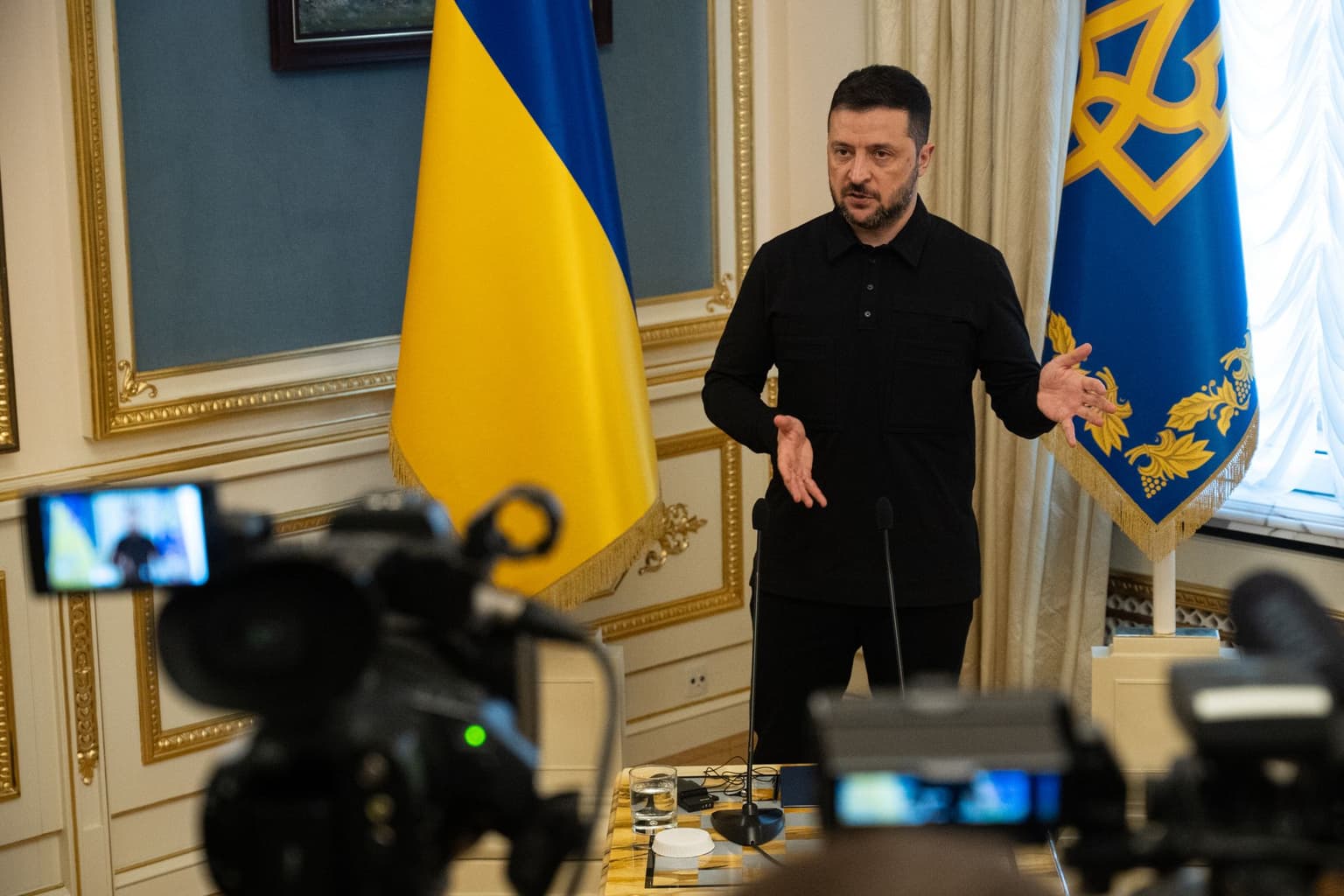
Imagine being told your ally suggested you fly into the capital of the country bombing your cities. That’s the story Bloomberg ran on Friday: that Donald Trump had urged Zelensky, at their meeting on the sidelines of the UN General Assembly in New York, to travel to Moscow and talk with Putin.
Kyiv shot it down fast. “This is false information,” said presidential adviser Dmytro Lytvyn. Ukrainian officials said the two leaders discussed three-way talks among the US, Ukraine, and Russia — not a trip to Moscow. American officials also denied it. The Kremlin has repeatedly offered Moscow as a venue; spokesman Dmitry Peskov promised Zelensky security guarantees there. Zelensky’s answer, given days earlier to a Russian journalist, was that he would go to Moscow only “on a missile.” Kyiv wants any leaders’ meeting held somewhere neutral.
What is real: Washington has proposed a new round of technical-level talks, possibly in the United Arab Emirates. The Kremlin says it could happen soon. Zelensky is waiting for a date.
He isn’t expecting much. “Putin always finds some lame excuse — not to meet, not to hold a trilateral, not to talk, not to end it, not to stop the killing,” he said, adding that “America sees the situation the same way.” After meeting Trump on September 22, Zelensky offered a mutual pause on strikes against energy targets, refineries included, if Russia agreed too. At the UN, asked what his message for Putin was, Trump said simply: “Settle the war.” Fifty-one countries signed a joint statement urging a full ceasefire.
Russia’s answer came from Foreign Minister Sergey Lavrov: the “special military operation” won’t pause even during negotiations. Zelensky predicts intense diplomacy in the coming days.
Holes in the Net: Tariffs, Oligarchs, and a Serbian Passport
Sanctions work like a net: they only catch what can’t slip through the holes. Today brought news of both the net and the holes.
The net first. On September 18, Trump signed the Lindsey O. Graham Sanctioning Russia and Iran Act, named for the late senator, a strong Ukraine supporter whose last days included a trip to a secret Ukrainian drone factory. It lets the president slap 100 percent tariffs — a tax on imports — on countries buying Russian oil. Graham’s original bill called for 500 percent. Zelensky asked Trump to use it “against Russia and everyone who props up its war financially.” The catch: the biggest buyer is China, followed by India and Turkey, and Trump hosted China’s leader, Xi Jinping, this week. Punishing Beijing could upset the trade peace Washington wants.
Now the holes. Zelensky urged the EU’s two top leaders, António Costa and Ursula von der Leyen, not to remove oligarchs from sanctions lists. The EU just did exactly that: at the insistence of France, Slovakia, and Luxembourg, it dropped Kremlin-linked billionaires Mikhail Fridman and Alisher Usmanov, in exchange for extending the rest of the sanctions for three years instead of the usual six months. Estonia and the UK say they’ll keep their own sanctions on both men.
And Serbia granted citizenship to Vadym Novynskyi — a Russian-born former Ukrainian lawmaker wanted in Ukraine on suspicion of high treason and inciting religious hatred, accused of serving Russia’s interests, including as a “curator” for the Russian Orthodox Church. He denies it. Serbia used a fast-track “national interest” rule and wouldn’t say what interest was served. It has granted citizenship this way to more than 300 Russians since the invasion — and a Serbian passport opens Europe’s borders without a visa.
The Army of Robots: A Fired Minister’s Six-Month Promise
Picture a trench on the front line with no soldiers in it — just machines, fighting machines. That’s the future Mykhailo Fedorov is selling.
If you’re new to him: Fedorov built Ukraine’s “Army of Drones” program in 2022 as digital transformation minister and later became defense minister. Zelensky fired him in July, sparking weeks of protests. In mid-August Fedorov called for elections — a direct challenge to Ukraine’s wartime politics — then pivoted to defense technology, launching a fund and a company whose first investors would include Alex Karp, head of the data firm Palantir.
Today, at the IT Arena conference in Lviv, he launched the “Army of Robots” — not one company, he said, but an “ecosystem” that will invest, research, test with the military, and “scale up as quickly as possible the things that actually work.” His goals: the first enemy soldier killed by a humanoid robot within six months, and the first assault with no infantry at all within twelve. His team didn’t say who is funding it.
His AI-generated promo video shows robots shaped like humans, spheres, dogs, and spiders storming trenches. Here’s the reality check. Ukraine’s ground robots — unmanned ground vehicles, or UGVs — are mostly remote-controlled carts, steered by a human operator, usually over Starlink. They’ve become vital for hauling supplies and evacuating the wounded, jobs that are nearly suicidal for people now that enemy drones fill the sky. But they run out of power and ammo, need humans to recharge them, and get picked off by drones too. Most of the designs in Fedorov’s video aren’t used in combat at all, and even all-robot “assaults” don’t count as taking ground until human boots arrive.
Six months is a bold clock. The war will keep time.
The Nordic Shield: Finland and Sweden Fly Together
Somewhere over the Gulf of Finland, the narrow arm of the Baltic Sea between Finland and Estonia, a Russian formation is flying west: a Tu-134 transport plane escorted by MiG-31 and Su-30 fighters. Up to meet them come Finnish F/A-18 Hornets and Swedish JAS 39 Gripens — together.
That flight, on September 24, was the first joint operation between the Finnish and Swedish air forces. The Russian planes stayed in international airspace, but the point was made. Under the new arrangement, the two air forces can identify intruders jointly, and their quick-reaction fighters — the jets kept armed and ready to scramble in minutes — can operate from each other’s bases. “This is what close cooperation looks like in practice,” said General Jonas Wikman, head of the Swedish Air Force. Built on years of trust, he added, “we can now operate seamlessly together — as air forces, as nations and as Allies.”
It’s part of what the Nordic countries call Nordic Air Power, with Norway and Denmark, aiming to turn the Baltic region into a single synchronized barrier on NATO’s eastern edge.
Why now? Russia keeps poking. Between August 31 and September 6 alone, NATO jets scrambled at least three times near the Baltic states, including against Russian Il-20 spy planes flying with their transponders off, and there was an incursion into Estonian airspace. In June, Sweden scrambled Gripens twice in one day against Russian strike jets. Europe has also seen suspected sabotage at Germany’s Leipzig Airport and a Russian warship firing flares at a Danish military helicopter.
Western allies are bracing for a possible Russian escalation on NATO soil. The Nordic pilots are practicing so that if it comes, nobody has to improvise.
The Closing
The sirens in Kyiv will sound again tonight. Somewhere in a Russian factory, another jet drone is being assembled from a $12 billion budget, and somewhere in Ukraine an engineer is testing the drone meant to catch it. In Sumy, an 11-month-old lies in a hospital bed; in Oleshky, families are surviving on weeds. Russia calls its bombing retaliation and its paper encirclements victory. The refinery at Ilsky is still smoking.
A Prayer for Ukraine
1. For the Boy in Pecherskyi and the Man in Sumy
Lord, a fourteen-year-old boy was at home in Kyiv when the strike came, and he is gone. A man of sixty-nine was killed by a drone in Sumy. They were not soldiers. They were not targets, except to those who chose to make them so. Receive them. Hold close the families who must now learn to live around the empty chair. Let their names be remembered longer than the weapons that took them.
2. For the Eleven-Month-Old in the Sumy Hospital
Father, a child not yet a year old lies wounded by a glide bomb, and girls of eight and fourteen with them. Guard their small bodies through every hour of healing. Steady the hands of the doctors and nurses who work while the sirens sound. Give their parents strength for the long nights ahead. Let them grow up in a country where the sky is only sky.
3. For Those Who Sit Across the Table From Excuses
God of wisdom, the talks come and go, and the man in Moscow keeps finding reasons not to end the killing. Give Ukraine’s leaders endurance when every door closes, and clarity to tell a real opening from a trap. Grant courage to those in Washington and Europe who hold tools of pressure in their hands, that they would use them. Let no one bargain away what was not theirs to give.
4. For the Defenders at Lyman and Orikhiv
Lord of hosts, they are moving forward through fields watched by drones, clearing tree lines and ruined houses one by one. Cover them in the fog and the dark. Keep their minds sharp and their hearts whole. Sustain the drone pilots who watch through the night and the medics who crawl toward the wounded. Bring them home — not only alive, but able to live again.
5. For the Hungry of Oleshky
God of justice, in a town on the far bank of the Dnipro, people are surviving on grass and weeds while help waits across the river. Break the blockade. Open the road for food and medicine, and for those who want to leave. Do not let the world look away. Let those who starve the innocent answer for it, in this life and before You. In Your mercy, in Your justice, in Your time — bring this war to its end, and let the ending be worthy of what Ukraine has endured.