
UKRAINE DAILY BRIEFING
October 12, 2026
Within a day of President Trump announcing that Russia and Ukraine had agreed to stop bombing each other’s energy plants, Russian drones had hit six Ukrainian power and gas sites and a 25-story apartment building in Kyiv — while Ukraine held its fire and asked when the truce was supposed to start. The Kremlin answered a Ukrainian offer of a 60-day ceasefire to hold elections with a counteroffer of exactly one day. And in the city of Rivne, a 19-year-old student was caught after planting a bomb under a bus full of soldiers, watched over by a camera hidden in a juice box.
The Day’s Reckoning
It’s evening in Kyiv’s Darnytskyi District, and a Russian drone — a pilotless aircraft packed with explosives — has just slammed into a 25-story apartment building. A woman is dead. Eleven people are hurt.
Here’s what made the day different from the hundreds before it. Just a day earlier, President Donald Trump had announced an “ENERGY CEASEFIRE” between Russia and Ukraine and declared that “Both parties have agreed.” Ukraine took him at his word and left Russia’s oil refineries alone overnight. Russia hit six Ukrainian energy sites anyway.
So, the day became a test of what a promise is worth. The Kremlin met a proposal for a 60-day pause with an offer of one. Ukraine’s security service pulled a bomb out from under a bus of soldiers. And inside Russia, Russia’s own Google was still begging its servers back to life after a week of Ukrainian drones.
One side stopped shooting at refineries. The other side never stopped shooting at all.
“No Home Anymore”: Kyiv Gets Hit Twice in One Day
Yuliia Sheremet, 38, was at work near her house when she heard explosions and saw smoke. She “immediately ran” home. “And I saw there was no home anymore…” Her elderly, disabled father had been inside. Neighbors helped her pull him out — injured, but alive. “It’s nothing short of a miracle that Dad didn’t die today,” she said. Then: “I’m in shock… It’s impossible to live like that, and I don’t know how to carry on. We’re all exhausted. We need help so that we can defend Ukraine.”
That was the first attack, late in the morning. Mayor Vitali Klitschko announced at 11:32 a.m. that air defenses were firing over the city. Debris landed near apartment blocks in the Solomyanskyi District and on Sheremet’s house in Darnytskyi; in the Pecherskyi District, crews put out a fire sparked by a crashed drone. Three people were hurt, including an elderly woman. Yana Mohal, 25, woke to a “horrible and loud” sound and went out to see if she could help the “elderly man with a dog” trapped in the damaged house next door. It was the first time an attack had landed this close to her.
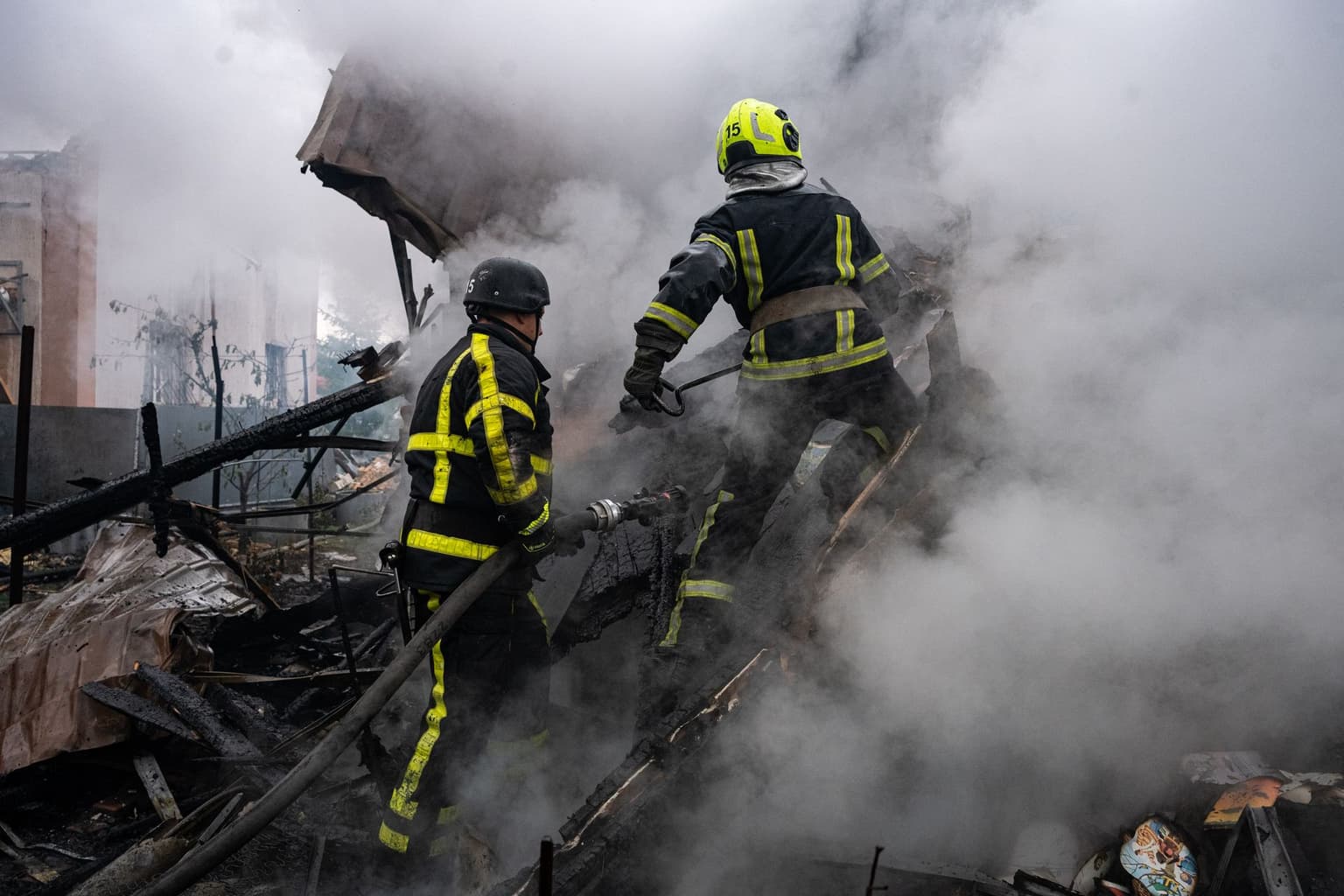
Then, in the evening, a drone hit a 25-story residential building in the same district. A woman was killed and 11 people were injured, Klitschko said. City authorities put the day’s toll at two dead and at least 14 injured, though early reports counted one death.
The capital was already reeling: a day earlier, a damaged high-voltage line left large parts of Kyiv without running water. Between Sept. 25 and Oct. 2 alone, at least 16 people were killed and more than 100 injured in Kyiv and the surrounding region, according to a Kyiv Independent count. Kyiv isn’t living through attacks. It’s living between them.
The Ceasefire That Existed Only Online
“Effective immediately, there is an ENERGY CEASEFIRE in the War between Russia and Ukraine. Both parties have agreed.”
So posted Trump on Truth Social, his social media platform. One problem: Ukraine learned of the deal it had supposedly agreed to from the news. “Please tell us when the ceasefire begins,” President Volodymyr Zelensky told Axios. “We are ready, and we will accept it.” A White House official later called it a “potential deal” covering only oil refineries for now.
Why does that matter? Russia runs scores of oil refineries whose fuel helps pay for the war. Ukraine effectively has one, in Kremenchuk, “badly damaged by Russian strikes long, long ago,” Zelensky told the Warsaw Security Forum. Russia’s weapon of choice, meanwhile, is hitting the power stations that keep Ukraine’s lights and heat on — and those aren’t covered. The Institute for the Study of War, a Washington group that tracks the fighting daily, said the deal would bar Ukraine from hitting Russia’s most sensitive energy sites while leaving Russia free to keep hitting Ukraine’s. It’s like promising not to touch my car while I keep breaking your windows.
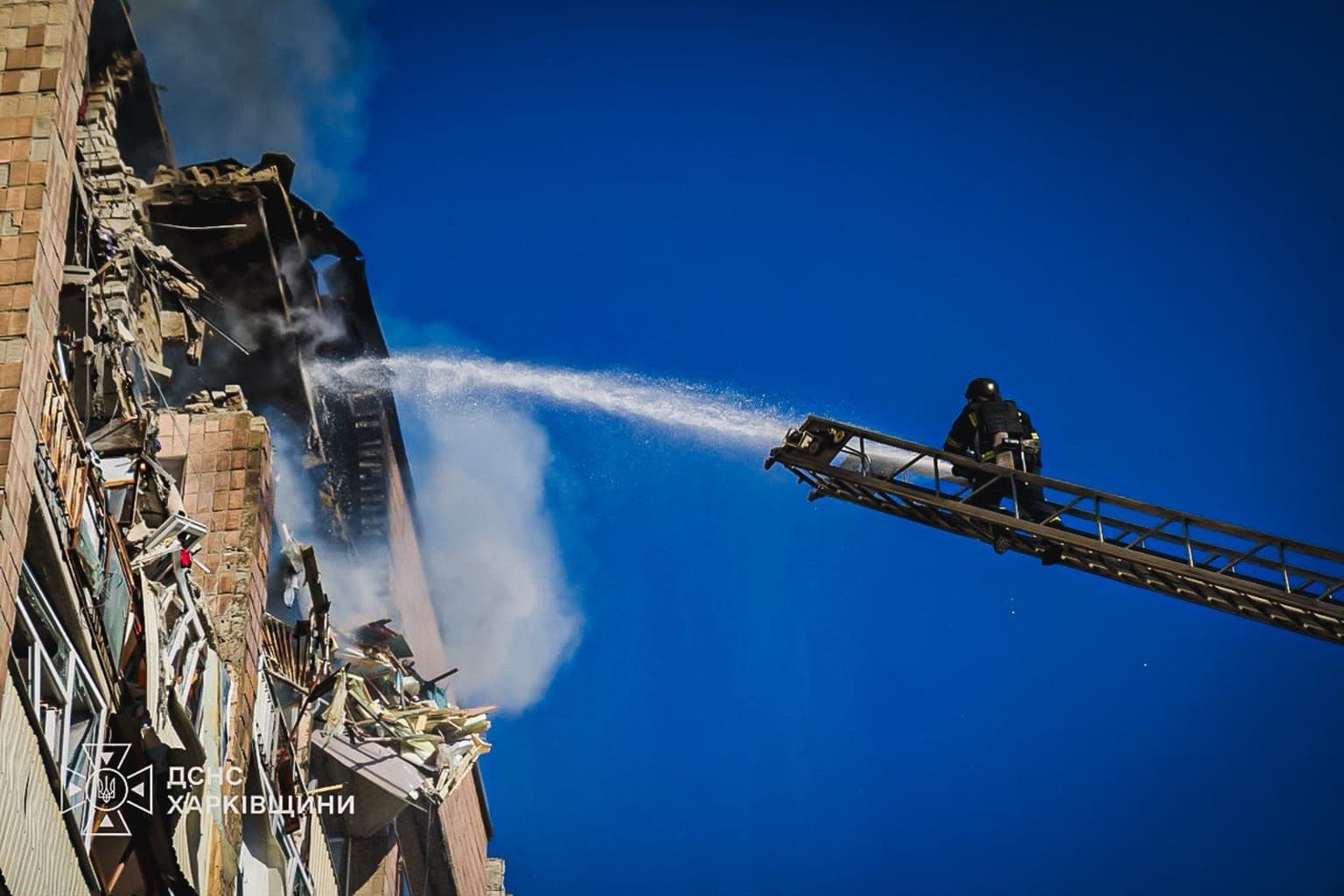
Ukraine held its fire. Russia didn’t. Shortly after the post, Russia struck Kharkiv’s CHP-5, a plant that makes both electricity and the hot water that heats apartments. Overnight it hit gas production in Kharkiv Oblast, an oil depot in Sarny in Rivne Oblast, and an energy site in Zhytomyr Oblast — six energy facilities in all, injuring 33 people, Zelensky said.
“It was clear that Putin does not read Truth Social, and his ‘Shahed’ drones follow a different set of instructions,” Zelensky said. “This winter, if Russia does not agree to an energy ceasefire, we will respond.” The EU’s top diplomat, Kaja Kallas, wished the ceasefire “would include people not being killed.”
One Day, Take It or Leave It: The Kremlin’s Answer on Elections
If you’re new to this storyline, here’s the thirty-second version. Trump has suggested that Ukrainians replace Zelensky if they want the war to end, and the Kremlin has echoed him. Calls for a wartime election have surfaced on and off since Trump called Zelensky a “dictator” in February 2025, days before their infamous White House clash; even Ukraine’s ousted former defense minister, Mykhailo Fedorov, floated the idea. So Zelensky called the bluff: he proposed a full, unconditional 60-day ceasefire so Ukraine could actually hold a presidential election.
“They really don’t want to hold elections in Kyiv. That’s completely obvious,” said Kremlin spokesman Dmitry Peskov. “And they don’t need a 60-day ceasefire for the elections, but to gather their strength, heal their wounds, and continue the war.” His counteroffer: Putin would order no strikes on Ukraine on election day. “Specifically, on election day.” Foreign Minister Sergei Lavrov added that Zelensky hadn’t “earned a respite.”
Think about what an election takes — weeks of campaigning, ballots, polling stations. Ukrainians already doubt that a wartime vote is workable, since most soldiers and displaced refugees would likely be unable to cast a ballot and the bombing puts voters at risk. A one-day pause doesn’t solve that. The Institute for the Study of War called the offer unserious — the Kremlin’s way of rejecting any truce that would allow a legitimate election while appearing to accept one.
Why won’t Russia simply stop hitting power plants? A Russian military blogger explained it with unusual candor: agreeing to spare Ukraine’s electrical stations would “deprive [Russia] of one of the main levers of pressure which we have achieved through protracted strikes.” Hitting airfields and factories, he wrote, isn’t nearly as effective. Read that again. The goal isn’t a military target. It’s the cold.
Russian Diesel, an American Waiver, and a Backlash at Home
The weekend’s drama started with diesel, the fuel that runs trucks and tractors. On Friday, Trump announced a deal with Putin: Russia would immediately ship more than 300,000 tons of diesel to the U.S. and global markets, another 500,000 tons in November, and 1 million tons after that. The Treasury Department issued a waiver allowing the sales despite sanctions.
Trump blamed Kyiv for high fuel prices. “We said you could do whatever you want to Russia, don’t hit the refineries, because that’s a world problem,” he said. Zelensky, he added, “wants to make problems for our farmers, our ranchers, with diesel fuel.” He had warned Zelensky to “better damn well stop” if he wanted continued support. And the Kyiv Independent reported that, according to its sources, the administration threatened senior Ukrainian officials with cuts to intelligence sharing and arms shipments to protect Russian refineries.
Is Ukraine really the cause? Trump’s critics say no — the main driver of the diesel shortage, they argue, is the U.S.-led war against Iran. The most striking agreement came from Moscow. Alexei Zhuravlyov, a senior member of the Russian parliament’s defense committee, said “everyone understands perfectly” that the Middle East war is to blame, and celebrated the sanctions waiver as a major win for Russia.
The backlash crossed party lines. Republicans in midterm races turned on the deal; one incumbent in a key state called it a “grave error.” Con Coughlin, a defense editor at Britain’s Telegraph, called it a “catastrophic miscalculation,” writing that “Ordinary Ukrainians will pay for cheaper global diesel prices with their lives.” Zelensky accused Washington of weakness, warning that new Russian revenue means more attacks and deaths. Trump faces real voter anger over fuel prices before November’s midterms. The question is who pays for the relief.
The Long Night Across Ukraine — and the Winter Behind It
Somewhere on a road in Sumy Oblast, in Ukraine’s northeast, a Russian drone found a civilian car. A 39-year-old man was killed. Three others were injured — two of them ambulance workers.
He was one of at least 10 people killed and 69 injured across Ukraine over a single day, regional officials said. Kharkiv and its region took the worst of it — five dead and 42 injured, Governor Oleh Syniehubov said — as Russia hit a facility of Naftogaz, Ukraine’s state energy company, plus a thermal power plant, a farm site, and homes. In Ivano-Frankivsk, in Ukraine’s far west, a strike killed three Ukrainian service members and injured three more, and Russia also hit a shopping center in the city. In Donetsk Oblast, one person was killed and 18 injured, most of them in Sloviansk. Two were injured in Kherson Oblast. In Zaporizhzhia Oblast, Russia launched 817 attacks on 57 towns and villages; one person was injured. Dnipropetrovsk and Chernihiv oblasts were hit without casualties.
Zoom out. Over the past week, Zelensky said, Russia carried out more than 200 strikes on Ukraine’s electricity plants and power lines and 17 on gas and oil facilities, killing more than 150 people and wounding more than 700.
Dmytro Kuleba, who served as Ukraine’s foreign minister from 2020 to 2024, warned that the country is heading into what could be its harshest winter of the full-scale war. “They don’t just want to turn out the lights in Ukraine. They want to paralyze the country,” he said. The worst case: the collapse of electricity, water, and drainage. Kuleba still believes Ukraine is “too large, too mobile, and too adaptable” to break. “That’s why I think we’ll get through this winter,” he said. But “the price will be much higher than last year.”
Candy, Packages, and Trains: Russia Targets the Everyday Economy
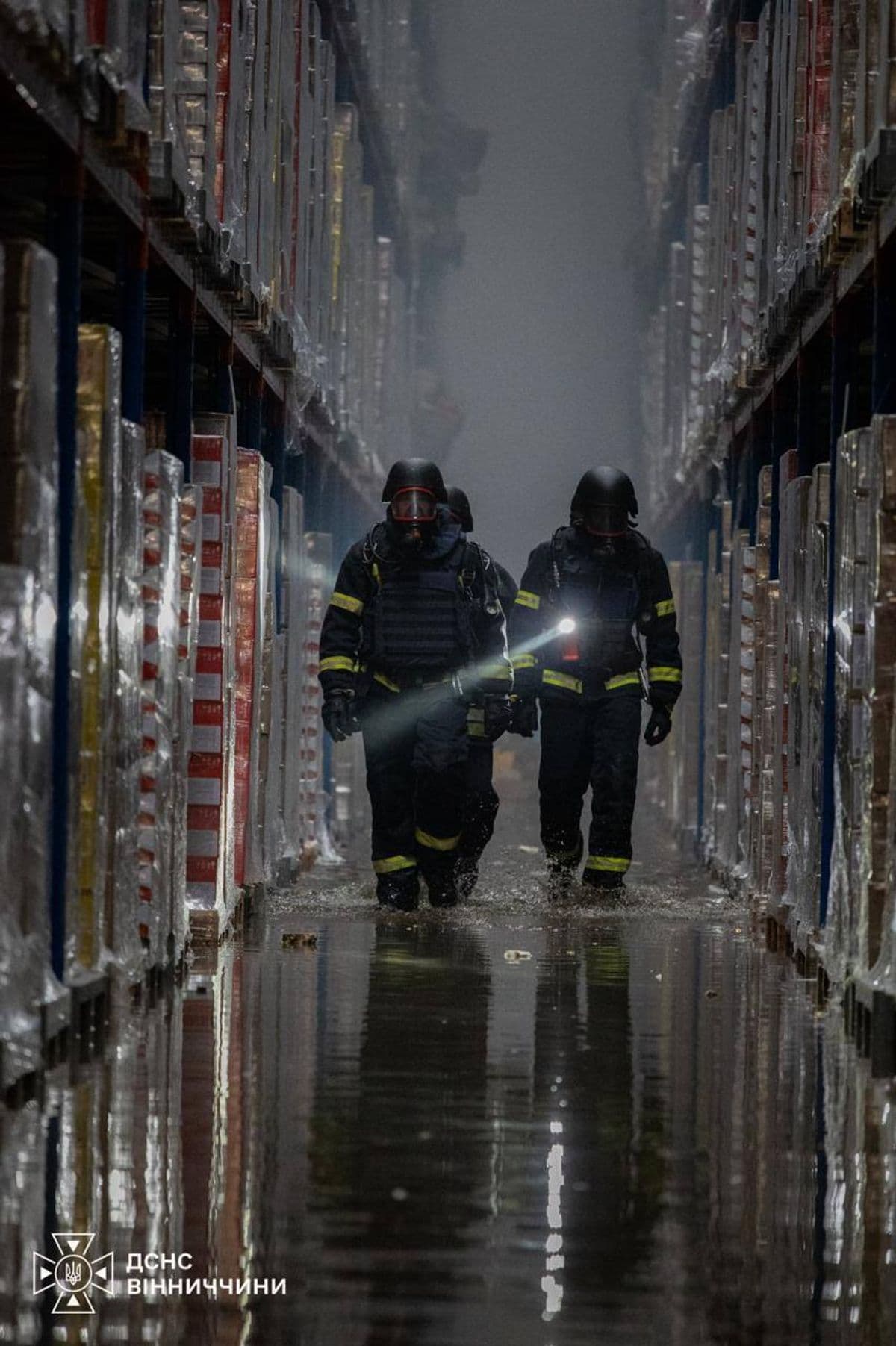
Imagine working the line at a candy factory when the warning siren sounds. At Roshen’s production complex in Vinnytsia, central Ukraine, workers heard it, left, and lived. “Thanks to the timely activation of the warning system and the prompt evacuation, the lives of employees were saved,” the confectionery company said after a Russian strike set the plant on fire. More than 50 rescuers and 13 emergency vehicles responded, and bomb-disposal specialists swept the area. No one was hurt.
Russian media claimed the plant was making drones. Roshen flatly denied it: “The corporation’s enterprises produce confectionery products and do not manufacture drones or other products for military purposes.” Strikes like this, the company said, “endanger the lives of civilian workers, destroy production capacity and jobs, and disrupt the supply of goods.” It’s not the first time. In August, a Russian attack destroyed a Roshen logistics center in Chubynske, outside Kyiv, and in January Russia struck a Roshen factory in Kyiv itself.
The same night, Russian drones hit terminals of Nova Poshta — Ukraine’s FedEx and Amazon rolled into one — in Mykolaiv and Odesa oblasts, along with businesses in Chernihiv and Dnipropetrovsk oblasts. And Russia’s Defense Ministry claimed it destroyed four Ukrainian locomotives near Odesa, Kryvyi Rih, and Pyatykhatky. That’s a running campaign: Russia keeps prioritizing Ukraine’s railways, and its locomotive strikes have caused significant shortages, likely helped by drone upgrades that make Russian drones faster and more maneuverable.
Candy, mail, and trains have nothing to do with the front line. That’s the point. A country that can’t ship goods, move freight, or keep people employed gets weaker without losing a single battle.
A Bomb, a Bus, and a Camera in a Juice Box
The bus was parked and waiting. In a few hours, it would carry “an entire unit” of Ukrainian soldiers to their permanent post. Underneath it sat a homemade bomb, reinforced with two glass bottles of flammable liquid. Across the parking area, a juice box held a hidden camera that someone in Russia could watch remotely. The plan, according to Ukraine’s Security Service — the SBU, roughly Ukraine’s FBI — was for Russian intelligence to set it off once the soldiers had boarded and the bus was on the move.
It never went off. SBU officers found the bomb, disabled it, and arrested the suspect at the bus station in Rivne, a city in northwestern Ukraine, as he tried to leave for Kyiv.

He is a 19-year-old student. According to the SBU, Russian intelligence recruited him through Telegram channels — a popular messaging app — that advertised quick earnings. He did it for money. After arriving in Rivne, he allegedly picked up the explosives from a hiding spot his Russian handler chose, planted the device, and then used his phone to report back that the job was done. Investigators seized the phone.
Prosecutors formally notified him that he is suspected of attempting a terrorist attack, and a court ordered him held without bail. If convicted, he faces up to eight years in prison and possible confiscation of property.
This wasn’t Rivne’s first close call. The SBU says it has foiled a series of Russian-directed plots in the city this year, including ones aimed at a park and government buildings downtown. The pattern is the danger: Russia doesn’t need trained agents in Ukraine when it can rent a broke teenager for the price of a few messages.
Catching a Missile That Calls Itself a Drone
First, a quick weapons lesson, because this one matters. Russia’s Shahed is an Iranian-designed attack drone; Russia builds its own versions and calls them Geran. The newest, the Geran-5, is jet-powered. It flies higher and faster than anything Russia has used before — up to 370 mph. “The Geran-5 much more resembles a low-cost cruise missile than a long-range drone like the original Shahed derivatives,” said Fabian Hoffmann of the Norwegian Institute for Defense Studies. A cruise missile is a guided missile that steers itself to its target.
That makes the Geran-5 hard to stop. In late September, Zelensky admitted Ukraine was shooting down only 57% of jet-powered drones — “much less than necessary.” One defense contractor engineer said the Geran-5 is “a significantly more difficult target to intercept” than any earlier Russian drone.
Enter the interceptor drone — a drone built to hunt other drones. Mykhailo Fedorov, Ukraine’s former defense minister, posted video of a new model he developed knocking down two Geran-5s. “Our new interceptor is already taking down jet-powered Shaheds over Kyiv. Two Geran-5s down in its first week,” he wrote. It went from idea to successful testing in one month, he said, and it is flown by “Lasar’s Group,” a special forces unit in the 27th Separate Brigade of Ukraine’s National Guard. Those claims are Fedorov’s own, but other Ukrainian and Western companies are racing to build interceptors of their own.
The night showed why. Russia launched 121 attack drones — 76 of them jet-powered — plus decoys meant to soak up air defenses and one Kh-59, an air-launched missile fired from over the Black Sea. Ukraine downed 89, including 55 jets. Strikes still landed in 15 places. Two Geran-5s in a week is a start. The math needs a lot more.
“Have You Tried Turning It Off and On Again?”
Picture a checkout line in Russia: your payment app won’t load. You can’t check your balance. You can’t transfer money. That’s what Dima Pirogov, head of fintech at Yandex — Russia’s closest equivalent to Google — described on X: “Today, another Yandex data center was damaged.” A data center is a warehouse of computers that keeps apps running.
Ukrainian weapons maker Fire Point couldn’t resist. “Dima, have you tried turning it off and on again?”
The joke lands because of the pattern behind it. A drone attack on Oct. 8 set fire to Yandex’s data center in Sasovo, in Ryazan Oblast, shutting it down completely. A strike on Oct. 9 disabled several modules at its Kaluga center. Russian state media said the Vladimir Oblast center was fully shut down after another attack. Yandex even rewrote its user agreement to list drone and missile attacks as circumstances that could excuse it from its obligations. Users of Yandex Pay, its digital wallet, have complained to Russia’s Central Bank that they can’t withdraw money from their cards.
Yandex says services are gradually returning after four days of strikes, but it has limited features like cloud storage and struck deals with rival cloud companies VK Cloud, Selectel, and K2Cloud to host customer data. Russia’s digital development minister, Maksut Shadayev, said his ministry and the Defense Ministry are working to protect data centers. Zelensky framed it as payback for Russian strikes on Ukrainian data centers: “We always respond in kind.”
Fire Point, founded in 2022, is among Ukraine’s biggest weapons makers. It plans to finish its FP-9 ballistic missile (range up to 530 miles) by autumn’s end and is finalizing the FP-7 (up to 185 miles). It has also faced scrutiny amid a major corruption probe into Timur Mindich, a former Zelensky business associate.
Ukraine’s Long Arm — and Who Pays for It
Before Russia can fire a ballistic missile at a Ukrainian city, it needs a launcher — the truck that carries and fires it. Ukraine has been hunting them. Defense Minister Yevheniy Khmara said Ukrainian forces struck eight Russian launchers in September for the Iskander, a tactical ballistic missile, and the S-400, a long-range air-defense system. Five were seriously damaged, and Russia postponed planned mass strikes on Ukraine as a result. Wider Starlink satellite-internet access inside Russia would likely help Ukraine find more — easing pressure on its air defenders.
Who flies Ukraine’s long-range drones? The Unmanned Systems Forces, the SBU, and military intelligence (known as HUR) have all hit targets inside Russia, including oil sites. After the diesel deal, people online asked how they could help, and the Kyiv Independent pointed to several channels. The 1st Separate Center of Unmanned Aerial Systems, Ukraine’s largest drone unit, says it carried out more than 50 strikes on Russian oil infrastructure in 2025, including refineries in Ryazan, Volgograd, and Saratov, inflicting a 38% loss on Russia’s refining capacity. Come Back Alive, which began in 2014 by writing “come back alive” on soldiers’ vests, has supplied more than 157,000 FPV drones — the small kind a pilot steers by camera, like a video game with real explosives — and funds the Yatagan drone operators school.
The Sternenko Community Foundation says it has bought almost 300,000 FPV drones and is now funding a digital-link version that can strike more than 31 miles behind the front. Unite with Ukraine, run by the Ukrainian World Congress, raises money for fixed-wing mid-range strike drones. The International Unity Movement supports the 423rd “Scythian Griffins” drone regiment on the Zaporizhzhia front. And United24 is the government’s official fundraising platform. The war’s deep strikes are partly crowdfunded.
Russia’s Arsenal Problem: A Rusty Kinzhal and Recycled Tanks
The Kinzhal is one of Russia’s showpiece weapons: a ballistic missile launched from a fighter jet, carrying either a 992-pound warhead built to punch through concrete or a nuclear one. HUR, Ukraine’s military intelligence agency, now says Russia is building a version with a blast-and-shrapnel warhead and links the change to guidance problems. Precision matters most for a bunker-buster; shrapnel is more forgiving. HUR says Russia also sharply cut Kinzhal orders this year, shifting parts and factory capacity to the ground-launched Iskander-M, which shares about 90% of its components. The jets that carry the Kinzhal, modified MiG-31s, have limited-service life left and are no longer being built. HUR published an interactive 3D model of the missile naming the companies that make its parts.
Russia’s tanks tell a similar story. As Uralvagonzavod — Russia’s only major tank factory since a rival plant closed in 2017 — celebrated its 90th anniversary with congratulations from Putin, pro-Russian military blogger Andrei Tarasenko asked what the plant had become. “Previously, they focused on quantity, sacrificing quality. Now, they can’t even deliver the required quantity,” he wrote. The plant “which should be assembling new tanks, is now dismantling old ones.”
Images posted online show battle-damaged T-90M tanks loaded onto train cars, reportedly headed to the factory for repair. Jakub Janovsky, a lead analyst with the Oryx project, which tracks equipment losses, said repaired tanks are likely being passed off as “new production.” Analysts say some T-90Ms declared new were refurbished older hulls — casting doubt on the factory’s recent claim of delivering tanks fitted with Arena-M, an anti-drone defense system. It matters, Janovsky argues, because it hides how fast Russia is really losing equipment — and that shapes how much help Ukraine’s partners send.
Fifty Thousand in a Month: Russia’s Staggering Bill
Here’s a number to sit with. In September alone, Russia suffered more than 50,000 casualties — killed and wounded — including as many as 28,000 dead, according to a senior NATO military official who spoke anonymously. That’s one of Russia’s heaviest months of the war and its highest of 2026. The same official estimated Ukraine’s casualties at about 5,000, roughly a tenth of Russia’s. Neither number can be independently verified, and Ukraine rarely discloses its own losses.
The official’s explanation was blunt: Russian commanders keep sending troops into “kill zones” — stretches of ground covered by armed drones, landmines, and artillery — trying to push through heavily defended Ukrainian lines.
Ukraine’s General Staff counts 46,230 Russian losses in September, up nearly 46% from 31,710 in January, and 1,552,840 since the full-scale invasion began in February 2022, a figure that likely includes the killed, wounded, captured, and missing. Russia publishes no comprehensive figures of its own. In January, then-Defense Minister Fedorov set a goal of killing “50,000 Russians per month,” arguing losses on that scale could break Moscow’s ability to sustain the war. September came close.
To keep the war going, Russia is spending heavily. Its defense budget is expected to approach 17 trillion rubles — about $199 billion — in 2026, around 40% more than planned. The Kremlin is relying on large enlistment bonuses, regional recruiting drives, and pressure on vulnerable groups rather than declaring a nationwide draft, and Ukrainian intelligence says Russia’s General Staff is ready to mobilize about 300,000 people this year and another 300,000 next year if needed. Germany’s foreign intelligence chief, Martin Jäger, said Putin’s war has made it increasingly hard for him to end it without paying a political price at home. That’s the trap: stopping costs Putin, and continuing costs Russia.
Meanwhile, at the Actual Front: Russia’s Push Runs Out of Steam
Here’s the quiet story the headlines miss. In Donetsk Oblast, Ukraine holds a chain of heavily fortified cities — Slovyansk, Kramatorsk, Druzhkivka, and Kostyantynivka — known as the Fortress Belt. Capturing it is Russia’s main goal. And Russia’s attacks there are fading fast. Ukrainian reports show Russian assaults in the Slovyansk direction fell from about 14 a day in August to five in September to three so far in October. Near Kramatorsk: three a day, then one, now 0.3. Ukraine’s General Staff reported no ground fighting in either direction over the past two days.
Why? Ukraine has been counterattacking for weeks east of Slovyansk and Kramatorsk, near Rai-Oleksandrivka, Vasyutynske, Tykhonivka, and Malynivka, after months of wearing Russian units down. Operation Vivaldi, Ukraine’s push to retake ground in the Lyman direction to the north, is rippling into neighboring sectors, and Ukrainian troops counterattacked around Lyman itself. Russia may also be pausing ahead of its fall offensive. Ukrainian forces have reportedly retaken more than 48 square miles overall.
Elsewhere, Russian attacks near Kupyansk, Borova, Kostyantynivka, Druzhkivka, and north of Kharkiv made no confirmed gains as Ukraine counterattacked; small Russian infiltration teams near Sumy and Dobropillya were struck. In the south, Ukrainian troops advanced to the Mokryi Yaly River in several places and reached the outskirts of Burlatske and Vilne Pole, though military observer Kostyantyn Mashovets warned the pace is slow and one Russian team still clings to northern Novopavlivka. Fighting continued near Hulyaipole and Orikhiv.
And then there’s Russia’s war on paper. Its Defense Ministry claimed Lidyne, about 8 miles past its furthest real advance and the third village near Dobropillya it has “taken” since Oct. 11, plus Mykilske, about 11 miles past. There’s no evidence for either. Announce a victory on television and hope nobody checks the coordinates.
Five Drones, a General’s Warning, and Drills Next Door
NATO’s top military commander, U.S. General Alexus Grynkewich, was set to lay out his “theory of victory” at the Warsaw security conference — a signal to Moscow and reassurance to NATO’s eastern members. His spokesman summed it up: “maintain NATO’s advantage,” and “set conditions now to deter aggression and, if necessary, win if attacked.” The worry is Russia’s “hybrid” campaign of sabotage and interference against Ukraine’s backers, including an explosive-laden drone found at a German airport. And it comes as Europe braces for possible cuts to U.S. forces, with a Pentagon review due by year’s end.
Kuleba warned that Russia doesn’t need a ground invasion to test NATO. “The truth is that Russia does not need 400,000 more people to wage that war. It needs five drones.” A small strike on European infrastructure, he argued, could split allies between calling meetings and urging restraint — and either response would invite more. “We [Ukrainians] don’t have to drag you – Putin will drag you into the war.” And Putin, he said, isn’t looking for peace: “He’s not looking for a solution, for a pause.”
Right on cue, Russia and four allies opened military drills in Belarus. The Collective Security Treaty Organization, or CSTO, is a Russian-led military alliance of former Soviet states. Troops from Belarus, Russia, Kazakhstan, Kyrgyzstan, and Tajikistan — more than 1,500 personnel, over 300 pieces of equipment, and around 80 drones — will train through Oct. 16 for “peacekeeping” and biological threats. Armenia, a member, sat out. Belarus let Russia launch the 2022 invasion from its soil, and Ukraine says Russia uses Belarusian cell networks to guide Shahed drones. Belarus also drilled near Poland and Lithuania in September, is building rail lines for military trains, and held nuclear drills with Russia in May.
Somewhere in Darnytskyi tonight, a father who should have died is alive, and a 25-story building has one fewer neighbor. The day began with a post announcing that the energy war was over. It ended with six energy sites hit, a one-day offer dressed as diplomacy, and a bomb pulled from under a bus before it could become tomorrow’s headline. Ukraine kept its side of a truce no one had signed. Russia never pretended to.
A Prayer for Ukraine
1. For Yuliia’s Father and the Woman of Darnytskyi
Lord, an elderly man was carried out of the rubble of his home while his daughter looked for the house that was no longer there. A woman in a high-rise did not survive the evening. Receive the one who died, and hold close those who must now bury her. Steady Yuliia’s hands and give her the strength she says she no longer has. Where exhaustion has settled into every heart in Kyiv, be the rest that sleep cannot give.
2. For the Student Who Took the Money
Father, a young man of nineteen answered a message offering quick earnings and found himself planting a bomb beneath a bus full of soldiers. You know the poverty, foolishness, or fear that brought him there. Let justice be done and let it not be the end of him. Break the reach of those who hunt the young through their phones and buy their souls cheaply. Guard the students of Ukraine from becoming weapons in an enemy’s hand.
3. For Those Who Learned of a Truce from the News
God of truth, give wisdom to leaders who must answer promises they never made and pressures they cannot refuse. Grant President Zelensky clarity when allies waver and enemies mock. Grant those in Washington who hold Ukraine’s lifeline in their hands the wisdom to see what every bargain truly costs. Where words are cheap, let deeds be honest. Where power is careless, make it accountable to You.
4. For the Three in Ivano-Frankivsk and Those Who Guard the Skies
Lord of hosts, three soldiers died far from the front, and the crews who hunt the night’s drones kept watch. Comfort the families of the fallen and heal the wounded. Give sharp eyes and steady hands to those who stand watch over Kyiv and every city under the drones. Protect the units on the move, the ones who board buses and trucks, never knowing what has been planted beneath them.
5. For the Winter Still to Come
Righteous Judge, the cold is being used as a weapon, and Ukraine stands at the door of its hardest winter. Keep the power flowing and the water running. Shelter the elderly, the sick, and the children in dark apartments. Let no strike on a sleeping city go unremembered before You, and let every lie talked about it be answered by the truth.
In Your mercy, in Your justice, in Your time — bring this war to its end and let the ending be worthy of what Ukraine has endured.