
A Week of Peace in a Land at War
Summer Camp 2026
From July 6–11, sixty teenagers from ten cities and four oblasts across Ukraine gathered for a week of camp hosted by Ruka Dopomogy, a youth ministry organization and founding partner in our Transform Uzhhorod Alliance. On paper, it was a summer camp. In reality, it was a field hospital for the soul — and it happened because prayer and financial partners stood behind every part of it.
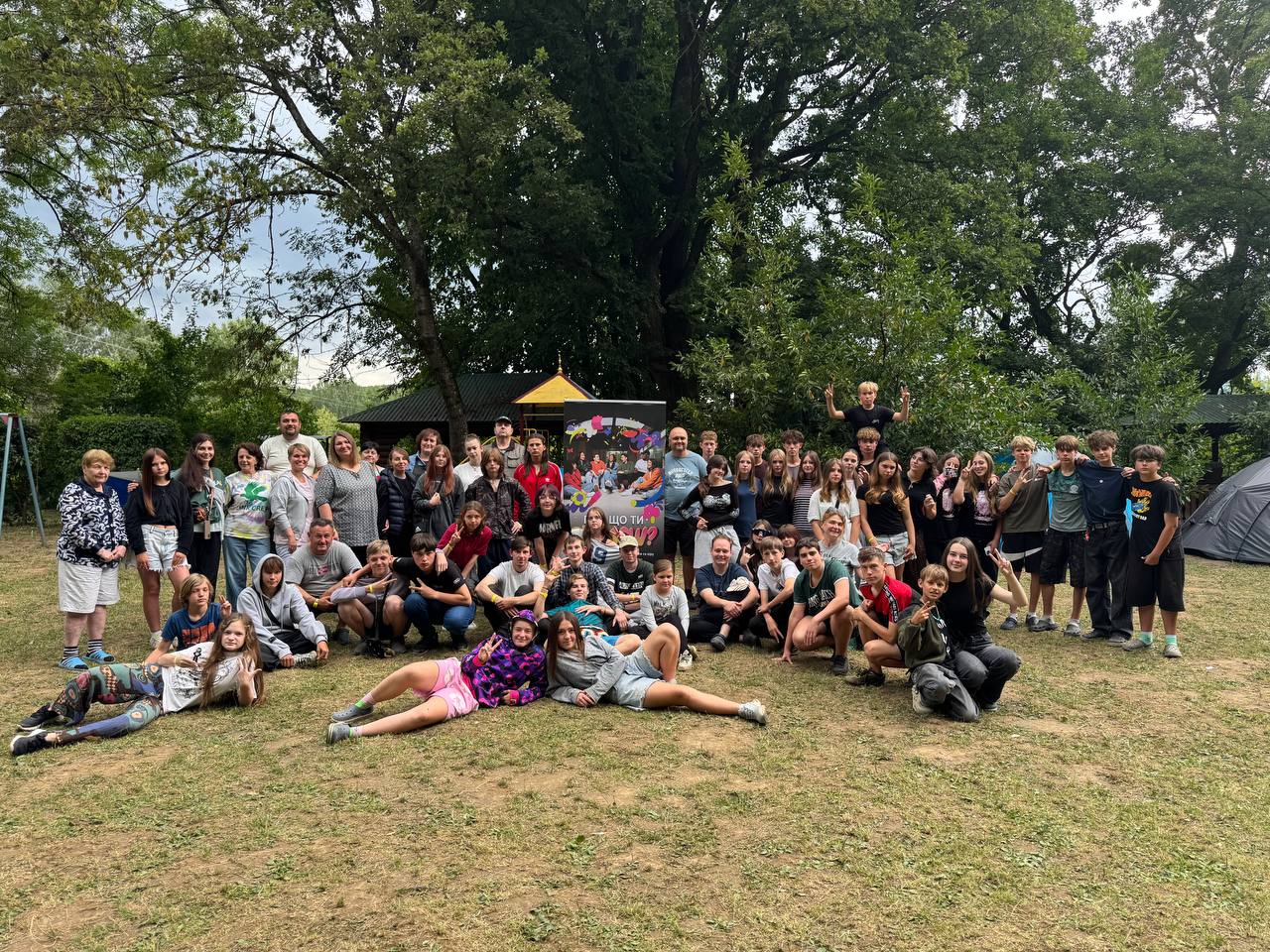
Forty percent of the campers were internally displaced (IDP) — teenagers whose families fled the war in the east with whatever they could carry. Two of them arrived carrying something far heavier than a suitcase: one had just lost her father in the fighting. Another’s father is missing, and no one knows if he is alive. One in ten of the campers were orphans. The rest came from single-parent homes and families with more children than income, families for whom a week of camp would otherwise be completely out of reach.
For the fourth-year running, this camp only happened because Camelback Bible Church in Paradise Valley, Arizona provided the funding. This year, after a missile and drone attack struck the Zakarpattia region, the decision was made to advise the church not to send their usual team. It would have been easy to pull the funding back along with the team. They didn’t. They trusted the ministry on the ground, and they trusted God with the risk, and they gave anyway. Their faithfulness carried this camp on their shoulders from six thousand miles away.
The camp was built entirely around the Alpha Course, walking these teenagers session by session through the cross, through how to resist evil, through healing, through the person of the Holy Spirit. For kids living inside a war, these were not abstract lessons. They were oxygen.
 The Ones Who Carried the Message
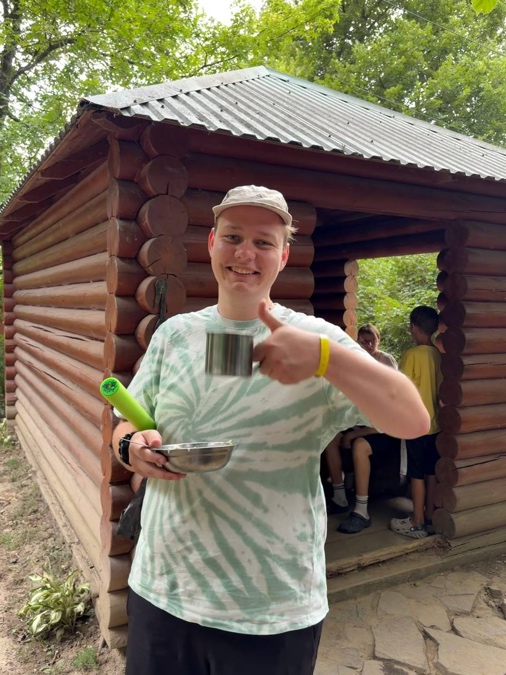
Nine leaders from nine different Ukrainian churches gave up their week to serve these teenagers. One of them, Mark, once sat exactly where these campers now sit — a displaced teenager himself after the 2014 invasion uprooted his family. A friend invited him to camp. He gave his life to Christ that week. He went on to grow in a Messianic congregation in Kyiv, and this year he returned to Uzhhorod — not as a broken displaced kid, but as a church planter, starting a new Messianic congregation of his own.
Hold that story next to the sixty faces at camp this year. Somewhere among them may be the next Mark. No one will know for ten, twenty years which of these teenagers God is quietly calling. But the gifts and prayers behind this camp funded the room where He gets to do that calling.
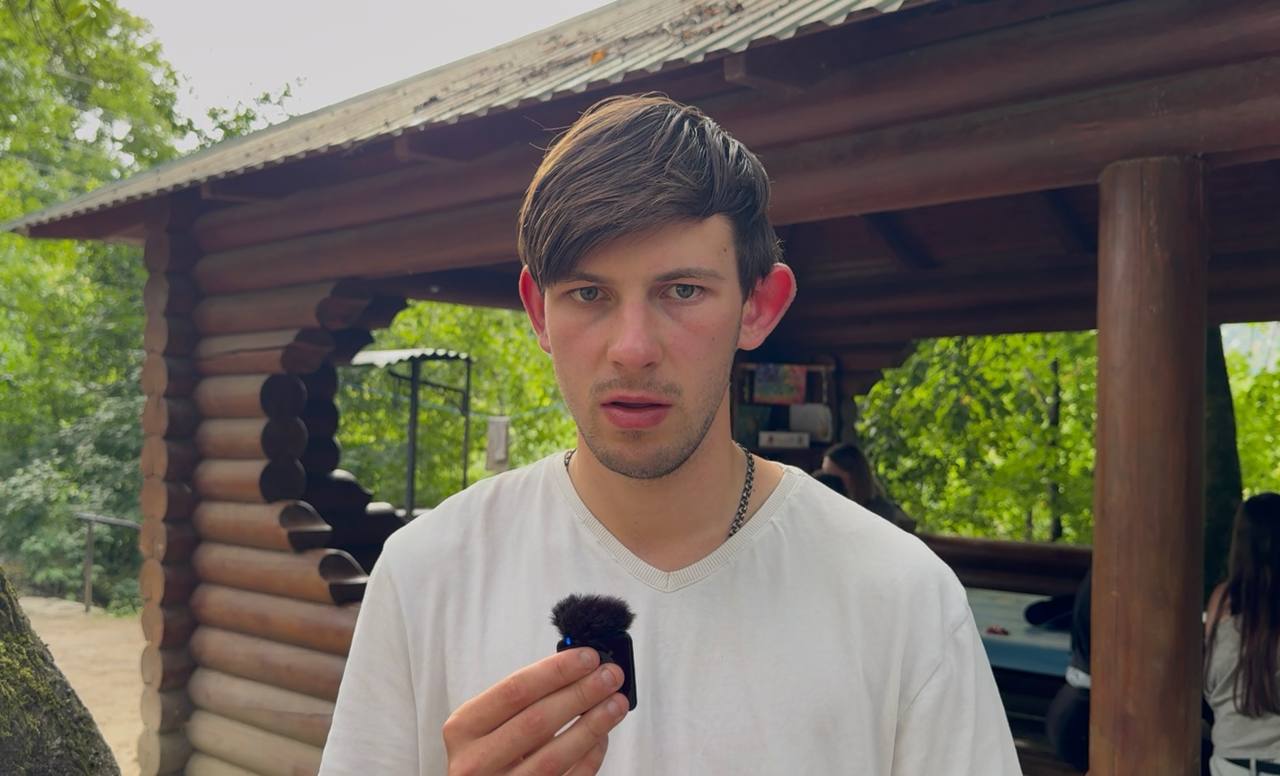
Nikita fled Sloviansk for Uzhhorod four years ago and has lived as an IDP ever since. He came to camp an atheist, full of a hatred he didn’t know how to put down. During one session, he watched a video of a Syrian boy who had lost his own father and home to war and had carried the same hatred — until he met Jesus, and the hatred simply left him. Nikita recognized himself in that boy’s story. By the end of the week, he asked for a Bible. He is not a believer yet. He is closer than he has ever been. Pray for Nikita by name — that the God who freed that Syrian boy from hatred would free him too.
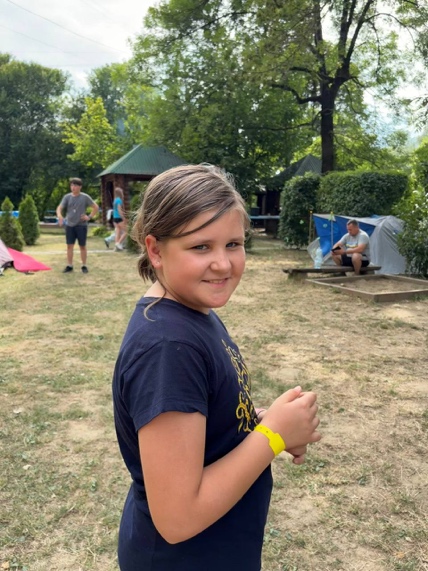
Masha was only eleven — two years below the camp’s usual age cutoff — when an exception was made for her. Her family of eight fled Kyiv in the war’s earliest, most terrifying days, when Russian troops surrounded the capital on three sides. She landed at one of our IDP centers run by Ruka Dopomogy as a seven-year-old and has been counting down the years to camp ever since. Her family has since resettled in the Czech Republic, but her parents made sure she came back this year, having seen in other families how much healing this week can bring. Masha said it was the best camp of her life. For the first time in a long time, surrounded by Ukrainian friends speaking her own language, she said she finally felt normal.
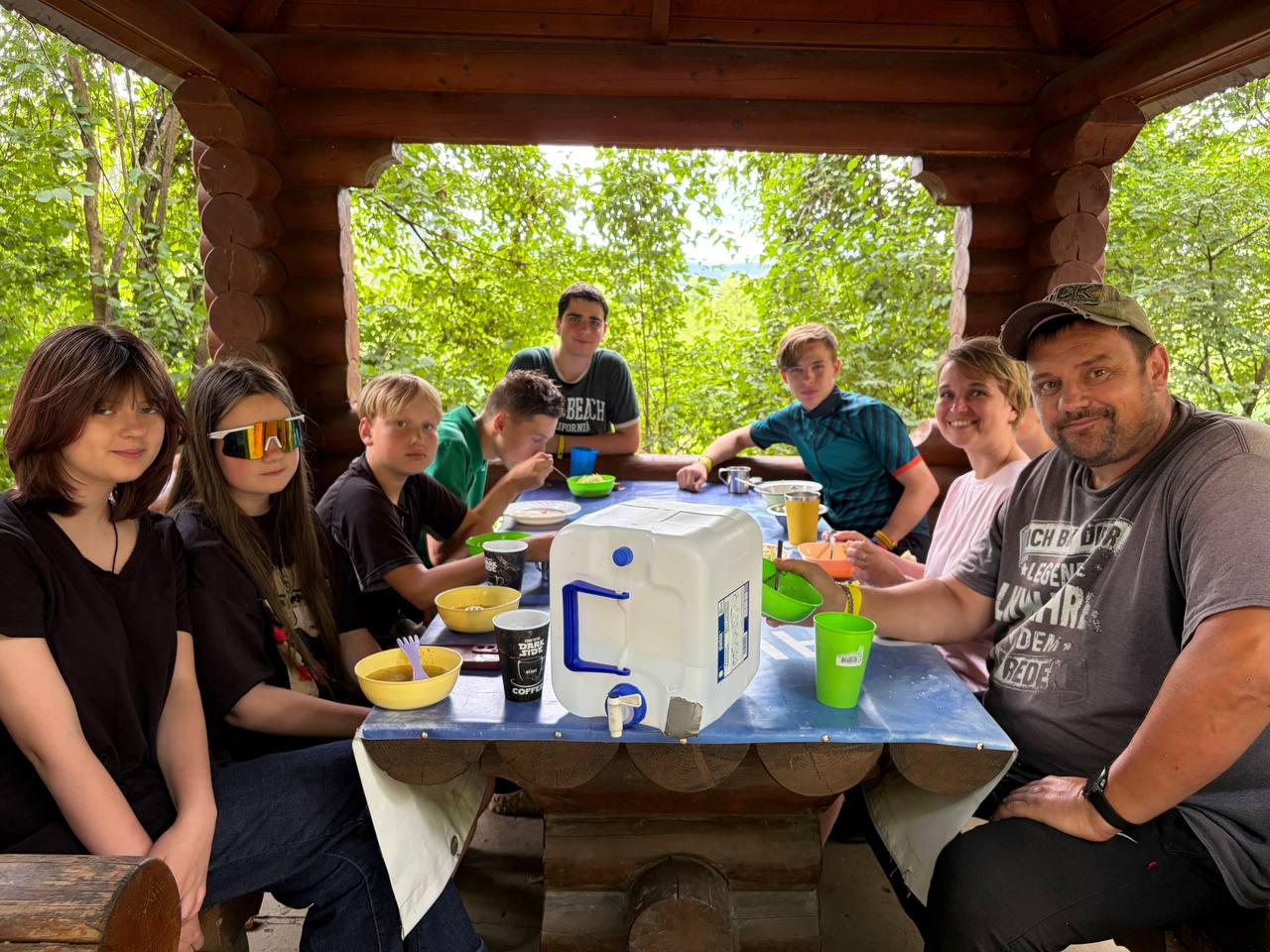
Natalia brought a group of teenagers from Poltava — one hundred miles from the front line. Close enough that air raid sirens are a weekly, sometimes daily, reality. Far enough that they cannot always tell how close the danger truly is. For these kids, the sirens mean genuine fear: wondering which friend might not make it through the day. For one week, they slept, laughed, and prayed without that fear. And several of them met the One the Bible calls the Prince of Peace — the only peace that will still be there when the sirens start again.
What This Means
None of it happened because of any one ministry or leader. It happened because ordinary people — people who will likely never meet these teenagers or see these cities — were willing to give and to pray. That giving handed Nikita a week away from the hate. It handed Masha a week of feeling like herself again. It gave nine church leaders a place to pour out what God has poured into them. It gave sixty young Ukrainians a glimpse, in the middle of a war, of a Kingdom that cannot be shaken.
All the glory for what happened this week belongs to Jesus Christ alone. He is the one who heals trauma no program can heal, who reaches teenagers hardened by loss, who plants churches out of displaced campers, who is Peace itself for kids who have never known a day without sirens.
Continued prayer is needed — for Nikita’s journey to faith, for the trauma still carried by children who have lost fathers or lost homes, and for the nine church leaders now discipling these teenagers in the months ahead.
“Blessed are those who mourn, for they shall be comforted.” — Matthew 5:4