
August 20, 2026
Prepared by Diana Bozhyk
A nine-hour Russian missile and drone assault on Kyiv killed at least 17 people and wounded dozens more, striking a children’s hospital, a school, and Red Cross facilities in what Ukraine’s foreign minister called one of the most brutal attacks of the war. Ukraine’s intelligence agency confirmed North Korea has now supplied Russia roughly 50 ballistic missiles, including an upgraded model capable of carrying a one-ton warhead, while Russian drones crossed into Moldovan and Romanian airspace and a naval drone was destroyed near a Black Sea gas platform. Ukraine struck oil terminals and drone-launch airfields deep inside Russia overnight, even as a widening corruption scandal forced the sale of a state-owned bank and the resignation of a top defense procurement official.
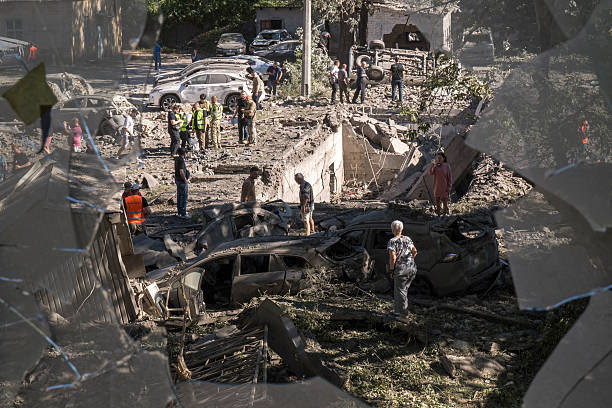
Local residents inspect cars burned in a Russian overnight missile and drone attack in Kyiv. Russia attacked Kyiv and the surrounding region with dozens of ballistic missiles, 44 cruise missiles and 168 Shahed attack drones. At least 15 people were killed and more than 30 were injured. (Maxym Marusenko/NurPhoto via Getty Images)
THE DAY’S RECKONING
Nine hours. That’s how long Russian missiles kept falling on Kyiv last night, one wave after another, until a children’s hospital, a school, and residential towers all bore the marks of a single sleepless night. By morning, at least 15 people were dead. By evening, after Russia came back for a second round of daytime strikes, that number had climbed to 17.
The rest of the day read like a ledger of everything feeding that violence and everything trying to survive it. North Korea has now quietly handed Russia roughly 50 ballistic missiles, some carrying warheads heavy enough to leave craters where Iskanders leave dents. Russian drones kept drifting into Moldovan and Romanian skies, testing borders nobody in Moscow has any legal right to test. Ukraine answered where it could — striking oil terminals and drone airfields deep inside Russia overnight — while back home, a corruption scandal serious enough to force the sale of an entire state bank kept unfolding inside the president’s own office. Nothing about today offered relief. Everything about it offered a clearer picture of exactly how large this war has grown, on every front it touches.
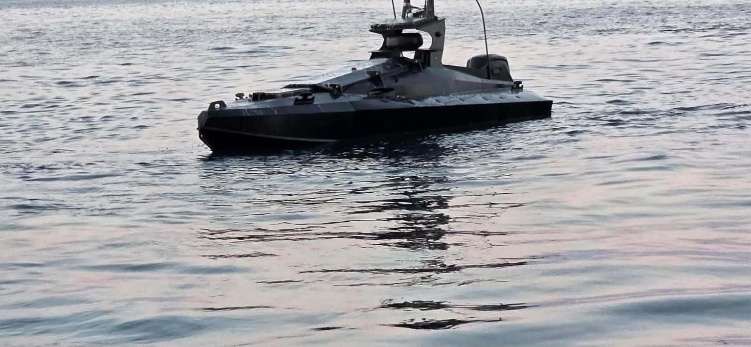
The suspected Russian drone before being destroyed by the ROmanian military. (Government of Romania)
A NINE-HOUR ASSAULT: KYIV’S DEADLIEST NIGHT IN WEEKS
Russia launched one of its most sustained attacks on Kyiv in months overnight, combining ballistic and cruise missiles — Oniks, Zircon, Iskander-M, and S-400-derived weapons — with Banderol loitering munitions and waves of drones in a barrage lasting almost nine hours, according to Ukraine’s prime minister. By morning, the toll stood grim: at least 13 killed in Kyiv itself, one more in the surrounding region, and over 40 injured, with a children’s hospital, a school, and residential buildings among the structures damaged.
Russia’s own defense ministry published photos of missiles launching from warships at sea, captioned “Let’s fire a salvo,” claiming the strikes hit military targets in Kyiv while making no mention of the civilian toll Ukrainian authorities had already confirmed. In Boryspil district outside the capital, strikes hit food warehouses and Red Cross facilities, with fires still burning hours later, Prime Minister Serhii Koretskyi said. A visiting Lithuanian delegation, in Kyiv for energy talks, spent the night in a shelter as the barrage continued. “We had to go through what a significant part of the people in Ukraine go through very often,” Lithuania’s energy minister said afterward.
Foreign Minister Sybiha called it “one of the most brutal Russian attacks to date,” urging allies to immediately deliver more air-defense interceptors, tighten sanctions, and cooperate on anti-ballistic technology. By day’s end, 462 emergency responders and 116 pieces of equipment were still working through the wreckage.
Kyiv wasn’t alone in absorbing the barrage. The same overnight strikes hit civilian, critical, and energy infrastructure in Chernihiv, Cherkasy, Odesa, and Mykolaiv oblasts, a gas station in Kharkiv Oblast, and logistics infrastructure in Zhytomyr Oblast. In southern Odesa Oblast, strikes knocked out power to roughly 13,000 households, though officials reported no injuries there as crews worked through the morning to restore electricity.
KYIV ATTACKED AGAIN BY DAY
Russia didn’t wait for nightfall to strike Kyiv a second time. Throughout the afternoon, jet-powered drones targeted the capital and surrounding oblast, with debris sparking two separate fires in the Holosiivskyi district hours apart — the first killing one person and injuring two, the second killing another and injuring one more, according to Mayor Vitali Klitschko. A separate strike in Brovary, just east of the city, killed one person and injured eight others, damaging what officials described only as an “industrial” facility.
Klitschko said Russian drones deliberately targeted a critical infrastructure facility in Kyiv for the first time in several months, warning residents of the Desnianskyi and Dniprovskyi districts to expect hot water disruptions as a result. He didn’t specify which facility was hit. Separately, the mayor revealed a staggering cumulative figure: roughly 4,000 of Kyiv’s 12,000 buildings — about one in three — have now sustained damage of varying severity since the war began, at an estimated cost to the city budget of $11.5 million per attack.
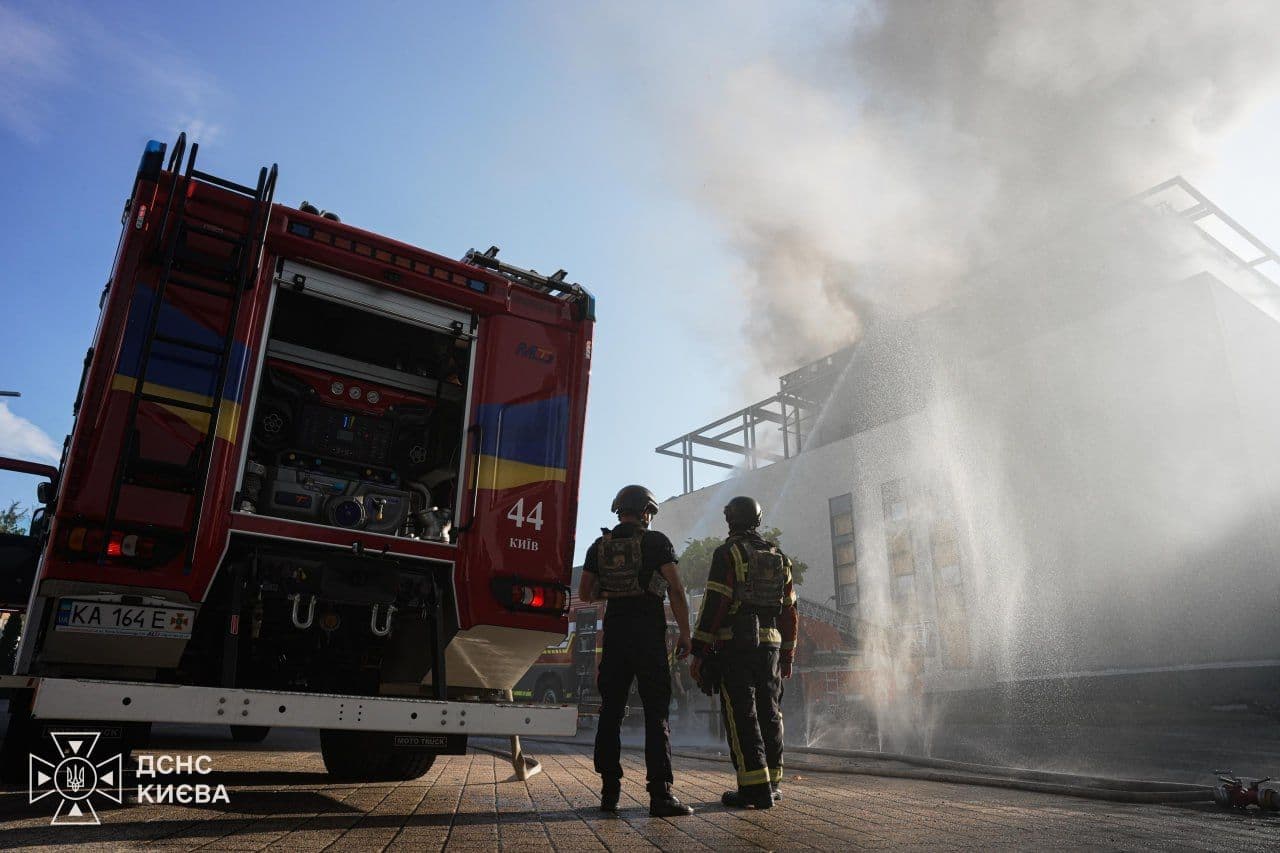
State Emergence Service working at the site of a Russian attack in the Holosiivskyi district of Kyiv. (State Emergence Servic / Telegram)
For residents living through it, the math of a chronic missile-interceptor shortage has become impossible to ignore. “Give us something to shoot down these missiles, because nothing gets shot down,” one Darnytskyi district resident, whose apartment building was damaged, told reporters. “And what kind of war is this, if they shoot, kill peaceful people. The war should be somewhere on the front line, not in the center of Ukraine.”
NORTH KOREA’S MISSILES ARRIVE IN NUMBERS
Ukraine’s military intelligence agency confirmed today what officials had long suspected but not fully quantified: North Korea has transferred roughly 50 ballistic missiles to Russia as of last month, including an upgraded model that dramatically raises the stakes of any future strike using it.
The transfer includes KN-23 and KN-24 missiles, already used repeatedly against Ukrainian cities, along with the newer KN-30 — a variant capable of carrying a warhead of up to 2,500 kilograms, roughly five times heavier than the standard payload on Russia’s own Iskander-M missiles. Ukrainian intelligence says Russia has begun deploying six launchers for these North Korean missiles in Voronezh Oblast, a position that would put Sumy, Kharkiv, Chernihiv, Poltava, Kyiv, Dnipropetrovsk, and Zaporizhzhia oblasts within striking range, with the six launchers together capable of firing up to 120 missiles.
There’s an odd asymmetry buried in the numbers, according to one Ukrainian military analyst: Russian Iskander-M missiles typically land within five to 20 meters of their intended target, while North Korean KN-23s regularly miss by hundreds of meters or more. Separately, Ukrainian intelligence disclosed that Russia still holds roughly 50 Kh-47M2 Kinzhal aeroballistic missiles in reserve, despite pausing Kinzhal production since April after Ukrainian jamming rendered the weapon far less accurate — one Ukrainian electronic-warfare commander said that of 59 Kinzhals launched during one recent stretch, jamming suppressed all but one. Russia has reportedly redirected the freed-up production capacity toward other missile types instead, maintaining its overall strike tempo even as one specific weapon becomes less reliable.
RUSSIA’S DRONES KEEP CROSSING NATO’S LINES
For the second time in a week, Russian unmanned weapons crossed directly into the airspace of countries that have nothing to do with the war Moscow is fighting — and this time, one of them carried an active explosive payload.
Romania’s military destroyed a naval drone carrying explosives roughly 80 miles east of Constanta, dangerously close to the Neptun Deep natural gas platform in the Black Sea, using two F-16 fighter jets after the country’s coast guard spotted the device. Romania’s defense minister confirmed, after coordinating directly with Ukraine, that the drone wasn’t Ukrainian in origin, while Romania’s president explicitly blamed Russia. European Commission President Ursula von der Leyen called it part of “an escalating campaign of threats” designed to unsettle European citizens, describing it plainly as “hybrid warfare.”
The same morning, a separate Russian-type drone entered Moldovan airspace near the Ukrainian border, lingering for six minutes before crossing back into Ukraine, while a drone of unspecified origin crashed and caught fire in Romania’s Tulcea County. Finland, meanwhile, reported a suspected Russian aircraft violation over the western Gulf of Finland, the second such incident this year. None of these incidents individually amounts to an attack on NATO territory. Together, they form a pattern analysts increasingly describe as deliberate: testing how much European airspace Russia can quietly violate before facing real consequences, and normalizing incursions that would have been unthinkable escalations just a few years ago.
THE KREMLIN RECRUITS ITS NEXT ELITE FROM THE BATTLEFIELD
Russia is preparing to hand a significant share of political power to the men who’ve fought its war, a deliberate strategy that will likely reshape the country’s parliament after next month’s elections.
A senior Kremlin-aligned war correspondent and United Russia Party candidate said the ruling party intends to elect between 40 and 100 combat veterans to the State Duma in September’s vote — potentially as much as 22 percent of the chamber’s 450 seats. The effort runs through a state program called “Time of Heroes,” which places war veterans into local, regional, and federal positions of power; 20 graduates of the program have already won United Russia’s internal preliminary vote, with 10 set to run on party lists and 10 more in individual districts. Putin himself said Russia must prepare in advance for veterans’ return from the front and their reintegration into Russian society and the labor force.
One prominent Kremlin-affiliated commentator explained the logic bluntly: a lawmaker with actual combat experience carries a “special kind of legitimacy” that’s “difficult to publicly challenge” — a status the Kremlin can use to insulate its wartime policies from criticism by installing veterans who can claim firsthand authority no career politician can match. The strategy suggests Russia isn’t simply trying to win a war; it’s actively building the next generation of loyalist, ultranationalist political leadership to sustain the system that produced it, regardless of how or when the fighting itself eventually ends.
RUSSIA’S FUEL CRISIS HAS NO REAL FIX
Russian officials keep promising the gasoline shortage crippling much of the country is temporary. The evidence keeps suggesting otherwise.
Russia’s deputy prime minister acknowledged the Kremlin is “monitoring” shortages nationwide, pointing to newly begun fuel imports, an export ban, and lower-grade gasoline blends as evidence of a response, while insisting several refineries will resume normal operations “soon.” But Ukrainian intelligence reports the fixes are creating new problems faster than they solve old ones: road freight transport costs have risen 4.5 to 5.5 percent nationally as companies scramble to shift cargo onto rail and sea routes, a change that only partially compensates given the longer transit times involved, and freight costs on routes between Russia and China have spiked sharply amid a fuel collapse in one border region.
Even Russia’s own military bloggers, typically reliable amplifiers of Kremlin messaging, are now openly acknowledging the problem has no quick solution. Two prominent commentators said Russian officials and private companies hold “very unrealistic expectations” about defending industrial sites from Ukrainian strikes, since neither factories nor the military are actually equipped to repel the drones and missiles doing the damage. One suggested Russia’s only real option is passive protection — netting, shelters, redundant infrastructure — rather than active interception, a tacit admission that Russia has essentially lost the ability to fully shield its own economy from a war it started.
MEANWHILE, AT THE ACTUAL FRONT
Away from headline strikes, the ground war moved in small, contested increments across half a dozen sectors, with Russia’s rare confirmed gains offset by Ukrainian advances elsewhere.
In northern Sumy Oblast, Russian forces made a confirmed advance south of Pokrovka, while further east in Kharkiv Oblast, Ukrainian counterattacks near Ternova held the line against continued Russian pressure. Near Kupyansk, a Ukrainian brigade spokesperson reported Russian forces intensifying artillery, mortar, drone, and glide-bomb strikes against rear logistics positions — a pattern typically preceding a renewed ground push. Near Kostyantynivka and Dobropillya, Russian sources made a flurry of advance claims, several contradicted by AI-altered footage researchers flagged as likely fabricated, even as Ukrainian forces confirmed their own modest advance northwest of Vodyanske, south of Dobropillya. Southwest of Pokrovsk, geolocated footage indicated a genuine Russian advance near Udachne, one of the more concrete gains reported anywhere along the front today.
In Kherson City, Russia’s “human safari” campaign continued unabated: drones struck an ambulance, a bus, a market, and individual pedestrians over a 24-hour span, injuring at least 10 civilians, with footage showing one drone dropping a grenade directly onto a person in the street. In occupied Crimea, Ukrainian strikes on power substations caused outages across the central, western, and eastern parts of the peninsula, while a new battle-damage assessment confirmed that this month’s naval strike on the frigates Admiral Makarov and Admiral Essen destroyed the communications systems and missile-launching capability both ships need to fire Kalibr cruise missiles.
UKRAINE STRIKES DEEP INTO RUSSIA’S OIL AND DRONE INFRASTRUCTURE
Ukraine’s long-range campaign kept pace with Russia’s own barrage overnight, hitting oil infrastructure, radar systems, and drone-launch sites across multiple regions in a single coordinated push.
Ukrainian forces struck the Tamanneftegaz oil terminal in Krasnodar Krai — a facility capable of processing nearly 20 million tons of oil and gas products annually and transferring them from rail to seagoing vessels — sparking a fire confirmed by satellite imagery. The same overnight window brought a strike on the TANECO oil refinery in Nizhnekamsk, Tatarstan, roughly 620 miles from the border, a facility capable of processing 16 million tons of crude annually; the city’s own mayor acknowledged Ukrainian drones had targeted it.
Separately, Ukraine’s military intelligence agency confirmed strikes on drone storage and launch sites at airfields in Primorsko-Akhtarsk, Krasnodar Krai, and in Russian-occupied Donetsk City — both locations Russia has used since the war’s early months to launch long-range drones toward Ukraine, given their proximity across the Sea of Azov and the front line respectively. The strikes also destroyed two Russian radar systems, a Nebo-U and a Nebo-UM, positioned to protect the Primorsko-Akhtarsk site, with ground equipment and drone launchers damaged and fires breaking out at both airfields. Ukrainian officials say Russia has also refitted Donetsk’s international airport, once one of the country’s largest, specifically to train and launch Shahed, Geran, and Gerbera drones — evidence, Ukrainian officials argue, that occupied Ukrainian territory itself has become integral infrastructure for the war being waged from it.
A GERMAN JOURNALIST FACES RUSSIAN PROSECUTION FOR A QUESTION
Russia is moving to place a German journalist on an international wanted list over a single question he asked President Zelensky nearly two weeks ago — a case that’s drawn criticism across three countries and exposed just how aggressively Moscow will pursue anyone it decides to make an example of.
Michael Martens, a longtime Balkans correspondent for the Frankfurter Allgemeine Zeitung, asked during an August 8 press conference in Belgrade what European countries could do to help Ukraine “kill more Russians,” later clarifying he meant Russian soldiers specifically, not civilians. Russian state media reported Moscow has opened a criminal case against him under a statute covering incitement to hatred, carrying up to six years in prison if he’s ultimately convicted and extradited — though he hasn’t yet been formally added to the international wanted list, pending further legal process. Russia’s embassy in Berlin has separately asked German prosecutors to assess whether Martens’s remarks constitute a crime under German law, while Foreign Ministry spokesperson Maria Zakharova called the comment “unacceptable and criminal.”
Martens, who has lived in Belgrade, Kyiv, and even St. Petersburg over his career, has stood by the remark publicly, calling the underlying goal a “noble objective.” His employer, FAZ, defended him as addressing a legitimate policy debate while acknowledging the phrasing was ambiguous, adding that the paper’s own editorial position isn’t that as many Russian soldiers as possible should be killed. The case lands as one more data point in a broader pattern: Russia increasingly treats foreign journalists’ questions, not just their reporting, as prosecutable offenses when they touch subjects the Kremlin finds embarrassing.
PUTIN IS BETTING ON A UKRAINIAN WINTER COLLAPSE
A senior Ukrainian diplomat offered a blunt read on why peace talks remain stalled: Vladimir Putin doesn’t believe he needs to negotiate, because he’s convinced winter will do the work for him.
Serhii Kyslytsya, first deputy head of Ukraine’s presidential office and one of Kyiv’s key negotiators, said Putin currently has no interest in returning to the table and won’t regain any until at least mid-March, once he’s seen whether Ukrainian society survives a winter of intensified strikes on energy infrastructure. “Putin now has no desire to sit down at the negotiating table,” Kyslytsya said, arguing Russia’s strategy hinges specifically on fracturing Ukrainian unity rather than winning outright on the battlefield. “The greatest factor in influencing Putin is the unity of the Ukrainian people,” he added, comparing Russia’s approach to destroying national identity to tactics used against European nations in the 20th century, now executed with modern technology.
Despite the bleak assessment, Kyslytsya insisted Ukraine shouldn’t abandon diplomacy, warning that doing so would only let Moscow blame Kyiv for stalling peace efforts. He said Ukraine needs at least 300 additional PAC-3 interceptors just to survive the winter and has proposed developing lower-cost systems specifically to counter Shahed-type drones, since Patriot interceptors remain scarce and expensive relative to the sheer volume of threats Ukraine now faces nightly.
NEW TAPES, A BANK SEIZED: UKRAINE’S CORRUPTION SCANDAL WIDENS
Ukraine’s anti-corruption bureau escalated its case against senior officials today, releasing a second batch of recordings that allege a scheme far more brazen than the money-laundering charges announced just a day earlier: an organized effort to seize valuable real estate and businesses through forged documents, bribed judges, and hired hackers.
The recordings implicate Iryna Mudra, the presidential deputy chief of staff dismissed yesterday, alongside sitting lawmaker Vadym Stolar and former lawmaker Maksym Mykytas, allegedly discussing payments as small as $5,000 and as large as $10,000 to secure favorable court rulings, plus roughly $514,000 spent overall on hackers, bribed judges, and law enforcement to seize assets ultimately worth more than $12 million. In one recorded exchange, Mykytas is heard bluntly instructing an associate on how to publicly humiliate a company director during a court hearing to force him out. Mudra herself is heard complaining about the price of bribes and, separately, dismissing the idea that corruption should be fought at all: “Corruption shouldn’t be fought — it should be controlled,” she reportedly said.
The fallout reached Ukraine’s banking sector directly. The government suspended Sense Bank’s CEO and moved to remove its supervisory board chairman after regulators ruled he no longer met independence requirements, while Prime Minister Koretskyi ordered the state-owned bank sold outright, with proceeds directed to the military. Separately, Arsen Zhumadilov, head of Ukraine’s Defense Procurement Agency and a witness in a related corruption probe, confirmed his resignation effective August 31, insisting the decision was entirely his own.
MOSCOW DENIES WHAT ZELENSKY WARNED ABOUT
Russia’s ambassador to the United Nations pushed back today against growing warnings that Moscow is preparing a large-scale mobilization once September’s elections conclude — though his denial left the door open rather than closed.
“It has been said many times that we don’t need a mass mobilization at the moment, it’s not planned or expected, as far as I know. But let’s see what happens,” Vasily Nebenzya told reporters, a carefully hedged statement that stops well short of a firm denial. The comment directly answers concerns President Zelensky raised days earlier, when he said Ukraine had seen internal Russian documents suggesting Putin plans to mobilize several hundred thousand additional troops by year’s end, with a similar number planned for the following year.
The skepticism toward Moscow’s denials isn’t abstract. Russian officials spent most of 2022 publicly ruling out mobilization before abruptly announcing a “partial” draft of 300,000 reservists that September, a reversal that left many Russians scrambling to avoid conscription with little warning. Zelensky has also said Russia is separately preparing to receive another 30,000 North Korean troops to reinforce its war effort, on top of manpower it’s already drawing from domestic recruitment and foreign fighters — suggesting that whatever Nebenzya’s careful phrasing implies today, Russia’s actual appetite for additional manpower shows no sign of shrinking.
A SECOND ASSASSINATION PLOT FOILED IN POLAND
Polish security services disrupted a second Russian-linked assassination attempt on Polish soil this month, this time targeting a Ukrainian defense industry representative rather than the dual US-Ukrainian citizen whose case made headlines days earlier.
Poland’s Internal Security Agency said it detained a 63-year-old Ukrainian citizen, identified only as Serhiy P., in Warsaw on August 5, accusing him of acting on behalf of Russian intelligence services to assassinate a representative of Ukraine’s arms industry in Irpin, just north of Kyiv. The plot allegedly involved a remotely detonated explosive device that could be triggered by cell phone; it failed, according to investigators, due to an unspecified fault with the device itself, prompting the suspect to flee to Poland before his arrest. He’s since been charged with attempted murder using unauthorized explosives and ordered held for three months of pretrial detention.
“This case demonstrates that Russian intelligence services conduct operations that transcend national borders and utilize individuals traveling between countries,” the agency said, describing preventing Polish territory from being used for such operations as one of its central responsibilities. Combined with the Warsaw assassination plot revealed earlier this month, the case underscores a pattern security officials across Europe have grown increasingly vocal about: Russia isn’t confining its campaign of intimidation and violence to Ukrainian soil, and it’s increasingly willing to use Ukrainian nationals themselves as the instruments of that violence.
GERMANY FUNDS CHORNOBYL’S REPAIR
Germany pledged $58 million to help repair the protective shelter covering Chornobyl’s destroyed reactor, following through on a commitment made during a recent ministerial visit to the site.
The funds will go toward fixing the New Safe Confinement, the massive steel structure built to contain radioactive material from the 1986 disaster, after a Russian drone strike damaged it in February of last year. The International Atomic Energy Agency estimated the total damage at roughly $540 million; the structure’s waterproof inner membrane reportedly smoldered for three weeks after the strike, forcing firefighters to cut holes through the outer shell just to fully extinguish it. Designed to shield the site for a full century, the shelter had functioned as intended for barely six years before Russia’s strike compromised it.
Ukraine’s energy minister thanked Germany specifically for its “commitment to ensuring the nuclear safety of Ukraine and all of Europe,” a framing that underscores what’s genuinely at stake: Chornobyl’s containment isn’t just a Ukrainian infrastructure concern, but a shared European safety issue that a single drone strike nearly turned into a much larger crisis. Other partners, including the European Union and Norway, have pledged additional funds toward the same repair effort, part of an international cooperation account specifically established to keep the site secure regardless of how the broader war unfolds.
UKRAINE SANCTIONS A CARTOON
Among four new sanctions decrees President Zelensky signed today, one target stood out for its sheer unlikeliness: the creators of “Masha and the Bear,” a Russian children’s cartoon with a global audience, sanctioned for allegedly spreading pro-Russian narratives disguised as harmless entertainment for kids.
The cartoon decree targets five Russian citizens — including its screenwriter, director, and producer — along with four organizations, among them the animation studio Animaccord and its founder. Under the sanctions, Animaccord is barred from distributing content in Ukraine, and the Ukrainian government gained authority to block the show entirely across YouTube and other platforms, in any language. “We must respond specifically to Russian propaganda, especially when it targets children and is disseminated through major international platforms,” Ukraine’s sanctions commissioner said.
The other three decrees carried more conventional targets: 28 Russian citizens and 36 Russian companies, plus one Chinese firm, tied to Russia’s defense-industrial supply chains; five companies linked to sanctioned aluminum giant Rusal and nine associated individuals, tied to importing raw materials used in missile and aircraft production; and 45 individuals and eight entities accused of actively promoting Russia’s occupation of Ukrainian territory, including a former pro-Russian lawmaker allegedly linked to the abduction of activists during the 2014 Euromaidan revolution. “Sanctions should not only highlight involvement in the Russian war machine but also effectively deprive it of resources and international connections,” Ukraine’s sanctions commissioner said.
A HOSPITAL HIT, A BANK SOLD, A CARTOON BANNED
By nightfall, the day had covered almost every register this war touches: mass civilian casualties in Kyiv, missile transfers from a nuclear-armed ally, drones drifting into NATO airspace, a domestic corruption scandal forcing the sale of a state bank, and, improbably, sanctions against a children’s cartoon. None of it fits into a single clean narrative. All of it is, somehow, the same war.
Seventeen people in Kyiv won’t see tomorrow. A defense industry worker in Irpin nearly didn’t either, saved only by a faulty detonator. And somewhere in Moscow tonight, officials are drafting plans for veterans-turned-lawmakers who’ll spend the next five years defending the war that put them in office. Nothing today brought an ending closer. Everything today made the shape of what’s still unfolding a little harder to look away from.
A PRAYER FOR UKRAINE
1. For the Seventeen Lost in Kyiv
Lord, seventeen people are dead tonight across Kyiv and its outskirts, killed across nine hours of missiles and then a second wave by daylight. We cannot make sense of a night this long, or a morning that offered no real relief. Receive each of them by name, comfort the dozens still recovering from injury, and hold this city that keeps counting its dead in the hundreds of buildings still standing broken.
2. For a Journalist Punished for a Question
Father, we lift up Michael Martens and every journalist now facing prosecution simply for asking a hard question in public. Protect those who speak honestly under pressure, even when their words are imperfect or provoke real controversy. Give reporters everywhere the courage to keep asking uncomfortable questions, even when the risk of retaliation grows more real by the day. And give governments, including our own, the restraint not to criminalize the asking itself, however sharp or unwelcome the question turns out to be.
3. For a Nation Bracing for Winter
Lord of provision, we pray for Ukraine as it prepares for a winter its enemy is openly betting will break it. Give engineers, city officials, and ordinary families the resources and resolve this season will demand, from shelter repairs to heating fuel to simple patience with each other. Let the unity Ukraine has shown so far hold firm against a strategy built entirely on the hope that it won’t, and let that unity surprise even the people counting on its collapse.
4. For Honesty Inside Institutions Meant to Protect
God of truth, we pray for Ukraine’s ongoing reckoning with corruption inside its own government — investigators pursuing evidence into uncomfortable places, officials facing real consequences regardless of rank or closeness to power. Give this process integrity all the way through, even when it implicates people close to the very leaders overseeing it. Let accountability reach as high as the evidence actually leads, and let it strengthen, rather than undermine, the trust this country needs to keep fighting.
5. For Every Border Still Being Tested
God of nations, we pray for the countries whose skies and waters keep absorbing this war’s spillover — Moldova, Romania, Finland, Poland — each navigating a threat they didn’t choose and can’t fully control. Give their leaders wisdom and their people patience. Let every tested border hold, and let the world’s attention not wait for tragedy before taking these warnings seriously.
In Your mercy, in Your justice, in Your time — bring this war to its end, and let the ending be worthy of what Ukraine has endured.