
August 21, 2026
Prepared by Diana Bozhyk
A Russian double-tap drone strike on a shopping mall in President Zelensky’s hometown of Kryvyi Rih killed at least 16 people and wounded 130 more, including 23 children, prompting Zelensky to declare a day of mourning and call the UN secretary-general directly. Ukraine’s intelligence agency confirmed North Korea has deployed 8,500 troops, including a 400-person drone unit, to Russia’s Kursk Oblast, with Moscow reportedly weighing a request for 50,000 more. Ukraine struck a Russian test-flight airfield and an oil refinery a thousand miles from the border overnight, even as Russia’s own deputy foreign minister ruled out any peace deal that doesn’t meet Putin’s original demands.
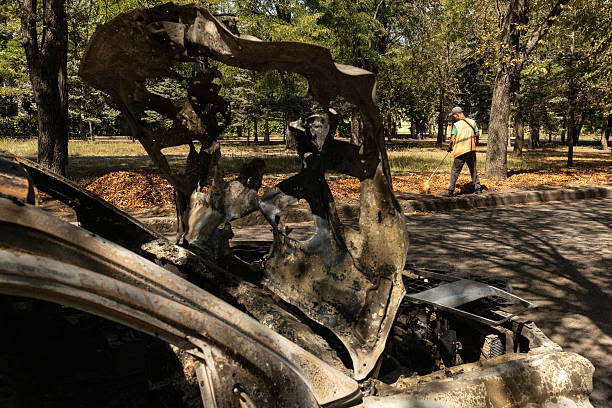
A worker cleans a street next to a burned-out car damaged in a Russian drone strike in Kramatorsk. (Francisco Richart/Anadolu via Getty Images)
THE DAY’S RECKONING
It’s mid-afternoon in Kryvyi Rih, an ordinary Friday, and people are doing ordinary things inside one of the city’s largest shopping centers — buying groceries, meeting friends, killing time. Then a drone hits. Rescue workers rush in. Thirty minutes later, a second drone hits the exact spot where they’re working. By the time the counting stopped, at least 16 people were dead and 130 injured, nearly a quarter of them children, in the hometown of the man leading this country’s defense.
That single attack could have been the whole story today, and in a smaller war it would have been. Instead it shared the day with North Korea quietly expanding its role from supplying weapons to actually training its own soldiers on real battlefield skills, with Ukraine racing to build its own answers to Russia’s missiles and drones rather than wait on allies who keep running short, and with Russia’s own diplomats flatly confirming — again — that nothing short of total Ukrainian surrender interests them. Sixteen people in a mall. Eight thousand soldiers in a training ground. Zero movement toward an actual end. That’s the shape of today.
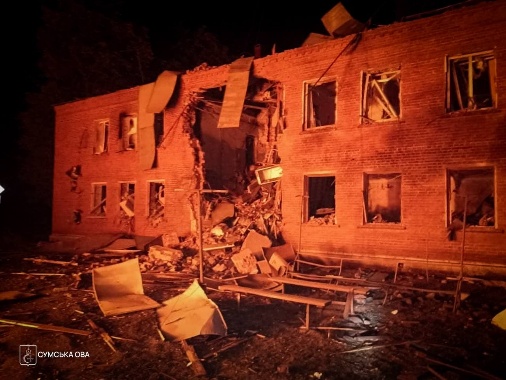
A two-story building deliberately targeted by a Russian strike drone in Sumy, Ukraine. (Governor Oleh Hryhorov/Telegram)
A SHOPPING MALL, A SECOND STRIKE, AND ZELENSKY’S HOMETOWN
Russian forces struck the Solnechnaya Galereya shopping mall in Kryvyi Rih with jet-powered Shahed-type drones flying at extremely low altitude on Friday afternoon, then struck the same site again roughly 30 minutes later as emergency crews were actively responding — a deliberate double-tap tactic that turned a rescue operation into a second attack. Casualty figures climbed steadily throughout the evening as search crews worked through the wreckage: two confirmed dead within the first hour, then six, then 15, finally reaching at least 16 dead and 130 injured, including 23 children, by night’s end. Interior Minister Ivan Vyhivskyi said the fire consumed roughly a third of the mall’s total area, with firefighting efforts repeatedly hampered by the threat of further strikes.
“The Russians carried out an utterly cynical and vile strike on an ordinary shopping center,” Zelensky said, calling it an act of terrorism and demanding “real pressure on the aggressor” from Ukraine’s partners. In a second statement hours later, as authorities still worked to locate everyone who’d been inside, he was blunter: “This is absolute Russian brutality. They are simply animals. We will respond.” Ukraine’s human rights commissioner, Dmytro Lubinets, said plainly that Russia deliberately targets places where civilians gather. Zelensky also spoke by phone with UN Secretary-General António Guterres, securing an agreement that the UN would join broader efforts to find a path toward ending the war — while noting Russia has already rejected proposals to return to negotiations. Kryvyi Rih observed a day of mourning.
NORTH KOREA’S DRONE OPERATORS JOIN THE WAR
North Korea’s role in this war just quietly expanded from supplying weapons to actively training its soldiers in the skills of modern warfare, using Russian battlefields as the classroom.
Ukraine’s military intelligence agency confirmed that 8,500 North Korean troops are now operating mostly in Russia’s Kursk Oblast, including a dedicated 400-person drone unit whose operators can survey and strike targets inside Ukraine, though the troops themselves reportedly won’t cross into Ukrainian territory. Deputy intelligence chief Vadym Skibitsky said North Korea has rotated roughly 25,000 soldiers through the Russian military altogether since deployments began, and that Putin may formally request up to 50,000 more North Korean troops from Kim Jong Un as soon as next month.
The arrangement benefits both dictatorships in ways that outlast any single battle. Russia gets manpower to free up its own exhausted units for offensive operations elsewhere, while North Korea gets something it can’t buy: real combat experience for its military, tested against a modern, drone-saturated battlefield rather than in training exercises. North Korean forces got their first taste of this exact kind of hands-on tactical education during earlier deployments in Kursk Oblast in 2025, operating reconnaissance and strike drones alongside Russian units. Any deployment of North Korean forces directly into Ukraine itself, rather than Russian territory, would mark a serious escalation — one Ukrainian officials say would force South Korea and the wider international community to fundamentally reassess how they’re responding to this war.
UKRAINE’S QUIET TECH RACE
With interceptor missiles scarce and allies slow to deliver more, Ukraine is increasingly building its own way around the shortage — both by rethinking how it uses technology it already has and by inventing new tools from scratch.
Sources told the Financial Times that Ukraine is seeking approval to use Starlink-equipped drones to strike Russian ballistic missile launchers up to 125 miles inside Russian territory. Access to Elon Musk’s satellite internet network over specific zones of Russia would let Ukrainian forces track and hit mobile ballistic missile launchers with far greater precision than they currently manage — a workaround that doesn’t require begging allies for more physical interceptors, since it targets the launchers themselves before they fire rather than trying to catch missiles already in flight.
Separately, Ukraine’s defense ministry unveiled the Alexa Spatium, a new jet-powered interceptor drone purpose-built to catch Russia’s fastest strike drones — the Geran-3, Geran-4, and Geran-5 models that fly far quicker than older, propeller-driven Shaheds. Russia has increasingly prioritized these faster jet-powered drones precisely because they’re harder for Ukraine to intercept using conventional air-defense missiles, which are expensive and in short supply. A cost-effective drone-on-drone interceptor like the Alexa Spatium could reduce Ukraine’s dependence on costlier surface-to-air systems entirely, resetting a technological race that’s been quietly escalating between the two sides for over a year.
RUSSIA STILL WON’T BEND
Any hope that recent diplomatic gestures might soften Moscow’s position got a clear answer today: they haven’t, and Russian officials aren’t pretending otherwise.
Russian Deputy Foreign Minister Sergei Ryabkov said Russia will only accept a peace proposal that aligns with Vladimir Putin’s original war aims and reflects what he called “ground realities” — diplomatic language for Russia’s continued insistence on Ukraine’s effective capitulation, a pro-Russian government in Kyiv, sharp limits on Ukraine’s military, and a permanent block on NATO membership. The statement offered nothing new in substance, but its timing mattered: it landed the same week Ukraine floated a Black Sea maritime truce and just days after Russia formally rejected it, reinforcing that Moscow’s rhetoric about “battlefield realities” is really just another way of demanding Ukraine surrender on Russia’s terms regardless of what’s actually happening on the ground.
Notably, Russia’s own rate of territorial advance has been slow and increasingly costly for months, a fact its own “ground realities” framing conveniently ignores. President Zelensky has repeatedly said Ukraine remains willing to negotiate and make meaningful compromises to end the war — a contrast Ukrainian officials point to whenever Russia tries to paint Kyiv as the side blocking peace. Ryabkov’s comments suggest that contrast isn’t likely to close anytime soon, regardless of how much economic or military strain continues building on Russia’s side of the war.
UKRAINE’S DEEP STRIKES: AIRFIELDS AND REFINERIES
Ukraine’s long-range campaign reached two more significant Russian military and economic targets overnight, continuing a pattern that’s forced even Moscow’s own officials to quietly admit they can’t keep up.
Ukrainian strikes hit the Akhtubinsk Airfield in Astrakhan Oblast, damaging a Su-34 multi-role bomber and causing a fuel spill at a base that hosts Russia’s primary center for testing new weapons and aircraft. The same overnight window brought a strike on the Lukoil Permnefteorgsintez oil refinery in Perm — nearly 930 miles from Ukraine’s border — with geolocated footage confirming a fire at the facility, and Russia’s own regional governor acknowledging damage to an unspecified industrial site. Ukrainian forces separately struck the Marinovka Airfield in Volgograd Oblast and continued suppressing Russian air-defense systems, hitting a loaded S-300 missile launcher roughly 43 miles inside Russian territory near the Belgorod border.
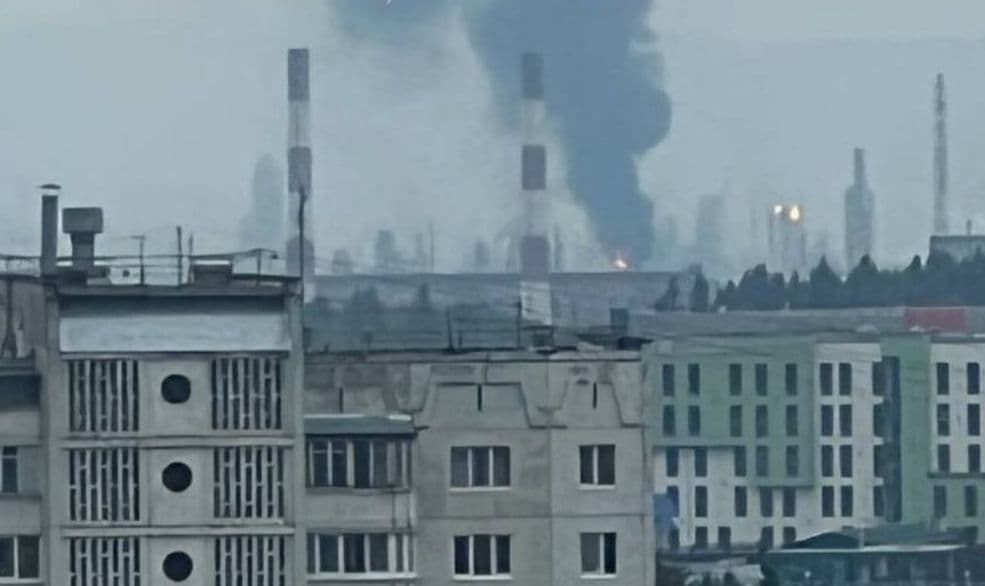
Smoke rising in the Russian city Perm following an overnight drone attack. (ASTRA/Telegram)
Perhaps more revealing than the strikes themselves: leaked internal communications from Moscow’s own city government, dated back to June, show a subordinate to Moscow’s deputy mayor privately acknowledging that Russia simply cannot defend the capital region’s oil refineries from Ukrainian strikes, and recommending Moscow decentralize its refining capacity into smaller, more dispersed mini-refineries instead. It’s a striking admission from inside the very government that’s spent months publicly insisting everything remains under control — proof that even officials responsible for shielding Moscow from the war’s consequences increasingly know that shield no longer holds.
MEANWHILE, AT THE ACTUAL FRONT
Russia launched 172 attacks along the front line today, the heaviest concentrated on the Pokrovsk and Kostyantynivka axes, where Ukraine’s General Staff reported destroying a tank, six vehicles, three artillery systems, and 27 personnel shelters while killing an estimated 35 Russian troops and wounding 14 more in a single 24-hour window. Russian forces conducted 75 airstrikes using 219 guided bombs and deployed nearly 6,800 drones nationwide, yet made no confirmed territorial gains anywhere along the line — a familiar pattern of enormous expenditure producing minimal movement.
Elsewhere, Russian forces continued small infiltration efforts near Mykolaivka east of Slovyansk and marginal gains in western Kostyantynivka, while Ukrainian forces held positions in western Zaporizhzhia Oblast despite Russian claims otherwise, with a Ukrainian military observer noting Russian units had essentially been cleared from Mala Tokmachka after weeks of contested presence there. In Kherson City, Russia’s “human safari” campaign claimed another life: a cyclist killed by a targeted drone strike in Daryivka, with two more civilians, including an elderly resident, injured in a separate attack. Ukrainian forces struck Russian military assets across occupied Crimea, though outages persist across the peninsula from earlier strikes. In the Black Sea, Turkish shipping interests reported drone strikes disabling two vessels linked to Russian cargo routes, with Zelensky confirming Ukrainian forces struck unspecified Black Sea targets. Regional casualty tolls compounded throughout the day: Donetsk Oblast lost two people with 27 injured, Kharkiv Oblast two dead and nine injured, Zaporizhzhia one dead and 10 injured, and Kherson Oblast one dead and 23 injured, on top of the Kryvyi Rih toll.
RUSSIA’S OCCUPATION MACHINE
Behind the daily strikes, Russia continues building a quieter, longer-term system for absorbing occupied Ukraine — one that increasingly targets its youngest residents and its most desperate institutions.
The Alabuga Special Economic Zone, Russia’s primary drone manufacturing hub, has begun actively recruiting teenagers as young as 15 from occupied Kherson and Zaporizhzhia oblasts for its affiliated technical college, offering to cover first-year tuition while funneling students toward hands-on labor at the same facility that builds the Shahed-type drones striking Ukrainian cities nightly. Investigators have documented aggressive, predatory recruitment tactics, and foreign workers who’ve labored at the site describe inhumane conditions. Separately, Russia’s education minister toured a school in occupied Simferopol this month reviewing new mandatory courses — “Fundamentals of Homeland Security and Defense” and “Spiritual and Moral Culture of Russia” — alongside a school-run museum glorifying the war and “Lessons on Courage” featuring visits from active-duty Russian soldiers.
Russia is also formalizing its administrative grip: the FSB’s proposed elimination of border-inspection zones between Russia proper and occupied Ukrainian territory, revealed earlier this month, drew a direct rebuke from Ukraine’s foreign ministry, which called it an attempt to fabricate the appearance of legal integration with no bearing on Ukraine’s internationally recognized borders. Meanwhile, occupied Luhansk Oblast’s medical system remains only 60 percent staffed, with a severe shortage prompting Russia to relocate 35 doctors and 15 mid-level medical workers there this year through incentive programs. In occupied Crimea, officials have openly boasted about profiting from stolen property, seizing and selling 83 Ukrainian-owned properties since 2023 for roughly $164 million.
SILENCING DISSENT
Russia’s crackdown on anti-war and opposition voices took several concrete forms today, each illustrating a different tool the Kremlin uses to remove critics from public life without the blunt instrument of imprisonment.
A Saratov court fined Communist Party candidate Nikolai Bondarenko roughly $12 for allegedly displaying “extremist symbols” tied to a 2024 social media post featuring a photo of late opposition leader Alexei Navalny — a conviction that, however small the fine, makes Bondarenko ineligible to run in next month’s parliamentary election. It’s the same legal maneuver Russia used against anti-war politician Boris Nadezhdin in July, whose identical fine and “foreign agent” designation blocked his own candidacy before he fled the country entirely, resurfacing in Paris earlier this month after Russian authorities briefly barred him from leaving.
Separately, Russia’s Justice Ministry added Mediazona, an independent outlet that’s tracked nearly 240,000 confirmed Russian soldier deaths in partnership with the BBC’s Russian service, back onto its “foreign agents” registry for a second time, accusing it of spreading “unreliable information” about the war. A Mediazona co-founder called the redesignation proof of the outlet’s continued influence rather than a deterrent. Together, the cases illustrate a consistent strategy: rather than arresting critics outright, Russia increasingly uses fines, administrative labels, and eligibility restrictions to quietly remove opposition voices from public life before elections, leaving the appearance of due process while achieving the same silencing effect.
A GENERAL’S DEATH IN MOSCOW
A retired FSB major general whose company supplied secure communications equipment to Russia’s military was found dead in his Moscow apartment from a gunshot wound, according to Russian media reports that could not be independently verified.
Igor Laptev, 83, reportedly died by suicide on August 20, according to unnamed sources cited by Russian outlets Moskovsky Komsomolets and Izvestia; Russian authorities haven’t publicly confirmed the circumstances. Laptev chaired the board of Informtekhnika, a group whose affiliated companies supplied communications systems to Russia’s Defense Ministry, Interior Ministry, and the military’s telecommunications infrastructure provider. He’d served in the Soviet-Afghan War before moving into KGB and later FSB information-security work.
His death lands amid a pattern that’s become impossible to ignore: Russian military and defense-industry figures have faced a string of targeted attacks and unexplained deaths in recent months, including an attack on Aerospace Forces commander Alexander Chayko in Moscow this month and the wounding of FPV drone developer Andrey Cherezov in Tula in July. Whether Laptev’s death fits that pattern or is exactly what Russian outlets describe remains unconfirmed, but the accumulating list of Russian military-linked figures dying or being attacked under unclear circumstances has become its own quiet subplot to the war, one Russian authorities have shown little public interest in fully explaining.
KELLOGG RETURNS TO UKRAINE
Keith Kellogg, the former US special envoy for Ukraine who left the Trump administration in 2025 while insisting his advocacy for Kyiv would continue, visited Odesa’s port today as part of a working group examining the damage from Russia’s sustained campaign against Ukrainian port infrastructure.
Ukrainian officials walked Kellogg’s delegation through the physical damage from Russian strikes and briefed them on measures being taken to keep the port functioning despite the ongoing attacks. “It is important to us that our American partners can see firsthand the conditions in which Ukrainian ports operate today,” Deputy Infrastructure Minister Serhii Derkach said, framing the visit as part of a broader push to keep Ukraine’s export economy internationally visible even as strikes intensify. The two delegations also discussed potential private investment in Ukrainian infrastructure through the US-Ukraine Reconstruction Investment Fund.
The visit lands against a grim backdrop: Ukraine’s agricultural exports fell to just 30 percent of target in the first two weeks of August, and Turkey’s earlier efforts to broker a new Black Sea safe-passage arrangement, similar to the deal that helped avert a global food crisis in 2022, have so far produced nothing. Kellogg’s continued engagement, even from outside government, reflects a recognition among some of Ukraine’s remaining allies that the war’s economic front — ports, grain, shipping lanes — deserves as much sustained attention as the military one, even when it generates fewer dramatic headlines.
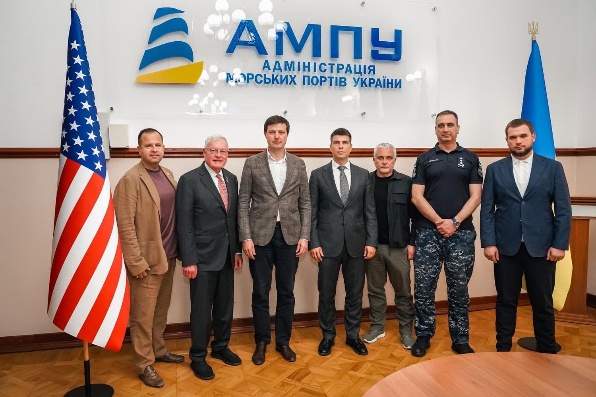
Keith Kellog, the former U.S. envoy on Ukraine, visited Odesa as part of a working group amid Russia’s ongoing attacks on port infrastructure. (Infrastructure Ministry)
TWO GOVERNMENTS, ONE CULTURAL CENTER
Germany is reconsidering whether a Russian cultural institution operating in the heart of Berlin should keep functioning, following mounting evidence that Russia has been using similar sites abroad as espionage cover.
According to Der Spiegel, Berlin is evaluating whether to terminate the legal agreement underpinning the Russian House of Science and Culture, located on Friedrichstrasse just minutes from Germany’s parliament, in response to a suspected Russian “hybrid attack” involving an explosive-rigged drone found near a Ukrainian cargo plane at Leipzig airport earlier this month. German Interior Minister Alexander Dobrindt has already described the airport incident using that exact phrase. A German lawmaker separately flagged the awkward proximity of part of Germany’s own Digital Ministry to the Russian House as “truly incomprehensible.”
Germany has reportedly hesitated on shutting the center down before now, fearing retaliation against the Goethe Institute, Germany’s own remaining cultural presence inside Russia — a caution the German Foreign Ministry now signals may be breaking, telling reporters the government is “comprehensively and continuously reviewing the foundations of the Russian House under international treaty law.” A preliminary decision could reportedly come as soon as next week. The case reflects a broader European reckoning with Russian soft-power institutions that have continued operating largely unimpeded throughout the war, despite years of documented concern that at least some function as intelligence-gathering fronts rather than genuine cultural outreach.
HOLDING RUSSIA ACCOUNTABLE, ONE LEDGER AT A TIME
Two separate accountability efforts advanced today on opposite sides of the world, both aimed at making Russia’s war more costly through legal and financial pressure rather than weapons.
Australia’s Senate Foreign Affairs Committee released a report recommending 11 changes to strengthen the country’s Russia sanctions regime, including new legislation to seize sanctioned Russian assets outright and redirect them to Ukraine — a notable proposal given that, by the committee’s own estimate, not a single person has ever been prosecuted despite 85 percent of Australia’s total sanctions targeting Russia. The report flagged significant loopholes, including Australia’s continued import of refined petroleum products made from Russian crude in third countries like India, a gap the EU and UK closed back in 2025. Australia’s governing Labor party dissented from parts of the report, arguing the legal and constitutional barriers to outright asset seizure remain steep and that using accrued interest on frozen assets, rather than seizing the assets themselves, offers a more viable path forward.
Separately, Australian federal police charged a 27-year-old dual Russian-Australian citizen, Vladimir Teslov, with attempting to pass sensitive information about Ukrainian military personnel and operations to Russian intelligence contacts after he joined Ukraine’s armed forces last year — the first such foreign-interference charge filed since Australia strengthened relevant legislation in 2018. He faces up to 20 years in prison if convicted. Investigators say Teslov underwent military-style training in Russia in 2024 before enlisting in Ukraine’s military the following year, a sequence authorities describe as a deliberate infiltration effort rather than a case of divided loyalty discovered after the fact.
UKRAINE’S CORRUPTION CASE MOVES TO COURT
The corruption scandal that reached President Zelensky’s own office this week took its next formal step today, as two of its central figures appeared before Ukraine’s High Anti-Corruption Court.
Former lawmaker Maksym Mykytas was placed in custody with bail set at roughly $670,000, while Iryna Mudra, the president’s former deputy chief of staff, appeared for a separate bail hearing, with a ruling on her pretrial restrictions expected August 24; prosecutors have asked the court to keep her in custody, with bail set as high as $3.3 million if granted at all. Both are central suspects in what investigators have nicknamed the “Forest Gump” case, an alleged scheme to launder roughly $3.4 million through state-owned Sense Bank to help post bail for a suspect in a separate, larger corruption case centered on Ukraine’s state nuclear power monopoly.
Ukraine’s central bank confirmed it’s independently investigating exactly how the suspects managed to circumvent financial-monitoring safeguards that should have flagged the transactions in the first place. Separately, EU ambassadors held what officials described as an “open and constructive” meeting with NABU and Ukraine’s anti-corruption prosecutor’s office, publicly pledging continued support for the investigation as Ukraine pursues its EU membership path — a signal that Brussels views the scandal’s handling as a genuine test of Ukraine’s institutional readiness, not just a domestic embarrassment to be managed quietly.
The case has already forced the sale of Sense Bank itself and the removal of its senior leadership, but today’s court appearances mark the first time the scandal’s central figures have faced direct judicial consequences rather than just public accusation — a meaningful shift in a country where corruption investigations have sometimes stalled well short of custody or serious bail conditions.
THE PEOPLE BEHIND THE UNIFORM
Two very different stories today illustrated the human strain running underneath Ukraine’s mobilization system, on both sides of a system stretched thinner every month.
In Lviv, a 55-year-old recruitment officer died after being stabbed while conducting routine document checks; a police officer shot the 25-year-old suspect in the leg during the encounter, and he’s since been hospitalized and detained. It’s one entry in a longer, grim pattern: dozens of attacks on enlistment officers have been reported across Ukraine since the war’s start, reflecting the intense friction between a military desperate for replenishment and a public increasingly resistant to being conscripted, particularly for frontline infantry roles.
Separately, German outlet Die Zeit reported that roughly 80 Ukrainian soldiers have deserted while undergoing military training in the German state of Saxony-Anhalt since 2022, with total desertions across all German training sites estimated in the hundreds. Most were mobilized rather than volunteers, using their deployment abroad as an opportunity to simply not return. Desertion carries up to 12 years in prison under Ukrainian martial law, but the soldiers face murky legal status in Germany too, since their official government deployment means they don’t qualify as displaced people eligible for standard temporary protection. Separately, Ukraine’s foreign ministry advised citizens traveling to the EU to secure an exit stamp in their passports, warning that inconsistent implementation of new EU temporary-protection rules is already creating confusion for legitimate travelers trying to prove they left the country lawfully.
A COALITION PREPARES TO MEET IN KYIV
More than 30 countries supporting Ukraine through the Coalition of the Willing are set to convene in Kyiv on August 24 — Ukraine’s Independence Day — with several heads of state and government attending in person for what will be the group’s third in-person gathering in the capital since its founding in early 2025.
President Zelensky will host European Council President Antonio Costa, Finnish President Alexander Stubb, and Luxembourg’s Prime Minister Luc Frieden among those confirmed to attend physically, while the broader coalition, which typically meets in hybrid format, participates remotely. It will also mark the first Kyiv visit for the coalition’s new British co-chair, Prime Minister Andy Burnham, who took office last month, should he choose to attend in person.
The coalition’s core purpose remains security guarantees for Ukraine once a ceasefire is eventually reached — plans for a “reassurance force” that would help secure Ukrainian land, air, and sea space in a postwar scenario. At the group’s last in-person meeting in France in July, Poland announced it would host joint coalition military drills sometime this autumn, part of ongoing efforts to translate the coalition’s stated commitments into concrete, exercised military readiness rather than leaving them as diplomatic language waiting on a ceasefire that, per Russia’s own deputy foreign minister today, still shows no sign of actually arriving.
A MALL, A TRAINING GROUND, A COURTROOM
By nightfall, the day’s three biggest stories sat uneasily side by side: a mall in Zelensky’s hometown reduced to rubble and grief, a foreign dictatorship quietly training its army inside Russia for a war that isn’t its own, and Ukraine’s own government facing hard questions in a courtroom about who profited while the country fought for its life. None of it resolved cleanly. All of it will still be true tomorrow.
Sixteen people in Kryvyi Rih won’t see the weekend. Eight thousand five hundred North Korean soldiers are gaining exactly the kind of combat experience their government wants them to have. And in a Kyiv courtroom, a former presidential aide is waiting to learn whether $3.3 million buys her freedom while the investigation continues. Different rooms, different stakes, same exhausted country trying to hold all of it together at once.
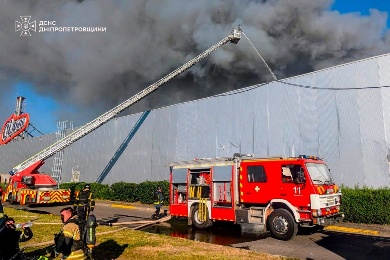
The aftermath of a Russian drone attack in Kryvyi Rih, Ukraine. (Ukraine’s State/Telegram)
A PRAYER FOR UKRAINE
1. For Kryvyi Rih’s Sixteen and Their City in Mourning
Lord, sixteen people are dead tonight in an ordinary shopping mall, struck once and then struck again as rescuers tried to help. Twenty-three children are among the injured, hurt in a place that should have meant nothing more than errands and afternoons together. We cannot make peace with an attack timed to kill the people trying to save others. Receive each of the dead, comfort a city in mourning, and heal the wounded slowly, fully, without the weight of what they witnessed following them forever.
2. For a Cyclist in Daryivka and the Hunted of Kherson
Father, another life was taken today by a drone deliberately aimed at an ordinary person on an ordinary road. We grieve a pattern that treats human movement itself as a target. Protect the people of Kherson still living under this daily threat, and give the world’s attention the staying power this suffering deserves, not just a headline’s worth of notice before it moves on.
3. For a Recruitment Officer Who Died at His Post
Lord of the weary, we lift up the officer stabbed in Lviv while doing the difficult, often thankless work of enforcing his country’s wartime laws. Comfort his family, and comfort every recruiter caught in the friction between a nation’s need and a citizen’s fear. Give Ukraine wisdom to build a mobilization system that citizens can trust rather than resist, and give grace to everyone strained by a war with no end in sight.
4. For Every Official Now Facing a Reckoning
God of justice, we pray for Ukraine’s ongoing corruption proceedings moving, finally, from headlines into a courtroom. Give judges wisdom, give prosecutors persistence, and give the country patience with a process that will take longer than anyone impatient for accountability wants it to. Let this reckoning strengthen the institutions meant to serve Ukraine, rather than simply become another controversy the country must absorb and move past.
5. For the Nations Still Choosing to Stand Together
God of unity, we pray for the coalition of countries preparing to gather in Kyiv, still choosing solidarity after four and a half exhausting years. Give their leaders resolve that outlasts fatigue, and give their promises the follow-through that turns diplomatic language into real protection. Let Ukraine feel, in tangible ways, that it has not been left to carry this war alone.
In Your mercy, in Your justice, in Your time — bring this war to its end, and let the ending be worthy of what Ukraine has endured.