
Russia launched 160 drones at Ukrainian cities through the night and dropped glide bombs on Kramatorsk’s residential center just hours before the Easter ceasefire it had unilaterally declared — then violated it 469 times in the first hours after it took effect. Simultaneously, the FSB completed its quiet takeover of seven of Russia’s eight special detention centers, tightening the Kremlin’s grip on political prisoners and Ukrainian captives alike, while new UN data confirmed that Russian FPV drone strikes against civilians have risen 70 percent year-over-year, with the elderly the primary targets.
The Day’s Reckoning
It is 9:45 in the morning on Holy Saturday. Inside a residential tower in central Kramatorsk — a city that has absorbed Russian fire for four years — a 29-year-old woman and an 89-year-old man are among the residents going about their morning. Then four FAB-250 glide bombs, each weighing 250 kilograms and guided by satellite navigation, fall from the sky. Ten people are injured. Two are critical, bleeding from shrapnel and traumatic brain injuries.
Six hours later, Vladimir Putin’s 32-hour Easter ceasefire begins. By midnight, Ukraine’s General Staff has logged 469 violations.
This is the portrait of Holy Saturday, 2026. Overnight, 160 drones — Shaheds, Gerberas, Italmas variants — swept across Ukraine from six launch points, killing four and injuring dozens, striking a kindergarten in Odesa, apartment towers in Sumy, and a hospital bus in Kherson. In the morning, the bombs fell on Kramatorsk. In the afternoon, the “ceasefire” began. In the evening, Ukraine confirmed strikes on oil infrastructure in Krasnodar and occupied Crimea. And in Moscow, documents filed quietly with the state registry showed that the FSB had completed its takeover of seven of Russia’s eight special detention centers — sealing the fates of prisoners no one will be allowed to see.
182 Ukrainians did come home. That fact, too, belongs to this day.
The truce that wasn’t. The prison doors that closed. The drones that never stopped.
The Ceasefire Charade: 469 Violations Before Midnight
Zelensky had proposed the Easter ceasefire first, on March 30. The Kremlin called it poorly defined and dismissed it. Then, two weeks later, Putin issued a unilateral decree: a 32-hour ceasefire beginning at 4 p.m. on Holy Saturday. The optics were deliberate — positioning Moscow as a peacemaker, drawing a parallel to the fragile ceasefire in the Middle East where US-led negotiations had recently produced results.
Zelensky accepted, carefully. “Ukraine will adhere to the ceasefire and respond strictly in kind,” he said after meeting with Commander-in-Chief Oleksandr Syrskyi to set the parameters. “The absence of Russian strikes in the air, on land, and at sea will mean no response from our side.” He added that Kyiv was prepared to extend the ceasefire if Russia honored it — framing the 32 hours not as a holiday gesture but as a potential gateway to real negotiations.
The ceasefire lasted less than 30 minutes in practice. A Ukrainian monitoring channel for Kherson Oblast reported an MLRS strike — multiple launch rocket system salvos, the kind that saturate an area with unguided rockets — against Tyahynska Hromada within half an hour of the ceasefire coming into effect. Two hours and forty minutes in, intercepted drone footage showed a Russian FPV kamikaze drone striking a civilian parking lot in Kherson City.
By the time Zelensky issued his nightly address, Ukraine’s General Staff had tallied the damage: 469 ceasefire violations, including 22 assault actions, 153 artillery shellings, 19 kamikaze drone strikes, and 275 FPV drone strikes. This was not a ceasefire. It was a performance — and a familiar one. Russia declared an Easter truce last year too. Ukraine reported nearly 3,000 violations.
Kremlin spokesman Dmitry Peskov denied Russia had even discussed the ceasefire with Ukraine or the United States in advance and said it was unconnected to peace negotiations. That denial itself told the story: a ceasefire Moscow wouldn’t defend as a diplomatic act, offered only as a publicity moment, broken within minutes of its start.
Holy Saturday’s Bombing: 160 Drones, Four Dead, Two Kindergartens
Before the ceasefire, before the diplomatic theater, there was the night. Beginning after midnight, Russia launched 160 drones of mixed type — Shahed loitering munitions (Iranian-designed propeller drones that navigate by GPS and explode on impact), Gerbera variants, and Italmas types — from six separate launch points: Kursk, Oryol, Millerovo in Rostov Oblast, Primorsko-Akhtarsk in Krasnodar, occupied Donetsk City, and occupied Cape Chauda in Crimea.
Ukrainian air defenses — a layered network of missiles, electronic warfare, and fighter aircraft — intercepted 133 of the 160. The remaining 27 found targets across ten locations, with debris from downed drones injuring people in eleven more. In Odesa, two civilians were killed and two wounded; the strike damaged dozens of apartment and private buildings, a dormitory, and a kindergarten. In Sumy, two separate strikes hit residential high-rises: one destroyed a rooftop and sparked a fire, the second forced evacuation. Seventeen were wounded, including a 14-year-old boy, with most victims elderly. A kindergarten was damaged there too.
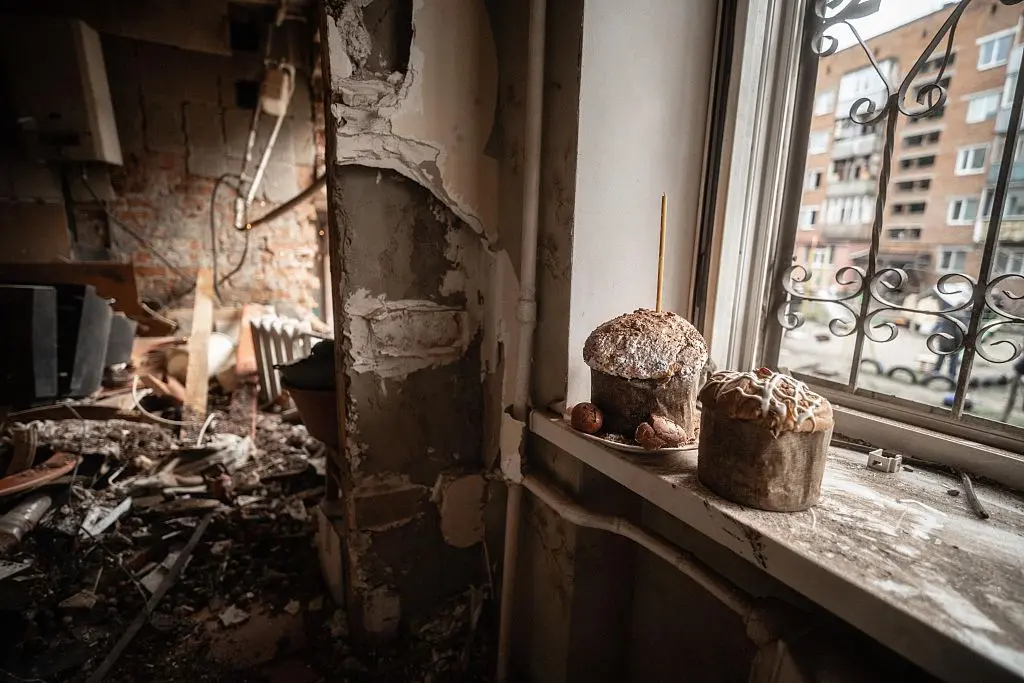
Easter eggs and paska, a traditional Ukrainian Easter bread, sit on a windowsill in a Russian-destroyed apartment in Sumy, Ukraine. A Russian drone struck a multi-story residential building in the city center Friday evening. (Yehor Kryvoruchko/Kordon.Media/Global Images Ukraine via Getty Images)
As morning broke, the attacks continued. In Kherson’s Korabelny district, the body of a 50-year-old man was found — killed in overnight shelling. A 73-year-old woman died in Fedorivka when a Molniya-type drone struck her village. A 24-year-old nurse on her way to work was hospitalized with concussion and blast injuries after a drone hit her public bus at 7:20 a.m. Minutes later, another drone hit a car, wounding a 61-year-old man. In Nikopol — across the river in Dnipropetrovsk Oblast — a 67-year-old truck driver was killed when FPV drones struck his vehicle.
In Poltava Oblast, drone debris falling from a destroyed Russian drone — intercepted, but still dangerous as it fell — damaged a café and a shop near Lubny, killing one person and injuring another. In Kherson Oblast more broadly, 25 settlements were targeted, injuring six more.
The total across the pre-ceasefire hours: four dead, thirty-six injured. The Easter morning had come with fire.
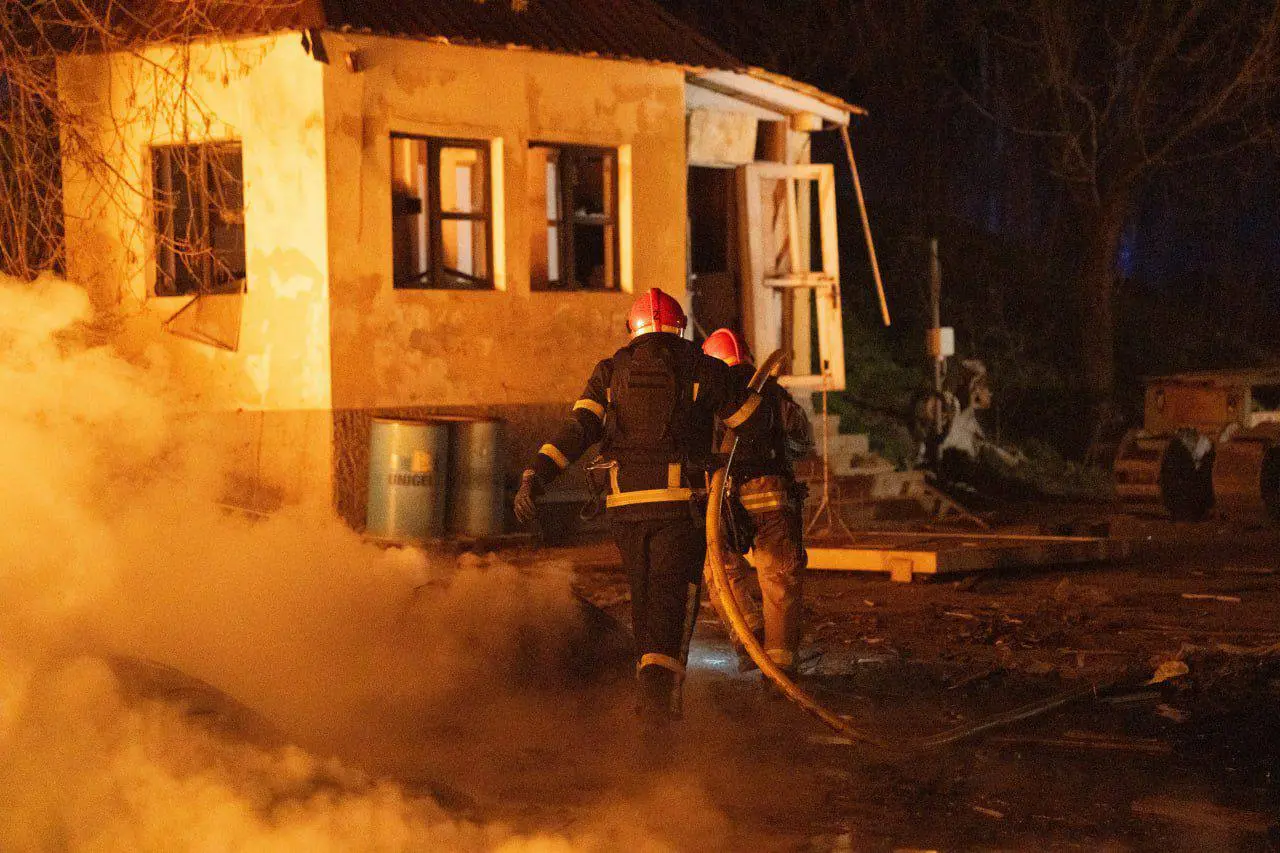
The aftermath of a Russian attack on the city of Odesa, Ukraine. (Oleh Kiper/Telegram)
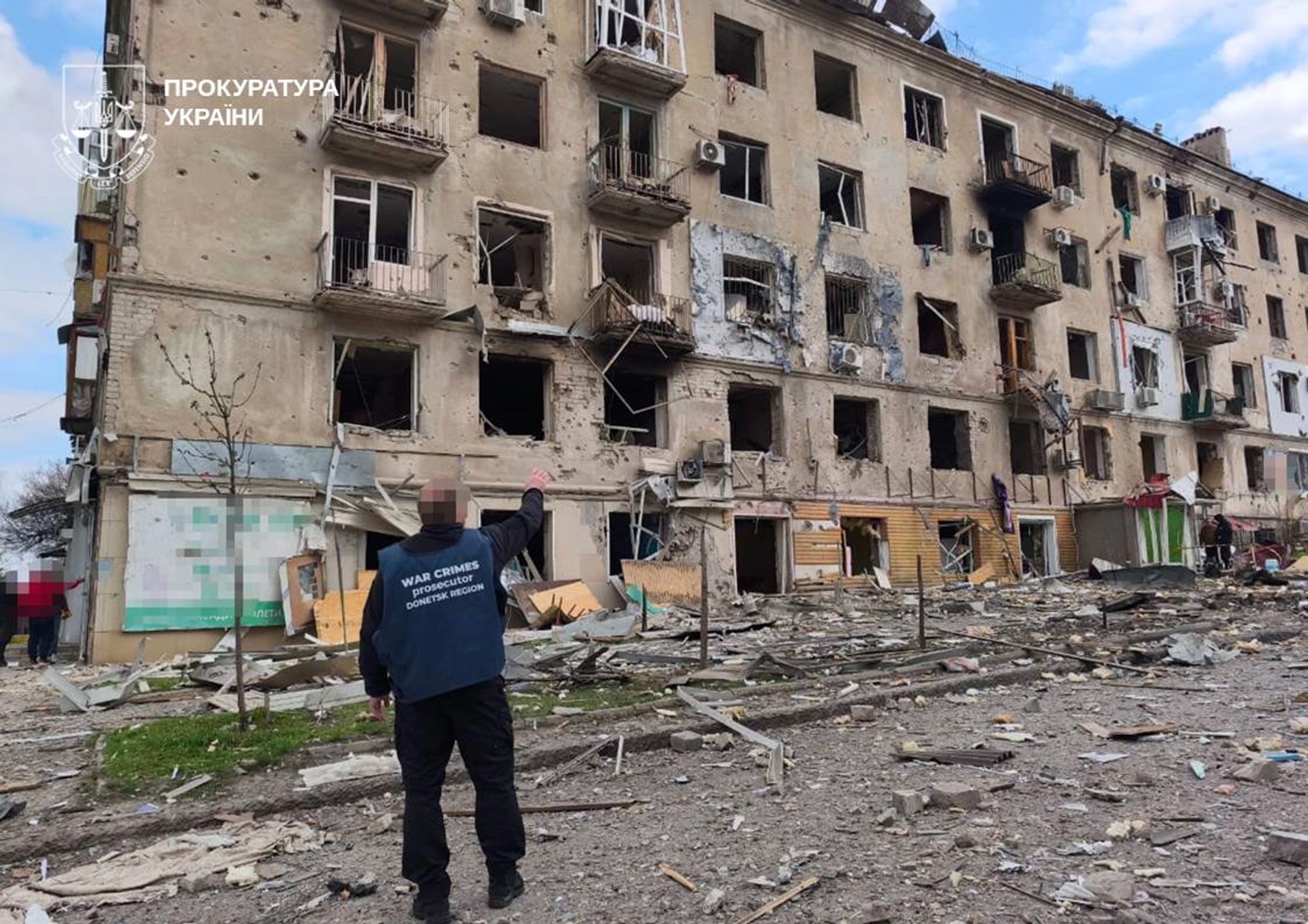
Kramatorsk, 9:45 a.m.: Glide Bombs on a Residential Center
A FAB-250 is a Soviet-era 250-kilogram iron bomb fitted by Russian engineers with a UMPK guidance module — essentially a kit of pop-out wings and GPS navigation bolted onto a dumb bomb. This conversion transforms surplus Cold War ordnance into a cheap, standoff glide weapon. Russian aircraft can release them from dozens of kilometers away, outside the range of many Ukrainian air defenses, and they glide to their targets.
Four of them fell on central Kramatorsk at 9:45 Saturday morning. Kramatorsk is a city of roughly 200,000 people — or it was before the war. It sits less than 20 kilometers from the nearest Russian positions in eastern Donetsk Oblast and has become the de facto regional capital since Russia occupied Donetsk City in 2014. It is a target of political as much as military significance: capturing it is central to Russia’s declared objective of seizing all of Donetsk Oblast.
Ten civilians were injured, ranging in age from 29 to 89. Four were women. Two remain in critical condition with shrapnel wounds and traumatic brain injuries. Several apartment buildings, an administrative building, and eight vehicles were damaged. Donetsk Regional Prosecutor’s Office opened a war crimes investigation under Article 438 of the Ukrainian Criminal Code.
“This is the true cost of Russia’s talk of ‘truce,'” Donetsk Governor Vadym Filashkin said. “They came here to kill and destroy. They don’t want peace.”
The bombs fell six hours and fifteen minutes before Putin’s ceasefire was supposed to begin.
The UN’s Verdict: Drones Are Hunting the Elderly
While individual strike reports circulate daily, the UN Human Rights Monitoring Mission in Ukraine released comprehensive data that assembled the pattern into a damning statistical portrait.
In March 2026, at least 211 civilians were killed and 1,206 injured in Ukraine — the highest monthly casualty rate since July 2025 and a 49 percent spike over February. Short-range weapons — FPV drones, artillery, and airstrikes — were the deadliest category, killing 66 people. FPV drones are first-person view drones: small, fast, typically piloted by a human operator wearing video goggles who flies the drone directly into its target like a guided missile. They cost roughly $400 to build. They are being used to kill people going to collect their pensions.
“Some were struck with drones while walking to collect their pensions or working in their gardens — in other words, while they tried to carry on with their everyday lives,” said Danielle Bell, head of the monitoring mission. Half of those killed in frontline areas were elderly. Ninety-seven percent of all recorded civilian harm occurred on Ukrainian-controlled territory, indicating Russian forces are responsible.
The year-over-year increase is staggering. In all of 2024, FPV drones killed 226 Ukrainian civilians and injured 1,528. In 2025, those numbers more than doubled: 580 dead, 3,295 injured. The March 2026 rate is 70 percent higher than March 2025. The Institute for the Study of War has assessed that Russian forces are using FPV drones intentionally against civilians as part of a broader battlefield air interdiction strategy — not as collateral damage, but as deliberate policy.
The UN has now documented more than 15,500 civilians killed since the full-scale invasion began, with more than 43,300 injured. The true figures are likely significantly higher: Russia prevents independent monitoring in the most heavily affected areas.
182 Come Home: The 72nd Prisoner Exchange
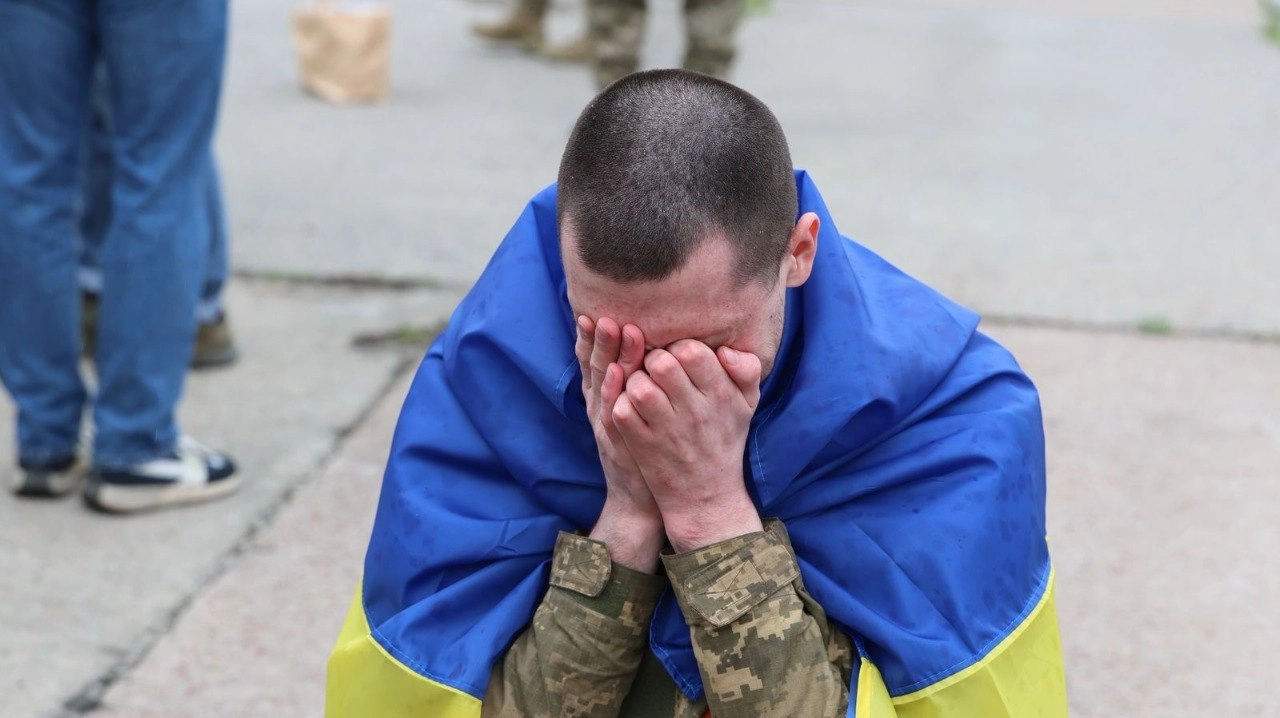
Against the backdrop of massacre and broken ceasefires, one thing worked. On Holy Saturday, Ukraine and Russia completed their 72nd prisoner exchange — one of the few mechanisms of cooperation that has survived four years of total war.
Ukraine brought home 175 military personnel and seven civilians. The soldiers represented the Armed Forces, National Guard, and Border Guard Service — most of them captured in 2022, in the catastrophic early months of the invasion when Russian forces had the initiative. More than half had been taken during the siege of Mariupol, the southeastern port city whose defenders held out for weeks against overwhelming odds before surrendering. Several National Guard members captured during Russia’s seizure of the Chornobyl Nuclear Power Plant in the first days of the invasion were also released.
Perhaps most significant: 25 of the released were officers, a category Russia had previously categorically refused to include in negotiations. Their return, after years of Russian stonewalling, represents a meaningful concession. All 182 returnees — ranging in age from 22 to 63 — will undergo medical examinations and psychological rehabilitation. Many are reported to be wounded.
Russia received 175 of its own military personnel and seven residents of Kursk Oblast. The United Arab Emirates mediated the exchange. “Finally, they are home,” Zelensky wrote. “It is a matter of principle for us to return everyone from Russian captivity.”
The FSB’s Quiet Takeover: Russia Locks Its Own Doors
While the world watched the ceasefire drama, a more methodical form of repression was being formalized in Moscow. Russian investigative outlet The Insider, analyzing the state registry of legal entities, revealed that the FSB — the Federal Security Service, Russia’s domestic intelligence agency and heir to the KGB — has completed its takeover of seven of Russia’s eight special pre-trial detention centers, known as SIZOs.
The seven facilities now under FSB control span Russia’s geography: Lefortovo SIZO-2 in Moscow, SIZO-3 in St. Petersburg, SIZO-4 in Rostov-on-Don, SIZO-5 in Krasnodar, SIZO-6 in Vladikavkaz, SIZO-7 in Chelyabinsk, and SIZO-8 in occupied Simferopol, Crimea. Only SIZO-1 in Moscow remains under the Federal Penitentiary Service. The legal foundation was laid in July 2025, when Putin signed a law granting the FSB the authority to control its own detention centers as of January 2026.
Russian human rights lawyers told The Insider that conditions for detainees have already deteriorated since the FSB assumed control, with reduced access to legal counsel. They warned the FSB will increase pressure on defendants, prolong investigations, and manipulate cases. The ISW has documented that the FSB uses SIZO facilities to abuse and torture Ukrainian prisoners of war and civilians. With seven of eight now under direct FSB command, that abuse becomes structurally institutionalized — not an aberration but an administrative feature.
It is worth pausing on the geography: one of these FSB prisons now operates in occupied Simferopol, in Ukrainian Crimea, seized in 2014. The FSB’s reach now extends formally into occupied Ukrainian territory, administered through the same apparatus that tortures dissidents in Moscow.
Ukraine Strikes Back: Oil Depots in Krasnodar and Tver
Ukraine’s long-range strike campaign against Russian oil infrastructure continued through the night, even as the ceasefire clock ticked down. Ukrainian forces struck the Krymskaya oil pumping station in Krasnodar Krai — the second strike on that facility in three days, following an attack on April 9 that also sparked a fire. The Krasnodar Krai Operations Headquarters acknowledged the strike and confirmed a fire at the depot.
Separately, Russian opposition outlet Astra geolocated footage showing a fire near the Tvernefteprodukt oil depot in Tver City, following local reports of explosions overnight. Lieutenant Andriy Kovalenko, head of Ukraine’s Center for Countering Disinformation, confirmed the Tver strike. Tver is deep inside Russia — several hundred kilometers north of Moscow — indicating the reach of Ukraine’s long-range drone fleet.
Ukrainian forces also struck the Hvardiiska oil depot near occupied Hvardiiske in Crimea. In occupied Donetsk Oblast, Ukrainian Special Operations Forces reported a series of precision strikes since April 1 against ammunition depots near Hlyboke and Manhush (roughly 120 kilometers from the front), a fuel depot near Rybynske, and logistical and repair bases across occupied territory — each confirmed by geolocated footage.
Also striking: Ukrainian forces hit two oil drilling platforms in the Caspian Sea — the Valery Grayfer and Yuri Korchagin oil fields — on the night of April 9 to 10. The Caspian Sea. That is not a short-range drone. Ukraine’s Special Operations Forces published geolocated footage of both strikes.
The Southern Surge: Ukraine Holds the Initiative in Zaporizhzhia
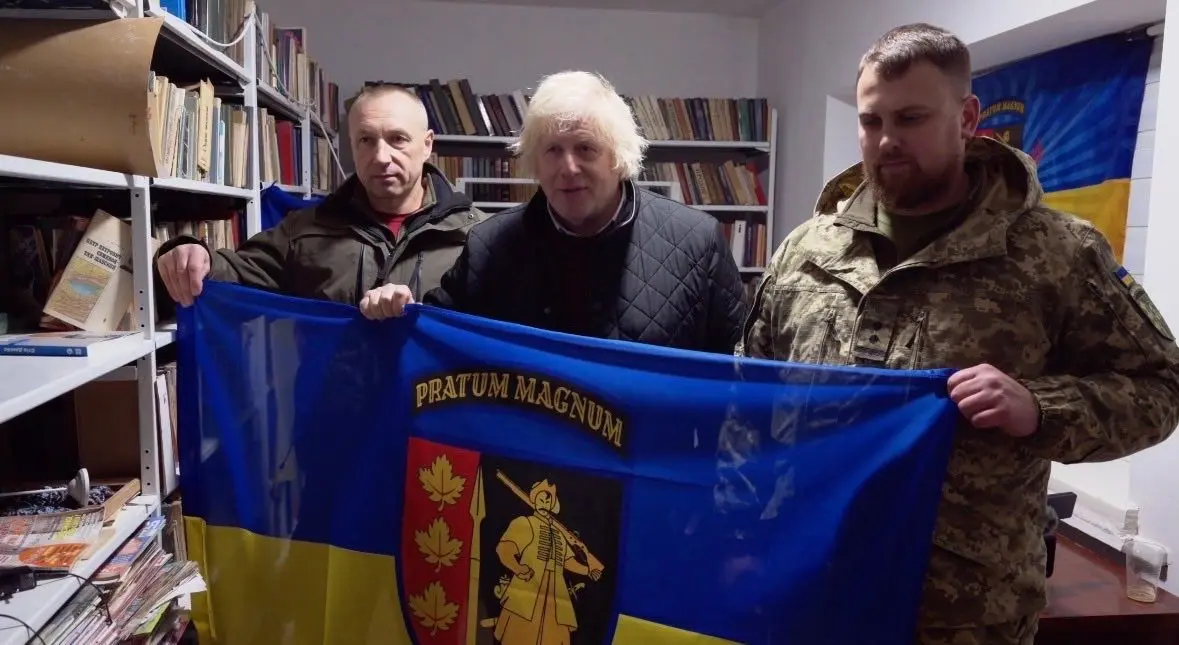
Boris Johnson walked into a frontline position near Huliaipole in southern Zaporizhzhia Oblast and called it “the kill zone.” In his Daily Mail dispatch, the former British prime minister — one of Ukraine’s most consistent Western advocates since the 2022 invasion — described the harsh reality facing Ukrainian soldiers while excoriating Western partners for insufficient support. “We are right to say that the Ukrainians are fighting for all of us — so why the hell are we still short-changing them?”
He chose Zaporizhzhia deliberately, and the strategic context is significant. Since February, Ukrainian forces have seized the tactical initiative on the southern front, counterattacking through eastern Zaporizhzhia and Dnipropetrovsk oblasts where Russia made its fastest gains in late 2025. A spokesperson for a Ukrainian brigade operating in the Oleksandrivka direction confirmed that Ukrainian forces have held the tactical initiative for several consecutive months, liberating approximately 480 square kilometers and 12 settlements in Dnipropetrovsk and Zaporizhzhia oblasts since late January.
Confirmed Ukrainian advances were recorded near Myrne, southwest of Huliaipole, and in southern Novopavlivka. Geolocated footage from April 8 also showed Ukrainian forces using GBU-62 JDAM-ER bombs — GPS-guided glide munitions — to destroy a Russian drone control point in Huliaipole itself.
Johnson’s visit and the brigade spokesperson’s statement tell the same story: the war in the south is not static. Russia is “so desperately trying and failing” to advance on Zaporizhzhia city, Johnson wrote. The analytics, at least in this sector, support him.
Frontline: Grinding Pressure Across Donetsk, No Major Breakthroughs
Across the sprawling Donetsk front, the pattern of the past months held: relentless Russian pressure, no confirmed Russian advances. The Kostyantynivka-Druzhkivka area saw Ukrainian forces actually advance in the southern outskirts of Kostyantynivka. In the Pokrovsk direction — the central Donetsk axis where Russia has invested enormous resources — a spokesperson for Ukraine’s 7th Rapid Reaction Corps reported that Russian forces are relying primarily on infantry, not heavy armor, for assault operations and are attempting to push artillery positions closer to the line of contact.
In the Slovyansk direction, Ukrainian forces maintained positions. In the Kupyansk sector to the north, Ukrainian forces pushed Russian troops out of Ambarne, northeast of Velykyi Burluk, exploiting Russian rotation gaps — the brief windows of vulnerability when fresh units replace exhausted ones. In Sumy Oblast along the northern border, Russian forces continued attacking near Sumy City itself without confirmed gains.
The Kremlin has thrown enormous resources at eastern Ukraine. The order of battle reveals the scale: the Kostyantynivka sector alone is being contested by at least nine distinct Russian regiment and brigade-level units, plus multiple drone warfare detachments, including FSB-affiliated forces. Yet the lines have not moved meaningfully. Russia’s cost-per-kilometer in Donetsk is becoming the defining strategic question of this phase of the war.
Kharkiv Under Pressure, Ambarne Retaken
In northern Kharkiv Oblast, Russian forces continued attacking across a broad front — near Prylipka, Lyman, Starytsya, Vovchansk, Hrafske, and Verkhnya Pysarivka — without confirmed territorial gains. A Russian milblogger claimed Ukrainian forces had counterattacked near Lyptsi, north of Kharkiv City, though this remains unconfirmed.
The more significant development came in the Velykyi Burluk area, east of the main Kharkiv front. Ukrainian Joint Forces Task Force Spokesperson Colonel Viktor Trehubov confirmed that Ukrainian forces exploited a Russian rotation — the tactical window when troops are being swapped out — to push Russian forces out of Ambarne, northeast of Velykyi Burluk. Ambarne is not a major settlement, but the action illustrates Ukrainian tactical attentiveness: watching for rotation schedules and striking during the transition.
Drone operators from Russia’s 71st Guards Motorized Rifle Division are confirmed striking Ukrainian personnel near Karaichne, northeast of Kharkiv City, while the Rubikon Center for Advanced Unmanned Technologies — a Russian autonomous drone warfare organization — operates in both the Sumy and Belgorod directions, indicating Russia is investing significant drone infrastructure in the northern theater.
Stalled Peace: The Talks That Aren’t Moving
US-led peace talks have stalled, distracted by the Middle East conflict. The core impasse remains unchanged: Ukraine proposes freezing the front lines where they now stand. Russia demands Ukraine withdraw from all of Donetsk Oblast — territory Ukraine still controls — within two months. Kyiv describes that demand as a call for surrender, not negotiation.
The Easter ceasefire was, in this light, a diplomatic maneuver rather than a genuine humanitarian gesture. By proposing a 32-hour pause that Moscow could then claim credit for accepting, Russia attempted to portray itself as peace-seeking while continuing to reject substantive negotiations. The 469 violations in the first hours demonstrated the limits of that performance.
Russia currently controls just over 19 percent of Ukrainian territory — most of it seized in the first weeks of the 2022 invasion. After four years of grinding war, that figure has changed only marginally. Russian advances have been slowing since late 2025, attributed partly to Ukraine’s counterattacks, partly to Russia being cut off from SpaceX’s Starlink satellite network, and partly to Moscow’s own efforts to block Telegram — a communications platform Russian soldiers had been using extensively for coordination.
What This Day Was
A 73-year-old woman died in Fedorivka. A nurse went to work by bus and ended the day in a hospital. A 14-year-old boy in Sumy was pulled from rubble. A 29-year-old and an 89-year-old lay side by side in a Kramatorsk hospital, both struck by the same glide bomb that fell six hours before the ceasefire.
182 people who had been in Russian captivity since 2022 went home. Some had been held so long that they could not recognize the world they returned to.
In the Lefortovo detention center in Moscow, in SIZO-3 in St. Petersburg, in SIZO-8 in occupied Crimea, the doors are now controlled by the same agency that interrogates, abuses, and in some documented cases kills Ukrainian prisoners. They closed a little more firmly today.
The ceasefire held for less than 30 minutes. The war did not pause. It has not paused in 1,872 days.
A Prayer for Ukraine
1. For the Woman in Fedorivka
Lord, she was 73 years old and she was in her village. A drone found her there on a Saturday morning — the same morning the news would fill with talk of ceasefires and holidays. She did not survive the ceasefire era. She did not survive the morning. We do not know her name, and that absence is its own indictment. Hold her, and hold the fifty-year-old man found dead in Kherson’s Korabelny district, and the truck driver in Nikopol. They were not combatants. They were people who had not yet found a way to leave.
2. For the 14-Year-Old Boy in Sumy
Father, a drone struck his apartment building before sunrise. He is fourteen. The report lists him among the seventeen wounded in Sumy City, alongside people old enough to be his grandparents. He was born into a country at war and has known nothing else. Give him healers who are skilled and gentle. Give him something to hold onto beyond the fear. Let the weight of what happened to him land somewhere besides his own chest.
3. For the 182 Who Came Home
God of mercy, they range in age from 22 to 63. Most have been held since 2022. Some were captured at Mariupol, where surrender was the only alternative to death. Some were taken at Chornobyl in the first days of the invasion. They walk out of Russian detention into a country still at war, into families who have waited four years for a phone call. Their medical exams will reveal what was done to them. Be present in those examinations. Be present in those reunions. And for those still in the prisons the FSB now controls — be present there too.
4. For the Defenders Who Hold the Line
Lord of hosts, they are fighting in a kill zone near Huliaipole, on the outskirts of Kostyantynivka, north of Sumy City, east of Kupyansk. They are counterattacking at Ambarne and holding positions at Lyman. They watch the ceasefire violations roll in — 469 in a single night — and they continue. Give them what the policy debates in Washington and Brussels cannot: clear skies, enough ammunition, and the knowledge that the world has not forgotten them.
5. For Justice, In Its Time
God of justice, the Donetsk Regional Prosecutor’s Office opened a war crimes investigation today. Article 438. It joins thousands of others. The FAB bombs and FPV drones are being documented, the dead are being counted, the names of Russian units are being recorded by people who believe that accountability is possible. Strengthen those people. And let the record that is being built outlast the men who think they will never answer for it.
In Your mercy, in Your justice, in Your time — bring this war to its end, and let the ending be worthy of what Ukraine has endured.