
UKRAINE DAILY BRIEFING
April 12, 2026 • Day 1,509 of Russia’s Full-Scale Invasion
The 32-hour Orthodox Easter ceasefire Putin announced with ceremony collapsed within hours into 2,299 recorded violations — including the execution of four Ukrainian prisoners of war in Kharkiv Oblast, their deaths captured on video, their hands empty of weapons. While Russian soldiers shot POWs, Hungarian voters ended Viktor Orbán’s 16-year grip on power in a landslide that could reopen Europe’s most stubborn veto on Ukraine aid. And in Washington, Donald Trump announced a blockade of the Strait of Hormuz after Iran peace talks collapsed, reshaping global energy markets and raising urgent questions about Russian oil sanctions set to expire the same day.
The Day’s Reckoning
Picture four soldiers on the ground in Kharkiv Oblast. The ceasefire has technically been in effect for less than two hours. Their weapons are gone. They are prisoners. They are alive.
Then they are not.
Russian forces executed the four Ukrainian POWs near the village of Veterynarne on Easter Sunday, shooting them with automatic weapons after seizing their position in an assault that began just before the truce’s 4 p.m. start time. Ukrainian prosecutors published the footage. A criminal investigation opened. And somewhere in Moscow, Kremlin spokesman Dmitry Peskov stood before cameras to explain that the ceasefire would not be extended unless Zelensky accepted Russia’s “well-known” terms — meaning surrender of four oblasts Russia does not fully control.
By 7 a.m. Easter morning, Ukraine’s General Staff had counted 2,299 Russian violations of the truce: 28 ground assaults, 479 artillery strikes, hundreds of kamikaze and FPV drone attacks. An ambulance was hit in Sumy Oblast, wounding three medics. A shop roof in Zolochiv burned. Energy infrastructure in Chernihiv went dark. In the only category where the ceasefire held, Russia did not launch long-range missiles or Shahed drones — the first such pause since May 2025.
Meanwhile, 182 Ukrainians came home. On the same day Russia executed POWs, a UAE-brokered prisoner exchange brought back soldiers held since Mariupol’s fall in 2022: men on crutches, men with tuberculosis, men who had survived four years of what a hospital official described as “abuse and inhumane treatment.” A 22-year-old named Yevhen walked off the bus into his mother’s arms after 190 days in captivity.
Easter Sunday, 2026. The ceasefire that wasn’t. The executions that were. The election in Budapest that changed the war’s diplomatic map overnight.
“Systemic Practice”: The Easter Execution of Four Ukrainian POWs
They entered Ukrainian positions through a neighboring sector. Russian forces captured four soldiers from an unnamed mechanized brigade near Veterynarne, north of Kharkiv City, in an assault Ukrainian officials say began before 4 p.m. — before the ceasefire technically began. What happened after 4 p.m. is not in dispute: the men were shot dead.
Ukraine’s Prosecutor General’s Office published video footage on April 12. The 14th Army Corps called it plainly: “The execution of prisoners has become a systemic practice for the enemy, indicating conscious approval of such crimes by the Russian high command.” The open-source mapping group DeepState had already circulated footage the night before.
This was not an isolated incident. Ukraine’s Human Rights Ombudsman had documented the execution of at least 337 captured Ukrainian prisoners of war by the end of 2025. ISW has assessed that the Russian military command endorses and sometimes orders these killings. Now investigators are building a case under Article 438 of Ukraine’s Criminal Code — war crimes resulting in death — and calling on the international community to identify every executor and every commander who approved the order.
Twenty-four hours earlier, Ukraine and Russia had exchanged 175 prisoners of war each. The juxtaposition is not incidental. It is a portrait of Russian policy: exchange in public, execute in private, and call the ceasefire violated by the other side.
2,299 Violations: The Anatomy of a Broken Truce
Putin announced the 32-hour Orthodox Easter ceasefire on April 9 with the language of piety and the logic of public relations. Ukraine, which had proposed a similar truce weeks earlier and been ignored, accepted. Zelensky was blunt about what he expected: the Ukrainian military would respond “immediately” and “strictly in kind” to any violation.
The violations began almost immediately. Within the first six hours of the truce, Ukrainian officials recorded 469 breaches: 22 assaults, 153 shelling attacks, Lancet and Molniya drone strikes, and 275 FPV strikes. By 7 a.m. the following morning, that number had risen to 2,299. Russia, in turn, accused Ukraine of 1,971 violations, including 258 artillery strikes and 1,329 FPV drone strikes.
In Sumy Oblast, Russian forces struck an ambulance in Hlukhivska Hromada overnight, wounding three medics. In Kharkiv Oblast, a Molniya drone hit a shop in Zolochiv, burning a man and sending a 63-year-old woman into severe shock. Buildings were damaged in Klynova-Novoselivka and Odnorobivka. At Chernihiv, an energy facility was hit late in the evening, cutting power to 12,000 customers — with repair crews told to wait until the security situation permitted.
There was one genuine effect of the ceasefire: for the first time since May 10, 2025, Russia launched no long-range missiles, guided glide bombs, or Shahed drones overnight. Soldiers of the 33rd Mechanized Brigade in Kharkiv Oblast attended an Easter Sunday mass in a freezing forest, their Easter baskets blessed by a priest. Lieutenant Colonel Vasyl Kobziak, 32, told reporters that while the truce had not been fully observed, that moment had been real. It was the ceasefire’s smallest and most human victory.
Peskov closed the door on any extension: no ceasefire continuation unless Zelensky accepted Russia’s terms. The special military operation, he said, would resume when the truce expired.
The Test That Failed: Russia Kills Its Own Prisoners
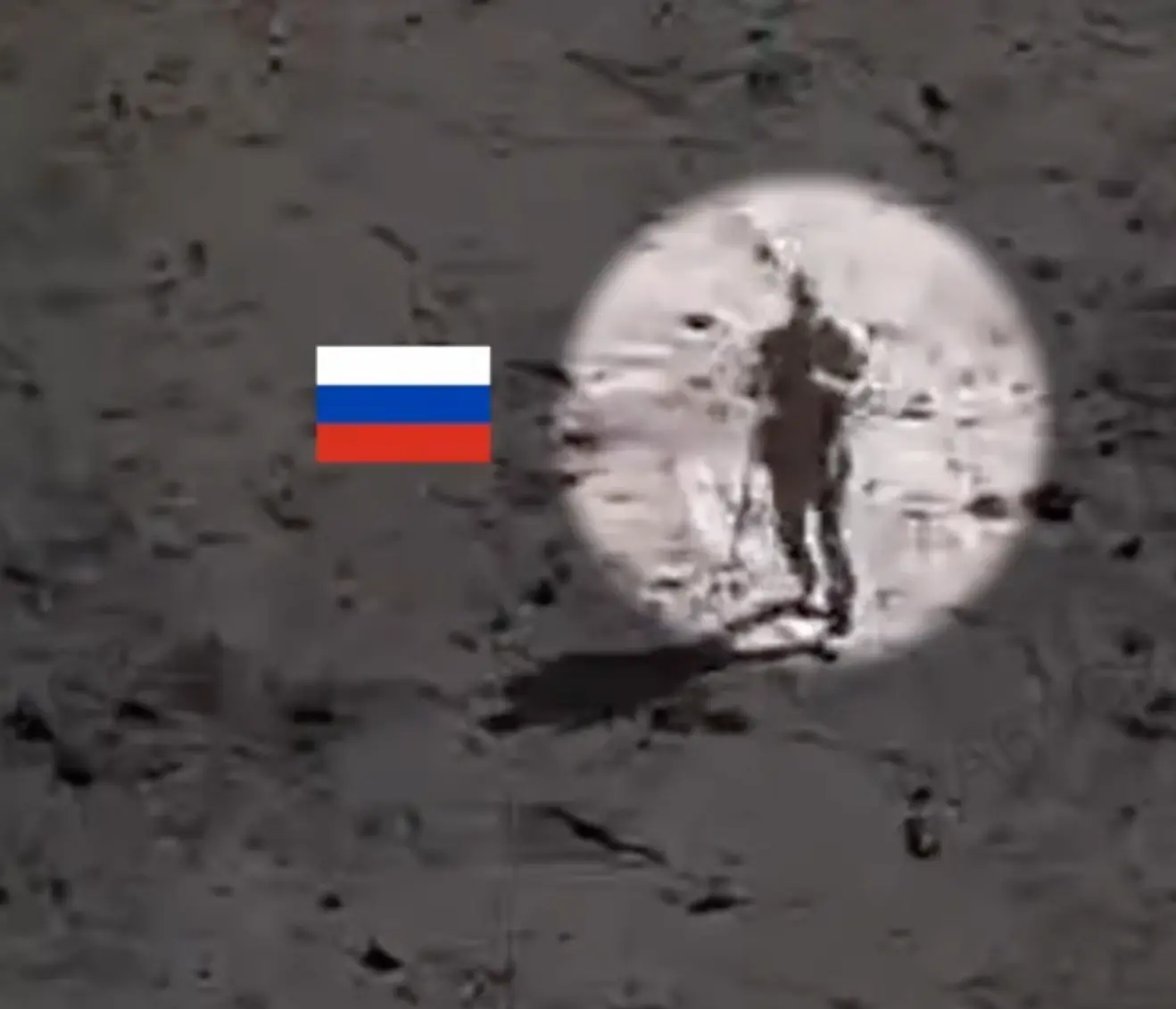
This screenshot from a video published by Ukraine’s 24th Separate Mechanized Brigade allegedly shows an unarmed Russian soldier targeted by a Russian drone in violation of an Easter ceasefire. (Screenshot / 24th Separate Mechanized Brigade)
Ukraine’s 24th Separate Mechanized Brigade, named for King Danylo, had an idea on Easter Sunday. They had Russian prisoners in their custody — men captured the day before. To test whether Russia’s declared ceasefire was real, they dressed the captives in neutral uniforms and conducted what they called a “test evacuation”: moving the wounded Russian soldiers from the front lines near Chasiv Yar on crutches, unarmed, visibly marked as medical evacuees.
Russian FPV drone operators struck the group. Three men were killed.
What Russian drone operators had just killed were their own soldiers — Russian prisoners of war being evacuated under conditions Russia itself had declared protected. The 24th Brigade published video footage of the incident. The result confirmed what the brigade command suspected: Russia’s ceasefire declarations did not translate into orders that stopped their drone operators from firing.
The episode captures something essential about this war’s particular cruelty. A ceasefire announced from Moscow does not automatically reach a drone pilot 1,200 kilometers away staring at a screen. Or perhaps it does, and he fires anyway. Either possibility is damning.
182 Come Home: The Easter Exchange and the Woman Who Never Stopped Waiting
The buses arrived four at a time. Three carried prisoners of war. One carried civilians. The people waiting pressed toward the doors.
On Easter Saturday, mediated by the United Arab Emirates and the United States, Ukraine and Russia exchanged 175 military prisoners each, along with seven civilians — 182 Ukrainians returning home. Among them: 25 officers, defenders of Mariupol and Azovstal, soldiers held since the fall of Chornobyl’s defenses in 2022. Ambulances — up to ten of them, far more than usual — drove in first, collecting the seriously wounded and the gravely ill. A hospital official spoke on condition of anonymity: four years of captivity had left men with tuberculosis, trophic diseases, wasted bodies.
Svitlana had made the trip to every exchange she could. Her son Yevhen, 22, a soldier of the 28th Brigade, had been in Russian captivity for 190 days. He had gone to war at 21 against her wishes, and when he was captured, he had sent her a message: “Mom, we are going to be sent somewhere we won’t return from.” She had written back: “you’re strong, you’ll endure.” On Easter Sunday, he stepped off the bus and told her: “Mom, I’m already home, don’t cry.”
Ukraine had hoped for a far larger exchange — preparation had targeted hundreds, perhaps nearly a thousand. Russia refused. Coordinator Andriy Yusov said cautiously that this was “only the beginning of the Easter exchange,” and that work would continue in the coming days. The question now is whether Russia will allow it to.
Hungary Chooses Europe: Orbán’s Fall and What It Means for Ukraine
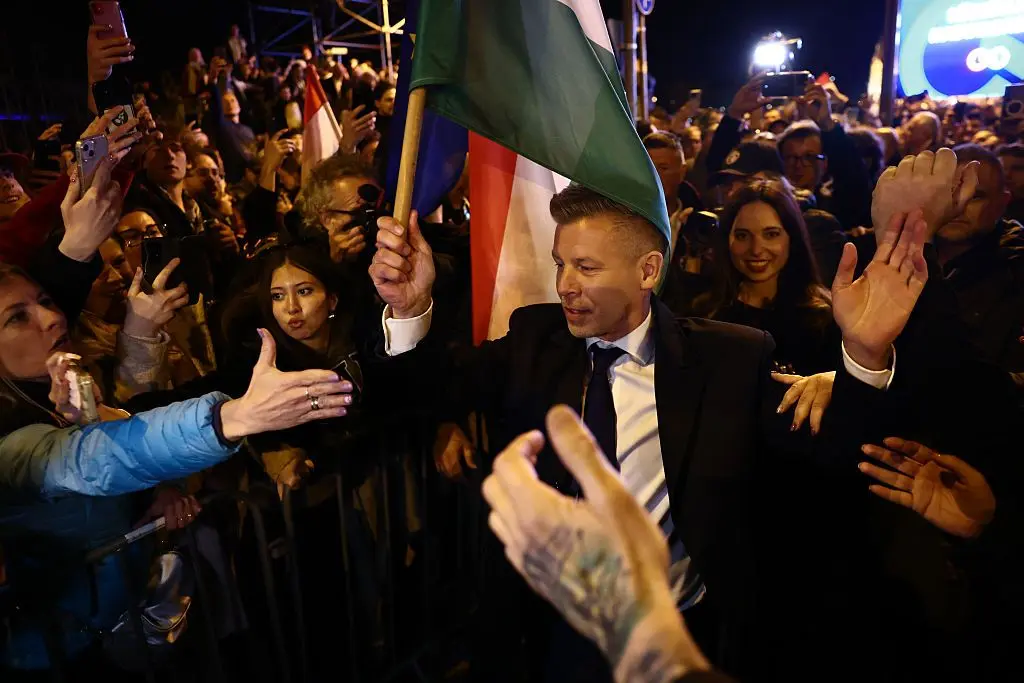
Viktor Orbán had governed Hungary for sixteen years. He had used his country’s EU veto to block a €90 billion loan for Ukraine, stalled Kyiv’s accession negotiations, and styled himself as Europe’s ambassador to Moscow. On Easter Sunday, Hungarian voters ended his rule.
Péter Magyar’s Tisza party won a landslide: on track for 138 seats in a 199-seat parliament, a two-thirds supermajority sufficient to amend the constitution. Voter turnout approached 80 percent — the highest in any Hungarian parliamentary election on record. Magyar called it “a celebration of democracy.” Orbán conceded: the results were “painful for us, but clear.”
For Ukraine, the shift is strategic. Zelensky congratulated Magyar within hours, calling for “good-neighborly relations” and “meetings and joint constructive work.” Foreign Minister Sybiha said Ukraine stood ready to resolve longstanding disputes, including protections for ethnic Hungarian minorities in Ukraine — an issue Orbán had weaponized to justify his vetoes. Ukraine’s Foreign Ministry simultaneously lifted its recommendation against citizen travel to Hungary.
European leaders responded with barely concealed relief. European Commission President Ursula von der Leyen wrote: “Hungary has chosen Europe.” Macron called it a victory for democratic values. Merz offered congratulations and spoke of “a strong, secure, and above all united Europe.” The Baltic states, Sweden, and the European Parliament all sent congratulations.
The immediate implications for Ukraine aid depend on how quickly Magyar can form a government and begin unwinding Orbán’s vetoes. But the directional shift is unmistakable: the war’s most persistent diplomatic obstacle inside the EU has been removed.
The Strait Closes: Trump’s Hormuz Blockade and What It Costs Ukraine
On April 12, with Iran peace talks in Pakistan failing to produce a deal, Donald Trump announced that the United States Navy would begin blockading the Strait of Hormuz at 10 a.m. Eastern time on April 13. Twenty percent of the world’s oil transits through that passage. A naval blockade is an act of war. Energy markets, already stressed by six weeks of U.S.-Israeli conflict with Iran, absorbed another shock.
For Russia, the timing has been a windfall. Moscow doubled its daily oil export revenues after the attacks on Iran began — high oil prices benefit the Kremlin directly, funding the war in Ukraine. The U.S. had tried to manage this by issuing a temporary sanctions waiver in March, permitting countries to buy Russian oil stranded at sea. That waiver expired on April 11, the day before the blockade announcement.
Kremlin envoy Kirill Dmitriev had visited Washington on April 10 — one day before the waiver’s expiration — to discuss extending it. Treasury Secretary Scott Bessent and Trump had both reportedly supported extension. Asian nations including India and the Philippines lobbied for continuation. As of April 12, no public extension announcement had been made.
The convergence is uncomfortable for Ukraine: a blockade that raises global oil prices, combined with a potential extension of Russian oil sanctions relief, could mean Russia profits from the same geopolitical chaos that occupies American attention and delays Ukraine’s support. The war in the Middle East has already slowed U.S.-brokered peace negotiations over Ukraine; the Hormuz closure deepens Washington’s distraction.
Fire in Rostov: Partisan Saboteurs Destroy a Russian Supply Locomotive
The footage is brief and specific: operatives from the Atesh partisan network pour flammable liquid onto a diesel locomotive near the Likhovskaya railway station in Rostov Oblast. Then the locomotive is engulfed in flames.
Atesh, the Ukrainian Crimea-based partisan group with agents operating deep inside Russian-controlled territory, announced the sabotage operation on April 12. The target was chosen for its role: Likhovskaya is a critical transit hub for military supplies moving toward Russian forces in Zaporizhzhia Oblast — ammunition, fuel, armored vehicles heading toward active combat zones. The group said the locomotive was destroyed beyond repair, blocking rail traffic along the section and stranding military trains in the rear. The direct financial loss exceeded $150,000, Atesh claimed, though the operational impact — supply disruption to front-line units — was likely worth far more.
The broader context Atesh emphasized: Russian Railways is already facing a shortage of operational diesel locomotives, and its repair capacity is nearly exhausted. Each destroyed locomotive is not simply a $150,000 loss — it is a replacement that Russia cannot easily field. Earlier on April 8, Atesh had sabotaged a railway line in Belgorod Oblast, disrupting supply toward Kupyansk and destroying transformer equipment.
The Likhovskaya operation was conducted on an unspecified date before April 12. The network’s pattern is consistent: identify logistics nodes, attack them, repeat. Russia must repair or replace under the knowledge that the next attack may come before the repair crew finishes.
The Grinding Line: Overextended Russians and Ukrainian Advances
Across the 1,200-kilometer front, Russian forces pressed attacks throughout Easter weekend despite the declared ceasefire — and largely failed to advance. In multiple sectors, Ukrainian positions held or even pushed back.
In western Zaporizhzhia Oblast, analyst Kostyantyn Mashovets offered a detailed assessment of Russian overextension. The Russian 58th Combined Arms Army is simultaneously trying to push northwest toward Zaporizhzhia City and support a separate advance on Orikhiv from the west — two objectives along a roughly 50-kilometer front that the available force cannot accomplish together. Mashovets assessed that Russian forces have made very few tactically significant gains in either direction, and that their force concentrations have left them vulnerable to Ukrainian counterattack against the Russian salient west of Orikhiv. Elements of Russia’s strategic reserve — 7th and 76th Airborne divisions — have been fed into this sector, suggesting Moscow recognizes the problem without having solved it.
Near Kostyantynivka, Ukrainian forces recently advanced west of Stupochky and into eastern Kostyantynivka, with geolocated footage confirming the gains. Russian infiltration attempts in the area failed to change the forward edge of the battle area. In the Pokrovsk direction, Russian forces attacked northwest, north, northeast, east, and southwest of the city and did not advance on any axis. In northern Kharkiv Oblast, near Veterynarne — the same sector where Russian forces executed Ukrainian POWs — Russian forces also attacked toward Synelnykove, Starytsya, Vovchansk, and other points without confirmed gains.
The pattern that has defined the past several months continues: Russia attacks in multiple directions simultaneously, accepting enormous casualties, advancing slowly if at all, and burning through strategic reserve formations that cannot be easily replaced.
The Ledger: 1.3 Million Russian Casualties and the Weight of Three Years
Ukraine’s General Staff estimated on April 12 that Russia has lost approximately 1,311,180 troops since February 24, 2022 — a figure encompassing killed, wounded, missing, and captured. The number has climbed steadily through the war’s fourth year even as territorial gains have slowed to a crawl. In March 2026, Zelensky reported Russia suffered its highest monthly casualties of the entire conflict: more than 35,000 killed or wounded in a single month.
Independent verification is partial but sobering. Russian independent media outlet Mediazona, working with BBC Russia, has confirmed the identities of 208,755 Russian military personnel killed in Ukraine from public records: obituaries, regional media, posts by relatives. Since late March, 2,553 additional names have been added. The confirmed dead include more than 76,300 volunteers, 23,400 recruited prisoners, 18,400 mobilized soldiers, and 7,003 officers. The most recent addition: Lieutenant-General Aleksandr Otroshchenko, killed when an An-26 transport crashed in Russian-occupied Crimea on March 31.
Ukraine’s losses are acknowledged but not fully documented. Zelensky stated in February that at least 55,000 Ukrainian soldiers had been killed. He also cited Ukrainian intelligence suggesting the Kremlin’s own classified assessments put total Russian killed-and-wounded at 1,315,000 — and added: “We have reason to believe that these figures are understated.”
Russia occupies just over 19 percent of Ukraine, most of it seized in the war’s opening weeks. What has been purchased since then, in blood, approaches the scale of the worst conflicts in living memory — for marginal gains measured in kilometers.
A Prayer for Ukraine
1. For the Four Near Veterynarne
Lord, we name them before you, though we do not yet know their names. Four men who surrendered, who complied, who were unarmed. What happened after that is documented, filmed, filed in a criminal court. We do not ask you to explain it. We ask you to receive them. And we ask that every man who gave that order, and every man who pulled that trigger, be brought to a reckoning in this world and the next that is worthy of what they did on Easter Sunday.
2. For Yevhen, 22, Home After 190 Days
Father, a young man got off a bus on Easter and heard his mother say his name. He spent 190 days in a place where, a hospital official said quietly, no Geneva Convention works. He is home now, with a long road ahead — of rest, of memory, of whatever it means to begin again. Hold him in the days when the silence after captivity is harder than the captivity was. And hold his mother Svitlana, who drove 270 kilometers to every exchange for six months, who wrote to her captured son: you’re strong, you’ll endure.
3. For the Three Medics Whose Ambulance Was Struck in Sumy
God of the wounded, there is no military target in an ambulance. There were three people doing their jobs in the early hours of Easter morning, and then there was an explosion, and then there was emergency care and a statement from a regional official that their lives were not in danger. We are grateful for that. We pray for their recovery. And we note, with the patience that has worn thin, that this has happened before, and will happen again, until something stops it.
4. For the Defenders Holding the Line Across 1,200 Kilometers
Lord, soldiers of the 33rd Mechanized Brigade stood in a freezing forest on Easter morning and had their baskets blessed by a priest. They had not slept through a quiet night. The ceasefire had not been fully observed in their sector. But for a moment, there was liturgy in the trees and the smell of blessed bread in cold air. Sustain the defenders of Ukraine who have held this line for 1,509 days. Grant them moments of the holy in the midst of the unholiest of circumstances.
5. For Justice, Which Moves Slowly and Must Not Stop
God of justice — the evidence is mounting. Three hundred thirty-seven executed prisoners confirmed by the end of 2025. Four more on Easter Sunday. Investigators are collecting it all: footage, testimony, chain of command. We pray that the distance between documentation and accountability shortens — that courts convene, that names are read aloud, that no one who ordered these things dies in comfort believing consequences were for others. In Your mercy, in Your justice, in Your time — bring this war to its end, and let the ending be worthy of what Ukraine has endured.
Ukraine Daily Briefing | April 12, 2026 | Day 1,509