
August 4, 2026
Prepared by Diana Bozhyk
Russia launched its third mass attack on Kyiv and its surrounding region in less than a week overnight, killing at least 15 people and wounding 51 — and this time, Ukraine’s air defenses failed to intercept a single one of the 28 missiles fired at the capital. Ukraine’s ambassador to the UK and former commander-in-chief, Valerii Zaluzhnyi, declared bluntly that Ukraine will never join NATO, arguing the alliance’s standards have fallen more than a decade behind modern warfare. Russia killed seven more people and wounded 123 across seven regions the same day, while Reuters reported that America’s own stockpile of precision missiles has been badly depleted by its war with Iran — one more strain on the same supply lines Ukraine depends on.
THE DAY’S RECKONING
For the third time in six days, Kyiv spent its early morning hours counting explosions instead of sleep — more than 30 of them within twenty minutes, according to residents in scattered districts across the city. By the time the smoke cleared, 15 people were dead and 51 wounded, most of them in Brovary and villages just outside the capital, where logistics hubs and factories burned through the night. For the first time in this war’s recent memory, not one of the 28 missiles Russia fired at Kyiv was intercepted — Ukraine’s Patriot stockpile, worn down strike after strike, finally had nothing left to offer. In London, Ukraine’s ambassador said out loud what officials have circled around for years: NATO membership, the goal written into Ukraine’s own constitution, isn’t coming, not in any timeframe that matters. And in Washington, Reuters reported that the missiles America might otherwise send Ukraine have been quietly drained by a different war entirely, fought half a world away. Kyiv burned. NATO’s door stayed shut. And the ammunition meant to help was busy somewhere else.
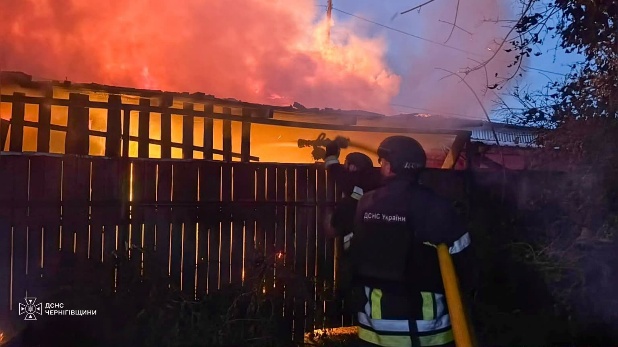
Emergency workers extinguish a fire in Chernihiv Oblast after Russian strikes overnight. (DSNS/Telegram)
A THIRD KYIV MASSACRE IN A WEEK: FIFTEEN DEAD, ZERO MISSILES STOPPED
Russia launched its third large-scale attack on Kyiv and the surrounding region in under a week overnight, killing at least 15 people and wounding 51 — 14 dead and 27 wounded in Kyiv Oblast, one dead and 24 wounded in the capital itself. Ukraine’s Air Force reported 143 aerial weapons launched, including 24 Iskander-M and S-400 ballistic missiles, four Zircon and Onyx anti-ship missiles, and 115 Shahed-type drones and decoys, with Kyiv Oblast the primary target. Air defenses shot down or suppressed 98 drones. Of the 28 missiles fired, not a single one was intercepted.
In Kyiv’s Obolonskyi district, a ballistic missile struck a 20-story residential building and sparked a large fire. In Holosiivskyi, part of a private home was destroyed, trapping people beneath the rubble as rescuers searched through the night; a nearby industrial strike ruptured a tank holding roughly 300 liters of ammonia, forcing an emergency containment operation that crews finished by 2:10 a.m. Warehouses burned in Sviatoshynskyi and Desnianskyi districts, and repeated explosions at one strike site damaged an ambulance and injured its driver. Outside the city, the deadliest strikes hit Brovary and nearby villages, where large fires consumed logistics centers, warehouse complexes, and manufacturing facilities in Bucha district and the village of Kalynivka. Authorities warned of high air pollution across every district of the capital by morning. Following the barrage, Zelensky again pressed Ukraine’s partners for more Patriot interceptors, warning the country can no longer absorb nights like this one without them.
ZALUZHNYI: “WE WILL NEVER JOIN NATO”
Valerii Zaluzhnyi, Ukraine’s ambassador to the UK and commander-in-chief from 2021 to 2024, told a gathering of Ukrainian ambassadors that NATO membership — a goal written directly into Ukraine’s constitution — simply isn’t going to happen. “I personally worked to ensure that we adopted NATO standards, and every year, I heard stories about how we were just about to join NATO. Unfortunately, we will never join it,” he said, arguing the alliance’s own doctrine has fallen dangerously out of date. “It is impossible for the Ukrainian Armed Forces, given their current level of development, to join an organization that is guided by World War II doctrines.” He estimated it would take NATO roughly 12 years to modernize its standards enough to reach even half the level of Russia’s current battlefield capability.
Zaluzhnyi argued Ukraine should instead pursue emerging European security arrangements outside NATO’s formal structure — “most likely, we will be talking about a European military security bloc.” Zelensky has previously suggested Ukraine could accept postponing NATO membership if it secures binding security guarantees from the US and European partners instead, but Zaluzhnyi’s comments go further, treating the alliance itself as effectively closed. It’s a striking admission from a man widely seen as Zelensky’s most credible future rival — June polling put Zelensky’s support at 32 percent against Zaluzhnyi’s 16 — delivered not as a campaign promise but as a blunt correction to years of official language that never quite said this plainly.
THE REGIONAL TOLL: KRAMATORSK’S BOMBS AND KHERSON’S LOSSES
Russian attacks killed seven people and wounded at least 123 more across seven regions over the day. The clearest single blow landed in central Kramatorsk, where two guided aerial bombs struck in the morning, wounding 24 people and damaging six high-rise buildings, two schools, a bank, a post office, four shops, and eight cars — part of a wider Donetsk Oblast toll of two killed and 32 wounded. Kherson Oblast lost two people and had 19 wounded; Zaporizhzhia Oblast reported 12 wounded; Kharkiv Oblast nine; Sumy Oblast 10; Odesa Oblast three, including an 81-year-old man; and Chernihiv Oblast one, after a drone strike on Chernihiv, Pryluky, and Novhorod-Siverskyi.
Russian forces also struck the grounds of the Zaporizhzhia Regional Children’s Clinical Hospital, damaging its facade and shattering windows — but every child and staff member had already moved into the shelter when the air raid began, and no one was hurt. “Fortunately, during the air raid, all the children and medical staff were in the shelter. No one was injured,” Governor Ivan Fedorov said. It was the second strike on Zaporizhzhia in three days, following an earlier bombing that killed two and wounded 21.
KHERSON’S HUNTED: A VEGETABLE SELLER’S VIDEO SHAKES UKRAINE
A video circulating widely this week shows exactly what Ukrainian officials have been describing for months as a Russian drone “safari” — 52-year-old Yuriy, a vegetable vendor, running around his market van as an FPV drone tracks him, ducking behind the vehicle only to have the drone change course and follow. It explodes near him moments later. “I only just put up the umbrella and started unloading the boxes,” he recalled from his hospital bed, describing blast trauma, a concussion, and shrapnel wounds to his legs and back. His wife, who had come with him to sell vegetables that morning, escaped unharmed. “It is open steppe. There is nowhere to go,” Yuriy said. “It is terrifying, of course. Really terrifying.”
What shocked people wasn’t simply another wounded civilian — it was the visible intent. Unlike a missile fired from hundreds of kilometers away, an FPV drone gives its operator a live view of exactly who they’re chasing. Foreign Minister Andrii Sybiha called it “a barbaric Russian war crime,” and Ombudsman Dmytro Lubinets said the footage exposed Russia’s real tactic: “pursuing and killing innocent people.” The UN’s Human Rights Monitoring Mission has documented the same pattern nationally — 1,396 civilians killed and 7,978 wounded in the first half of 2026 alone, 37 percent above the same period last year, with short-range drones now killing or injuring 677 civilians in June alone, the highest single-month toll from that weapon since the invasion began.
SBU’S HONEY TRAPS: FIFTY ASSASSINATION PLOTS FOILED
Ukraine’s Security Service disclosed that Russian intelligence has significantly intensified efforts to assassinate Ukrainian soldiers through fake online romance — so-called “honey traps” — with the SBU’s counterintelligence unit foiling more than 50 such attempts since the start of 2026 alone. The method typically starts on dating sites or themed messenger chats, with Russian operatives posing as romantic interests before luring soldiers to prearranged locations rigged with improvised explosives, or supplying poisoned gifts synthesized from narcotics and other chemicals.
In one case from March 2025, an FSB agent posing as a volunteer handed a Ukrainian soldier in Kharkiv Oblast poisoned food and medicine. In another, a Russian agent mailed a soldier a drink laced with a lethal dose of methadone, suggesting he drink it during a video call; SBU operatives intercepted the package before it reached him. In a January 2026 case in Zaporizhzhia, a woman lured a soldier to an industrial site under the pretense of a date, where a masked attacker stabbed him six times in the neck, chest, abdomen, and leg. Investigators are pursuing charges under Ukraine’s treason, premeditated murder, and terrorism statutes, with life imprisonment on the table for anyone convicted.
FRONTLINE: BOROVA ADVANCES, KOSTIANTYNIVKA’S SLOW BLEED
Ukrainian forces recently advanced northwest of Novovodyane, southeast of Borova — one of the few clearly confirmed Ukrainian gains reported this week — while Russian forces made no confirmed progress anywhere else along the line, including in the Kupyansk, Sloviansk, Novopavlivka, and Oleksandrivka directions. Inside Kostiantynivka itself, a Ukrainian company commander described a war of attrition by inches: Russian forces send roughly three small infiltration groups a day, each penetrating no more than 500 meters before being destroyed, only for command to send the next group down the identical route regardless. Increasingly, officers themselves are among the infiltrators, and Russian authorities are reportedly tasking many of these groups purely with staged flag-raising footage rather than any real tactical objective.
Near Dobropillya, Russian forces appear to be giving up on direct frontal assaults after repeated mechanized failures, shifting instead toward trying to outflank the town from the north and south — a plan complicated by Russia’s continued inability to seize nearby Bilytske. Ukraine’s General Staff reported 216 combat clashes nationwide by 10 p.m., the heaviest concentration on the Pokrovsk axis with 23 separate attacks, alongside 213 guided bombs and 6,428 drones deployed by Russian forces over the course of the day.
SBU’S 40-DAY CAMPAIGN: A HUNDRED STRIKES AND COUNTING
Ukraine’s Security Service disclosed that its drone operators have carried out more than 100 successful strikes against strategic Russian targets since launching a sustained campaign on June 26 — hitting the Yevpatoria Aircraft Plant and airbases at Saky, Hvardiiske, Belbek, and Baherove in Crimea, Engels Airbase in Saratov Oblast, and Khanskaya Airbase in Adygea, destroying a Tu-95MS strategic bomber, two Su-35 fighter jets, and two L-39 trainers, and hitting 14 oil refineries, two cargo ships, and two shadow fleet tankers. Zelensky confirmed he’s approved a follow-on SBU operation without disclosing its scope.
The campaign’s economic bite is becoming impossible for Russia to hide. Bloomberg reported that Russia’s crude refining capacity fell to its lowest level since May 2002, forcing near-record crude exports as processing plants sit damaged; Russian insurers have effectively stopped covering war and terrorism risk for cargo ships in the Black and Azov seas entirely. Ukrainian forces have now struck at least 19 Wildberries warehouses since mid-July and roughly 200 cargo ships and oil tankers, degrading Russian refining capacity by at least a third overall. Even Belarusian businesses are feeling it — the Minsk Capital Union of Entrepreneurs appealed to Belarusian officials this week after Ukrainian strikes destroyed more than 22,000 products belonging to Belarusian sellers stored in Russian Wildberries warehouses.
DEEP STRIKES: A REFINERY IN SAMARA, A WAREHOUSE NEAR ST. PETERSBURG
Ukrainian forces struck the Syzran Oil Refinery in Samara Oblast and a Wildberries warehouse in Krasny Bor, Leningrad Oblast, just southeast of St. Petersburg — both acknowledged by Russian officials or company statements. A Cameroon-flagged cargo vessel, the Nadezhda, was likely struck off Novorossiysk while traveling from Turkey, according to Turkish officials and Russian opposition media; a separate, differently registered Nadezhda remains under Ukrainian sanctions for exporting Ukrainian grain, and analysts believe the two ships have been conflated in some reporting. Ukraine’s General Staff also confirmed strikes on a Russian FSB deployment point near the Kherson-Crimea border, a Geran/Gerbera drone relay station in occupied Olenivka, Crimea, and an electronic warfare tower in Toka, Crimea.
Crimea’s fuel shortage has become severe enough that occupation authorities imposed a price cap of 100 rubles per liter on regular gasoline this week — a cap that proved symbolic almost immediately, since local monitors reported the capped stations had run out of fuel entirely within a day.
WASHINGTON’S EMPTY SHELVES: ATACMS DEPLETED BY THE IRAN WAR
Reuters reported that US Army stockpiles of precision surface-to-surface missiles — including the ATACMS system Ukraine has used sparingly this year — have been significantly depleted by the Trump administration’s military campaign against Iran, citing three sources familiar with the data. The shortage could force riskier bomber missions for targets that would otherwise be struck from safe distance, the sources said, and comes as shortages of the separate but related Patriot interceptor system already constrain Ukraine’s own air defense. The White House denied the report directly, telling Reuters the US has “far more munitions than anyone in the world” and “far more than we need.”
Ukraine’s own ATACMS stockpile is understood to be severely depleted already, pushing Ukrainian forces toward domestically produced FP-2 drones and the British-French Storm Shadow/SCALP cruise missile for comparable-range strikes instead. The Army’s newer Precision Strike Missile, which entered service in 2023, has never been delivered to Ukraine at all. Two wars, one stretched American arsenal, and a country that keeps discovering how far down the priority list its own war has slipped.
PUTIN TARGETS RUSSIANS WHO FLED
Putin signed a law imposing sweeping financial and consular restrictions on Russians convicted in absentia while living abroad — covering not just ordinary criminal convictions but political offenses like violating the “foreign agents” law, joining “undesirable” organizations, “discrediting” the military, or supporting sanctions against Russia. Those placed on the new Justice Ministry blacklist will have Russian bank accounts frozen, lose access to online banking and government services, and be barred from consular services like passport renewal, though they can still obtain certificates confirming they’re alive. Legal experts at the Russian human rights group First Department called the restrictions “similar to de facto deprivation of citizenship” — the state keeps its claim on a person’s obligations while stripping away nearly everything that usually comes with belonging to it.
REFORMS: KHMARA’S ANTI-CORRUPTION PUSH, RIGHTS FOR CONVICT SOLDIERS
Defense Minister Yevhen Khmara moved to tighten Ukraine’s notoriously corruption-prone military procurement system, signing a partnership with corporate due-diligence firm YouControl to screen contractors before they can bid on defense contracts at all. Companies will need to prove they can actually deliver what they’re bidding to supply, with automatic disqualification for sanctioned entities, conflicts of interest, Russian ties, or past corruption cases — part of a new “Trust Index” rating system meant to give contracting officers a fast, standardized way to flag risk. It continues, under new leadership, the digitized anti-corruption push Fedorov championed before his ouster, following procurement scandals that have periodically embarrassed Ukraine’s military since the war’s earliest, most desperate months.
Separately, Zelensky signed a law granting former prisoners serving under military contract the same rights as other soldiers — 15 days of paid annual leave, proper medical care and recovery leave, the ability to transfer between units after a year of service, and maternity leave for women. “People who have proven their loyalty to Ukraine at the front must be protected,” Deputy Defense Minister Liubov Halan said. Ukraine has allowed prisoners to volunteer in exchange for eventual amnesty since May 2024, and former convicts now make up a substantial share of front-line infantry — their legal status, until this week, remained largely undefined.
ZELENSKY: RUSSIA LOSING 30,000 A MONTH, RECORD GLIDE BOMBS
Zelensky said Russia lost 30,727 military personnel to Ukrainian drone strikes in July alone, based strictly on cases with clear video documentation — a figure he called consistent with a trend of roughly 30,000 monthly Russian losses, killed and severely wounded combined. He credited the SBU’s Alpha unit with the most successful target engagements of any Ukrainian formation in July. Separately, Ukraine’s Defense Ministry reported Russia launched more than 8,300 glide bombs in July, breaking the previous month’s record of 8,266 — a weapon Ukraine still has no reliable way to intercept, increasingly aimed not at front-line positions but at residential neighborhoods in cities like Sloviansk, Kramatorsk, Kharkiv, and Zaporizhzhia well behind the actual fighting.
SHMYHAL’S WINTER WARNING: WATER, NOT JUST POWER
Energy Minister Denys Shmyhal warned Russia may shift its winter strategy away from the power grid and toward Ukraine’s water infrastructure instead, telling Politico that surviving more than three days without water and sewage service would be far harder than surviving without electricity alone. Russian strikes destroyed roughly 80 percent of Ukraine’s power generation capacity over the previous winter, leaving a six-gigawatt shortfall; Ukraine is now building protective shelters for water, gas, and electricity facilities and distributing modular generators and boilers designed to be harder to knock out than large centralized plants. Shmyhal said Ukraine needs another €500 million before winter for energy resilience and €400 million to help state energy company Naftogaz recover from Russian strikes, alongside the interceptors that remain the country’s most urgent unmet request. “He will bleed, but he will drag us into the winter,” Shmyhal said of Putin. “This is a pessimistic scenario, but my optimism is that we will survive this winter; we are ready for it.”
NEW US SANCTIONS TIED TO IRAN AND NORTH KOREA
The US State Department sanctioned several Russian Defense Ministry entities — including the Main Missile and Artillery Directorate — along with two Russian companies and five individuals, citing US nonproliferation law covering weapons cooperation involving Iran, North Korea, and Syria. The sanctions, in effect since July 24, bar US agencies from purchasing from or selling weapons to the listed entities for two years. It’s a narrower, more technical measure than the broader Graham-named sanctions bill still working through Congress, but one more thread tying Russia’s war in Ukraine to the wider web of alliances Washington is trying, unevenly, to constrain.
WHAT TUESDAY INTO WEDNESDAY COST
By the time Wednesday’s fires in Kyiv and Brovary were finally out, Ukraine had absorbed its third mass Kyiv-area attack in under a week, with not a single intercepted ballistic missile to show for it. Zaluzhnyi had said the word Ukrainians have waited years to hear plainly: never. Reuters had confirmed that even the country supplying Ukraine’s air defense is running low, distracted by a different war. Nothing about any of it was new exactly — the shortages, the excuses, the bodies pulled from rubble in yet another district. It simply kept arriving, the way it always does, whether or not anyone was ready for it.
A PRAYER FOR UKRAINE
1. For Every Family in Brovary Counting Losses Tonight
Lord, fourteen people in Kyiv’s surrounding towns did not survive a night that arrived with more than thirty explosions in twenty minutes, and not a single missile aimed at their capital was stopped before it landed. Hold every family now grieving in Brovary and the villages around it. Comfort the ambulance driver injured trying to reach others, and every rescuer still searching rubble for people who haven’t been found yet.
2. For Yuriy, and Every Ordinary Person Being Hunted
Father, a man selling vegetables with his wife became prey for a drone operator who could see plainly that he was chasing a civilian, not a soldier. Heal Yuriy’s wounds, and steady his hands the next time he has to decide whether it’s safe to go back to work. Hold everyone in Kherson and beyond who now feels hunted simply for stepping outside.
3. For the Soldiers Targeted Through False Love
Lord of truth, more than fifty Ukrainian soldiers were nearly killed this year by people who first pretended to care about them, using loneliness itself as a weapon against men already carrying more than most of us will ever understand. Protect every soldier navigating connection in a war that has made even affection a possible trap. Give wisdom to the counterintelligence officers working to stay one step ahead of it, and comfort those who already lost someone to trust misplaced.
4. For a Country Told, Plainly, That the Door Isn’t Opening
God of hope, a nation that built years of strategy and identity around eventually joining an alliance heard today, from one of its own most trusted voices, that the alliance likely isn’t coming after all. Comfort the disappointment underneath that honesty, even where the honesty itself was needed. Give Ukraine’s leaders wisdom to build the security this country actually requires, wherever that security ends up coming from.
5. For a War Competing for Weapons With Another War
God of provision, tonight Ukraine’s own defense depends partly on missiles being used up in a war on the other side of the world, a shortage no Ukrainian family chose and no Ukrainian government can fix alone. Move the hearts of those deciding where scarce weapons go next, and give Ukraine’s people patience for a scarcity shaped by forces entirely outside their control.
In Your mercy, in Your justice, in Your time — bring this war to its end, and let the ending be worthy of what Ukraine has endured.