
Russian President Vladimir Putin personally declared victory in Pokrovsk despite Ukrainian forces still fighting in the city—elevating false battlefield claims to presidential propaganda just as American envoy Steve Witkoff arrived in Moscow for negotiations, revealing the Kremlin’s strategy of manufacturing momentum to strengthen its negotiating position.
The Day’s Reckoning
War Day 1377 arrived with a peculiar clarity: everyone knew what would happen next, yet the performance continued anyway.
In Florida, American envoys pressed Ukrainian officials for the second consecutive day on concessions Moscow would reject within twenty-four hours. In Vilnius, Russian-launched balloons shut down the airport again—the fourteenth closure in two months, proving NATO membership provided less protection than geography suggested. In Pokrovsk, Ukrainian forces killed Russians in a city their president had just declared captured. In Moscow, the Kremlin prepared talking points for meetings it had already decided would fail.
The gap between diplomatic theater and battlefield reality had grown so wide that even pro-Kremlin military bloggers publicly called out their own defense ministry for lying. Putin himself announced victories that hadn’t occurred. Dutch ministers signed contracts for Ukrainian drone production while American negotiators crafted proposals for Ukrainian territorial concessions. Balloons drifted across NATO airspace. Children remained in Russian custody. Corruption scandals touched the president’s former business partners.
This was the day before the meeting—when everyone involved understood the script but pretended improvisation might change the ending. Witkoff would fly to Moscow. Putin would say no quietly. Washington would blame Kyiv loudly. European governments would commit more resources while questioning whether commitment mattered. Ukrainian forces would keep fighting in cities Russia claimed to control.
The only question was whether anyone still believed the performance, or whether the audience had learned to watch for what happened offstage while the actors delivered their lines.
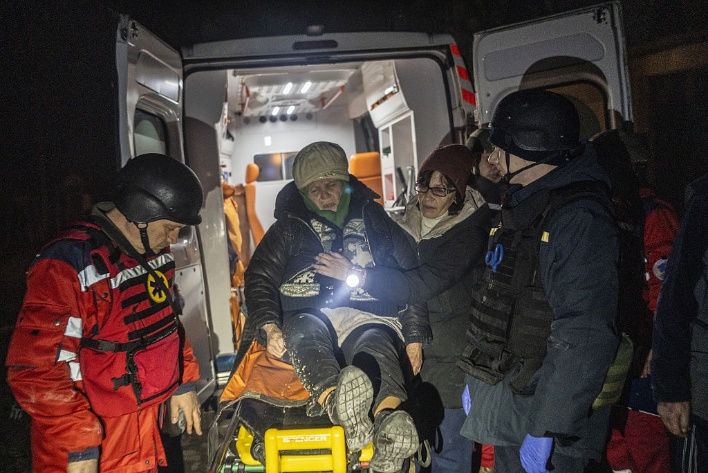
Kramatorsk, Sunday morning: Firefighters pulled her from the rubble after five hours buried alive. A Russian missile had found her apartment building while she slept. She survived. Four others didn’t. (Jose Colon/Anadolu via Getty Images)
The Diplomatic Theater
The script had been written before the actors took the stage.
US Special Envoy Steve Witkoff met with Ukrainian National Security and Defense Council Secretary Rustem Umerov in Florida for the second consecutive day, ostensibly finalizing details of a peace proposal before presenting it to Russian President Vladimir Putin. The proposal—originally drafted in close collaboration with the Kremlin—had been revised after Ukrainian and European objections, though how substantially remained unclear. What was clear: Putin would meet with Witkoff in Moscow on December 2, Kremlin spokesperson Dmitri Peskov had already announced Russia would not discuss the meeting’s outcomes publicly, and this silence would allow Moscow to reject American terms while blaming Ukraine for the diplomatic impasse.
The Kremlin’s positioning revealed Moscow’s assessment of its strategic situation with remarkable transparency. Peskov stated Russia would not conduct negotiations “through a megaphone” or “through the media”—not the language of a party eager to broadcast diplomatic success, but rather careful positioning by a regime preparing to say no while avoiding public responsibility. High-ranking officials and pro-war military bloggers had been rejecting various iterations of peace proposals for weeks, not because these proposals were unfavorable to Russia, but because they didn’t grant Moscow everything it demanded.
The fundamental Russian position remained unchanged: Ukraine must cede territory Russia doesn’t currently occupy, accept permanent military limitations, and abandon NATO membership hopes. Any proposal short of capitulation would be rejected.
US Secretary of State Marco Rubio claimed America’s goal was ending the war while helping Ukraine “be safe forever” and preventing another invasion—a formulation carefully avoiding how these contradictory objectives might be achieved. President Trump stated he had no deadline for peace settlement. Translation: no leverage to compel Russian concessions.
The Kremlin understood perfectly. Alexei Zhuravlev, deputy chairperson of the Duma Defense Committee, openly stated that the “right” negotiations were between Russia and the United States, who would present a “fait accompli” to Europe and Ukraine such that they would have “no choice but to sign whatever the United States and Russia say.”
This wasn’t diplomatic posturing but candid description of what Moscow hoped to achieve: an agreement imposed on Ukraine by Washington, with European objections swept aside as irrelevant. The fact that such statements could be made publicly without diplomatic consequence suggested how far the conversation had already moved in Russia’s favor.
When Amsterdam Answered
The announcement came from The Hague on the same day American envoys pressed Kyiv to surrender territory for peace.
Dutch Defense Minister Ruben Brekelmans committed 250 million euros to Ukraine through the Prioritized Ukrainian Requirements List—NATO’s mechanism for buying American weapons and handing them to Ukrainian forces. Total Dutch PURL contributions: 540 million euros. Then came the second signature: an agreement to jointly produce Ukrainian drones in both countries. The Dutch government would buy them, then transfer them to Ukraine’s military.
This wasn’t charity. This was strategic calculation.
The PURL structure channeled resources efficiently—no delays, no theater, just weapons purchased and delivered. The drone production agreement created lasting capabilities rather than temporary aid. And the timing sent a message: while Washington negotiated Ukrainian concessions, Amsterdam committed to Ukrainian victory.
The contrast was almost absurd. In Florida, American officials pressed Rustem Umerov on territorial concessions. In The Hague, Dutch officials signed weapons production contracts with Ukrainian officials. Both meetings happened simultaneously, three thousand kilometers apart, with diametrically opposed premises about what Ukraine needed.
NATO Secretary General Mark Rutte expected PURL to deliver five billion dollars in weapons by year’s end. The Dutch had been among the first contributors in August and remained among the largest. The fact that such support continued even as Washington pressured Kyiv suggested that at least some European governments understood what was at stake better than their American counterparts.
Sixty Balloons Over Vilnius
The balloons started arriving just after dark on November 30.
Lithuanian authorities tracked roughly sixty of them drifting toward Vilnius International Airport through the night—launched continuously at varying altitudes, in small groups, from Belarusian territory. By early morning December 1, the airport had shut down operations. Again.
Vilnius had faced thirteen separate airspace restrictions in October and November due to balloon incursions. This closure disrupted fifty flights and over 7,400 passengers. The airport operator’s losses exceeded 750,000 euros. The balloons themselves cost almost nothing to produce and launch, carried contraband cigarettes that generated revenue even when intercepted, and created disproportionate disruption to major civilian infrastructure.
This was hybrid warfare in its purest form.
Oro Navigacija Director Saulius Batavicius stated an unidentified actor had launched the balloons, though Lithuanian officials had previously attributed similar incursions to Belarus. The operations remained below the threshold that would trigger NATO Article 5 collective defense guarantees, but nevertheless degraded civilian life, strained security services, and demonstrated that Lithuania’s NATO membership provided less protection than geography to Russian power suggested.
Each successful violation of Lithuanian airspace without meaningful response taught Moscow that NATO would tolerate incremental violations of member state sovereignty. Each closure of Vilnius Airport demonstrated that relatively primitive methods could disrupt civilian infrastructure without triggering military escalation. Each balloon that reached Lithuanian territory reinforced the message that Baltic states existed in a gray zone where formal security guarantees meant less than proximity to Russian power.
EU Commission President Ursula von der Leyen announced Brussels was preparing additional sanctions against Belarus in response to what she described as a “hybrid attack.”
The balloons kept coming anyway.
Building the Next War’s Army
Russia’s Pacific Fleet announced it had reorganized the 155th Naval Infantry Brigade into the 55th Naval Infantry Division.
The new division was almost certainly not staffed at full doctrinal strength—the 155th Brigade had been ground down in Pokrovsk and Kursk Oblast. Nevertheless, the reorganization proceeded, creating the framework for a larger force that would be filled after the war’s end.
This was part of former Defense Minister Sergei Shoigu’s December 2022 plan: form seventeen new divisions, including by expanding five naval infantry brigades into divisions. The Russian military had formed or reorganized at least eight new divisions since then—the 104th Airborne Division, multiple motorized rifle divisions. All remained below doctrinal strength because they’d been committed to combat in Ukraine.
But the structures existed.
Division-level formations provided the mass and higher echelon structures that Russian military planners assessed would be necessary for effective combat operations against NATO forces. Russia wasn’t merely trying to conquer Ukraine but using the war to rebuild its military for potential conflict with NATO. The formation proceeded despite enormous casualties, suggesting Moscow viewed these losses as acceptable costs in creating a military capable of challenging NATO directly.
The fact that these divisions were being committed to combat while below full strength indicated both desperation and confidence that personnel could be added later. Every Ukrainian who died delaying Russian advances bought time for Europe to prepare. Every Russian who died in these divisions reduced personnel available for future wars.
The grinding attrition in Pokrovsk wasn’t meaningless violence but the contest that would determine whether Russia emerged from this war with the military capacity to threaten NATO members directly.
The President Lies
Vladimir Putin personally announced that Russian forces had captured Pokrovsk and Vovchansk.
The announcement came after Chief of the General Staff Valery Gerasimov issued a front-line report alleging full Russian control of both cities. The timing was transparent: the claims emerged just as American envoy Steve Witkoff arrived in Moscow for negotiations. Putin was personally staking his credibility on battlefield claims that Ukrainian forces and independent monitoring groups immediately contradicted.
The Ukrainian General Staff reported that defenders had stopped seventy-two Russian assault actions on the Pokrovsk front over the preceding twenty-four hours. Hardly the pattern of a city fully under Russian control.
Andrii Kovalenko, head of Ukraine’s Center for Countering Disinformation, warned that Moscow would escalate propaganda claims during negotiations, stating that Russian attempts to pressure the front line would be “accompanied by loud statements—all of this is done exclusively for Western audiences and to raise the stakes in diplomacy.” Kovalenko noted that part of Vovchansk remained under Ukrainian Defense Forces control, directly contradicting Putin’s claims.
The significance of Putin personally making these announcements rather than leaving them to ministry spokespeople suggested the Kremlin’s assessment of how critical perception management had become to negotiations. When the Russian president himself declares victories that have not occurred, the gap between diplomatic posturing and battlefield reality has become so wide that even maintaining the fiction requires presidential authority.
This was Putin elevating ministry lies to presidential declarations—cognitive warfare in its most cynical form, announcing victories to strengthen negotiating positions based on momentum that didn’t exist.
In Pokrovsk, Ukrainian forces killed 519 Russian soldiers in November alone. The city Russia claimed to have captured. Where defenders still rotated troops through supply lines Moscow insisted didn’t exist. Where the guns hadn’t stopped firing.
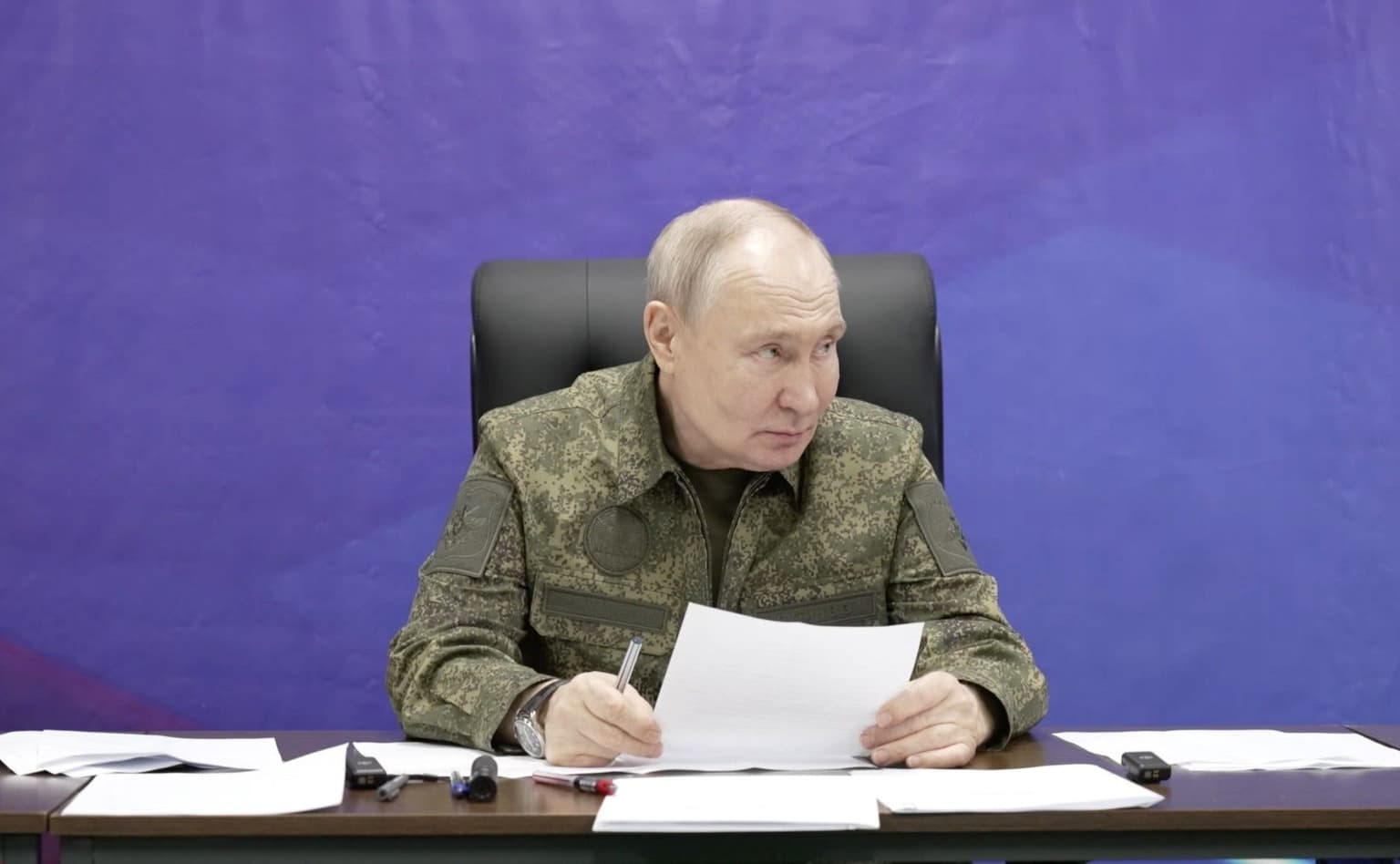
Vladimir Putin announces Russia has captured Pokrovsk—a city where Ukrainian forces killed 519 Russian soldiers in November alone, where defenders still rotate troops through supply lines Moscow claims don’t exist, where the guns haven’t stopped firing. The president lies with presidential authority. (Russian Presidential Office)
The Saboteurs Who Fled to Belarus
Polish prosecutors requested a European Arrest Warrant for two Ukrainian citizens suspected of sabotaging railway infrastructure at Russian intelligence’s orders.
Yevhenii Ivanov and Oleksandr Kononov allegedly damaged the Warsaw-Lublin railway line on November 15 and 16 before fleeing to Belarus. Polish authorities had confirmed that one section of track was damaged by explosives while damaged overhead lines at another location shattered a train window. The route was used to deliver aid to Ukraine, making it a strategic target for Russian disruption operations.
Poland had already charged both men with espionage, sabotage on behalf of foreign services, and related crimes carrying potential life sentences. A third Ukrainian, identified only as Volodymyr B., faced charges for driving Ivanov to the site beforehand to plan the operation.
The European Arrest Warrant simplified cross-border prosecution within the EU, replacing complex extradition procedures. The fact that both suspects had fled to Belarus before warrants could be executed suggested sophisticated support networks that enabled rapid extraction after operations.
Polish Prime Minister Donald Tusk had previously stated the sabotage was likely intended to blow up a train, though Russia denied involvement. The incident was part of a broader pattern: Poland sharing a 535-kilometer border with Ukraine had become a key hub for delivering allied military assistance to Kyiv, making Polish infrastructure attractive targets for Russian sabotage operations.
Warsaw had been raising alarm over mounting cases of sabotage and espionage targeting Poland, with numerous incidents linked to Russian or Belarusian intelligence services. The arrest warrant formalized Polish determination to prosecute those responsible, even if they remained beyond immediate reach in Belarus.
Three Thousand Kilometers from Ukraine
Drones attacked the Russian republic of Dagestan overnight into December 1, damaging buildings and vehicles near the Dagdizel machine-building plant in Kaspiysk.
Local residents reported explosions early in the morning. Footage showed damage to residential buildings and parked vehicles on Molodiozhnaya Street, approximately 3.5 kilometers from the Dagdizel facility. The courtyard of the damaged building complex included a kindergarten. Dagestan’s Health Ministry reported a twelve-year-old girl sustained light injuries requiring hospitalization, though her condition was not life-threatening. Dagestan head Sergey Melikov confirmed the incident but declined details, citing operational security.
The Dagdizel shipbuilding facility was a major defense enterprise, making it a logical target for Ukrainian long-range strike operations. The damaged residential area’s proximity to the plant suggested the drones had been targeting the facility when they struck civilian structures—whether through defensive measures, technical malfunction, or targeting errors remained unclear.
Ukraine had repeatedly struck targets deep inside Russia as part of its strategy to weaken Russian military capabilities and undermine the wartime economy. The Ukrainian General Staff had claimed responsibility for many such attacks, describing them as part of a broader effort to degrade Russia’s ability to sustain operations in Ukraine.
The Dagestan strike, occurring the same night as Ukrainian operations against other Russian targets, fit this pattern of distributed attacks across Russian territory designed to stretch Russian air defenses and complicate protection of military-industrial facilities.
Siberia to the Caucasus. Nine time zones. Three thousand kilometers from Ukraine’s border.
Ukraine found it anyway.
The Careful Response to Astana
Ukraine’s Foreign Ministry issued a careful response to Kazakhstan’s protest over the November 29 drone strike that damaged the Caspian Pipeline Consortium’s marine terminal in Novorossiysk.
Kazakhstan had condemned the strike as an attack on “an exclusively civilian facility” and claimed it harmed bilateral relations. The consortium operated a pipeline linking Kazakhstan’s western oil fields with the Russian port, where the terminal had halted shipments after the naval drone attack damaged a mooring point.
Foreign Ministry spokesperson Heorhii Tykhyi stated that no Ukrainian actions targeted Kazakhstan or any third country, emphasizing that all Ukrainian operations focused on countering Russia’s invasion. Kyiv did not claim responsibility for the strike but made clear its strategic position: “All of Ukraine’s efforts are focused on repelling full-scale Russian aggression.”
The ministry noted pointedly that Kazakhstan had not publicly condemned Russian strikes on Ukrainian civilians, residential buildings, or energy infrastructure. This was diplomatic pushback framed as factual observation: Ukraine faced daily attacks on civilian infrastructure while Kazakhstan protested damage to a facility that, whatever its formal ownership status, served Russian oil export operations.
The ministry emphasized Ukraine’s commitment to maintaining friendly ties with Kazakhstan, citing strong historical connections, but the subtext was clear: neutrality had limits when that neutrality enabled Russian aggression.
Kazakhstan, a Russian ally in the Collective Security Treaty Organization, had declared neutrality in the war and avoided recognizing Russia’s illegal annexation of Ukrainian territories. The drone strike was the third attack on consortium infrastructure in recent months, with previous strikes in September and November 25.
The repeated targeting suggested Ukrainian assessment that disrupting Russian oil exports through Novorossiysk justified risks to relations with Kazakhstan.
Geography Doesn’t Lie
The Ukrainian 11th Army Corps issued a detailed refutation of Russian claims about Klynove, a front-line settlement south of Kramatorsk.
The Russian Ministry of Defense had reported capturing Klynove, but the 11th Army Corps called this “a fake report” and “part of regular Russian propaganda practices.” The Ukrainian military pointed out that to capture Klynove, Russian forces would first need to seize Virolyubivka, located directly east of Klynove in the path of any Russian advance. According to battlefield monitoring site Deep State, both settlements remained under Ukrainian control.
The 11th Army Corps also denied Russian claims of heavy Ukrainian armored vehicle losses, stating that Russian Ministry of Defense “informational victories” announced daily on paper “have nothing to do with the real situation on the front lines.”
This detailed rebuttal illustrated how Ukrainian forces had adapted to Russian propaganda tactics. Rather than simply denying Russian claims, the 11th Army Corps explained the geographical impossibility of the Russian assertion, cited independent monitoring data, and contextualized the false claim within Russia’s broader pattern of propaganda.
The statement acknowledged that Russian informational operations would intensify during peace negotiations but emphasized that Ukrainian defenders maintained their positions regardless of what Russian press releases claimed. The fact that Ukrainian military units felt compelled to issue such detailed rebuttals suggested they understood that some international audiences took Russian claims at face value and that allowing false narratives to stand unchallenged could affect diplomatic negotiations and public support.
To capture Klynove, Russia would need to take Virolyubivka first. Russia hadn’t taken Virolyubivka.
Geography doesn’t negotiate.
The President’s Former Partner
The arrest warrant issued for businessman Timur Mindich provided an unexpected window into the intersection of business networks, political influence, and wartime corruption.
Mindich, a former business partner of President Volodymyr Zelensky who had co-owned the Kvartal 95 production company, fled Ukraine before the court could consider his detention. Investigators alleged he had organized a kickback network involving roughly one hundred million dollars in bribes linked to nuclear energy agency Energoatom’s contracts. The scheme reportedly involved encrypted communications, code names, and a laundering network that handled the massive financial flows.
Mindich had even allegedly attempted to pressure Rustem Umerov—currently secretary of the National Security and Defense Council and the same Umerov negotiating with American envoys in Florida—over the Defense Ministry’s purchase of bulletproof vests.
Zelensky had imposed sanctions on Mindich and his alleged co-conspirator Oleksandr Tsukerman on November 13, but sanctions after the fact did little to recover the funds allegedly stolen. The fact that Mindich had business connections to the president raised inevitable questions about whether those connections had enabled the alleged corruption or at least delayed its detection.
The involvement of Energoatom contracts meant that corruption had potentially affected Ukraine’s nuclear energy sector at a time when Russian attacks on energy infrastructure made reliable power generation strategically critical.
What made the scandal particularly damaging was its timing. Ukraine was fighting for its survival while asking Western partners for continued support, yet here was evidence that some individuals had allegedly used the war as an opportunity for massive personal enrichment. The charges suggested systematic corruption: organized kickback networks, encrypted communications, financial flows large enough to affect major state enterprises.
The court requested an Interpol warrant, suggesting Mindich had fled to a country that might cooperate with international law enforcement, possibly Israel.
The larger questions remained unanswered: how many other such networks existed, how much damage they had done to Ukraine’s defense capabilities, and whether political connections had enabled corruption or merely failed to prevent it.
The Grinding
Slow, grinding advances purchased at enormous cost. Contested urban areas where neither side could achieve decisive breakthroughs. Continuous small-unit actions that cumulatively degraded both armies’ combat power.
In the Lyman direction, Ukrainian forces liberated Stavky after Russian sources had claimed its capture. The Ukrainian 3rd Army Corps refuted claims that Russian forces had seized both Stavky and Novoselivka, noting that small Russian groups infiltrated settlements to film staged videos with Russian flags, then were destroyed by Ukrainian forces before they could consolidate positions.
This pattern repeated across the front: Russian attacks in the Kostyantynivka-Druzhkivka tactical area, the Dobropillya area, near Siversk, in the Velykomykhailivka direction. Each sector saw multiple Russian assault attempts, most repelled, some gaining marginal terrain, none achieving operational breakthroughs.
In western Zaporizhia Oblast, Russian forces seized Zelenyi Hai and Vysoke east of Hulyaipole, along with advances near Solodke, Rivnopillya, and Yablukove. These were the day’s most significant confirmed Russian advances—modest gains that nevertheless represented tactical progress in a direction that threatened Ukrainian positions defending approaches to Zaporizhzhia City. The Russians had concentrated elements of the 127th Motorized Rifle Division in this sector.
Ukrainian forces in Hulyaipole itself faced Russian attacks from northwest, north, northeast and east—pressure from multiple directions that complicated defense and forced difficult decisions about resource allocation.
In the Kharkiv direction, a Ukrainian brigade chief of staff reported that Russian forces were regrouping and bringing up reserves in preparation for future attacks toward Lyptsi, using fiber-optic first-person-view drones and unmanned ground vehicles for ambushes against Ukrainian logistics convoys. The Russians were adapting tactics to Ukrainian countermeasures, employing new technologies to compensate for Ukrainian advantages in other areas.
The fighting in Vovchansk itself continued as infiltration events rather than sustained control, with Russian units conducting ostentatious flag-raising missions for propaganda purposes even when they could not hold the positions where flags were raised.
Hunter Becomes Hunted
The Russian drone strike campaign overnight into December 1 showed both the scale of Russian air operations and the evolution of Russian drone technology.
Ukrainian Air Force reported that Russian forces launched eighty-nine drones from multiple launch points. Ukrainian forces downed sixty-three while twenty-six struck nine locations, hitting energy, industrial, civilian, religious, and residential infrastructure across Chernihiv, Dnipropetrovsk, Kyiv, Mykolaiv, and Kharkiv oblasts. This was typical: large Russian drone swarms overwhelming Ukrainian air defenses through sheer numbers, with enough getting through to cause significant damage even as the majority were intercepted.
What distinguished this strike was evidence of Russian adaptation.
Ukrainian electronic warfare expert Serhiy Beskrestnov reported that Ukrainian forces had downed a Russian Shahed drone equipped with an R-60 air-to-air missile for the first time. Russian forces were modifying Shaheds to destroy Ukrainian helicopters and tactical aircraft that hunted drones—turning hunter-killer operations back against the hunters.
Additionally, Ukrainian Deputy Defense Minister Yuriy Myronenko told reporters that Russian forces had recently started using operator-controlled Shahed drones that communicated via antennas in occupied Ukraine, allowing rapid Russian response to Ukrainian counter-measures.
These were not incremental improvements but significant tactical adaptations that changed the calculus of Ukrainian air defense operations. Every successful Ukrainian adaptation prompted Russian counter-adaptation, creating an ongoing technological competition where advantages proved temporary and survival required constant innovation.
The statistics for November provided context: Ukrainian air defense forces destroyed 9,707 air targets—eleven Kinzhal ballistic missiles, fifteen Iskander-M ballistic missiles, fifty-one Kh-101 cruise missiles, twenty Kalibr cruise missiles, 2,939 Shahed-type drones, 361 reconnaissance drones, and 6,288 other drones.
Even with these interception rates, enough Russian weapons reached their targets to cause significant damage. The air war had become a grinding contest of production capacity and technological adaptation, where neither side could achieve dominance but Russian quantitative advantages allowed sustained pressure despite heavy Ukrainian attrition.
Nine Time Zones Away
Ukraine’s military intelligence agency HUR confirmed two explosions that damaged railway infrastructure inside Russia, disrupting critical logistics networks.
A source in HUR told journalists that the first explosion occurred near Baryshovo settlement in Novosibirsk Oblast, hitting a section of the West Siberian Railway and disrupting freight traffic along the route. The second explosion struck the Unecha junction in Bryansk Oblast—a key node of the Moscow Railway on the Bryansk-Homel line used to move fuel and military equipment toward Belarus. According to the source, a fuel train was hit in the Unecha incident.
HUR did not directly claim responsibility for the attacks or provide additional operational details, but the targeting pattern was consistent with previous Ukrainian intelligence operations against Russian logistics infrastructure.
The Unecha junction was particularly significant because it housed one of the largest hubs of the Druzhba oil pipeline system, operated by Transnefteprodukt. The facility was part of a network of approximately 9,000 kilometers of pipelines used to transport oil and petroleum products, and was involved in supplying Russia’s military-industrial complex. Disrupting fuel shipments to Belarus complicated Russian logistics for both the war in Ukraine and potential future operations.
The Novosibirsk strike, occurring deep in Siberia far from the Ukrainian border, demonstrated the extended reach of Ukrainian sabotage capabilities and the vulnerability of Russian infrastructure across enormous geographical distances.
These operations followed a series of previous attacks against railway infrastructure inside Russia that HUR had claimed responsibility for in recent months, part of ongoing efforts to disrupt logistics supplying Russian forces and complicate the movement of fuel, equipment, and ammunition to front lines.
Baryshovo to Unecha. Siberia to the border with Belarus. Nine time zones of Russian territory.
Ukraine’s saboteurs moved through all of it.
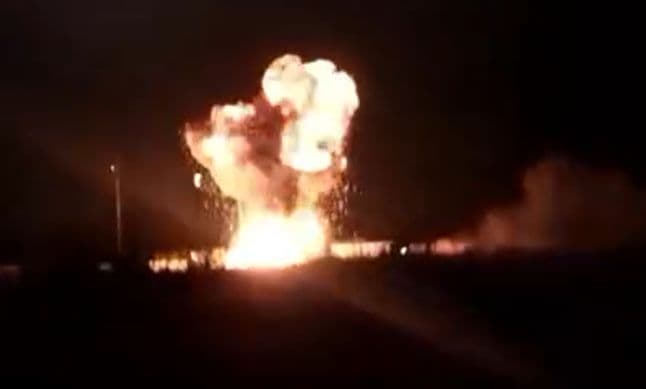
Siberia burns: Ukrainian saboteurs struck the West Siberian Railway near Baryshovo, 3,000 kilometers from Ukraine’s border. Russia’s logistics network stretched across nine time zones. Ukraine found it anyway. (HUR source)
Sunday Morning in Dnipro
The Russian ballistic missile struck around 10:14 a.m., about four minutes after Ukrainian Air Force alerts.
It hit a car service station and nearby businesses in Dnipro’s industrial area where workers had already arrived for the morning. Eleven of the wounded were in serious condition when the day ended. Four were dead.
A witness named Iryna, who worked at the destroyed service station, told Suspilne Dnipro that one colleague had been killed, another was hospitalized, and the facility was gone. She had been at work with her dog when the strike occurred.
This was not collateral damage from military operations but deliberate targeting of civilian economic infrastructure in a city far from the front lines, designed to degrade Ukrainian society’s capacity to function normally during war.
Dnipro, Ukraine’s fourth-largest city with a pre-war population of 968,000, continued to suffer regular Russian attacks due to its proximity to active fighting—about 130 kilometers from the nearest front-line positions. The city’s size and economic importance made it a natural target for Russian efforts to break Ukrainian morale and economic capacity.
The car service station was civilian infrastructure with no military value beyond its contribution to normal economic activity. The workers killed and wounded had been doing their jobs on a Sunday morning in a city that had spent nearly three years learning to function under constant threat.
The missile that killed them had been launched deliberately, aimed carefully, and struck precisely where Russian operators intended.
This was the routine violence of the war’s current phase: systematic targeting of Ukrainian civilian life in cities far from military operations, designed to convince Ukrainians that normal existence was impossible until they accepted Russian terms.
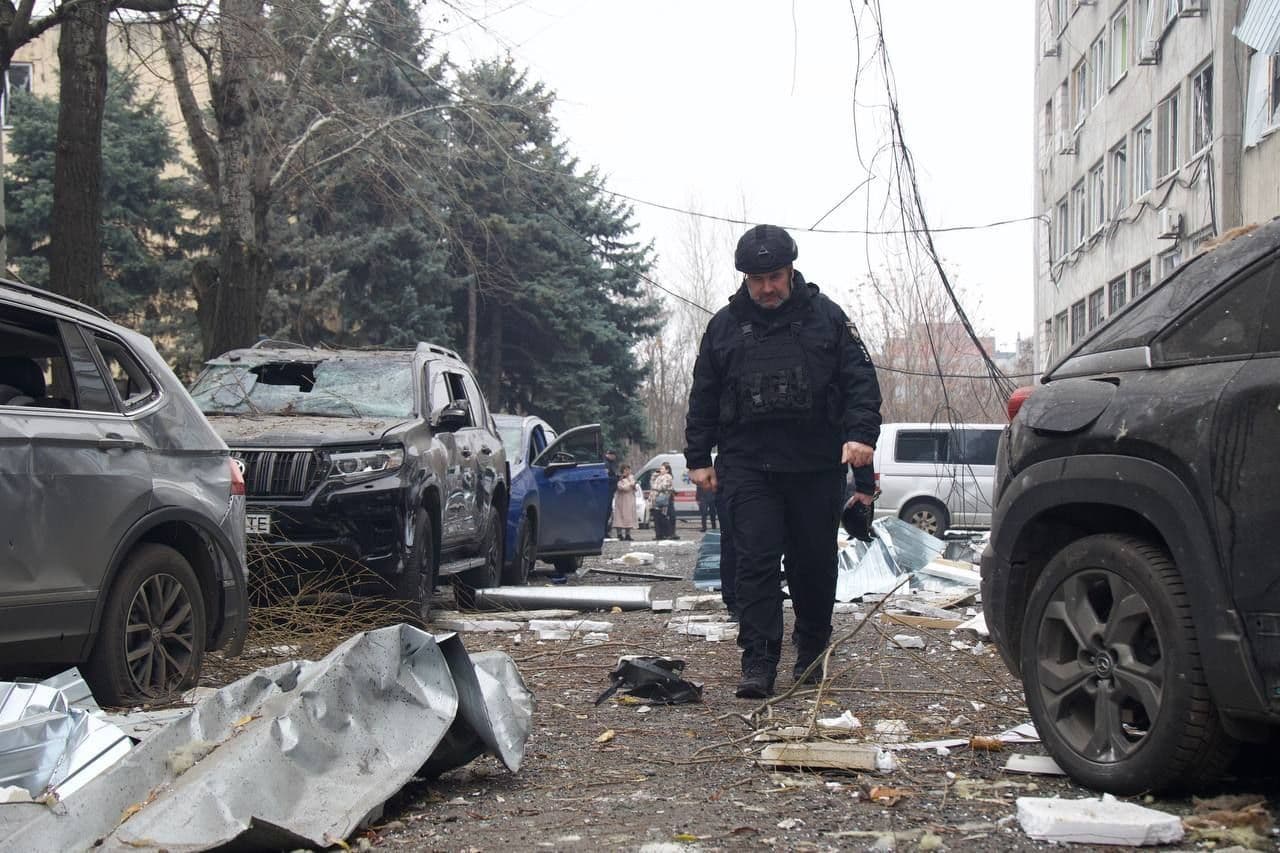
Sunday morning, 10:14 a.m., Dnipro: A Russian ballistic missile hit a car service station where mechanics had just started their shift. Four dead, forty wounded, eleven in serious condition. Iryna survived. Her colleague didn’t. The building is gone. (Local authorities/Telegram)
1,859 Out of 19,546
First Lady Olena Zelenska announced in Paris that Ukraine had brought back 1,859 children abducted by Russia.
According to Ukraine’s “Children of War” database, at least 19,546 Ukrainian children had been abducted from Russian-occupied territories since February 2022 and taken to Russia or Russian-controlled areas. An estimated 1.6 million Ukrainian children remained in territories under Russian occupation.
The figures were staggering not merely for their scale but for what they represented: systematic forced deportation of children, conducted by Russian state authorities, designed to erase Ukrainian identity and assimilate children into Russian society. This was genocide in its most literal sense—the destruction of a people through the theft of their children.
The International Coalition for the Return of Ukrainian Children now included forty-two countries plus the EU, Council of Europe, and OSCE Parliamentary Assembly. Zelenska emphasized that physical return was only the first step, that psychological and social reintegration required extensive programs, and that Ukraine had introduced state assistance for every returned child.
These were necessary measures but insufficient responses to crimes of this magnitude.
The 1,859 children returned represented less than ten percent of those known to have been taken. The 19,546 documented cases almost certainly understated the true total. The 1.6 million children in occupied territories faced ongoing risk of deportation.
The apparatus that had conducted these deportations—Russian state agencies, transportation networks, receiving facilities in Russia—remained operational and would continue functioning unless destroyed by Ukrainian victory or international intervention.
Every child returned was a small victory against an ongoing atrocity that continued unchanged.
What December 1 Revealed
Two wars happened simultaneously. In Florida, American envoys pressed Ukrainian officials on concessions. In The Hague, Dutch ministers signed drone production contracts. In Pokrovsk, Ukrainian forces killed Russians in a city their president declared captured.
The diplomatic choreography had become absurdly transparent. Everyone knew the script.
What made Putin’s false claims particularly notable wasn’t that the Kremlin lied—such claims had become routine—but that Putin personally staked his credibility on victories Ukrainian forces immediately contradicted. When pro-war Russian bloggers warned that obvious lies risked undermining Russian positions, the disconnect between propaganda and reality had become impossible to ignore even for propagandists.
The balloon incursions, Russian division reorganizations, corruption scandals touching the president’s former business partner, grinding tactical fighting—all revealed a conflict whose fundamental character was changing. The war was no longer primarily about territory but about whether Ukraine would survive as an independent state, whether NATO guarantees meant anything when tested, whether European societies had cohesion to sustain support, and whether the United States remained committed to the security architecture it had created.
These were existential questions being answered through daily accumulation.
The day ended with Witkoff preparing to fly to Moscow, Russian forces still fighting in Pokrovsk they claimed captured, balloons still launching into Lithuanian airspace, Ukrainian children still in Russian custody, the Dutch committing resources while Americans negotiated concessions.
Nothing resolved. Everything in flux.
Day 1377 was the day before the meeting that would clarify how much of Ukraine the United States was willing to sacrifice for a peace that would last only until Russia rebuilt its forces sufficiently to resume the war.
The answer would come soon enough.