
August 7, 2026
Prepared by Diana Bozhyk
The Kremlin published a transcript of Vladimir Putin praising a division commander for battlefield progress in Donetsk Oblast — except the officer on the call identified himself using the name of a colonel Russian sources say has been dead since May 2025. Separately, Russian opposition outlets confirmed that a second general, Valery Plokhotnyuk, died in the same Moscow restaurant bombing that likely targeted Aerospace Forces Commander Alexander Chayko a week ago. The US Senate passed sweeping new sanctions against Russia and Iran, sending the bill to the House. And Russian attacks killed at least nine Ukrainians and wounded 89 more, including two railway workers killed at a station serving as the last stop before the front.
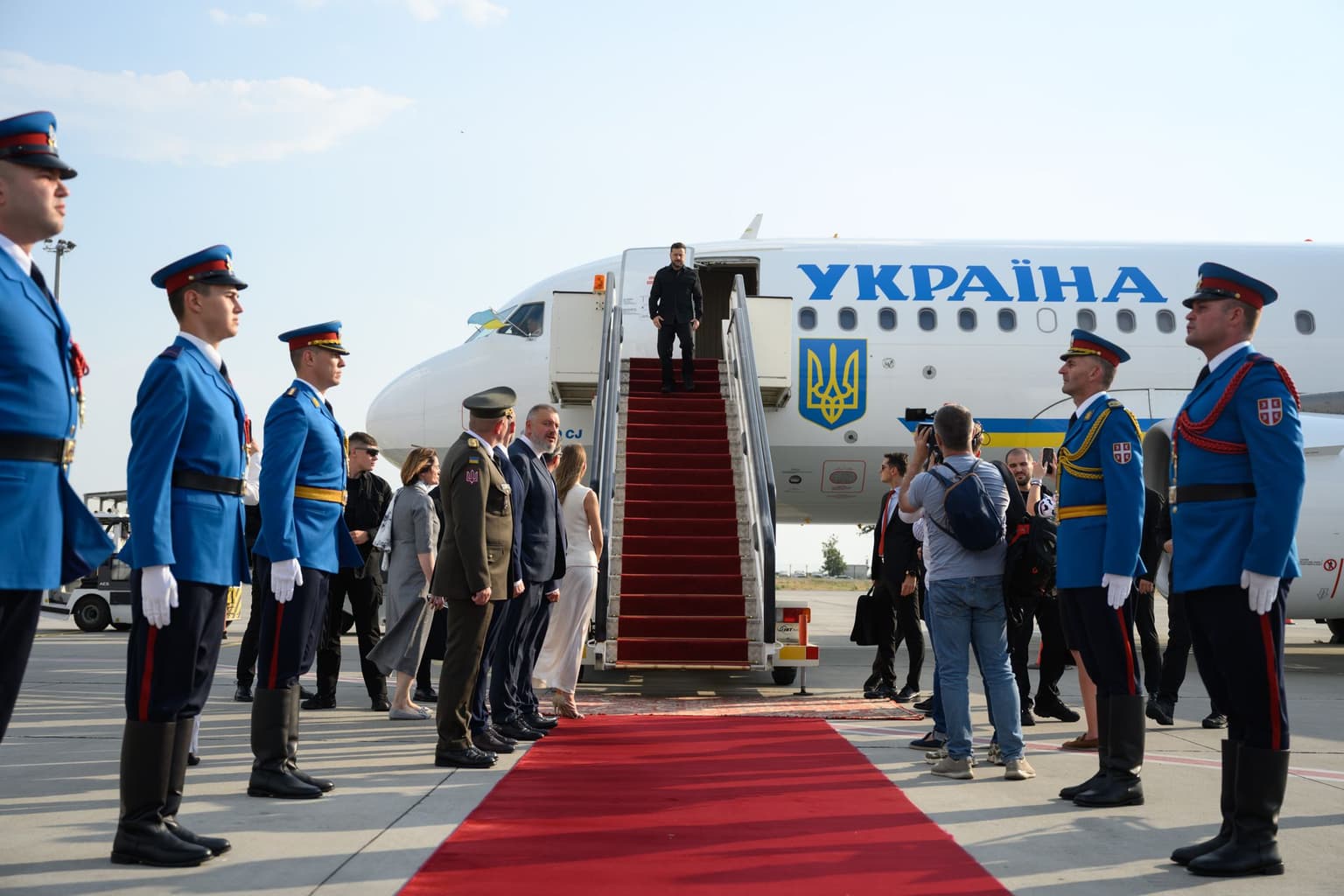
President Volodymyr Zelensky lands in Serbia, beggining his two-day official visit. (Volodymyr Zelensky / X)
THE DAY’S RECKONING
Somewhere in the Kremlin’s press office, someone published a transcript meant to reassure the Russian public that their president stays close to the battlefield — and instead handed skeptics a small mystery. The voice on the call with Putin identified itself as Colonel Shikhabidov, commander of the 76th Guards VDV Division. Multiple Russian sources say that man has been dead since May 2025. Whether it was a scripting error, a stand-in, or something stranger, the moment captured something true about this war regardless: the version of it reaching Putin’s desk may not be the version actually happening on the ground. In Kharkiv Oblast, at a train station that has become the last stop before Donetsk Oblast swallows the tracks entirely, a Russian drone killed two railway workers doing the unglamorous work of keeping soldiers and evacuees moving. In Washington, the Senate finally passed sanctions built around a dead senator’s name. And in Moscow, opposition journalists confirmed a second general had died in an explosion the Kremlin still won’t fully explain. Some days this war reveals itself through spreadsheets and missile counts. This one revealed itself through a phone call with a man who wasn’t really there.
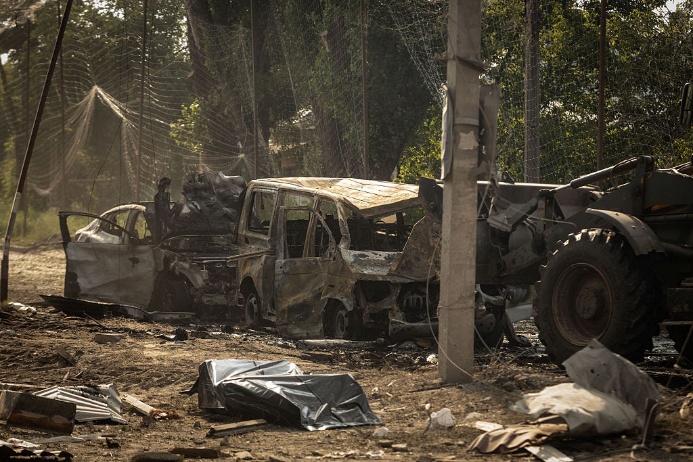
A victim in a body bag lies amidst debris and burned-out cars as an excavator removes rubble following a Russian strike in Sloviansk. (Francisco Richart/Anadolu via Getty Images)
PUTIN’S CALL WITH A DEAD MAN
The Kremlin published a transcript of a phone call between Putin and a commander identified as Colonel Shikhabidov, head of Russia’s 76th Guards VDV Division, in which “Shikhabidov” claimed his troops had seized Pokrovsk, Hryshyne, Novooleksandrivka, Vasylivka, and Shevchenko, and assured Putin the division’s timeline for further gains was realistic. There’s just one problem: multiple Russian sources report that the actual Colonel Shikhabidov died in May 2025, and Russian military sources identify the division’s current commander as a different officer, Denis Shishov. Putin never named the man he was speaking with. The mismatch calls the entire exchange’s authenticity into question, and with it, the reliability of what Russian battlefield commanders are telling their own president.
Putin rarely speaks directly with tactical-level commanders at all, typically relying on reports filtered through senior officers — and this rare direct call came days after growing accusations that Putin is dangerously disconnected from the war’s real progress, following a July 3 meeting where commanders falsely told him Russian forces had seized Kostiantynivka and pushed beyond it. ISW’s own battlefield tracking shows why the pressure to inflate results keeps growing: Russian forces actually lost 2.23 square kilometers in the Dobropillya area in June before gaining 34.67 in July, and lost 3.12 square kilometers near Pokrovsk in June before gaining 45.96 in July — real movement, but nowhere close to what Putin would need to seize the rest of Donetsk Oblast by his own new deadline of December 31. If Russian units are telling their own commander-in-chief a fictional story about a battlefield that doesn’t match reality, an assessment ISW considers increasingly likely, that gap between what Moscow believes and what’s actually happening may matter as much as anything happening on the ground itself.
PLOKHOTNYUK CONFIRMED DEAD IN THE MOSCOW BLAST
Russian opposition outlets Mediazona and Agentstvo confirmed, using state registries, that Major General Valery Plokhotnyuk died in the August 1 explosion at Moscow’s Balzi Rossi restaurant — the same blast a source told the Kyiv Independent had likely targeted Aerospace Forces Commander Alexander Chayko during a private birthday celebration. Plokhotnyuk previously served as chief of staff of Russia’s 49th Combined Arms Army. His death brings the confirmed toll of people connected to Russia’s military establishment killed or injured in that single bombing to at least three: Plokhotnyuk, Chayko’s son-in-law Danylo Peredriy, and Chayko’s daughter Maria, reportedly injured. Chayko’s own fate remains unconfirmed more than a week later.
NINE KILLED, 89 WOUNDED: LOZOVA AND THE REST OF THE DAY
Russian attacks killed at least nine civilians and wounded 89 more across Ukraine over 24 hours. The clearest single strike hit Lozova, the Kharkiv Oblast town that has become the last functioning rail stop toward Donetsk Oblast since service to Kramatorsk stopped last year — killing two railway workers and wounding 11 more in the city, with seven additional injuries elsewhere in the region. Dnipropetrovsk Oblast absorbed roughly 80 separate strikes across two days, leaving five dead and 16 wounded; Kherson Oblast reported one killed and 32 wounded, including a child, across 39 settlements; Donetsk Oblast one killed in Bilenke and five wounded elsewhere; Zaporizhzhia Oblast 10 wounded; and Sumy Oblast eight wounded.
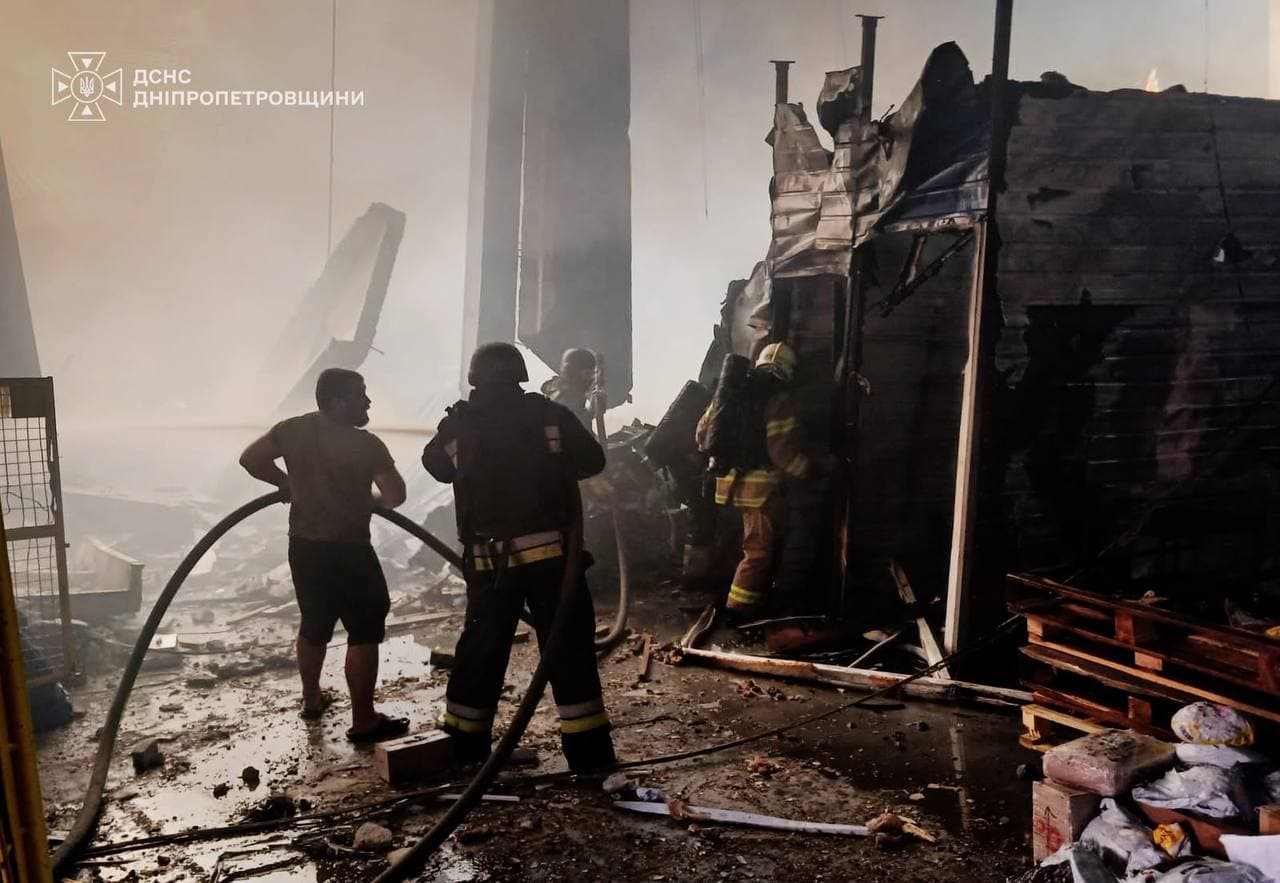
Aftermath of Russian attacks in Dnipropetrovsk Oblast, Ukraine. (Ukraine’s Emergency Service/Telegram)
Overnight into Friday, a further strike on Brovary district, just outside Kyiv, killed three people, including a child, and wounded three more, with falling debris damaging a private home and outbuildings. Ukraine’s Air Force reported 147 Shahed-type drones launched against Ukraine overnight, with 114 intercepted and 29 reaching 15 locations. Naftogaz reported that Russian strikes hit seven Ukrnafta oil and gas production facilities and four gas stations in eastern Ukraine overnight, shutting down equipment ahead of winter. “Russia is systematically attacking Ukrainian oil and gas production in order to cause maximum damage to our infrastructure on the eve of winter,” said acting Naftogaz chief Serhii Fedorenko, noting Russian forces have now struck Naftogaz facilities 287 times in 2026 alone — more than in all of 2025 and the war’s first three years combined. In Bilopillya, Sumy Oblast, Russian forces struck a market with a second, deliberate follow-up strike after residents had already gathered to help victims of an earlier drone hit on a vehicle, wounding 10 people in what Ukrainian officials described as a textbook double-tap attack on rescuers.
A STADIUM FALLS SILENT IN ODESA
A Russian strike damaged Chornomorets Stadium in central Odesa, one of Ukraine’s largest football venues with a capacity of 34,164, wounding two people — a 29-year-old woman treated at the scene and a 31-year-old man hospitalized later the same evening. The strike hit around 3:30 p.m., shortly after Ukraine’s Air Force warned of jet-powered drones approaching Odesa Oblast, tearing apart the roof and damaging the stands and glazing of a stadium that once hosted UEFA competitions and Ukraine’s national team before the full-scale invasion. Its scheduled Ukrainian Premier League match the next day was postponed indefinitely.
It’s one entry in a much longer list: Ukraine’s Youth and Sports Ministry counted 915 damaged or destroyed sports facilities nationwide as of July 20. A stadium is not a power plant or a military target by any definition, but it is, like a bookstore warehouse or a bread delivery van, exactly the kind of ordinary place this war keeps finding anyway.
FRONTLINE: RUSSIA’S IMPOSSIBLE TIMELINE FOR THE FORTRESS BELT
Ukraine’s General Staff logged 192 combat engagements by 10 p.m., with Russian forces conducting 53 airstrikes, dropping 176 guided bombs, and deploying 6,540 kamikaze drones nationwide. The heaviest fighting centered on the Pokrovsk axis, where Russian forces launched 25 separate attacks; Ukrainian officials reported killing 37 Russian soldiers and wounding 19 more there in a single day. Elsewhere, Ukrainian brigades reported genuine gains: forces expanded their drone “kill zone” in the Kupyansk direction from 15 to 25 kilometers, using fiber-optic drones to identify targets well behind the line of contact, and advanced northeast of Oleksandrivka, reportedly liberating several settlements near Zirka including Myrne.
Ukrainian pressure is visibly reshaping how Russia fights. A Ukrainian brigade spokesperson in the Oleksandrivka direction reported Russian forces withdrawing artillery farther from the front and relying increasingly on longer-range rocket systems instead of tube artillery, a direct consequence of Ukraine’s expanded strike range. Near Kostiantynivka, Russian forces continued limited advances without confirmed breakthroughs as Ukrainian troops counterattacked from Osykove; near Lyman, Ukrainian officers say Russian units are trying to bypass the Seversky Donets River’s natural defenses by infiltrating through Zarichne and Yampil, both still under Ukrainian control.
SKELIA BEGINS TO BREAK UP
Soldiers from the 425th “Skelia” Assault Regiment — the unit at the center of a widening abuse scandal — are being transferred out to roughly 10 other formations, Ukrainska Pravda reported, citing sources inside both the regiment and Ukraine’s Defense Forces. The reassignment order went out roughly a week ago; some affected soldiers are reportedly unhappy with the move. A Defense Forces source described the unit as having been “artificially inflated” under former Commander-in-Chief Oleksandr Syrskyi, expanding to more than 10,000 personnel while ordinary mechanized brigades went short-staffed, even as the quality of Skelia’s command remained low.
It’s the clearest sign yet that Commander-in-Chief Mykhailo Drapatyi’s July 26 order freezing assault-regiment recruitment, and the General Staff’s broader July 29 audit of unit staffing, are translating into actual structural change rather than just paperwork. An investigation had already documented at least 26 noncombat deaths among Skelia recruits between late 2025 and spring 2026; the regiment’s commander was suspended, and two of its soldiers were charged in July with torturing fellow servicemen.
ZELENSKY IN BELGRADE: COURTING SERBIA
Zelensky traveled to Belgrade for his first official visit to Serbia as president, meeting President Aleksandar Vučić and due to meet Prime Minister Đuro Macut the following day. “We will discuss expanding economic ties between our countries, relations with the European Union, other areas that can benefit our nations, and security issues,” Zelensky wrote. Serbia has remained one of the few European countries refusing to join Western sanctions against Russia, relying heavily on discounted Russian gas and maintaining a relationship traced to shared history as former communist states; a senior Ukrainian official told AFP the trip was meant to “pull the Serbs away from Russia’s side.”
Vučić signaled no shift ahead of the visit: “The Republic of Serbia set out its position four and a half years ago… and has not changed it since,” he told reporters. Still, Belgrade has quietly provided Kyiv non-military assistance throughout the war, and Russian intelligence has previously accused Serbian defense companies of indirectly supplying ammunition to Ukraine — an allegation Vučić denies. The visit adds Serbia to the long list of relationships Zelensky has spent four years working to shift, one country at a time, even where the shift is measured in inches rather than declarations.
THE GRAHAM ACT PASSES THE SENATE
The US Senate passed the Lindsey O. Graham Sanctioning Russia and Iran Act of 2026 by an 86-11 vote, sending it to the House, which returns from recess before taking it up. The bill authorizes tariffs up to 100 percent on the five largest buyers of Russian crude oil or gas, mandates sanctions on Putin’s inner circle, Russian banks, state energy projects, and shadow fleet tankers, and renews the 1996 Iran Sanctions Act through 2031. “This legislation hits Putin where it hurts,” said Darline Graham, the late senator’s sister, as the vote concluded. Senators Rand Paul and Ron Wyden had tried and failed to strip the bill’s secondary-tariff authority, which critics warn could raise costs for American consumers and strain relationships with allies like India that still depend on Russian energy.
The EU added its own pressure the same day, sanctioning five more individuals tied to Russia’s missile industry — including the head of a plant producing Iskander-M components and the director of the facility building Russia’s RS-28 Sarmat missile system — with foreign policy chief Kaja Kallas signaling a much larger package of 1,600 to 2,000 additional listings is already under discussion. “Each new attack on Ukraine is another reason for Europe to tighten the screws on Russia,” she wrote.
JULY’S AIR WAR BY THE NUMBERS
Ukraine’s Defense Ministry disclosed the full scope of July’s air campaign: Russia launched 195 ballistic missiles, of which Ukraine intercepted only 29; 265 cruise missiles, of which 187 were stopped; and 8,653 attack drones, of which 5,142 were downed. Combined with reconnaissance craft excluded from the count, Russia launched more than 9,000 weapons at Ukraine in a single month. Interception rates for ballistic missiles fell sharply as the month wore on — four of 28 stopped on July 2, none of an unspecified number on July 6, and just one of many on July 30 — a trend the ministry attributed directly to depleted Patriot interceptor stocks rather than any change in Russian missile quality. The ministry said it’s working with partners to secure more interceptors and is separately pursuing Meteor air-to-air missiles for Ukraine’s incoming Gripen fighters, aimed at the aircraft that drop the glide bombs increasingly striking residential neighborhoods rather than the front line itself.
RUSSIA’S RECRUITMENT BIDDING WAR
Russian regions are dramatically escalating cash bonuses for military recruiters as voluntary enlistment keeps declining, The Moscow Times reported: 56 regions now offer recruitment rewards, up from 31 a year ago, with some payouts rising tenfold. Smolensk raised its recruiter bonus from 115,000 rubles to 1 million rubles and its signing bonus for new contract soldiers from 1.6 million to 2.1 million rubles; Ryazan now pays nearly 15 times more for recruiting an outsider than a local resident. “If recruitment fails, there will be mobilization,” said Sergei Krivenko, head of the human rights group Citizen. Army. Law, describing the bonuses as a last resort before the politically dangerous step Moscow has avoided since 2022. Economist Janis Kluge estimates voluntary contract enlistment has fallen to its lowest point in three years.
The legal groundwork for a broader call-up keeps quietly advancing regardless: Russia’s parliament has already approved allowing people with active criminal records to sign military contracts during formal mobilization, while Rosgvardia has sought expanded powers to suppress unrest if one is ever declared — the kind of bureaucratic preparation, ISW notes, that governments typically complete before announcing something unpopular, not after.
WILDBERRIES: YEKATERINBURG, 2,000 KILOMETERS IN
Ukrainian drones struck a Wildberries logistics center in Yekaterinburg, roughly 2,000 kilometers from the front line, sparking a large fire and prompting the evacuation of about 800 people; Russian aviation authorities briefly restricted flights at the city’s Koltsovo Airport. No one was injured. It’s one of roughly 20 Wildberries facilities Ukrainian forces have struck since the campaign began in late July, and Reuters now estimates the destruction totals at least 1.18 million square meters of warehouse space — a fifth of the company’s entire capacity. Wildberries responded by raising its own product insurance rates 40 percent, to as much as 5.6 percent of item value, while a source close to the Kremlin told Reuters the strikes will likely trigger a wave of bankruptcies among small Russian retailers that no state mechanism can fully prevent.
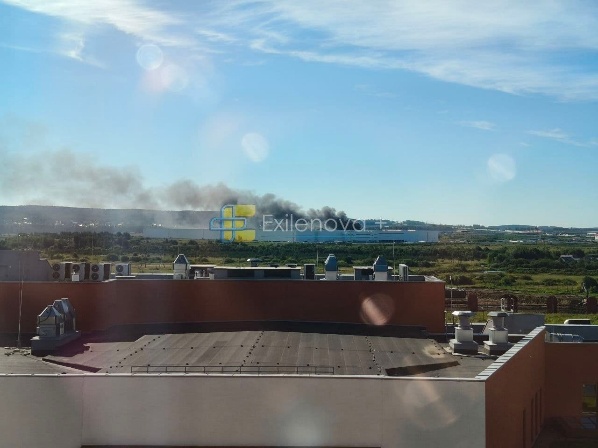
Smoke rises above a Wildberries warehouse in Yekaterinburg, Russia, following a Ukrainian strike. (Exilenova+/Telegram)
EUROPE’S DRONE ANXIETY GROWS
Two drones were spotted over a German military base in Mechernich, North Rhine-Westphalia, two days after a modified drone carrying explosives was found beside a Ukrainian cargo plane at Leipzig airport — an incident German officials confirmed Thursday had involved a plane carrying French-supplied ammunition at the time. Germany’s Interior Ministry has not ruled out “foreign powers” behind either incident, calling it a possible hybrid attack; Russia’s embassy in Berlin denied any involvement in the Leipzig incident specifically. The pattern echoes across the continent: similar drone sightings have disrupted airports and military installations in multiple NATO countries in recent months, feeding directly into warnings, including from German army chief Christian Freuding, that Russia may be preparing options against NATO within the next several years.
WHAT UKRAINIANS ACTUALLY THINK: A NEW POLL
A new survey from the Kyiv International Institute of Sociology found 60 percent of Ukrainians oppose ceding territory in Donbas to Russia, while a similar 59 percent would accept freezing the war along the current front line in exchange for real security guarantees — a distinction that captures how differently Ukrainians view formal surrender versus a pragmatic pause. Only 33 percent said they’d accept giving up territory outright. Most respondents don’t expect the war to end soon: 45 percent think it will run past the second half of 2027, and just 21 percent expect resolution by year’s end. Perhaps most tellingly, the share of Ukrainians willing to keep fighting for as long as necessary has climbed back to 61 percent, recovering from a low of 48 percent in April — a country that got more tired earlier in the year, and has since, for reasons the poll doesn’t fully explain, found more resolve rather than less.
WHAT FRIDAY REVEALED
By the time Friday folded into Saturday morning’s fresh strike on Brovary, the day had delivered its usual mix of numbers and names — nine dead, 89 wounded, a Senate vote, a sanctions list — but also something rarer: a small, specific piece of evidence that the war Putin believes he’s fighting may not be the one actually happening. A dead colonel’s voice on a phone call. A general quietly confirmed killed by his own opposition press, more than a week after the fact. A regiment finally being broken up after months of warnings nobody above it wanted to hear. None of it changes what happened on the ground today. All of it suggests the picture at the very top may be less reliable than either side’s official statements let on.
A PRAYER FOR UKRAINE
1. For the Two Railway Workers of Lozova, Once More
Lord, this war keeps finding the same kind of people in the same kind of places — workers keeping trains running for soldiers and evacuees, killed doing exactly that. Hold their families, and hold every worker at every station still standing between the front and everywhere else. Let their deaths mean something more than one more line in tomorrow’s count.
2. For a Child Wounded Overnight in Brovary
Father, a child was killed and another injured in the same strike, in a district that has now absorbed loss after loss this month alone. Hold every parent in Brovary checking on their children tonight, and comfort the family now grieving a child too young to have understood why any of this was happening to them.
3. For Soldiers Leaving a Regiment That Failed Them
Lord of justice, more than ten thousand soldiers are being reshuffled out of a unit that grew too large, too fast, under commanders who let it happen. Give these men steadiness through another transition in a war that has already asked so much of their patience. Let this restructuring genuinely protect the soldiers still serving, not just rearrange the paperwork around them.
4. For Truth to Reach the People Who Need It Most
God of truth, even a president waging this war may be hearing a version of it built on flattery rather than fact. Let honesty find its way through every layer meant to hide it, on every side of every war being fought right now. Protect the people whose lives depend on decisions made from a picture that isn’t true.
5. For a Country Choosing, Again, to Keep Enduring
God of endurance, more Ukrainians than in months are choosing to keep fighting for as long as it takes, even without any promise of when that will be, and even after months when many had grown tired enough to want it over on almost any terms. Renew that resolve where it’s genuine, and be gentle with those still struggling to find it. Give this whole country strength for a wait that keeps stretching longer than anyone wanted.
In Your mercy, in Your justice, in Your time — bring this war to its end, and let the ending be worthy of what Ukraine has endured.