
September 5, 2026
Prepared by Diana Bozhyk
US envoys Steve Witkoff and Jared Kushner met Vladimir Putin for three hours in Moscow, securing a narrow three-day pause on strikes against Kyiv and Moscow themselves while Putin rejected Ukraine’s broader proposal to halt fighting along the entire front line. Zelensky said Russia deliberately struck Kyiv’s two main airports overnight in a “demonstrative” response to the envoys’ planned arrival, part of a wider barrage that killed five people in an industrial strike on Kamianske and nearly wiped out a family of three in Chuhuiv. Ukraine’s anti-corruption bureau searched the office of Prosecutor General Ruslan Kravchenko himself, hours after he disappeared from contact for twelve hours before being found at a Kyiv clinic.
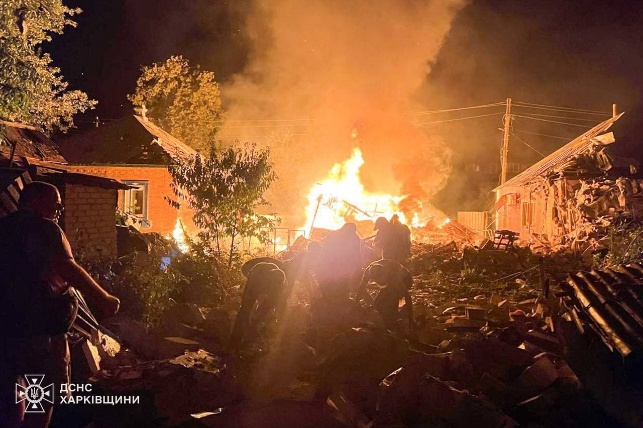
An aftermath of the Russian attack on the city of Chuhuiv in Kharkiv Oblast. (State Emergency Service / Telegram)
THE DAY’S RECKONING
Two American envoys sat across from Vladimir Putin for three hours today, and by the time they left the Kremlin, they’d secured exactly one thing: a promise not to bomb two specific cities for three days. Everywhere else in Ukraine, the war continued exactly as before. Putin made that distinction himself, telling the envoys Russia hadn’t agreed to anything broader than that.
The gap between what got protected and what didn’t showed up almost immediately. While diplomats talked in Moscow, a ballistic missile killed five people in Kamianske. A drone wiped out most of a family in a small Kharkiv Oblast city. Zelensky said Russia had struck Kyiv’s own airports overnight — deliberately, he said, timed exactly to the moment American negotiators were deciding how to fly in. It’s the shape this war keeps taking: a narrow, symbolic gesture toward peace in the capitals, and the same unrelenting violence everywhere the cameras aren’t specifically pointed. Meanwhile, back home, a corruption investigation reached all the way to Ukraine’s own top prosecutor, who spent half a day unreachable before turning up at a Kyiv clinic.
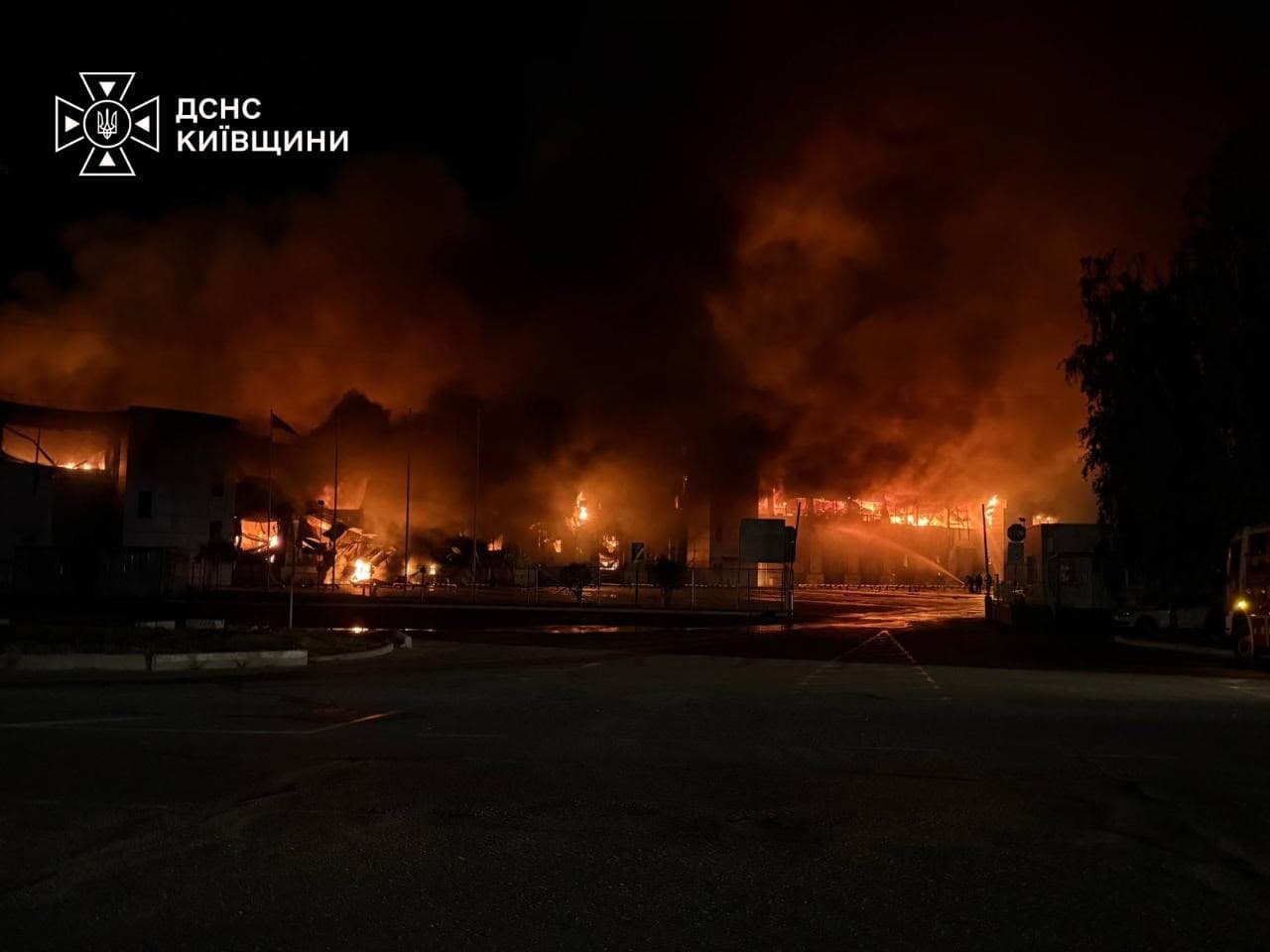
The aftermath of a Russian attack on Kyiv Oblast overnight. (Volodymyr Zelensky/Telegram)
WITKOFF AND KUSHNER MEET PUTIN FOR THREE HOURS IN MOSCOW
US envoys Steve Witkoff and Jared Kushner arrived in Moscow today, greeted at Vnukovo Airport by Kremlin negotiator Kirill Dmitriev with the words “Welcome to Moscow, peacemakers.” After a business lunch, they sat down with Vladimir Putin for roughly three hours starting around 8 p.m., in what Kremlin aide Yuri Ushakov later called “substantive, constructive, extremely frank and trustworthy” talks. Putin told the envoys the situation remains “not easy,” while confirming Russian forces hadn’t struck Kyiv since midnight and acknowledging Ukraine had significantly reduced its own strikes on Russian territory during the visit.
Putin was explicit about what Russia still wants: for the war’s “root causes” to be resolved on Moscow’s terms, which in practice means continued pursuit of the remainder of Ukrainian-controlled Donetsk Oblast and a rollback of Ukraine’s NATO ambitions. A White House official said the two sides discussed “substantive plans for next steps” to be announced in coming weeks, with the envoys expected in Kyiv the following day for what officials described as equally serious talks. Trump, addressing reporters before the visit, attributed stalled diplomacy partly to personal animosity between Zelensky and Putin, saying the two leaders “really hate each other” — an assessment that, whatever its accuracy, sidesteps the substantive gap in what each side is actually willing to accept.
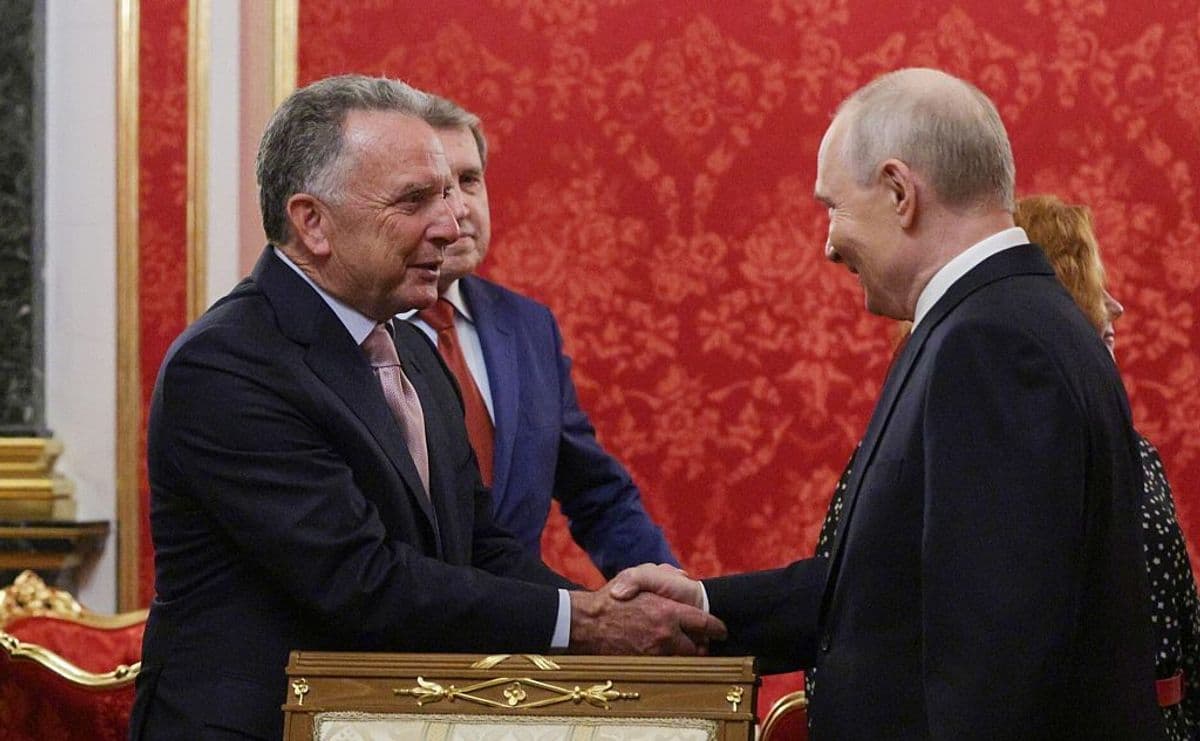
Russian President Vladimir Putin meets with U.S. President Donald Trump’s special envoys Steve Witkoff and Jared Kushner at the Kremlin in Moscow, Russia. (Kremlin Press Office/Anadolu via Getty Images)
KYIV AND MOSCOW GET A TRUCE, THE FRONT LINE DOESN’T
The diplomatic visit produced one concrete result: a narrow, three-day halt to long-range strikes specifically against Kyiv and Moscow, meant purely to let the envoys travel safely between the two capitals. Kremlin spokesperson Dmitry Peskov confirmed Putin ordered the pause on Kyiv starting at midnight; Zelensky matched it hours later for Moscow, effective through the end of September 7. “From the moment of this conversation, we are ready to observe a halt in aerial strikes on the cities involved in the negotiating process,” Zelensky said.
But Ukraine had proposed something considerably broader: a full ceasefire covering both long-range strikes and frontline combat operations lasting through September 8, communicated directly to Putin according to presidential chief of staff Kyrylo Budanov. Putin confirmed to the envoys that Russia simply hadn’t agreed to it. Ukraine’s own General Staff clarified that combat operations were continuing regardless, telling reporters a ceasefire “could not be unilateral or asymmetric” and that a full stand-down would needlessly endanger Ukrainian troops while Russia kept fighting.
One assault regiment commander noted that while long-range strikes were restricted, no limitations applied to tactical-level combat — meaning soldiers on the actual front line noticed essentially no difference from any other day. The distinction mattered practically as much as symbolically: a pause that covers missile strikes on two capital cities protects millions of civilians from the war’s most dramatic violence, but leaves untouched the daily grind of trench fighting, artillery duels, and drone strikes that continue killing soldiers and civilians alike in every region the ceasefire doesn’t name.
RUSSIA “DELIBERATELY” STRIKES KYIV’S AIRPORTS AND KILLS FIVE IN KAMIANSKE
President Zelensky said Russian forces deliberately targeted Kyiv’s two main airports overnight — the capital’s own international airport and Boryspil — calling it the first direct strike on the airfields “in a long while” and linking it explicitly to discussions about whether the US envoys might fly directly into Kyiv. “Russian-Iranian Shaheds in response to American diplomacy,” Zelensky said, adding that Ukraine would adjust its own approach to Russian airspace “next week” in response. The strikes fit an emerging pattern of using specific infrastructure to send political signals rather than purely military ones — hitting exactly the facility relevant to a diplomatic visit, at exactly the moment that visit is being planned. The envoys’ plans to fly directly into Ukraine reportedly remained unsettled as of the day’s end, with overland travel discussed as a fallback given the continued closure of Kyiv’s airspace.
The same overnight barrage carried a far deadlier edge elsewhere. A Russian ballistic missile struck an industrial enterprise in Kamianske, Dnipropetrovsk Oblast, killing five people and injuring five more, according to regional governor Oleksandr Hanzha. Three of the injured were hospitalized, including a 30-year-old woman in intensive care. Ukraine’s Air Force had issued warnings about high-speed targets approaching the area before the missile hit. Russia’s Defense Ministry didn’t shy away from confirming its refusal to observe any broader pause, publishing its own report detailing overnight strikes on industrial targets in Dnipropetrovsk Oblast alongside logistics and energy infrastructure in Mykolaiv and Odesa oblasts — effectively announcing, in its own words, that the day’s diplomacy in Moscow changed nothing about its intentions everywhere else in Ukraine.
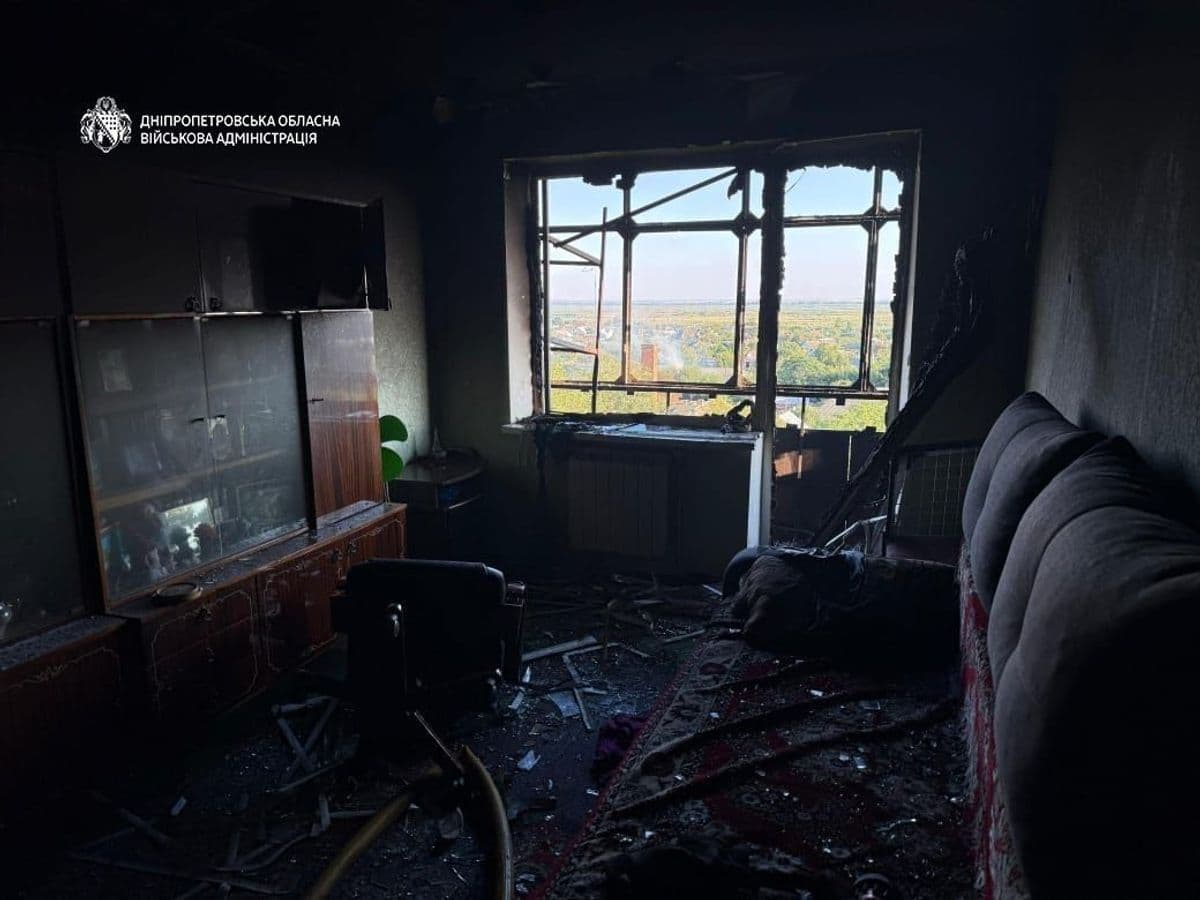
The aftermath of a Russian attack in Dnipropetrovsk Oblast. (Oleksandr Hanzha / Telegram)
A FAMILY NEARLY WIPED OUT IN CHUHUIV
A Russian jet-powered drone struck a house in the center of Chuhuiv, in Kharkiv Oblast, killing three people and injuring one more, regional governor Oleh Syniehubov said. The strike destroyed the house along with a nearby warehouse and garage. The dead were identified as a 19-year-old woman, an 11-year-old boy, and a 45-year-old man — nearly an entire family, gone in a single strike on their own home.
The Chuhuiv strike happened the same day American envoys were sitting across from Putin discussing paths toward peace, a juxtaposition that captures something essential about how little day-to-day violence in Ukraine actually depends on the state of high-level diplomacy. A city with no particular strategic significance, a house with no military value, and a family reduced from four generations of shared life to one surviving, injured relative — that’s what continued alongside three hours of talks in the Kremlin that both sides later described in careful, diplomatic language as constructive. Elsewhere the same day, International Atomic Energy Agency Director General Rafael Grossi announced a rare, narrow success: a localized ceasefire near the Russian-occupied Zaporizhzhia Nuclear Power Plant allowed Ukrainian technicians to repair power lines needed to restore the facility’s external power connection, lost since August 20 due to military activity along the Dnipro River. It’s proof that limited, specific pauses remain achievable when both sides share a practical interest — even as a comprehensive halt to the fighting itself remains entirely out of reach.
DOCTORED FOOTAGE AND A FABRICATED VILLAGE SEIZURE
Russian sources published footage today purporting to show a Russian serviceman walking through Svyatohirsk, a settlement north of Slovyansk that Putin claimed Russian forces had seized back on September 1. The footage turned out to be archival material, doctored with an added voiceover and a removed watermark — and even a Russian military blogger publicly acknowledged the manipulation, admitting there’s no credible evidence Russian forces actually hold Svyatohirsk at all. The nearest confirmed Russian positions sit roughly six miles away across difficult terrain.
It’s a rare moment of a Russian information source openly contradicting its own government’s battlefield claims, and it fits a broader pattern researchers have tracked for months: doctored and AI-generated footage functioning as a core tool in Russia’s effort to manufacture an inflated impression of territorial gains, particularly in sectors like Svyatohirsk where actual Ukrainian counterattacks near Drobysheve suggest Russian forces haven’t meaningfully advanced at all. The tactic matters beyond simple embarrassment for Moscow’s own propagandists — it actively shapes how ordinary Russians and outside observers alike perceive the war’s momentum, at a moment when the verified reality on the ground increasingly contradicts what state television keeps choosing to broadcast to its own domestic audience ahead of elections already scheduled for later this month.
MEANWHILE, AT THE FRONT
Away from the diplomatic and civilian news, the ground war held mostly static across every sector. In northern Sumy Oblast, a Ukrainian battalion deputy commander directly refuted Putin’s own claim that Russian forces sit within seven miles of Sumy City, noting no real Russian advance has occurred there since winter despite repeated small-group infiltration attempts. Near Kharkiv City, Russian sources continued baselessly claiming an encirclement between Vovchansk and Velykyi Burluk without presenting any supporting evidence, while Ukrainian counterattacks reportedly regained lost ground near Hoptivka and Kudiivka.
Near Kupyansk, fighting continued without confirmed Russian advances, and the area between Ridkodub and Nove, southeast of Borova, remains what one Russian source called a contested “gray zone” with no clear front line at all. Near Kostyantynivka, Russian claims of seizing Kurtivka went unsupported by any evidence, with the nearest actual Russian positions roughly six miles away. Near Dobropillya, Russian infiltration missions continued without confirmed territorial change, and near Hulyaipole and in western Zaporizhzhia Oblast, Russian forces made no advances despite continued pressure and infiltration attempts near Mala Tokmachka. Ukrainian intermediate-range strikes continued against Russian logistics and repair facilities in occupied Luhansk and Donetsk oblasts, part of the same sustained pressure campaign that’s defined most of the summer fighting regardless of what’s happening in Moscow that same day.
SCATTERED STRIKES ACROSS THE SOUTH AND EAST
Beyond the day’s deadliest strikes, Russian drones and missiles reached civilians across at least five regions. In Kherson City’s Korabelnyi district, drone strikes injured two men, aged 62 and 77, one suffering a traumatic finger amputation; a separate attack hospitalized a 59-year-old man with explosive trauma, and strikes in the village of Molodizhne injured three women, including a 56-year-old nurse traveling to work. In Zaporizhzhia, an FPV drone struck a cargo truck, injuring a 37-year-old woman, while a separate strike damaged a private home and hospitalized its owner.
Russian forces also targeted rail transportation directly: Shahed-type drones struck a passenger train in Chornobaivka, Kherson Oblast, damaging locomotives, injuring two people, and forcing the evacuation of 21 passengers and crew, while a separate Shahed attack midday damaged two diesel locomotives on a Kherson-bound train, injuring a 55-year-old railway worker. In Mykolaiv, consecutive jet-powered drone strikes hit an Epicenter shopping center late Friday into Saturday, injuring a 72-year-old man and, in a second strike on the same location, a 17-year-old girl. In Khmelnytskyi, drone debris fell on a three-story building, injuring seven people, including a minor. By day’s end, Russian attacks nationwide had killed at least three people and injured more than 20 others, on top of the overnight toll from Kamianske and Chuhuiv.
THE IMF REVIEWS UKRAINE’S ECONOMY AS G7 REAFFIRMS SUPPORT
G7 ambassadors met this week with an IMF mission assessing Ukraine’s economic outlook, financial stability, and progress on structural reforms tied to the country’s $8.1 billion Extended Fund Facility program. The IMF, which began its review on August 31, previously found in July that Ukraine had maintained broad macroeconomic stability despite the invasion, with total program disbursements reaching roughly $2.2 billion so far — but the fund also noted the country’s economic outlook has weakened, citing intensified Russian strikes on infrastructure and spillover effects from the war between Israel and Iran.
IMF Managing Director Kristalina Georgieva said maintaining macroeconomic stability remains Ukraine’s most urgent priority, calling for continued fiscal and monetary discipline alongside measures protecting the financial sector, even as the fund characterized Ukraine’s overall performance as “broadly satisfactory” despite delays on several structural benchmarks. The review matters beyond bureaucratic box-checking: continued IMF compliance underpins Ukraine’s broader access to international financing, at a moment when the country is simultaneously racing to close a separate $27 billion budget gap through direct negotiations with the EU and other partners. G7 ambassadors used the meeting specifically to reaffirm their own continued backing, framing reform progress and financial resilience as inseparable priorities heading into a winter that will test both simultaneously.
EUROPE’S DRONE ALLIANCE AND A RENEWED PUSH FOR FROZEN ASSETS
The EU-Ukraine Drone Alliance will hold its first formal meeting on September 11 in Brussels, bringing together 19 companies — including Ukrainian firms like Skyfall Industries and Vyriy Industry alongside European counterparts like Fincantieri and Quantum Systems — to coordinate drone and counter-drone production across the bloc. European Commission Defense Commissioner Andrius Kubilius will attend what officials describe mainly as a stocktaking session to establish a timeline for future work, though one industry source was skeptical it would produce anything beyond “yet another meeting.” The initiative can draw on up to €10 billion in unspent EU defense funds, part of a broader effort Commission President Ursula von der Leyen first proposed last year specifically to counter repeated drone incursions into EU airspace.
Separately, Belgium’s defense minister reiterated his flat rejection of using frozen Russian assets to help fund Ukraine, telling reporters the issue remains “non-negotiable” and specifically warning Baltic states to stop repeatedly raising it, given how directly Belgium would bear any legal exposure to Russian retaliation as the country hosting most of the assets through Euroclear. EU foreign ministers are scheduled to revisit the roughly €200 billion question at a meeting in Ireland next week, though today’s renewed rejection suggests any resolution remains far from settled, even as pressure to find some workable arrangement keeps building on the other side of that same debate.
NORDIC-BALTIC NATIONS COMMIT $1 BILLION FOR UKRAINE’S WINTER
Energy Minister Denys Shmyhal announced that the Nordic-Baltic Eight — Denmark, Estonia, Finland, Iceland, Latvia, Lithuania, Norway, and Sweden — will work to secure additional financial and technical assistance for Ukraine’s power grid ahead of winter, building on roughly €918 million the group has already committed this year specifically for energy resources and infrastructure protection. Shmyhal said Ukraine is prepared to share the operational expertise it’s built up over four years of keeping the grid running under sustained attack, framing the relationship as increasingly reciprocal rather than purely one of aid recipient and donor.
The commitment lands against the backdrop of Zelensky’s own recent disclosure that Ukraine faces a roughly €23.5 billion funding gap heading into winter — a number that dwarfs any single regional pledge, however welcome, and underscores just how much of Ukraine’s winter preparation still depends on financing nobody has yet fully secured. Ukrainian officials have repeatedly framed the coming season as a genuine test, warning that a repeat of last winter’s extended blackouts remains a real possibility if international support doesn’t materialize faster than it has so far, regardless of how many individual countries or regional blocs announce contributions in the meantime. Shmyhal said Ukraine’s own accumulated experience keeping the grid partially functional under sustained attack has itself become a resource worth sharing, positioning the country less as a passive recipient of aid and more as a partner whose hard-won operational knowledge now has genuine value to allies watching hybrid threats spread closer to their own borders.
UKRAINIAN REFUGEES LEAVE POLAND AS HATE CRIMES RISE
Updated Eurostat data shows Ukrainians holding temporary protection status in Poland increasingly relocating to Germany and the Czech Republic, with Poland’s registered Ukrainian population falling by roughly 14,400 across June and July alone, down to approximately 953,000. Germany now hosts nearly 1.3 million Ukrainians, while the Czech Republic has become a primary alternative destination alongside Spain, Romania, and Slovakia.
The shift coincides with a documented rise in hostility: Ukrainian citizens filed at least 180 hate-crime complaints in Poland between January and July, up roughly 30 percent from the same period last year. The trend follows a widely covered incident in Bydgoszcz in which police charged a 46-year-old Polish woman with nationality-based insults, property damage, and battery against two Ukrainian siblings, aged 14 and 12, after twisting the younger child’s arm over a toy drone. Polish Prime Minister Donald Tusk condemned the attack as “an anti-Polish act,” and Interior Minister Marcin Kierwiński stated there is “zero tolerance for hatred” — official condemnation that hasn’t yet translated into a reversal of the broader trend Eurostat’s numbers describe. Poland has hosted more displaced Ukrainians than almost any other country since 2022, making even a modest reallocation toward Germany and the Czech Republic a meaningful signal about how sustainable that welcome has actually proven over four and a half years of war.
RUSSIA KEEPS ARRESTING THE ONLY PARTY THAT OPPOSES THE WAR
Russian authorities detained two more Yabloko party candidates yesterday, Anna Shatunovskaya-Byurno and Grigory Grishin, on charges of displaying “extremist symbols” — a conviction that would legally bar either from running for office for a year. A third candidate, Artem Snegovsky, was detained just days earlier on September 1. Yabloko, Russia’s only registered party formally opposed to the war, was already barred by the Supreme Court in August from competing for the 225 party-list seats in September’s parliamentary elections, though members can still run in the 225 constituency-based seats.
The arrests follow last month’s sentencing of Yabloko figure Lev Shlosberg to 11 years and one month in prison for publicly discrediting Russia’s military and spreading what courts called “fake news” about the war — the same criminal framework now being used against Shatunovskaya-Byurno and Grishin ahead of a September 8 court hearing, just days before the elections that Yabloko will barely be allowed to contest. The pattern has become predictable enough that Russian opposition observers describe it less as a series of isolated prosecutions than as a coordinated pre-election sweep, timed specifically to remove any credible antiwar voice from public view before Russians go to the polls later this month. With Yabloko already barred from party-list seats and now watching its remaining constituency candidates detained one by one, the party’s actual ability to appear on ballots at all is shrinking by the week, even as officials insist the elections themselves remain free and fair.
A CORRUPTION CASE REACHES THE PROSECUTOR GENERAL HIMSELF
Ukraine’s anti-corruption agencies revealed new detail today in an investigation that increasingly appears to touch Prosecutor General Ruslan Kravchenko personally. Investigators allege a senior official within the Prosecutor General’s Office built a criminal organization in mid-2025 that protected fraudulent call centers in exchange for systematic bribes, laundering the proceeds through real estate, jewelry, and accounts held by associates — more than $450,000 in identified assets so far, with five alleged members identified.
Recordings released by NABU reference the group’s leader answering to someone identified only by the patronymic “Andriiovych” — Kravchenko’s own patronymic — though investigators stopped short of directly naming him as implicated. Kravchenko went unreachable for more than 12 hours before sources told local media he’d been found at a Kyiv clinic; his office initially denied reports of searches at his own workspace before confirming overnight searches had, in fact, taken place there and in offices used by his first deputy. The Prosecutor General’s office said it would cooperate with the investigation while separately questioning whether the evidence justifying searches of Kravchenko’s own office actually meets the legal threshold required — a dispute likely to play out in court even as the broader case continues expanding, adding one more thread to a year that’s already seen corruption investigations touch a former chief of staff, a former deputy chief of staff, and now, however indirectly, the country’s most senior prosecutor.
A THREE-HOUR MEETING, A FAMILY LOST, A PROSECUTOR UNREACHABLE
By nightfall, the day’s central tension was impossible to miss: diplomacy inching forward in one room while ordinary Ukrainian lives kept ending in others. Three hours in the Kremlin bought two capitals a few days of quiet. It bought Kamianske and Chuhuiv nothing at all.
A family in Chuhuiv is down to one survivor tonight. A power line at a nuclear plant is finally getting repaired, thanks to the one kind of ceasefire that actually held. And in Kyiv, the country’s top prosecutor spent half a day unreachable before turning up at a clinic, leaving a corruption case that started months ago now knocking, however carefully, on his own office door. Nothing today ended. Everything today measured exactly how selective this war’s rare moments of restraint still are.
A PRAYER FOR UKRAINE
1. For the Family Lost in Chuhuiv
Lord, a family is gone tonight in Chuhuiv — a 19-year-old woman, an 11-year-old boy, a 45-year-old man, taken together in their own home. We cannot make sense of a loss this complete, this sudden. Receive each of them, comfort whoever survives to grieve them, and let their home, however destroyed, be remembered as the place a family once lived fully, not simply the site of their ending.
2. For the Five Lost in Kamianske
Father, five more people are gone tonight in an industrial strike that arrived hours after Ukraine had already chosen restraint. We grieve lives measured in ordinary workdays, ended without warning. Comfort the families still sitting with the injured tonight, including a young woman fighting in intensive care, and give this community strength for the mourning still ahead, even as the world’s attention stays fixed elsewhere.
3. For Diplomacy That Protects More Than Two Cities
Lord of peace, we pray for the negotiators working toward something real, even when today’s progress covered only two capitals and left everywhere else exposed. Give them wisdom to press for more than symbolic gestures. And give both sides the courage to extend the same restraint they showed Kyiv and Moscow to every village and city that matters just as much.
4. For Every Voice Russia Keeps Trying to Silence
God of justice, we pray for Yabloko’s candidates, detained one after another simply for representing the only party willing to oppose this war. Give them endurance behind whatever charges are brought against them. And give Russia’s own citizens, watching this pattern repeat with each election, the courage to remember that silence imposed by force is never the same as consent.
5. For Truth to Reach Every Office, However High
God of truth, we pray for Ukraine’s ongoing corruption investigations, now reaching toward the country’s most senior legal official. Give investigators the courage to follow evidence wherever it leads, and give Ukraine’s institutions the strength to hold accountable even those meant to hold others accountable. Let this reckoning, however uncomfortable, ultimately serve the justice the country deserves.
In Your mercy, in Your justice, in Your time — bring this war to its end, and let the ending be worthy of what Ukraine has endured.