
Ukraine Daily Briefing | May 10, 2026 | Day 1,537 of the Full-Scale Invasion
Day two of the U.S.-brokered ceasefire: Russia launched no mass missile packages but conducted over 150 ground assaults, 100 artillery strikes, and almost 10,000 kamikaze drone strikes across two days, killing one civilian in Zaporizhzhia Oblast and injuring at least 19 others. A Russian rescue vehicle was deliberately struck in Dnipropetrovsk Oblast as a 23-year-old driver was hospitalized; a 47-year-old man was injured by a drone strike on a car in Sumy Oblast. Russian forces used the pause to rotate troops, resupply, and fortify positions in Kupyansk, Lyman, and Slovyansk. Ukraine advanced in the Slovyansk direction, cleared infiltrators in Lypivka, pushed forward in Illinivka south of Kostyantynivka, and eliminated Russian assault groups in western Zaporizhzhia Oblast. Russia was documented using Red Cross insignia as camouflage near Pokrovsk — a war crime under the Geneva Conventions. Latvia’s defense minister resigned over the drone incidents near Rezekne. Putin threatened Armenia with an “intelligent divorce” from the EAEU if it pursues EU membership, drawing a direct parallel to Ukraine. Kremlin aide Ushakov confirmed U.S. envoys Witkoff and Kushner will return to Moscow. Germany rejected Putin’s suggestion that Gerhard Schröder serve as European mediator. Ukraine’s Zelensky announced it will hold “long-range sanctions” as long as Russia avoids mass attacks.
The Day’s Reckoning
The ceasefire’s second day looked like the first. Russia launched no large-scale missile packages — that much held. Everything else continued. More than 150 ground assaults, more than 100 artillery strikes, almost 10,000 kamikaze drone strikes across the two days of the truce. Ukraine’s General Staff recorded 147 combat engagements on day one alone. A rescue vehicle was struck in Dnipropetrovsk Oblast while its crew was responding to an emergency. Ukrainian forces advancing south of Kostyantynivka and through the Slovyansk direction were discovering that the ceasefire meant different things on different sides of the line.
Russia used the pause to do what it always does with pauses: move forces. Troops rotated in Kupyansk, Lyman, and Slovyansk. Supplies came forward. The 90th Tank Division consolidated in Pokrovsk. Russian forces in the Lyman direction accumulated infantry and brought them closer to the front under reduced Ukrainian drone pressure. ISW assessed that Russian forces will resume reinvigorated offensive operations when the ceasefire ends on May 11. The truce is a logistics window dressed as a humanitarian gesture.
In Pokrovsk, Russian servicemembers were photographed and filmed wearing Red Cross armbands. The Ukrainian 7th Rapid Reaction Corps reported this had been occurring for several days in a row. Using Red Cross insignia to disguise combatants is perfidy — a war crime under the Geneva Conventions. It joins a list that now includes double-tap strikes on emergency responders, systematic torture of prisoners, deliberate targeting of hospitals, and the deployment of fiber-optic drones against civilian vehicles in residential areas.
The diplomatic picture clarified around its hardest edges. Kremlin aide Ushakov told Russian state media that Ukraine must withdraw from Donbas before any settlement can advance, adding that Witkoff and Kushner will return to Moscow “quite soon.” Germany rejected Putin’s suggestion that former Chancellor Gerhard Schröder serve as a European mediator, calling it a “bogus offer” designed to divide the Western alliance. Latvia’s defense minister resigned after Ukrainian drones diverted by Russian jamming crashed near an oil storage facility in Rezekne.
Ceasefire Day Two: No Mass Strikes but 10,000 Drone Attacks Across the Front
Ukraine’s Air Force reported that Russian forces launched 27 Shahed, Gerbera, Italmas, and Parodiya drones between midnight and 0800 on May 10, all of which Ukrainian air defenses downed. Russia launched them from Primorsko-Akhtarsk and Millerovo. The absence of a mass missile package — the first time in weeks Russia has not launched a large-scale aerial campaign — was the most notable feature of day two. Zelensky acknowledged this directly: Ukraine held back “long-range sanctions” in response to the absence of massive Russian attacks. “If the Russians decide to return to full-scale warfare, our sanctions will be immediate and tangible,” he said.
The ground picture was different. Russian forces conducted limited offensive operations without confirmed advances in the Sumy, Kharkiv, Kupyansk, Slovyansk, Kostyantynivka-Druzhkivka, Dobropillya, Pokrovsk, Novopavlivka, Oleksandrivka, Hulyaipole, and western Zaporizhzhia directions. Across the two ceasefire days, Zelensky stated Russian forces conducted over 150 ground assaults, over 100 artillery strikes, and almost 10,000 kamikaze drone strikes on front-line positions. Russia’s own MoD on May 10 accused Ukraine of committing eight ground assaults, 676 artillery and mortar strikes, and 6,331 drone strikes. ISW observed a reduction in overall operational tempo but not a cessation of hostilities.
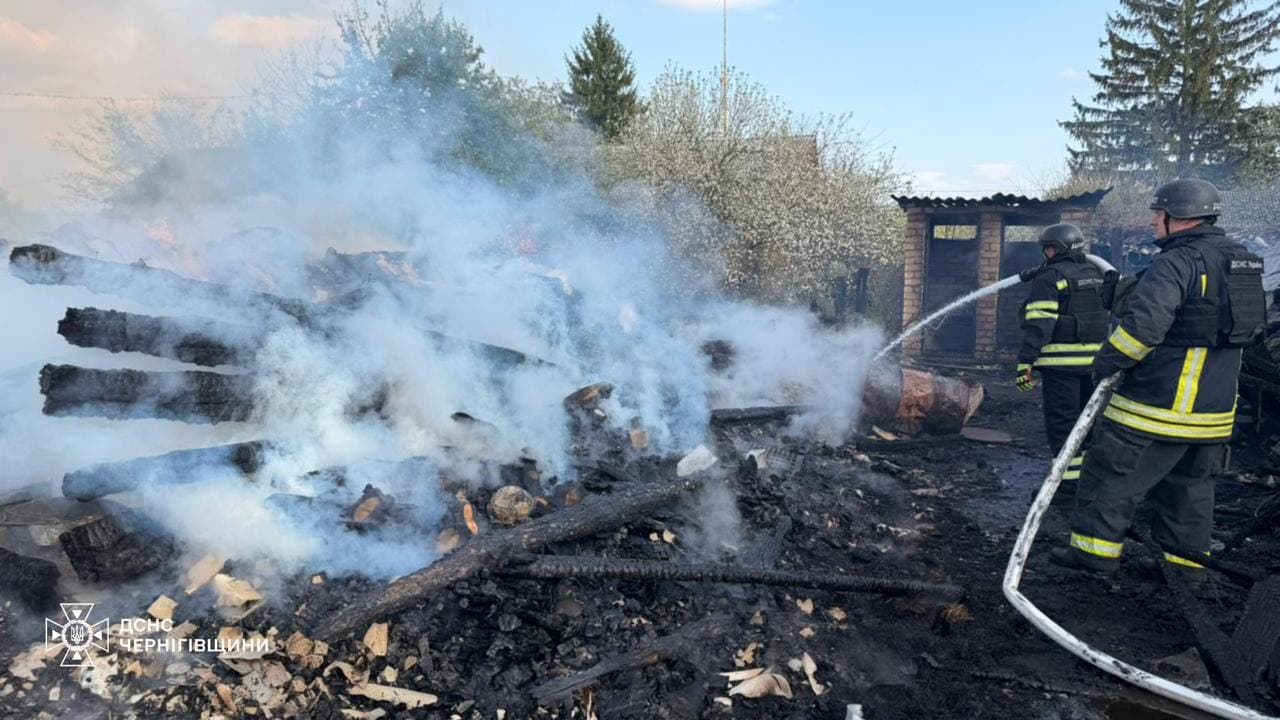
Firefighters from Ukraine’s State Emergency Service put out a blaze following Russian first-person-view (FPV drone strikes on border areas. (Ukraine’s State Emergency Service)
Casualties on Day Two: One Killed, 19 Injured, Emergency Crew Deliberately Struck
One civilian was killed and at least 19 were injured across Ukraine on May 10. In Zaporizhzhia Oblast, one person was killed and three others injured, including a child; Russian forces carried out 780 strikes on 33 settlements over 24 hours. In Kharkiv Oblast, three people were injured. In Dnipropetrovsk Oblast, a three-year-old girl was injured in a drone strike and hospitalized in moderate condition. In Donetsk Oblast, four people were injured; Russian forces struck settlements 18 times. In Kherson Oblast, seven people, including a child, were injured; a multi-story apartment building and eight private homes were damaged. In Sumy Oblast, a 47-year-old man was injured when a drone struck his car; more than 50 attacks were recorded across 18 settlements. In Chernihiv Oblast, critical and civilian infrastructure was damaged by FPV drone strikes in border areas; no casualties were reported.
In the Myrivska community of Nikopol district, Dnipropetrovsk Oblast, a Russian drone struck a State Emergency Service fire-rescue vehicle while the crew was traveling to assist local residents on the morning of May 10. A 23-year-old rescue driver was injured and hospitalized. The SES described the attack as “deliberate.” This is the 402nd documented Russian attack on Ukrainian emergency responders since the start of the full-scale invasion, according to Truth Hounds’ database.
War Crime: Russian Forces Wear Red Cross Insignia Near Pokrovsk
Geolocated footage published on May 10 shows Russian servicemembers dressed as Red Cross personnel operating near Pokrovsk — a violation of the Geneva Conventions constituting the war crime of perfidy. The Ukrainian 7th Rapid Reaction Corps of the Air Assault Forces reported that Russian forces in the Pokrovsk area have been wearing white armbands with Red Cross markings for several consecutive days, using the humanitarian insignia to move among Ukrainian positions without being immediately identified as combatants. The Geneva Conventions explicitly prohibit the use of the red cross emblem or similar protective symbols by combatants to gain a military advantage, classifying such acts as perfidy — a grave breach of the laws of armed conflict.
Russian AI Flag-Raising Videos: Kremlin’s Coordinated Cognitive Warfare
ISW assessed on May 10 that Russia has been systematically using AI-generated and heavily edited flag-raising footage to falsely claim advances in areas where Russian forces conducted only infiltration missions without establishing enduring positions. The Kremlin released significant volumes of this AI footage in the days immediately preceding Victory Day on May 9, apparently to compensate for Russian forces failing to meet their own advance deadlines before the holiday. ISW has increasingly observed footage created using artificial intelligence purportedly showing Russian flag raisings in multiple frontline sectors. The footage is designed to portray the front as collapsing across the theater, contradicting all available evidence. ISW assessed the campaign reflects a coordinated Kremlin effort to support the higher military command’s informational objectives and obscure the reality that Russian forces are making minimal tactical progress.
Frontline: Ukrainian Advances in Slovyansk, Kostyantynivka, and Western Zaporizhzhia
Ukrainian forces recently advanced in the Slovyansk direction. Geolocated footage published on May 9 indicates Ukrainian forces advanced in central Nykyforivka southeast of Slovyansk. Additional footage, reporting from Ukrainian military observer Mashovets, and Russian milblogger claims indicate Ukrainian forces are fighting for Nykyforivka and have likely cleared Lypivka — northwest of Nykyforivka and southeast of Slovyansk — of Russian infiltrators. A Russian milblogger claimed Russian forces advanced south of Sosnove northwest of Lyman and east of Lyman, not confirmed by ISW. In the Borova direction, geolocated footage published May 9 shows Russian forces shelling a Ukrainian trench southwest of Serhiivka, indicating no Russian positions near the Ukrainian line.
Ukrainian forces recently advanced south of Kostyantynivka. Geolocated footage published on May 9 indicates Ukrainian forces advanced in central Illinivka south of Kostyantynivka. Separately, footage from April 28 shows Russian forces shelling Ukrainian positions in eastern Kostyantynivka, indicating no Russian positions in the area contrary to Russian claims. Russian forces conducted a fresh infiltration mission in northeastern Kostyantynivka. In the Oleksandrivka direction, Mashovets reported Russian forces are attempting to retake positions in the Rybne-Zlahoda direction that Ukrainian counterattacks previously denied them; the largest Russian penetration was an assault group infiltration north of Novohryhorivka toward Verbove.
In western Zaporizhzhia Oblast, Ukrainian forces eliminated most Russian assault groups southeast of Stepnohirsk and reduced the size of the Russian infiltration area south of Novodanylivka. Ukrainian forces maintain positions on the Yanchekrak River northwest of Stepove and north of Lobkove, indicating Russian forces infiltrated around rather than through these positions. A Kremlin-affiliated milblogger acknowledged Ukrainian forces seized four settlements northwest of Orikhiv including Lukyanivka and operate in most parts of Prymorske. ISW assessed these advances cumulatively eliminate Russian gains made in western Zaporizhzhia since roughly mid-2025.
The Russian 58th Combined Arms Army has likely shifted its main effort from advances toward Zaporizhzhia City to seizing Orikhiv, per Mashovets. The 58th CAA is shifting operational reserves from its left flank (toward Zaporizhzhia City, 19th MRD AoR) to its right flank (toward Orikhiv, 42nd MRD AoR). Mashovets assessed that the Russian command likely changed its main effort after concluding that advancing on Zaporizhzhia City without first eliminating Orikhiv as a Ukrainian defensive hub would be futile. Russian forces infiltrated up to one kilometer north of Shcherbaky and into northwestern Mali Shcherbaky. Mashovets added that Russian assault groups remain in small groups of five to six servicemembers in infiltration positions west of Novoandriivka and east of Pavlivka — not enduring seizures. ISW assessed the Russian Eastern Grouping of Forces’ advance toward the Verkhnya Tersa-Hulyaipilske line has effectively stalled because it cannot concentrate sufficient forces under current Ukrainian drone pressure.
Russian Forces Use Ceasefire to Regroup; VDV Redeployment Toward Zaporizhzhia
Ukrainian military sources confirmed on May 10 that Russian forces used the ceasefire for regrouping, rotations, logistics, and position fortification across the Kupyansk, Lyman, and Slovyansk directions and in northern Kharkiv Oblast. In the Kupyansk and Borova sectors, the Ukrainian 10th Army Corps reported no Russian ground assaults on May 9 but continued FPV and Molniya drone strikes at reduced pace. A source reporting on the Russian Western Grouping of Forces stated the ceasefire did not fully hold in Kupyansk and both sides had resumed activity. In the Lyman direction, a Ukrainian brigade spokesperson confirmed Russian forces exploited the truce to accumulate troops and bring infantry forward. In the Kramatorsk direction, the Ukrainian 11th Army Corps confirmed Russian forces reduced airstrikes but continued ground assaults and drone strikes, also exploiting the truce for infantry accumulation and logistics.
ISW assessed that the Russian military command’s redeployment of 106th VDV Division elements from Sumy Oblast to the Kherson direction may be an attempt to free up the 104th VDV Division for operations in the Zaporizhzhia direction. ISW first observed 106th VDV elements in Kherson as of May 6. The Russian military has also reportedly introduced the new BM-70 reconnaissance and strike drone to the battlefield, with footage of Northern Grouping of Forces strikes published by a Russian milblogger on May 10. The drone reportedly has a speed of 150–200 km/h. Russian forces in the Kharkiv direction are also reportedly launching Banderol cruise missiles from Mi-28 helicopters — a configuration that keeps the helicopters outside Ukrainian air defense range — and have introduced 20 kg-capacity UGVs for logistics in the sector.
Kremlin Demands Donbas Withdrawal; Ushakov Confirms Witkoff-Kushner Return to Moscow
Kremlin Presidential Aide Yuri Ushakov stated on May 10 that any peace settlement “will stand still even after 10 rounds of negotiations” unless Ukraine withdraws its armed forces from the Donbas. Ushakov added he is “convinced” that Witkoff and Kushner will visit Moscow again “quite soon” and that Russia does not believe the U.S. has decided to leave the Ukrainian issue unresolved. The Kremlin separately demanded that Zelensky call Putin by phone before any face-to-face meeting can occur. Kremlin aide Ushakov cited Slovak PM Fico as having relayed signals of Zelensky’s interest in a meeting, saying: “Let him call — we are ready to accept and conduct negotiations.” Ukraine’s Presidential Office adviser Serhiy Leshchenko responded: “Moscow is the capital of the aggressor state. Such a format of negotiations is impossible.” ISW assessed that the Donbas withdrawal demand asks Ukraine to surrender territory Russia cannot seize militarily, as a precondition for Russia agreeing to a ceasefire it would use to prepare the next offensive.
Fico returned from Moscow on May 10 and publicly stated he had conveyed a message from Zelensky to Putin: that Zelensky is ready to meet in any format. Fico said Putin’s answer was that Zelensky must call him by phone first. Fico described himself as the “black sheep” of the EU for the Moscow visit, called the ceasefire “absolutely necessary,” and backed its extension. His aircraft had been forced to detour through Czech airspace after Poland, Lithuania, Latvia, and Estonia barred him from their airspace for the Moscow trip. Costa (EU Council President) clarified on May 10 that the EU will talk to Russia “at the right moment” but will not disturb the U.S.-led process; an EU official said: “There will be a moment when the EU will need to speak to Russia because it’s an existential issue for Europe. Now is not the time.”
Germany Rejects Schröder as Mediator; Kremlin Punishes Critical Milbloggers
Berlin dismissed Putin’s suggestion on May 10 that former German Chancellor Gerhard Schröder serve as a European mediator in peace talks. A German official told Reuters the proposal was not credible because Russia had not changed its conditions for ending the war, calling it one of a series of “bogus offers” aimed at dividing the Western alliance. SPD politician Michael Roth called it “an affront to the U.S. and a transparent maneuver,” adding that “a mediator cannot simply be Putin’s buddy.” Opinion within the SPD was divided: politician Adis Ahmetovic said the proposal should not be “categorically ruled out” if it could help Europe gain a seat at the negotiating table. Schröder served as German chancellor from 1998 to 2005, received approximately $350,000 annually as chairman of Nord Stream AG’s board, and has maintained close ties with Putin.
ISW documented on May 10 that the Kremlin is systematically punishing milbloggers who criticize military and political leadership. The administrator of the Thirteenth channel, Yegor Guzenko — who had fractured both legs on March 1 and was serving with a military unit in lieu of jail time after being arrested in October 2024 on charges linked to his criticism of the MoD and Putin — was reportedly sent to a frontline assault unit on approximately April 27 and has not made contact since; the channel assessed he would “very likely die” on this mission. Separately, Russian combat helicopter pilot Alexey Zemtsov, administrator of the Voevoda Veshaet channel, was arrested and placed in pre-trial detention on charges unrelated to his military service; the channel noted he was willing to deploy to Ukraine as a Storm V assault company member. Zemtsov had published a video on April 15 alleging censorship and “discrediting” accusations from the Russian military command.
Latvia’s Defense Minister Resigns; Drone Incidents Across NATO’s Eastern Flank
Latvian Defense Minister Andris Spruds resigned on May 10 after two Ukrainian drones — diverted from targets in Russia by Russian electronic warfare jamming — entered Latvian airspace and crashed near oil storage facilities in Rezekne on May 7. Prime Minister Evika Silina said she had requested Spruds’ resignation, stating he had lost her trust and “that of the public.” Silina appointed Colonel Raivis Melnis as the new defense minister. Spruds said he stepped down to prevent the military from being dragged into a political dispute. Ukrainian FM Sybiha confirmed that investigations proved the diversions were caused by Russian electronic warfare deliberately redirecting Ukrainian drones, and announced Ukraine’s readiness to send specialists to Latvia, Estonia, and Finland to cooperate on airspace protection. Estonia’s Defense Minister Pevkur said Estonia expects Ukraine to better control its drones; Estonian FM Tsakhna warned that Russia could exploit jammed Ukrainian drones to carry out attacks on NATO territory.
Polish military police reported on May 9 the discovery of a reconnaissance drone near Bartoszyce, approximately 20 km from Russia’s Kaliningrad Oblast. The drone bore Russian-language inscriptions, was equipped with multiple cameras, and preliminary findings suggest it was a military reconnaissance drone with no combat capabilities. Polish authorities confirmed it was a foreign object not originating from Poland; its limited range suggests it could not have flown from Ukraine and likely came from Kaliningrad. Ukraine’s Atesh partisan group claimed on May 10 that its agents sabotaged a military electric locomotive used to transport cargo toward Sumy Oblast near the city of Lipetsk, Lipetsk Oblast (approximately 335 km from the Ukrainian border in Sumy Oblast), pouring flammable liquid into the interior and setting it ablaze. The Kyiv Independent could not independently verify the claim.
Putin Threatens Armenia with “Intelligent Divorce”; Kremlin Demands Explanation from Yerevan
Russian President Putin stated on May 10 that Armenia should hold a national referendum to decide between EU membership and remaining in the Eurasian Economic Union, and that if Armenia chooses the EU, an “intelligent and mutually beneficial divorce” from the EAEU may be necessary. Putin explicitly drew a parallel between Armenia’s EU aspirations and the EuroMaidan revolution in Ukraine: “Where did it start? With Ukraine seeking to join the European Union.” Kremlin spokesman Peskov separately stated on May 10 that Moscow expects an explanation from Armenia over Zelensky’s “anti-Russian statements” at the Yerevan summit, calling it inconsistent with “the spirit of relations” between Moscow and Yerevan, and criticizing Pashinyan for not pushing back against such statements. Armenia formally remains a CSTO member but suspended its participation in 2024 after Russia failed to intervene during the Nagorno-Karabakh conflict. Armenia has ratified the Rome Statute, joining the ICC — which has an active arrest warrant for Putin.
Ziobro Flees Hungary; Magyar Sworn In; Amosov Wins at UFC 328
Former Polish Justice Minister Zbigniew Ziobro fled Hungary to the United States on May 10 after newly inaugurated Hungarian PM Peter Magyar indicated he would extradite Ziobro to Poland, where an arrest warrant charges him with 26 offenses including deploying spyware against political opponents and misuse of public funds. Ziobro had been sheltered in Hungary under Viktor Orbán’s protection. Ziobro denied fleeing, saying he was attending a conference in Budapest, and will work as a political commentator for Polish outlet TV Republika. Magyar took office on May 9 during Hungary’s inaugural parliamentary session. As noted yesterday, his Tisza party won 141 of 199 seats in April’s elections, and Magyar has pledged to end Hungary’s Russian energy dependence by 2035 and restore EU ties.

Yaroslav Amosov of Ukraine reacts after a victory against Joel Alvarez of Spain in a welterweight fight during the UFC 328 event at Prudential Center in Newark, New Jersey. (Ed Mulholland/Zuffa LLC)
Ukrainian MMA fighter Yaroslav Amosov won at UFC 328 on May 10 in Newark, New Jersey, defeating Spaniard Joel Alvarez by arm-triangle choke submission in the second round. Amosov holds a professional record of 30–1. He had paused his fighting career in 2022 to serve in Ukraine’s Territorial Defense Forces, participating in the defense of Kyiv Oblast and his hometown of Irpin. After Irpin’s liberation, Amosov recovered his world championship belt from the rubble of his mother’s home — footage that circulated widely around the world.
The Weight of May 10
Russia used the ceasefire to rotate troops and resupply positions across every active direction. The pause held in the air. The ground never stopped.
Russian soldiers were photographed wearing Red Cross armbands near Pokrovsk. The Kremlin is producing AI flag-raising videos to claim advances that do not exist. Milbloggers who criticize the war are being sent to assault units with broken legs and placed in pre-trial detention.
Ukraine advanced in Nykyforivka, cleared Lypivka, pushed forward south of Kostyantynivka, and eliminated Russian assault groups in western Zaporizhzhia. The ceasefire did not stop any of this.
The Kremlin’s price for talks: Ukraine must abandon the Donbas, call Putin by phone, and wait for Witkoff and Kushner to fly to Moscow. Germany said Schröder as mediator is a bogus offer. Latvia’s defense minister resigned over Ukrainian drones Russia redirected into Latvian airspace.
A rescue worker was struck in a deliberate drone attack while responding to an emergency call in Dnipropetrovsk Oblast. A three-year-old girl was injured in Dnipropetrovsk. One person was killed in Zaporizhzhia. The ceasefire expires tomorrow.
A Prayer for Ukraine
1. For the One Killed and the 19 Injured on Day Two of the Ceasefire
Lord, one person died in Zaporizhzhia Oblast. A three-year-old girl was hospitalized in Dnipropetrovsk. Seven were injured in Kherson, including a child. A 47-year-old man was struck in his car in Sumy. A 23-year-old emergency worker was hit in Dnipropetrovsk while driving toward people who needed help. These are the casualties of a day that was called a ceasefire. Receive the one who died. Hold the injured. And hold the families who spent a ceasefire day in a hospital waiting room.
2. For the Emergency Worker Deliberately Struck
Father, a 23-year-old driver for the State Emergency Service was targeted by a Russian drone in Nikopol district while traveling to assist local residents. The SES called it deliberate. This is the 402nd documented Russian attack on Ukrainian emergency responders. We have prayed for this list before. We pray again. Protect the people who run toward fires and explosions when the rest of Ukraine is running away from them. And let the 402 attacks be counted, documented, and answered for.
3. For the Prisoners Waiting for an Exchange That Has Not Happened
God of the waiting, the 1,000-for-1,000 exchange has not taken place. Putin said Ukraine sabotaged it. Ukraine said that is not true. The U.S. is being asked to guarantee what it brokered. The ceasefire expires tomorrow. We pray for the people on those lists — the Ukrainian prisoners in Russian facilities who were told something was coming, and the families who were told the same. Let the exchange happen before the ceasefire ends. Let it happen even if the ceasefire ends. Let it happen.
4. For the Soldiers in the Silence Russia Used
Lord, the ceasefire gave Russia’s forces two days to rotate, resupply, and fortify positions that Ukrainian drone pressure had made inaccessible. The silence that was promised to protect lives was used to prepare the next assault. We pray for the Ukrainian soldiers who observed the pause on the other side of the line from that preparation. Give them the intelligence they need to understand what is coming on May 12, and the strength to meet it. And give their commanders the wisdom to use what remains of the silence well.
5. For Armenia, and for Every Country Russia is Threatening
God of nations, Putin told Armenia it must choose between Russia and Europe, and invoked Ukraine as the warning of what happens to countries that choose wrong. Armenia ratified the ICC statute. Armenia said it is not Russia’s ally. Russia summoned its ambassador and demanded explanations. We pray for Armenia’s leaders and its people as they navigate a set of pressures that have already destroyed one neighbor’s peace. And we pray for the principle that nations are permitted to choose their own alliances — that this principle survives the war, and is written into whatever document eventually ends it. In Your mercy, in Your justice, in Your time.