
Ukraine Daily Briefing | May 11, 2026 | Day 1,538 of the Full-Scale Invasion
The three-day U.S.-brokered ceasefire expired at midnight on May 11. Within hours, Russian drones struck Kyiv — debris from a downed drone fell on a 16-story residential building in Obolon; a kindergarten and homes in Fastiv, Kyiv Oblast were also damaged. The ceasefire’s final day recorded 180 combat engagements, 8,037 kamikaze drones, and 6,380 attacks; three civilians were killed (two in Kherson, one in Zaporizhzhia) and 16 injured. Ukraine submitted its POW exchange lists to Russia and called on the U.S. to guarantee implementation; the exchange has not taken place. Ukrainian FM Sybiha proposed a new limited “airport ceasefire” to EU foreign ministers as a European-led diplomatic initiative. German Defense Minister Pistorius made an unannounced visit to Kyiv and signed a letter of intent launching “Brave Germany” — joint drone and defense tech development including systems up to 1,500 km range. The EU and Ukraine formally rejected Putin’s proposal of Gerhard Schröder as mediator. Hungary’s incoming FM Anita Orbán pledged to end veto abuse and unblock €17 billion frozen over rule-of-law disputes. North Korea earned $7–13.8 billion from Russia through arms sales and troop deployment. Swedish authorities arrested two people for supplying Russia with sanctioned industrial goods.
The Day’s Reckoning
The ceasefire expired at midnight. Russia did not wait for morning. Drones flew toward Kyiv at 3:35 a.m. local time — the Air Force warned of groups approaching from the east, explosions were heard in the capital, and debris from a downed drone fell on the roof of a 16-story building in the Obolon district. In Fastiv, southwest of Kyiv, a kindergarten and several private homes were damaged. No casualties were reported in the capital. The three days of relative quiet were over.
The final day of the ceasefire itself had not been quiet. One hundred and eighty combat engagements were recorded. Russia launched 8,037 kamikaze drones and conducted 6,380 attacks on May 10. Three civilians were killed and 16 injured on May 11: two in Kherson Oblast, one in Zaporizhzhia Oblast. Kherson was struck across 12 settlements. Zaporizhzhia recorded 785 attacks on 36 settlements. A drone strike in Mykolaiv Oblast injured a married couple and a 19-year-old man. The ceasefire was, for the third consecutive time since Easter, a period of reduced — not absent — killing.
Ukraine submitted its lists for the prisoner exchange. Zelensky confirmed it after a briefing from Umerov, writing: “The lists have been submitted, and we expect the American side to be active in ensuring the implementation of this agreement.” The exchange has still not taken place. Ukraine’s Sybiha, speaking on the sidelines of the EU Foreign Affairs Council in Brussels, proposed a new initiative: a limited “airport ceasefire” in which both sides agree not to strike each other’s airfields. Russia’s airports have grown increasingly vulnerable to Ukrainian long-range drones. The proposal is the first time Ukraine has publicly named a specific sectoral ceasefire format as an entry point for European-led diplomacy.
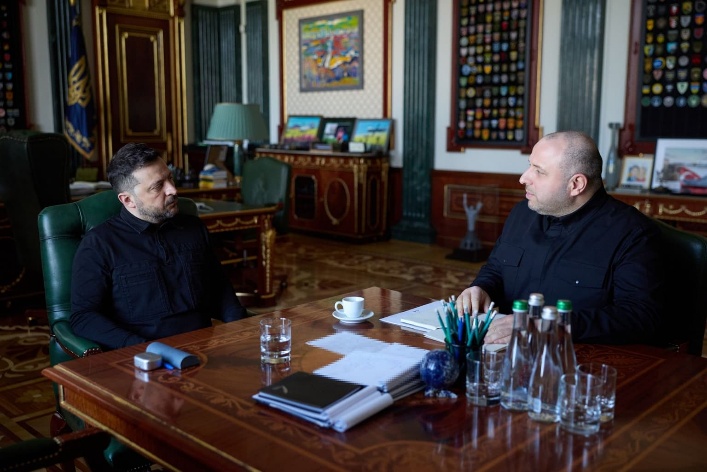
President Volodymyr Zelensky meets Rustem Umerov, secretary of Ukraine’s National Security and Defense Council in Kyiv. (Volodymyr Zelensky / X)
German Defense Minister Pistorius arrived in Kyiv unannounced and signed a letter of intent with Defense Minister Fedorov launching “Brave Germany” — a joint initiative backed by Ukraine’s Brave1 defense-tech platform to develop advanced drone systems, including long-range systems with 1,500 km range, and support innovative startups in both countries. Germany has already begun financing a contract signed April 14 for hundreds of Patriot missiles; deliveries begin next year. Germany is also funding IRIS-T missiles, interceptor drones, and initial allocations for Ukrainian drone assault units. Fedorov noted Ukraine possesses weapons striking at 1,500 kilometers and remains interested in German Taurus missiles.
Ceasefire Day Three: 180 Engagements, 8,037 Drones, Three Dead, and an Overnight Strike on Kyiv
Ukraine’s General Staff reported 180 combat engagements on May 11 across all frontline sectors during the final day of the ceasefire. Russian forces used 4,901 kamikaze drones and conducted 1,926 attacks on May 11 itself; on May 10, Russia had already launched 8,037 kamikaze drones and 6,380 attacks including 25 MLRS strikes. No large-scale missile packages were launched during the three ceasefire days, and no long-range strikes were conducted by either side on May 10–11. The heaviest fighting was on the Pokrovsk and Hulyaipole axes. On Pokrovsk, Russian forces launched 26 separate attacks near Rodynske, Novooleksandrivka, Hryshyne, Bilytske, Pokrovsk City, Kotlyne, Udachne, Muravka, Novopidhrodne, and Molodetske; Ukrainian forces reported 50 Russian soldiers killed, 17 wounded, one MLRS destroyed, six vehicles, and 50 personnel shelters on that axis alone. On Hulyaipole, Ukrainian forces repelled 16 attacks toward Dobropillia, Staroukrainka, Zaliznychne, Nove Zaporizhzhia, Vozdvyzhivka, Charivne, and near Hulyaipole itself.
At 3:35 a.m. on May 12 — hours after the ceasefire expired — Russian drones struck Kyiv. Debris from a downed drone fell on the roof of a 16-story residential building in the Obolonskyi district; a fire was visible on the rooftop. In Fastiv, Kyiv Oblast, a kindergarten and several homes were damaged. The Air Force had warned of dozens of drones approaching from the east. No casualties were reported in the capital. Separately, the Ukrainian Air Force reported that Russia fired one Iskander-M ballistic missile from occupied Crimea during the ceasefire period, along with the daily drone packages. Ukraine downed all 27 drones launched overnight May 10–11. Russia’s Defense Ministry claimed Ukraine committed a total of over 16,000 ceasefire violations during the three-day period.
Ceasefire Casualties: Three Killed, 16 Injured Across Southern and Eastern Ukraine
Three civilians were killed on the final day of the ceasefire, May 11. In Kherson Oblast, Russian forces struck 12 settlements including the regional center of Kherson, killing two people and injuring two more. In Zaporizhzhia Oblast, Russian forces killed one person and injured two others in the Zaporizhzhia district while launching 785 attacks on 36 settlements. In Mykolaiv Oblast, FPV and Molniya drones struck two communities, injuring a 68-year-old man and a 62-year-old woman (a married couple) and a 19-year-old man; all three were hospitalized in moderate condition. In Kharkiv Oblast, five people were injured including victims aged 22 and 74 across eight settlements including Kharkiv City. In Donetsk Oblast, four people were injured in Oleksiievo-Druzhkivka, Kindrativka, and Sloviansk City.
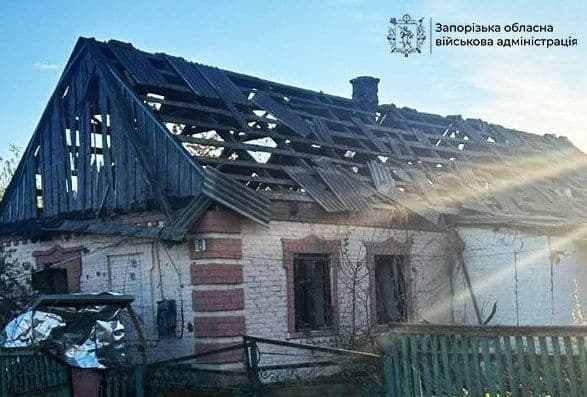
Aftermath of a Russian attack against the Zaporizhzhia district, Zaporizhzhia Oblast. (Zaporizhzhia Oblast Military Administration/Telegram)
POW Lists Submitted; Exchange Awaits U.S. Guarantee
President Zelensky confirmed on May 11 that Ukraine has submitted its prisoner of war exchange lists to Russia for the planned 1,000-for-1,000 swap brokered by Trump. “The lists have been submitted, and we expect the American side to be active in ensuring the implementation of this agreement,” Zelensky said after a briefing from NSDC Secretary Umerov. The exchange had been announced by Trump on May 8 alongside the three-day ceasefire; Putin on May 9 claimed Ukraine had not submitted proposals and had withdrawn from an earlier agreement. Ukraine called Putin’s claims false. As of the end of May 11, no exchange had taken place. The U.S. is being asked to serve as guarantor of the implementation the administration brokered.
Sybiha’s Airport Ceasefire Proposal; EU Foreign Ministers in Brussels
Ukrainian Foreign Minister Sybiha proposed a limited “airport ceasefire” to EU foreign ministers on the sidelines of the Foreign Affairs Council in Brussels on May 11 — an agreement in which both sides would halt strikes on each other’s airfields. “Maybe we would try to resolve or to achieve a so-called airport ceasefire,” Sybiha told Politico. He noted that Zelensky had already discussed the proposal with some European leaders. Russia’s airports have been increasingly struck by Ukrainian long-range drones in recent months, disrupting civilian aviation and forcing repeated temporary closures. The proposal is the first time Ukraine has publicly named a specific sectoral ceasefire format as a potential entry point for European-led diplomatic engagement, positioned as a “complementary track” to the U.S.-led process rather than an alternative to it. Sybiha also stated that Ukraine will present Budapest with a “package of proposals” to resolve concerns over Hungarian minority rights, and expressed hope for opening EU accession Cluster One negotiations by May 26.
EU High Representative Kaja Kallas told journalists that the EU is not yet ready for direct talks with Russia, does not see Russia negotiating in good faith, and that internal EU consultations are ongoing about what conditions to set before any engagement. “We do not see that Russia really conducts negotiations in good faith,” Kallas said. Finnish President Stubb, speaking to Corriere della Sera on May 11, called for European governments to begin direct engagement with Russia, arguing Europe can no longer rely solely on U.S. policy: “It’s time to start speaking with Russia. When that will be, I don’t know.” Stubb outlined three scenarios: continuation of the war, a ceasefire leading to negotiations, or collapse of one side — which he assessed would most likely be Russia. He said a peace deal is “not on the table, at least not for this year.” EU leaders are expected to discuss possible conditions for Russia engagement and the question of a single EU negotiating representative at the Cyprus summit on May 27–28.
Schröder Rejected by EU, Ukraine, and Germany’s Own Ministers
The EU and Ukraine formally dismissed Putin’s suggestion that former German Chancellor Gerhard Schröder serve as European mediator in peace talks. Kallas: “If we give the right to Russia to appoint a negotiator on our behalf, that would not be very wise” — and noted Schröder had worked as a “high-level lobbyist for Russian state-owned companies.” “It is clear why Putin wants him to be the person so that he would be sitting on both sides of the table.” Sybiha: Ukraine “definitely does not support such a candidacy.” German European Affairs Minister Krichbaum: “The former chancellor has shown with his work in the past that he cannot be an honest broker” given his “tight friendship with Putin.” Swedish FM Stenergard: “Not realistic.” Estonian FM Tsakhna: “Gerhard Schröder is Putin’s idea.” Lithuanian FM Budrys: “Europe should not take seriously what Russia says but what it does — and the breach of the ceasefire says it all.”
Pistorius in Kyiv: “Brave Germany,” Patriot Missiles, and Joint Long-Range Drones
German Defense Minister Boris Pistorius made an unannounced visit to Kyiv on May 11 and signed a letter of intent with Ukrainian Defense Minister Fedorov to deepen cooperation in defense technology. The two ministers launched “Brave Germany” — a joint initiative backed by Ukraine’s Brave1 defense-tech platform providing grants to Ukrainian and German companies developing defense technologies. Germany and Ukraine will jointly develop drones with ranges up to 1,500 kilometers. Germany has already begun financing the April 14 contract for hundreds of Patriot missiles; deliveries begin in 2027. Germany is simultaneously funding IRIS-T systems and missiles, interceptor drone programs, and initial allocations for Ukrainian drone assault units. Germany is also beginning to fund medium- and long-range Ukrainian strike capabilities against Russian military targets.
Fedorov said Germany is now “the world’s leading provider of security assistance to Ukraine, accounting for about one-third of all aid.” He noted Ukraine’s interest in Taurus missiles (500 km range), adding: “You can never have too many of these weapons.” Pistorius stated Ukraine’s drone capability for overwhelming air defenses is “of immense importance” and “NATO is also working intensively on” it. Berlin plans to study Ukraine’s DELTA battle management and situational awareness system in the second half of 2026 for possible Bundeswehr integration. Fedorov confirmed Germany will also begin a detailed study of DELTA with potential integration into German armed forces command systems.

German Defense Minister Boris Pistorius and Ukrainian Defense Minister Mykhailo Fedorov signed an agreement to deepen cooperation between the two countries in the defense sector in Kyiv, Ukraine. (Daniiar Sarsenov/Ukraine’s Defense Ministry)
Frontline: Russian Advance North of Pokrovsk; Drone-Assisted POW Rescue in Sumy
Russian forces recently advanced north of Pokrovsk. Geolocated footage published on May 10 shows Ukrainian forces conducting an airstrike on a Russian-occupied building in central Rodynske, indicating no Ukrainian positions in the area. An officer of a Ukrainian brigade in the Pokrovsk direction reported on May 11 that Russian forces are conducting large-scale KAB glide bomb strikes against Ukrainian positions and that Ukrainian drone strikes against Russian heavy armor have forced Russian forces to rely primarily on drones for frontline missions. Ukrainian forces conducted counter-strikes against Russian positions in and around Rodynske, with footage showing a guided aerial bomb strike on a Russian-occupied building and a strike on a Russian position at a mine near Rodynske.
In the Kupyansk direction, Ukrainian forces repelled Russian efforts to reenter Kupyansk through Holubivka north of the city, while Russian forces continue infiltration attempts toward Kurylivka through Pishchane southeast of Kupyansk and efforts to reduce Ukraine’s Oskil River left-bank foothold. Russian forces continued infiltration operations in Sumy Oblast south of Yablunivka northeast of Sumy City; Ukrainian forces reportedly counterattacked. A Ukrainian brigade reported on May 11 that in April, a Vampire drone crew in the North Slobozhansk direction helped free two Ukrainian servicemembers captured during a Russian assault on neighboring Ukrainian positions — the first confirmed drone-assisted POW rescue in that direction. In the Slovyansk direction, Russian forces intensified drone strikes while Ukrainian forces reportedly counterattacked. In the Kostyantynivka area, Russian forces conducted an infiltration mission in eastern Markove north of the city; Ukrainian forces reportedly counterattacked. Ukrainian forces maintained positions in Dovha Balka southwest of Kostyantynivka contrary to Russian claims.
BM-35 and BM-70 Drones Strike Cities; Kh-101 Modified Four Times Since 2022
Ukrainian MoD advisor Beskrestnov reported on May 10 that Russian forces are employing BM-35 and BM-70 drones to strike large stationary targets — specifically residential buildings in Sumy City, Kramatorsk, and other cities — because communications break down at low altitudes against moving targets. BM drones reach 200 km/h near the ground and become uncontrollable; Russian operators control them from rooftop stations at least 15 km behind the front. ISW first observed reports of BM-70 deployment on May 10. Ukrainian forces face a shortage of EW systems capable of suppressing analog video feeds on BM drones.
Ukraine’s MoD reported on May 11 that Russia has developed four significant variants of the Kh-101 air-launched cruise missile since 2022: a reduced-range variant with a larger payload second warhead; a cluster warhead variant with zirconium balls that ignite upon impact; a variant using 30–40 percent more powerful explosive in cluster munitions; and a modernized guidance and EW countermeasures variant. Ukraine has nonetheless downed 88 percent of all Kh-101, Kh-55, and Kh-555 cruise missiles launched since January 2026. Russia assembles missiles within two weeks of launching them from components stockpiled months in advance. Russian Tu-160 strategic bombers expend 6–8 percent of engine service life per flight from Ukrainka Airfield to the Caspian Sea; Tu-95MS bombers now carry only two missiles instead of six.
Satellite imagery confirmed on May 11 that Russian authorities fully extinguished the fire at the Transneft Perm Linear Production Dispatch Station in Perm Krai — 12 days after a Ukrainian strike on April 28–29. The fire destroyed six oil storage tanks at the station. Ukrainian Hornet drones operating over the T-0509 Mariupol-Donetsk City highway and M-14 Mariupol-Berdyansk-Melitopol coast road are generating concern among Russian milbloggers, who warned these GLOCs are beginning to resemble the paralyzed M-30 highway near Donetsk City and that Starlink-enabled Hornet drones with 200 km range may achieve full automation within 6–12 months.
Hungary Pledges to End Veto Abuse; Ukraine Offers Budapest Minority Rights Package
Hungary’s incoming Foreign Minister Anita Orbán (no relation to Viktor Orbán) said at her parliamentary confirmation hearing on May 11 that Budapest will cease using the EU veto “as political theater” and will become “a reliable and predictable partner.” She said the new government’s priority is restoring trust with EU and NATO partners and unblocking €17 billion frozen over rule-of-law disputes. Hungary will not become a “weak, silent member state” and will use the veto when genuine Hungarian interests are at stake. On Ukraine, she confirmed Hungary will not send weapons to Kyiv, will set conditions on Ukraine’s EU accession path including resolution of Hungarian minority rights concerns, and stands for peace. Magyar’s cabinet is scheduled to be formally constituted on May 12. Zelensky’s FM Sybiha offered Budapest a “package of proposals” to resolve minority rights concerns: “We are open to a new page in bilateral relations.”
North Korea Earned $7–13.8 Billion from Russia; Plans for 30,000 More Troops
A report by Nikkei Asia published on May 11, citing South Korean intelligence, estimates North Korea earned between $7 billion and $13.8 billion from supplying weapons and soldiers to Russia through 2025. Shipments include 152-mm artillery ammunition, KN-23 ballistic missiles (whose accuracy was significantly improved with Russian assistance), and deployment of 10,000 special forces personnel, 10,000 engineers, and hundreds of drone operators. Plans exist to send an additional 30,000 North Korean soldiers. North Korean casualties through February 2026 are estimated at 6,000 killed or wounded. During Russian Defense Minister Belousov’s April visit to Pyongyang, North Korea inaugurated a museum for soldiers killed in Ukraine. Russia is reportedly helping North Korea develop Shahed-type long-range drones and submarines. Russia also showcased its new Geran-5 missile at the May 9 parade.
Sweden Arrests Two for Sanctioned Goods; Russia Gets Visa-Free Saudi Arabia Access
Swedish authorities arrested two people on May 11 for supplying Russia with industrial products in violation of sanctions. Details of the products and suspects were not immediately disclosed. The arrests follow Sweden’s recent seizure of the sanctioned Jin Hui shadow fleet tanker in the Baltic and continue a pattern of Swedish enforcement actions against Russia’s sanctions evasion networks. Separately, Russia became the fourth country to receive visa-free status in Saudi Arabia, a diplomatic development that underscores Saudi Arabia’s parallel engagement with Moscow despite the kingdom’s role in global oil markets that Ukraine’s deep strike campaign seeks to constrain.
U.S. Pushing Ukraine Toward Ceasefire Deal with Sanctions Relief for Russia
The Kyiv Independent reported on May 11 that the U.S. is again attempting to broker a temporary ceasefire deal between Ukraine and Russia in exchange for sanctions relief for Moscow. The report, citing sources familiar with the discussions, indicates that after a pause in Russia-Ukraine peace negotiations driven by Washington’s focus on the Iran conflict, U.S. diplomatic efforts have resumed. Ukraine has previously rejected sanctions relief for Russia without concrete territorial and security concessions, and has not confirmed the specific parameters of any proposal under discussion. Umerov’s Miami talks with Witkoff and Kushner on May 7–8 focused on the 20-point peace framework, with Donbas control and the status of the Zaporizhzhia Nuclear Power Plant remaining the central unresolved issues.
The Weight of May 11
The ceasefire lasted three days. Russia launched drones at Kyiv within hours of its expiry. Debris fell on a residential building in Obolon at 3:35 a.m. A kindergarten in Fastiv was damaged.
Three people were killed during the ceasefire’s final day. Sixteen were injured. Kherson was struck across 12 settlements. Zaporizhzhia recorded 785 attacks. Russia launched 8,037 kamikaze drones on May 10 while calling the pause a humanitarian gesture.
Ukraine submitted the POW lists. The exchange has not happened. The U.S. is being asked to guarantee what it brokered. Putin said Ukraine withdrew from the agreement. Ukraine said that was false. The 1,000 people on the lists are waiting.
Pistorius signed “Brave Germany” in Kyiv. Germany will co-develop drones that can fly 1,500 kilometers. Patriot missiles are already being financed. One-third of all military aid to Ukraine now comes from Germany.
North Korea earned $13.8 billion from Russia. The Geran-5 was displayed at the parade. Tu-95s now carry two missiles instead of six. The Perm refinery fire burned for 12 days. The ceasefire is over.
A Prayer for Ukraine
1. For the Three Killed on the Last Day of the Ceasefire
Lord, two people were killed in Kherson Oblast on May 11 while the ceasefire was still technically in effect. One was killed in Zaporizhzhia. They died during the three days of reduced killing that were being described as a pause. Receive them. Hold the 16 injured — the married couple in Mykolaiv, the people in Kharkiv, the four in Donetsk Oblast. And hold the residents of Kyiv who heard explosions at 3:35 a.m. on May 12 and understood that the pause was over.
2. For the 1,000 on the Lists
Father, Ukraine submitted its lists. The exchange has not happened. A thousand Ukrainians — soldiers and civilians who have been in Russian detention, some for years, some since the first days of the full-scale invasion — are waiting for something that was announced, agreed to, listed, and then not executed. We do not know what is causing the delay. We know only that people are waiting on both sides of a border for buses that have not come. Let the U.S. guarantee hold. Let the lists match. Let the exchange happen before the full weight of the war returns.
3. For the Drone-Rescued Soldiers in Sumy
God of the unexpected, a Vampire drone crew in the North Slobozhansk direction helped free two Ukrainian servicemembers who had been captured during a Russian assault on a neighboring position. The rescue happened in April and was confirmed today. A drone found them. A crew flew it toward them instead of away. We do not have their names. We pray for them by the fact of what happened — that they were captured, that someone looked for them, that they came back. And for every captured Ukrainian soldier for whom no drone has yet arrived.
4. For the Prisoners at the Perm Fire
Lord, the Transneft pumping station in Perm Krai burned for 12 days. Six oil storage tanks were destroyed. The fire is out now. The refinery in Yaroslavl was struck. The refinery in Perm was struck three times. These are the “long-range sanctions” that Zelensky says Ukraine will hold back as long as Russia avoids mass attacks. We pray for the civilians who live near these facilities and breathe the air above them. War does not spare anyone near its instruments. And we pray that the leverage Ukraine has built — the capability to reach 1,500 kilometers — translates into something other than an endless escalation ladder.
5. For What Comes After the Ceasefire
God of peace, the ceasefire is over. The Kyiv Independent reports the U.S. is offering Russia sanctions relief in exchange for another ceasefire. Stubb says a peace deal is not on the table this year. Kallas says Russia is not negotiating in good faith. Sybiha has proposed an airport ceasefire as a European entry point. The EU will meet in Cyprus on May 27. The POW lists are submitted. The Patriot missiles are on order. The joint drones with Germany are in development. These are the building blocks of something — or they are the furniture of a war that continues. We do not know which. We pray that the people building these things have clear eyes about what they are building toward. And we pray for Ukraine — for its soldiers in the Pokrovsk direction who repelled 26 attacks during a ceasefire day, for its negotiators flying to Brussels and Miami, for its engineers designing drones in Kyiv and Suffolk and Warsaw and Copenhagen. Let this war end. In Your mercy, in Your justice, in Your time.