
Ukraine Daily Briefing | June 25, 2026 | Day 1,583 of the Full-Scale Invasion
Prepared by Dayana Bozhyk
Ukraine raised its flag on the Kinburn Spit after Russian forces withdrew under logistical collapse. Russia’s NORSI refinery — fourth-largest in the country — went offline after a June 24 drone strike, with gasoline futures halted on the St. Petersburg Exchange. Secretary of State Rubio publicly confirmed no agreement was reached in Alaska. Zelensky approved a 40-day SBU pressure operation and named five Belarusian border zones where military infrastructure is nearly complete. The EU disbursed the first €3.2 billion tranche of its 90 billion euro loan in Gdansk. Russian ballistic missiles struck Kyiv. Fuel shortages now affect all but five Russian regions.
THE DAY’S RECKONING
A Ukrainian flag went up on the Kinburn Spit on June 25. It is a narrow sandy peninsula that Russia entered in March 2022 from occupied Kherson Oblast, using it to shell Mykolaiv and control access to the ports of the Buh-Dnipro estuary. Russian forces withdrew after supply lines were completely severed — no ammunition, no fuel, no food. “Occupiers’ logistics system in this sector has completely collapsed,” the Atesh partisan network reported. The Navy spokesperson was careful: Russian forces remain in the area, fighting continues, the flag is “primarily symbolic.” But a symbol on June 25, 2026 is worth noting.
Meanwhile, Ukraine’s strike campaign hit its latest milestone: the NORSI refinery in Nizhny Novgorod — Russia’s fourth-largest, processing 17 million tons of crude per year — went offline after a June 24 strike damaged its primary CDU-5 unit. The St. Petersburg Exchange halted gasoline futures. Russian independent outlet Verstka confirmed that fuel shortages now affect all Russian federal subjects except five. And Secretary of State Rubio, in Bahrain, said plainly what Moscow had been refusing to acknowledge: “There was no agreement in Alaska.”
In Gdansk, the Ukraine Recovery Conference opened with the EU disbursing the first €3.2 billion tranche of its 90 billion euro loan. Zelensky was not there. He was in Kyiv, approving a 40-day SBU pressure operation against Russia and announcing that Belarusian military infrastructure at five border locations is “nearing completion.” Russia struck Kyiv with ballistic missiles the same evening. The Kinburn Spit flag, the Nizhny Novgorod refinery, the Gdansk conference, and the Kyiv explosions occupied the same June 25.
UKRAINE RAISES FLAG ON KINBURN SPIT AS RUSSIAN FORCES WITHDRAW
Ukraine’s Southern Territorial Defense Forces Command announced on June 25 that Ukrainian forces have raised the national flag on the Kinburn Spit after Russian forces withdrew from their positions following the complete severing of their supply lines. “The blue-and-yellow flag is on the Kinburn Spit,” the command said. “We are not stopping. One day our tanks will reach Dzhankoi.” Ukrainian Navy spokesperson Dmytro Pletenchuk confirmed the flag had been installed but cautioned that Russian forces remain in the area and that fighting for full control of the spit continues. “Yes, Russian troops were forced to abandon some of their positions, but in the context of liberating the spit, it is still too early to say that the enemy has completely withdrawn from this territory,” Pletenchuk said, adding that the flag serves primarily as a symbolic presence that “greatly irritates” Russian forces.
The withdrawal was the result of Ukraine’s sustained logistics interdiction campaign against Russia’s 337th Airborne Regiment, which had held the spit since March 2022. The Atesh partisan network had reported on June 8 that the regiment was abandoning positions after supply lines — ammunition, fuel, and food — were completely cut off; after part of the force was redeployed to the Zaporizhzhia sector, remaining units were severely understaffed and received no reinforcements. Ukrainian Navy Commander Oleksiy Neyizhpapa confirmed on June 22 that Ukrainian strikes forced an evacuation of Russian units; surviving personnel were evacuating and abandoning defensive positions. The Kinburn Spit’s strategic value is its position at the confluence of shipping routes from Mykolaiv and Kherson ports; its loss removes a key Russian fire platform against southern Ukrainian coastal communities and weakens Russia’s ability to control access to the Buh-Dnipro estuary.
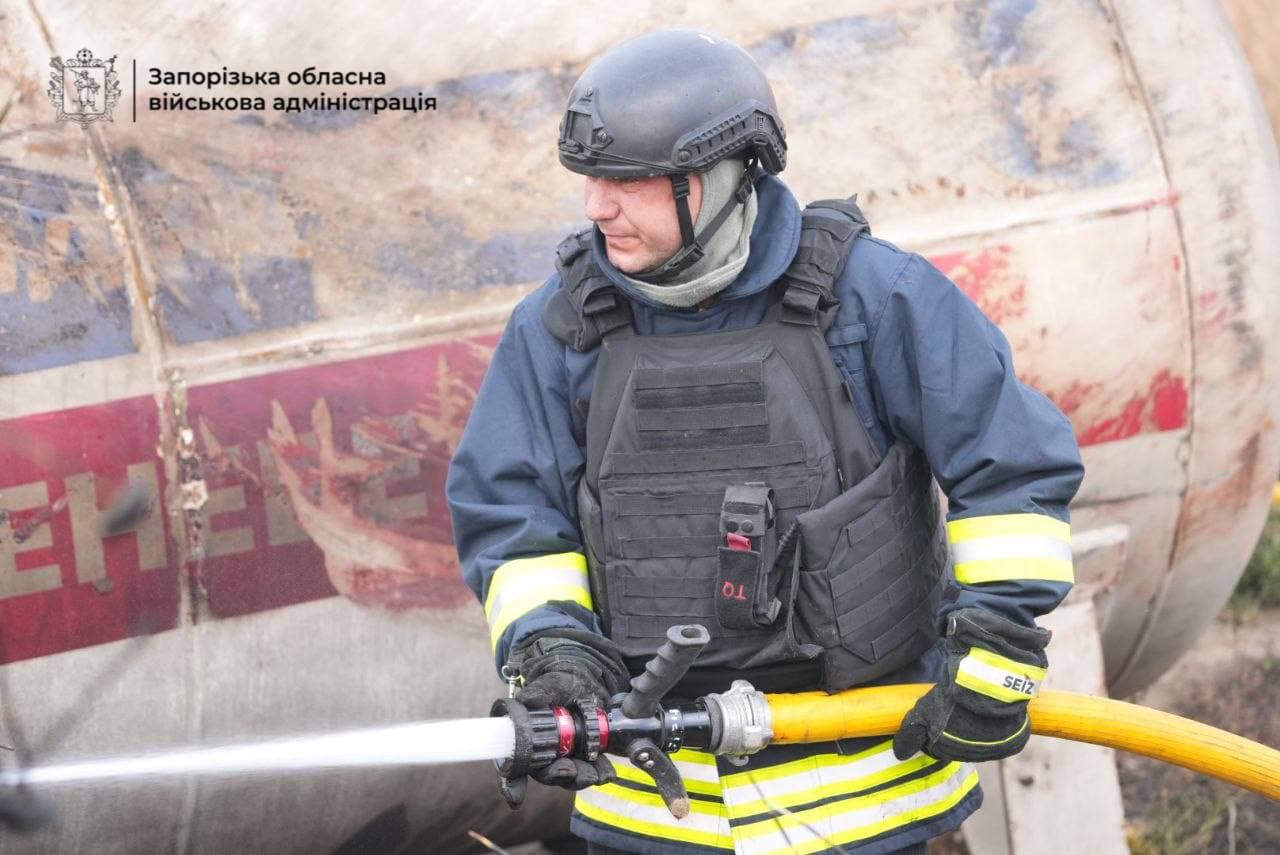 An emergency worker at the scene of a Russian strike on Zaporizhzhia, Ukraine. (Zaporizhzhia Oblast Governor Ivan Fedorov / Telegram)
NORSI REFINERY GOES OFFLINE: RUSSIA’S FOURTH LARGEST STOPS PRODUCTION
The Lukoil-Nizhegorodorgsintez refinery (NORSI) in Kstovo, Nizhny Novgorod Oblast — Russia’s fourth-largest oil refinery and second-largest gasoline producer, with an annual processing capacity of approximately 17 million metric tons of crude — halted operations on June 24 after a Ukrainian drone strike damaged the facility’s primary CDU-5 refining unit, which accounts for roughly a quarter of the plant’s total production capacity at 12,000 metric tons per day, Reuters reported on June 25, citing two industry sources. Nizhny Novgorod Oblast Governor Gleb Nikitin confirmed an attack on an unspecified industrial facility, reporting two people killed by debris. The Saint-Petersburg International Mercantile Exchange (SPIMEX) halted trading of NORSI diesel and gasoline futures as of June 24. NORSI may be able to use other units to restart partial operations, the industry sources said.
The NORSI halt compounds the damage already done to Russia’s refining capacity. The Moscow Oil Refinery — Russia’s largest refinery in the capital — was confirmed offline until at least early 2027 after three Ukrainian strikes in June. Together, the two facilities represent a significant share of Russia’s ability to produce domestic transportation fuels. Ukraine’s fuel crisis figures are now stark: operating refineries produce approximately 85,000 tons of gasoline daily against summer demand of 111,000 tons, a structural gap of 25,000 tons per day. Russian independent outlet Verstka confirmed on June 25 that fuel shortages are now affecting all Russian federal subjects — all 89 regions — except Ingushetia, Chechnya, Kalmykia, Chukotka, and the Nenets Autonomous Okrug, though prices have risen nationwide. Bloomberg reported that Russian gasoline prices rose three percent between June 16 and 22 — the largest weekly increase in at least 20 years — and that total annual inflation rose from 5.3 to 5.8 percent in June, with inflationary pressure spreading from fuel to other sectors through rising transportation and production costs.
Russian intelligence data obtained by Ukraine and presented by Zelensky on June 25 documented the domestic effect: anxiety levels among Russian citizens now exceed 50 percent — higher than during Ukraine’s Kursk incursion — with roughly 66 percent describing their financial situation as difficult and more than 80 percent considering a large-scale economic crisis inevitable.
UKRAINE STRIKES BASHKORTOSTAN REFINERIES AND KRASNODAR DEPOT; ORENBURG DAMAGE CONFIRMED
Ukrainian forces struck the Bashneft-Novoil and Bashneft-Ufanaftokhim refineries in Ufa, Bashkortostan Republic, approximately 1,500 kilometers from the frontline, causing fires at both primary AVT installations, the SBU confirmed on June 25. Geolocated footage published on June 25 showed fires at both refineries. Bashkortostan Governor Radiy Khabirov acknowledged the attacks while claiming Russian air defenses repelled them and no one was injured. The Ukrainian General Staff also confirmed a strike on the Poltavska Oil Depot in Krasnodar Krai, which supplies fuel to Russian occupation forces in Ukraine, with Krasnodar Krai officials acknowledging the fire.
The General Staff published updated battle damage assessments from recent strikes: the June 25 strike on the Orenburg Gas Processing Plant damaged four gas processing units and halted production at the facility; the June 22 strike on the Vladimir Space Communications Center critically damaged the main 25-meter parabolic antenna, a roof antenna, the central part of the main hardware-software complex, and Hardware-Technical Building No. 1. The General Staff also reported that Ukrainian forces struck two rail bridges over the Aidar and Luhanchyk rivers in occupied Luhansk Oblast used to transfer troops and deliver ammunition, and a material-technical warehouse near occupied Novohannivka. Ukrainian forces struck a Russian command post near occupied Tsukuryne in Donetsk Oblast, a road bridge over the Korsak River in Zaporizhzhia Oblast — prompting Russian occupation head Balitsky to restrict traffic on the M-14 highway passing over it — and a Russian Shahed drone launch vehicle at the occupied Donetsk City International Airport. The Freedom of Russia Legion additionally announced Operation Torch on June 24, striking six gas distribution facilities in Moscow and Tver oblasts in a coordinated attack on Russian gas infrastructure prepared over several months.
Ukraine’s Defense Ministry confirmed on June 25 that Russia has struck over 150 gas stations across Ukraine in the past two months as part of a counter-campaign to disrupt Ukrainian fuel logistics; however, the ministry said Ukraine’s diversified oil and gas market is preventing significant regional shortages.
RUBIO KILLS THE “ALASKA AGREEMENTS”; U.S. FORMALLY SIDES WITH UKRAINE, MACRON SAYS
U.S. Secretary of State Marco Rubio, speaking to reporters in Bahrain on June 25, directly contradicted Russia’s central diplomatic fiction of the past year: “There was no agreement in Alaska. There was a proposal, but there was no agreement. If there had been an agreement, we would have had an end to the war.” Rubio attended the August 2025 Alaska summit himself as part of the U.S. delegation. Russian officials — including Foreign Minister Lavrov, Deputy Foreign Minister Ryabkov, and Putin himself — have repeatedly invoked “anchorage understandings” and alleged “agreements” to justify refusing compromise peace terms and to portray the U.S. as failing to uphold commitments. Rubio’s unambiguous denial, from a participant, is the most direct refutation yet of the Kremlin narrative. The Russian proposal at Alaska included Russian control of Donbas among its demands, Rubio said.
French President Macron separately told reporters on June 25 in Washington that the United States has formally dropped its role as a neutral mediator and now stands with Ukraine — the first time, he said, that Washington approved a text stating it “is no longer a neutral mediator, but stands with us on supporting the territorial integrity of Ukraine, providing military assistance, energy support and sanctions against Russia.” Macron linked the shift to the G7 summit in France the previous week, where Trump joined a joint statement backing tougher pressure on Russia. A senior Ukrainian official told the Kyiv Independent that Trump privately urged Zelensky to act “more boldly” against Russia to increase pressure on Putin — a claim Lavrov and Peskov publicly dismissed on June 25 as Ukrainian media fabrication, with Peskov saying “You can’t trust the Ukrainian media.” Trump, speaking at NATO in The Hague on June 24, said Zelensky is “winning now” and praised Ukraine’s fighters. The Financial Times separately reported, citing sources familiar with discussions, that Trump was “hugely impressed and enthusiastic” about Ukraine’s recent long-range strike campaign.
ZELENSKY APPROVES 40-DAY SBU OPERATION; NAMES FIVE BELARUSIAN BORDER ZONES
President Zelensky announced on June 25 that he has approved a 40-day influence operation by Ukraine’s Security Service “against the aggressor state aimed at compelling it to end the war,” following a meeting with acting SBU head Yevhenii Khmara who briefed him on the agency’s long-range and medium-range strike results and drone warfare performance. Zelensky did not specify what the operation entails but praised the SBU’s Alpha special operations unit and said the operation is aimed at forcing Russia toward negotiations. “We are preparing new, entirely justified steps in response to Russia’s prolongation of the war and its strikes against Ukraine,” he said.
Zelensky also published new intelligence from the Foreign Intelligence Service identifying five specific Belarusian border locations where construction of military road infrastructure and ammunition and fuel storage is “nearing completion” under what he described as “obvious Russian influence”: Kobrin-Kovel, Ivanovo-Manevychi, Lunynets-Sarny, Rechytsa-Korosten, and Homel-Chernihiv. “These facilities have no purpose other than a military one,” Zelensky said. Russian documents describe the infrastructure in the context of Russia’s “special military operation.” Separately, Commander-in-Chief Syrskyi reported that the Kremlin is increasingly pressuring Belarus to develop possible provocations or an offensive against Ukraine from Belarusian territory in response to stalling Russian advances on the frontline, and that Russian forces — having failed to achieve decisive success on the main fronts — are seeking to expand active combat operations in northern Ukraine. Syrskyi said Ukraine is forming new brigades to defend against a potential Belarusian-front expansion that could add approximately 160 kilometers to the active frontline.
Zelensky also confirmed on June 25 that Russian forces are building new formations: the Kremlin has “adjusted its plans” and now intends to form new divisions and five new brigades in 2026. ISW assessed that Russia’s ability to staff these formations to doctrinal endstrength remains unclear, given infantry-heavy tactics and continuing recruitment shortfalls.
UKRAINE RECOVERY CONFERENCE GDANSK: €3.2 BILLION EU FIRST TRANCHE, 160 AGREEMENTS, WORLD BANK DEAL
The Ukraine Recovery Conference opened in Gdansk, Poland on June 25, with speeches from Polish Prime Minister Tusk, Ukrainian Prime Minister Svyrydenko, European Commission President von der Leyen, and European Council President Costa. The EU disbursed €3.2 billion to Ukraine — the first tranche of the 90 billion euro Ukraine Support Loan approved in April 2026 — with von der Leyen announcing the transfer and committing to “start paying the first money of the 6 billion euros for drone production in the coming days.” “The prosperous Ukraine of tomorrow requires massive investment today,” von der Leyen said. Prime Minister Svyrydenko confirmed the funds had been transferred to the state budget and will be used to strengthen defense capabilities and social resilience.
The conference is expected to generate approximately 160 agreements, with defense investment as a central focus for the first time — organizers targeting approximately 3 billion euros in private capital including major funding for security projects. The World Bank’s Multilateral Investment Guarantee Agency (MIGA) and the U.S. International Development Finance Corporation signed a partnership agreement at the conference to insure DFC projects in Ukraine against political and war-related risks through the U.S.-Ukraine Reconstruction Investment Fund (URIF), unlocking private-sector investment through risk-reduction guarantees. EU Enlargement Commissioner Marta Kos framed the event as helping to “anchor” Ukraine inside the EU as its defense industry expands.
Zelensky did not attend in person following the ongoing diplomatic dispute with Poland over the UPA military unit naming. Polish Law and Justice Party leader Jarosław Kaczyński announced during the conference that he intends to return his Ukrainian Order of Prince Yaroslav the Wise in protest, and separately called for Poland to begin blocking the opening of EU’s next accession clusters with Ukraine and Moldova — though he clarified this was his personal position, not the party’s.
OVERNIGHT STRIKES AND BALLISTIC MISSILE ATTACK ON KYIV: 7 KILLED, 70+ INJURED
Russian forces launched one Iskander-M ballistic missile from occupied Crimea and 90 Shahed, Gerbera, and Italmas-type drones and Parodiya decoys overnight on June 24 to 25, from Kursk, Oryol, Bryansk, Millerovo, Shatalovo, Primorsko-Akhtarsk, occupied Hvardiiske, and occupied Donetsk City. Ukrainian air defenses downed 83 drones; the ballistic missile and six drones struck seven locations, with debris falling at nine more. Strikes damaged gas, railway, medical, commercial, and residential infrastructure in Chernihiv, Dnipropetrovsk, Kharkiv, Poltava, Odesa, Sumy, and Kyiv oblasts.
Russian strikes killed at least seven people and injured at least 70 others over the 24-hour period. In Zaporizhzhia Oblast, two people were killed and 22 injured in strikes on the regional capital and other settlements. In Kherson Oblast, two people were killed and 16 injured; Russian forces damaged six high-rise buildings, nine homes, a cell tower, a gas station, and agricultural equipment. In Dnipropetrovsk Oblast, two people were killed and three injured across 50+ strikes in four districts. In Donetsk Oblast, seven were injured, including six in Druzhkivka. In Kharkiv Oblast, five were injured as attacks struck Kharkiv and 20 other settlements. In Sumy Oblast, 17 people including a six-year-old child were injured; Russian drones struck gas stations in Sumy in separate attacks — including 13 gas station attacks in Sumy Oblast in June alone — with Naftogaz CEO Koretskyi reporting strikes on Ukrnafta stations in Zaporizhzhia, Mykolaiv, and Dnipropetrovsk oblasts and on Naftogaz gas extraction and storage facilities in Poltava Oblast. A locomotive driver’s assistant was killed in a second Russian strike on railway infrastructure in Zaporizhzhia Oblast after two crews were evacuated before the first strike; Ukrzaliznytsia confirmed Russian attacks on trains in both Zaporizhzhia and Sumy oblasts. In Odesa Oblast, a strike on the Vilkove community damaged energy infrastructure and left Vilkove and surrounding settlements without electricity, injuring one person.
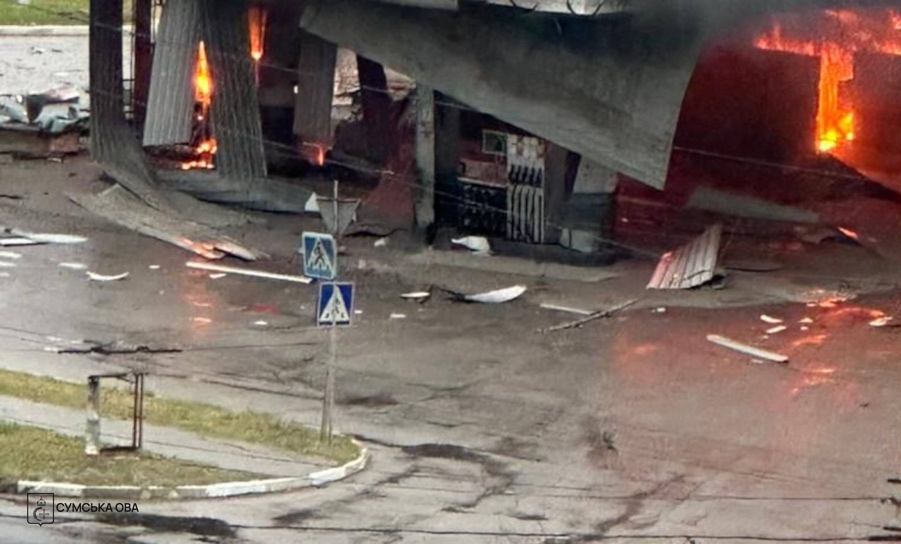 A gas station on fire after a Russian drone attack, in Sumy, Ukraine. (Oleh Hryhorov / Telegram)
Russia launched a separate ballistic missile attack on Kyiv on the evening of June 25. Explosions were heard across multiple districts; missile debris fell in the Darnytskyi district in an open area and a warehouse fire broke out. Two people were injured by falling debris. Kyiv was placed under air alert a second time in the early morning hours of June 26, with the Air Force warning of a ballistic threat from the northeast; a missile was later tracked toward Kremenchuk. Officials urged Kyiv residents to take every air raid alert seriously, noting that ballistic threats leave very little time to reach shelter.
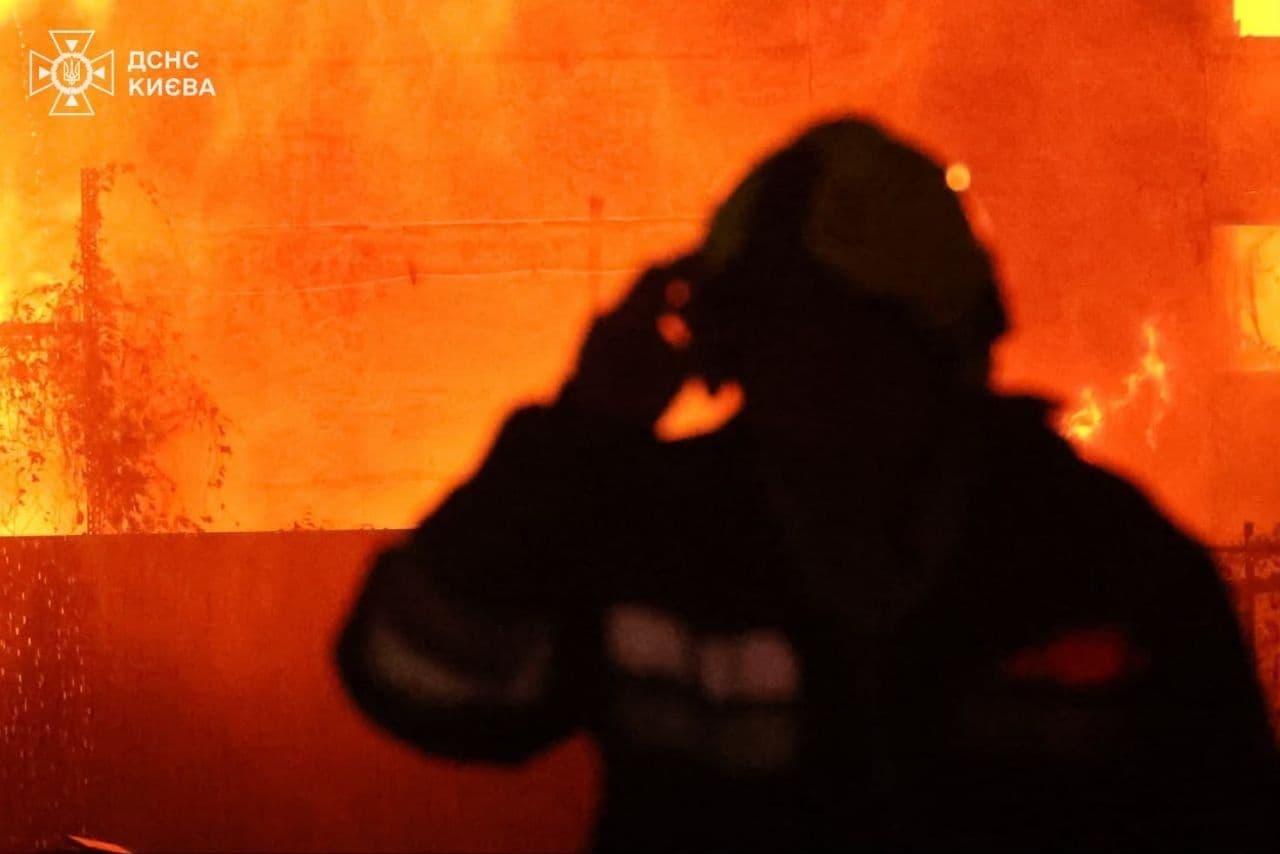 A fire breaks out in Kyiv’s Darnytskyi district after a Russian missile strike. (Ukraine’s State Emergency Service / Telegram)
FRANCE SEIZES SECOND RUSSIAN SHADOW FLEET TANKER IN A MONTH
The French Navy intercepted the Russian shadow fleet tanker Deliver on June 23 off the coast of Sicily after a visit team boarded and confirmed doubts about the legitimacy of the Cameroonian flag the vessel was flying. The Deliver had departed the Russian Baltic port of Primorsk on June 4 and turned off its AIS tracking on June 23. Macron announced the seizure on June 25, writing: “We will not allow the shadow fleet to evade sanctions and fund Russia’s war effort. Europe is determined.” The Deliver is the second shadow fleet tanker seized by France in a month, following a similar operation in the Atlantic. Sweden, the U.K., and France have all intercepted Russian shadow fleet vessels in June; the EU’s 21st sanctions package, expected for finalization in July, is under discussion with Italy and France raising concerns about how to practically identify ex-combatants for a proposed travel ban — one element of a broader package targeting Russia’s energy revenues, price cap, shadow fleet LNG, and cryptocurrency operators.
CRIMEA STRIKES: 38 TARGETS OVERNIGHT, TRAINS CUT FROM 18 TO 7, WATER RATIONED
USF Commander Brovdi reported on June 25 that Ukrainian forces struck 38 targets in occupied Crimea overnight, including a coastal MR-231 radar in Myrnyi, Neva-B radars in Morske and Zaozerne, the Tavriiska Thermal Power Plant and the 330 kV Simferopolska electrical substation in Simferopol, the 330/220/110/35 kV Sevastopol electrical substation, an oil depot in Dzhankoi, gas compressor stations in Zhuravlivka and Kliuchi, and a ZU-23-2 anti-aircraft gun in Kumove. The General Staff additionally confirmed strikes on a Nebo radar station and Skala-M radar station near occupied Kerch. Crimean occupation authorities continued power consumption restrictions following the strikes, with Aksyonov announcing on June 25 that the Tavria long-distance train service between Crimea and mainland Russia via the Kerch Bridge would be progressively restricted and eventually cancelled over the next two weeks — reducing from 18 to 7 trains per day initially. Water rationing continued in occupied Yevpatoriia following power outages that forced wells offline.
A Russian milblogger acknowledged that footage of Ukrainian strikes against Crimean substations shows no evidence of Russian air defense systems operating — consistent with ISW’s assessment that Russia is experiencing significant air defense degradation across Crimea.
FRONTLINE: POKROVSK FUEL CRISIS DRIVES ELECTRIC MOTORCYCLES; LYMAN STABLE; OLEKSANDRIVKA CONTESTED
The fuel shortage reached the front in a striking way: a Ukrainian brigade spokesperson in the Pokrovsk direction reported on June 24 that Russian forces have begun using silent, likely electric, motorcycles and scooters for approach missions, almost certainly due to ongoing Russian fuel shortages. This tactical shift — from gasoline-powered vehicles to electric ones for offensive infiltration — is a direct tactical consequence of the refinery strike campaign. The Ukrainian 7th Rapid Reaction Corps reported on June 25 that Russian forces continue concentrating in Pokrovsk to use it as a logistics hub, but that Ukrainian forces are hampering advances by striking Russian communication systems and drone launch points; periodic Russian communication losses result in drone control disruptions, reducing the number of drones operating at a given time. A Russian milblogger separately claimed that Russian forces seized the settlement of Myrne northwest of Pokrovsk — a claim ISW could not independently confirm. Russian forces continued offensive operations in the Kupyansk, Borova, and Novopavlivka directions on June 24 to 25 but did not make confirmed advances. In northern Sumy Oblast, Russian forces continued offensive operations without confirmed advances; a Russian milblogger claimed Russian forces advanced south of Sopych, west of Chervona Zorya, and north of Sydorivka, all northwest of Sumy City — unconfirmed claims ISW assessed as likely infiltration activity rather than consolidated gains. Russian forces also struck energy infrastructure in Kharkiv Oblast, with geolocated footage from June 22 showing a Russian FPV drone strike against a transformer at a substation near Staryi Saltiv east of Kharkiv City.
In the Lyman direction, a Ukrainian battalion commander reported the situation remains stable and that Russian forces are not making tactical gains, though Russian forces continue deploying strike drones of various types at greater depths with support from elements of the elite Rubikon Center for Advanced Unmanned Technologies. Russian forces intensified glide bomb strikes in the Slovyansk direction, using FAB-1500 bombs against the Slovyansk Thermal Power Plant in Mykolaivka and six FAB-500 bombs against retreating Ukrainian forces near Shchurove and western Lyman, as part of a campaign to degrade logistics to Lyman and set conditions for future Slovyansk operations. In the Oleksandrivka direction, the Southern Defense Forces spokesperson reported Russian forces intensifying artillery to hinder Ukrainian counterattacks and retake lost positions, while a Ukrainian battalion commander confirmed Ukrainian offensive actions and logistics strikes are keeping Russian forces on a defensive footing. The Hulyaipole direction saw Russian forces slightly reduce ground attacks to regroup for renewed offensives in Oleksandrivka and Orikhiv, while intensifying drone and glide bomb strikes to 100 to 120 daily versus the previous 20 to 30.
SKELIA REGIMENT COMMANDER SUSPENDED; MILITARY OMBUDSMAN CALLS IT “STRAIGHTFORWARD CRIMINAL CONDUCT”
The commander of Ukraine’s 425th Separate Assault Regiment (Skelia), Lieutenant Colonel Yurii Harkavyi, was suspended from duty on June 25 amid the investigation into allegations of abuse and at least 26 non-combat deaths. Skelia’s press officer Andrii Surai confirmed the suspension and confirmed the deaths of 25 of the 26 servicemembers named in the Babel investigation — unable to identify one person he said had no connection to the regiment. Military Ombudsman Olha Reshetylova called the case “straightforward criminal conduct, allegedly committed by organized groups of individuals,” identifying a specific group of instructors allegedly responsible for organizing abuse at training grounds in June 2025, though she stressed the entire unit is not at a critical state. Ukraine’s Ground Forces Command issued a statement on June 25 emphasizing zero tolerance for statutory violations and pledging legal and administrative decisions if instances occurred. The State Bureau of Investigation pre-trial probe continues.
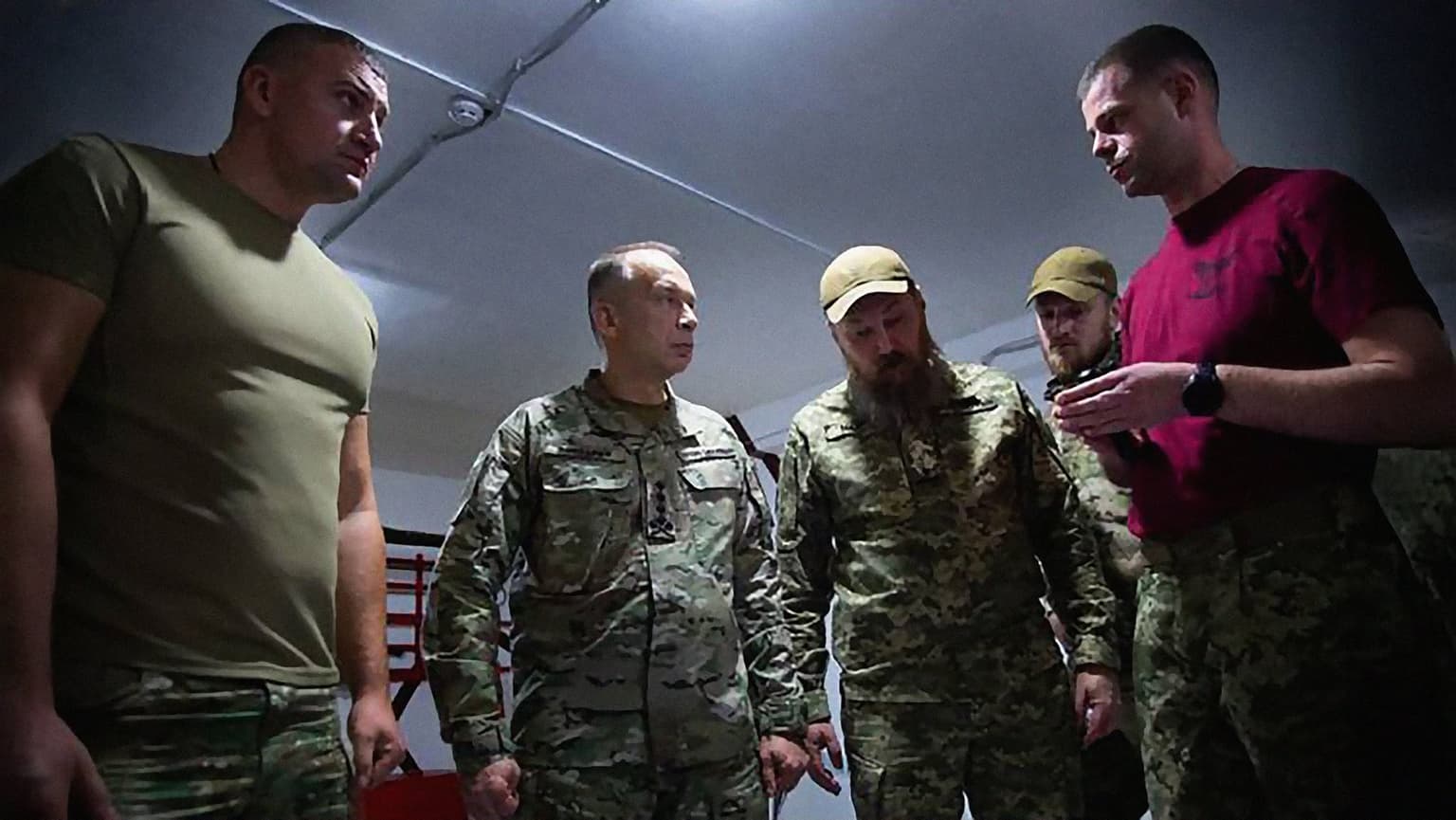 Footage showing soldiers of Ukraine’s Skelia assault regiment with Commander-in-Chief Oleksandr Syrskyi. (Skelia Regiment/Facebook)
SBU COLONEL CONVICTED OF TREASON: LIFE SENTENCE FOR FSB AGENT SINCE 2018
Former SBU counter-terrorism department head Colonel Dmytro Koziura was convicted of treason under martial law and sentenced to life in prison on June 25, Prosecutor General Ruslan Kravchenko announced. Koziura was recruited by Russia’s FSB in Vienna in 2018 and maintained continuous contact with Russian handlers. After the full-scale invasion began in 2022, he transitioned to active intelligence work: transmitting information about missile strike consequences in Kyiv, locations of SBU units, military unit data, official documents, and analytical materials. He also passed intelligence on Ukraine’s gas transportation system and plans for air defense improvements at critical infrastructure facilities. Russian intelligence additionally sought personal data on Ukraine’s senior military and political leadership. The SBU detained Koziura in February 2025 following a lengthy covert investigation codenamed “Rat,” during which Ukrainian counterintelligence also used Koziura’s channel to flood Russian intelligence with disinformation. “Anyone who wore Ukrainian shoulder boards and began working for the FSB becomes an enemy of Ukraine,” Kravchenko said.
EU LOAN, BANK PRIVATIZATION, UKRENERGO’S SUMMER WARNING, DENMARK ON REFUGEES
The first €3.2 billion tranche of the EU’s 90 billion euro Ukraine Support Loan reached Ukraine’s state budget on June 25. Ukraine’s National Bank Governor Andriy Pyshnyi told the Kyiv Independent on the Gdansk conference sidelines that two state-owned banks — Sense Bank and Ukrgazbank — have a “good chance” of being privatized before the end of 2026, with the government set to launch its state-owned bank strategy by end of June; international financial institutions have expressed interest in PrivatBank and OschadBank, though these are “unlikely” to be privatized this year.
Ukrenergo CEO Vitaliy Zaichenko warned that Ukraine could face up to five hours of daily emergency power outages in July and August if prolonged heat waves above 30°C coincide with Russian mass strikes on energy infrastructure. The risk is greatest during evening peak demand periods, which cannot be fully covered by nuclear power, imports, or renewables. Zaichenko said the 2026 summer outlook is significantly better than 2025 due to expanded distributed generation, new protected facilities, and stronger substation defenses. On June 25, Ukrenergo separately introduced emergency outages in some Kyiv districts due to a “technical malfunction” at a power facility, with emergency repairs underway.
Denmark announced on June 25 that it will no longer grant refugee protection to Ukrainian men aged 23 to 60, amending its Ukrainian special law to prevent military-age men from using Danish residence permits to avoid mobilization. Men already in Denmark will be permitted to stay; men with exemptions from military service remain eligible. The Council of Europe’s Commissioner for Human Rights criticized the measure, warning that blanket exclusions risk becoming human rights violations and that conscientious objection can raise legitimate protection claims. Denmark’s move is the first such national restriction, enabled by Denmark’s 1990s opt-out from EU freedom, security, and justice rules; Germany, Poland, and Czechia are also considering similar national laws, though EU-level temporary protection renewal is expected in July with extension to March 2028.
VK APPS VANISH FROM APPLE APP STORE
Russia’s largest social media platform, VK, and 15 other applications operated by the VK holding company disappeared from Apple’s App Store on June 25, confirmed by the Kyiv Independent. VK is owned by Russian state-linked entities and has become a dominant information distribution channel as Western platforms were restricted in Russia. VK said the removal happened without prior warning and disputed that it has ever appeared on sanctions lists. Apple separately confirmed that the state-backed Max messenger, which disappeared from the App Store on June 3, was removed due to sanctions compliance. Users who had already installed the apps retain access but push notifications no longer function. Kremlin spokesperson Peskov told reporters: “For those who are truly active users of the service, there’s always an instant solution to the problem: switch to Android.” VK’s disappearance removes a major Kremlin-controlled information channel from Apple devices globally.
June 25, 2026 ended with a Ukrainian flag on the Kinburn Spit, a Nizhny Novgorod refinery shuttered, and €3.2 billion arriving in Kyiv’s state budget from Brussels. Rubio said the Alaska agreement never existed. Macron said the United States is no longer neutral. Zelensky signed a 40-day SBU operation into existence. Russia struck Kyiv with ballistic missiles — two people injured by debris — while its tanks may have been sold or traded for electric motorcycles to navigate the gasoline shortage. The war keeps compressing: Ukraine is pushing Russia out of its last foothold on the Kinburn Spit, and Russia is running out of fuel to hold the line it still has.
A PRAYER FOR UKRAINE
1. For the Locomotive Driver’s Assistant Killed in Zaporizhzhia
Lord, a locomotive driver’s assistant was killed in a second Russian strike on railway infrastructure in Zaporizhzhia Oblast on June 25. Two crews had been evacuated before the first strike — safety protocols that saved some lives. The assistant was not saved. We do not know this person’s name or age. We know only that they were doing their job on a railway line that Russia has now struck 13 times in Sumy Oblast alone this month, and that the trains are still running because people like them keep running them. Receive this person. Comfort the driver who survived. And give endurance to the railway workers across Ukraine who wake up tomorrow and go back to the line anyway.
2. For the Citizens of Kyiv Under Ballistic Threat
Father, ballistic missiles struck Kyiv on the evening of June 25, injuring two from debris, setting a warehouse on fire, and triggering a second air alert in the early morning hours of June 26. Kyiv’s residents have been through this enough times to know the drill. They know what PAC-3 interceptors sound like. They know how little time a ballistic missile leaves between warning and impact. We pray for the people who sheltered last night, and for those who could not reach a shelter in time. We pray for the air defense crews who engage these threats in the dark. And we ask that the world’s failure to supply sufficient interceptors to Ukraine be named for what it is: a policy choice with a body count.
3. For the Soldiers Who Held the Kinburn Spit
God of the stubborn, a Ukrainian flag stands on the Kinburn Spit today because Ukrainian forces held logistics routes under fire for months until Russian supply lines collapsed entirely and the enemy had no choice but to evacuate. We do not know the names of the Ukrainian soldiers who maintained those positions, or the drone operators who struck supply convoys in the dark, or the commanders who planned 50-kilometer logistics interdiction routes. We know the result: the spit is not free, but Russian forces are no longer on it in the way they were. Lord, we pray for those who held and still hold the line in Mykolaiv Oblast. And we ask that the navy spokesperson’s caution be unnecessary soon — that fighting for the spit ends, and ends in Ukraine’s favor.
4. For Every Russian Who Now Drives an Electric Motorcycle to the Front
God of unexpected mercies, Russian forces in the Pokrovsk direction are using electric motorcycles and scooters for assault missions because Russian fuel shortages have made gasoline motorcycles unreliable. We do not pray for this war to continue. We pray instead for every ordinary Russian conscript being sent to approach Ukrainian positions in the dark on a silent electric scooter because his commanders cannot secure enough fuel for a proper assault vehicle — sent by a government that is spending its fuel money on managing the political fallout from burning refineries. May those who are ordering young men to do this face accountability. And may the young men being ordered find ways to survive.
5. For the People of Ukraine, on a Day of Small Victories
Lord, on June 25, 2026, Ukraine raised a flag, received €3.2 billion, confirmed that the Alaska deal never existed, struck refineries in Bashkortostan, and approved a 40-day operation to pressure Russia toward peace. None of it ended the war. Russian drones are still striking gas stations in Sumy — 13 attacks in one month. Kyiv is still under ballistic threat. The Kinburn Spit flag is symbolic. We ask You to hold the Ukrainian people in the accumulation of these days, which are not triumphs but are not defeats either. Let the small victories matter to the people living through them. Let the €3.2 billion reach the people who need it. Let the 40-day operation do what it is designed to do. And let this war end in a peace that Ukraine can actually live in.