
European billions meet Russian battlefield claims as fire lights the night across two nations
The Day’s Reckoning
The flames were visible for kilometers. Against the December darkness of Tambov Oblast, deep in Russia’s interior, the Nikiforovsky Oil Refinery burned through the early morning hours—storage tanks erupting in sequence, each explosion feeding the next. Ukrainian drones had found their target hundreds of kilometers from the front line, transforming refined petroleum into black smoke that stained the winter sky. The glow could be seen from villages where mothers woke children for school, from highway rest stops where truck drivers paused for coffee, from the homes of workers who would arrive at the refinery gates to find twisted metal where their workplace had stood.
On this same morning, in Brussels, European foreign ministers gathered to pledge half a billion dollars in American weapons for Ukraine. In Moscow, Kremlin aides emerged from closed-door meetings with Trump envoys to declare that Russian battlefield “successes” were reshaping peace negotiations. And along hundreds of kilometers of frozen earth—from the forests north of Kharkiv to the muddy approaches to Pokrovsk—soldiers on both sides continued the grinding arithmetic of modern war, a reality that existed in a different universe from the diplomatic pronouncements echoing through distant capitals.
The one thousand three hundred seventy-ninth day of Russia’s invasion unfolded as a study in dissonance. Fire in the Russian rear. Promises in European conference rooms. Claims of victory from officials who insisted negotiations remain secret. And beneath it all, the stubborn persistence of a war that neither diplomacy nor propaganda could seem to end.
The Refinery That Wouldn’t Stop Burning
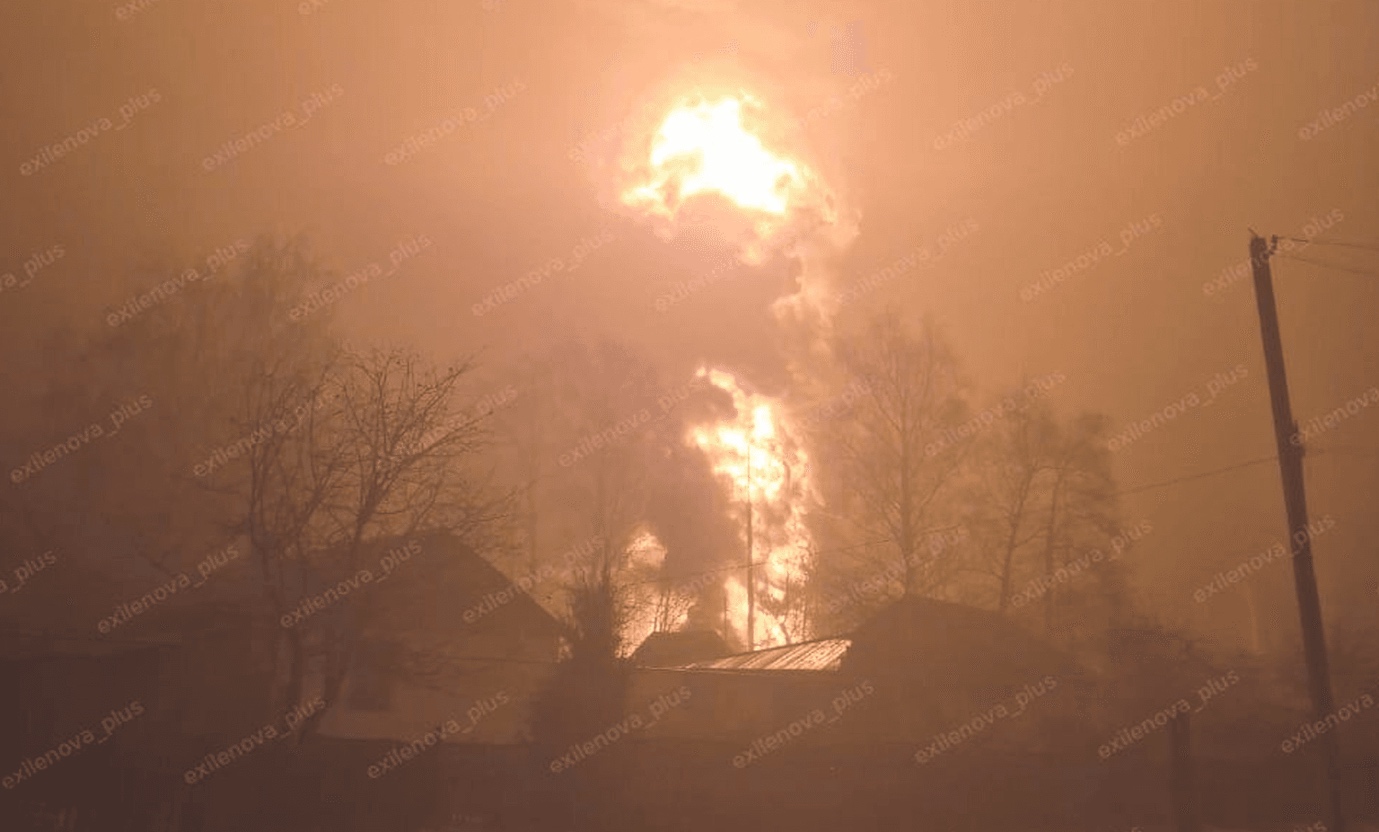
Picture the moment when the first drone struck. Security cameras would have caught it—a dark speck growing larger against the predawn sky, engine buzzing like an angry wasp, closing at 120 kilometers per hour toward storage tanks filled with refined gasoline. The impact flash. Then the secondary explosion as fuel ignited, a fireball climbing into the darkness that turned night briefly into day.
The Nikiforovsky refinery in Dmitriyevka processed crude oil into the fuel that powered Russian military vehicles fighting in Ukraine. Now it processed nothing but smoke. Ukrainian forces had also struck the Druzhba pipeline near Kazinsky Vysilky using remotely detonated explosives and combustible mixtures—a calculated blow against the arteries that fed Russia’s war machine.
These weren’t random targets. Every liter of fuel destroyed in Tambov Oblast was a liter that couldn’t power a tank grinding toward Ukrainian positions. Every pipeline section blown meant Russian logistics officers scrambling to reroute supplies, adding kilometers and hours to journeys that were already stretched thin. The Ukrainian General Staff noted with characteristic understatement that the refinery “supplies Russian forces fighting in Ukraine”—a dry acknowledgment that belied the strategic calculation behind turning Russia’s energy infrastructure into an inferno.
The morning’s fires cast long shadows. In occupied territories, Russian commanders were already recalculating fuel ratios. In Ukrainian operations rooms, analysts marked another node in Russia’s supply network degraded. And in Moscow, officials preparing to tout battlefield momentum faced uncomfortable questions about why Ukrainian drones continued striking targets deep inside Russia with apparent impunity.
The Confident Declarations from Behind Closed Doors
Yuriy Ushakov, Putin’s aide, chose his words with the precision of a diplomat who knows his audience is listening for gaps between what’s said and what’s meant. Russian forces’ “successes,” he declared, had produced a “positive impact” on negotiations with American envoys. The phrasing was a masterwork of ambiguity. What constituted success in a war grinding toward its fourth year? The slow advances measured in meters? The tens of thousands of casualties? The transformation of Russia’s economy into a wartime machine spending forty percent of its budget on military operations?
State Duma official Leonid Slutsky followed the script, claiming “Western officials are changing their negotiating positions” given Russia’s battlefield advances. It was a familiar refrain, one repeated with variations since the war’s earliest days when Moscow had confidently predicted Kyiv’s fall within seventy-two hours. Three years and eleven months later, the claims of imminent victory had acquired a hollow quality—like an echo in an empty room.
The Tuesday talks in Moscow remained shrouded in carefully orchestrated opacity. Alexei Chepa explained that Russia was holding negotiations “confidentially” to prevent “outside forces” from “exerting pressure.” Kremlin spokesman Dmitry Peskov reinforced the message: Russia would conduct talks “in silence” because they would be “more successful” that way.
The irony cut deep. For months, Russia had conducted an aggressive information campaign designed precisely to exert pressure—threatening nuclear escalation, claiming battlefield breakthroughs, declaring Ukrainian resistance futile. Now, having secured meetings with Trump’s envoys, Moscow suddenly discovered the virtues of discretion. The shift suggested not confidence but its opposite: a recognition that publicizing actual substance might reveal how little progress had been made toward Russia’s maximalist objectives.
The European Answer: Five Hundred Million Reasons
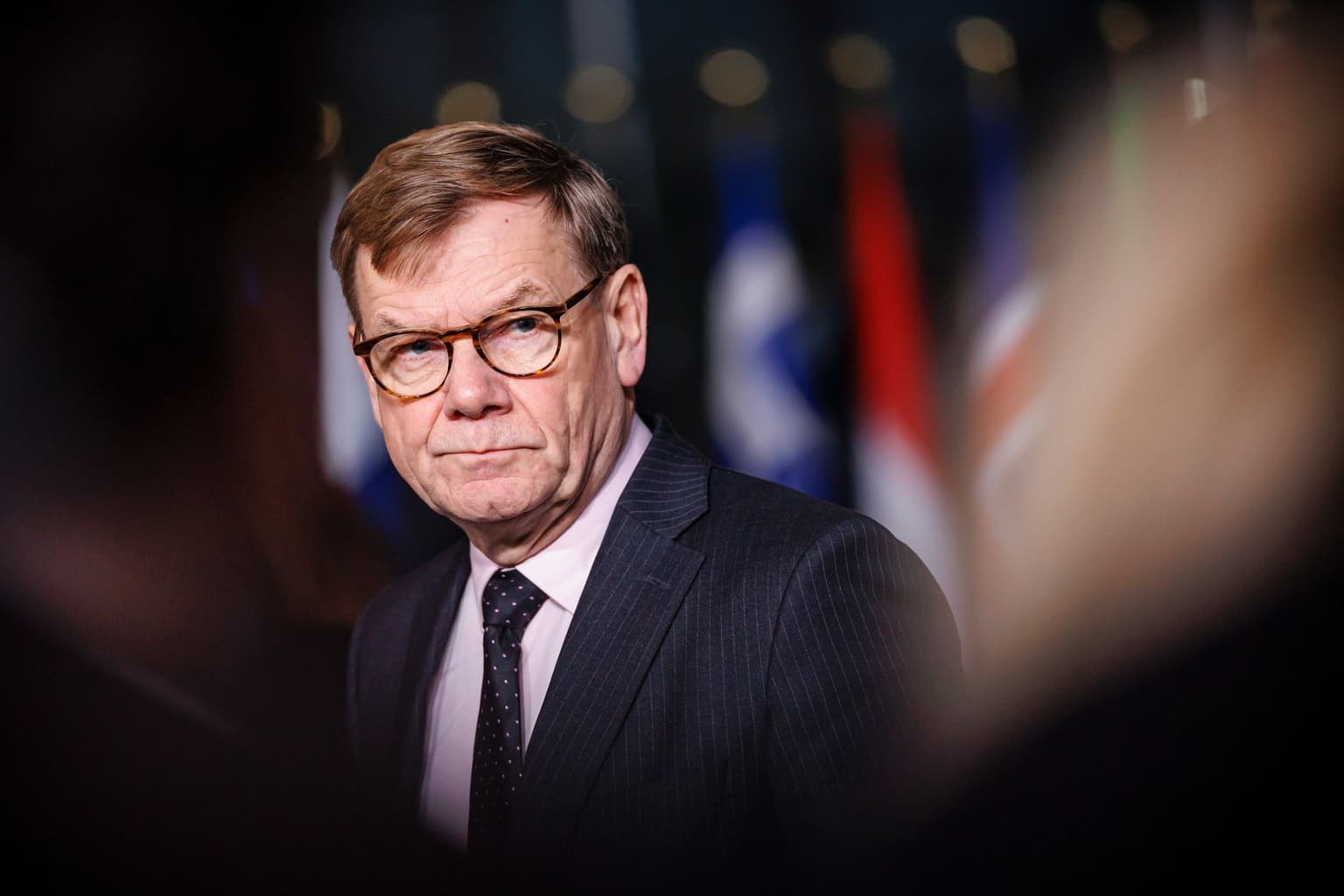
Speaking in concrete terms: German Foreign Minister Johann Wadephul announces $200 million in air defense equipment and ammunition for Ukraine—a counter-narrative to Moscow’s claims of Western abandonment—at NATO headquarters in Brussels, December 3, 2025. (Thomas Trutschel/Photothek via Getty Images)
While Russian officials spoke in careful abstractions, Norway’s Foreign Minister Espen Barth Eide spoke in concrete numbers. Five hundred million dollars. Two packages. Norway, Germany, Poland, and the Netherlands pooling resources through the Prioritized Ukrainian Requirements List—a framework that channels NATO states’ purchases of American weapons directly to Ukraine.
German Foreign Minister Johann Wadephul specified his nation’s contribution: two hundred million dollars toward “essential supplies, including air defense equipment and ammunition.” The words carried weight beyond their dollar value. They represented a practical response to Russia’s war of attrition, a demonstration that European resolve had not crumbled despite nearly four years of war.
Canada separately pledged approximately two hundred million under the same initiative. The United Kingdom added ten million pounds in energy support. The announcements cascaded through the Brussels meeting, each one a counter-narrative to Moscow’s claims of inevitable Ukrainian defeat and Western abandonment.
NATO Secretary General Mark Rutte took a notably firm line. He commended Trump for attempting to broker peace but warned that NATO must maintain “unwavering vigilance” toward Russia. Responding to Putin’s recent claim that Russia would be “ready” for war with Europe, Rutte declared: “NATO is a defensive alliance. We will remain a defensive alliance, but make no mistake, we are ready and willing to do what it takes to protect our one billion people and secure our territory.”
The language wasn’t accommodation. It was deterrence. A signal that whatever diplomatic overtures might emerge from American-Russian talks, European nations retained their own redlines drawn in concrete and steel.
When Fog Becomes Ammunition
The weather turned treacherous along the Hulyaipole direction. Fog rolled across the southeastern plains before dawn, thick as ash, swallowing villages and tree lines until artillery sounded muffled and directionless. Soldiers said it felt like the world had turned to smoke. Drones couldn’t see. Satellites couldn’t help. And in that blindness, Russia moved.
Small assault groups—three, sometimes five men at a time—crept forward through fields slick with dew, walking their motorcycles through the haze until close enough to fire. Ukrainian defenders, stripped of their eyes in the sky, fell back to stronger positions under the ghostly veil covering the steppe. Poor weather had become a Russian weapon.
Yet even this tactical advantage came at cost. Russian forces had concentrated between 170,000 to 220,000 troops in the Eastern Grouping operating in this sector—a force comparable to what Moscow had massed around Pokrovsk. Elements of the 76th Airborne Division redeployed from Sumy. Components of the 228th Motorized Rifle Regiment shifted from other sectors. Brigades reinforced with additional units. The result: a seventeen-kilometer-deep tactical breakthrough crossing the Yanchur River near Uspenivka.
But tactical gains weren’t operational victories. Russian forces now faced the Haichur River—another water obstacle that Ukrainian forces were using to slow the advance. Near Velykomykhailivka, Ukrainian counterattacks had pushed elements of the 36th Combined Arms Army back near Sosnivka. At Oleksandrivka, west of Velykomykhailivka, Ukrainian defenses held, allowing strikes against Russian supply routes in the rear.
The pattern was grimly familiar. Russia concentrated overwhelming force at a specific point, achieved localized advances through sheer weight of numbers, then discovered Ukrainian forces had established new defensive positions that absorbed the attack’s momentum. Tactical gains came at enormous cost while operational objectives—encircling forces, seizing cities, breaking through to open terrain—remained frustratingly out of reach.
Pokrovsk: The City That Refuses to Fall
In Pokrovsk, the war breathes through ruins. Streets lie silent until they aren’t—until a drone’s hum slices through fog, or another glide bomb caves in a wall. Russian officials claimed the city had fallen. Ukrainian officers refuted this with ground truth: “Ukrainian forces still hold the northern part of Pokrovsk” and had “organized additional logistics routes” to supply units inside the city.
Geolocated footage showed Ukrainian troops advancing north of Udachne even as Russian forces seized Molodetske nearby. The combat reflected the sector’s fundamental character—neither side capable of decisive breakthrough, both grinding forward through costly incremental gains.
A Ukrainian brigade officer described the operational adaptations both sides were making. Russia’s battlefield air interdiction campaign, targeting logistics routes with persistent drone and artillery strikes, had forced Ukrainian units to develop alternative supply methods: air drops and unmanned ground vehicles. When traditional supply lines became death traps, Ukrainian logistics officers found new paths.
Russian forces were “taking advantage of poor weather conditions to conceal their positions and attack in small groups,” the spokesperson reported. But these attacks were being met and contained. The fog that aided Russian assault groups also concealed Ukrainian defenders adjusting positions, repositioning anti-tank systems, calling in artillery on coordinates marked during previous attacks.
The Geography of Russian Dreams
State Duma Deputy Dmitry Pevtsov looked beyond current battle lines to ancestral fantasies. Russia would likely resolve the war through military means, he declared, so Russians could go to their “ancestral lands” in Odesa—a Black Sea port hundreds of kilometers from Russian-controlled territory, separated by multiple rivers and the entire depth of Ukrainian defensive preparations.
The renewed focus on Odesa built on Putin’s threat to cut Ukraine off from the Black Sea entirely. Ukrainian officials assessed that Russia was “reigniting narratives” about the city—propaganda depicting Odesa as fundamentally Russian rather than Ukrainian, part of a broader pattern denying Ukrainian national identity and sovereignty.
The timing revealed the statements’ function within Russia’s negotiating strategy. By broadcasting territorial demands extending far beyond current realities, Moscow aimed to make its current positions appear moderate by comparison. If Russia theoretically would fight until seizing all southern Ukraine, perhaps the West should convince Kyiv to accept merely ceding Donetsk and Luhansk?
The strategy rested on fundamental misreading of Ukrainian and Western resolve. Ukrainian forces had demonstrated through nearly four years that they would contest every meter. Western nations had shown themselves capable of sustaining Ukraine militarily and economically even as the war ground into its fourth winter. Russian calculations that repeated threats would break this will had proven consistently wrong—yet Moscow continued making them, suggesting either genuine belief in their efficacy or a lack of alternative strategies.
Foreign Minister Sergei Lavrov extended the pattern to Russia’s other neighbors, claiming Baltic states and Moldova were passing “racist” laws and “discriminating” against Russian populations. The rhetoric precisely mirrored narratives justifying Russia’s invasions of Georgia in 2008 and Ukraine in 2014 and 2022. That Russian officials now applied these formulas to NATO members Estonia, Latvia, and Lithuania—whose territories Article 5 committed the alliance to defend—suggested either supreme confidence in Western division or reckless disregard for broader conflict risks.
The Maritime Chess Game
While ground forces struggled through fog and mud, Ukrainian forces maintained their campaign against Russian positions in the Black Sea. Strikes hit a technical observation post on the MSP-4 offshore platform, eliminating a Russian drone crew and destroying surface radar on the Syvash floating rig.
These weren’t random targets. The platforms represented nodes in Russia’s network for monitoring and contesting Ukrainian activity in the Black Sea. Each destroyed observation post meant blind spots in Russian coverage. Each eliminated radar meant windows where Ukrainian vessels or drones could operate undetected.
The campaign reflected the ongoing contest for control of Black Sea approaches—a struggle that had seen Ukrainian forces systematically degrade Russian naval capabilities through combinations of missile strikes, drone attacks, and sea drones. Russia’s Black Sea Fleet, which had dominated these waters in the invasion’s early days, now operated with considerably more caution, having learned the cost of underestimating Ukrainian reach.
The Darkness Overhead
Russian forces launched their own campaign against Ukrainian skies and infrastructure. One hundred eleven drones crossed into Ukrainian airspace during the night, targeting residential and energy facilities across Dnipropetrovsk, Zaporizhia, Kharkiv, and Odesa oblasts. Ukrainian air defenses downed eighty-three. The twenty-seven that reached targets struck thirteen locations, while debris from intercepted drones fell on another.
Picture Ukrainian families sheltering in basements, children learning to distinguish between different types of incoming fire by sound alone. Workers racing to reach cover. First responders calculating trajectories to predict impact zones. This was the human reality beneath military briefing statistics.
The persistent attacks on energy infrastructure served Russia’s strategy of imposing maximum suffering on Ukrainian civilians, hoping to break morale and political will. Ukrainian officials reported implementing energy consumption limits due to ongoing grid damage. Deputy Energy Minister Mykola Kolisnyk noted that Russian strikes had particularly limited Ukraine’s ability to transmit electricity between oblasts, creating power deficits in eastern regions where Russia had destroyed “almost all local generation capabilities.”
The campaign revealed the Kremlin’s fundamental approach—unable to achieve military objectives through conventional operations, it sought victory through deliberate targeting of civilians and civilian infrastructure. That this strategy had failed to break Ukrainian resistance over nearly four years didn’t lead to its abandonment. Russian forces intensified such strikes, as if repetition might succeed where initial efforts had failed.
When Children Become Weapons
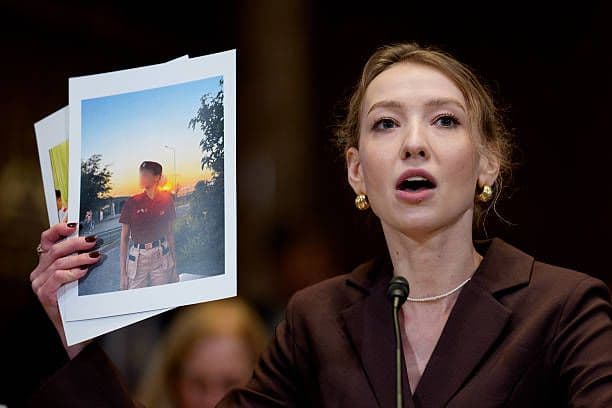
The faces of stolen children: Kateryna Rashevska displays evidence of Ukrainian children transferred 9,000 kilometers from home to North Korean camps during a US Senate hearing on child abductions, December 3, 2025. (Andrew Harnik/Getty Images)
The darkness had dimensions beyond nighttime drone strikes. In a US Senate hearing room, Ukrainian human rights investigator Kateryna Rashevska held up photographs. Two Ukrainian children—twelve-year-old Misha from occupied Donetsk and sixteen-year-old Liza from occupied Simferopol—had been transferred to camps in North Korea. Songdowon camp, 9,000 kilometers from home, where children were reportedly taught to “destroy Japanese militarists” and met Korean veterans who had attacked American forces in 1968.
Rashevska’s organization had documented 165 re-education camps where Ukrainian children were being “militarized and Russified”—camps existing not only in Russia and occupied territories but also in Belarus and now North Korea. Ukraine’s national database listed at least 19,546 abducted children, though officials estimated the real number could be ten times higher.
In occupied Donetsk, Russian authorities enrolled teenagers in military-style training programs including weapons handling, basic tactics, and drone operation. Ukraine’s Center of National Resistance reported these sessions, held within educational institutions and presented as youth development initiatives; targeted students as young as fifteen.
The systematic abuses had led the International Criminal Court in 2023 to issue arrest warrants for Putin and Russia’s Commissioner for Children’s Rights Maria Lvova-Belova. Yet the warrants had no apparent effect on Russian practices. The war crimes continued, systematic and deliberate, part of what Ukrainian officials termed Russia’s effort to erase Ukrainian national identity through forced assimilation of its children.
Putin’s Humanitarian Theater
While Ukrainian children learned military tactics in occupied territories, Putin devoted his day to showcasing Russia’s mobilization of civil society. Meeting with volunteers from the state-affiliated #MyVmeste forum, he received requests for expanded humanitarian operations and discussed ways to institutionalize volunteer efforts within state structures.
A veteran from occupied Donetsk asked Putin to expand operations in Russia’s “border regions”—a euphemism likely encompassing both regions bordering Ukraine and occupied Ukrainian territories. Putin also offered state support to a volunteer seeking to create initiatives uniting family members of Russian servicemembers.
Most revealing was discussion of expanding a Russian Orthodox Church military hospital treating servicemembers fighting in the Pokrovsk direction. A physician reported training over 8,000 volunteers in tactical medical treatment and sought government funding to establish branches of a battlefield treatment movement in all Russian regions and occupied territories.
The proposal to systematize medical volunteer training across Russia indicated the scale of casualties Russian forces continued sustaining. If existing military medical infrastructure were adequate, such extensive volunteer mobilization would be unnecessary. Putin’s engagement suggested official concern about sustaining popular mobilization for a war entering its fourth year—that the Kremlin found it necessary to showcase such meetings indicated awareness that Russian society’s willingness to sacrifice couldn’t be assumed indefinitely.
The Budget That Requires Faith
In Kyiv, the Verkhovna Rada voted to adopt the 2026 budget: 257 to 37. The numbers told their own story. Expenditures: 4.8 trillion hryvnia ($115 billion). Revenues: 2.9 trillion hryvnia ($70 billion). The deficit—18.5 percent of GDP—would require substantial external financing to cover.
The budget’s passage was predicated on receiving the international aid that European officials were working to secure. Without such support, Ukraine would face severe cash crunch by mid-2026, potentially forcing painful choices about which essential services and military operations could be maintained.
The vote represented not just a financial decision but an act of faith that Western nations would sustain their commitments even as the war ground toward its fourth anniversary. Every line item assumed continued European and American support. Every allocation presumed that diplomatic promises would translate into actual euros and dollars arriving in Ukrainian accounts.
The Detective Who Knew Too Much
The Kyiv Appeals Court ordered the release of Rustem Mahamedrasulov, a detective with Ukraine’s National Anti-Corruption Bureau investigating the country’s largest corruption case involving state-run nuclear monopoly Energoatom. Mahamedrasulov had been arrested by the Security Service in July on charges of collaborating with Russia—charges critics argued were politically motivated retaliation for his investigation of individuals close to the Presidential Office.
The detective’s release, along with that of his 65-year-old father arrested alongside him, came days after Andriy Yermak was dismissed as head of the President’s Office. Anastasia Radina, head of parliament’s anti-corruption committee, cautiously welcomed the release while noting that “the entire system is deeply flawed and requires urgent intervention, primarily through legislative changes.”
The case crystallized concerns about political interference in anti-corruption investigations—a vulnerability that could undermine Western confidence in Ukrainian institutions precisely when sustained support was most critical. That the detective’s release came only after significant personnel changes suggested the depth of resistance to genuine anti-corruption efforts within Ukrainian power structures.
The American Envoys and Diplomatic Optimism
Trump’s special envoys Steve Witkoff and Jared Kushner had spent nearly five hours in Moscow talks that remained shrouded in deliberate opacity. Now Ukrainian Defense Minister Rustem Umerov would meet them in Miami to discuss peace talks following their Moscow visit.
Trump himself offered characteristically optimistic assessments to reporters in the Oval Office. He described the Moscow meeting as “reasonably good” before upgrading to “very good,” claiming his delegates got the impression that Putin “would like to see the war ended.” Trump stated: “Their impression was very strongly that he wants to make a deal.”
The assessment contrasted sharply with Putin’s public statements and the Kremlin’s refusal to make substantive concessions on maximalist demands. Estonian Foreign Minister Margus Tsahkna offered a sobering counter: “What we see is that Putin has not changed any course. He’s pushing more aggressively on the battlefield. It’s pretty obvious that he doesn’t want to have any kind of peace.”
The Estonian perspective, shaped by decades under Soviet occupation and proximity to Russian power, offered context that American diplomatic optimism sometimes lacked. Trump’s envoys had spent hours in carefully choreographed meetings. Estonian officials had spent decades reading the patterns in Russian behavior—patterns that suggested Moscow’s interest lay not in peace but in Western acceptance of Russian territorial conquests.
What December 3 Revealed
The one thousand three hundred seventy-ninth day of war offered a crystalline view of the conflict’s fundamental dynamics entering its fourth winter. Russian officials emerged from talks with American envoys to declare battlefield success was reshaping negotiations—even as those same battlefields demonstrated limits of Russian military effectiveness. European nations pledged substantial aid to sustain Ukrainian defense—even as Russian forces continued systematic attacks on Ukrainian civilian infrastructure. Diplomats spoke carefully about confidential discussions—even as Russian officials broadcast maximalist territorial demands admitting no compromise.
The dissonance between parallel realities revealed the essential character of Russia’s strategic approach. Unable to achieve military victory through force of arms, Moscow sought victory through force of narrative—claiming Ukrainian resistance was futile, Western support would crumble, time favored Russia’s patient accumulation of territorial gains. The strategy assumed that if Russia repeated these claims consistently enough, they would become true through collective exhaustion with contradiction.
Yet the day demonstrated the strategy’s fundamental flaw. Russian battlefield advances, achieved at enormous cost through concentration of overwhelming force at specific points, remained tactical rather than operational. Ukrainian forces continued contesting every meter, adapting defensive methods to Russian tactics, maintaining coherent lines under intense pressure. Western nations continued providing material support despite nearly four years of war and significant domestic political pressures. The gap between Russian claims and battlefield realities remained too wide to close through information operations alone.
The day revealed the human costs both sides were accepting as the price of their strategic objectives. Russian volunteers were mobilized to provide medical care for casualties straining military infrastructure. Ukrainian children in occupied territories were systematically indoctrinated and trained for military service. Civilians on both sides bore the weight of decisions made in distant capitals—decisions condemning them to another day, another week, another year of war.
Most fundamentally, the day demonstrated that the war’s trajectory would not be determined by diplomatic declarations or information operations but by stubborn arithmetic of military capability, economic resilience, and national will. Russia’s theory of victory assumed it could outlast Ukraine and the West through sheer persistence. Ukraine’s defense rested on the opposite assumption—that Russia’s military, economic, and social systems would crack under sustained pressure of a war they expected to win in days but which had stretched to years.
As the day drew to a close, with smoke rising from burning Russian refineries and Ukrainian cities sheltering from drone attacks, with diplomats parsing statements and soldiers manning frozen trenches, the fundamental dynamic remained unchanged. Russia sought through violence to impose its will on Ukraine. Ukraine, supported by Western arms and its own determination to survive as an independent nation, continued to resist. The day’s events changed nothing essential about this confrontation—and yet they added another page to a historical record whose final chapters remained unwritten, dependent on choices not yet made and battles not yet fought.
The refinery fires would burn through the night. The diplomatic meetings would continue. The soldiers would return to their positions. And tomorrow, on day one thousand three hundred eighty, the war would go on.