
Ukraine Daily Briefing | April 8, 2026
Ukraine’s Deputy Presidential Office revealed Russia’s true war map: buffer zones across seven oblasts, including a first-ever plan to thrust from Transnistria into western Ukraine — ambitions the Kremlin publicly denies while privately documenting. On the battlefield, Ukrainian forces knocked out Russia’s last Kerch Strait military ferry and torched Crimea’s largest oil depot, while Russian drones killed 13 Ukrainians across seven regions overnight. And in Budapest, JD Vance campaigned openly for Kremlin-friendly Viktor Orban four days before Hungary’s election — on the same day audio emerged of Orban’s foreign minister secretly passing classified EU documents to Sergey Lavrov.
The Day’s Reckoning
Somewhere in Nikopol, four people boarded a bus. They didn’t hear it coming — you never do. The drone that killed them was small, fast, camera-guided, and aimed at a city bus in the middle of a Tuesday morning. Not a military convoy. Not a weapons depot. A bus.
While that was happening — while families in Nikopol were learning who hadn’t come home — a Ukrainian intelligence officer named Colonel Pavlo Palisa was sitting down for an interview and doing something extraordinary. He described Russia’s real map. Not the diplomatic map Moscow shows at ceasefire talks, the one that asks only for Donetsk. The other map. The one with buffer zones in seven Ukrainian oblasts, the one where Kharkiv and Odesa are already marked as Russian cities, the one that — for the first time ever documented — includes a thrust westward from Transnistria, a strip of Russian-occupied Moldova that presses against Ukraine’s back.
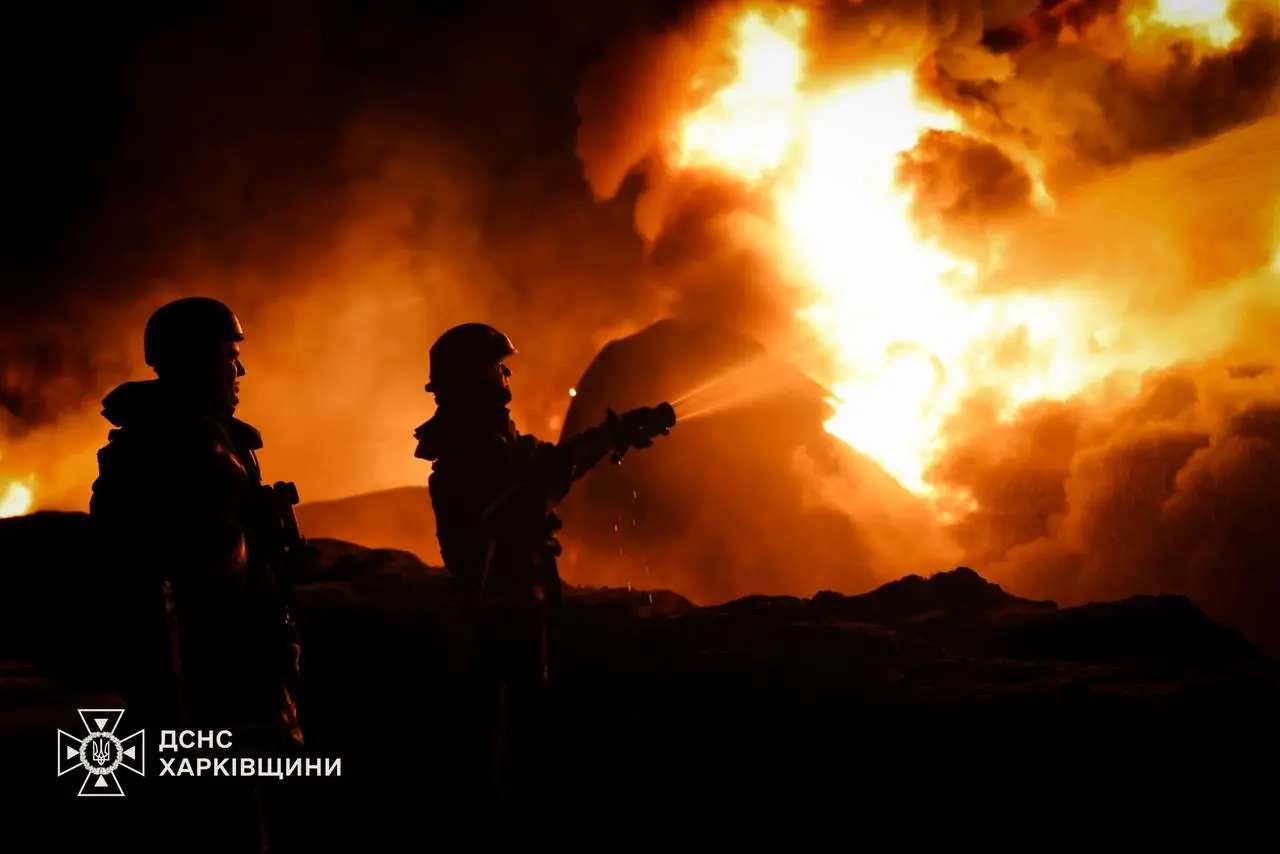
While Palisa spoke, Ukrainian drone operators were already working through the dark over occupied Crimea. The Slavyanin — Russia’s last military ferry crossing the Kerch Strait — was burning. The oil terminal at Feodosia, the largest fuel depot on the peninsula, was lighting up the sky. A Buk-M3 air defense launcher, a signals intelligence station, a coastal missile battery: all hit before morning.
And in Budapest, JD Vance was on a stage cheering for Viktor Orban. Audio was surfacing of Orban’s foreign minister reading EU secrets to Sergey Lavrov over the phone. In Washington, Mark Rutte sat across from Donald Trump and told reporters afterward that it had been “a meeting between friends” — and when asked whether Trump planned to leave NATO, said nothing at all.
Thirteen Ukrainians were killed overnight. Four of them were on a bus.
The Map Russia Won’t Show You: Seven Oblasts, One Transnistrian Gambit
Here is what Russia says it wants: Ukraine to cede Donetsk Oblast and agree to neutrality. Here is what Russia’s military planning documents actually say, according to Colonel Pavlo Palisa, Deputy Head of Ukraine’s Presidential Office: it wants buffer zones along the entire northern border — Kharkiv, Sumy, Chernihiv. It wants the rest of Zaporizhzhia and Kherson. It wants Mykolaiv and Odesa. And now, written into Russian planning for the first time that Ukrainian intelligence has documented, it wants to push a buffer zone into Vinnytsia Oblast from Transnistria — from the small sliver of Moldova that Russian troops have occupied since 1992 and that presses up against 400 kilometers of Ukraine’s western flank.
Think about what that means geographically. Vinnytsia is not the Donbas. It is not the south. It is in central-western Ukraine — the part of the country that has felt, if not safe, at least distant from the territorial appetite Russia shows in public. There are roughly 1,000 to 1,500 Russian soldiers in Transnistria right now. Ukraine has already started mining the border and moving armored units into position opposite the Russian-controlled zone. They have been reading this map too.
Palisa was careful to say Russia lacks the forces to execute any of this today. He is probably right — Russian troops have failed to meet every operational milestone he outlined in a June 2025 assessment, and the casualty rates make clear why. But that is a statement about capability, not intent. The map exists. Every negotiator who sits down with Moscow to discuss a ceasefire “along the current front line” is negotiating against a document that shows the current front line is not where Russia intends to stop.
“To be frank, there is no need to panic,” Palisa said. Which is precisely what someone says when the thing they are describing is worth panicking about.
The Price of a Square Kilometer: How the Drone War Is Breaking Russia’s Advance
Three hundred and sixteen. That is the number of Russian soldiers killed or wounded for every square kilometer of Ukrainian territory Russian forces seized in Donetsk Oblast during the first three months of 2026. Let that settle for a moment. For every square kilometer — roughly the size of a few city blocks — Russia is absorbing 316 casualties. In all of 2025, the rate across the entire front was 120. In the brutal Pokrovsk direction alone last year, it was 160. Whatever is happening on that front line is getting more expensive for Russia, not less.
The reason sits partly in the sky. Ukraine now has 1.3 strike drones for every one Russian strike drone along the front — a reversal that would have seemed impossible eighteen months ago. More telling is the quality gap: nearly a third of Ukrainian drones are fiber-optic guided, meaning they trail a hair-thin physical cable behind them as they fly and are controlled through that cable rather than through a radio signal. You cannot jam a wire. Russian electronic warfare — the technology that scrambles radio frequencies and sends GPS-guided weapons off course — simply doesn’t work on them. Only 24 percent of Russian drones have the same protection.
Ukraine has also been hunting the launch infrastructure. Strikes on occupied Donetsk City Airport and on drone relay repeaters in Crimea — the towers that bounce control signals from operators to aircraft — have forced Russia to stop launching synchronized thousand-drone salvos. Instead, Russian drone crews now send them in staggered waves throughout the day and night, which is harder to coordinate and easier for Ukrainian defenders to manage one cluster at a time. It is the difference between a tidal wave and a series of smaller swells. Both are dangerous. Only one overwhelms.
End of the Line: Ukraine Kills Russia’s Last Ferry in the Kerch Strait
The Slavyanin was not glamorous. It was a flat-decked railway ferry, the kind of working vessel that doesn’t show up in photographs unless it’s on fire. It crossed the Kerch Strait — the 35-kilometer waterway between occupied Crimea and Russia’s Taman Peninsula — hauling the unglamorous necessities of occupation: fuel drums, lubricant tanks, ammunition crates, weapons crates, equipment. Day after day. Back and forth. The kind of logistics work that makes everything else possible.
Ukraine’s military intelligence agency had hit it before. In March, a drone strike damaged the hull. The Slavyanin stayed afloat. They patched it. It kept crossing. Then, in the early hours before dawn on April 6, specialists from the HUR’s Active Operations Department came back. This time the drones found what they were looking for. The Slavyanin is no longer crossing anything.
The Avangard — the Slavyanin’s partner vessel — was already gone, destroyed in a previous HUR operation. That means Russia’s Kerch ferry crossing, which once ran multiple vessels, is now effectively closed. The Kerch Bridge still stands, and Russian engineers have repaired previous damage — but it is a single thread, one span of concrete over which everything that feeds the Russian military in Crimea must now travel. Sever that, and the peninsula becomes an island. Ukraine has not severed it yet. But they just removed the backup.
Feodosia Burns: The Spy Network, the Drones, and Crimea’s Biggest Fuel Hub
Before the drones ever launched, someone walked around the Feodosia oil terminal taking notes. That person worked for Atesh — a Ukrainian partisan network operating inside Russian-occupied territory — and they spent time establishing what was stored where, which tanks held what, which routes the fuel trucks used, where the security was positioned. Then they passed that intelligence to Ukrainian drone operators. Then the 414th Separate Unmanned Systems Brigade’s crews launched.
Residents of Feodosia woke around 1:00 a.m. to explosions. By the time dawn came, at least two storage tanks at the Maritime Oil Terminal were engulfed, and smoke was rolling ten kilometers across the occupied sky. The terminal holds up to 250,000 tons of fuel. It is the largest such facility in Crimea — the hub through which petroleum moves between ships, trains, and trucks to supply Russian forces across the occupied south. Ukraine has now struck it four times in less than two years.
The same night’s package included an oil depot in Hvardiiske, a Russian signals intelligence station near Novoozerne — the kind of facility that listens to communications and tracks electronic emissions — and a Bastion-M coastal missile battery near Sofiivka. A Bastion-M is an anti-ship missile system, the kind Russia uses to threaten Black Sea shipping. It was not a night of symbolic strikes. It was systematic degradation of multiple Russian military capabilities in a single operational window.
176 Drones, Thirteen Dead: What Russia Calls a Military Operation
Russia launched 176 drones at Ukraine in the night — Shahed-type, Gerbera-type, Italmas-type, Iranian-designed kamikaze aircraft that fly low and slow and look for something to destroy when they arrive. They came from six launch points: Bryansk, Kursk, Oryol, Millerovo in Rostov Oblast, Primorsko-Akhtarsk in Krasnodar, and occupied Cape Chauda in Crimea. Ukrainian air defenses shot down 146 of them. Twenty-four got through.
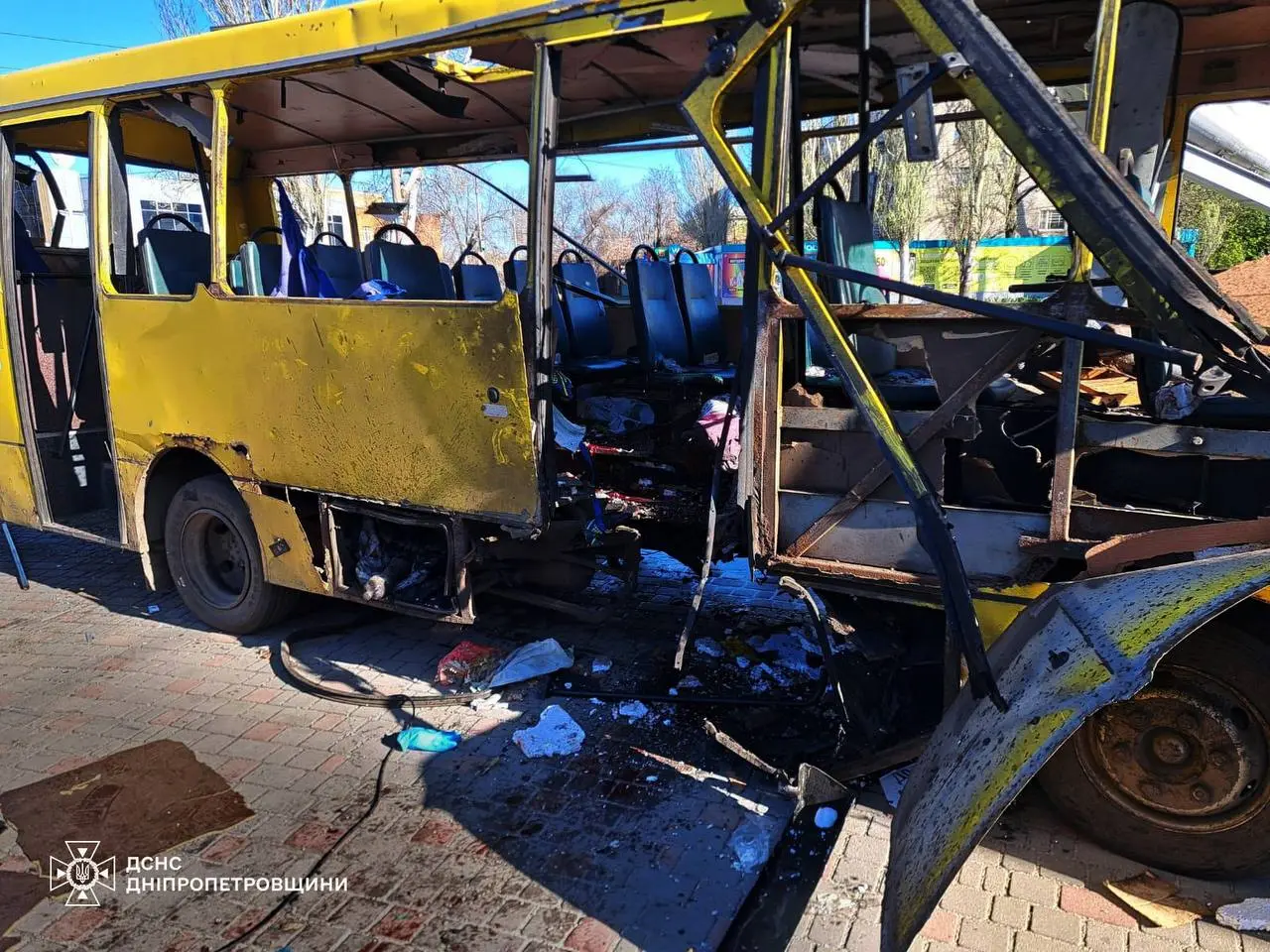
In Nikopol, one of those twenty-four found a city bus. Four people died. Sixteen were wounded. Across the Nikopol district through the rest of the day, twenty-four more people were injured, eight hospitalized. In Kherson Oblast, Russian forces struck 26 settlements. Four more dead. Twenty-one wounded, including a child. In Zaporizhzhia: two dead, nine wounded. In Donetsk: two more, in the villages of Kindrativka and Oleksiievo-Druzhkivka. In Sumy: a 42-year-old man killed in Romny, three women wounded beside him. In Chernihiv: fifteen people injured in Pryluky, eleven of them women, one hospitalized in serious condition. In Kharkiv: two more injured.
Thirteen dead across seven regions. And somewhere in that toll, in Pavlohrad in Dnipropetrovsk Oblast, two Shahed drones found a food company warehouse — a facility belonging to Star Brands, the maker of Flint croutons and Chipster’s potato chips and BigBob nuts. Five thousand five hundred square meters of storage incinerated. Raw materials gone. Finished goods gone. The workers survived only because they were in shelters. “Material losses are a challenge,” the company’s management said afterward, “but people are our main priority.” Which is one way to describe what it means to run a snack food company in the middle of a war.
The Front That Doesn’t Move — and the Strikes That Reach Behind It
Along several hundred kilometers of front line, Russian units attacked and did not advance. This is the rhythm of the war now — pressure applied everywhere, confirmed gains almost nowhere. Russian forces pushed against positions in Sumy and Kursk oblasts, around Kupyansk, near Lyman and Slovyansk, across the Kostyantynivka-Druzhkivka sector, toward Dobropillya, and south in the Hulyaipole and Orikhiv directions. Attacks came. Ukrainian positions held.
The one confirmed movement in Ukraine’s favor came near Pokrovsk, where geolocated footage from April 7 shows Ukrainian forces pushing east of Molodetske, southwest of the city. In Kharkiv Oblast, Russian soldiers crept into a building in Vilcha, northeast of Kharkiv City. Ukrainian forces shelled them out. No ground changed hands.
But behind the Russian lines, Ukraine was not sitting still. Ukrainian drone crews reached an equipment depot in Sukhodilsk, Luhansk Oblast — 134 kilometers behind the front — and set it burning. They hit an ammunition depot near Uralo-Kavkaz, 143 kilometers back. In Donetsk Oblast they destroyed a drone depot in Stepne, a field artillery depot near Yalta, hit the battalion command post of the Russian 336th Naval Infantry Brigade, and killed a Tor-M2 air defense launcher — a short-range surface-to-air missile system — before it could intercept anything else. In Zaporizhzhia Oblast they took out a Buk-M3 launcher (a medium-range missile system), a Zoopark-1M counter-battery radar (the device Russian artillery uses to locate Ukrainian guns), and struck two locomotives that Russian forces were using to haul stolen Ukrainian grain and natural resources out of occupied territory. Those locomotives will not be finishing that run.
Kstovo and Merefa: The Refinery War Comes for Russia’s Heartland
Reuters confirmed it through two industry sources: the Lukoil refinery in Kstovo, Nizhny Novgorod Oblast, is not operating. Ukrainian drones reached it on April 5 and shut it down. Kstovo is not near the front. Nizhny Novgorod Oblast sits deep in the Russian interior, the kind of place where Russian citizens had probably come to believe the war was something that happened in someone else’s territory. The drone that reached Kstovo traveled hundreds of kilometers to get there, threading through what Russia calls its layered air defense. The refinery is quiet now.
Closer to home — if occupied Kharkiv Oblast can be called that — Russian forces returned the favor by striking the Merefa oil refinery for the fifth time since the full-scale invasion began. The legal director, Anastasiia Cherednykova, walked out to speak to reporters. There were no casualties — the workers had been in shelters. The damage was “significant.” The facility would reopen, she said, because they had a large workforce. She could not say when. Five strikes, and the people who work there have learned to count the hits and keep going. That is also a form of Ukrainian resilience, quieter than drone footage but no less real.
Vance in Budapest: A Rally, a Recording, and the Brazenness of the Accusation
JD Vance flew to Hungary. Four days before Hungarians vote in an election that polling shows Viktor Orban is losing, the Vice President of the United States stood before a crowd and praised the man who has spent years blocking EU support for Ukraine, maintaining warm economic ties with Moscow, and using the neighboring country’s war as a domestic political bludgeon. “The most helpful has been Viktor,” Vance said, explaining which European leader had done the most to advance peace in Ukraine. Viktor Orban. The man who has arguably done more than any other EU leader to serve Russian interests while drawing a Western salary.
Then, in what can only be described as a masterpiece of unselfaware timing, Vance accused Ukraine of interfering in Hungary’s election. No evidence was presented. No specific action was named. Ukraine, Vance suggested, was meddling in Hungarian democracy — this charge delivered by the sitting Vice President of the United States who had just flown to Budapest to stand on stage at a campaign event for the incumbent four days before votes were cast. If foreign interference in elections has a definition, it requires some creative gymnastics to make that definition include Ukraine’s alleged behavior while excluding what Vance was doing at the exact moment he said it.
The European Commission pushed back with pointed understatement. Spokesperson Thomas Regnier noted that the real threats to Hungarian democratic integrity were the online platforms manipulating algorithms, boosting certain candidates’ visibility, silencing others — and that the EU’s Digital Services Act was designed to police exactly that behavior. He did not name names. He did not have to. Russia had sent social media specialists to Budapest in early March specifically to support Orban’s campaign. That is documented. And it happened while American officials were complaining about Ukrainian interference.
Then came the audio, and whatever remained of the day’s political clarity dissolved into something darker. A joint investigation by five European outlets published recordings of phone calls between Hungarian Foreign Minister Peter Szijjarto and Russian Foreign Minister Sergey Lavrov, spanning 2023 to 2025. The calls capture Szijjarto briefing Lavrov during breaks in EU meetings — live updates, from inside the room, on what Europe was planning to do about Russia’s war. In one recording, made during the European Council meeting that voted to open Ukraine’s accession negotiations, Szijjarto called Lavrov mid-session to walk him through the proceedings. Hungary had been vigorously opposing those negotiations. After Szijjarto finished explaining the EU’s position, Lavrov responded with what sounds very much like approval: “Sometimes good-willed direct blackmailing is the best option.” In another call, Lavrov asked for an EU document on Ukraine’s accession. Szijjarto promised to send it through his Moscow embassy. “I immediately do it,” he said.
Szijjarto’s response when the recordings published: foreign intelligence services had wiretapped him. Which may be true. It does not change what he said.
Hungary’s Evidence: The Subtitle That Wasn’t There
Hungary announced it had new evidence that the $82 million in cash and gold it seized from a Ukrainian state bank convoy on March 5 was part of a money laundering operation. The vehicles had been carrying funds belonging to Oschadbank, Ukraine’s state-owned bank, legally transiting from Austria back to Ukraine. Hungarian authorities stopped the convoy, detained the personnel briefly, returned the people, and kept the money. They have kept it ever since.
The new evidence includes freshly printed uncirculated currency and a video. In the video, a Ukrainian official appears to falsify documents in a gas station restroom. Oschadbank’s response was precise: the video contains genuine audio of a conversation among bank employees. Hungarian subtitles were added for a Hungarian audience. The added subtitle includes the phrase “corruption money.” That phrase does not appear in the audio. It exists only in the text overlaid on the screen. “It is precisely this deliberately added phrase,” the bank said, “that forms the basis of Hungary’s conclusions.”
Hungary has not returned the gold or the cash. Hungary has not responded to Oschadbank’s inquiries about the legal basis for continuing to hold bank employees’ personal property. The election is April 12. Orban has built much of his campaign around Ukraine as a threat. The timing of this new “evidence” is not, perhaps, a coincidence.
“They Were Tested and They Failed”: Trump, Rutte, and the Alliance That May Not Survive Its Friends
Mark Rutte sat down with Donald Trump and emerged afterward to describe it as “a meeting between friends.” He praised Trump’s “transformational legacy” on NATO. When a reporter asked how worried he was about Trump pulling America out of the alliance, Rutte said nothing. He could not afford to say anything, because the honest answer would require him to acknowledge that the leader of NATO’s most powerful member had posted that morning that NATO “wasn’t there when we needed them, and they won’t be there if we need them again.”
The fury has a specific origin. When the United States and Israel struck Iran — without consulting European NATO partners, and in a war that NATO’s collective defense framework does not require allies to join — Europe said no. Several nations closed their airspace to American military aircraft. Nobody sent warships to help reopen the Strait of Hormuz. Trump called it a betrayal. White House Press Secretary Karoline Leavitt put it starkly: “They were tested, and they failed.”
The Wall Street Journal reported the same day that the administration is weighing a plan to pull U.S. troops from NATO countries that did not support the Iran operation — potentially closing bases in Spain and Germany while moving forces closer to Russia’s border into Poland, Romania, Lithuania, and Greece. It stops short of a formal NATO withdrawal. U.S. law would require two-thirds Senate approval for that, a bill passed in 2023 by, among others, then-Senator Marco Rubio. But closing bases, repositioning troops, and withdrawing commitments by another name is not nothing. For Ukraine — dependent on weapons, intelligence, and the deterrent weight of an intact Western alliance — a NATO that is quietly hollowed out serves Russia nearly as well as one that formally collapses.
The Iran Ceasefire, Russia’s Oil Windfall, and Kyiv’s Question: Who’s Next?
Washington announced a two-week conditional ceasefire with Iran. Oil prices dropped the moment the news broke — then climbed back when the ceasefire wobbled almost immediately, with Israel continuing strikes on Lebanon, Iran briefly reclosing the Strait of Hormuz, and the peace terms proving murkier than the headline. Iran submitted a 10-point proposal whose Farsi and English versions apparently differed on uranium enrichment. Trump called CNN’s coverage of Iran’s declaration of victory “fake news.” CNN said they reported what the Iranians said.
Zelensky watched all of this and said what Ukraine has been saying in different forms for months: American decisiveness works. “We believe it is time for sufficient decisiveness to force Moscow to cease fire,” said Foreign Minister Sybiha. Ukraine reiterated its energy ceasefire offer — halt drone attacks on Russian energy infrastructure in exchange for Russia halting attacks on Ukraine’s power grid. Russia rejected it, as it has rejected every version of this proposal. The Kremlin said it welcomed the Iran truce and hoped Washington would now come back to Ukraine peace talks. The talks it walked away from when Iran became more interesting.
Three days from now — April 11 — the U.S. waiver on Russian oil sanctions expires. The waiver was a temporary measure to calm energy markets after the Iran crisis caused a supply shock. Russia has been the quiet beneficiary: according to the Center for Research on Energy and Clean Air, Moscow has been earning roughly 510 million euros a day from oil and LNG exports during the Iran war, running 14 percent above February revenues. When former U.S. Ambassador to Kyiv Steven Pifer was asked whether that waiver should be extended, he said the opposite of extending pressure on Russia is precisely the wrong policy — and that Moscow’s negotiating position has not changed from what Putin was demanding in the summer of 2024.
Russia’s Intelligence Service Invents a European Nuclear Threat — and Tells Washington About It
Russia’s Foreign Intelligence Service — the SVR, roughly analogous to the CIA — published a claim that unnamed EU leaders are discussing developing European nuclear weapons production capabilities. The SVR said it was bringing this alarming development specifically to Washington’s attention. The message was unmistakable: the EU is going rogue on nuclear weapons; America should help Russia stop them.
No evidence was offered. There are no EU nuclear weapons programs. What exists is a Western conversation about European strategic autonomy and security guarantees for Ukraine — discussions that make Moscow very uncomfortable. This is the same SVR that in February accused Britain and France, also without evidence, of trying to transfer a dirty bomb or nuclear weapon to Ukraine — a claim designed to disrupt discussions about Western security guarantees for Kyiv. The pattern is consistent. Manufacture a nuclear threat. Attribute it to a Western partner. Insert Russia as the responsible actor trying to maintain global stability. Hope Washington is distracted enough to take it seriously.
The Kremlin’s New Governors: War Veterans Replace the Old Guard in Belgorod
Vyacheslav Gladkov has governed Belgorod Oblast — the Russian region that borders Ukraine and has spent three years absorbing Ukrainian cross-border strikes — since before the full-scale invasion. He has been, by Russian standards, relatively candid: publicly complaining about the internet and Telegram shutdowns Moscow imposed on his border region, a posture that signals independence the Kremlin typically does not encourage in its governors. Reports emerged that he may soon be replaced by Major General Alexander Shuvayev, a veteran who commanded Russian forces in Ukraine, possibly as early as April 13.
This is not only about Belgorod. Putin’s “Time of Heroes” program — nominally a veteran reintegration initiative — is increasingly functioning as a mechanism to install military-loyal officers in civilian positions. The first such appointment came in November 2024 when Putin made Yevgeny Pervyshov the Acting Head of Tambov Oblast. What is being built, ahead of September 2026 regional elections, is a cadre of governors who have killed for Russia, who owe their positions to Putin personally, and who are unlikely to publicly complain about internet shutdowns in border regions. Gladkov’s relative candor may have been his undoing.
Your Router Is a Russian Weapon: The GRU’s Global Espionage Network Exposed
Russia’s military intelligence directorate — the GRU — has been stealing passwords, authentication tokens, and emails through an operation that required no exotic technology whatsoever. They hacked home and office Wi-Fi routers. Not military hardware. Not classified systems. The routers people buy at electronics stores and forget to update. GRU operatives found vulnerable devices — ones running outdated firmware, ones with default passwords still set — and quietly rerouted their internet traffic through servers the GRU controlled. Every email sent, every login credential entered, every session token used: the GRU could see it.
Ukraine’s Security Service, the FBI, Polish counterintelligence, and EU law enforcement dismantled the network together, blocking more than 100 servers and reclaiming hundreds of compromised routers in Ukraine alone. The operation specifically targeted government officials, military personnel, and defense sector employees in Ukraine, Europe, and the United States. The stolen credentials were intended for future cyberattacks, disinformation campaigns, and intelligence collection. The SBU’s advice to everyone reading this: update your router’s firmware. Change the default password. Disable remote access. The GRU is not waiting for you to do it.
The Generators Are Running Again: Ukraine’s Fragile Spring Grid
The hum is back. In Kyiv and several western regions, generators are running again — not because Russia struck anything new last night, though it did strike energy infrastructure in four oblasts, but because the sky turned grey. March brought sun, and Ukrainian solar farms produced over three gigawatts during the good days — enough to paper over the deficit Russia’s winter campaign had torn into the grid. Then the clouds came back, and so did the blackouts.
Russia destroyed nine gigawatts of Ukrainian generation capacity over the winter — the equivalent of Slovakia’s entire national output. Ukraine has clawed back four of those gigawatts. What’s left of the gap is being felt now, compounded by spring: nuclear plants on scheduled maintenance, combined heat-and-power facilities powering down now that the heating season is over, and gas-burning generators cutting production after Kyiv ended the special pricing that had made them economically viable. “If the temperature rises and solar activity increases, we will be in a good position to cover all our needs,” said Ukrenergo CEO Vitaliy Zaichenko. It is a statement of hope dressed as a forecast.
The outages are hours now, not days. That is progress measured against catastrophe, which is its own kind of Ukrainian metric.
Japan Steps In, Russia Summons the Ambassador: The Drone Investment That Changed the Map
A Japanese company called Terra Drone invested in a Ukrainian drone manufacturer called Amazing Drones in late March. This was not a weapons transfer — Japan’s postwar constitution prohibits providing lethal military aid to foreign states. It was a commercial investment. Russia summoned Japan’s ambassador and told him the investment was “overtly hostile,” that relations between Moscow and Tokyo had “reached an all-time low,” and that if Japan wanted to resume dialogue it would need to demonstrate this “through concrete actions and practical steps.”
Tokyo has been watching the drone war in Ukraine the way a country watches something that could soon be coming for them. Japan lives next to Russia, China, and North Korea. It passed its largest-ever defense budget in 2026 — 9.04 trillion yen, or about $58 billion — including 100 billion yen specifically for drone defense. The Terra Drone investment was Japan’s first direct entry into Ukraine’s defense sector. Moscow’s fury is a measure of how much it matters.
147 Dead, 28 Captive: The War on the People Who Document the War
Serhii Tomilenko, head of Ukraine’s National Union of Journalists, appeared before a parliamentary commission and read numbers. One hundred forty-seven media workers killed since February 24, 2022. Twenty-eight still in Russian captivity. One hundred sixty recorded attacks or threats against journalists in 2025 alone. At least twenty-one of the dead were killed while doing their jobs.
Then he said something that captures a particular cruelty of this war. International standards tell journalists working in conflict zones to wear visible “Press” markings on their protective gear — bright letters, high-visibility, so that combatants can see they are non-combatants and hold fire. In Ukraine, Tomilenko warned, those markings make journalists into targets. Russian forces do not hold fire for the press. They aim for it. “Any ‘Press’ marking makes a journalist a live target,” he said. The commission established in December 2025 to investigate crimes against media workers now has 147 cases of the dead and 28 of the missing to contend with.
Iryna Zarutska Fled One War. She Died in Another Country’s Political Battleground.
Iryna Zarutska was 23 years old. She came to the United States in 2022 because Russia invaded her country. On August 22, 2025, she was stabbed to death in North Carolina by a man named Decarlos Brown Jr., who had been arrested at least fourteen times over the previous decade and had documented mental health issues. Video of the attack spread across right-wing media. Trump called for the death penalty. Congresswoman Marjorie Taylor Greene moved to introduce amendments cutting U.S. financial aid to Ukraine. A woman’s murder was converted into a political argument against her own country.
Court documents filed April 7 show that Brown was evaluated in December 2025 and found incompetent to stand trial. His defense attorney has moved to delay the death penalty hearing by six months. The state has agreed. Zarutska’s family is waiting. The trial that Trump demanded be swift is not coming soon. The war Zarutska fled is still happening. The country that was supposed to be safe has its own reckoning underway — and hers has been absorbed into it.
What the Day Left Behind
The Slavyanin is on the bottom of the Kerch Strait, or close enough. The Feodosia oil terminal is still smoking. Somewhere in Nikopol, four families are making the phone calls that nobody is ever ready to make.
Russia’s real map is now a matter of public record. It names cities that Russian officials swear they have no designs on. It plans operations from occupied Moldovan territory that Russia claims it has no interest in expanding. The gap between what Moscow says at the negotiating table and what it writes in its planning documents is not a gap — it is a chasm, and Colonel Palisa just turned the lights on inside it.
JD Vance flew home from Budapest. Mark Rutte said nothing when nothing was required of him. The oil waiver expires in three days. The generators hum.
Ukraine is still here. That is the thing Russia cannot make its map account for.
A Prayer for Ukraine
1. For the Four Who Boarded the Bus in Nikopol
Lord, they did not know. They were doing what people do on ordinary mornings — getting on a bus, going somewhere. Not a military target. Not a weapons depot. A bus with seats and windows and people looking out at a Tuesday. We do not know their names. We know only that they got on and did not get off, and that the weapon that killed them was aimed there on purpose. Receive them. And do not let the rest of us become so accustomed to this that we stop saying: this is not an accident. This is a choice Russia makes every day.
2. For the 28 Journalists Still in Russian Captivity
Father, twenty-eight journalists are in Russian captivity right now — people who went to the front to tell the truth and were taken for it. We do not know their conditions. We know the conditions of the 147 who did not come back. We ask for endurance for those still held, for relentlessness from those negotiating their release, and for the governments with leverage in this to use it. Let those who bore witness not be silenced permanently. Let their names be spoken.
3. For the Soldiers Doing the Math No One Should Have to Do
God of mercy, the number came today: 316 casualties per square kilometer. These are not abstractions. Each one is a person who went to the front and did not come back whole, or did not come back at all — Russian and Ukrainian alike, both consumed by a war one side chose to begin. We pray for Ukraine’s defenders holding that line — for the drone operators threading fiber-optic cables through the dark, for the soldiers in Pokrovsk who advanced one more sliver of ground, for those who kept Russian forces out of Vilcha until morning. Give them what sustains human beings past their limits: the knowledge that what they are doing matters, and that someone is watching.
4. For the Leaders Who Read Russia’s Real Map and Must Decide What to Do with It
Lord, Pavlo Palisa laid out Russia’s actual ambitions today — not the diplomatic version, the real one, with Vinnytsia and Odesa and Kharkiv and Chernihiv and Transnistria all marked for eventual absorption. He said there was no need to panic. He said it calmly, in a way that suggested the effort it took to be calm. Zelensky watched a ceasefire announced in Tehran and asked aloud why the same decisiveness cannot be turned toward Moscow. Give these leaders what they need to say true things in rooms where true things are unwelcome. And give the rest of us the clarity to understand what we are being told.
5. For Justice — for Iryna, for the 147, for All That Has Been Done in the Dark
God of justice, Iryna Zarutska fled a war and died in a country that was supposed to be safe, and her death was made into an argument against her own people before her family had finished grieving. Her killer has been found incompetent for trial. The men who ordered drones aimed at city buses have not been tried at all. Szijjarto passed EU secrets to Lavrov and called the recordings of his own voice a foreign intelligence operation. We hold onto justice anyway — imperfectly, across long years, with less certainty than we would like. We believe the darkness will not hold everything it has swallowed.
In Your mercy, in Your justice, in Your time — bring this war to its end, and let the ending be worthy of what Ukraine has endured.