
UKRAINE DAILY BRIEFING
April 10, 2026 · Day 1,507 of Full-Scale Invasion
Hours before a declared Easter ceasefire was to take effect, Russia launched 128 drones across Ukraine, killing at least four people — and Ukrainians greeted Moscow’s truce pledge with open contempt. Overnight, Ukrainian forces struck two ice-resistant oil platforms deep in the Caspian Sea, nearly 1,000 kilometers from the front, extending Kyiv’s campaign against Russian energy revenue to a third sea. Meanwhile, Ukraine’s top negotiator Kyrylo Budanov said the war may not last much longer — and then warned it could also get catastrophically worse.
The Day’s Reckoning
Picture a drone approaching a café in Poltava on the morning before Easter. A customer pays for coffee. A shopkeeper counts change. Then the ceiling comes down.
That is how April 10 began — with Russia launching a 128-drone wave against Ukrainian cities, killing at least four people and wounding 38 others, even as the Kremlin simultaneously declared an Easter ceasefire and called on Ukraine to “follow Russia’s example.” On the streets of Kyiv, residents responded with unvarnished fury. “No one believes in these fairytales anymore,” said one. “If they want a ceasefire, then let them start it,” said another. The drones were still flying.
Far to the east, in the dark waters of the Caspian Sea, something unprecedented was taking shape. Ukrainian forces struck two Russian ice-resistant oil platforms — the V. Grayfer and Yuri Korchagin fields — nearly 1,000 kilometers from Ukrainian-controlled territory. It was the third sea in which Ukraine has now struck Russian energy infrastructure: after the Baltic and the Black Sea, now the Caspian. The economics were the point. Recent Baltic port strikes cost Moscow close to a billion dollars in lost oil revenue in a single week.
Inside Ukraine, a different kind of crisis was crystallizing. Presidential Office chief Kyrylo Budanov delivered two messages simultaneously: the war could end soon, possibly within months, with US envoys Witkoff and Kushner expected in Kyiv as early as next week — and separately, Ukraine faces a “huge, enormous problem” of draft evasion that threatens to hollow out its army from within. Optimism and emergency, delivered in the same breath. That was April 10, 2026.
The Easter Truce That Arrived With Drones
The timing was almost theatrical in its cynicism. On April 10, the Kremlin announced a 32-hour Orthodox Easter ceasefire — to begin at 4 p.m. Moscow time on April 11 and run through April 12 — and called on Ukraine to reciprocate. Zelensky confirmed Ukraine would act accordingly. The announcement looked, on paper, like a step toward peace.
It arrived alongside 128 Russian drones.
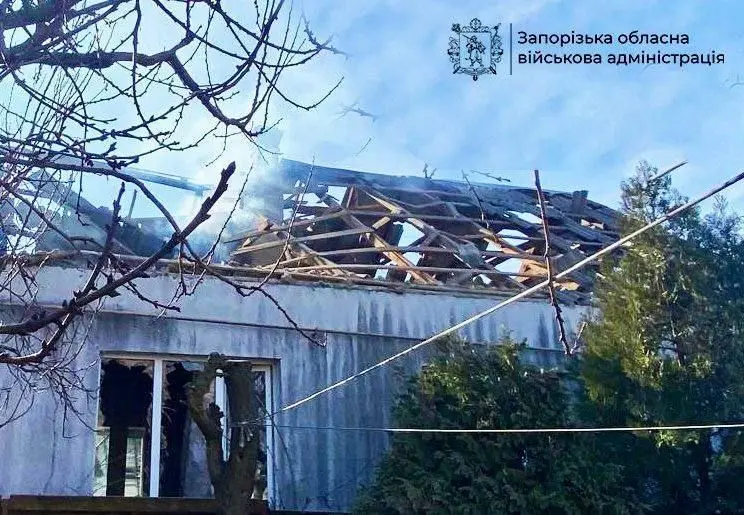
In Poltava, one of those drones struck a store and a café during the overnight hours. One civilian died. Another was wounded. In the Sumy region, attacks on residential areas injured 14 people — including a 14-year-old boy and an 87-year-old woman. In Kyiv, few were persuaded that anything meaningful had changed.
“Even today, drones and missiles are still flying,” said Dmytro Sova, a 42-year-old actor. “If they want a ceasefire, then let them start it.” Yuriy Dunai was blunter still: “It’s hard to expect a miracle. We’ve seen this before.”
They had indeed. A similar Easter ceasefire last year was marred by hundreds of documented violations. Kremlin spokesman Dmitry Peskov confirmed that the ceasefire had not been discussed in advance with Ukraine or the United States. Zelensky had been calling for an Easter truce for weeks — and when the Kremlin announced one, it did so without acknowledging his prior appeals.
US analyst Paul Goble was blunt in his assessment: “Putin is engaged in his usual propaganda efforts, declaring he is doing something that appears to be popular even in Russia but continuing to act as he wants.” He called Zelensky’s earlier proposal to halt energy infrastructure strikes a “real” offer, and Putin’s broader truce announcement “a propaganda ploy designed to suggest that Putin is more interested in peace than Zelensky.”
A Third Sea: Ukraine Strikes the Caspian
The Caspian Sea sits landlocked between Russia, Kazakhstan, Azerbaijan, Iran, and Turkmenistan. It is, by definition, unreachable from Ukraine’s coastline. There is no direct maritime route. And yet, overnight on April 9 to 10, Ukrainian forces struck two Russian ice-resistant stationary platforms there — the LSP-2 at the Valery Grayfer oil field and the LSP-1 at the Yuri Korchagin field — nearly 1,000 kilometers from the front line.
The method of attack remains undisclosed. The platforms could not have been struck by drones launched from Ukrainian-controlled land without crossing the airspace of at least one other nation, or from a base whose location has not been revealed. Ukrainian military spokesman Serhiy Bratchuk noted only that the weapons “either transited third nations or launched from undisclosed overseas bases.”
The strategic logic is cleaner than the operational mystery. The General Staff described the platforms as “a vital link in supplying fuel and lubricants to the Russian occupation army.” Ukraine has escalated its oil infrastructure campaign across three distinct maritime theaters: Baltic port strikes at Ust-Luga and Novorossiysk have cost Russia close to a billion dollars in revenue losses in recent weeks; Crimea’s Feodosia oil terminal was struck on April 8 and continues to burn; and now the Caspian.
Separately, Ukrainian drones struck the Tinguta main oil pumping station in Volgograd Oblast, which pumps up to three million tons of diesel annually, and the Krymskaya oil pumping station in Krasnodar Krai. Ukrainian forces also confirmed damage from an April 4-5 strike on the Lukoil-Nizhegorodnefteorgsintez refinery in Nizhny Novgorod Oblast, hitting its primary oil refining unit and diesel hydrotreatment unit.
Even as Ukraine strikes, Russia is patching. Reuters reported that Novorossiysk’s Sheskharis terminal — which handles roughly 700,000 barrels per day — partially resumed oil loading on April 9 after a week-long pause following a Ukrainian drone strike. The repairs continue. So do the strikes.
128 Drones, Six Oblasts, Four Dead
Russian forces launched 128 strike drones overnight — Shahed-type, Gerbera-type, Italmas-type, and others — from multiple directions: Oryol City, Millerovo in Rostov Oblast, Primorsko-Akhtarsk in Krasnodar Krai, and occupied Crimea. Ukrainian air defenses downed 113 of them. Fourteen struck targets. Debris from downed drones fell across seven additional locations.
The human toll was spread across Ukraine’s regions. In Kharkiv Oblast, a 40-year-old man died and five others were injured — including three children. In Dnipropetrovsk Oblast, two more were killed and three wounded, with strikes hitting residential buildings, a business, and vehicles. In Zaporizhzhia Oblast, one person died near the city, and nine others were wounded. In Sumy Oblast, five civilians were hurt, among them a 5-year-old boy. A Russian drone struck a residential building in Konotop. In Kherson Oblast, an 86-year-old woman suffered blast and shrapnel wounds in the village of Inzhenerne.
In Odesa, the drones found energy and port infrastructure for the second consecutive night. Power disruptions struck energy networks; storage facilities and port equipment were damaged. State energy operator Ukrenergo confirmed outages across Odesa, Zaporizhzhia, Kherson, Sumy, and Kharkiv oblasts by morning.
This escalation reflects a documented shift in Russian tactics. BBC’s Russian Service reported that Russia conducted two 24-hour drone strike campaigns in late March — a departure from its previous 10-to-12-hour overnight attacks. Longer strike windows allow Russian drones to reach nearly every Ukrainian oblast, including deep western regions like Lviv, Lutsk, Ternopil, and Ivano-Frankivsk. During daylight hours, drone operators use mesh networks to find unprotected targets in real time rather than relying on pre-prepared coordinates. Presidential Office Deputy Head Pavlo Palisa warned that Russia may pause strikes temporarily before launching even more intense waves targeting power generation, water supply, and transportation infrastructure.
‘Wars Are Not Won Without People’: Budanov’s Warning From Within
Kyrylo Budanov has a gift for delivering devastating truths without blinking. On April 10, speaking to Ukrinform, Ukraine’s Presidential Office chief and top war negotiator turned his assessment toward home — and what he found there was as alarming as anything on the front line.
“On the one hand, everyone says we must fight until victory — and on the other hand, everyone is running away from mobilization. And all of this is happening at the same time. This is a huge, enormous problem,” Budanov said.
He rejected the idea that technology could substitute for people. “Wars are not won without people. Without people, wars are lost, that does happen. But winning without people — that simply doesn’t exist.” The warning is not abstract. Draft evasion has become a serious operational issue. In early April, a stabbing attack on enlistment officers in Lviv left one recruiter dead. In Vinnytsia, two draft officers were injured in a separate incident. The social contract around conscription is visibly fraying.
Budanov also named a phenomenon that Ukrainian leadership has been reluctant to confront directly: the cultural valorization of evasion. “Our hero is the one fighting on the front line, shedding blood… And at the same time, our hero is also the one filming videos like ‘how I told the recruitment office to go to hell’… And both of them are heroes at the same time.”
He warned that this contradiction will not stay contained. When soldiers return from the front and find that those who stayed behind faced no consequences, the social damage could outlast the war itself. The call, ultimately, was for shared sacrifice — and an acknowledgment that not every conscript goes to combat. “Some serve in air defense, or in other roles, in logistics, warehouses,” he said. The army needs bodies, not just heroes.
Budanov’s Other Message: The War Could End Soon
The same day Budanov warned of Ukraine’s mobilization crisis, he delivered a strikingly different message to Bloomberg: the war may be nearing its end.
“They all understand the war needs to end. That’s why they are negotiating,” he said. “I don’t think it will be long.” He described negotiations among Ukraine, the United States, and Russia as gradually moving toward compromise. Both sides still hold “maximalist” positions, he acknowledged — but there is now a clearer sense of where the actual boundaries lie, which he called a major step forward.
Most significantly, Budanov said Ukraine expects US envoys Steve Witkoff and Jared Kushner to visit Kyiv, possibly as early as next week — their first trip to Ukraine since the full-scale invasion began. The visit would focus on security guarantees and the framework of a potential peace deal. Budanov described keeping the US engaged in the negotiation process as one of Kyiv’s key diplomatic achievements.
He was careful to hedge. No final decisions have been made on territorial issues — the most sensitive topic, where Moscow has pushed for Ukrainian withdrawal from remaining Donetsk Oblast territory it has not yet captured. “There are only two options — war or peace,” he said. “And continuing talks depend on whether both sides are willing to compromise.”
Zelensky, in a separate interview on The Rest Is Politics podcast, identified a “small window of opportunity” but warned it would require swift action from partners. He noted that with summer, the US will focus increasingly on domestic electoral politics — creating an informal deadline around August. “I think it will be very difficult for us until September,” he said.
Zelensky: NATO Exclusion Was a ‘Historic Mistake,’ Russia Eyes a Bigger War
In the same Rest Is Politics interview, Zelensky offered his most direct public assessment yet of the strategic trap Ukraine has occupied since 1994. Giving up its nuclear arsenal without securing NATO membership, he said, was a “historic mistake” — the Budapest Memorandum having provided no meaningful protection against the country that signed it.
He described Putin’s current strategy as one of substitution: unable to fully conquer Ukraine militarily, Russia is attempting to achieve its strategic goals through the negotiating table. The Kremlin’s goal, Zelensky argued, is to push Ukraine out of the Donbas region through US-mediated talks rather than battlefield advances — because a full-scale military attempt to seize the Donbas would cost Russia between 300,000 and 1 million troops, losses that even Moscow could not easily absorb.
Zelensky was unambiguous about the danger of any territorial concession. Withdrawing Ukrainian forces from the Donbas, he said, would divide Ukraine internally and create conditions for further Russian offensives. Any pause in fighting would give Moscow time to rebuild its forces, expand its defense industries, and push for sanctions relief — before resuming.
He pointed to Russia’s behavior as evidence of bad faith: refusing direct leader-to-leader talks and rejecting proposals to deploy foreign troops along the front line as a stabilizing mechanism. And he issued a warning about Russian ambitions that extended beyond Donbas — toward a buffer zone along Ukraine’s entire northern border with Belarus, including the Chernihiv and Sumy regions.
His proposed counterweight: a European security bloc comprising the EU, the United Kingdom, Ukraine, Turkey, and Norway — a grouping he argued would be capable of deterring Russia even if American security guarantees weakened or disappeared.
The Front Holds — and Bends: Ground Combat Across Eastern Ukraine
While diplomats talk ceasefire and drones light up the night sky, the ground war continues its grinding daily calculus. Russian forces pressed offensive operations across most of the front on April 9 and 10 but achieved no confirmed significant advances.
In Donetsk Oblast, the Kostiantynivka-Druzhkivka sector saw persistent Russian attacks — near Kostyantynivka itself, and southwest of Druzhkivka toward Sofiivka, Pavlivka, and Novopavlivka — but Ukrainian lines held. Russian forces continue attempting to encircle Kostiantynivka from three sides; Druzhkivka lies more than 10 kilometers to its northwest. Zelensky confirmed Russian forces set a self-imposed deadline to capture both cities, along with Pokrovsk, by the end of April. British intelligence assessed this as impossible.
Near Pokrovsk — already largely under Russian control since December 2025 — fighting continues on the outskirts and around the sister city of Myrnohrad. A Ukrainian brigade spokesman described Russian tactics in the area as small-group infiltrations, with units probing terrain and mapping new infiltration routes rather than committing to frontal assaults. Ukrainian forces recently advanced south of Hryshyne, northwest of the city.
In the Slovyansk direction, Ukrainian forces advanced in central Yampil, southeast of Lyman — geolocated footage confirmed the gains. The Russian Ministry of Defense claimed the capture of Dibrova, southeast of Slovyansk, but a Russian milblogger contradicted this, calling Dibrova a contested gray zone and stating that Russian forces cannot consolidate even on its outskirts.
In the Oleksandrivka direction, a strategically significant development: Ukrainian counterattacks are forcing the Russian military command to divert reinforcements away from its priority Donetsk offensive and toward the Hulyaipole-Zaporizhzhia axis. Military analyst Kostyantyn Mashovets reported that Russia is now drawing on strategic reserves — including elements of the 40th Naval Infantry Brigade from the Pacific Fleet and multiple motorized rifle brigades from the Eastern Military District — to stabilize a front it had not intended to prioritize. These deployments have not produced tactically significant gains.
Strategic Reserves Enter the Fight — Far From Russia’s Main Objective
Russia’s decision to commit strategic reserves is significant. Strategic reserves are, by definition, the last rung before formal mobilization — the forces held back for emergencies, not routine attrition. Their deployment to the Hulyaipole and Oleksandrivka directions rather than to Donetsk Oblast — Russia’s declared operational priority — reveals the degree to which Ukrainian counterattacks have scrambled Moscow’s plans.
Mashovets assessed that the Russian military command has concluded that Ukrainian counterattacks threatening the operational rear of the 5th Combined Arms Army near Hulyaipole do not rise to the level of an existential threat — but the reinforcements sent there suggest the calculation is tight. Meanwhile, Russian forces in Donetsk proper, including those pressing against Ukraine’s so-called Fortress Belt cities of Kostiantynivka and Druzhkivka, are being relatively underserved.
Zelensky, speaking to journalists, framed the reserve deployment as both a sign of Russian desperation and a risk: by thinning its borders with other countries to feed the Ukraine war, Moscow is creating vulnerability on multiple fronts simultaneously. “For the Russians, this is a risky step,” he said. “But nevertheless, they went for it.”
The operational conclusion from ISW’s analysis: Ukrainian counterattacks in the Oleksandrivka and Hulyaipole areas are functioning as a strategic disruption — not necessarily capturing large amounts of territory but forcing Russia to fight in places it had not planned to, with resources it cannot easily replace.
Burning the Supply Lines: Ukraine’s Mid- and Long-Range Strike Campaign
Ukraine’s drone campaign against Russian military logistics continued without pause across multiple theaters overnight. In occupied Luhansk Oblast, Ukrainian forces struck a logistics depot and manpower concentration near Perevalsk, roughly 80 kilometers from the front; an ammunition depot near Trudove, 85 kilometers out; and a fuel warehouse near Rovenky, 130 kilometers back. Video from April 9 showed fires at a reported Russian ammunition depot in Dovzhansk, nearly 190 kilometers from the front.
In occupied Donetsk Oblast, Ukrainian forces struck a logistics hub near Novoazovsk — 148 kilometers from the front — and a drone control point near Novohryhorivka, 106 kilometers out. In Zaporizhzhia Oblast, strikes hit an ammunition depot near Okhrimivka and a UAV control point near Novopetrivka. Ukrainian National Guard Commander Oleksandr Pivnenko confirmed the destruction of a Russian Palatin electronic warfare system, a 9A83 missile launcher, and a 9S32 missile guidance station from an S-300V air defense complex.
In occupied Crimea, NASA fire monitoring data recorded ongoing heat anomalies at the JSC Sea Oil Terminal in Feodosia — three days after Ukraine’s strike on April 8. Analyst Oksana Ishchuk described the hit as destroying Russian capacity to store petroleum products at one of Crimea’s three main logistics hubs. The damage is expected to force Russian logistics to reroute fuel via the Kerch Bridge, creating a two-to-six-week fuel shortage across the peninsula.
Ukraine also confirmed the earlier destruction of Russia’s last railway ferry in the Kerch Strait — the Slavyanin — eliminating another fuel and ammunition supply route to occupied Crimea.
95 Percent Blocked: Russia’s War on Its Own Internet
Russia’s throttling of Telegram reached a new intensity on April 10. According to data from the Open Observatory of Network Interference, cited by Russian opposition outlet Agenstvo, the anomaly rate for Telegram logins hit 95 percent on the morning of April 10 — the highest since the throttling campaign began on March 20. For context: WhatsApp and Signal, both officially banned in Russia, have anomaly rates of roughly 89 percent. Russia is now blocking Telegram more aggressively than platforms it has formally prohibited.
The pattern Agenstvo identified is one of progressive tightening, with new waves of blocking tending to arrive at the end of the week. The April 9-10 overnight period saw a sharp spike in Downdetector complaints about Telegram access across Russia.
The question of why matters enormously. Zelensky offered two hypotheses: the Kremlin is either preparing to push through an unpopular mass mobilization order, or it is preparing to announce a peace deal that Russian hardliners will reject as surrender. “Why would the Russians close Telegram? I think it would be to push through unpopular decisions,” he said. “What could those be? Perhaps ending the war in one form or another. Or, conversely, escalating it — which would mean even greater mobilization.” He added: “And soon we will see which scenario Vladimir Putin has chosen.”
The Kremlin’s censorship campaign is already generating domestic backlash — including from the prominent ultranationalist information space, which has been among the most vocal critics of Telegram throttling. This is a constituency Moscow typically cannot afford to antagonize.
Balaclava and Bicycle: The Failed Assassination in Odesa
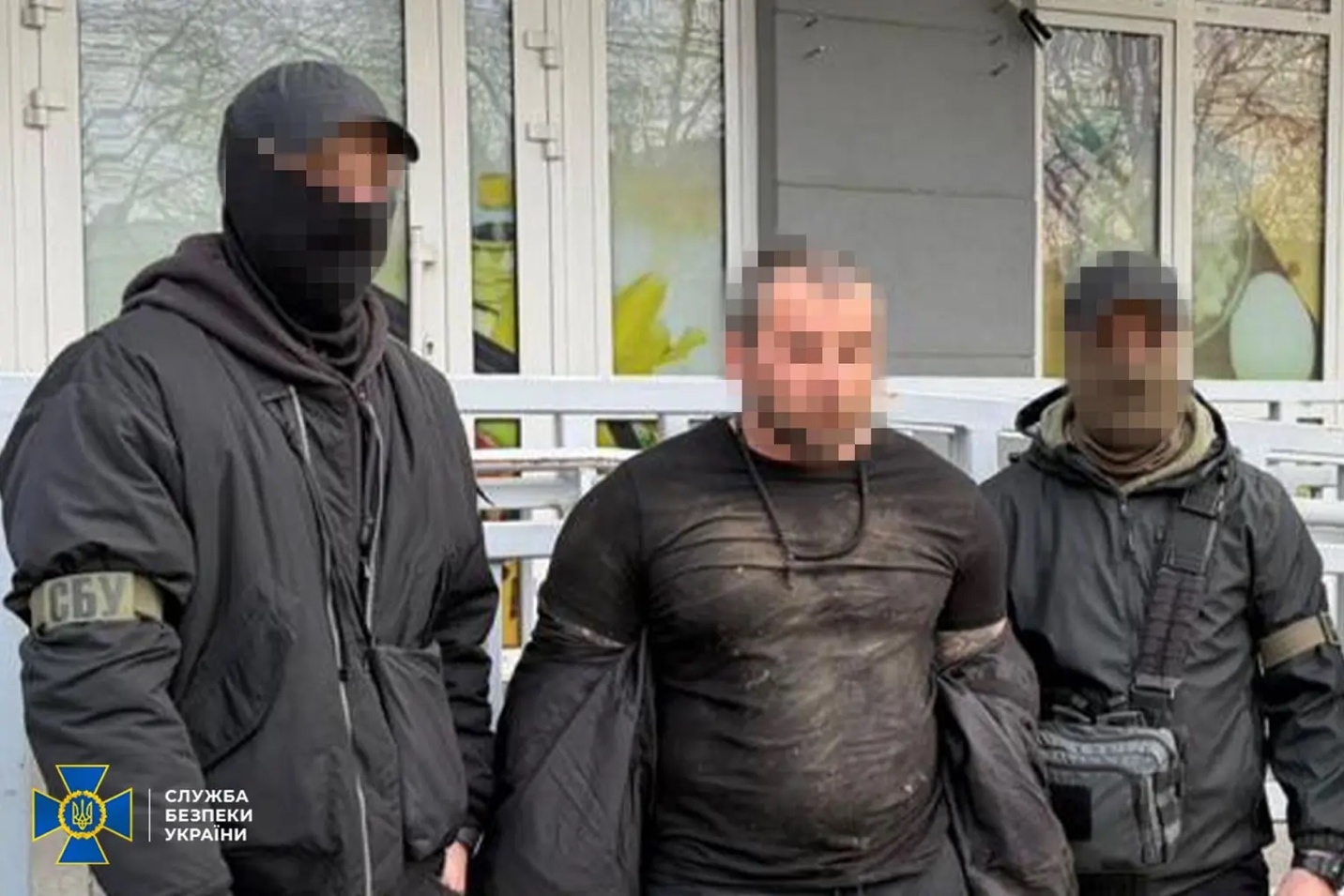
He came in disguise and waited by the exit. Dressed in a balaclava, pretending to repair a bicycle near a residential complex in Odesa, a 37-year-old national of a Balkan country positioned himself to intercept the vehicle of a high-ranking Ukrainian Navy officer. He was armed with a pistol and two loaded magazines, their coordinates transmitted by a Russian handler. He had been in Ukraine since February, entering under tourist cover, moving between rented apartments and hotel rooms to avoid detection.
When the officer’s car neared the exit, the attacker threw his bicycle under its wheels and prepared to open fire. He was detained immediately — not because of chance, but because Ukraine’s Security Service (SBU) had been tracking and documenting his movements for weeks. Counterintelligence officers and special forces had him under surveillance the entire time.
The SBU described it as a “red-handed” arrest. The suspect faces charges of attempted terrorist attack under Ukrainian law and a potential sentence of up to 12 years. He reportedly received the firearm from a hidden cache provided by his Russian handler after arriving in Odesa.
The operation is a reminder of how Russia prosecutes the war beyond the front lines: assassination networks, recruited foreign nationals, courier networks for weapons. Ukraine’s intelligence services have been disrupting these attempts throughout the war — but the attempts continue.
Seventeen Countries: The Tribunal for Aggression Crosses Its Threshold
In a development that received little attention on a crowded news day, the special tribunal to prosecute the crime of Russian aggression against Ukraine quietly cleared a critical legal threshold. The Kyiv Independent confirmed that at least 17 European countries are now prepared to sign on to the Enlarged Partial Agreement establishing the tribunal — one more than the 16-country minimum required.
Belgium, Denmark, Austria, and Lithuania are among those confirmed. The Netherlands has formally expressed interest in hosting the tribunal and is actively negotiating an interim host-state agreement. Costa Rica has joined as the only non-European signatory so far.
The tribunal is distinct from the International Criminal Court: while the ICC is investigating Russian war crimes, it lacks jurisdiction over the specific crime of aggression — the conscious decision by Putin to launch the invasion. A separate tribunal is legally required to address that charge. The case was first argued in March 2022 by legal scholar Philippe Sands; the tribunal framework was agreed in June 2025.
Foreign ministers of Council of Europe member states will be able to formally advance the tribunal when they meet in Chisinau on May 14-15. The European Commission has separately proposed playing a larger founding role, and two EU working parties are currently reviewing the proposal. A vote by national ministers is expected in the second half of April. If approved, the EU would have a say over the tribunal’s start date and the appointment of its judges.
Shooting Down Shaheds in the Gulf: Ukraine’s Quiet New Front
In a disclosure that reframes the scope of Ukrainian operations, Zelensky confirmed that Ukrainian military specialists have been actively engaged in multiple Middle Eastern countries — not in an advisory capacity, but in direct air defense operations against Iranian-made Shahed drones.
“Did we shoot things down? Yes, we did. Did we shoot them down in one country? No, in several,” Zelensky said at an April 8 closed-door briefing. The Ukrainian specialists involved include drone interceptor and electronic warfare experts. “This is not about a training mission, not about drills — it’s about supporting the creation of a modern air defense system that can actually work,” he said.
The arrangement is explicitly transactional. In exchange for Ukrainian expertise and direct operational support, Kyiv is to receive interceptor drones for protecting its energy infrastructure, as well as oil and diesel fuel — some of which will be sent to European refineries for processing. Ten-year security agreements are being negotiated with Oman, Kuwait, and Bahrain, alongside deals already concluded with other Gulf states.
The context is the ongoing US-Israeli conflict with Iran, now in its sixth week. Iran has shut down the Strait of Hormuz, through which roughly one-fifth of global oil supply transits. This is also the context for Zelensky’s separate disclosure that unnamed Western partners asked Ukraine to reduce its strikes on Russian oil refineries, fearing Ukrainian attacks would worsen already elevated global energy prices during the Hormuz crisis. Ukraine appears to have declined that request — striking Ust-Luga and the Caspian platforms regardless.
Russian Spy Plane Over the Baltic — Twice in One Week
Poland’s F-16 fighters intercepted a Russian Il-20 reconnaissance aircraft over the Baltic Sea on April 9 — the second such intercept within a single week, following a prior encounter on April 8. Polish Defense Minister Wladyslaw Kosiniak-Kamysz confirmed the intercept on X, noting that the aircraft was flying in international airspace without a filed flight plan and with its transponder switched off.
The Il-20 — based on the Il-18 transport aircraft — is Russia’s primary electronic surveillance and reconnaissance platform, equipped with radar and signals intelligence gear designed to map military infrastructure and communication networks. Flying it dark, without transponder or flight plan, is a deliberate provocation: it degrades NATO’s ability to distinguish reconnaissance from something more threatening.
“The provocative actions of the Russian Federation are testing our air defense systems,” Kosiniak-Kamysz said. Polish officials have repeatedly warned that Russia’s aerial provocations — which included repeated drone incursions into Polish airspace in the fall of 2025 — risk triggering dangerous escalation if not decisively addressed. Poland’s geographic position, bordering Ukraine to the east and stretching to the Baltic opposite Russia’s heavily militarized Kaliningrad exclave, makes it a focal point for exactly this kind of Russian pressure.
Blood on the Pavement: Ukraine’s War Wins the World’s Attention Again
A photograph taken on April 24, 2025, of 65-year-old Valeria Syniuk — seated outside her badly damaged Kyiv home, covered in blood, following one of the deadliest Russian missile strikes on the capital since the 2022 invasion — has been named one of seven winners in the Europe category of the 2026 World Press Photo contest.
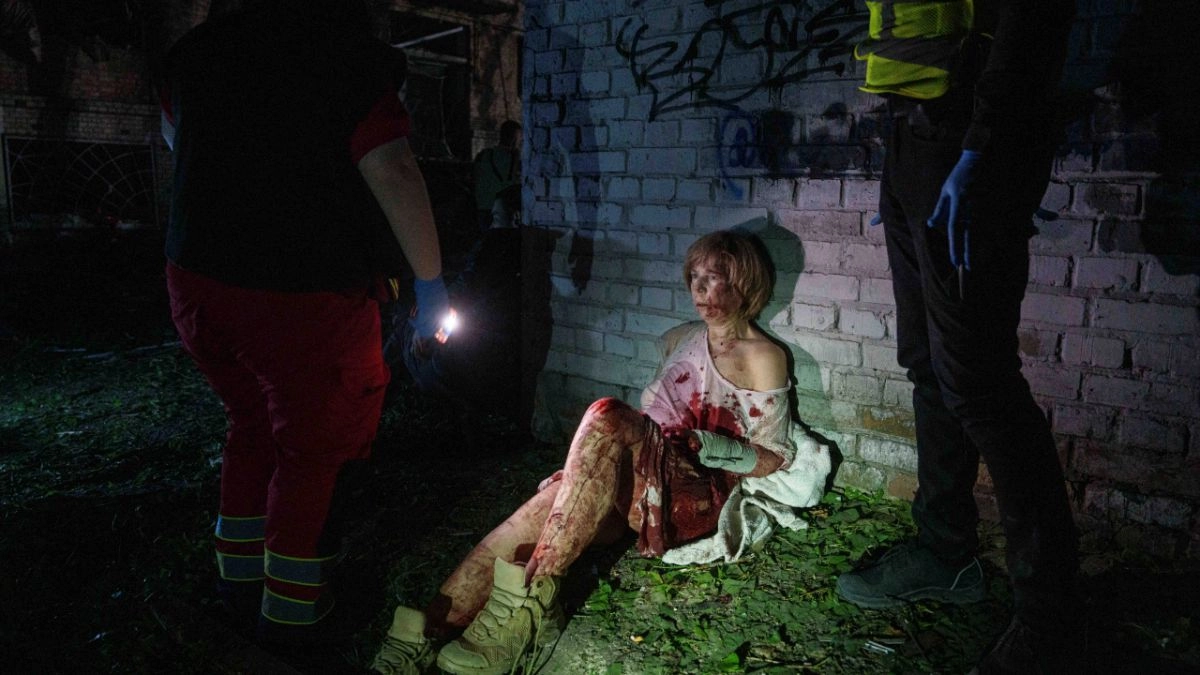
The image was shot by Evgeniy Maloletka, a Ukrainian war photographer and two-time Pulitzer Prize winner who has documented the conflict since 2014, years before Russia’s full-scale invasion. Maloletka is the co-creator of 20 Days in Mariupol, the Academy Award-winning documentary covering Russia’s brutal 2022 siege of that city. He also won the 2023 World Press Photo of the Year — a different image, also from Ukraine, showing 32-year-old Iryna Kalinina being carried from a maternity hospital struck by Russian forces in Mariupol. Both Kalinina and her unborn child died shortly after the photo was taken.
A second Ukraine-related image also won in the Europe category: US photographer David Guttenfelder’s “Drone Wars,” showing a Ukrainian soldier preparing FPV drones for attack missions against Russian positions. The FPV drone — a first-person-view remotely piloted aircraft, typically small and fast, guided by a pilot wearing video goggles — has become one of the defining weapons of this war, used by both sides for precise strikes against vehicles, equipment, and personnel.
The contest’s overall Photo of the Year will be announced April 23. That nearly 60,000 photographs from more than 3,700 photographers were submitted, and two of the seven European winners depict the same war, says something about what the world’s press is witnessing — and what it cannot look away from.
Somewhere over Odesa on the night of April 9, an 86-year-old woman was pulled from rubble with blast wounds. Somewhere over the Caspian, a drone found an oil platform in the dark. In Kyiv, a man with a pistol waited by an exit until he didn’t. And in Poltava, a café received a drone instead of its Easter morning customers. The ceasefire, when it arrives, will land on a country that has learned — through four years of broken promises and shattered glass — not to mistake silence for peace.
A Prayer for Ukraine
1. For Valeria, Sitting in Her Blood
Lord, we begin with Valeria Syniuk — 65 years old, seated outside the wreckage of her home in Kyiv, covered in blood, the building opposite hers simply gone. She had been asleep. A lens captured what words struggle to hold. We ask not that she be explained, or that her suffering be given meaning by those who were not there. We ask only that she be seen — by You, who sees what the world photographed and still could not fully witness. Hold what remains of her peace. Let the image that won the world’s attention also win her something: the ordinary days she was owed.
2. For the 14-Year-Old in Sumy
Father, a boy of 14 was injured in the Sumy region last night, alongside an 87-year-old woman — two lives at opposite ends of a span that should have held everything between. He has known nothing but this war. His childhood has been shaped by sirens and basements and the particular arithmetic of which strikes land and which are intercepted. We ask for his healing, yes — but more than that, we ask for the world he deserves to grow into: one where he does not need to run at 14, or at 24, or ever again.
3. For the Soldiers on a Front That Never Rests
God of justice, we pray for those who held the line on April 10 — near Kostiantynivka, near Yampil, in the fields around Hulyaipole where Ukrainian counterattacks are buying time and ground that may never appear on any map. They are tired in ways that defy description. And today, a 32-hour ceasefire was announced — but not yet, and not reliably, and not by people who have earned the benefit of the doubt. Keep them. Sustain what cannot be sustained by will alone. Let the ceasefire, if it holds even briefly, give them a few hours of something other than the sound of incoming.
4. For Kyrylo Budanov, Carrying Two Truths at Once
Lord, we pray for those who must hold contradictions that cannot be resolved — who must say, in the same breath, that the war may end soon and that Ukraine is hollowing out from within. Budanov knows what the front needs that the rear is not providing. He knows what peace requires that neither side has yet offered. Guide the negotiations that no one is fully discussing in public. Protect the window, however small, that still exists. And grant to those carrying impossible weight the clarity to know which compromise preserves Ukraine and which one only defers its destruction.
5. For Justice That Arrives Before It Is Too Late
God of history, seventeen countries have now agreed that the decision to invade — not just the atrocities that followed, but the decision itself — must be named and prosecuted. We pray for that tribunal: for the lawyers and diplomats who are building it, for the host country that will shelter it, for the judges who will one day sit in it. The arc is long. The crime was committed more than four years ago and the trial has not yet begun. We ask that it arrive before those who made the decision die peacefully in their beds, and before the world convinces itself that accountability is a luxury it cannot afford. In Your mercy, in Your justice, in Your time — bring this war to its end, and let the ending be worthy of what Ukraine has endured.
— Ukraine Daily Briefing · April 10, 2026