
Ukraine Daily Briefing | June 10, 2026 | Day 1,568 of the Full-Scale Invasion
Prepared by Dayana Bozhyk
Ukraine’s FP-5 Flamingo cruise missile struck the VNIIR-Progress plant in Cheboksary, Chuvashia — 900 kilometers from the frontline, manufacturer of navigation and guidance components for Shaheds, Kalibr, Iskander-M, and guided aerial bombs — while a second overnight strike halted primary crude distillation at the Kuibyshev Oil Refinery in Samara, one of Russia’s largest at 7 million tons per year. The 1st Azov Corps disabled Mariupol port, destroying substations, radar, control tower, fuel tanks, and the shadow fleet vessel Lady Augusta. Russian forces made tactical gains in Kostyantynivka from two directions simultaneously, marking the most significant advance in Russia’s spring-summer 2026 main effort. Zelensky declared June 11 the Day of Ukraine’s Unmanned Systems Forces; Ukraine approved a record defense budget increase of Hr 1.56 trillion; and Putin signed a law permitting seizure of property from Russians abroad who criticize the Kremlin.
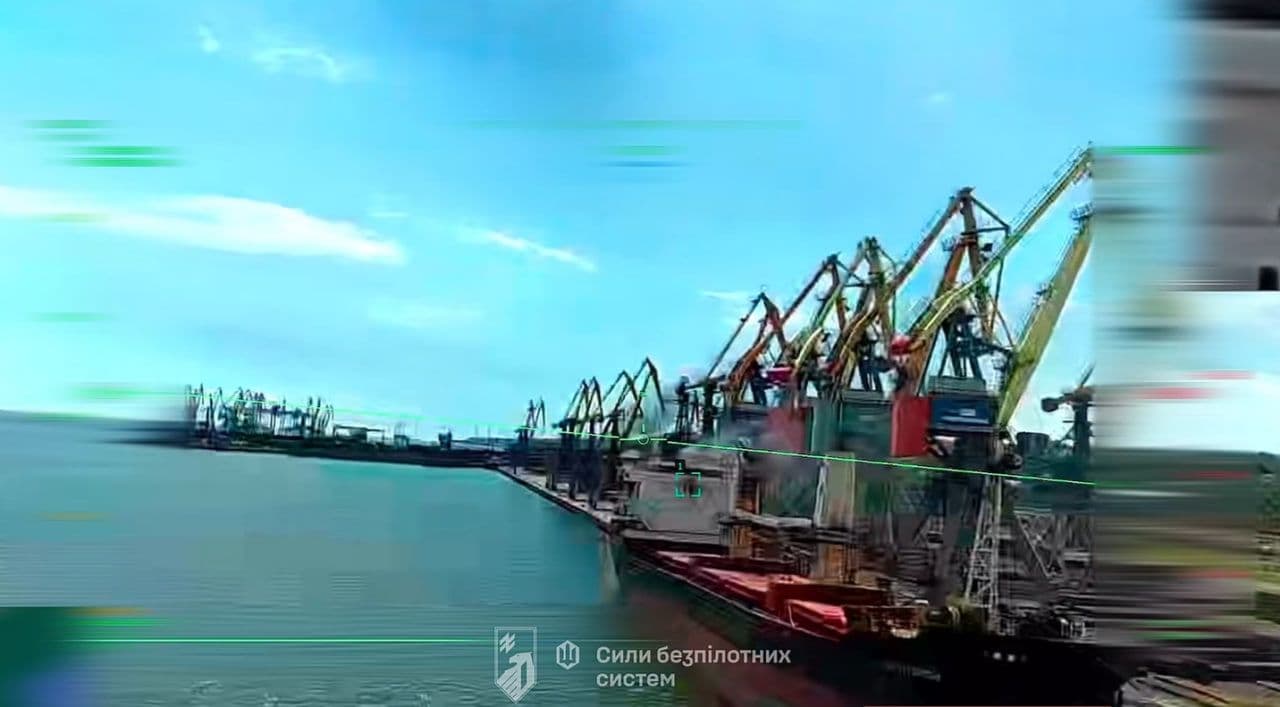
Screenshot from a video published by the National Guard’s 1st Azov Corps, showing the port of Mariupol in occupied Donetsk Oblast. (National Guard’s 1st Azov Corps/Telegram)
THE DAY’S RECKONING
The Flamingo is Ukraine’s domestically produced cruise missile — a 3,000-kilometer-range weapon that entered serial production and has now been used in combat at operational depth. On the night of June 9 to 10, it reached Cheboksary in the Republic of Chuvashia, 900 kilometers from the frontline, and struck the VNIIR-Progress plant: the facility that produces the satellite navigation receivers and Kometa-type antennas embedded in the Shaheds, Kalibr cruise missiles, Iskander-M ballistic missiles, and KAB guided bombs that have killed Ukrainians across four years of full-scale war. Fires and smoke confirmed. Chuvash Republic Head Nikolaev acknowledged the strike. ISW noted this was Ukraine’s second Flamingo strike against the same plant — the first was May 5 — demonstrating the ability to strike the same target system repeatedly at that depth.
The same overnight period: the Kuibyshev Oil Refinery in Samara City — one of Russia’s largest, 7 million tons per year, 2.5 percent of total national refining capacity — halted its primary crude distillation units following a Ukrainian drone strike. Two unnamed Reuters sources confirmed the halt. And in occupied Mariupol, the 1st Azov Corps — fighting for the same city where Azov’s predecessor was besieged at Azovstal in 2022 — executed a precision strike that left the port without power, destroyed radar and control infrastructure, and struck the shadow fleet vessel Lady Augusta. Russia uses Mariupol port to link occupied Donetsk to Crimea and to Russia. Ukraine just took away its lights.
The news from Kostyantynivka is harder. Two Russian tactical groups — Bakhmut from the northeast, Dzerzhinsk from the south — advanced into the city simultaneously on June 10. The Dzerzhinsk group achieved what military analyst Mashovets assessed as a tactical breakthrough in the western central part of the city. The two assault elements are roughly two kilometers from each other. ISW’s analysis is measured but direct: Russian forces will likely continue to make tactical gains in Kostyantynivka, but the Fortress Belt as a whole remains beyond their operational reach. Kostyantynivka is the most significant urban battle in Russia’s spring-summer offensive. Ukraine has not yielded the railway station. Its forces cleared Dovha Balka of infiltrators the same day. The battle is ongoing.
Putin signed a law permitting Russian authorities to seize the property of Russians living abroad who criticize his government, discredit the military, or call for sanctions. It takes effect September 1. Russia’s Duma banned Starlink equipment. Zelensky declared June 11 the Day of Unmanned Systems Forces and announced that USF operations have caused $40 billion in Russian asset damage in their first year. Ukraine approved a record Hr 4.4 trillion ($97.6 billion) defense budget. An Omsk Oblast drone alert — the first ever, 2,300 kilometers from the frontline — was declared.
FLAMINGO CRUISE MISSILE STRIKES CHEBOKSARY: DRONE-GUIDANCE PLANT DESTROYED
Ukrainian forces struck the VNIIR-Progress plant in Cheboksary, Chuvashia Republic, overnight June 9 to 10 using FP-5 Flamingo cruise missiles. The General Staff confirmed the strike. The VNIIR-Progress plant produces satellite navigation receivers and Kometa-type antennas — components used in Shahed drone navigation, Kalibr cruise missile guidance, Iskander-M ballistic missile systems, and unified modules for KAB guided aerial bombs. Chuvash Republic Head Nikolaev acknowledged a Ukrainian missile strike damaged unspecified infrastructure in Cheboksary. Geolocated footage and satellite imagery confirmed smoke and fires at the VNIIR plant. Russian opposition outlet Astra noted that Russian officials had previously installed anti-drone nets over the plant following an earlier Ukrainian strike in late 2025.
This was Ukraine’s second Flamingo strike against the same facility. The first was May 5. ISW assessed this demonstrates Ukraine’s increasing ability to sustain and intensify long-range strikes against key Russian military-industrial facilities. The Flamingo is Ukraine’s domestically produced cruise missile with a claimed range of 3,000 kilometers, already in serial production. Striking a single target system twice at 900-kilometer depth — effectively disabling its ability to protect itself between strikes — represents a qualitative shift in Ukraine’s long-range strike capability. Russia’s Defense Ministry claimed its air defenses shot down 326 Ukrainian drones overnight across 21 regions; it notably did not list Chuvashia or acknowledge the VNIIR-Progress strike.
KUIBYSHEV REFINERY HALTS; VTOROVO AND LOBKOVO PUMPING STATIONS STRUCK; MILLEROVO DEPOT HIT
Ukrainian forces struck the Kuibyshevsky Oil Refinery in Samara City overnight June 9 to 10, causing fires confirmed by geolocated footage and satellite imagery. Two unnamed Reuters industry sources confirmed the refinery halted oil processing at its primary crude distillation units following the strike. The Kuibyshevsky refinery processes approximately 7 million tons of crude oil annually — about 2.5 percent of Russia’s total national refining capacity — and is located more than 1,000 kilometers from the Ukrainian border. The facility produces gasoline, diesel, fuel oil, and other petroleum products.
Ukraine’s SBU confirmed strikes on the Vtorovo and Lobkovo oil pumping stations in Vladimir Oblast, roughly 700 kilometers from the launch point. The General Staff stated both stations pump diesel fuel to the Moscow Ring Oil Product Pipeline and transport oil products to Russian Baltic Sea ports, primarily through the Primorsk loading port. NASA FIRMS data confirmed heat anomalies at both locations. Vladimir Oblast Governor Avdeev acknowledged fires at two industrial facilities. Rostov Oblast Governor Slyusar confirmed a fire near an oil depot at Millerovo, with FIRMS data confirming heat anomalies at a fuel tank. Updated BDA from the June 8 Grushovaya strike confirmed fires at two oil tanks and oil quality evaluation infrastructure; the Krasnoarmeysk pumping station in Saratov Oblast fire affected two 50,000 cubic meter oil tanks; the Krasnyy Yar Volgograd fire affected a 50,000 cubic meter oil tank.
AZOV CORPS DISABLES MARIUPOL PORT: RADAR, SUBSTATIONS, CONTROL TOWER, LADY AUGUSTA STRUCK
The National Guard’s 1st Azov Corps announced on June 10 that Ukrainian forces disabled the Russian-occupied port of Mariupol, rendering it unusable for military logistics. The operation, conducted jointly with the SBU’s Alpha unit and Unmanned Systems Forces, struck electrical substations, radar equipment, repair facilities, the control tower, fuel storage tanks, and the cargo vessel Lady Augusta — a vessel linked to Russia’s shadow fleet and sanctioned by Western governments. As a result of the attack, the port was left without power, significantly disrupting Russian military logistics in occupied southern Ukraine.
Mariupol port serves as a critical link in Russia’s southern logistics architecture, connecting occupied Donetsk Oblast to occupied Crimea and to Russia proper. The 1st Azov Corps noted this is the latest stage in a systematic campaign: on May 8 the Corps declared its operational “return” to Mariupol with drone reconnaissance and strike footage; on May 25 it published strikes along the Mariupol-Taganrog and Mariupol-Volnovakha highways. The June 10 operation moved from road interdiction to port infrastructure destruction. ISW could not immediately assess whether the port has been rendered inoperable or merely temporarily incapacitated.
KOSTYANTYNIVKA: RUSSIA’S SPRING-SUMMER MAIN EFFORT MAKES TACTICAL BREAKTHROUGH
Military analyst Mashovets reported on June 10 that two Russian tactical groups advanced into Kostyantynivka simultaneously. The “Bakhmut” tactical group, composed primarily of the 3rd Army Corps, advanced from Stupochky through Novodmytrivka into northeastern Kostyantynivka and along the T-0504 Pokrovsk-Bakhmut road to the Kostyantynivka railway station area. The “Dzerzhinsk” tactical group, drawn from multiple Southern Military District armies, advanced from Illinivka into several areas stretching from northwestern to southwestern Kostyantynivka. Mashovets assessed the Dzerzhinsk group achieved a “tactical breakthrough” in the western central part of the city. The two assault elements are roughly two kilometers from each other. Russian forces seized the southern part of Novodmytrivka. Ukrainian forces cleared Dovha Balka southwest of Kostyantynivka of Russian infiltrators and the railway station itself has not been seized.
ISW’s structural assessment: Russian forces began their Kostyantynivka campaign in Summer 2025, accelerated it through Winter 2026, replenished 80 percent of attacking units by June 6, and have committed at least one Combined Arms Army and elements of several others. Despite this commitment, they failed to meet the military command’s internal deadline of May 2026 for seizure. Russian forces have now infiltrated at least 12.69 percent of the city. ISW assessed Russian forces will likely make further tactical gains but face structural obstacles to operational breakthrough: the 3rd Army Corps is simultaneously struggling in Chasiv Yar to the northeast; Russian forces have been unable to advance significantly toward Slovyansk; and Ukrainian counterattacks in the neighboring Borova direction are consuming Western Grouping resources. The Fortress Belt overall remains beyond Russian operational reach.
OMSK DRONE ALERT FIRST EVER; BDA: 1060TH ARSENAL IN ST. PETERSBURG DESTROYED 18 UNDERGROUND BUNKERS
Omsk Oblast Governor Khotsenko declared a drone threat on June 10 — the first such declaration ever for the region, located approximately 2,300 kilometers from the frontline. The declaration signals that Ukraine’s operational reach now approaches the geographic center of Russia. The same day, the Ukrainian General Staff released updated BDA from the June 6 strike on the weapons, ammunition, and vehicle arsenal of the Russian 1060th Material-Technical Support Center in Bolshaya Izhora, near St. Petersburg: secondary detonations destroyed 18 underground storage areas and three open storage areas. This BDA represents the most significant confirmed destruction of a Russian military arsenal in the Leningrad Military District since the full-scale invasion began.
ZELENSKY DECLARES JUNE 11 DAY OF USF; UKRAINE APPROVES RECORD DEFENSE BUDGET
President Zelensky signed a decree on June 10 establishing June 11 as Ukraine’s Day of Unmanned Systems Forces — making Ukraine the first country in the world with a national commemorative day for drone forces. Zelensky: “It is Ukrainians who have proven that thanks to technology, thanks to their creativity and courage, we can change the war.” He confirmed the USF’s first year caused an estimated $40 billion in Russian asset damage — the same operations that killed 100,082 Russian military personnel verified in the Delta system. He added that Russia’s border regions are “feeling our impact” — a direct reference to the Omsk alert, the St. Petersburg strikes, and the Cheboksary Flamingo.
Prime Minister Svyrydenko announced Ukraine’s parliament approved a record defense budget increase of Hr 1.56 trillion ($34.6 billion), bringing 2026 security and defense spending to Hr 4.4 trillion ($97.6 billion). The allocation: Hr 2.3 trillion ($51 billion) for weapons and equipment, Hr 1.45 trillion ($32.2 billion) for personnel, and Hr 40 billion ($887 million) for regional resilience. The budget increase reflects both the scale of Ukraine’s operational tempo and the sustained need to replace equipment and expand capabilities without external financing guarantees from the U.S.
PUTIN SIGNS PROPERTY SEIZURE LAW FOR DISSIDENTS ABROAD; DUMA BANS STARLINK EQUIPMENT
Putin signed legislation on June 10 permitting Russian authorities to seize the property of Russian citizens living abroad for a wide range of administrative offenses against Russia’s interests, effective September 1. Grounds for seizure include discrediting the Russian military, calling for sanctions against Russia, distributing materials deemed extremist, promoting Nazi symbols, insulting officials, violating foreign-agent rules, and participating in undesirable organizations. Under the law, property can be frozen as a “precautionary measure” before a final court ruling, and the value of seized property does not have to be proportionate to the fine. Courts are instructed to appoint lawyers for absent defendants at federal budget expense. ISW assessed this continues Russia’s accelerating trajectory toward authoritarianism and systematic asset nationalization to support war revenues.
The Russian State Duma approved legislation banning the use and sale of foreign satellite equipment — including Starlink terminals — that has not been assigned Russian radio frequencies. The measure, part of the “Anti-Fraud 2.0” package, closes loopholes that allowed Starlink terminals to enter Russia through unofficial channels despite existing import restrictions. The prohibition targets equipment operating outside Russia’s SORM traffic-monitoring framework. The legislation gained urgency after SpaceX deactivated Starlink for Russian military forces in February 2026, significantly disrupting Russian battlefield coordination. Russia’s Rassvet alternative constellation — which lost one of its 16 first-batch operational satellites in recent weeks — remains years from operational viability.
UKRAINE’S FP-7.X ANTI-BALLISTIC INTERCEPTOR: FIRST SUCCESSFUL TEST; MASS PRODUCTION TARGETED FOR 2027
The Financial Times reported on June 10 that Ukraine successfully completed the first flight test of its FP-7.X anti-missile interceptor, designed as a domestically produced, cost-effective alternative to the U.S.-made PAC-3 Patriot interceptor. Fire Point co-owner and chief designer Shtilierman told FT the test was “pretty successful.” The FP-7.X is designed to intercept Russian ballistic missiles and drones at speeds of 1,500-2,000 meters per second, at a cost projected to be far below the several-million-dollar price of a Patriot PAC-3 interceptor. European partners will supply remaining components for the complete Freyja air defense system, including radars and command-and-control infrastructure.
Shtilierman stated mass production could begin as early as August 2026 if partner support materializes at speed, with completed interceptors ready by 2027. Ukraine currently depends almost entirely on U.S.-supplied Patriot PAC-3 interceptors for ballistic missile defense — the only available system capable of reliably intercepting Russian Iskander-M and similar threats. Russia exploits the known shortage by systematically launching ballistic missile strikes at targets it calculates Ukraine cannot protect. FP-7.X, if it reaches production at scale, could break that calculus.
RUSSIAN VOLUNTEER RECRUITMENT DOWN 20%; PUTIN ORDERS CHILDREN’S CAMPS PROTECTED
Russian opposition outlet Vazhnye Istorii reported on June 10, citing Russian federal budget data, that 71,200 people received one-time enlistment bonuses after signing military contracts in the first quarter of 2026 — down 20 percent from the same period in 2025. Full-year 2025 military contracts totaled 363,900 — 10 percent fewer than 2024. ISW assessed Russia is conducting limited, rolling reserve call-ups under the guise of “military records updates” to compensate for declining voluntary recruitment and rising monthly casualties that have exceeded recruitment rates since December 2025.
Putin addressed Russia’s summer children’s camp system, ordering security services and law enforcement to “reliably protect” children’s centers, camps, and health resorts during the summer season, with 5.75 million children expected to attend. The instruction came weeks after the EU imposed sanctions on 16 Russian officials and 7 entities linked to the unlawful deportation and forced indoctrination of Ukrainian children — including the Orlyonok, Scarlet Sails, and Smena All-Russian Children’s Centers, which are accused of running pro-Russian ideology programs for transferred Ukrainian minors. Putin framed European child rights concerns as evidence of Western “moral decay.”
OVERNIGHT STRIKE: 207 DRONES, 181 DOWNED; SIX KILLED, 60 INJURED; ARABAT SPIT BRIDGE AND BRIDGES AT ARMIANSK AND KRASNOPEREKOPSK STRUCK
Russian forces launched 207 Shahed, Gerbera, Italmas, Banderol, and Parodiya drones overnight June 9 to 10. Ukrainian air defenses downed 181. At least 21 struck 14 locations; debris fell on 13 more. Russian attacks killed six civilians and injured 60 across Ukraine. In Donetsk Oblast, three killed and seven injured. In Sumy Oblast, two killed and five injured. In Kharkiv Oblast, one killed and 15 injured including 10 in the city. Russian forces struck Kharkiv again at approximately 9 a.m. local time — a separate daytime assault on four city districts that injured two more and caused six acute stress reactions. In Kherson Oblast, 13 injured. In Zaporizhzhia, 10 injured across 46 settlements struck 884 times. In Dnipropetrovsk, seven injured. Moscow Mayor Sobyanin separately acknowledged 12 drones shot down approaching the capital.
Ukraine struck the bridge connecting Henichesk to the Arabat Spit in occupied Kherson Oblast, prompting closure of another Crimea-mainland route. Occupation head Saldo confirmed the overnight missile strike and suspended traffic. Overnight strikes in occupied Crimea also hit bridges at the entrance to Krasnoperekopsk from Armiansk direction. The pro-Ukrainian Crimean Wind channel wrote: “It appears there are no intact bridges left on the overland approaches to the peninsula.” Explosions were also reported in Sevastopol near Komyshova and Kozacha Bays, at a facility near Striletska Bay with Black Sea Fleet infrastructure, and separately in Simferopol.
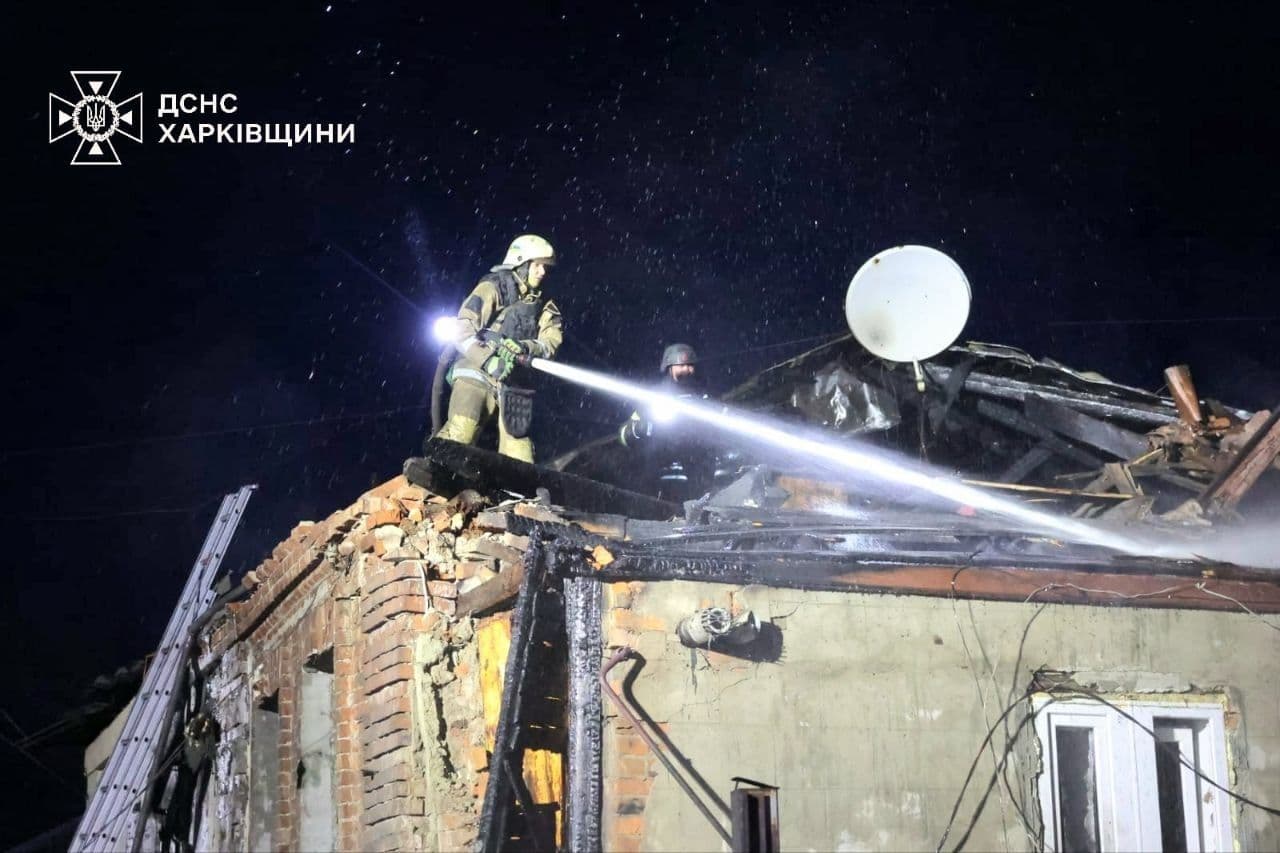
Aftermath of a Russian attack on the city of Kharkiv, Ukraine’s Kharkiv Oblast, overnight. (Ukraine’s Emergency Service)
EU RUSSIAN LNG IMPORTS UP 18% DESPITE RESTRICTIONS; GERMANY VS. POLAND ON EPF DISBURSEMENT
NGO Urgewald reported on June 10 that EU imports of Russian LNG from the Yamal project increased 18 percent in the first five months of 2026, reaching 8.37 million metric tons. In May alone, 23 of the project’s 25 exported cargoes went to EU ports — 92 percent of all Yamal exports. Spain was the largest EU importer in May at 586,000 metric tons. Belgium’s Zeebrugge handled 31 Yamal cargoes in the first five months versus 25 in the same period of 2025. The increase occurred despite the EU’s ban on short-term contracts taking effect April 25 — but contracts signed between June 17, 2025, and March 18, 2026, remain valid, creating what Urgewald described as “a significant loophole.” The daily flow represents approximately €29 million ($33.5 million) in daily Russian revenue from EU buyers.
Germany proposed directing the full €6.6 billion in unblocked European Peace Facility funds to Ukraine; Poland is objecting, insisting its own reimbursement claims must first be fully honored. Polish Deputy Defense Minister Tomczyk: “This money is our money.” Germany’s Defense Ministry framed the EPF as “a solidarity mechanism.” The dispute adds to existing Poland-Ukraine tensions over the UPA unit naming controversy. Ukraine’s Foreign Minister Sybiha had urged use of the EPF funds specifically to purchase U.S. Patriot air defense systems for Ukraine.
UKRAINE ARMOR AND MBDA SIGN DEEP-STRIKE PARTNERSHIP; MACRON: ZELENSKY ATTENDANCE AT G7 ‘VERY IMPORTANT’; INDIA EYES RUSSIAN COKING COAL
Ukrainian Armor CEO Belbas and MBDA Germany Managing Director Gottschild signed a memorandum of understanding at the ILA Berlin air show on June 10, establishing a strategic partnership for joint development of deep-strike and counter-drone systems. MBDA — manufacturer of Germany’s Taurus cruise missile and multiple European precision weapons — committed to contributing expertise in development, production, and support of missile systems. Ukrainian Armor described the partnership as “a historic step both for strengthening Ukraine’s defense capabilities and for building a new European security architecture.”

Thomas Gottschild, managing director of MBDA Germany (L) and Vladyslav Belbas, CEO of Ukrainian Armor (R) at the signing of a memorandum of understanding between the two companies in Berlin, Germany. (Ukrainian Armor / Facebook)
Macron stated on June 10 that Zelensky’s attendance at the G7 summit in Evian-les-Bains on June 15–17 is “very important” for rebuilding G7 consensus on Ukraine support and advancing peace negotiation frameworks. Zelensky confirmed G7 preparations are underway alongside preparations for the EU and NATO Ankara summits. India’s state-owned steel companies SAIL and NMDC are exploring acquisitions of Russian coking coal assets and expanded nickel imports, according to Reuters — deepening Russia-India industrial ties as Russia seeks buyers for commodities redirected from Western sanctions.
Ukraine’s Flamingo missile reached a drone-guidance factory 900 kilometers inside Russia for the second time in five weeks. The Kuibyshev refinery — one of Russia’s largest — halted production. Mariupol port lost power. Russia made its most significant tactical advance in Kostyantynivka of the entire spring-summer offensive.
Putin signed a law allowing his government to seize the homes of Russians abroad who criticize him. Duma banned Starlink terminals. Recruitment fell 20 percent. An Omsk drone alert — 2,300 kilometers from Ukraine — was declared for the first time ever. Ukraine’s FP-7.X interceptor passed its first flight test. Ukraine approved a $97.6 billion defense budget.
Day 1,568. Cheboksary burned. Kostyantynivka is being contested kilometer by kilometer. The Crimean Wind channel wrote: no intact bridges left on the overland approaches to the peninsula.
A PRAYER FOR UKRAINE
1. For the Defenders of Kostyantynivka
Lord, Russian forces advanced into Kostyantynivka from two directions on June 10. The two assault groups are two kilometers apart. The railway station has not fallen. Ukrainian forces cleared one settlement of infiltrators the same day they were losing ground in another part of the same city. We do not know the names of the soldiers holding the western blocks, the ones defending the station, the ones who pushed back at Dovha Balka while the eastern breach was being reported. They are fighting inside a city that Russia has been trying to take since 2025 and that Ukraine has refused to concede despite the cost. Sustain them. Give them the ammunition, the drones, the artillery support they need. And let the tactical breakthrough not become a strategic one.
2. For the Six Killed Across Ukraine Overnight
Father, three were killed in Donetsk Oblast. Two in Sumy. One in Kharkiv. Six in a night of 207 Russian drones. We do not have their names. We have their oblasts and the knowledge that they died in their homes, in their vehicles, in the streets of cities that have been under attack for 1,568 days. Receive them. Hold the families who will now begin counting days without them. And let the governments meeting at Evian next week feel the weight of six more names in six different oblasts on a single overnight, as evidence of what it means to delay a war’s ending by weeks.
3. For the Azov Corps Operators Who Reached Mariupol Port
God of return, the 1st Azov Corps operated over the port of Mariupol on June 10 — the city where the original Azov was besieged at Azovstal for three months in 2022, where its soldiers were captured and imprisoned, where its commanders spent years in Russian detention before being exchanged. The Corps that emerged from that defeat returned to the port from the air. It destroyed radar. It cut the power. It struck a shadow fleet vessel. It did not yet recapture the city. But it flew over it and left it darker. Sustain those operators and commanders. Let what they are building — operation by operation, strike by strike — eventually close the distance between where they fly and where they stand.
4. For the Engineers at Fire Point
Lord, Ukraine’s FP-7.X interceptor passed its first flight test. The engineers who built it are trying to do in months what states normally spend decades on: a domestically produced anti-ballistic missile interceptor, built under wartime conditions, intended to protect Ukrainian cities from the Iskander-M strikes that current Patriot shortages cannot fully stop. Chief designer Shtilierman said the test was pretty successful. Mass production could begin in August. That is a sentence with enormous stakes inside it. We pray for the team at Fire Point: for the precision of their engineering, for the speed of partner support materializing, for the protection of their facilities from Russian targeting, and for the chance to finish what they started before the next winter’s strikes begin.
5. For Ukraine’s Drone Operators on Their First National Day
God of ingenuity, Zelensky declared June 11 the Day of Ukraine’s Unmanned Systems Forces — the first such national day in any country’s history. In one year, the USF killed 100,082 Russian personnel verified case by case. It caused $40 billion in confirmed Russian asset damage. It struck factories 900 kilometers inside Russia, closed the main Crimea supply highways, disabled Mariupol port, and flew over cities that Ukraine cannot yet walk into. The operators doing this work are overwhelmingly young. Many of them came from other professions. They learned to fly in training programs that take weeks, not years, because the war required it. We give thanks for them. We pray for every one of them by name, though we do not know those names. In Your mercy, in Your justice, in Your time — bring this war to its end, and let the ending be worthy of what Ukraine has endured.