
Ukraine’s most destructive drone strike of the war shut down Russia’s Novorossiysk oil terminal overnight, while Kremlin milbloggers warned that air defenses are running out of missiles to stop them. As the Black Sea burned, Russia quietly crossed a grim threshold: for the fourth straight month, it recruited fewer soldiers than it lost in battle.
The Day’s Reckoning
Imagine standing on the pier at Novorossiysk at three in the morning. The night sky is lit not by stars but by fire—massive columns of orange flame roiling up from Russia’s most important Black Sea oil terminal, black smoke curling into the darkness above two of the port’s main tanker berths. Somewhere above you, in the chaos of searchlight beams and anti-aircraft tracers, Ukrainian drones are threading through a gauntlet of Pantsir, BUK-M3, and S-300 missiles to finish the job they came to do.
This is what April 6, 2026 looked and sounded like for the people of Novorossiysk—and it was only the most dramatic act in a day of cascading blows against Russia’s war economy. In the preceding week, Ukraine had already taken an estimated 40 percent of Russia’s total oil export capacity offline through relentless nightly attacks on Baltic Sea terminals at Ust-Luga and Primorsk. Now Kyiv opened a second front, this time on the Black Sea, while simultaneously striking a Russian warship, a surveillance platform, a military aircraft in Crimea, an ammunition depot in Belgorod, and a chemical plant producing explosive precursors in Voronezh Oblast.
Beneath all of this lay a structural crisis Russia cannot bomb its way out of: for the fourth consecutive month, Moscow recruited fewer soldiers than it lost on the battlefield. Meanwhile, Kremlin-affiliated milbloggers—normally cheerleaders for the war—openly warned that Russian air defenses are being stretched to the limit and are running out of missiles to shoot. A war that was supposed to last days in February 2022 has entered a new and dangerous phase, one where Ukraine’s ability to impose costs on Russian soil has never been greater.
On the ground, the frontline continued its grinding rhythms: Russian pressure near Pokrovsk and Oleksandrivka, Ukrainian counterattacks in Zaporizhzhia, infiltrations probing positions from Kupyansk to Kostyantynivka. A Russian general’s death was confirmed from a Crimea plane crash. A defector’s war ended in a Ukrainian field. And in Kyiv, a military ombudsman delivered the bluntest assessment yet of Ukraine’s mobilization crisis: there will be no popular solutions.
The Inferno at Novorossiysk: Ukraine’s Most Devastating Oil Terminal Strike
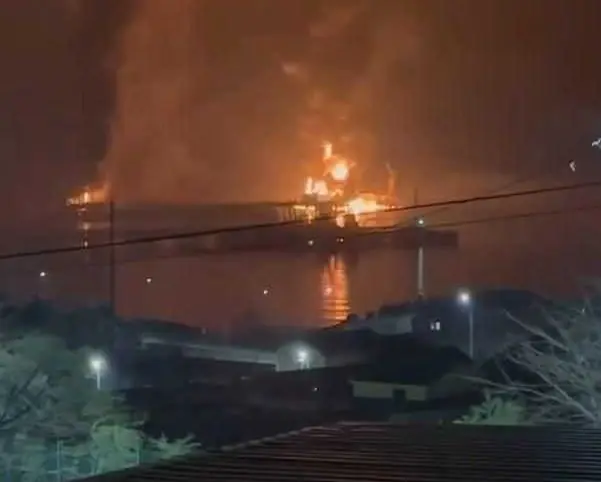
At roughly 7 p.m. local time on Sunday, Novorossiysk Mayor Andrei Kravchenko made an unusual public announcement: a Ukrainian drone strike was probably coming. He urged citizens to stay calm and—most tellingly—not to film incoming drones or Russian air defenses engaging them. By 11 p.m., the battle was on. Propeller-driven Ukrainian An-196 Liutyi drones—a pusher-prop with a distinctive dual fuselage—were appearing over the port city, met by a fireworks display of anti-aircraft tracers, interceptor missiles, and Gatling-type cannon fire sweeping the sky with blue and purple searchlight beams.
Citizens ignored the mayor’s instructions and flooded social media with images and video. It didn’t matter. The drones got through anyway. The central target was the Sheskharis oil terminal, Russia’s main export outlet for Ural and Siberian Light crude—a facility that in peacetime handles 25-35 percent of all Russian crude oil exports, roughly 3-3.2 million tons per month. Six of the terminal’s seven oil-loading stands were damaged, along with the pipeline control unit and the oil metering station. Two of the port’s main tanker berths took multiple direct hits. By sunrise, NASA’s FIRMS fire-watch satellites showed two substantial blazes burning within the port, with one hotspot covering practically the entire Sheskharis loading facility.
Russia’s Defense Ministry claimed 50 Ukrainian drones had been shot down. But the fires still burning at midday told a different story. Independent Russian news agency Astra confirmed the port was fully offline, its operations stopped entirely. This was the most destructive Ukrainian attack against Novorossiysk oil facilities of the entire war, exceeding previous raids on November 14, November 29, February 7, and March 1. A security source told the Kyiv Independent that six of the terminal’s seven oil-filling loading arms had also been damaged in the attack, mirroring the damage done in the March 2 strike—only worse.
The timing was not accidental. With world oil prices having nearly doubled following the US-Israeli campaign against Iran and the closure of the Strait of Hormuz, Russia stood to earn between $1.4-1.8 billion per day from oil exports. Ukrainian strikes, taken together across Baltic and Black Sea terminals, could cut those earnings by as much as 70 percent for as long as the damage remains unrepaired. In one week alone, the Baltic port campaign had already cost Moscow an estimated $1 billion in oil revenue.
Running Out of Missiles: Russia’s Air Defense Unravels
Thirty-six hours before the Novorossiysk attack, Russian milblogger Vladimir Romanov posted a furious open letter to the Crimea air defense command and the Russian Defense Ministry. He had 150,000 followers and a prophetic warning: ammunition wasn’t reaching air defense units, and Ukraine would take advantage. “GIVE US MISSILES FOR TOR/PANTSIR!” he wrote. “We can see the targets and technically have the capability to hit them, but we’ve got nothing to do it with!!!”
Romanov’s warnings proved prescient. During the Novorossiysk attack, Russian forces in Crimea reportedly expended dozens of interceptor missiles engaging incoming Ukrainian drones—and then ran out of some munitions entirely. Unconfirmed reports on Russian state-controlled social media indicated defenders had fired roughly 35 interceptor missiles from Pantsir, BUK-M3, and S-300 platforms during the port battle alone.
A separate Kremlin-affiliated milblogger, writing after the strikes, stated that the constant Ukrainian attacks on Russian facilities were “stretching” surface-to-air missile forces “to the limit” and exhausting ammunition “at an accelerated rate.” He noted that Russia cannot simply produce “thousands” of missiles for Pantsir air defense systems “out of thin air,” and encouraged Russian forces to follow Ukraine’s model of mobile fire groups, interceptor drones, and acoustic reconnaissance—systems Russia has discussed but not yet deployed at scale.
The strategic logic behind Ukraine’s campaign is becoming clear. By forcing Russia to defend an enormous geographic area—the Baltic coast, the Black Sea coast, and hundreds of strategic installations in between—Kyiv is making Moscow choose between protecting the front and protecting the rear. Ukraine’s systematic destruction of Russian air defense radars has only deepened the problem: defenders increasingly can see threats but cannot intercept them. The campaign is also diverting valuable Russian resources and manpower away from the front lines. As the milblogger noted with unusual candor: the damage repair bill alone is consuming extraordinary resources.
The Frigate in the Crosshairs: Admiral Makarov and the Syvash Platform
The oil terminal was not the only target that night. Ukrainian Unmanned Systems Forces Commander Major Robert “Magyar” Brovdi posted footage to Telegram of something that made Russian naval officers wince: the crosshairs of an approaching long-range drone locked onto the Admiral Makarov, a Grigorovich-class frigate, sitting in the port of Novorossiysk. The video cuts out before impact, and battle damage assessment was still underway.
The Admiral Makarov carries a particular symbolic weight. After the missile cruiser Moskva—Russia’s Black Sea Fleet flagship—was sunk by a Ukrainian Neptune missile strike in spring 2022, the Makarov inherited that title. It has been the target of Ukrainian strikes before: in October 2022, it survived a mass air and sea drone attack on Sevastopol with little damage. In March 2026, General Staff reports confirmed strikes on the Makarov and another frigate, Admiral Essen—again with inconclusive damage assessment. This time, damage assessment continues.
Separately, Ukraine’s 413th Unmanned Systems Regiment, better known as “Raid,” struck the Syvash offshore drilling platform in the Black Sea, west of occupied Crimea. The Ukrainian Navy had previously documented that Russia uses the platform not just for drilling but as a military node—deploying surveillance equipment, communications relays, electronic warfare systems, short-range air defenses, and weapons including anti-tank and anti-drone systems. A commander of a Ukrainian maritime drone unit also reported striking a Russian large landing ship en route to Sevastopol.
Ukrainian forces also struck a Be-12 amphibious anti-submarine aircraft near the village of Kacha in Russian-occupied Crimea—a target roughly 250 kilometers from the front line—demonstrating yet again that no corner of occupied territory offers sanctuary from Ukrainian reach.
Ukraine’s Campaign Beyond the Oil Terminals: Voronezh and Belgorod Strikes
The night’s operations ranged well beyond Novorossiysk. In Rossosh, Voronezh Oblast—roughly 50 kilometers from Ukraine’s border—Ukrainian drones struck the Minudobrenia chemical plant, a facility that produces ammonia, ammonium nitrate, and nitric acid: the key components of explosives and ammunition. A fire four kilometers from the site was reported by independent Russian outlet Astra. Six drones were shot down over Voronezh Oblast, Governor Alexander Husev confirmed, though one person was injured and four homes damaged. Kyiv considers such facilities legitimate military targets, as they feed directly into Russia’s ammunition production pipeline.
Separately, Ukrainian State Border Guard drone operators struck a Russian anti-tank mine stockpile in Belgorod Oblast in the Kharkiv direction, causing a large explosion. These border guard operations—targeting Russian logistics nodes just across the frontier—have become a consistent feature of Ukraine’s ground-based drone campaign, designed to complicate Russian resupply to forces pressing against Kharkiv Oblast.
The $28 Million Night Near Hulyaipole: Destroying Russia’s Rare Zoopark Radar
In the pre-dawn hours near Hulyaipole, a city in southern Zaporizhzhia Oblast that Russia has been pressing for months, Ukrainian border guard drone pilots of the Phoenix unit found three multiple rocket launcher systems. They struck all three—two BM-21 Grad systems and one BM-27 Uragan—in rapid succession. But the headline target was something else entirely: a Russian Zoopark-1 counter-battery radar system.
The Zoopark-1 is not a common piece of military equipment. Ukraine’s State Border Guard Service noted that only up to 15 such units have been destroyed since Russia’s full-scale invasion began in February 2022. A single Zoopark-1 complex is valued at roughly 1 billion hryvnias—around $23 million. Its function is to detect mortar shells within a 20-kilometer radius, artillery shells up to 30 kilometers away, and surface-to-air missiles up to 50 kilometers, pinpointing their launch locations. For Russian artillery operations, it is irreplaceable. Losing one matters.
“The total cost of the destroyed equipment is $28 million,” the DPSU’s report stated. “And this is on top of the usual everyday targets that the unit’s border guards eliminate around the clock.” The system had been in occupied Ukrainian territory since 2014, first documented by InformNapalm volunteers. Its destruction near Hulyaipole—a city whose fall analysts warn could open the road to Zaporizhzhia city itself—was one of the sharper tactical successes of the day.
Russia’s Recruitment Crisis: Falling Behind Its Own Losses for the Fourth Month
Behind the spectacle of burning oil terminals and disabled frigates lies a less visible but potentially more consequential crisis: Russia is failing to recruit enough soldiers to replace the men it loses in battle. Ukraine’s “I Want to Live” initiative, which monitors Russian military manpower, reported that in the first three months of 2026 the Russian Ministry of Defense recruited an average of only 940 contract soldiers per day—when it needs 1,100 to 1,150 per day just to stay on track for its annual target of 409,000 new recruits.
The math is grim. During that same three-month period, Russian forces recruited roughly 80,456 soldiers while the Ukrainian General Staff recorded 85,290 Russian casualties—a net shortfall even before accounting for the wounded. Major “Magyar” Brovdi confirmed that March 2026 marked the fourth consecutive month in which Russia’s recruitment rate fell below its battlefield loss rate. Zelensky’s own estimate for March losses exceeded 35,000.
Moscow is scrambling to close the gap through increasingly coercive measures. At least 12 Russian federal subjects raised one-time signing bonuses by 50 to 80 percent since mid-February. Russia’s Minister of Science directed large universities to ensure at least two percent of students sign MoD contracts. Ryazan Oblast’s governor issued a decree requiring medium and large businesses to select employees to sign military contracts. About 24 percent of all Russian contract soldiers are currently under criminal investigation or conviction, and nearly 40 percent are classified as debtors—a portrait of a military force increasingly scraped from society’s margins.
President Putin faces a dilemma with no clean exit. A formal involuntary mobilization would generate domestic backlash he is determined to avoid. Dramatically increasing financial incentives risks blowing the federal budget. Yet continuing the current approach means the gap between losses and replacements will only widen. ISW had forecast these manpower pressures as early as February 2025; they have arrived on schedule.
Sweden’s Gift and Ukraine’s Air Defense Dilemma
Even as Ukraine strikes Russia’s rear, the war at home continues in darkness and rubble. The Ukrainian Air Force intercepted 114 of 141 Russian drones launched overnight—a respectable intercept rate—but 26 still struck 17 locations across the country, with debris from downed drones hitting 13 more. Energy infrastructure was struck in Chernihiv, Sumy, Kyiv, Zaporizhzhia, Dnipro, and Odesa oblasts. In Chernihiv Oblast alone, a strike on a facility in the Nizhyn district left 340,000 subscribers without power, including residents of Chernihiv and Pryluky cities.
Against this backdrop, Sweden’s announcement of a 400-million-euro package of Tridon Mk2 air defense systems—truck-mounted platforms with 40mm anti-aircraft guns specifically designed to counter Shahed-type drones—offered welcome relief. But it also illustrated the persistent gap in Ukraine’s defenses: the Tridon Mk2 handles slow, propeller-driven drones. The threat from high-speed ballistic missiles and cruise missiles remains a different and harder problem.
Zelensky voiced concern that Patriot missile supplies could be diverted to the Iran conflict if it drags on—a worry that Ukrainian arms maker Fire Point is working to address over a longer timeline. Fire Point, known for developing the Flamingo cruise missile, announced plans to develop a Patriot-style air defense alternative by 2027. The US Navy, for its part, is seeking funding for 405 Patriot missiles in its 2027 fiscal budget. For Ukraine, 2027 feels a long way away.
Odesa’s Dead and the Price of Civilization: Russian Attacks on Civilians
In Odesa’s Primorskyi district, a child was among three people killed when Russian forces struck a residential area overnight. Sixteen more were injured, including a toddler and two teenagers. At least two victims were hospitalized in serious condition—one in neurosurgery, one in the burn intensive care unit. Rescue operations continued into the morning, with more people believed to be under the rubble. Seven homes and a residential building were damaged in Primorskyi district; in the Kyivskyi district, 13 high-rise buildings and 39 houses were struck. Some 16,700 households in Odesa were without power by midday.
The daily ledger was written across multiple regions. In Nikopol, Dnipropetrovsk Oblast—directly across from the Russian-occupied Zaporizhzhia nuclear power plant—a 61-year-old man was killed and a 60-year-old woman wounded by Russian FPV drones.
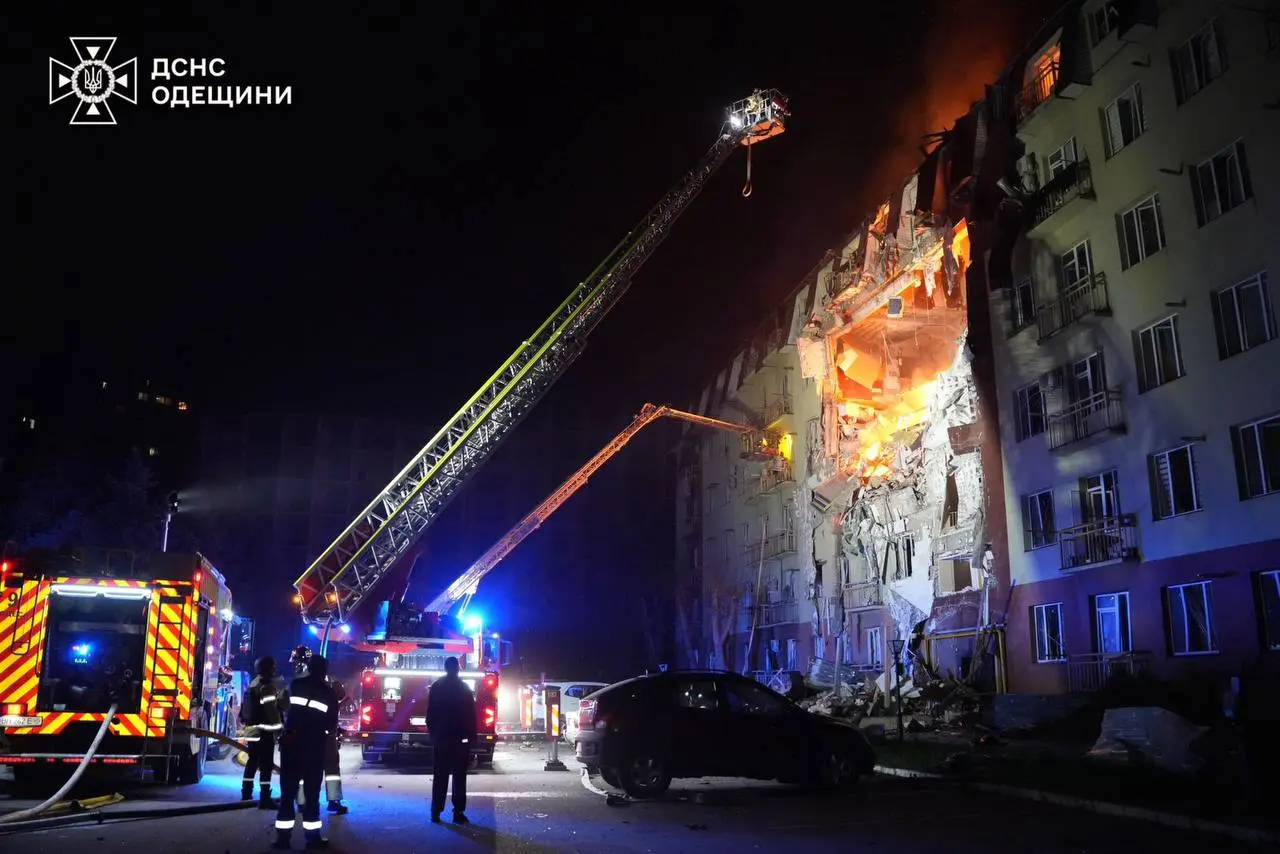
One person was killed in front-line Lyman in Donetsk Oblast. Five people were injured in Kherson Oblast as Russian forces continued targeting settlements across the Dnipro River. Three people were injured in Kharkiv Oblast as Russian attacks hit 19 settlements. The total for the day: at least five dead, at least 28 injured. The war in numbers. Zelensky also noted that in just the previous week, Russian forces had launched over 2,800 long-range drones, almost 1,350 glide bombs, and over 40 missiles—a sustained industrial assault on Ukrainian society.
Pokrovsk and Oleksandrivka: Where Russia’s Greatest Energies Are Concentrated
After being briefed by Commander-in-Chief Oleksandr Syrskyi and General Staff Chief Andriy Hnatov, President Zelensky identified the two fronts absorbing the most Russian effort: Oleksandrivka in Dnipropetrovsk Oblast and Pokrovsk in Donetsk Oblast. Syrskyi himself had recently visited both positions. “Right there are concentrated the greatest energies of the Russian army, and consequently, our opposition,” Zelensky wrote on Telegram.
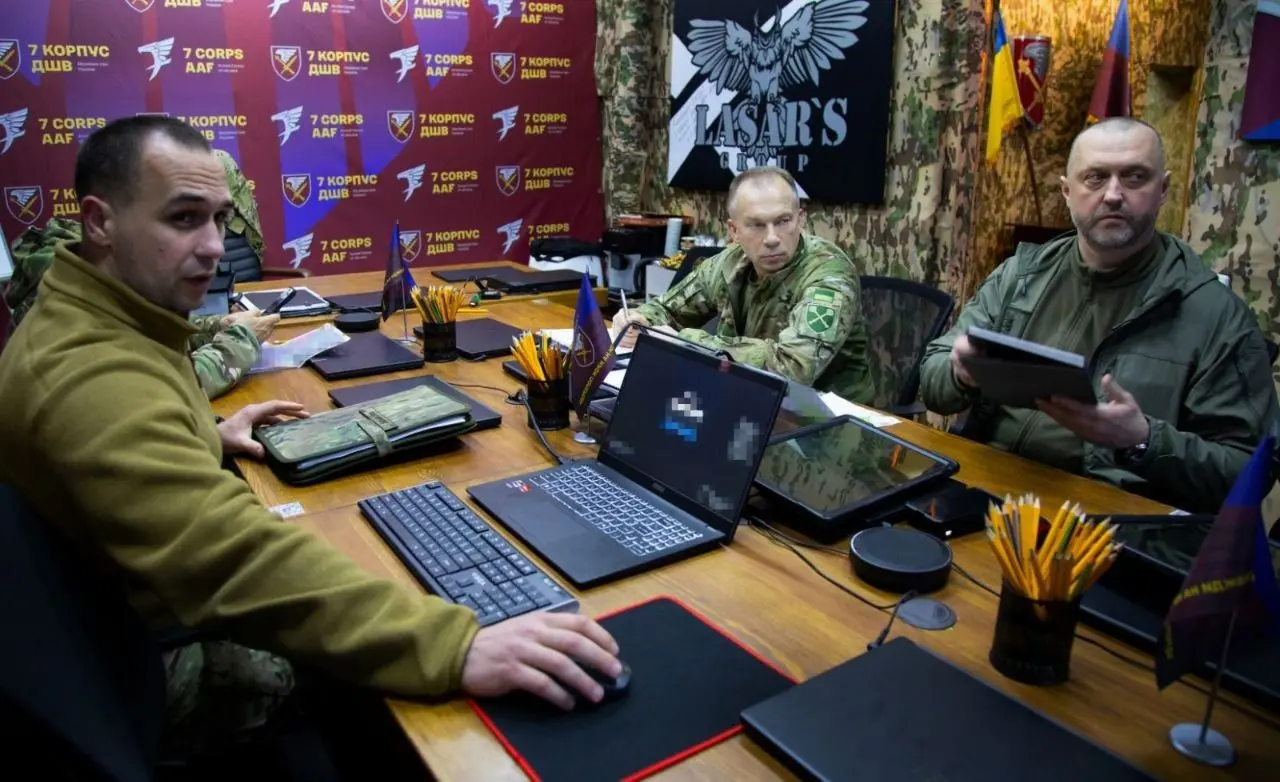
Commander-in-Chief Oleksandr Syrsky visits Ukrainian troops on the Oleksandrivka and Pokrovsk fronts amid continued fighting in Dnipropetrovsk and Donetsk oblasts. Photo: Oleksandr Syrsky/Telegram
In Pokrovsk, Russian forces launched 25 separate attacks during the day, pressing against Bilytske, Rodynske, Myrnohrad, Pokrovsk itself, Kotlyne, Udachne, Novomykolaivka, and Hryshyne. Two assault actions were still underway at reporting time. Ukrainian military observer Kostyantyn Mashovets assessed that Russian forces have likely infiltrated around Ukrainian positions in northern and northeastern Pokrovsk rather than seizing them outright—a tactical distinction that matters enormously for understanding the actual state of the battle.
In Oleksandrivka, Russian forces carried out 11 attacks near Ivanivka, Myrne, Kalynivske, Pryvillia, Verbove, Zlahoda, and Oleksandrohrad. Syrskyi reported that Ukrainian counterattacks in this direction have recaptured 480 square kilometers of territory, eight municipalities in Dnipropetrovsk Oblast, and four in Zaporizhzhia Oblast since January. But an expanding drone-imposed gray zone is making even “liberated” terrain uninhabitable, complicating Ukrainian efforts to consolidate gains.
From Vovchansk to Kherson: The Full Frontline Picture
The frontline on April 6 revealed a pattern familiar to those who have followed this war: sustained Russian pressure across multiple sectors, Ukrainian resistance preventing operational breakthroughs, and small but meaningful adjustments on both sides. In northern Kharkiv Oblast, Russian forces attacked near Starytsya, Hrafske, and Vovchansk without advancing, while Ukrainian forces recently advanced southwest of Vovchansk. A Ukrainian battalion commander reported something operationally significant: Russian forces are concentrating manpower close to the line and waiting for poor weather to provide concealment for infiltration missions—a sign of tactical patience rather than raw mass assault.
In Kupyansk, a Ukrainian reconnaissance commander offered a window into the siege mentality of modern urban combat: 10 to 15 Russian soldiers remain trapped in the ruins of a destroyed hospital in the city, being resupplied by FPV drones, refusing to surrender in hope of reinforcement. Russian forces are simultaneously attempting to cross the Oskil River near Holubivka before entering the city itself, with Ukrainian drones striking them before they can consolidate.
Near Slovyansk, a significant intelligence picture emerged: Lieutenant Colonel Dmytro Zaporozhets, spokesperson for Ukrainian 11th Army Corps, stated that Russian forces are accumulating personnel, light motorized vehicles, and armored vehicles ahead of an intensified offensive against Slovyansk when weather dries. The terrain east of Kramatorsk—open fields and small settlements—disadvantages the attacker, but Russian planners appear to be accepting that cost. In Kostyantynivka, meanwhile, geolocated footage showed Russian forces operating in the city’s northeastern districts in what analysts assessed as infiltration missions that have not yet changed the forward edge of battle.
Ukrainian forces struck Russian Gerbera-type drone crews during launch operations from the occupied Donetsk City Airport, roughly 41 kilometers from the frontline, in a demonstration that Ukraine is hunting Russian drone operators as a force-multiplier tactic. In western Zaporizhzhia Oblast, a Kremlin-affiliated milblogger candidly criticized Russian command for falsely claiming to have seized settlements where only small infiltration groups had entered—and for failing to hold them when Ukrainian forces pushed back from Novoyakovlivka and Pavlivka.
Ukraine’s Mobilization Hard Truths: ‘There Will Be No Popular Solutions’
While Ukraine strikes Russia’s oil infrastructure with growing effectiveness, the country faces its own manpower dilemma—one that military ombudsman Olha Reshetylova addressed with unusual frankness in an interview published. The problem is structural: any move to guarantee soldiers a discharge date requires enough new recruits to replace those leaving. And Ukraine is not recruiting fast enough to allow that.
“You can’t expect fixed terms of service without strengthening mobilization,” Reshetylova said. “There will be no popular solutions here. Obviously, they will be unpopular, and society should be ready for that.” She cited the case of one unnamed unit where more than 2,000 newly mobilized troops were found to be legally unfit for service—a form of waste that costs resources while failing to produce capable fighters. Cracking down on illegal draft avoidance, she said, is the necessary first step before fixing AWOL and desertion regulations.
Under Defense Minister Mykhailo Fedorov, the ministry has committed to a broad audit of battlefield losses and a reform of mobilization processes. Fixed three-year service terms were originally part of 2024 legislation but were removed at Commander-in-Chief Syrskyi’s request before passage. They remain unimplemented. Active service members—mobilized or volunteer—are currently required by law to serve until the end of martial law is declared. In a war entering its fifth year with no end date visible, that means indefinitely.
The Defector’s War Ends: Former SBU General Killed Fighting for Russia
Some lives that ended in this war carry particular weight. Russian outlet Mediazona confirmed the death of Volodymyr Lyapkin—a former major general of Ukraine’s Security Service (SBU) who had defected to Russia after the 2014 Euromaidan protests—killed on March 17 while serving in the Russian volunteer unit BARS-33. He was 12 years removed from Ukraine’s security establishment by the time he died in a Ukrainian field.
Lyapkin had headed the SBU’s operational documentation department and received his general’s rank in 2013. After 2014, he settled in occupied Crimea. After 2022, he took a position in the Russian-installed “security service” in occupied Kherson region and was later charged in absentia by Ukraine for involvement in “filtration measures”—the interrogation and detention processes used to screen Ukrainian civilians in occupied territories for potential resistance activity. In 2025, he was formally charged with collaboration. He is the latest in a grim reckoning for those who chose Moscow’s side.
General Otroshchenko: Russia Confirms Its 14th General Killed in the War
Russian authorities confirmed what had been reported days earlier: Lieutenant-General Aleksandr Otroshchenko, commander of the Northern Fleet’s air corps since 2013 and a veteran of Russian operations in Syria, was among the 29 military personnel killed when an An-26 transport plane crashed in Russian-occupied Crimea on March 31. The governor of Murmansk Oblast, home of the Northern Fleet, announced the death. A criminal case was opened under Article 351 of the Russian Criminal Code, which covers violations of flight rules or preparation regulations.
No accusations have been made against Ukraine regarding the crash, and Kyiv has not claimed involvement. Otroshchenko becomes the 14th Russian general to be killed since February 2022—a toll with no equivalent in modern Russian military history and one that reflects the grinding attrition the officer corps has suffered across four years of full-scale war.
The Global Oil Crisis and Ukraine’s Delicate Calculation
Ukraine’s oil strike campaign is unfolding against an already volatile global energy backdrop. With Iran-US tensions having caused oil prices to nearly double and the Strait of Hormuz partially closed, Russia stood to earn a windfall from elevated prices—a windfall Ukraine is systematically destroying. But Kyiv faces pressure from some of its own allies to ease off.
Kyrylo Budanov, Ukraine’s Presidential Office head and former military intelligence chief, revealed that “some allies” have asked Kyiv not to hit Russian oil refineries—a request he disclosed without naming the countries involved. The pattern has echoes: in March 2024, the Biden White House pressured Ukraine to halt oil infrastructure strikes when they had taken 10-15 percent of Russian production offline, fearing higher pump prices in an election year. Ukraine complied until mid-2025, when it resumed the campaign with domestically produced drones. Since then, by Kyiv Post counts, Ukraine has struck more than 500 strategic targets in Russia.
The pressure to pause again exists, but Ukraine’s calculus is different now: Russia is earning more per barrel than ever due to the Hormuz disruption, and Kyiv needs to deny Moscow those revenues to offset the military advantages elevated oil income provides. Separately, explosives were discovered near the Serbia-Hungary pipeline amid the global energy tensions—Serbia quickly ruled out Ukrainian involvement, though the incident’s proximity to Hungary’s approaching elections has fueled speculation about potential political manipulation.
What April 6, 2026 Revealed
Watch the fire at Novorossiysk burn through the night while Russian milbloggers frantically post that there aren’t enough missiles to stop the drones. Read the manpower numbers: 940 recruits per day against 85,000 casualties in three months. Count the dead in Odesa—a child, a man, a woman—and the 340,000 without power in Chernihiv while Ukrainian drones are simultaneously striking a chemical plant 50 kilometers inside Russia.
April 6 captured the war’s essential paradox with unusual clarity. Ukraine is demonstrating a growing capacity to impose strategic pain on Russia—burning its oil infrastructure, destroying its counter-battery radar, hitting its flagship frigate, killing its generals, eliminating its generals. At the same time, Ukraine is candidly reckoning with a mobilization system that is not producing enough soldiers and a diplomatic position where even friendly nations are asking Kyiv to ease the pressure on Russian oil.
Russia continues to press everywhere: Pokrovsk, Oleksandrivka, Kupyansk, Slovyansk, Hulyaipole. It launches 141 drones in a single night, 2,800 in a single week, the most glide bombs in a single month since the invasion began. Its air defenses are cracking but not collapsed. Its recruitment is falling but not failed. Its officers are dying but its army continues to advance.
Zelensky, briefed by Syrskyi and Hnatov on two hotspots and one expanding deep-strike campaign, said battlefield strength and long-range capabilities should reinforce Ukraine’s diplomatic position. The Novorossiysk fires were still burning when he said it. Russia’s recruitment gap was still widening. Otroshchenko’s death was still being formally processed by Murmansk Oblast. And the questions that have defined this war from the beginning—whose costs become unsustainable first, whose will holds longest, whose arithmetic finally breaks—remained as open as ever.
The fires at Sheskharis burned until morning. The drones will come again tomorrow.
A Prayer for Ukraine
1. For the Child Killed in Odesa, and the Toddler Who Survived
Lord, a child was killed in Odesa’s Primorskyi district before dawn. A toddler was injured. Two teenagers. One patient is in neurosurgery tonight; another is in the burn unit. We do not know their names. You do. We ask that You be present in those hospital rooms in ways that medicine cannot reach—and that You hold the grief of the families who arrived to rubble where a home had been. Let them not be forgotten in the accounting of this war.
2. For the 340,000 Without Power in Chernihiv
Father, the lights went out in Chernihiv and Pryluky before most people were awake. Two facilities struck, 340,000 subscribers without power—a number so large it becomes abstract until you remember that each subscriber is a household, and each household has people in it trying to live. Be with the elderly sitting in the dark. Be with the parents explaining, again, why the heat is gone. Give the repair crews speed and safety. And make the world understand that this is not collateral damage—it is the point.
3. For the Soldiers Holding Pokrovsk and Oleksandrivka
God of the exhausted, Zelensky said those two places absorb the greatest energies of the Russian army. Which means they also absorb the greatest energies of the men and women sent to stop it. Twenty-five attacks in the Pokrovsk sector in a single day. Eleven in Oleksandrivka. Grant the defenders clarity under pressure, protection they cannot manufacture themselves, and the knowledge that what they are holding matters—not just as terrain, but as the lives of the people behind them.
4. For Those Who Must Choose How Far to Strike
Lord, Budanov said that allies have asked Ukraine to ease off the oil strikes—to let Russian revenues flow so world prices don’t spike higher. Zelensky must weigh his country’s survival against the pressures of partners on whom that survival depends. These are not clean choices. Give wisdom to those who carry them: the clarity to know when restraint serves justice and when it merely serves convenience. And grant Ukraine the allies it deserves, not just the ones it has.
5. For the Arc That Bends Toward Justice
God of justice, Volodymyr Lyapkin spent twelve years on the wrong side of this war and died in a Ukrainian field wearing a Russian uniform. Lieutenant-General Otroshchenko died on a Crimean mountainside, the 14th Russian general killed since February 2022. We do not pray for vengeance. We pray that the accounting be real—that those who ordered the strikes on Odesa’s apartments, who planned the attacks on Chernihiv’s power grid, who directed the filtration camps, be named and faced and held. In Your mercy, in Your justice, in Your time—bring this war to its end, and let the ending be worthy of what Ukraine has endured.